
Naval Cyber Defense System Market Outlook: Size, Share, Trends, Growth Analysis, Competitive Landscape & Forecast, 2026-2033

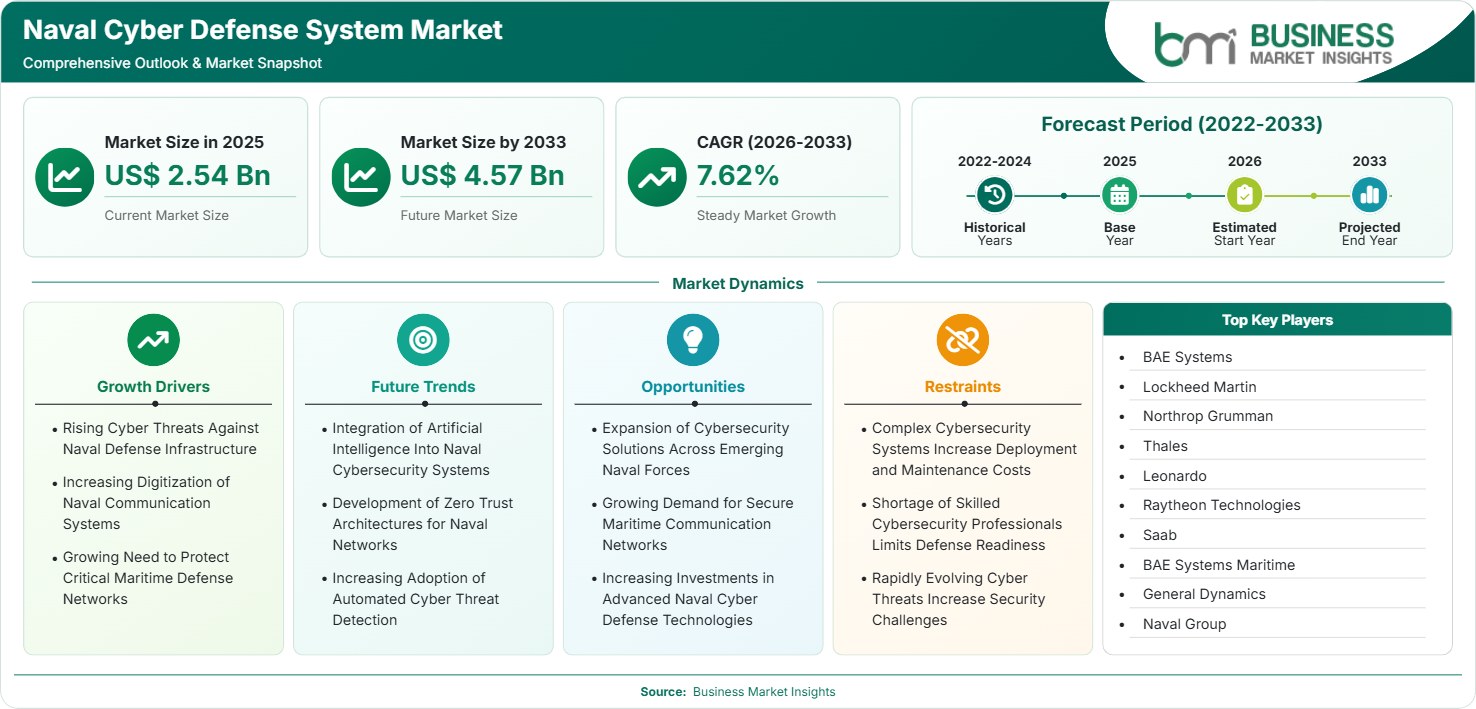
The Naval Cyber Defense System Market size was valued at US$ 2.54 billion in 2025 and is projected to reach US$ 4.57 billion by 2033, growing at a CAGR of 7.62% during 2026–2033. Rising cyber threats against naval defense infrastructure, increasing digitization of maritime communication systems, and the need to protect critical defense networks are accelerating adoption. Expansion of cybersecurity solutions across emerging naval forces, secure maritime communication requirements, and investments in advanced cyber defense technologies are creating new growth opportunities.

Report Coverage
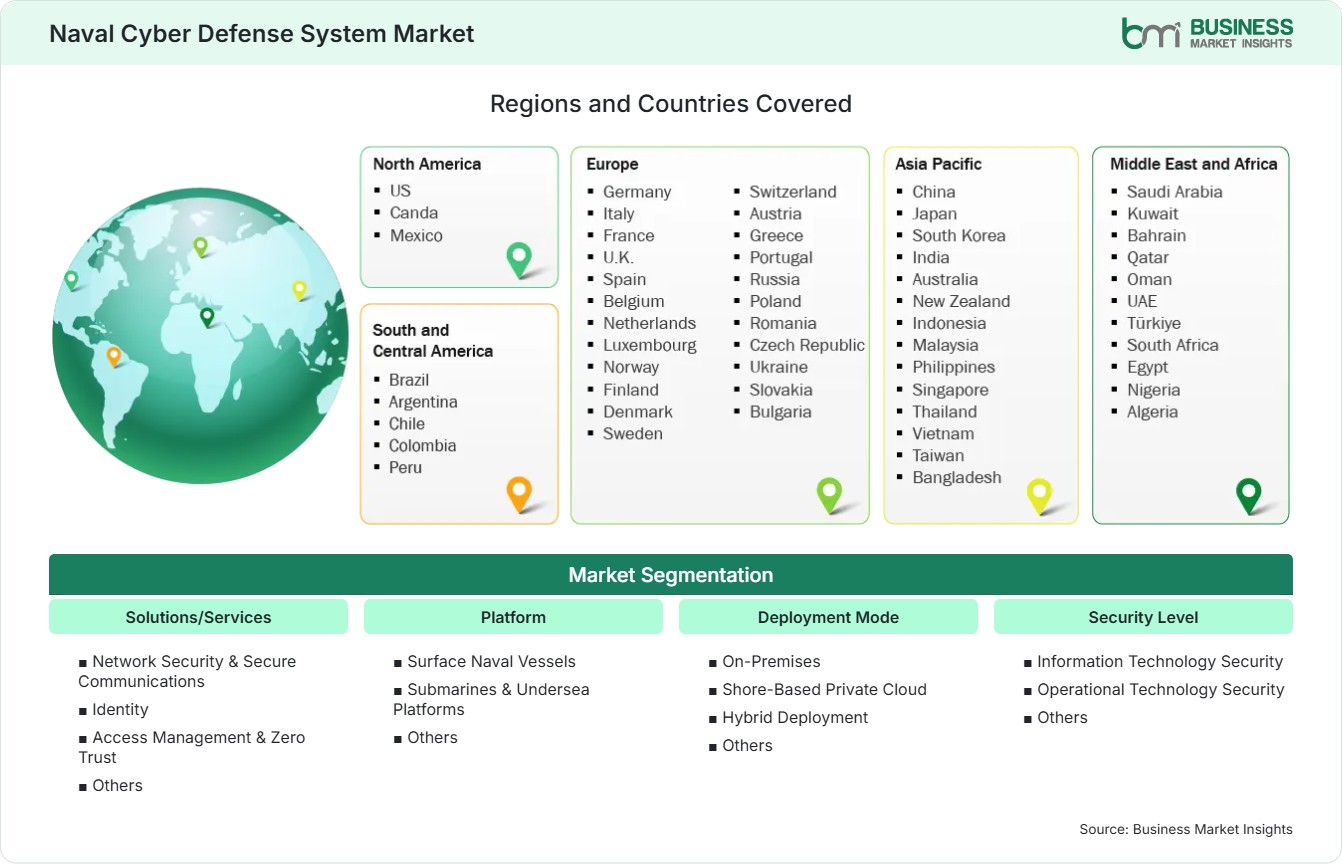
  • Solutions/Services: Network Security & Secure Communications, Identity, Access Management & Zero Trust, Others
  • Platform: Surface Naval Vessels, Submarines & Undersea Platforms, Others
  • Deployment Mode: On-Premises, Shore-Based Private Cloud, Hybrid Deployment, Others
  • Security Level: Information Technology Security, Operational Technology Security, Others
  • End User: Navies, Defense Ministries, Coast Guards, Naval Shipbuilders, Others
US$ 2.54 Bn Market size in 2025
US$ 4.57 Bn Market Size by 2033
7.62% CAGR, 2026 - 2033
2026-2033 Forecast Period

AI Overview

Naval Cyber Defense System Market Summary

  • North America Region: North America accounted for 38%–41% share in 2025 and is projected to grow at a CAGR of 7.0%–7.5% during 2026–2033. Strong defense expenditure, advanced naval infrastructure, cybersecurity modernization programs, and protection of strategic maritime assets support regional growth. The U.S. contributes 78%–82% of North American demand, supported by naval fleet modernization, zero-trust adoption, and cyber resilience initiatives with a CAGR of 7.2%–7.6% during the forecast period.
  • Fastest Growing Region: Asia Pacific represented 24%–27% share in 2025 and is expected to expand at a CAGR of 8.8%–9.4% during 2026–2033. Expansion of naval fleets, maritime security priorities, indigenous defense programs, and increasing adoption of connected military systems are driving cybersecurity investments across regional naval forces.
  • Leading Segment: Solutions/Services held 34%–37% share in 2025 and is expected to grow at a CAGR of 7.8%–8.3% during 2026–2033. Increasing demand for secure communications, network protection, identity management, and cyber monitoring solutions is supporting segment leadership.
  • High Growth Segment: Hybrid Deployment accounted for 20%–23% share in 2025 and is projected to grow at a CAGR of 9.2%–9.8% during 2026–2033. Integration of vessel-based cybersecurity systems with secure shore infrastructure is increasing adoption of flexible deployment architectures.
  • Key Market Opportunity: Growing cybersecurity requirements among emerging naval forces, expansion of autonomous maritime platforms, and rising demand for resilient defense communication networks are creating opportunities for advanced cybersecurity providers.
  • Major Market Players: BAE Systems plc, Lockheed Martin Corporation, Northrop Grumman Corporation, Thales S.A., Leonardo S.p.A., RTX Corporation, Saab AB, BAE Systems Maritime Services, General Dynamics Corporation, Naval Group.
Strategic Insights

Naval Cyber Defense System Market: Strategic Insights

Naval Cyber Defense System Market Strategic Framework
FREE PDF
Request your free sample
Request free sample
Stakeholder View

Key Takeaways

  • The Naval Cyber Defense System Market ecosystem includes defense contractors, cybersecurity providers, naval shipbuilders, military organizations, technology integrators, and research institutions supporting cyber resilience across maritime defense operations.
  • Secure communication systems, zero-trust architectures, identity management platforms, and network security solutions are creating opportunities as naval forces modernize connected vessels and digital command environments.
  • The industry is shifting toward artificial intelligence-enabled monitoring, automated threat detection, predictive analytics, and integrated cybersecurity frameworks designed for complex naval networks.
  • Asia Pacific provides an attractive expansion opportunity as countries increase naval modernization investments, strengthen maritime security capabilities, and adopt advanced cyber protection technologies.
  • Strategic investments are increasingly directed toward cybersecurity partnerships, defense technology integration, and solutions combining secure communication, operational technology protection, and threat intelligence.
  • Cyber readiness, interoperability, compliance requirements, and availability of specialized cybersecurity professionals remain important competitive factors influencing naval cybersecurity procurement decisions.
Geographic Outlook

Naval Cyber Defense System Market Regional Highlights

North America Naval Cyber Defense System Market

North America held 38%–41% share in 2025 and is projected to grow at a CAGR of 7.0%–7.5% during 2026–2033. The region maintains leadership due to advanced defense infrastructure, significant naval spending, and mature cybersecurity capabilities. The Naval Cyber Defense System Market share remains concentrated in the region due to strong adoption among major naval forces, advanced technology providers, and established defense ecosystems. The U.S. continues to represent the largest contributor, supported by fleet modernization programs, secure communication initiatives, and cyber resilience investments.

  • The U.S. Navy is increasing investments in cyber protection solutions for communication systems, combat networks, and mission-critical operational technologies.
  • Canada is strengthening maritime cybersecurity capabilities through defense modernization programs focused on secure information exchange and network protection.
  • Defense technology providers are expanding partnerships to deliver cyber-resilient solutions for naval platforms and infrastructure.

US Naval Cyber Defense System Market

The U.S. accounted for 78%–82% of North America’s share in 2025 and is projected to grow at a CAGR of 7.2%–7.6% during 2026–2033. The country maintains dominance due to advanced naval capabilities, cybersecurity investments, and large-scale defense modernization initiatives. Increasing reliance on connected vessels, digital mission systems, and network-centric warfare is accelerating adoption of cybersecurity solutions across naval operations.

  • Naval digital transformation is increasing demand for secure communication, cyber monitoring, and incident response capabilities.
  • Defense contractors are integrating cybersecurity technologies into surface vessels, submarines, and shore-based command systems.
  • Rising connectivity across military platforms is increasing requirements for advanced cyber protection solutions.

Europe Naval Cyber Defense System Market

Europe accounted for 26%–29% share in 2025 and is expected to expand at a CAGR of 7.4%–7.9% during 2026–2033. The region is strengthening cybersecurity adoption through naval modernization programs, defense cooperation, and protection of critical maritime infrastructure. The United Kingdom, France, Germany, and Poland represent key markets. Increasing integration of cybersecurity during vessel development is supporting regional market expansion.

  • The United Kingdom is improving naval cyber capabilities through investments in secure defense communication and digital infrastructure.
  • France and Germany are integrating cybersecurity into naval systems development and fleet modernization programs.
  • Poland is increasing defense spending, supporting adoption of maritime cybersecurity technologies.

Asia Pacific Naval Cyber Defense System Market

Asia Pacific represented 24%–27% share in 2025 and is projected to register a CAGR of 8.8%–9.4% during 2026–2033. The region is experiencing rapid growth due to expanding naval fleets, maritime security concerns, and increasing defense digitization. China, India, Japan, and South Korea are major contributors. Rising dependence on connected platforms is creating demand for secure communication and cyber protection solutions.

  • China is expanding naval cybersecurity capabilities through investments in integrated defense networks and digital platforms.
  • India is strengthening cybersecurity adoption as part of naval modernization initiatives.
  • Japan and South Korea are investing in advanced cyber protection technologies for connected maritime systems.

Rest of World Naval Cyber Defense System Market

Rest of World accounted for 8%–10% share in 2025 and is expected to grow at a CAGR of 7.9%–8.4% during 2026–2033. South America, the Middle East, and Africa are gradually increasing cybersecurity investments due to maritime security requirements. Brazil, Saudi Arabia, and Gulf countries represent important markets as governments modernize naval capabilities and protect strategic maritime infrastructure.

Growing adoption of digital defense systems is creating demand for scalable cybersecurity solutions across emerging naval environments.

  • Brazil is improving naval capabilities through modernization programs requiring secure communication and network protection technologies.
  • Middle Eastern countries are increasing investments in maritime defense infrastructure and cyber resilience solutions.
  • African maritime security initiatives are creating opportunities for cybersecurity providers supporting coastal defense networks.
Global Market Geography
FREE PDF
Request your free sample
Request free sample
Segment Analysis

Naval Cyber Defense System Market Segmentation

Solutions/Services

Solutions/Services represented 34%–37% share in 2025 and is projected to grow at a CAGR of 7.8%–8.3% during 2026–2033. The segment remains dominant due to increasing demand for cybersecurity expertise, secure communication frameworks, and continuous monitoring capabilities. Naval organizations are adopting integrated solutions to protect networks, operational systems, and mission-critical infrastructure. The Naval Cyber Defense System Market scope is expanding as defense users prioritize managed security, threat intelligence, and advanced cyber protection services.

  • Network Security & Secure Communications: Supports encrypted communication, secure data exchange, and network monitoring across vessels, command centers, and naval facilities. Increasing connectivity is driving adoption.
  • Identity, Access Management & Zero Trust: Enables authentication controls, user verification, and restricted access frameworks to protect sensitive naval information systems from unauthorized activity.
  • Others: Includes cyber assessment services, threat intelligence platforms, vulnerability management, and incident response capabilities supporting comprehensive defense cybersecurity strategies.

Platform

The Platform segment is gaining importance as naval organizations deploy increasingly connected vessels and digital mission systems. Surface vessels, submarines, and emerging maritime platforms require cybersecurity solutions to protect communication networks, sensors, and operational technologies. Integration of advanced electronics and automated systems is increasing demand for platform-specific cyber protection capabilities across modern naval fleets.

  • Surface Naval Vessels: Require cybersecurity solutions for communication systems, combat management platforms, sensors, and connected operational environments.
  • Submarines & Undersea Platforms: Demand advanced cybersecurity due to sensitive missions, secure communication requirements, and dependence on protected control systems.
  • Others: Includes unmanned maritime systems and specialized naval assets requiring secure connectivity and cyber monitoring.

Deployment Mode

Deployment Mode adoption is increasing as naval organizations seek flexible cybersecurity architectures supporting different operational environments. Hybrid models are gaining traction by combining onboard protection with centralized shore-based management. Defense organizations are evaluating deployment approaches based on mission requirements, data sensitivity, infrastructure availability, and scalability needs.

  • On-Premises: Preferred for classified defense environments requiring direct infrastructure control and dedicated security operations.
  • Shore-Based Private Cloud: Supports centralized management, secure storage, and advanced cybersecurity analytics.
  • Hybrid Deployment: Combines vessel-based systems with secure shore infrastructure for flexible protection and improved operational visibility.
  • Others: Includes customized deployment models designed for specialized naval cybersecurity requirements.

Security Level

The Security Level segment is expanding as naval forces require protection across both information technology and operational technology environments. Increasing integration of digital command systems, automated platforms, and connected maritime assets is creating demand for layered cybersecurity frameworks. The Naval Cyber Defense System Market trends indicate stronger adoption of solutions that secure classified information, industrial control systems, and mission-critical operations against sophisticated cyber threats.

  • Information Technology (IT) Security: Protects naval networks, applications, databases, and communication infrastructure through encryption, access management, and cybersecurity monitoring.
  • Operational Technology (OT) Security: Secures vessel control systems, industrial networks, sensors, and automated defense equipment against cyber disruptions.
  • Others: Includes endpoint security, specialized monitoring tools, and cybersecurity solutions designed for unique naval applications.

End User

The End User segment is driven by increasing cybersecurity requirements among military organizations, government agencies, and maritime defense stakeholders. Naval forces remain the primary users due to growing dependence on connected platforms and digital operations. Defense ministries and coast guards are also investing in cybersecurity capabilities to protect strategic maritime infrastructure. The Naval Cyber Defense System Market analysis highlights rising demand for integrated solutions across defense ecosystems.

  • Navies: Represent the largest user group due to requirements for protecting vessels, communication networks, combat systems, and operational infrastructure.
  • Defense Ministries: Invest in cybersecurity frameworks supporting national defense strategies, classified information protection, and military modernization programs.
  • Coast Guards: Adopt cybersecurity solutions for maritime surveillance systems, communication networks, and coastal protection operations.
  • Naval Shipbuilders: Integrate cybersecurity capabilities during vessel design, construction, and modernization activities.
  • Others: Includes defense research organizations, technology partners, and specialized maritime security entities.
Market Forces

Naval Cyber Defense System Market Dynamics

Key Market Drivers

Rising Cyber Threats Against Naval Defense Infrastructure

The rising number of cyberattacks on naval infrastructure is driving the need for state-of-the-art cybersecurity solutions. Today’s ships have integrated networks, digital command-and-control systems, and automation technologies, which are contributing to the creation of additional attack points. Governments are working to strengthen cybersecurity measures to ensure the safety of military data and readiness. The Naval Cyber Defense System market growth will be aided by innovations in threat intelligence, vulnerability assessment, automatic monitoring, and incident response products. The defense sector is adopting more proactive approaches to cyber resilience.

Increasing Digitization of Naval Communication Systems

The communication systems of naval organizations have undergone rapid digitization through satellite communications, net-centric warfare systems, and command integration. Such digitization makes the process more efficient but also poses cybersecurity threats, necessitating a secure communication framework. The use of encrypted communication systems, identity management systems, and zero-trust systems by the naval organizations is an attempt to secure the data exchange between the two parties. There has been an increase in demand for cybersecurity solutions that can address the complex maritime environment due to advancements in artificial intelligence systems and the integration of connected platforms.

Growing Need to Protect Critical Maritime Defense Networks

Safeguarding key maritime defense network infrastructure has emerged as a top strategic priority due to its interconnectivity in modern naval operations. Continuous protection is required for communication, operational control, and mission platforms from any form of intrusion and disruption. Defensive organizations are adopting new cybersecurity architectures that have improved network visibility, increased access management controls, and enhanced response capabilities. With increased reliance on operational technology systems in both ships and shore installations, the need for specialized cybersecurity solutions is rising. The need to ensure mission continuity in the face of cyber threats has led to increased adoption of integrated protection systems within naval ecosystems.

Key Market Opportunities

Expansion of Cybersecurity Solutions Across Emerging Naval Forces

Upcoming naval powers are making significant investments in fleet modernization, creating opportunities for cybersecurity companies. Nations that wish to expand their naval capabilities will need secure communication, networks, and operational technology. There has been an increase in the inclusion of cybersecurity aspects in defense modernization programs within the procurement and development stages. Companies that offer scalable solutions will be able to meet the needs of nations interested in building up their maritime cybersecurity capability. The rise in regional security issues and the buildup of naval capabilities are prompting nations to invest in cybersecurity.

Growing Demand for Secure Maritime Communication Networks

Increased reliance on digital communication channels is creating opportunities for firms focused on secure maritime communications. Ships need efficient communication capabilities between themselves, as well as between ships and headquarters and other shore-based stations, while keeping their operational information secure. Efficient communication solutions, encryption technologies, and authentication tools are becoming vital parts of modern naval infrastructure. Cybersecurity firms can help defense agencies with secure solutions as navies increasingly adopt network-centric operations. Increasingly, there is also demand for communication capabilities suitable for unmanned operations and automated communications during maritime missions.

Increasing Investments in Advanced Naval Cyber Defense Technologies

The investment in AI, machine learning, automation, and advanced analytics is opening up more possibilities in naval cybersecurity. Defense agencies are discovering that new technologies are helping identify potential threats and protect systems from damage. The Naval Cyber Defense System Market forecast suggests further growth opportunities in the field, driven by an emphasis on cyber resilience, autonomous platforms, and futuristic naval technologies. Collaboration among defense companies, cybersecurity experts, and tech firms is driving innovation in maritime security applications.

Market Restraints and Challenges

Complex Cybersecurity Systems Increase Deployment and Maintenance Costs

Factor: Complex cybersecurity systems require significant investment in infrastructure integration, software updates, specialized equipment, and continuous monitoring processes. Impact: High deployment and maintenance costs can slow adoption among organizations with limited cybersecurity budgets and increase operational complexity. Naval environments require customized solutions due to differences in vessel designs, communication architectures, and mission requirements. The need for regular system upgrades and cybersecurity assessments further increases lifecycle expenses. Defense organizations must balance security requirements with budget constraints while ensuring long-term reliability of deployed systems. These cost considerations can influence procurement timelines and adoption strategies across different naval forces.

Shortage of Skilled Cybersecurity Professionals Limits Defense Readiness

Factor: Limited availability of professionals with specialized knowledge in naval systems, cybersecurity, and operational technologies creates workforce challenges. Impact: Shortages of skilled personnel can reduce cyber readiness, delay incident response, and increase dependency on external cybersecurity providers. Naval cybersecurity requires expertise across information technology, industrial systems, communication networks, and defense operations. Training qualified specialists requires significant time and resources, creating challenges for defense organizations. As cyber threats become more advanced, maintaining a skilled workforce remains essential for effective monitoring, threat analysis, and protection of maritime defense infrastructure.

Company Analysis

Competitive Landscape

The competitive environment includes global defense contractors, naval technology companies, and cybersecurity specialists developing solutions for secure communication, threat detection, operational technology protection, and cyber resilience. Companies are focusing on partnerships, defense contracts, and integrated cybersecurity platforms to strengthen their position in the evolving market.

Company Name

Overview

Products and Services relevant to this market

BAE Systems plc

Global defense technology company providing naval systems and cybersecurity capabilities.

Cyber defense solutions, secure communications, electronic systems, and maritime protection technologies.

Lockheed Martin Corporation

Defense contractor supporting advanced military and naval technology programs.

Cybersecurity platforms, mission systems, network protection, and naval defense solutions.

Northrop Grumman Corporation

Aerospace and defense company specializing in advanced security technologies.

Cyber resilience solutions, command systems, threat detection, and naval technologies.

Thales S.A.

Technology provider focused on defense, security, and digital systems.

Naval cybersecurity, secure communications, identity management, and monitoring solutions.

Leonardo S.p.A.

Defense technology company supporting military electronics and security applications.

Cybersecurity services, naval electronics, communication systems, and protection solutions.

RTX Corporation

Defense technology provider developing advanced military systems.

Secure networking, cyber protection, intelligence, and defense technologies.

Saab AB

Defense company delivering naval and security technologies globally.

Cyber resilience solutions, naval combat systems, and secure communication platforms.

BAE Systems Maritime Services

Naval support organization providing lifecycle services.

Cybersecurity upgrades, vessel modernization, and operational technology support.

General Dynamics Corporation

Defense company involved in naval platforms and military systems.

Submarine systems, cybersecurity integration, engineering, and defense services.

Naval Group

Naval shipbuilder specializing in advanced maritime defense systems.

Secure naval platforms, combat systems, and cybersecurity integration.

Trust & Transparency

Research Methodology

The market analysis combines proprietary research with secondary data from government agencies, company disclosures, regulatory filings, industry databases and expert interviews. Market estimates are validated through data triangulation, cross-market benchmarking and analyst review.

View Full Research Methodology

Questions Answered

Frequently Asked Questions

What does the Naval Cyber Defense System Market Report provide?

The report provides insights into market size, segmentation, regional trends, competitive landscape, technology developments, growth drivers, opportunities, and strategic challenges influencing the industry.

How are emerging technologies influencing naval cybersecurity?

Artificial intelligence, automation, machine learning, and advanced analytics are improving threat detection, cybersecurity monitoring, and response capabilities. These technologies support faster identification of vulnerabilities across connected maritime defense systems.

Why is hybrid deployment gaining importance in naval cybersecurity?

Hybrid deployment provides flexibility by combining vessel-based cybersecurity systems with secure shore infrastructure. It enables centralized management while maintaining protection for distributed naval assets operating in complex environments.

Which segment is expected to maintain leadership?

Solutions/Services is expected to maintain leadership due to rising demand for network security, secure communications, identity management, and cybersecurity monitoring services across naval operations.

What factors are driving the Naval Cyber Defense System Market?

Growth is driven by increasing cyber threats, naval digitization, connected defense platforms, and the need to protect mission-critical communication and operational technology systems. Defense organizations are investing in advanced cybersecurity solutions to improve resilience and maintain operational continuity.

Access the Full Naval Cyber Defense System Market Report

Get segment-level forecasts, regional estimates, competitive benchmarking, company profiles and downloadable Excel datasets.

Access the full Naval Cyber Defense System Market Report
350 pages PDF & Excel | 2026-08-05