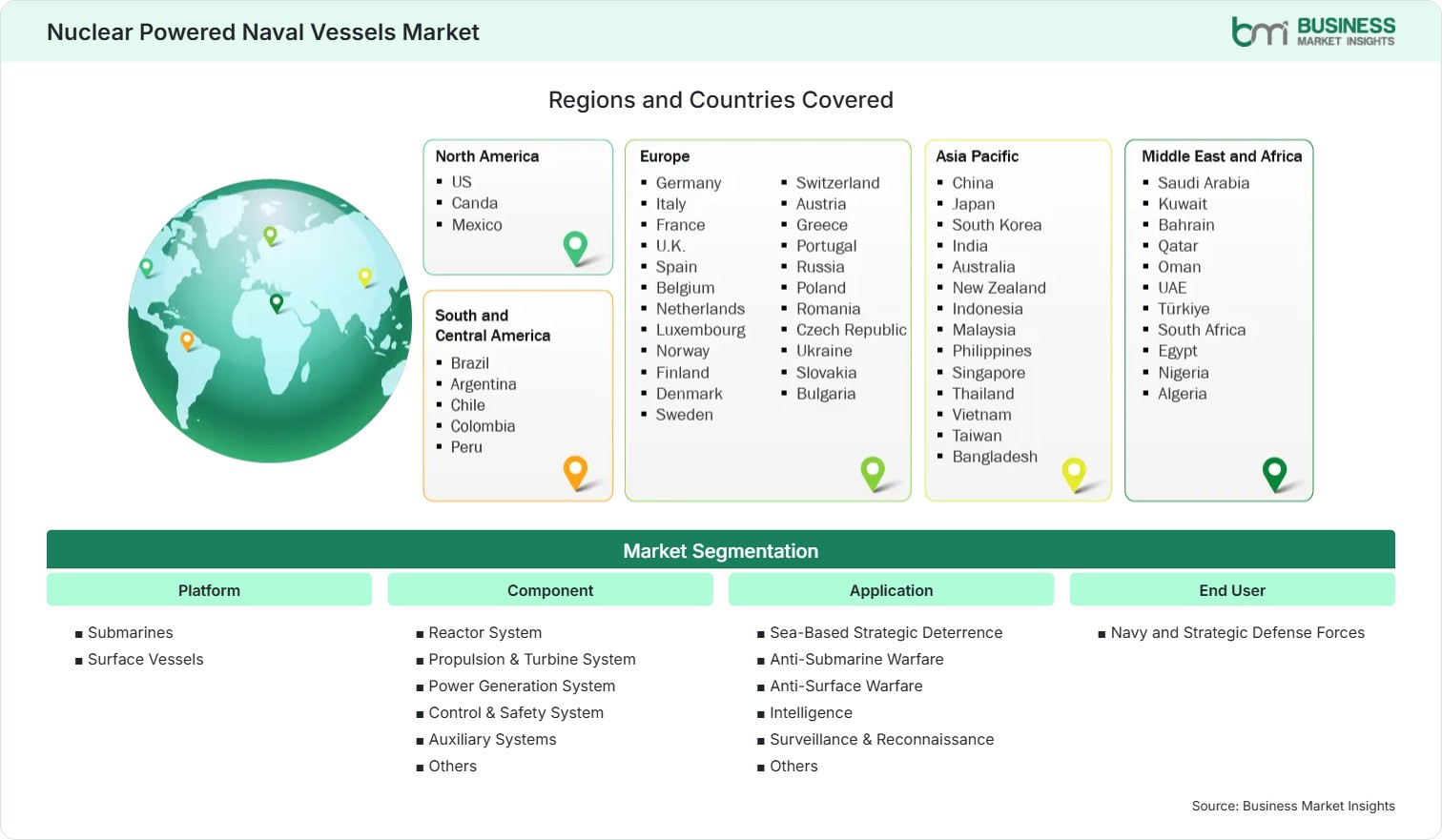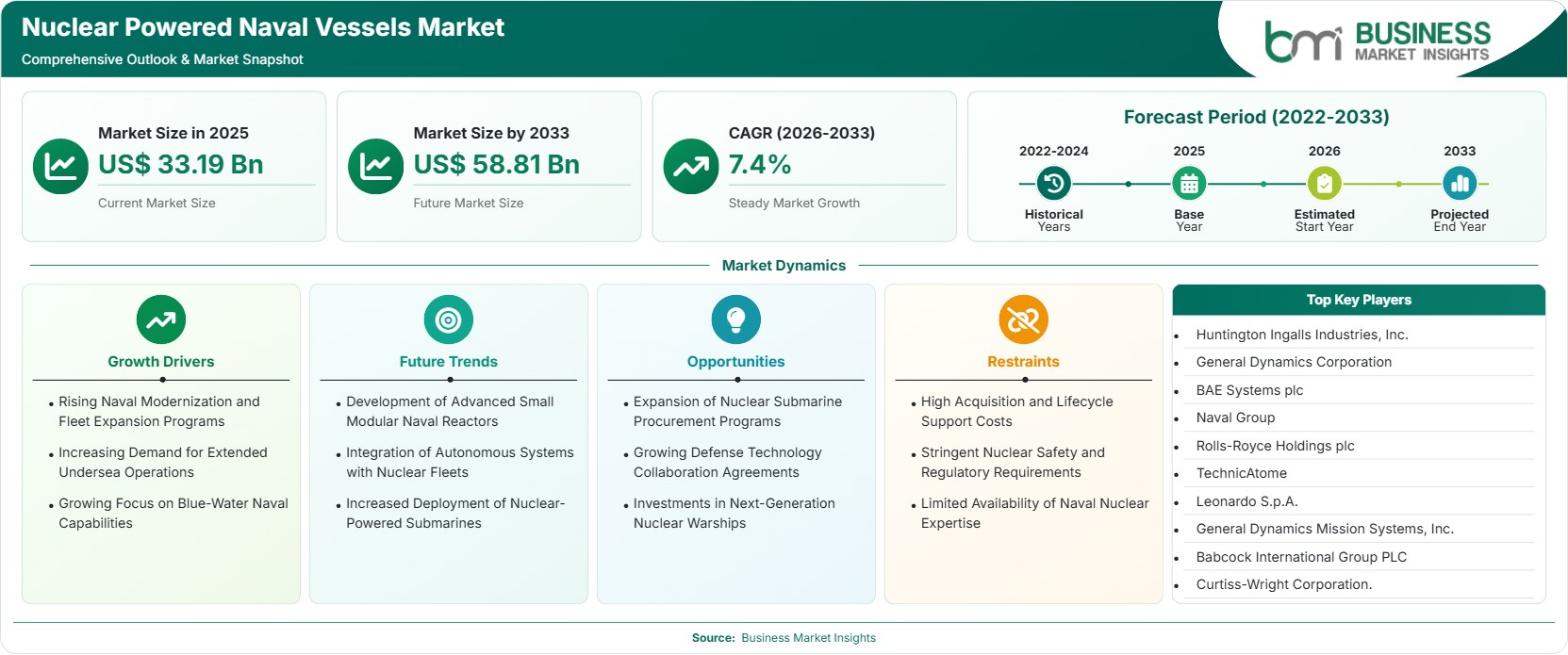
Nuclear Powered Naval Vessels Market Regional Highlights
North America Nuclear Powered Naval Vessels Market
North America accounted for 48%–50% of the Nuclear Powered Naval Vessels Market share in 2025 and is projected to expand at a 7.0%–7.4% CAGR during 2026–2033. The dominance of North America can be attributed to its modernization of naval vessels, procurement of nuclear-powered submarines, and investment in maritime defense strategy. The United States remains the largest contributor, while Canada increasingly participates through naval support, maintenance, and allied defense cooperation initiatives.
- Continuous investments under long-term naval shipbuilding programs support procurement of next-generation submarines and modernization of existing nuclear-powered fleets for enhanced strategic readiness.
- Advanced nuclear propulsion technologies, digital combat management systems, and predictive maintenance solutions improve operational efficiency and lifecycle performance across naval platforms.
- Strong collaboration between defense agencies, shipbuilders, and technology providers accelerates innovation in reactor systems, propulsion integration, and mission-critical naval technologies.
- Fleet sustainment and mid-life modernization programs continue generating demand for advanced engineering services, reactor support systems, and vessel upgrades.
- Rising geopolitical tensions and maritime security priorities encourage continued investments in nuclear-powered naval capabilities across the region.
US Nuclear Powered Naval Vessels Market
The United States represented 45%–47% of the global market in 2025 and is expected to register a 7.1%–7.5% CAGR through 2033. The country maintains the largest nuclear fleet in the world, thanks to the continual procurement of submarines, the refurbishment of aircraft carriers, and advances in nuclear power plant technology. The ongoing nature of the defense programs and the capabilities within the industries will continue to drive new builds and maintenance works.
- Ongoing Columbia-class and Virginia-class submarine programs continue supporting long-term procurement of advanced nuclear-powered naval platforms.
- Modernization of nuclear-powered aircraft carriers strengthens demand for propulsion upgrades, digital control systems, and lifecycle engineering services.
- Significant investments in naval nuclear propulsion research improve reactor safety, operational efficiency, and long-term fleet sustainability.
- Strong domestic manufacturing capabilities enable secure production of nuclear propulsion systems and mission-critical naval components.
Europe Nuclear Powered Naval Vessels Market
Europe held 24%–26% market share in 2025 and is forecast to grow at a 7.8%–8.2% CAGR during 2026–2033. Demand from the region is underpinned by submarine fleet modernization, military cooperation, and increasing investments in local manufacture of naval vessels. The United Kingdom leads as the dominant National Nuclear Powered Naval Vessels market due to ongoing submarine replacements, whereas France exhibits high growth rates driven by investments in advanced nuclear-powered submarines.
- The United Kingdom leads regional demand through ongoing development and modernization of nuclear-powered submarine fleets supporting national defense objectives.
- France continues investing in next-generation nuclear propulsion systems and indigenous submarine construction to strengthen long-term maritime security capabilities.
- Increasing defense cooperation among European nations encourages technology sharing, industrial partnerships, and modernization of naval infrastructure.
- Advanced reactor technologies, digital engineering, and predictive maintenance solutions continue improving fleet performance and operational readiness.
- Rising defense budgets across Europe support long-term investments in strategic underwater warfare capabilities.
Asia Pacific Nuclear Powered Naval Vessels Market
Asia Pacific accounted for 18%–20% of global demand in 2025 and is anticipated to expand at a 7.5%–7.9% CAGR during 2026–2033. Growing maritime security concerns, regional naval competition, and indigenous defense manufacturing initiatives continue driving market expansion. China leads regional revenue generation through significant investments in nuclear-powered submarines, while India demonstrates the fastest growth owing to expanding indigenous submarine development and naval modernization programs.
- China continues expanding its nuclear-powered submarine fleet to strengthen strategic deterrence and blue-water naval capabilities.
- India records the fastest regional growth through indigenous nuclear submarine development and long-term naval modernization initiatives.
- Rising geopolitical tensions encourage increased investment in underwater warfare capabilities and strategic maritime defense assets.
- Governments continue strengthening domestic defense manufacturing to reduce dependence on imported naval technologies.
- Technological advancements in reactor efficiency and digital vessel management improve operational capability across future naval platforms.
Rest of World Nuclear Powered Naval Vessels Market
Rest of World accounted for 5%–7% market share in 2025 and is projected to register a 6.8%–7.2% CAGR during 2026–2033.
The Middle East currently has limited deployment of nuclear-powered naval vessels but continues investing in broader naval modernization and maritime security capabilities. South and Central America remain relatively small markets, with Brazil leading regional activity through its indigenous nuclear-powered submarine development program and long-term investments in strategic naval capabilities.
- Brazil remains the leading the Nuclear Powered Naval Vessels market through continued development of its indigenous nuclear-powered submarine program and expansion of domestic naval industrial capabilities.
- Middle Eastern nations continue strengthening conventional naval fleets while evaluating future advanced maritime technologies and strategic partnerships.
- Increasing maritime security challenges encourage greater investment in long-term naval modernization and defense preparedness.
- International defense cooperation supports technology transfer, naval training, and infrastructure development for strategic maritime operations.
- Long-term growth remains supported by indigenous defense manufacturing initiatives and increasing investments in sovereign naval capabilities.