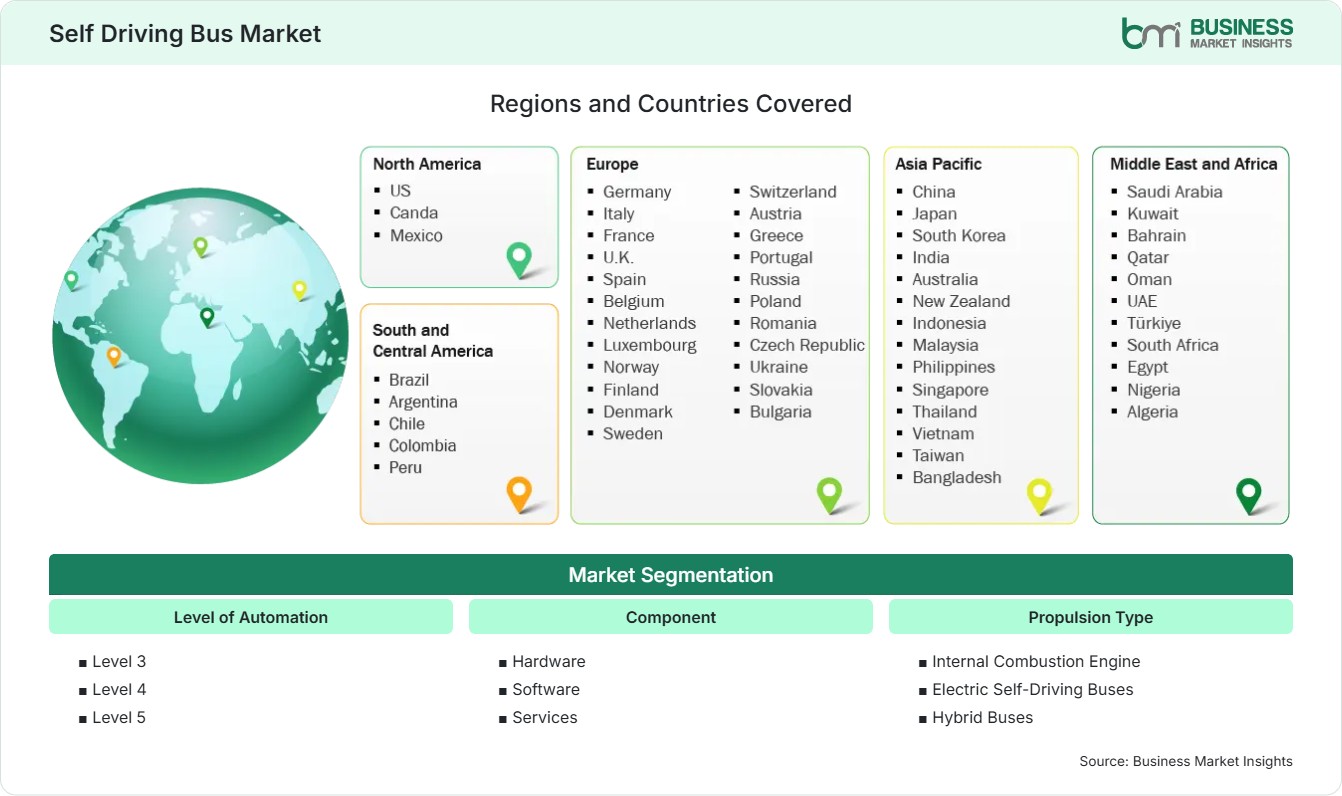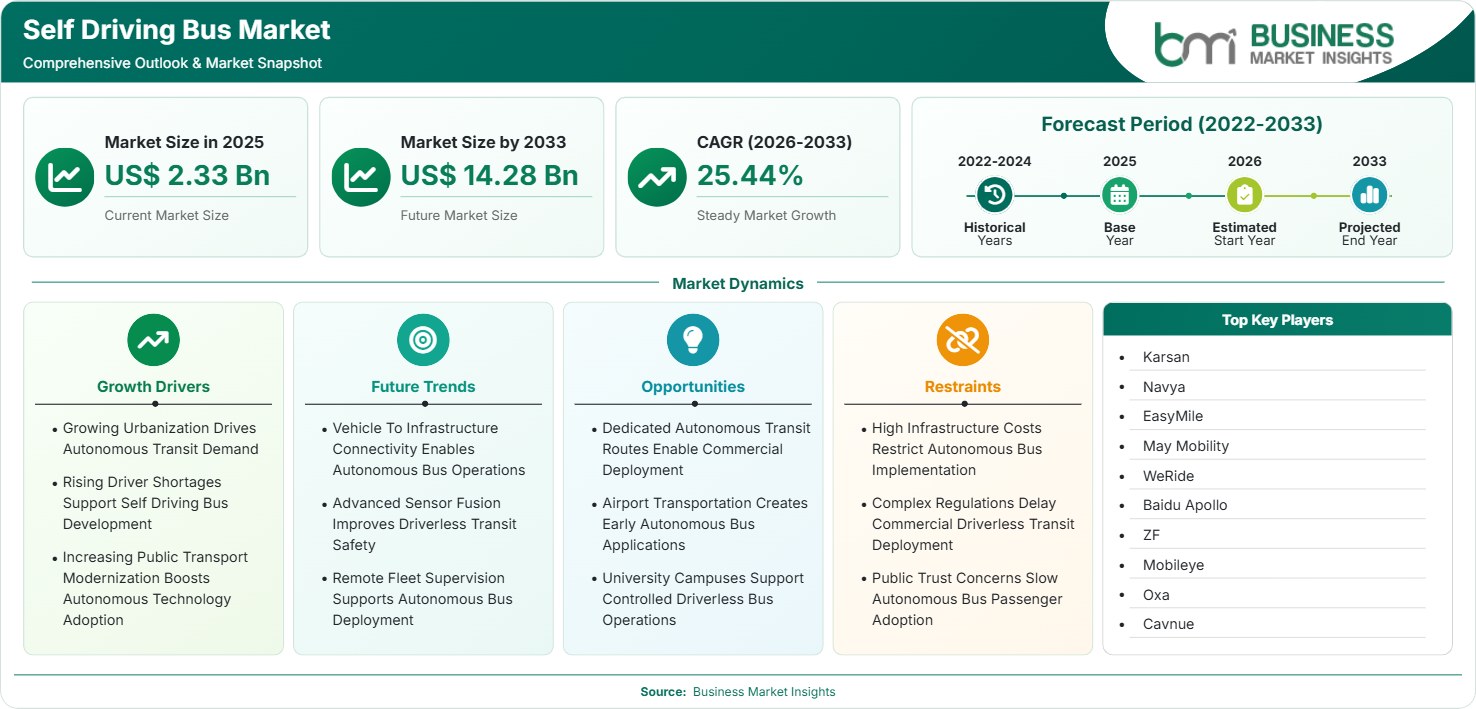
Self Driving Bus Market Regional Highlights
North America Self Driving Bus Market
North America maintains a strong position due to advanced autonomous vehicle development, technology infrastructure, and increasing investments in smart transportation systems. The region holds 31%–35% Self Driving Bus Market share in 2025 and is projected to grow at a 23%–25% CAGR during 2026–2033. The United States and Canada are key contributors due to autonomous mobility trials, supportive innovation ecosystems, and increasing focus on future public transportation solutions.
- The US market is advancing through autonomous transit pilot programs and smart city initiatives.
- Transportation authorities are exploring driverless buses for improving public mobility efficiency.
- Technology companies are investing in artificial intelligence, sensors, and vehicle connectivity solutions.
- Airports, campuses, and dedicated routes are emerging as important deployment environments.
- Partnerships between vehicle manufacturers and technology providers are supporting market development.
US Self Driving Bus Market
The US market is supported by autonomous vehicle innovation, public transportation modernization, and increasing investments in intelligent mobility infrastructure. The country represents 27%–31% share within North America in 2025 and is expected to grow at a 23%–25% CAGR during 2026–2033. Market growth is influenced by demand for safer transit systems, operational efficiency, and solutions addressing driver availability challenges.
- Autonomous shuttle programs are expanding across controlled environments and urban areas.
- Public agencies are exploring driverless transit solutions to improve service coverage.
- Technology companies are developing advanced autonomous driving platforms.
- Electric bus adoption is supporting integration with autonomous transportation systems.
Europe Self Driving Bus Market
Europe demonstrates significant growth potential due to strong sustainability goals, advanced transportation networks, and government-supported autonomous mobility initiatives. The region accounts for 22%–26% market share in 2025 and is projected to grow at a 24%–26% CAGR during 2026–2033. Countries including Germany, France, the UK, and Nordic nations are supporting autonomous transit development through pilot projects and smart mobility programs.
- European cities are testing autonomous buses for public transportation applications.
- Sustainability regulations are encouraging adoption of electric autonomous vehicles.
- Transportation operators are investing in intelligent mobility solutions.
- Research initiatives are improving autonomous driving safety and reliability.
- Urban mobility programs are creating opportunities for technology providers.
Asia Pacific Self Driving Bus Market
Asia Pacific represents the fastest-growing regional market due to rapid urbanization, increasing transportation demand, and expansion of smart city initiatives. The region accounts for 28%–32% market share in 2025 and is expected to grow at a 27%–29% CAGR during 2026–2033. China, Japan, South Korea, and India are key markets due to investments in autonomous technology and public transport modernization.
- China is advancing autonomous mobility through technology development and smart transportation projects.
- Japan is focusing on autonomous solutions to address public transportation challenges.
- South Korea is investing in connected mobility infrastructure and intelligent transport systems.
- India is exploring autonomous transit solutions for future urban mobility needs.
- Regional technology companies are developing autonomous vehicle platforms and services.
Rest of World Self Driving Bus Market
Latin America, the Middle East, and Africa represent emerging opportunities due to growing urban transportation needs, infrastructure development, and interest in advanced mobility solutions. The region holds 7%–11% market share in 2025 and is projected to grow at a 22%–25% CAGR during 2026–2033. Increasing investments in smart infrastructure and specialized transit applications are supporting adoption.
- Middle Eastern cities are investing in smart transportation and future mobility projects.
- Tourism destinations are exploring autonomous shuttles for visitor transportation.
- Latin American cities are evaluating technology-driven public transit solutions.
- Emerging economies are improving digital infrastructure for connected mobility.
- International technology providers are expanding partnerships in developing regions.