City Bus Market Regional Highlights
North America City Bus Market
North America accounted for a 24%–28% share in 2025 and is projected to register a 6%–8% CAGR during 2026–2033. The region is advancing through fleet modernization, electric bus deployment, and public transportation investments. The United States and Canada are focusing on sustainable mobility solutions through government funding and emission reduction programs. The City Bus Market share in North America is supported by transit upgrades, charging infrastructure expansion, and increasing adoption of connected transportation technologies across urban networks.
- Transit agencies in the United States are accelerating electric fleet adoption through funding programs that support replacement of aging buses with cleaner and more efficient transportation solutions.
- Canada is investing in sustainable public mobility programs, encouraging adoption of electric buses and advanced transit technologies across major cities to reduce transportation-related emissions.
- Urban transportation operators are implementing digital fleet management systems to improve route efficiency, maintenance planning, and passenger service reliability.
- Infrastructure development for charging stations and transit facilities is strengthening regional readiness for large-scale electric bus deployment.
US City Bus Market
The US accounted for a 20%–24% share within North America in 2025 and is expected to grow at a 6%–7% CAGR during 2026–2033. The country is modernizing public transportation systems through federal investments, clean mobility programs, and technology adoption. Transit agencies are replacing conventional fleets with electric and low-emission buses. The City Bus Market share in the US is influenced by urban expansion, sustainability targets, and growing demand for efficient transportation solutions in metropolitan areas.
- Federal infrastructure programs are supporting transit agencies in purchasing electric buses and developing charging systems for long-term fleet transformation.
- Large cities are integrating connected transportation technologies to improve scheduling, fleet monitoring, and operational efficiency.
- Manufacturers are collaborating with transit authorities to provide customized bus solutions aligned with city-specific mobility requirements.
- Growing environmental regulations are encouraging operators to transition toward cleaner transportation technologies.
Europe City Bus Market
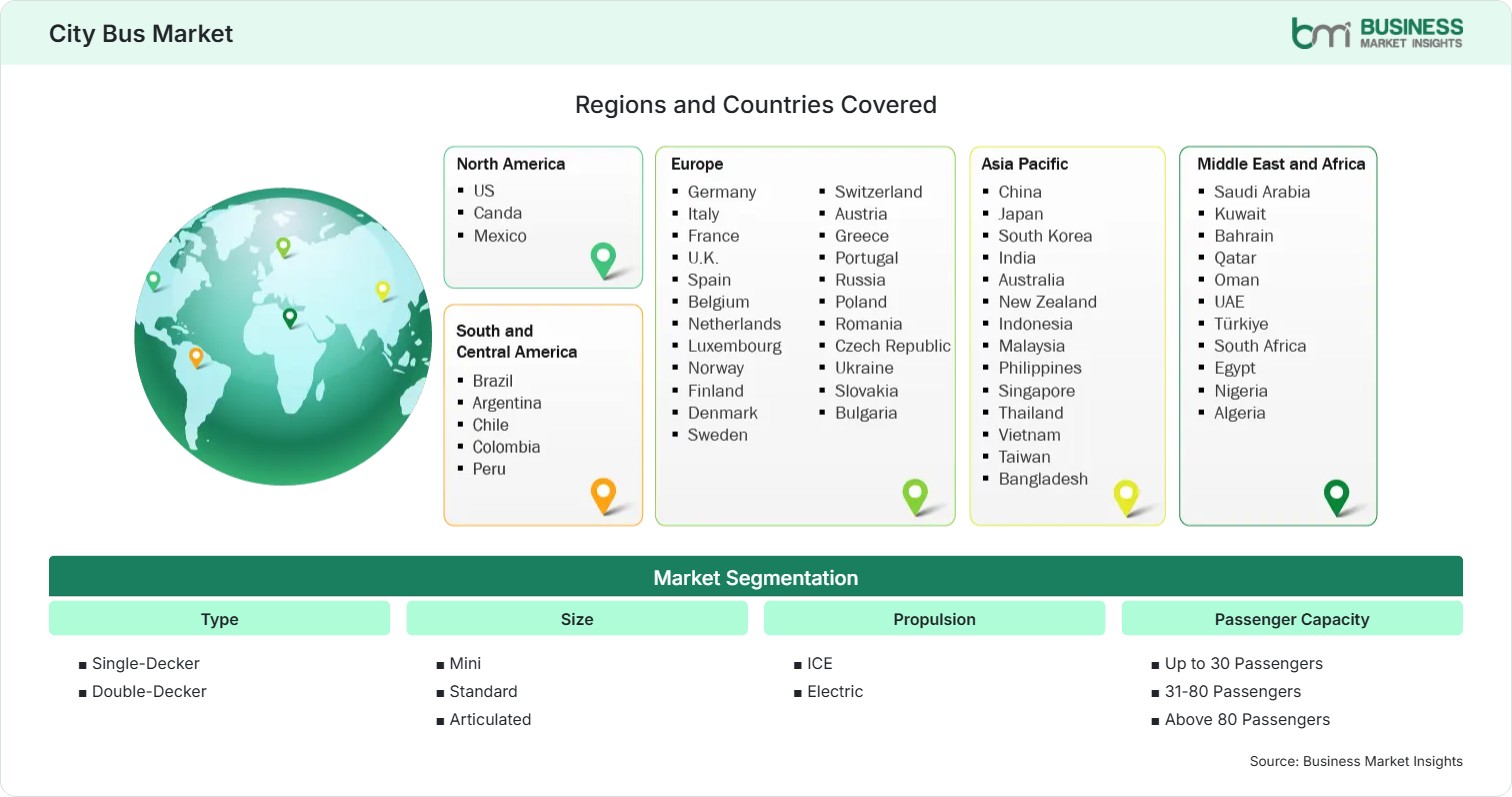
Europe accounted for a 26%–30% share in 2025 and is anticipated to expand at a 7%–9% CAGR during 2026–2033. The region remains a major market due to strict emission standards, established transit infrastructure, and strong sustainability commitments. Germany, France, the United Kingdom, and Nordic countries are leading electric bus adoption. The City Bus Market share in Europe is supported by government incentives, urban decarbonization strategies, and replacement of conventional fleets with cleaner alternatives.
- European cities are increasing electric bus deployment through climate-focused transportation policies and investments in sustainable urban mobility infrastructure.
- Germany is strengthening electric mobility adoption through advanced manufacturing capabilities and collaboration between automotive companies and transit operators.
- Nordic countries are leading zero-emission bus adoption due to strong environmental policies and renewable energy availability.
- France and the United Kingdom are expanding clean transportation programs, creating opportunities for electric bus suppliers and technology providers.
Asia Pacific City Bus Market
Asia Pacific represented a 38%–42% share in 2025 and is projected to achieve a 9%–11% CAGR during 2026–2033. The region is the fastest-growing market due to rapid urbanization, rising passenger demand, and government-backed transportation development programs. China, India, Japan, and Southeast Asian countries are expanding public transit networks and adopting electric mobility solutions. The City Bus Market growth in Asia Pacific is supported by smart city initiatives, infrastructure investments, and increasing focus on sustainable transportation.
- China continues to lead electric bus deployment due to large manufacturing capacity, government support, and extensive urban transportation networks.
- India is expanding city bus infrastructure through electric mobility programs and modernization initiatives across rapidly growing metropolitan regions.
- Japan and South Korea are developing advanced transportation solutions through connected mobility systems and energy-efficient vehicle technologies.
- Southeast Asian countries are investing in public transportation expansion to reduce congestion and improve urban connectivity.
- Regional manufacturers are increasing production capacity and forming partnerships to strengthen electric bus supply chains.
Rest of World City Bus Market
The Rest of World region accounted for an 8%–12% share in 2025 and is expected to grow at a 6%–8% CAGR during 2026–2033. South America, the Middle East, and Africa are improving transportation infrastructure through government initiatives and private investment. Brazil, Mexico, Gulf countries, and South Africa are emerging markets due to rising urban populations and mobility requirements. The City Bus Market share in these regions is supported by fleet modernization and sustainable transportation programs.
Latin American cities are upgrading public transport systems to improve connectivity and reduce congestion. Middle Eastern economies are incorporating smart mobility solutions into broader urban development strategies.
- Brazil and Mexico are investing in transportation modernization programs to improve public mobility and fleet efficiency.
- Gulf countries are adopting advanced urban transportation solutions as part of smart city development initiatives.
- African cities are expanding bus networks due to increasing urbanization and growing demand for affordable transportation.
- Public-private partnerships are supporting fleet upgrades and technology adoption across emerging transportation markets.
- Private operators are adopting digital fleet solutions to improve service quality and operational performance.