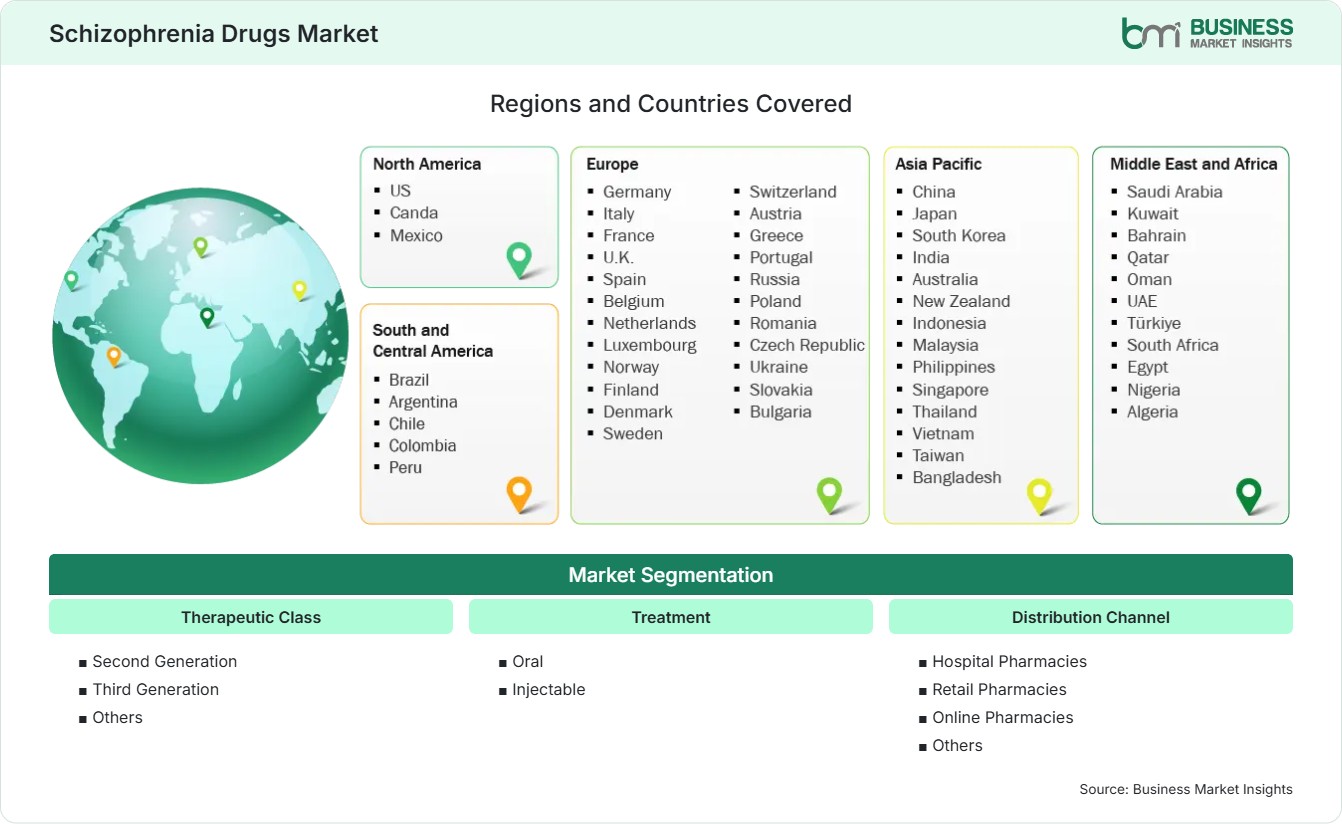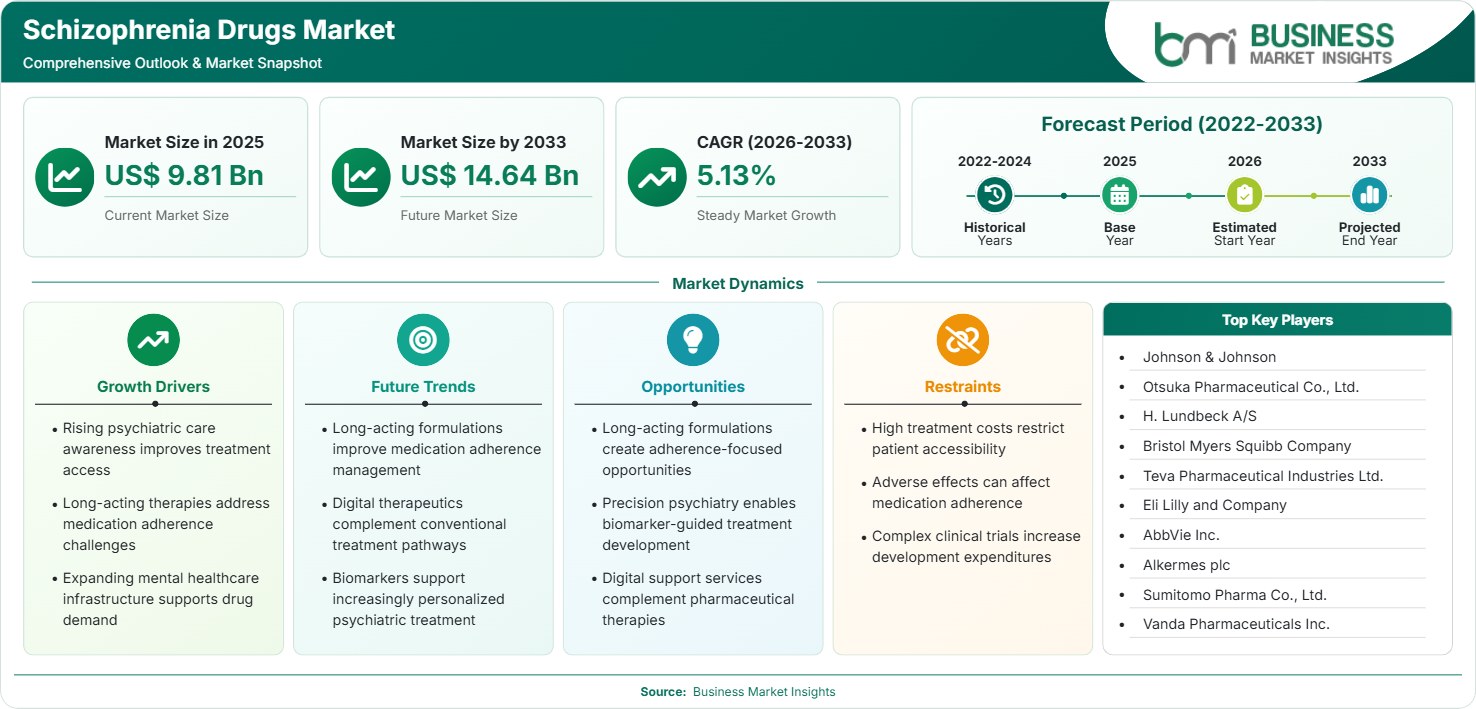
Schizophrenia Drugs Market Regional Highlights
North America Schizophrenia Drugs Market
North America Schizophrenia Drugs Market represented 35%–38% of the market in 2025 and is projected to expand at 4.5%–4.9% CAGR through 2033. The region benefits from specialist psychiatry, broad reimbursement, branded product penetration, established clinical research, and strong pharmaceutical commercialization. The United States accounts for most regional demand, while Canada provides a smaller but stable opportunity through publicly supported healthcare access and hospital-based psychiatric services.
- Mature reimbursement supports premium differentiated therapies, particularly products demonstrating adherence, tolerability, or administration advantages across chronic treatment pathways.
- Long-acting injectable adoption is supported by specialist infrastructure, outpatient psychiatric services, and growing recognition of treatment persistence as a clinical and economic priority.
- Pharmaceutical companies continue investing in mechanism diversification, reflecting dissatisfaction with limitations associated with conventional dopamine-centered treatment approaches.
- Regulatory and commercial capabilities make North America an important launch market for novel mechanisms and reformulated antipsychotic products.
US Schizophrenia Drugs Market
The US Schizophrenia Drugs Market represented approximately 84%–87% of North American demand in 2025, with CAGR estimated at 4.6%–5.0% through 2033. Its position reflects extensive specialist prescribing, higher pharmaceutical expenditure, established payer structures, and concentration of clinical development activity. Novel oral therapies and long-acting injectables can gain adoption when supported by differentiated clinical evidence, manageable safety profiles, and reimbursement strategies addressing the substantial costs associated with relapse and hospitalization.
- Commercial opportunities remain strongest where differentiated therapies demonstrate measurable adherence, tolerability, relapse, or administration benefits that can influence prescriber and payer decisions.
- Specialty pharmacy, hospital, and outpatient channels collectively support broad access, while patient assistance programs can influence uptake of higher-cost branded medicines.
- The regulatory environment continues to encourage novel mechanisms, as demonstrated by the approval of a first-in-class muscarinic approach for adult schizophrenia.
Europe Schizophrenia Drugs Market
Europe Schizophrenia Drugs Market held a 27%–30% share in 2025 and is forecast to grow at 4.8%–5.2% CAGR through 2033. Germany, France, Italy, the United Kingdom, and Spain represent leading markets, while Germany and the United Kingdom provide comparatively strong innovation and specialist-care environments. Poland and selected Central European markets offer higher growth potential as diagnosis, reimbursement, and access to modern antipsychotic therapies continue improving.
- Germany combines strong healthcare infrastructure with substantial pharmaceutical access, supporting continued use of established branded and generic antipsychotics.
- The United Kingdom benefits from centralized health-system decision-making, creating opportunities for products supported by compelling comparative effectiveness and health-economic evidence.
- France, Italy, and Spain remain important commercial markets, although reimbursement assessment and budget discipline can moderate premium-product penetration.
- Central and Eastern European markets provide higher incremental growth potential as specialist psychiatric capacity and medicine availability expand.
Asia Pacific Schizophrenia Drugs Market
Asia Pacific Schizophrenia Drugs Market held a 20%–23% share in 2025 and is forecast to achieve 6.2%–6.8% CAGR through 2033. China and Japan are leading markets by treatment infrastructure and pharmaceutical maturity, while India and Southeast Asia provide stronger growth opportunities. Rising healthcare expenditure, expanding urban services, broader medicine availability, and greater awareness of psychiatric disorders support sustained regional demand.
- China offers scale through a large treated population, expanding hospital capacity, domestic pharmaceutical manufacturing, and increasing availability of modern antipsychotic medicines.
- India provides high growth potential as specialist services, generic affordability, private healthcare investment, and urban psychiatric diagnosis expand across major population centers.
- Japan represents a mature market with strong physician infrastructure, established pharmaceutical distribution, and continued interest in adherence-enhancing treatment formats.
- South Korea and Southeast Asian markets offer selective growth as healthcare systems strengthen specialist capacity and improve access to chronic psychiatric treatment.
Rest of World Schizophrenia Drugs Market
Rest of World Schizophrenia Drugs Market comprises South and Central America, the Middle East, and Africa, where market development remains uneven. Brazil and Mexico lead Latin American demand, while Saudi Arabia, the United Arab Emirates, and South Africa provide stronger commercial infrastructure. Growth is supported by expanding private healthcare, hospital procurement, specialist networks, and increasing awareness, although affordability remains a central adoption determinant.
Latin America benefits from broader generic availability and expanding private-sector psychiatric services, while Gulf countries are strengthening specialist healthcare infrastructure. South Africa serves as an important sub-Saharan market because of its comparatively developed pharmaceutical distribution and clinical ecosystem, although access remains uneven across lower-income populations.
- Brazil provides the strongest regional commercial base, supported by population scale, established hospital networks, and expanding access to psychiatric medicines.
- Mexico offers incremental growth through private healthcare, specialist services, and improving medicine availability across metropolitan areas.
- Saudi Arabia and the United Arab Emirates benefit from healthcare modernization, specialist investment, and increasing demand for advanced pharmaceutical treatments.
- South Africa remains a strategic gateway for selected African markets, supported by comparatively developed distribution and healthcare infrastructure.