
Cardiovascular Drugs Market Outlook: Size, Share, Trends, Growth Analysis, Competitive Landscape & Forecast, 2026-2033

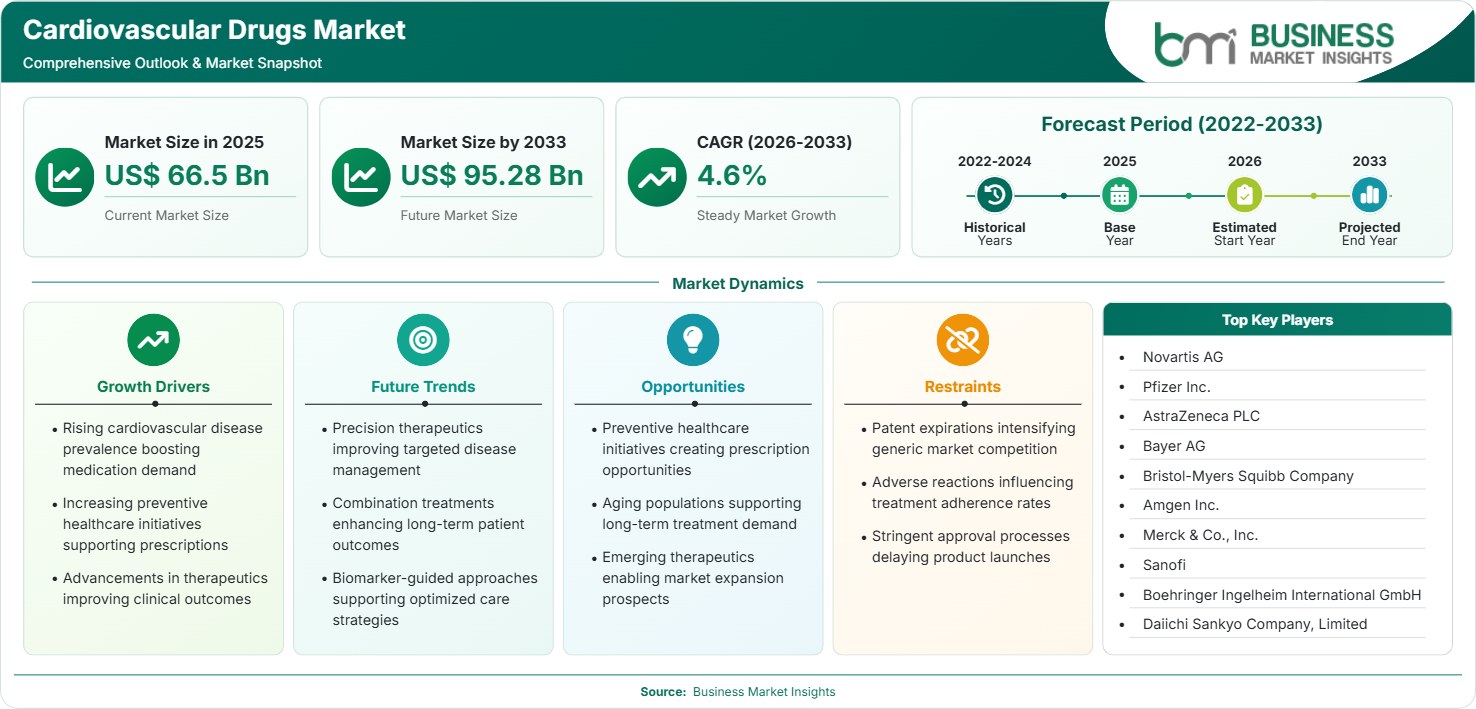
The Cardiovascular Drugs Market size was valued at US$ 66.5 Billion in 2025 and is projected to reach US$ 95.28 Billion by 2033, growing at a CAGR of 4.60% during 2026–2033, driven by hypertension, dyslipidemia, aging populations, improved diagnosis, and innovative therapies.

Report Coverage
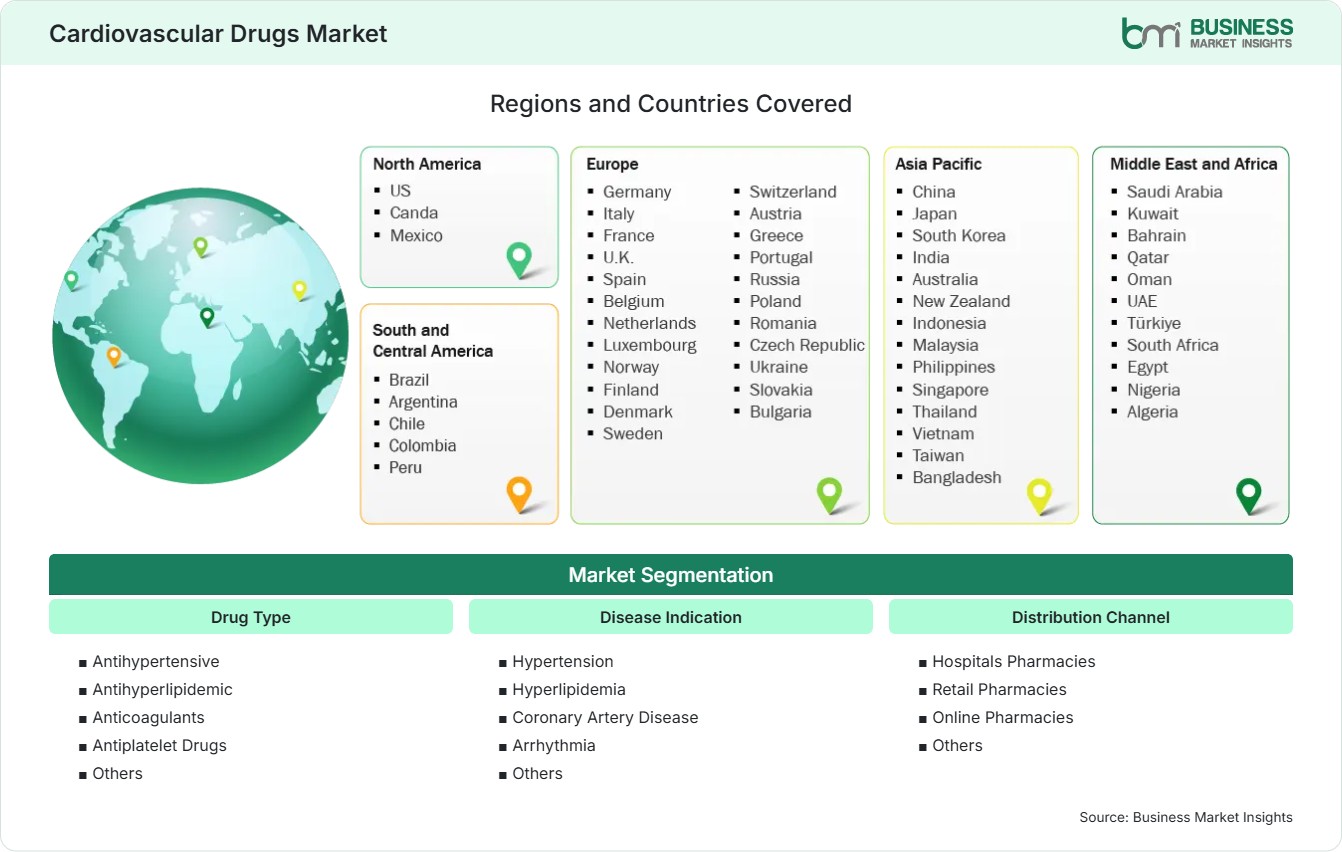
  • Drug Type: Antihypertensive, Antihyperlipidemic, Anticoagulants, Antiplatelet Drugs, Others
  • Disease Indication: Hypertension, Hyperlipidemia, Coronary Artery Disease, Arrhythmia, Others
  • Distribution Channel: Hospitals Pharmacies, Retail Pharmacies, Online Pharmacies, Others
US$ 66.5 Bn Market size in 2025
US$ 95.28 Bn Market Size by 2033
4.6% CAGR, 2026 - 2033
2026-2033 Forecast Period

AI Overview

Cardiovascular Drugs Market Summary

  • North America Region: holds a 34%–37% Cardiovascular Drugs Market share in 2025, growing at a 4.2%–4.7% CAGR, influenced by cardiovascular screening, prescription adherence, lipid management, innovative therapies, insurance coverage, and expanding specialty-care access. The US market advances at a 4.0%–4.5% CAGR, supported by hypertension treatment, lipid lowering, anticoagulation, and cardiovascular risk reduction.
  • Fastest Growing Region: Asia Pacific holds a 23%–27% share in 2025, expanding at a 5.4%–6.0% CAGR, supported by urbanization, aging, rising diagnosis, expanding healthcare infrastructure, generic medicine access, digital health, and stronger cardiovascular screening.
  • Leading Segment: Antihypertensive drugs hold a 29%–32% share in 2025, advancing at a 4.4%–4.9% CAGR, supported by widespread hypertension prevalence, combination therapies, improved diagnosis, chronic treatment requirements, and expanding access across emerging healthcare systems.
  • High Growth Segment: Anticoagulants hold a 14%–17% Cardiovascular Drugs Market share in 2025, expanding at a 5.2%–5.8% CAGR, supported by atrial fibrillation, venous thromboembolism management, broader prevention strategies, oral therapies, clinical evidence, and treatment adoption.
  • Key Market Opportunity: Cardiovascular prevention is shifting toward earlier intervention, personalized risk stratification, longer-acting therapies, oral biologic approaches, combination products, and broader access across emerging markets with substantial untreated patient populations.
  • Major Market Players: Novartis AG; Pfizer Inc.; AstraZeneca PLC; Bayer AG; Bristol-Myers Squibb Company; Amgen Inc.; Merck & Co., Inc.; Sanofi; Boehringer Ingelheim International GmbH; Daiichi Sankyo Company, Limited.
Strategic Insights

Cardiovascular Drugs Market: Strategic Insights

Cardiovascular Drugs Market Strategic Framework
FREE PDF
Request your free sample
Request free sample
Stakeholder View

Key Takeaways

  • The supply chain is increasingly organized around integrated pharmaceutical ecosystems linking active pharmaceutical ingredient suppliers, formulation manufacturers, clinical developers, specialty distributors, hospitals, retail pharmacies, and digital channels. Control over manufacturing quality, regulatory compliance, and reliable cold-chain or controlled distribution can influence commercial resilience.
  • The strongest upside is concentrated in chronic conditions requiring lifelong pharmacological management. Hypertension remains the largest treatment pool, while anticoagulation and advanced lipid lowering offer opportunities for differentiated therapies addressing adherence, residual risk, treatment intensity, and patients inadequately controlled by conventional medicines.
  • Innovation is increasingly focused on convenience and precision. Oral PCSK9 inhibition represents a notable formulation shift, while longer-acting injectable therapies, RNA-based approaches, combination regimens, and biomarker-guided treatment are broadening cardiovascular pharmaceutical development.
  • Asia Pacific provides a compelling expansion case because large populations coexist with improving diagnosis, healthcare expenditure, and pharmaceutical accessibility. India, China, Japan, and South Korea offer distinct opportunities spanning branded medicines, generics, specialty therapies, and hospital-led cardiovascular care.
  • Investment is increasingly directed toward differentiated cardiovascular platforms and adjacent technologies. Johnson & Johnson's acquisition of Shockwave Medical for approximately US$13.1 billion demonstrates strategic interest in higher-growth cardiovascular intervention capabilities.
  • Market participants should prioritize lifecycle management, indication expansion, adherence-enhancing formulations, evidence generation, and regional commercialization partnerships rather than relying solely on volume expansion in mature therapeutic categories.
Geographic Outlook

Cardiovascular Drugs Market Regional Highlights

North America Cardiovascular Drugs Market

North America will account for 34%-37% of the market in 2025 and will experience a CAGR of 4.2%-4.7% from 2026 to 2033. This region is blessed with features like reimbursement facilities, cardiovascular care, clinical pathway, and diagnosis. The US will be the leader in this region, while Canada will contribute to this region because of universal healthcare and an aging population. Some of the factors responsible for this regional share in the Cardiovascular Drugs Market include prescriptions, lipid management, anticoagulation, and differentiated treatment.

  • Expanding preventive cardiology is increasing demand for antihypertensive and lipid-lowering medicines as clinicians intervene earlier in cardiovascular risk trajectories.
  • Specialty therapies are gaining relevance as pharmaceutical companies target resistant hypertension, familial hypercholesterolemia, atrial fibrillation, heart failure, and residual cardiovascular risk.
  • Reimbursement remains a major commercial determinant, with formulary placement, evidence of cardiovascular outcomes, and total treatment value influencing uptake of premium therapies.
  • Generic competition maintains pricing pressure across mature molecules while creating headroom for differentiated products with stronger efficacy, convenience, or adherence profiles.

US Cardiovascular Drugs Market

The US accounts for roughly 68%-72% of demand in North America and is expected to grow at a CAGR of 4.0%-4.5% through 2033. It has a mixed market comprising both extensive general practitioner prescriptions and specialist cardiology and hospital-based treatments. It benefits from hypertension and dyslipidemia screening, an efficient reimbursement system, research, and regulation in addition to innovative products such as the first oral PCSK9 inhibitor approved by the FDA in 2026.

  • Oral PCSK9 inhibition can broaden lipid-management options for patients requiring additional LDL-C reduction after conventional treatment, potentially improving convenience and treatment persistence.
  • Anticoagulants remain strategically important because atrial fibrillation and thromboembolic disease generate recurring demand across outpatient and hospital settings.
  • Generic entry continues to reshape mature categories, as illustrated by the FDA's 2025 approval of the first generic rivaroxaban tablets for selected cardiovascular risk-reduction indications.

Europe Cardiovascular Drugs Market

Europe accounts for 25%-28% of the market in 2025 and is expected to grow at a CAGR of 4.0%-4.5% in the Cardiovascular Drugs Market until 2033. The countries that will be responsible for driving the market include Germany, UK, France, Italy, and Spain. Poland, along with other Central European countries, offers better growth prospects. Europe possesses well-developed pharmaceutical infrastructures, combined with stringent health technology assessment, which ensures a high demand for drugs with cardiovascular efficacy and economic value.

  • Germany and France remain major pharmaceutical markets, supported by specialist care capacity, aging populations, and broad cardiovascular disease treatment infrastructure.
  • The United Kingdom provides opportunities for evidence-led cardiovascular therapies as national prevention strategies emphasize earlier diagnosis, risk reduction, and long-term disease management.
  • Spain and Italy offer sustained demand from aging populations, hypertension treatment, lipid management, and increasing emphasis on outpatient chronic-care pathways.
  • Central and Eastern European markets can deliver faster volume growth as diagnostic capacity, healthcare spending, and access to modern medicines improve.

Asia Pacific Cardiovascular Drugs Market

Asia Pacific holds a share of 23%-27% in 2025 and is the fastest growing regional market with a CAGR of 5.4%-6.0% until 2033. Countries like China, Japan, India, South Korea, and Australia account for major consumption areas. In India and China, there are greater prospects for growth in volume, while in Japan, the market is relatively mature for innovation. The growth in this region is due to certain parameters like urbanization, an aging population, lifestyle risk factors, high rates of diagnosis, insurance, manufacturing, and generic drugs.

  • China combines substantial patient volume with expanding hospital capacity and domestic pharmaceutical manufacturing, supporting both branded innovative therapies and cost-sensitive medicines.
  • India offers high-volume opportunities as hypertension awareness, diagnostics, insurance penetration, and access to affordable cardiovascular medicines continue improving across urban and secondary cities.
  • Japan's aging population supports persistent demand for antihypertensive, anticoagulant, antiplatelet, and lipid-lowering therapies alongside advanced clinical research.
  • South Korea and Australia provide attractive specialty-drug markets where reimbursement systems, clinical evidence, and high treatment standards support differentiated cardiovascular products.

Rest of World Cardiovascular Drugs Market

Rest of World accounts for a 12%–15% market share in 2025 and is expected to register a CAGR of 4.7%–5.3% during 2023–2033 in the Cardiovascular Drugs Market. South and Central America have benefited from rising investment in private health care and pharmacies, and countries such as Brazil and Mexico continue to be significant generators of demand. The Middle East markets find support in health care modernization; among these, Saudi Arabia and UAE are better positioned for growth.

  • Brazil and Mexico provide scale through established pharmaceutical distribution networks, increasing chronic-disease management, and expanding private healthcare expenditure.
  • Saudi Arabia and the United Arab Emirates are strengthening specialist cardiovascular services through healthcare modernization, supporting premium therapies and hospital-based treatment.
  • South Africa remains a key African pharmaceutical market, although affordability and healthcare-access differences influence treatment penetration across population groups.
  • Latin American and Middle Eastern distributors increasingly provide opportunities for manufacturers seeking regional partnerships, localized commercialization, and broader pharmacy reach.
Global Market Geography
FREE PDF
Request your free sample
Request free sample
Segment Analysis

Cardiovascular Drugs Market Segmentation

Drug Type

The Drug Type continues to be a crucial determinant of market structure, with antihypertensive drugs currently the largest drug category, accounting for 29%–32% by 2025 and a CAGR of 4.4%–4.9%. There is an increasing trend in the Cardiovascular Drugs Market for combination therapy, novel mechanisms, compliance formulation, and residual cardiovascular risk.

  • Antihypertensive: Remains the largest drug class because hypertension requires long-term management, combination regimens, repeated prescriptions, and broad primary-care adoption across developed and emerging markets.
  • Antihyperlipidemic: Gains importance as clinicians pursue lower LDL-C targets and address residual atherosclerotic risk through statins, PCSK9 approaches, combination therapy, and newer mechanisms.
  • Anticoagulants: Demand is supported by atrial fibrillation and thromboembolic disease, while oral administration and expanded prevention strategies strengthen adoption across outpatient care.
  • Antiplatelet Drugs: Maintain strong utilization in coronary artery disease management, particularly around acute coronary syndromes and post-interventional treatment where platelet inhibition remains clinically important.

Disease Indication

Disease Indication is diverse in cases of chronic cardiovascular diseases, where hypertension is the largest disease indication due to the widespread occurrence and pharmaceutical needs. The disease indication has grown due to increased screening and early diagnosis, improved guideline adherence, and greater awareness of cardiovascular risk reduction. According to the WHO, there were 1.4 billion adults aged 30 to 79 years who suffered from hypertension in 2024.

  • Hypertension: Represents the broadest treatment population, supported by routine blood-pressure screening, combination therapy, generic availability, and lifelong medication requirements.
  • Hyperlipidemia: Expansion is driven by intensified LDL-C management, familial hypercholesterolemia diagnosis, preventive cardiology, and emerging oral and injectable lipid-lowering approaches.
  • Coronary Artery Disease: Demand remains tied to secondary prevention, lipid control, antiplatelet therapy, anticoagulation, and management of recurrent cardiovascular events.
  • Arrhythmia: Growth reflects increasing atrial fibrillation recognition, anticoagulation requirements, rhythm management, and aging-related cardiovascular risk.

Distribution Channel

Distribution Channel affects the availability, adherence, and economics of products in the Cardiovascular Drugs Market space. Hospitals are critical in delivering acute and specialty drugs, while retail pharmacies have been critical in delivering chronic, recurring prescriptions. The online distribution channel is becoming increasingly relevant as more prescriptions are done through home deliveries and telemedicine.

  • Hospital Pharmacies: Serve acute-care, specialist, and inpatient demand, particularly for complex cardiovascular conditions requiring monitored treatment and hospital-based prescribing.
  • Retail Pharmacies: Remain the principal channel for chronic prescriptions because antihypertensive, lipid-lowering, antiplatelet, and anticoagulant medicines require recurring refills.
  • Online Pharmacies: Expand convenience through home delivery, digital ordering, automated refills, and broader access to chronic medicines for patients managing long-term conditions.
Market Forces

Cardiovascular Drugs Market Dynamics

Key Market Drivers

Rising Global Cardiovascular Disease Burden

Cardiovascular diseases continue to be the world's number one killer, with approximately 19.8 million people dying from these diseases according to the WHO in 2022. These conditions support a long-term demand for medicines, since conditions such as hypertension, dyslipidemia, coronary artery disease, and arrhythmia need treatment. There were approximately 1.4 billion cases of adult hypertension among adults aged 30-79 years in 2024. However, less than 23% of these individuals had their blood pressure under control. This means there is huge potential in diagnosing, initiating treatments, up-titrating therapies, and using combination therapies. The Cardiovascular Drugs Market growth stems from demographic changes and conversion of non-managed patients to managed ones.

Expansion of Preventive and Risk-Reduction Therapy

There is an increasing trend towards prevention of cardiovascular episodes rather than treatment after serious disease onset. The use of lower LDL-C targets, widespread hypertension testing, anticoagulants for eligible patients with atrial fibrillation, and increased focus on secondary prevention is leading to more use of drugs. Enlicitide approval by the FDA in 2026 is a concrete illustration of an innovative solution for people who need further lowering of LDL-C levels. In two clinical trials conducted in 3,207 adults, the drug led to placebo-corrected decreases in LDL-C of 56% and 59% at week 24.

Shift Toward Differentiated and Convenient Therapies

The issues of convenience, adherence, and mechanism-specific medications are becoming increasingly competitive. Extended duration of action for lipid-lowering medications, an oral version of the injectable therapy, fixed-dose combinations, and cardiovascular-targeted drugs could help overcome obstacles to medication adherence. Novartis states that “Clinical trials experience of the cardiovascular research program includes more than 60,000 patients in over 30 clinical trials performed in more than 50 countries,” which speaks to the volume of data collected for future generations of cardiovascular drugs. It corresponds to the Cardiovascular Drugs Market trends toward personal risk management, biomarker-based treatments, and therapies that simplify treatment without loss of efficiency.

Key Market Opportunities

Oral and Longer-Acting Lipid Management

The combination of high prevalence of dyslipidemia and unaddressed gaps in treatment represents an opportunity to develop convenient oral treatments and longer acting agents. Merck's approval of LIPFENDRA in 2026 for FDA approval demonstrates the commercial viability of oral PCSK9 inhibitors. The treatment can be utilized for adults who have been diagnosed with hypercholesterolemia, including heterozygous familial hypercholesterolemia, offering a new alternative to a known mechanism of treatment. The development of combination therapies and novel lipid-lowering mechanisms may further increase the number of people inadequately treated with statins. This represents promising opportunities for Cardiovascular Drugs Market Forecasts firms.

Emerging-Market Cardiovascular Treatment Access

The emerging markets present an addressable population opportunity, as diagnosis and treatment still have room to grow compared with more advanced healthcare systems. According to the World Health Organization, two-thirds of the hypertensive population aged 30-79 lives in low and middle-income countries. This type of approach, which incorporates affordable generics, branded generics, regional manufacturing, pharmacy networks, and digital compliance programs, may allow for better access while providing sustainable volume growth. Pharmaceuticals may leverage regional alliances to develop more efficient distribution beyond large urban areas.

Cardiometabolic Disease Convergence

The connection between cardiovascular disease, chronic kidney disease, diabetes, obesity, and metabolic disease is creating new avenues of therapy. More drug companies are seeking mechanisms to address multiple risk factors, while regulators are considering data on the connections between diseases. The example of such an approach is the finerenone program of Bayer, which received approval in the USA to treat heart failure with LVEF greater than 40%, following its previous use in diabetic kidney disease. Indication extension increases the duration, population, and robustness of therapy if there is sufficient clinical benefit across associated cardiovascular and metabolic diseases.

Market Restraints and Challenges

Pricing Pressure and Generic Competition

Factor: Patent expiration, generic launches, payers' bargaining power, and competitive pricing driven by procurement may lead to revenue compression across existing classes of cardiovascular drugs. Impact: drug makers may experience falling average selling prices despite stable or rising prescriptions. This situation is especially applicable to mature antihypertensive, antiplatelet, and anticoagulant medicines with various substitutes. The presence of generics may broaden patients' access to treatments; however, the lack of differentiation will push branded drug manufacturers to develop new formulations, combinations, indications, evidence, and lifecycle strategies. The FDA's approval of generic rivaroxaban illustrates how regulatory measures can increase competitive pressure in mature cardiovascular markets.

Adherence, Safety, and Complex Treatment Pathways

Factor: Cardiovascular drugs are commonly prescribed on a chronic basis, but polypharmacy, concerns over adverse events, complex dosing regimens, and asymptomatic illness may affect persistence. Impact: Failure to adhere completely to medication therapy will impair the effectiveness of treatment and weaken demand for pharmaceuticals despite an existing clinical need. Hypertension represents the issue, as per the World Health Organization estimates for 2024, 44% of those with hypertension were undiagnosed, and only 23% of those with hypertension had it under control. Thus, manufacturers will need products and services that simplify dosing and increase persistence.

Company Analysis

Competitive Landscape

The Cardiovascular Drugs Market analysis indicates a diversified competitive structure spanning large pharmaceutical companies with broad portfolios and specialists focused on lipid management, anticoagulation, hypertension, heart failure, and cardiometabolic diseases.

Company Name

Overview

Products and Services relevant to this market

Novartis AG

Global pharmaceutical company with a major cardiovascular, renal, and metabolic development platform and established innovative medicine capabilities.

Leqvio, cardiovascular pipeline programs, lipid-lowering therapies, hypertension and heart-failure research, clinical development and lifecycle management.

Pfizer Inc.

Global pharmaceutical company with extensive cardiovascular and thrombosis capabilities supported by large-scale commercial infrastructure.

Eliquis and related cardiovascular medicines, thrombosis management, clinical research, regulatory development, and global commercialization.

AstraZeneca PLC

Research-driven pharmaceutical company with substantial cardiovascular, renal, and metabolic capabilities and broad international reach.

Farxiga, cardiovascular and renal medicines, hypertension pipeline assets, heart-failure research, and cardiometabolic development.

Bayer AG

Diversified healthcare company with established cardiovascular and anticoagulation franchises and extensive clinical development capabilities.

Xarelto, Kerendia, cardiovascular risk-management therapies, anticoagulation, heart-failure research, and clinical evidence generation.

Bristol-Myers Squibb Company

Innovative biopharmaceutical company with established cardiovascular and thrombosis franchises and specialty cardiovascular development.

Eliquis, Camzyos, cardiovascular clinical programs, anticoagulation, hypertrophic cardiomyopathy treatment, and evidence development.

Amgen Inc.

Biotechnology company with a strong cardiovascular franchise centered on lipid management and cardiovascular risk reduction.

Repatha, cholesterol management, cardiovascular outcomes research, specialty biologics, and commercialization capabilities.

Merck & Co., Inc.

Global pharmaceutical company expanding cardiovascular exposure through innovative lipid-management technology and cardiometabolic research.

LIPFENDRA, oral PCSK9 inhibition, lipid-lowering research, combination development, and cardiometabolic clinical programs.

Sanofi

Global healthcare company with cardiovascular products and broad capabilities across chronic disease treatment and commercialization.

Praluent, cardiovascular risk reduction, lipid management, specialty medicines, and international commercial infrastructure.

Boehringer Ingelheim International GmbH

Privately held pharmaceutical company with significant cardiovascular, renal, and metabolic research and commercial capabilities.

Jardiance, heart-failure and cardiometabolic therapies, clinical development, disease management, and international commercialization.

Daiichi Sankyo Company, Limited

Japanese pharmaceutical company with major cardiovascular and anticoagulation expertise and global commercial partnerships.

Lixiana/Savaysa, anticoagulation, cardiovascular research, clinical development, and specialty cardiovascular commercialization.

Trust & Transparency

Research Methodology

The market analysis combines proprietary research with secondary data from government agencies, company disclosures, regulatory filings, industry databases and expert interviews. Market estimates are validated through data triangulation, cross-market benchmarking and analyst review.

View Full Research Methodology

Questions Answered

Frequently Asked Questions

Why is Asia Pacific becoming increasingly important for cardiovascular pharmaceuticals?

Asia Pacific combines large patient populations with improving diagnosis, healthcare infrastructure, pharmaceutical access, and chronic-disease management. China and India offer especially strong volume opportunities, while Japan and South Korea provide mature specialty-treatment environments.

What should investors examine in a Cardiovascular Drugs Market report?

Investors should assess therapeutic differentiation, patent exposure, clinical-outcome evidence, reimbursement, generic competition, pipeline maturity, geographic access, and opportunities to expand indications across interconnected cardiovascular and metabolic diseases.

How is oral lipid management changing cardiovascular treatment?

The 2026 U.S. approval of oral enlicitide provides a new PCSK9 inhibition option beyond injectable therapies. Its development demonstrates continued industry interest in improving convenience while achieving substantial LDL-C reduction.

Which therapeutic category provides the strongest volume opportunity?

Antihypertensive medicines provide the broadest volume opportunity because hypertension affects a very large global population and requires continuous pharmacological management. Combination treatment and improved diagnosis can further expand prescription demand.

What factors are shaping cardiovascular drug demand through 2033?

Persistent hypertension, dyslipidemia, aging populations, cardiovascular screening, anticoagulation requirements, and treatment intensification are supporting pharmaceutical demand. Innovation in lipid management, heart failure, and targeted therapies is adding new growth opportunities.

Access the Full Cardiovascular Drugs Market Report

Get segment-level forecasts, regional estimates, competitive benchmarking, company profiles and downloadable Excel datasets.

Access the full Cardiovascular Drugs Market Report
350 pages PDF & Excel | 2026-09-18
Similar Research

Related Market Reports