
Genitourinary Drugs Market Outlook: Size, Share, Trends, Growth Analysis, Competitive Landscape & Forecast, 2026-2033

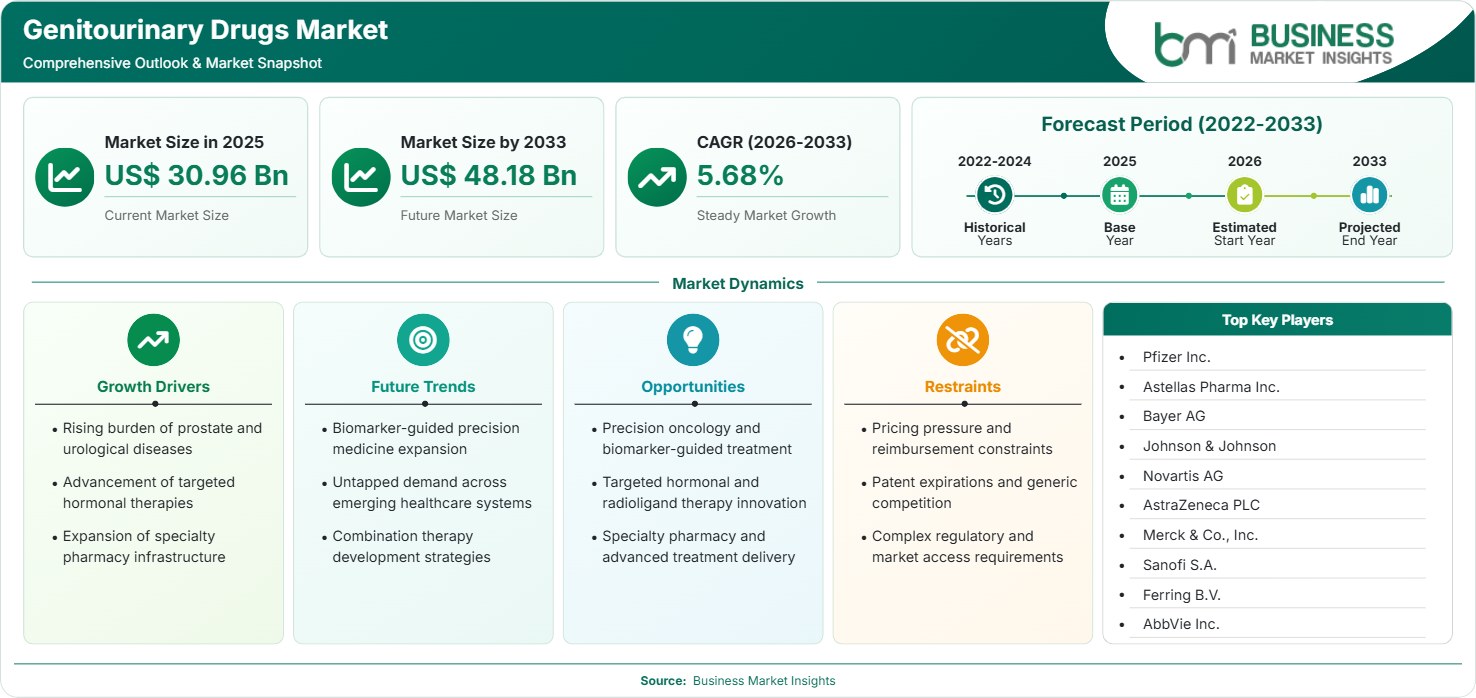
The Genitourinary Drugs Market size was valued at US$ 30.96 Billion in 2025 and is projected to reach US$ 48.18 Billion by 2033, growing at a CAGR of 5.68% during 2026–2033, supported by rising prostate cancer prevalence, aging populations, expanding urology care access, targeted therapy adoption, and investments in precision medicine and specialty drug development.

Report Coverage
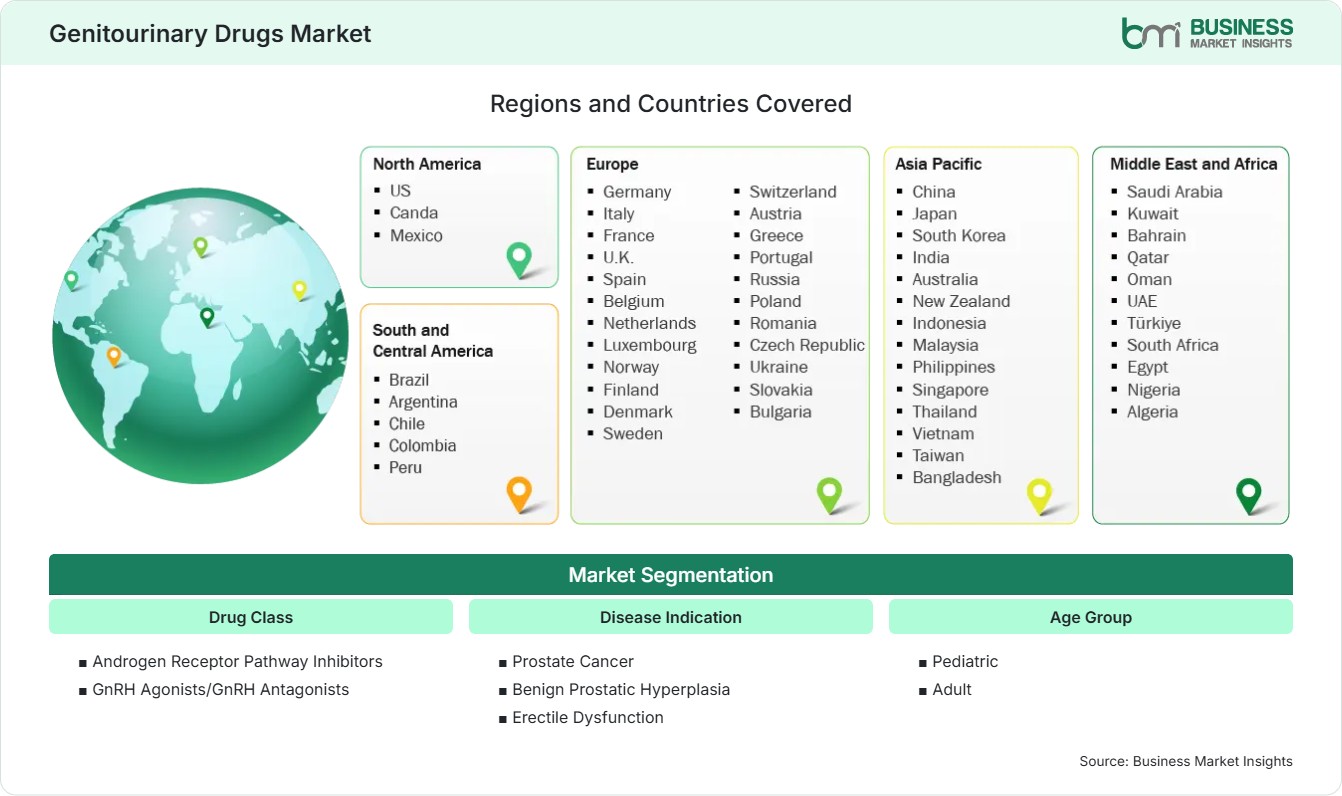
  • Drug Class: Androgen Receptor Pathway Inhibitors, GnRH Agonists/GnRH Antagonists
  • Disease Indication: Prostate Cancer, Benign Prostatic Hyperplasia, Erectile Dysfunction
  • Age Group: Pediatric, Adult
US$ 30.96 Bn Market size in 2025
US$ 48.18 Bn Market Size by 2033
5.68% CAGR, 2026 - 2033
2026-2033 Forecast Period

AI Overview

Genitourinary Drugs Market Summary

  • North America Region: North America holds a market share of 38%–41% in 2025, growing at a CAGR of 5.0%–5.4% during 2026–2033. Growth is driven by advanced oncology treatment pathways, favorable reimbursement, strong specialty pharmacy networks, increasing prostate cancer diagnoses, and broader uptake of novel androgen receptor therapies across major healthcare systems. The U.S. remains the largest contributor, supported by strong oncology spending and a CAGR of 5.1%–5.5%.
  • Fastest Growing Region: Asia Pacific accounts for 24%–27% of market share in 2025, advancing at 6.7%–7.2% CAGR during 2026–2033. Expansion reflects improving healthcare infrastructure, larger patient pools, increasing cancer screening programs, generic drug penetration, strategic investments, and wider access to urology and reproductive health therapies.
  • Leading Segment: Prostate Cancer represents 34%–38% share in 2025 and expands at 5.9%–6.3% CAGR during 2026–2033. Rising disease incidence, earlier diagnosis, greater awareness, adoption of hormonal therapies, and innovation in androgen receptor pathway inhibitors continue to strengthen segment leadership.
  • High Growth Segment: Androgen Receptor Pathway Inhibitors account for 28%–32% share in 2025 and grow at 7.0%–7.6% CAGR during 2026–2033. Clinical efficacy, prolonged treatment duration, expanding indications, improved patient outcomes, and continuous oncology pipeline advancements reinforce rapid adoption worldwide.
  • Key Market Opportunity: Precision oncology integration across genitourinary disorders creates opportunities for biomarker-guided therapies, combination regimens, digital monitoring solutions, expanded emerging-market access, and differentiated specialty pharmaceutical portfolios with improved outcomes.
  • Major Market Players: Pfizer Inc., Astellas Pharma Inc., Bayer AG, Johnson & Johnson, Novartis AG, AstraZeneca PLC, Merck & Co., Inc., Sanofi S.A., Ferring B.V., AbbVie Inc.
Strategic Insights

Genitourinary Drugs Market: Strategic Insights

Genitourinary Drugs Market Strategic Framework
FREE PDF
Request your free sample
Request free sample
Stakeholder View

Key Takeaways

  • The value chain in the industry is increasingly focused on specialty pharmacies, oncology clinics, hospital procurement networks, and sophisticated distribution systems capable of handling high-value therapies.
  • The commercial potential of therapies for prostate cancer and of inhibitors of the androgen receptor is the greatest because of the increasing eligibility for treatment and the length of time that treatment can be continued.
  • Innovation in products is now focusing on precision medicine, on selecting treatments based on biomarkers, on the use of radioligand therapies, and on combination regimes which are designed to overcome treatment resistance.
  • The Asia Pacific region presents the most attractive opportunity due to increasing access to healthcare, a growing middle class, and rising rates of urological disease diagnosis.
  • Strategic licensing deals, the acquisition of oncology businesses, and joint development partnerships are still altering the competitive landscape as the various companies look to expand their markets and develop differentiated pipelines.
  • Generic penetration remains important in mature therapeutic categories, creating opportunities for cost-effective access to treatment while supporting healthcare sustainability objectives.
Geographic Outlook

Genitourinary Drugs Market Regional Highlights

North America Genitourinary Drugs Market

North America accounts for 38%–41% of revenue in 2025 and is projected to advance at a 5.0%–5.4% CAGR through 2033. The region benefits from advanced cancer screening, strong reimbursement systems, widespread adoption of innovative hormonal therapies, and well-established specialty pharmacy networks. The Genitourinary Drugs Market share remains highest here due to significant healthcare expenditure and extensive clinical research activity. Continued adoption of precision oncology and radiopharmaceutical therapies strengthens commercial potential across oncology-focused genitourinary treatments.

  • The widespread availability of specialist oncology centres contributes to the adoption of high-end therapies and leads to better adherence to treatment among patients with prostate cancer.
  • The regulatory processes are now encouraging the approval of new drugs and the expansion of their labels, which in turn is stimulating investment in cutting-edge treatments for urology and oncology.
  • Strong reimbursement systems reduce the obstacles faced by patients and help to ensure wider access to branded therapeutic products.
  • The number of older people is still rising, which is increasing the demand for treatment in the areas of cancer and benign urological conditions.

US Genitourinary Drugs Market

The United States contributes 78%–82% of North American Genitourinary Drugs Market revenue and grows at 5.1%–5.5% CAGR through 2033. Market growth is driven by substantial oncology expenditure, quick uptake of innovative drugs, and intensive clinical trials. The increasing trend in the use of androgen receptor pathway inhibitors and radioligand therapies reflects better patient care. Health systems are increasingly focusing on personalized medicine, pharmacological advancement, and early intervention methods for genitourinary diseases.

  • Strong involvement in global clinical research programs speeds up bringing new treatments to market.
  • Reimbursement systems that focus on oncology promote the use of high-value therapies.
  • Substantial investments in healthcare infrastructure help achieve long-term growth across various therapeutic specialties.
  • As greater awareness of diseases develops, so does the rate at which they are diagnosed and treatment is started.

Europe Genitourinary Drugs Market

Europe captures 28%–31% share in 2025 and expands at a 5.2%–5.7% CAGR. Germany leads regional demand, while Spain shows one of the highest growth rates, nearing the top end of the CAGR spectrum. Public healthcare systems ensure that there is access to treatments, though prices have a strong impact. There are ongoing investments by pharmaceutical companies in oncology pipeline development and real-world data collection. An aging population and improved screening programs ensure steady prescriptions.

  • Germany is still the biggest market in the region as a result of its well-developed healthcare infrastructure and the wide extent of oncology treatment.
  • In Spain and in a number of Central European countries there is a rapid adoption of innovative therapies.
  • Health technology assessments are becoming more important when shaping strategies for market access and determining reimbursement outcomes.
  • The greater the adoption of precision medicine, the more efficient the treatment becomes and the better patients can be classified.

Asia Pacific Genitourinary Drugs Market

Asia Pacific represents 24%–27% share in 2025 and records the fastest growth at 6.7%–7.2% CAGR. China leads regional revenue generation, while India exhibits high growth supported by healthcare expansion and pharmaceutical manufacturing strength. Increasing awareness, improving diagnostic capabilities, and broader insurance coverage strengthen demand. Rising investments in cancer care infrastructure and domestic drug production enhance treatment accessibility. Regional governments continue prioritizing oncology and chronic disease management as healthcare modernization accelerates.

  • China benefits from extensive healthcare investments and rising specialty drug adoption.
  • India is showing strong momentum as a result of its generic manufacturing and healthcare accessibility initiatives.
  • The growing size of urban populations leads to higher levels of treatment use and more diagnostic activity.
  • Local pharmaceutical companies improve the resilience and affordability of the supply.
  • Digital healthcare projects enhance patient involvement and the monitoring of diseases.

Rest of World Genitourinary Drugs Market

Rest of World accounts for 8%–11% share and progresses at a 5.6%–6.1% CAGR. South & Central America are supported by improving access to specialty healthcare services and rising oncology awareness. Middle East and Africa markets benefit from healthcare modernization and increasing investment in advanced medical facilities. The Genitourinary Drugs Market growth outlook remains positive as public and private healthcare spending expands.

  • Brazil remains the leading South American market, supported by broad healthcare utilization.
  • Saudi Arabia demonstrates strong investment activity in healthcare modernization programs.
  • Increasing insurance coverage improves access to specialty treatment options.
  • International pharmaceutical partnerships support distribution and medical education activities.
  • Oncology infrastructure development improves diagnosis and treatment capacity.
Global Market Geography
FREE PDF
Request your free sample
Request free sample
Segment Analysis

Genitourinary Drugs Market Segmentation

Drug Class

Drug Class represents a critical component of industry value creation. This segment holds approximately 30%–34% market share in 2025 and expands at 6.1%–6.5% CAGR. The Genitourinary Drugs Market scope continues to broaden through targeted hormonal therapies, expanding oncology indications, improved efficacy profiles, and greater clinician preference for evidence-based treatment approaches.

  • Androgen Receptor Pathway Inhibitors: Widely adopted in prostate cancer management due to demonstrated survival benefits, expanding clinical evidence, and increasing use across earlier treatment lines.
  • GnRH Agonists/GnRH Antagonists: Essential hormonal treatment class supporting disease control and long-term management across multiple prostate cancer treatment strategies.

Disease Indication

Disease Indication remains the largest revenue contributor, accounting for 34%–38% share in 2025 and growing at 5.9%–6.3% CAGR. Rising prevalence of chronic urological conditions, earlier diagnosis pathways, and broader treatment access enhance long-term prescription demand.

  • Prostate Cancer: Dominates demand through expanding patient populations, targeted therapy utilization, and ongoing clinical innovation.
  • Benign Prostatic Hyperplasia (BPH): Maintains significant treatment volumes due to aging male demographics and chronic disease prevalence.
  • Erectile Dysfunction: Benefits from awareness growth, healthcare access expansion, and availability of differentiated pharmacological options.

Age Group

Age Group segmentation accounts for 12%–16% share in 2025 and advances at 4.8%–5.4% CAGR. Treatment utilization is primarily driven by adult populations; however, specialized pediatric applications continue addressing specific therapeutic requirements.

  • Pediatric: Represents selective treatment demand focused on specialized clinical indications requiring careful therapeutic management.
  • Adult: Constitutes the dominant patient category because of prostate disease prevalence and broader treatment requirements.

Type

The Type segment captures 43%–47% share in 2025 and grows at 5.4%–5.8% CAGR. Brand leadership remains important in innovative oncology therapies, while generics support affordability and healthcare access.

  • Branded: Supported by patent-protected innovation, clinical differentiation, and premium pricing potential.
  • Generics: Expand patient accessibility and reduce overall treatment costs across mature therapeutic categories.

Route of Administration

Route of Administration contributes 18%–22% Genitourinary Drugs Market share in 2025 and records 5.7%–6.2% CAGR. Oral therapies increasingly gain preference because of convenience and patient adherence benefits.

  • Oral: Favored for long-term management owing to patient convenience and broad prescribing flexibility.
  • Vaginal: Serves targeted therapeutic requirements across female genitourinary conditions.
  • Injectable/Parenteral: Important in oncology and specialty treatment settings requiring controlled administration.
  • Topical/Transdermal: Supports localized treatment delivery and improved patient experience.

Gender

Gender segmentation accounts for 48%–52% Genitourinary Drugs Market share in 2025 with a 5.5%–5.9% CAGR. Male-focused therapies dominate due to prostate-related treatments, while female-focused formulations continue expanding.

  • Male: Represents the majority of prescription volume driven by prostate cancer and BPH treatment needs.
  • Female: Benefits from increasing attention toward women’s urological and reproductive health management.

Distribution Channel

Distribution Channel holds 26%–30% Genitourinary Drugs Market share in 2025 and advances at 5.3%–5.7% CAGR. Specialty distribution and hospital procurement remain commercially significant.

  • Hospital Pharmacies: Critical for oncology therapies and complex treatment regimens requiring clinical oversight.
  • Drug Stores & Retail Pharmacies: Support broad patient access, prescription fulfillment, and chronic disease management.
Market Forces

Genitourinary Drugs Market Dynamics

Key Market Drivers

Rising Burden of Prostate and Urological Diseases

The global incidence of prostate cancer and age-associated urological disorders continues to increase as populations age. WHO and major cancer registries report growing cancer diagnosis volumes, creating sustained demand for hormonal therapies and targeted products. Rising screening adoption facilitates earlier intervention, while improvements in diagnostic accuracy increase treatment eligibility. Growing physician awareness and updated clinical guidelines further strengthen therapeutic utilization. Demand is also reinforced by longer survival rates among patients receiving advanced therapies, which extend treatment duration and prescription volumes. These factors collectively support durable expansion across major therapeutic classes.

Advancement of Targeted Hormonal Therapies

Significant innovation in androgen receptor pathway inhibitors and related hormonal therapies is improving efficacy and treatment persistence. Clinical evidence increasingly supports earlier intervention and combination treatment approaches. The evolving therapeutic landscape is one of the most influential Genitourinary Drugs Market trends, encouraging physicians to transition from traditional treatment pathways toward targeted options. Pharmaceutical companies continue to expand labels, invest in clinical trials, and pursue next-generation formulations. Enhanced progression-free survival outcomes and broader global approvals strengthen commercial performance across oncology-focused treatment categories and improve long-term market sustainability.

Expansion of Specialty Pharmacy Infrastructure

There is a growing investment by healthcare systems in specialty pharmacy services, patient support schemes, and digital monitoring tools. These enhancements help improve patient adherence, make it easier to manage treatment, and support the use of high-value oncology drugs. Hospitals and integrated care networks are becoming more likely to adopt coordinated treatment pathways, which in turn establishes better access routes for new products. The clearer visibility of reimbursement rates helps to increase confidence among prescribers and leads to better patient retention. The ongoing modernization of healthcare delivery boosts the commercial accessibility of premium therapies and increases demand in both existing and developing pharmaceutical markets.

Key Market Opportunities

Biomarker-Guided Precision Medicine Expansion

Advances in genomic testing and biomarker identification create opportunities for highly targeted therapeutic development. Pharmaceutical companies can improve treatment outcomes by selecting treatments with precision while reducing unnecessary interventions. Increasing incorporation of personalized medicine into oncology protocols supports premium product positioning and improved healthcare efficiency. Collaborations among diagnostic companies, healthcare providers, and drug manufacturers are expected to accelerate commercialization. Long-term Genitourinary Drugs Market Forecasts remain favorable as precision medicine adoption expands across developed healthcare markets and progressively penetrates emerging economies.

Untapped Demand Across Emerging Healthcare Systems

Because of diagnostic limitations and difficulties in access, a large number of emerging countries are still under-served. With governments increasing their spending on healthcare and on investment in oncology infrastructure, a great deal of demand for treatment is now going to be met. Affordability can be improved by expanding insurance coverage and by developing local manufacturing capabilities. Businesses that enter these markets via partnerships and by using local distribution networks can take advantage of large growth opportunities. The long-term potential in these markets will also be strengthened by rising urbanization and by increasing awareness of prostate health.

Combination Therapy Development Strategies

Future approaches to treatment are likely to involve hormonal agents, targeted therapies, radioligands, and various supportive treatments. Such combined strategies have the potential to enhance effectiveness and deal with resistance mechanisms. Ongoing clinical research will provide opportunities for extending the lifecycle of products and for establishing a distinct market position. Companies that have a wide range of products in the field of oncology are especially well placed to take advantage of this shift. Expect investment in innovative combination regimens to remain strong throughout the forecast period.

Market Restraints and Challenges

Pricing Pressure and Reimbursement Constraints

Factor: Increased pressure from payers for the costs incurred on specialty pharmaceuticals results in major difficulties in terms of pricing and reimbursement. There is a need for drug companies to engage in negotiations for the reimbursement, reference pricing mechanisms, formularies, and greater demand to prove value. The variation in health care policies among different nations makes the situation more challenging.

Impact: Pricing constraints stemming from reimbursement issues may reduce price flexibility even as novel drugs enter the market. There will be longer times for commercialization and market access, and varying adoption rates will exist between nations based on the decision of reimbursement and health care budgeting. With the focus on cost containment becoming more evident in healthcare systems, there will be an increased need for pharmacoeconomic research and value propositions from pharmaceutical companies.

Patent Expirations and Generic Competition

Factor: The expiration of patent and intellectual property protections across selected therapies creates opportunities for generic drug manufacturers to introduce lower-cost alternatives. Once exclusivity periods end, multiple generic products may enter mature therapeutic categories and compete directly with established branded therapies. Healthcare providers, insurers, and reimbursement organizations often favor cost-efficient alternatives when clinically appropriate, increasing competitive pressure on originator companies.

Impact: The increased availability of generic products may result in revenue erosion and loss of market share for original drug manufacturers, especially in therapeutic classes with less differentiation. The use of more generics may even result in price pressures and low margins for the drug manufacturers as they strive to preserve their access to the markets. To address these problems, the branded pharmaceutical manufacturers are adopting life cycle management techniques, which involve improving the formulations, expanding indications, combining products, and extending product life cycles.

Company Analysis

Competitive Landscape

The Genitourinary Drugs Market analysis highlights a competitive environment characterized by oncology innovation, lifecycle management, specialty distribution capabilities, and strategic collaborations.

Company Name

Overview

Products and Services relevant to this market

Pfizer Inc.

Global biopharmaceutical leader with significant oncology and specialty medicine capabilities.

XTANDI partnership, oncology treatments, specialty pharmaceuticals, clinical development programs.

Astellas Pharma Inc.

Major innovator in urology and oncology therapies with strong prostate cancer presence.

XTANDI, urology products, oncology research, precision medicine initiatives.

Bayer AG

Diversified healthcare company with strong oncology and radiology portfolio presence.

Prostate cancer therapies, radiopharmaceutical solutions, specialty healthcare products.

Johnson & Johnson

Global healthcare company active through innovative oncology and pharmaceutical businesses.

ERLEADA and related oncology therapies, clinical research, patient support services.

Novartis AG

International pharmaceutical company focused on advanced oncology and nuclear medicine.

Radioligand therapies, oncology products, precision treatment platforms.

AstraZeneca PLC

Research-driven pharmaceutical company expanding oncology and specialty care portfolios.

Oncology medicines, targeted therapies, global clinical development programs.

Merck & Co., Inc.

Global innovator with extensive immuno-oncology and pharmaceutical expertise.

Oncology therapeutics, combination treatment research, clinical partnerships.

Sanofi S.A.

Multinational healthcare company with broad specialty medicine capabilities.

Hormonal therapies, specialty pharmaceuticals, healthcare solutions.

Ferring B.V.

Specialist biopharmaceutical company focused on reproductive and urology health.

Urology treatments, reproductive health therapies, specialty medicines.

AbbVie Inc.

Research-based biopharmaceutical company active across immunology and oncology markets.

Oncology products, specialty pharmaceuticals, targeted therapy development.

Trust & Transparency

Research Methodology

The market analysis combines proprietary research with secondary data from government agencies, company disclosures, regulatory filings, industry databases and expert interviews. Market estimates are validated through data triangulation, cross-market benchmarking and analyst review.

View Full Research Methodology

Questions Answered

Frequently Asked Questions

What is the primary challenge facing manufacturers?

Balancing innovation with affordability remains challenging because reimbursement scrutiny, pricing pressure, and generic competition can affect commercial performance.

How does the Genitourinary Drugs Market Report help investors?

It provides insights into regional demand patterns, competitive dynamics, growth segments, innovation trends, and commercial opportunities that influence investment decisions.

What makes androgen receptor pathway inhibitors strategically important?

These therapies deliver strong clinical outcomes, support longer treatment courses, and continue receiving expanded clinical adoption across multiple prostate cancer settings.

Which region presents the strongest future growth potential?

Asia Pacific offers the strongest expansion outlook due to healthcare modernization, growing patient populations, improving diagnostics, and increasing access to specialty medicines.

Which disease indication generates the highest revenue within this market?

Prostate cancer remains the leading indication because of high treatment intensity, long therapy duration, and ongoing adoption of targeted hormonal and precision oncology treatments.

Access the Full Genitourinary Drugs Market Report

Get segment-level forecasts, regional estimates, competitive benchmarking, company profiles and downloadable Excel datasets.

Access the full Genitourinary Drugs Market Report
350 pages PDF & Excel | 2026-09-23
Similar Research

Related Market Reports