Hemophilia Drugs Market Regional Highlights
North America Hemophilia Drugs Market
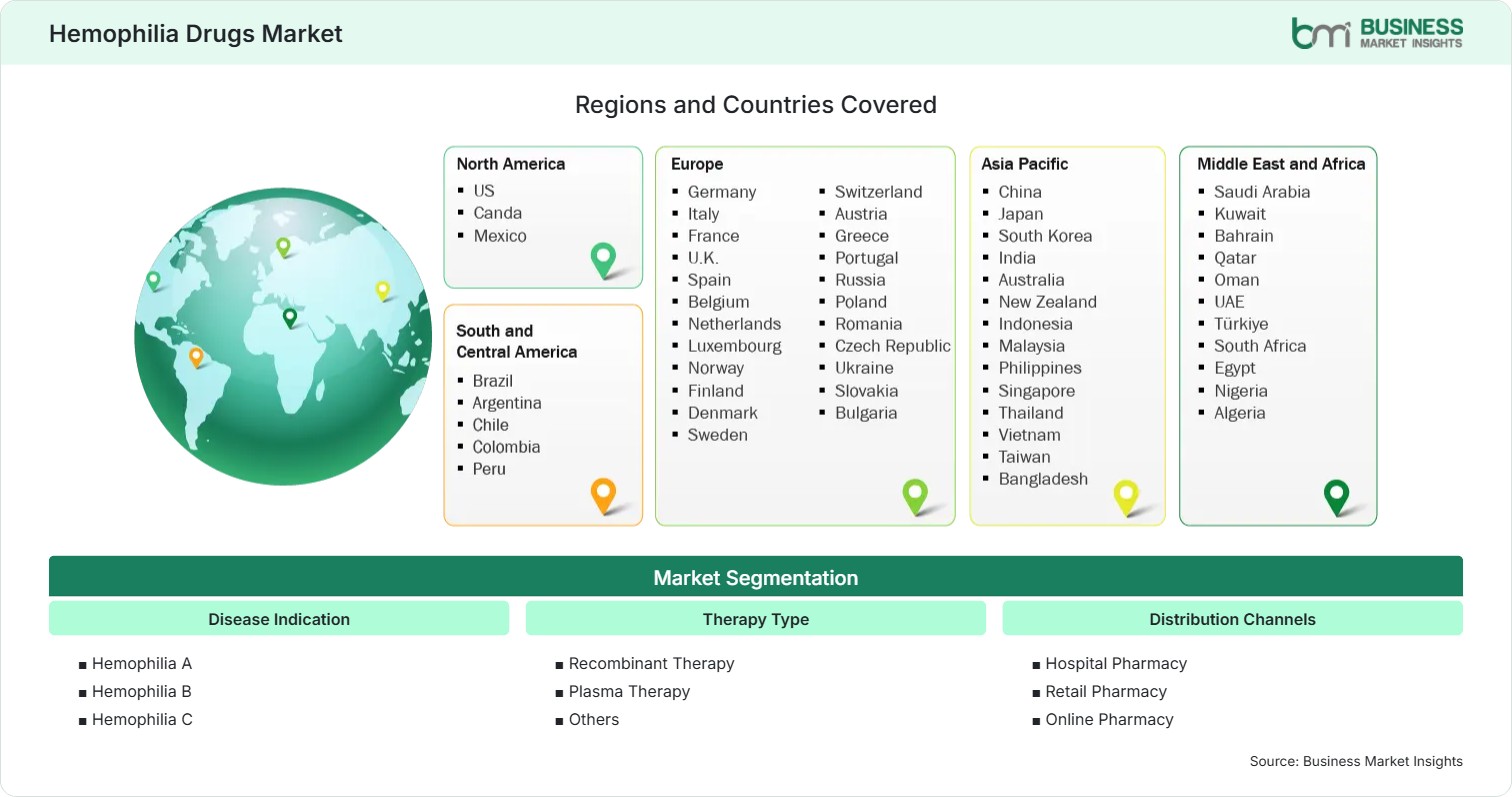
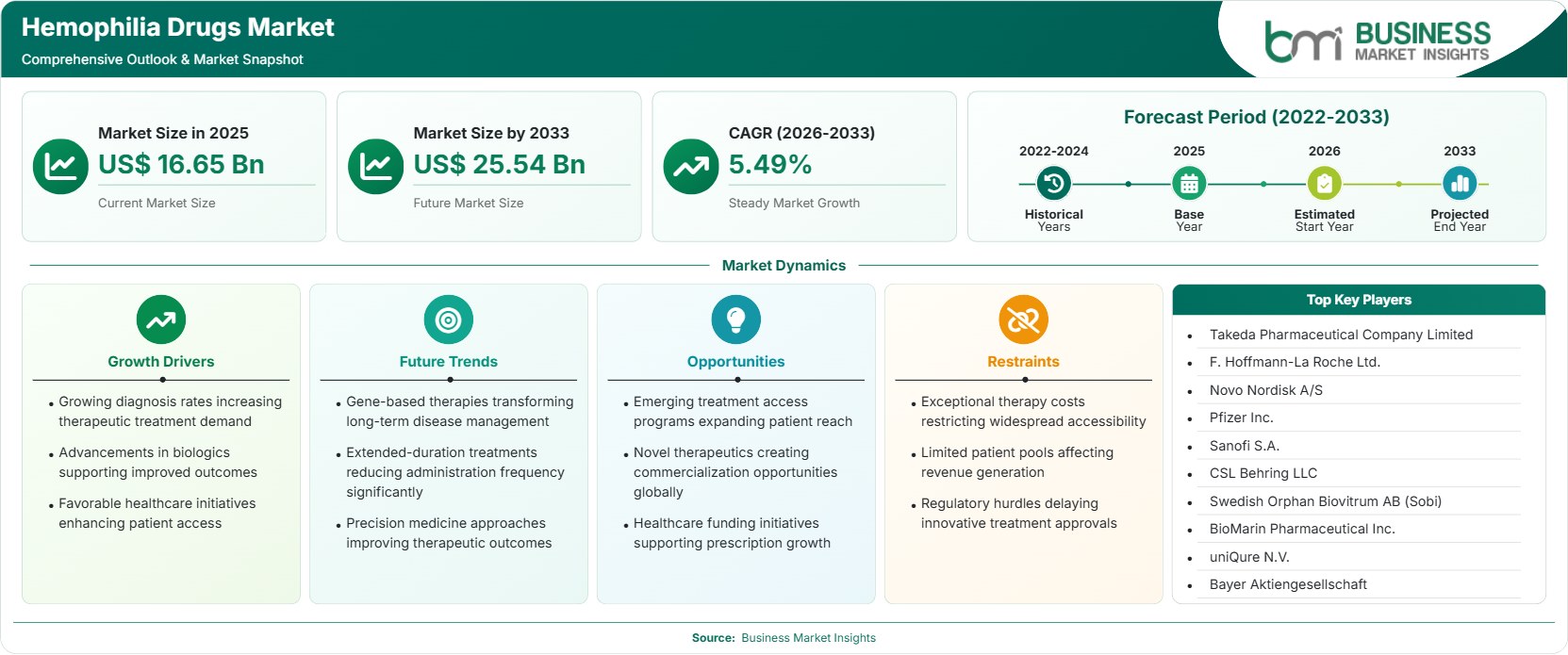
North America remains the largest regional market, accounting for approximately 38%–41% of global revenue in 2025 while expanding at a CAGR of 4.8%–5.3% through 2033. Good reimbursement systems, increased awareness, treatment centers, and rapid implementation of new drugs are key drivers of regional leadership. The region is lucky to have good diagnosis, insurance coverage, and research activity in order to make access to biologics and gene therapy innovations. The Hemophilia Drugs Market share remains highest within this region.
- The widespread use of preventive treatments is still leading to better patient outcomes and, at the same time, helping to drive steady revenue growth throughout the treatment sector.
- Sophisticated regulatory routes promote the commercialization of innovative therapies aimed at improving efficacy and reducing the treatment burden.
- When patients have strong advocacy groups, awareness of the condition, early intervention, and long-term compliance with treatment all increase among those who have been diagnosed.
- Research into gene therapy is still focused on the major academic and biotechnology centers in the area.
- The infrastructure provided by specialty pharmacies enables quick distribution and monitoring of complex biologic therapies.
US Hemophilia Drugs Market
The United States represents the majority of the North American Hemophilia Drugs Market demand with a regional share of 82%–86% and expected CAGR of 4.9%–5.4%. Effective health care spending, large treatment center networks, well-developed reimbursement systems, and research activities ensure long-term growth of the market. Innovators in pharmaceuticals regularly introduce new drugs in the country owing to the favorable environment for commercialization and patient availability in specialized hematology clinics.
- The biologics that are sold at a premium are still producing large amounts of revenue due to reimbursement support and the fact that physicians are familiar with them.
- As more non-factor therapies become available, patients who need long-term disease management are more likely to comply.
- Clinical trial activity is still at one of the highest levels in the world, and this is helping to strengthen the pipelines for innovation.
- Funding schemes for rare diseases help make treatments available to a wider range of eligible patient groups.
Europe Hemophilia Drugs Market
Europe accounts for approximately 27%–30% Hemophilia Drugs Market share in 2025 and advances at a CAGR of 4.7%–5.2% through 2033. Well-developed healthcare infrastructure, rare disease policy and rising use of recombinants are contributing factors to regional growth. Germany is in the most advanced position, whereas Spain and Eastern Europe show higher growth potential because of better access to therapies and diagnostics.
- Germany is still the biggest national market, possessing a well-developed treatment infrastructure and a wide range of therapies available.
- Spain shows a level of growth that exceeds that of the regional average, due to better access to innovative biologics and to specialized care networks.
- As the amount of recombinant factors purchased increases, both the safety of treatment and the reliability of the supply are improved.
- Collaborations involving more than one country promote clinical innovation and the generation of real-world evidence.
- The Rare Disease Act helps to secure quicker access to advanced therapeutic methods.
Asia Pacific Hemophilia Drugs Market
Asia Pacific represents 23%–26% of the global Hemophilia Drugs Market revenue in 2025 and is the fastest-growing region with a CAGR of 6.4%–7.1%. Expanding healthcare infrastructure, rising awareness, increasing diagnosis rates, and improving treatment affordability collectively support regional growth. Japan maintains leadership in premium therapies, while China and India exhibit stronger expansion due to larger patient populations and healthcare modernization initiatives.
- China's growth is being driven by wider insurance coverage and by an increasing recognition of rare diseases.
- India offers considerable potential for the long term since there are large numbers of patients who have not yet been diagnosed, and as healthcare access is growing.
- Japan is at the forefront of the adoption of advanced recombinant and non-factor treatment methods.
- The reforms introduced by the government increase the availability of specialized hematology services.
- In some markets, local manufacturing efforts could make treatment more affordable.
Rest of World Hemophilia Drugs Market
Rest of World contributes approximately 8%–11% of total Hemophilia Drugs Market revenue and grows at a CAGR of 5.5%–6.1% through 2033. South and Central America benefit from improving diagnosis rates and public healthcare investments, while the Middle East and Africa markets expand through government-supported rare disease programs and specialist care development. Brazil leads regional demand, whereas Saudi Arabia demonstrates notable growth potential due to healthcare modernization initiatives.
- Brazil still serves as a major center for the procurement of clotting factor therapies in Latin America.
- Saudi Arabia is still making investments in advanced healthcare infrastructure and in the management of rare diseases.
- Programs providing international assistance and raising awareness help to improve diagnosis among underserved groups.
- By expanding the number of specialist treatment facilities, access to comprehensive care services becomes wider.
- The need to import still has an effect on pricing and the consistency of supply in a number of countries.