
Preeclampsia Diagnostics Market Outlook: Size, Share, Trends, Growth Analysis, Competitive Landscape & Forecast, 2026-2033

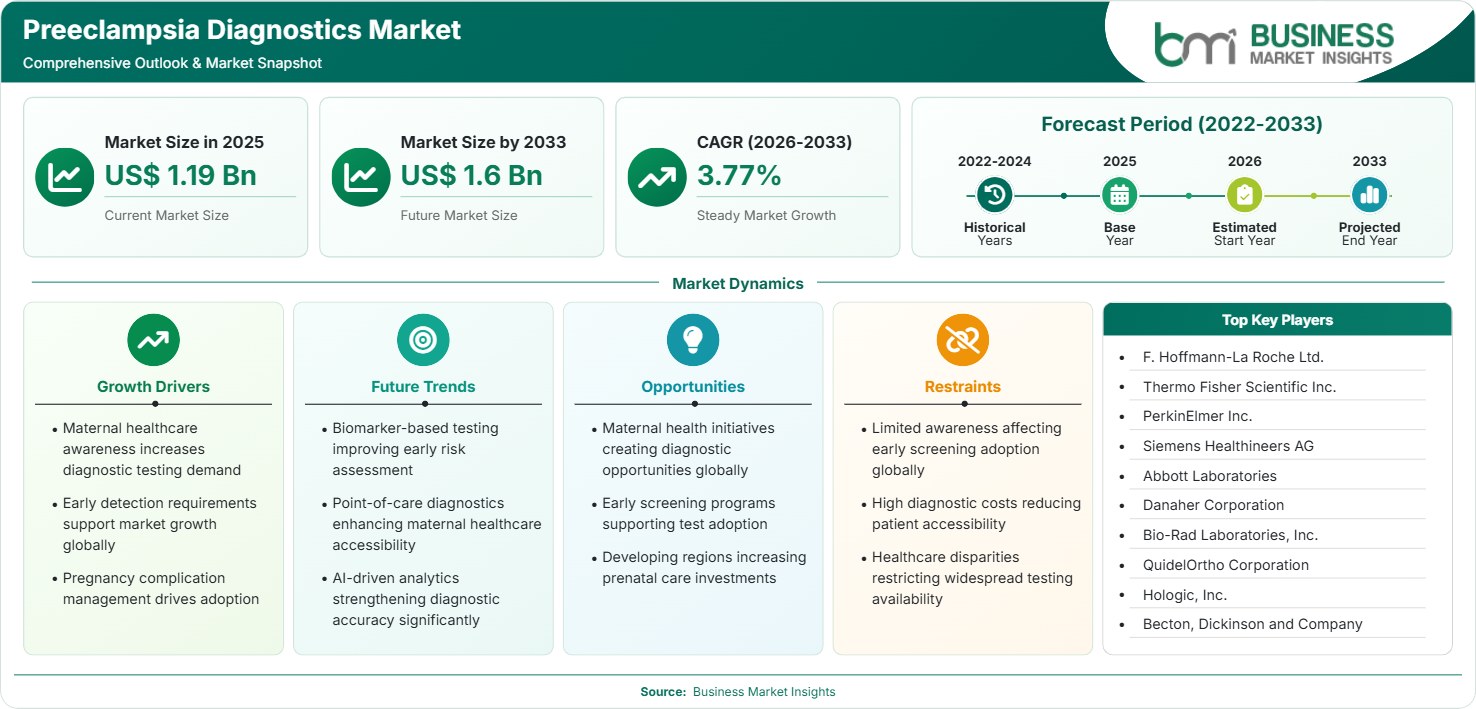
The Preeclampsia Diagnostics Market size was valued at US$ 1.19 Billion in 2025 and is projected to reach US$ 1.6 Billion by 2033, growing at a CAGR of 3.77% during 2026–2033. Rising maternal health surveillance, increasing numbers of high-risk pregnancies, broader biomarker adoption, expanding prenatal screening programs, and improved laboratory accessibility are driving demand, while innovation in predictive testing creates additional commercial opportunities.

Report Coverage
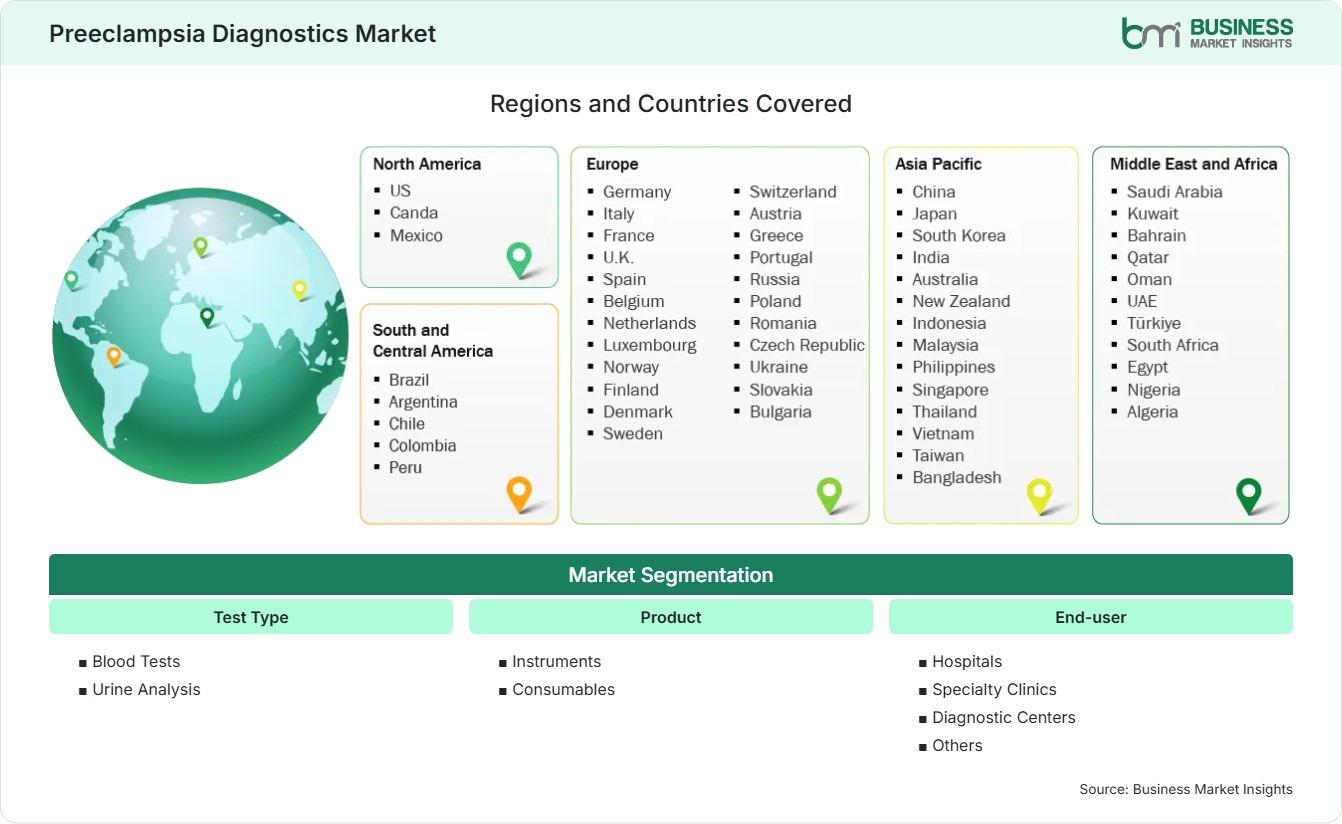
  • Test Type: Blood Tests, Urine Analysis
  • Product: Instruments, Consumables
  • End-user: Hospitals, Specialty Clinics, Diagnostic Centers, Others
US$ 1.19 Bn Market size in 2025
US$ 1.6 Bn Market Size by 2033
3.77% CAGR, 2026 - 2033
2026-2033 Forecast Period

AI Overview

Preeclampsia Diagnostics Market Summary

  • North America Region: North America holds a market share of 38%–41% in 2025, growing with a CAGR of 3.2%–3.6% during 2026–2033. Growth is supported by advanced prenatal care systems, widespread adoption of biomarker testing, expanded reimbursement coverage, rising maternal age, and increasing identification of high-risk pregnancies across healthcare networks. Brief U.S. analysis: Strong screening protocols, hospital-based testing adoption, and maternal health initiatives support a CAGR of 3.3%–3.7% through 2033.
  • Fastest Growing Region: Asia Pacific holds a market share of 23%–26% in 2025, growing with a CAGR of 5.1%–5.6% during 2026–2033. Increasing healthcare investments, expanding obstetric infrastructure, rising pregnancy monitoring awareness, government maternal health programs, growing private diagnostics networks, and improving access to laboratory technologies accelerate regional expansion.
  • Leading Segment: Blood Tests hold a Preeclampsia Diagnostics Market share of 62%–66% in 2025 and are anticipated to grow at a CAGR of 4.0%–4.4% during 2026–2033. Clinical preference for biomarker-based assessment, higher predictive accuracy, integration into hospital workflows, and expanding utilization of angiogenic marker testing sustain adoption.
  • High Growth Segment: Consumables hold a market share of 54%–58% in 2025 and are projected to record a CAGR of 4.4%–4.9% during 2026–2033. Recurring procurement requirements, increasing testing volumes, broader diagnostic coverage, laboratory standardization efforts, and expanding installed instrument bases continue to support revenue generation.
  • Key Market Opportunity: Increasing deployment of biomarker-guided risk stratification in community healthcare settings enables earlier intervention, broadens access to prenatal testing, improves maternal outcomes, reduces complications, and creates scalable commercial opportunities.
  • Major Market Players: F. Hoffmann-La Roche Ltd., Thermo Fisher Scientific Inc., PerkinElmer Inc., Siemens Healthineers AG, Abbott Laboratories, Danaher Corporation, Bio-Rad Laboratories, Inc., QuidelOrtho Corporation, Hologic, Inc., and Becton, Dickinson and Company.
Strategic Insights

Preeclampsia Diagnostics Market: Strategic Insights

Preeclampsia Diagnostics Market Strategic Framework
FREE PDF
Request your free sample
Request free sample
Stakeholder View

Key Takeaways

  • The value chain is increasingly centered on biomarker development, assay manufacturing, laboratory processing, and clinical decision support. Integration between obstetric departments and diagnostic laboratories is becoming a critical differentiator for healthcare providers seeking faster preeclampsia risk assessment.
  • Among application areas, biomarker-based blood testing presents the strongest commercial upside due to its growing clinical acceptance in pregnancy risk stratification, earlier intervention planning, and improved maternal-fetal outcome management across hospital settings.
  • Innovation is shifting from conventional proteinuria-focused approaches toward multi-marker diagnostic models incorporating placental growth factor (PlGF), soluble fms-like tyrosine kinase-1 (sFlt-1), artificial intelligence-enabled interpretation, and automated laboratory workflows.
  • Asia Pacific offers the most compelling geographic expansion opportunity as healthcare infrastructure modernization, increasing institutional deliveries, and growing prenatal screening awareness support sustained diagnostic adoption across China, India, and Southeast Asian economies.
  • Strategic investments are increasingly targeting women's health diagnostics portfolios. Large healthcare technology companies continue expanding their maternal health capabilities through product launches, companion biomarker programs, research collaborations, and selective acquisitions.
  • Public health initiatives focused on reducing maternal morbidity are encouraging earlier screening protocols, creating an environment where predictive diagnostics can transition from specialized use cases to routine prenatal care pathways.
Geographic Outlook

Preeclampsia Diagnostics Market Regional Highlights

North America Preeclampsia Diagnostics Market

North America accounted for approximately 38%–41% of global revenue in 2025 and is projected to register a CAGR of 3.2%–3.6% through 2033. The region benefits from extensive prenatal screening programs, strong reimbursement systems, advanced laboratory infrastructure, and widespread adoption of biomarker-based diagnostics. The regional Preeclampsia Diagnostics Market share remains the highest globally due to high awareness among healthcare professionals and robust maternal health monitoring practices. Continued investments in women's health innovation and risk-based pregnancy management support sustained demand across clinical settings.

  • Healthcare systems increasingly incorporate angiogenic biomarker testing into prenatal pathways, improving clinical confidence in diagnosing suspected disease cases while supporting efficient patient triage and monitoring.
  • Academic medical centers continue validating advanced biomarker combinations, strengthening physician acceptance and encouraging broader integration into maternal-fetal medicine programs throughout the region.
  • Favorable reimbursement coverage supports utilization of advanced testing technologies, reducing barriers to adoption among hospitals, specialty clinics, and integrated healthcare providers.
  • Rising incidence of obesity, hypertension, and diabetes during pregnancy continues to expand the at-risk population requiring routine monitoring and diagnostic evaluation services.
  • Digital health integration and electronic medical record connectivity enhance diagnostic workflow efficiency, supporting proactive management of high-risk pregnancies across large healthcare networks.

US Preeclampsia Diagnostics Market

The US contributes nearly 79% - 83% of North American revenue in 2025 and is estimated to have a CAGR of 3.3% - 3.7% from 2026 to 2033. Strong maternal healthcare spending, active research, and rapid adoption of the latest technologies contribute to the strength of the national market. Health care providers have made it a priority to detect diseases early to lower maternal deaths and improve neonatal outcomes. Access to advanced testing infrastructure further supports widespread utilization across urban and regional healthcare systems.

  • Maternal health programs increasingly prioritize identification of hypertensive disorders during pregnancy, supporting broader implementation of predictive and confirmatory diagnostic testing protocols.
  • Major healthcare networks are expanding laboratory automation investments, enabling faster turnaround times and improved testing consistency across large patient populations.
  • Research institutions continue generating clinical evidence supporting biomarker-guided risk assessment, encouraging physician adoption and advancing standard-of-care recommendations.
  • Growing demand for personalized prenatal care models is increasing diagnostic utilization throughout obstetric care pathways and specialty maternal-fetal medicine services.

Europe Preeclampsia Diagnostics Market

The Europe region accounted for around 27%-30% of the total Preeclampsia Diagnostics Market share in 2025 and is predicted to grow at a CAGR of 3.4%-3.9% through 2033. Well-covered prenatal health care services, developed obstetric practice guidelines, and the increasing availability of advanced laboratory testing capabilities are responsible for the market's maturity in this region. Germany is the most successful country in this region owing to high investments in healthcare and laboratory facilities, whereas Spain and Poland represent relatively higher growth rates.

  • National screening initiatives increasingly encourage earlier identification of hypertensive disorders, supporting adoption of biomarker-driven diagnostic approaches among healthcare providers.
  • Germany maintains regional leadership through extensive laboratory infrastructure and strong clinician awareness, reinforcing demand for advanced maternal health diagnostics.
  • Spain demonstrates above-average expansion opportunities, supported by healthcare modernization efforts and growing implementation of predictive screening protocols.
  • Research collaborations between healthcare institutions and diagnostic companies accelerate validation of innovative assays and strengthen commercialization opportunities.
  • Improving maternal care standards across Central and Eastern Europe supports gradual expansion of advanced prenatal diagnostic services.

Asia Pacific Preeclampsia Diagnostics Market

Asia Pacific represented approximately 23%–26% of global revenue in 2025 and is forecast to grow at a CAGR of 5.1%–5.6% through 2033. The region records the fastest expansion owing to rising healthcare investments, growing awareness of maternal complications, and expanding access to institutional prenatal care. China remains the largest regional contributor, while India demonstrates the highest growth trajectory. Strong demographic fundamentals and healthcare infrastructure development continue strengthening long-term market potential and overall diagnostic adoption.

  • Government-supported maternal health programs increasingly promote routine prenatal assessments, improving access to diagnostic services across urban and semi-urban populations.
  • China benefits from expanding laboratory networks and greater adoption of biomarker testing within hospitals and maternity care institutions.
  • India records accelerated expansion due to improving healthcare accessibility, rising awareness of pregnancy complications, and expanding diagnostic infrastructure investments.
  • Private healthcare providers continue introducing advanced prenatal screening solutions, creating new commercial opportunities for industry participants.
  • Growing emphasis on reducing maternal mortality rates supports sustained investments in innovative diagnostic technologies and risk-assessment capabilities.

Rest of World Preeclampsia Diagnostics Market

The Rest of World region held an 8%-11% share of the global Preeclampsia Diagnostics Market in 2025 and is anticipated to record a CAGR of 4.2%-4.7% by 2033. South and Central America benefit from advancements in healthcare systems and increased awareness among mothers about preeclampsia screening. At the same time, the Middle East and Africa regions benefit from investments in healthcare infrastructure, especially in the Gulf Cooperation Council member states.

  • Brazil leads South and Central America through expanding hospital networks and growing implementation of maternal risk-monitoring protocols.
  • Mexico demonstrates relatively stronger growth supported by healthcare access initiatives and increasing investments in diagnostic laboratory capabilities.
  • Saudi Arabia remains a leading Middle East market due to healthcare transformation programs and growing demand for advanced prenatal assessments.
  • The United Arab Emirates exhibits high-growth potential driven by specialty healthcare expansion and adoption of innovative diagnostics technologies.
  • International maternal health programs continue strengthening awareness, workforce capabilities, and laboratory readiness across several African healthcare systems.
Global Market Geography
FREE PDF
Request your free sample
Request free sample
Segment Analysis

Preeclampsia Diagnostics Market Segmentation

Test Type

Test Type is the largest category in the industry due to doctors' growing inclination toward early disease diagnosis and improved maternal care outcomes. This category accounted for around 62%-66% of the market by sales in 2025 and is forecast to expand at a CAGR of 4.0%-4.4% by 2033. Preeclampsia Diagnostics Market trends show a rise in the use of biomarker tests due to their superior predictive power over conventional assessments.

  • Blood Tests: Blood-based diagnostics are increasingly utilized for angiogenic biomarker measurement, supporting early identification of high-risk pregnancies, improved patient stratification, clinical decision-making, and integration into standardized prenatal screening pathways.
  • Urine Analysis: Urine testing remains an essential diagnostic approach due to established clinical familiarity, accessibility, broad healthcare availability, and its continued role in supporting disease confirmation and patient monitoring.

Product

The Product segment is associated with continuous investments in updating the laboratory infrastructure and streamlining the diagnostic process. This segment contributed around 100% of total market revenue and remains bifurcated into platforms and repeat-use supplies. The scope of the Preeclampsia Diagnostics Market is expected to widen in the coming years due to the need for scalability among healthcare organizations.

  • Instruments: Automated analyzers, immunoassay systems, and laboratory platforms support efficient processing of maternal diagnostic samples, enabling accuracy, consistency, workflow improvements, and integration with clinical laboratory information systems.
  • Consumables: Reagents, assay kits, calibrators, controls, and sample-processing materials generate recurring revenues as testing volumes increase, supporting long-term commercial opportunities for diagnostic manufacturers and suppliers.

End-user

End-user demand depends on the availability of prenatal care facilities, laboratory capabilities, and services related to managing high-risk pregnancies. Hospitals accounted for about 48%-52% of the Preeclampsia Diagnostics Market revenue in 2025 and are estimated to grow at a CAGR of 3.8%-4.2% through 2033. The rising awareness of maternal conditions, coupled with improved access to diagnostics, continues to drive utilization in both institutional and specialized healthcare settings worldwide.

  • Hospitals: Hospitals remain primary testing locations due to integrated obstetric care services, established laboratory infrastructure, high patient volumes, and comprehensive management capabilities for high-risk pregnancies.
  • Specialty Clinics: Maternal-fetal medicine centers increasingly utilize advanced diagnostic assessments to facilitate early risk evaluation, personalized prenatal management strategies, and specialist-led monitoring of vulnerable patient populations.
  • Diagnostic Centers: Independent diagnostic laboratories support accessibility through specialized testing services, high-throughput processing capabilities, broad geographic reach, and growing collaboration with hospitals and healthcare practitioners.
Market Forces

Preeclampsia Diagnostics Market Dynamics

Key Market Drivers

Rising Incidence of High-Risk Pregnancies Worldwide

Increasing maternal age, obesity prevalence, hypertension, diabetes, and other pregnancy-related risk factors continue to expand the population susceptible to hypertensive disorders during pregnancy. All healthcare systems have responded to this trend by increasing their focus on intensive prenatal surveillance and enhanced early detection strategies. One of the main sources of morbidity associated with pregnancy is hypertension during pregnancy, according to the World Health Organization. Consequently, there has been a need for earlier detection of any complications arising from hypertension. Clinical guidelines recommend more proactive monitoring of cases of hypertension, and health care providers have adopted more sophisticated methods for detecting complications at earlier stages in pregnancy. These developments continue to support demand for diagnostic solutions throughout prenatal care pathways and contribute directly to sustained industry expansion.

Expanding Adoption of Biomarker-Based Diagnostic Technologies

The clinical value of biomarker testing has strengthened significantly through growing evidence supporting the use of placental growth factor and angiogenic markers in risk assessment. Healthcare professionals are becoming aware of the value of better diagnosis, more effective treatment, and fewer hospital admissions. Companies dealing with diagnostics are developing automated systems that can help with testing by incorporating biomarkers. The technology helps doctors make better decisions while saving time. Increased confidence among doctors and inclusion in the maternal health care pathway are helping to increase the adoption rate across developed and emerging healthcare markets.

Government Focus on Maternal Health Improvement

Governments and health authorities are still focusing on decreasing the rates of maternal mortality by increasing access to prenatal care services and improving monitoring systems. National healthcare programs tend to focus more on identifying any possible pregnancy-related conditions in order to enhance the results and minimize the burden on the healthcare system. Programs that are financial in nature, which focus on building women’s health infrastructure and laboratories, and on educating healthcare professionals, also act as drivers of diagnostic equipment development. As maternal health is an important issue for many countries, investments in disease diagnosis will positively affect the future market.

Key Market Opportunities

Expansion of Community-Based Prenatal Screening Programs

Increasing availability of healthcare services within communities is opening up possibilities for early detection for disadvantaged patients. Many nations are developing health initiatives to enhance prenatal monitoring outside tertiary hospitals. Portable diagnostic tools, decentralization of laboratories, and the integration of digital health make this accessible and enable early detection. Companies that manufacture affordable diagnostics for use across different healthcare settings can gain significantly from increased uptake. These developments create attractive long-term opportunities across both developed and resource-constrained healthcare systems.

Integration of Artificial Intelligence into Risk Prediction Models

Evaluations are also being conducted on the role of AI and predictive analytics in maternal risk stratification for prenatal care. The combination of clinical data and biomarker results helps determine which patients may face severe complications. Healthcare professionals require technology that helps them make diagnoses confidently while reducing interventions and resources used. Technology adoption will lead to greater collaboration among healthcare facilities, software developers, and diagnostic firms. Preeclampsia Diagnostics Market Forecasts continue to be influenced by the commercialization of digital decision support technologies.

Untapped Potential Across Emerging Healthcare Economies

The availability of many patients, better healthcare infrastructure, and increased efforts to spread knowledge about prenatal care offer great opportunities in the developing world. Many healthcare systems are evolving towards early disease detection, making the need for new diagnostic technology inevitable. The development of lab networks, specialized healthcare, and improvements in maternal care have enabled the slow but steady introduction of new testing methods. Companies that provide efficient solutions tailored to the region's healthcare needs are well-positioned to strengthen market penetration and establish a long-term commercial presence.

Market Restraints and Challenges

Limited Access to Advanced Testing in Resource-Constrained Regions

Factor: An unequal presence of laboratory facilities, staff, and healthcare funding hinders the use of advanced diagnostic tools in several developing areas. Impact: Late diagnosis, infrequent tests, and inequity in access to prenatal risk testing are challenges facing the health care industry. Although awareness of problems in maternal health care is improving, numerous infrastructural gaps persist in many resource-constrained regions. This also prevents the use of more advanced biomarker-based diagnostic tests. Overcoming these challenges would require continuous investments in laboratory upgrades, human resource development, and healthcare access programs.

Cost Pressures and Reimbursement Variability

Factor: The use of sophisticated biomarker tests and diagnostic systems is often associated with higher implementation and operational costs than traditional testing approaches. Impact: Financial constraints on healthcare institutions and a lack of reimbursement models pose challenges to the adoption of innovative diagnostics. Healthcare institutions may be reluctant to adopt innovations in the absence of economic incentives. This factor is especially important in publicly funded healthcare systems due to competing expense priorities across different medical domains. Addressing reimbursement variability and demonstrating health-economic value remain essential for broader adoption of advanced diagnostics.

Company Analysis

Competitive Landscape

The competitive environment is characterized by established diagnostics manufacturers, laboratory technology providers, and biomarker assay developers focused on expanding testing accuracy and workflow efficiency. Ongoing Preeclampsia Diagnostics Market analysis indicates increasing competition around biomarker-based solutions, automated immunoassays, and integrated maternal health diagnostics platforms.

Company Name

Overview

Products and Services relevant to this market

F. Hoffmann-La Roche Ltd.

Global diagnostics leader with strong immunoassay platforms and broad maternal health testing capabilities serving hospitals and laboratories worldwide.

Elecsys immunoassays, laboratory automation systems, biomarker testing solutions, prenatal diagnostics, and integrated laboratory workflow technologies.

Thermo Fisher Scientific Inc.

Major life sciences and diagnostics provider with extensive laboratory testing technologies and biomarker research capabilities.

BRAHMS biomarker assays, immunodiagnostics platforms, laboratory reagents, research solutions, and clinical testing technologies.

PerkinElmer Inc.

Healthcare diagnostics company supporting maternal and neonatal screening applications across global healthcare systems.

Prenatal screening products, laboratory diagnostics, biomarker testing services, assay development, and clinical laboratory solutions.

Siemens Healthineers AG

Advanced healthcare technology provider delivering laboratory diagnostics and automation platforms for clinical testing.

Immunoassay analyzers, diagnostic instruments, healthcare informatics, laboratory automation, and prenatal testing support systems.

Abbott Laboratories

Diversified healthcare company with broad diagnostic capabilities and extensive global clinical laboratory presence.

Clinical chemistry systems, immunoassays, laboratory analyzers, biomarker testing technologies, and maternal health diagnostic solutions.

Danaher Corporation

Healthcare technology group operating multiple diagnostics businesses focused on precision testing and laboratory innovation.

Diagnostic instruments, laboratory automation, assays, biomarker detection technologies, and clinical workflow solutions.

Bio-Rad Laboratories, Inc.

Laboratory diagnostics specialist supporting healthcare providers through quality testing systems and controls.

Quality control products, immunoassay solutions, laboratory testing systems, reagents, and clinical diagnostic technologies.

QuidelOrtho Corporation

Diagnostics company focused on immunoassays and laboratory testing solutions for healthcare providers globally.

Clinical diagnostic assays, laboratory instruments, immunodiagnostic products, and healthcare testing platforms.

Hologic, Inc.

Women's health-focused healthcare company emphasizing diagnostic innovation across multiple disease areas.

Women's health diagnostics, laboratory systems, screening technologies, molecular diagnostics, and healthcare testing solutions.

Becton, Dickinson and Company

Global medical technology company supporting clinical diagnostics and laboratory operations.

Sample collection devices, diagnostic systems, laboratory instruments, specimen management, and healthcare workflow technologies.

Trust & Transparency

Research Methodology

The market analysis combines proprietary research with secondary data from government agencies, company disclosures, regulatory filings, industry databases and expert interviews. Market estimates are validated through data triangulation, cross-market benchmarking and analyst review.

View Full Research Methodology

Questions Answered

Frequently Asked Questions

What does the Preeclampsia Diagnostics Market Report indicate about future industry direction?

The Market Report highlights increasing adoption of biomarker-driven diagnostics, greater integration of digital decision-support tools, broader access to prenatal screening programs, and continued investment in maternal health innovation.

What makes Asia Pacific an attractive investment destination?

Expanding healthcare infrastructure, large birth populations, government maternal health programs, increasing prenatal awareness, and growing private diagnostic networks create favorable conditions for sustained market expansion across the region.

Which end-user group generates the highest demand for diagnostics?

Hospitals remain the leading end-user category because they manage the highest number of prenatal patients, maintain advanced laboratory infrastructure, and provide comprehensive care for complex and high-risk pregnancies.

How are biomarker-based tests improving preeclampsia diagnosis?

Biomarker-based tests improve clinical confidence by identifying physiological changes associated with disease development earlier than traditional methods, enabling more accurate risk stratification and timely interventions for high-risk pregnancies.

What factors are increasing demand for preeclampsia diagnostic testing?

Rising maternal age, increasing prevalence of hypertension and obesity during pregnancy, stronger prenatal monitoring protocols, and wider awareness of maternal health risks are increasing demand for advanced diagnostic testing solutions across healthcare systems.

Access the Full Preeclampsia Diagnostics Market Report

Get segment-level forecasts, regional estimates, competitive benchmarking, company profiles and downloadable Excel datasets.

Access the full Preeclampsia Diagnostics Market Report
350 pages PDF & Excel | 2026-11-10
Similar Research

Related Market Reports