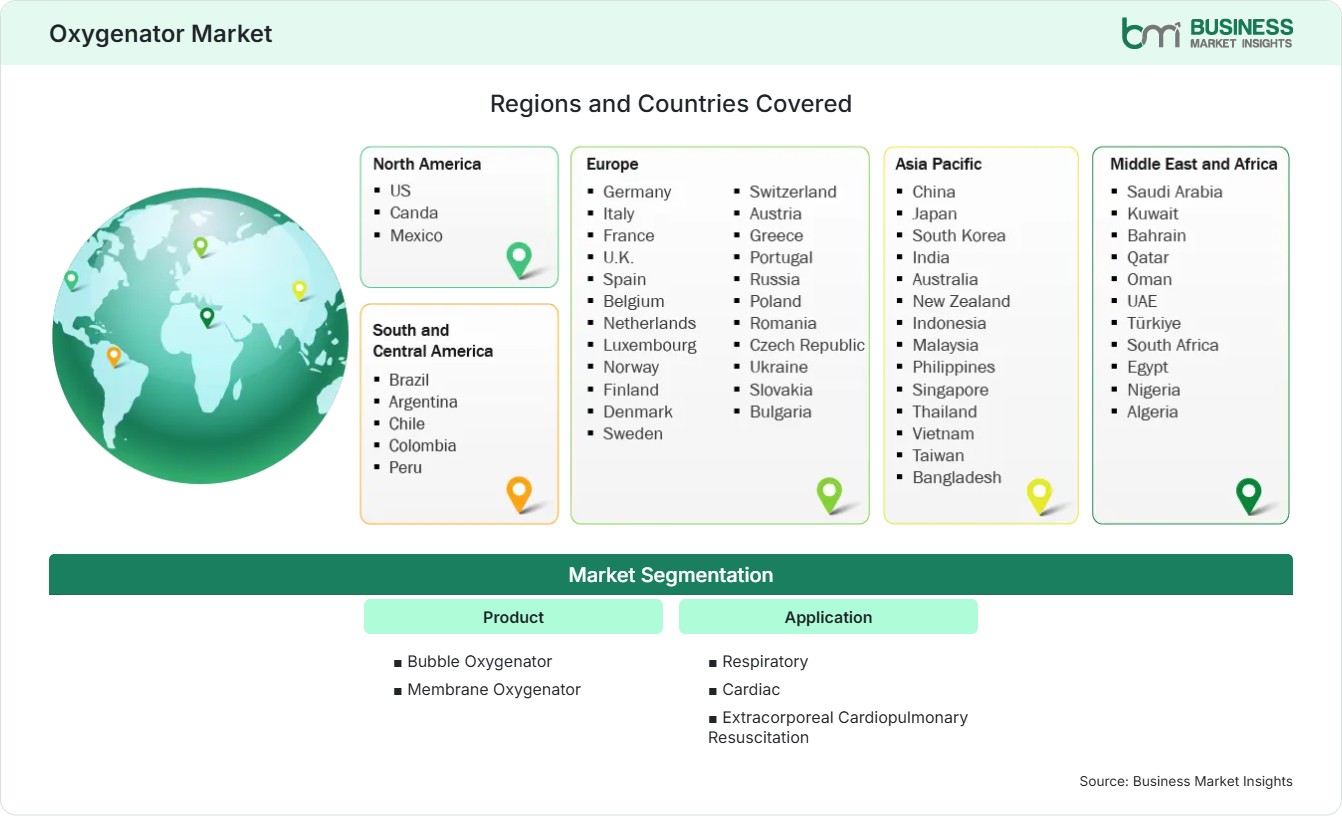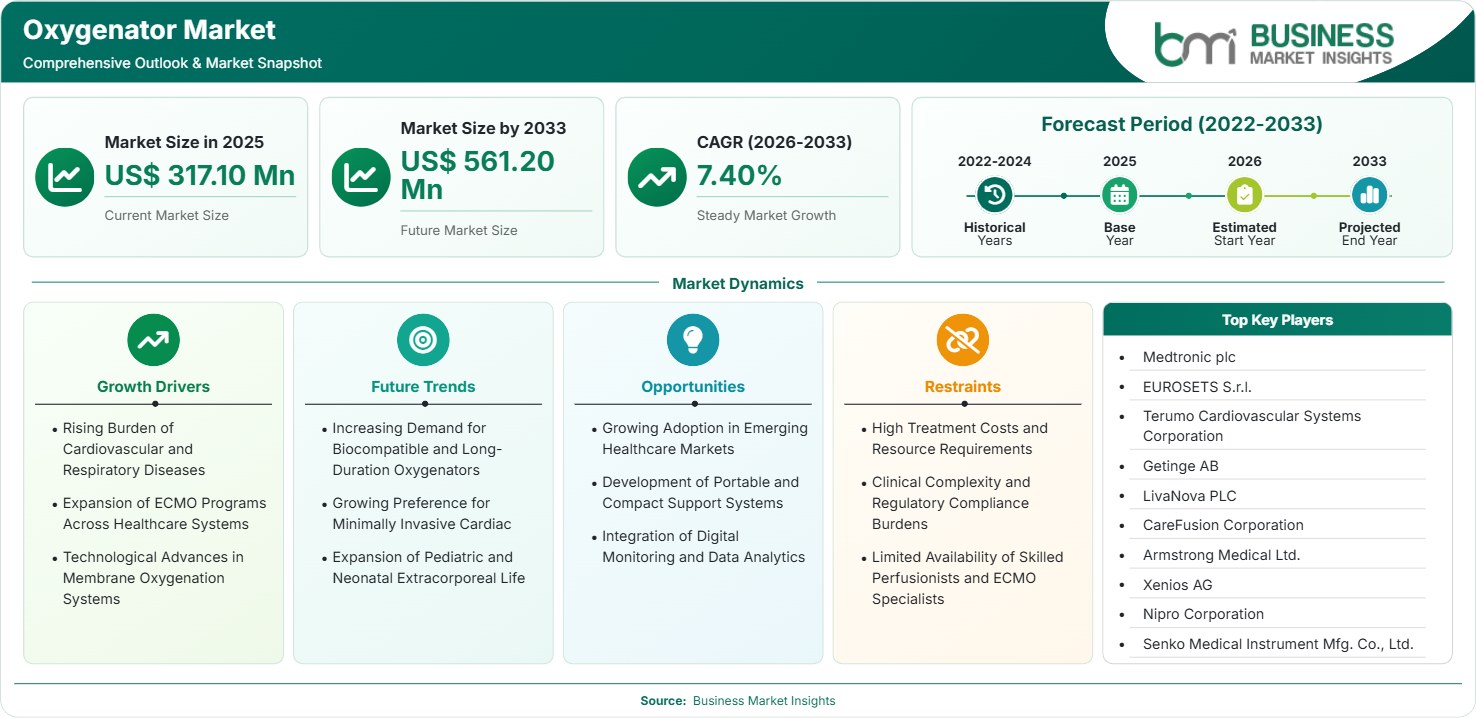
Oxygenator Market Regional Highlights
North America Oxygenator Market
North America accounts for approximately 36%–39% of global demand in 2025 and is projected to expand at a CAGR of 6.8%–7.2% through 2033. The region benefits from cardiac surgery infrastructure, extensive use of extracorporeal membrane oxygenation technology, and conducive reimbursement structures. High procedure rates in specialized hospitals also drive demand for the equipment. North America's Oxygenator Market share is still the largest in the world, backed by excellent clinical expertise, extensive critical care networks, and continued investment in advanced life support technologies.
- Academic medical institutions continue to expand their ECMO programs to cope with severe heart and respiratory diseases, which bolsters demand for advanced membrane-based equipment and drives procurement activity.
- High incidence of coronary heart disease, heart failure, and cardiovascular procedures ensures stable usage rates, which drives investments in advanced oxygenation equipment and consumables
- The presence of favorable reimbursement schemes and clinical practice guidelines facilitates the use of technologies, allowing the hospitals to invest in new perfusion devices that possess improved safety features.
- The cooperation between manufacturers and hospitals leads to faster development of biocompatible components, monitoring systems, and smaller device sizes to meet contemporary critical care needs.
US Oxygenator Market
The United States represents approximately 74%–78% of regional demand within North America during 2025 and is expected to advance at a CAGR of 6.9%–7.3% through 2033. Presence of high levels of specialized centers for heart treatment, sophisticated intensive care units, and well-trained perfusionists have made wide-scale use of such products possible. High investments in healthcare and technology upgrades support procurement activity. The country continues to be an important center of innovations in the field of extracorporeal support technologies, thus making clinical studies and commercialization possible in different healthcare sectors.
- The expansion of the use of ECMO treatment programs in hospitals creates opportunities for technologically advanced systems of oxygenation and their support services.
- The growing usage of minimally invasive cardiac operations stimulates demand for the perfusion equipment which can provide steady operation during complex procedures.
- The prominence of leading medical technology firms ensures ongoing innovations, testing, and marketing of oxygenation technologies in specialized treatment facilities.
- The federal and private investments in the health sector to enhance preparedness for critical cases will ensure equipment upgrades, infrastructure advancements, and training programs.
Europe Oxygenator Market
Europe accounts for approximately 27%–30% of global demand in 2025 and is projected to grow at a CAGR of 6.9%–7.4% through 2033. This area is positively impacted by the presence of healthcare system structures that include highly regarded heart surgery practices and extracorporeal support programs. The leadership in this area belongs to Germany due to the presence of highly-developed hospital structure and advanced clinical practices, while Italy shows fast growth rates in this sector with a CAGR fluctuating in the range of 7.5%-8.0%.
- Increased importance of advanced cardiovascular care pathways implies consistent development of oxygenation technologies that can be used for performing highly efficient surgical and critical care procedures.
- Germany continues to be the leader in this segment owing to high volumes of heart surgeries performed and advanced infrastructure that includes extracorporeal support technologies.
- Italy demonstrates accelerated adoption supported by expanding ECMO capabilities, increasing clinical expertise, and investments in specialized healthcare infrastructure focused on advanced respiratory and cardiac care.
Asia Pacific Oxygenator Market
Asia Pacific accounts for approximately 25%–28% of global demand in 2025 and is anticipated to register the fastest regional expansion with a CAGR of 8.4%–8.9% through 2033. Rapid healthcare infrastructure development, increasing cardiovascular disease prevalence, and broader access to advanced surgical procedures are supporting market expansion. China represents the largest regional contributor owing to substantial hospital investments, while India exhibits one of the highest growth rates, estimated at 9.0%–9.5%. Government healthcare initiatives and medical tourism further strengthen adoption prospects across the region.
- China continues expanding tertiary hospitals and specialized cardiac centers, creating sustained demand for advanced extracorporeal technologies and supporting procurement of modern oxygenation systems across public and private healthcare networks.
- India benefits from rising healthcare expenditure, increasing awareness of advanced cardiac interventions, and expansion of private hospital chains investing in critical care and perfusion infrastructure.
- Japan remains a significant technology-driven market where aging demographics and high standards of clinical care encourage adoption of sophisticated oxygenation solutions with enhanced reliability and safety.
- Southeast Asian countries are strengthening healthcare access and surgical capabilities, generating opportunities for manufacturers targeting cost-effective yet technologically advanced oxygenation platforms.
Rest of World Oxygenator Market
Rest of World represents approximately 8%–11% of global demand in 2025 and is expected to expand at a CAGR of 7.3%–7.8% through 2033. South and Central America continue benefiting from healthcare modernization initiatives and increasing access to specialized cardiovascular treatment services. Brazil remains the leading regional market due to growing investments in tertiary healthcare infrastructure. The Middle East and Africa are witnessing rising adoption of advanced critical care technologies driven by healthcare diversification strategies, hospital expansion projects, and increasing investments in specialized treatment capabilities. Saudi Arabia demonstrates notable growth potential with a CAGR ranging between 7.8%–8.3%.
- Brazil continues investing in advanced cardiac care facilities and surgical capabilities, supporting greater adoption of oxygenation technologies across both public and private healthcare institutions.
- Mexico is improving access to specialized healthcare services through infrastructure development and increasing investment in advanced medical technologies used during complex surgical procedures.
- Gulf Cooperation Council countries are expanding healthcare capacity and strengthening critical care preparedness, creating opportunities for advanced extracorporeal support equipment suppliers.
- Saudi Arabia benefits from healthcare transformation initiatives focused on improving tertiary care capabilities, supporting adoption of innovative technologies across major hospital networks.