
Oral Antibiotics Market Outlook: Size, Share, Trends, Growth Analysis, Competitive Landscape & Forecast, 2026-2033

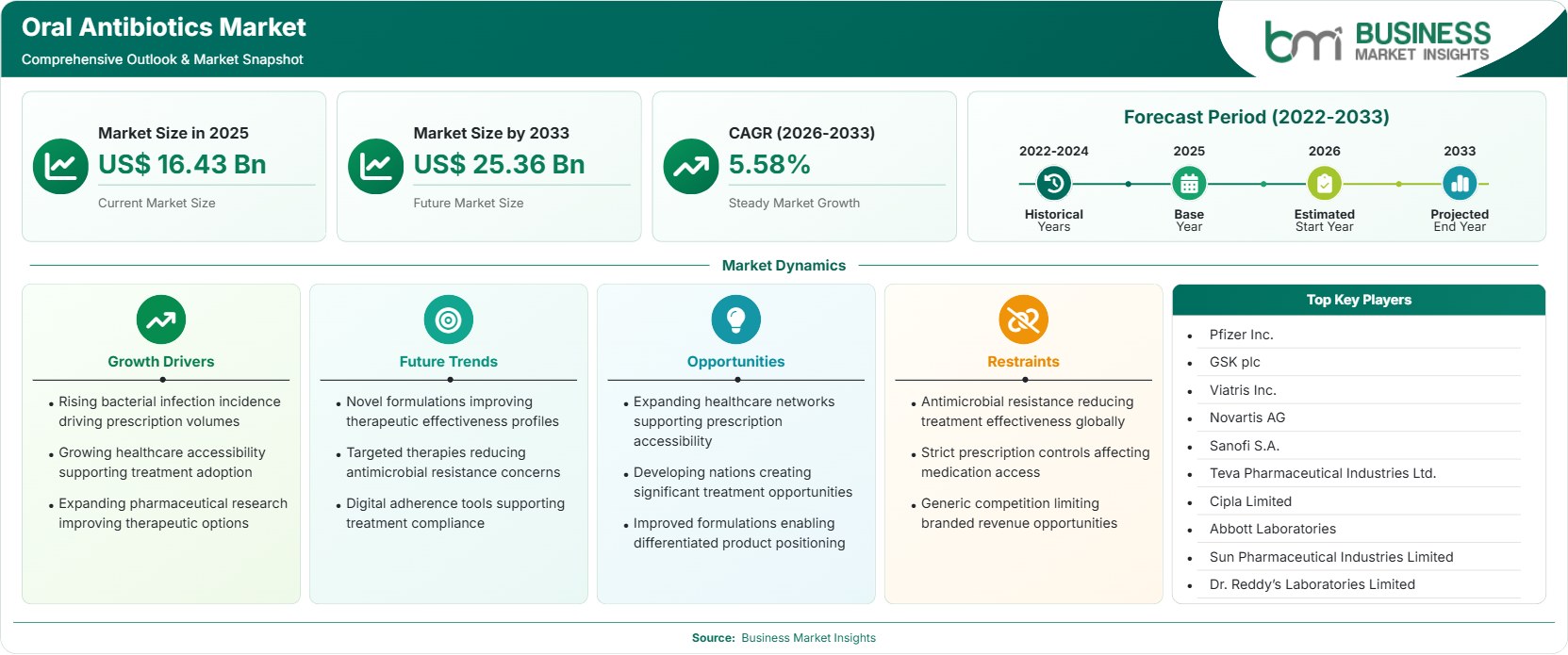
The Oral Antibiotics Market size was valued at US$ 16.43 Billion in 2025 and is projected to reach US$ 25.36 Billion by 2033, growing at a CAGR of 5.58% during 2026–2033, driven by rising bacterial infection incidence, expanding outpatient care models, growing generic penetration, antimicrobial stewardship initiatives, and opportunities in resistant-pathogen therapies and digital pharmacy distribution.

Report Coverage
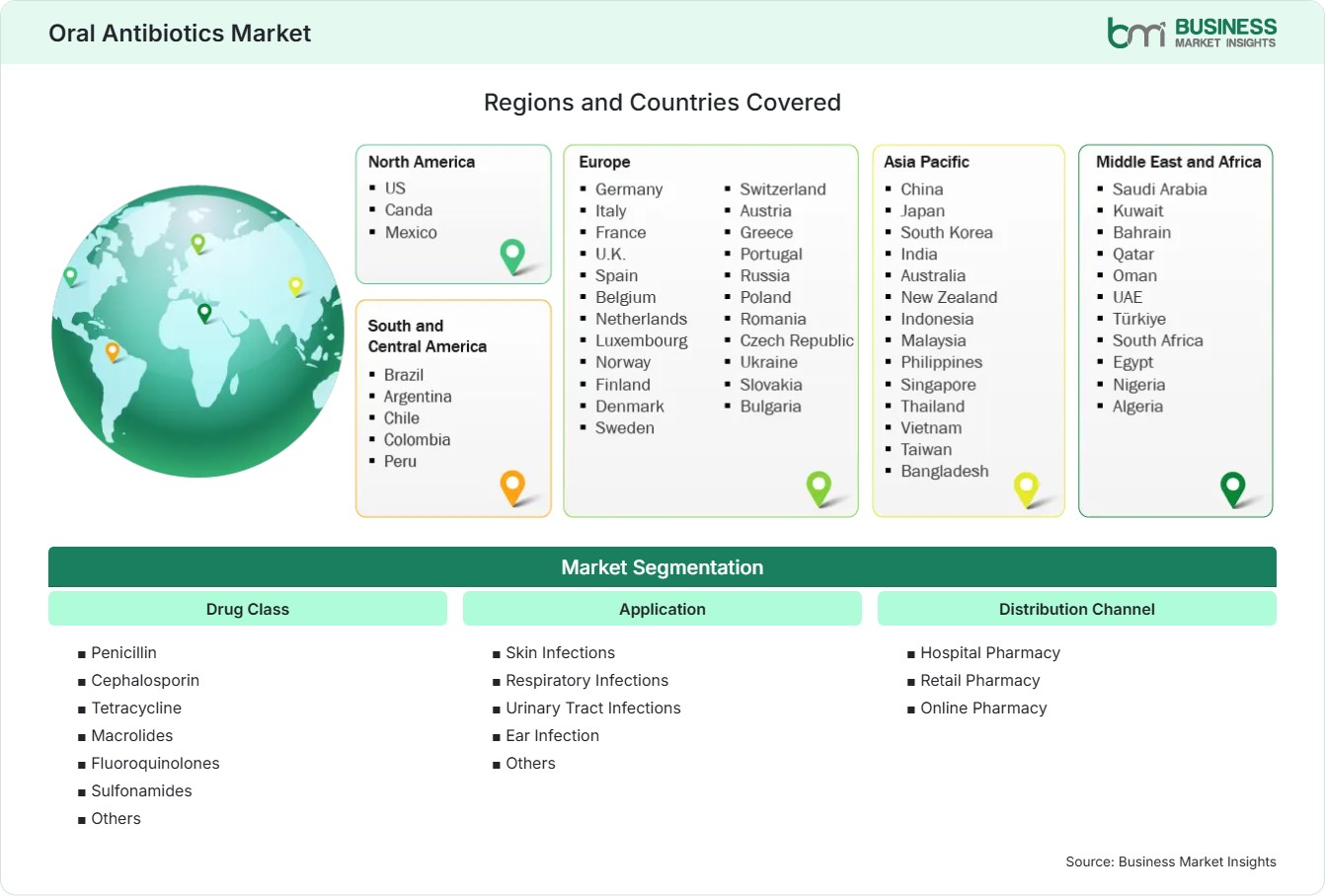
  • Drug Class: Penicillin, Cephalosporin, Tetracycline, Macrolides, Fluoroquinolones, Sulfonamides, Others
  • Application: Skin Infections, Respiratory Infections, Urinary Tract Infections, Ear Infection, Others
  • Distribution Channel: Hospital Pharmacy, Retail Pharmacy, Online Pharmacy
US$ 16.43 Bn Market size in 2025
US$ 25.36 Bn Market Size by 2033
5.58% CAGR, 2026 - 2033
2026-2033 Forecast Period

AI Overview

Oral Antibiotics Market Summary

  • North America Region: North America holds a market share of 34%–37% in 2025, growing at a CAGR of 4.8%–5.2% during 2026–2033. Growth is supported by strong prescription volumes, advanced healthcare access, antimicrobial surveillance programs, generic availability, and expanding community-based infection management across major healthcare systems. The U.S. market benefits from high outpatient antibiotic utilization, robust reimbursement systems, and a projected CAGR of 4.9%–5.3%.
  • Fastest Growing Region: Asia Pacific holds 27%–30% share in 2025 and is expected to expand at a CAGR of 6.5%–7.1% during 2026–2033. Drivers include healthcare infrastructure expansion, broader insurance coverage, rising urbanization, improved diagnosis rates, expanding pharmaceutical manufacturing capacity, and increasing treatment access in emerging economies.
  • Leading Segment: Penicillin accounts for 24%–27% share in 2025 and is expected to grow at a CAGR of 5.0%–5.4%. Broad physician familiarity, affordability, extensive clinical guidelines support, and strong use across respiratory and skin infections continue strengthening prescription demand globally.
  • High Growth Segment: Online Pharmacy represents 12%–15% share in 2025 and is projected to grow at a CAGR of 7.2%–7.8%. Telehealth expansion, e-prescribing adoption, home delivery preferences, healthcare digitization, and improved medication adherence programs create sustained channel momentum.
  • Key Market Opportunity: Expanding access to targeted oral anti-infective therapies for resistant community-acquired infections creates opportunities through innovative formulations, stewardship-aligned prescribing, differentiated portfolios, and improved patient compliance across ambulatory settings.
  • Major Market Players: Pfizer Inc.; GSK plc; Viatris Inc.; Novartis AG; Sanofi S.A.; Teva Pharmaceutical Industries Ltd.; Cipla Limited; Abbott Laboratories; Sun Pharmaceutical Industries Limited; Dr. Reddy’s Laboratories Limited.
Strategic Insights

Oral Antibiotics Market: Strategic Insights

Oral Antibiotics Market Strategic Framework
FREE PDF
Request your free sample
Request free sample
Stakeholder View

Key Takeaways

  • The value chain is still greatly affected by the sourcing of active pharmaceutical ingredients, which means that supply security and manufacturing resilience are essential for gaining a competitive advantage.
  • There are still considerable opportunities in terms of volume for the treatment categories of respiratory and urinary tract infections in both developed and developing healthcare markets.
  • The focus on innovation is now placed more on improving formulations, on enhancing patient adherence, on developing therapies that are compatible with stewardship measures, and on strategies for managing resistance rather than on creating entirely new broad-spectrum classes.
  • The Asia Pacific region offers one of the best investment opportunities due to healthcare expansion, growing pharmaceutical production capacity, and increasing availability of primary care services.
  • Industry consolidation and portfolio optimisation are still going on, pharmaceutical companies strengthening their range of anti-infective products by means of acquisitions, licensing and partnership strategies.
  • The integration of digital pharmacies with telemedicine is altering the ways in which prescriptions are fulfilled and is increasing patients' access to approved oral anti-infective treatments.
Geographic Outlook

Oral Antibiotics Market Regional Highlights

North America Oral Antibiotics Market

North America represented approximately 34%–37% of global revenue in 2025 and is expected to expand at a CAGR of 4.8%–5.2% through 2033. The region benefits from advanced healthcare infrastructure, strong outpatient treatment utilization, mature reimbursement systems, and high awareness of infectious disease treatment. The Oral Antibiotics Market share remains supported by substantial prescribing volumes for respiratory, urinary tract, and skin infections. Stewardship initiatives are improving prescription quality while maintaining significant demand across hospital and community healthcare settings.

  • Effective outpatient treatment programmes lead to a decrease in the need for hospitalisation while at the same time supporting the number of prescriptions issued through primary care networks.
  • Using a generic drug makes it more affordable and improves access within both the public and private healthcare systems.
  • Surveillance programmes enhance the monitoring of pathogens and help to guide treatment decisions on the basis of evidence.
  • Because pharmacy access is high, prescriptions can be filled quickly and patients are more likely to adhere to their treatment.
  • The integration of digital healthcare services enhances antimicrobial management procedures.

US Oral Antibiotics Market

The United States accounts for approximately 78%–82% of regional Oral Antibiotics Market demand and is projected to grow at 4.9%–5.3% CAGR through 2033. Wide insurance coverage, improved diagnostic capabilities, and well-developed retail pharmacy chains create a consistent demand base. Health care practitioners are beginning to strike a balance between the outcomes of treatment and goals of stewardship.

  • Community-acquired respiratory infections still make up a major category of prescriptions.
  • The ability to prescribe and have medications filled through the use of telehealth is increasing access and convenience.
  • The large pharmacy chains increase the availability of medications and ensure continuity of care.
  • Resistance monitoring helps doctors and nurses make better decisions in all healthcare settings.

Europe Oral Antibiotics Market

Europe holds approximately 25%–28% Oral Antibiotics Market share in 2025 and is forecast to grow at a CAGR of 4.6%–5.0%. Germany continues to be one of the key sources of revenue, whereas Poland and certain markets in Central Europe show higher growth rates. The approach taken towards the use of antibiotics responsibly determines prescribing practices. Public healthcare, well-established drug distribution systems, and generics usage ensure market stability.

  • Germany is at the head of regional demand due to its advanced healthcare infrastructure.
  • Poland shows greater growth as a result of modernizing its healthcare system and expanding access to treatment.
  • The stewardship frameworks promote the selection of therapies based on guidelines.
  • The general type of competition helps make healthcare more affordable within national healthcare systems.
  • Initiatives aimed at building resilience enhance the security of the pharmaceutical supply.

Asia Pacific Oral Antibiotics Market

Asia Pacific accounts for 27%–30% share in 2025 and represents the fastest-growing regional market with a CAGR of 6.5%–7.1%. China and India dominate regional consumption while Southeast Asian countries are emerging growth centers. Expanding healthcare coverage, urbanization, increasing diagnosis rates, and local pharmaceutical manufacturing capabilities support long-term expansion of the Oral Antibiotics Market growth outlook across healthcare systems.

  • China is still the biggest regional market as a result of the wide extent of its healthcare usage.
  • India benefits from the advantages of a robust generic manufacturing sector and is seeing greater accessibility to treatments.
  • The healthcare spending and demand for prescriptions are increasing in the countries of Southeast Asia.
  • As the number of pharmacy networks increases, so does the availability of medicines in secondary cities.
  • Public health programs increase the proportion of people who receive treatment for infectious diseases.

Rest of World Oral Antibiotics Market

The Rest of World region contributes 10%–13% Oral Antibiotics Market share and is projected to grow at 5.4%–5.9% CAGR through 2033. Increasing healthcare access and wider use of generic drugs have become advantageous to South and Central America. The Middle East and Africa are benefiting from investments in healthcare infrastructure, improvement of pharmaceuticals delivery system, and heightened awareness of the treatment of bacterial infections.

  • Brazil is still the leading market in both South and Central America.
  • Saudi Arabia is showing strong momentum in healthcare growth due to investment.
  • The use of generic medicines makes treatment more affordable and more accessible.
  • The programmes aimed at modernising healthcare lead to an expansion of prescription medicines.
  • Improving the distribution network increases the availability of products in poorly served markets.
Global Market Geography
FREE PDF
Request your free sample
Request free sample
Segment Analysis

Oral Antibiotics Market Segmentation

Drug Class

Drug Class represents the core revenue foundation of the market and accounted for approximately 34%–37% market share in 2025, expanding at a CAGR of 5.1%–5.6% through 2033. Physician prescribing behavior, resistance profiles, treatment guidelines, affordability, and spectrum of activity continue influencing class-level demand. The Oral Antibiotics Market scope within this segment remains broad because different drug classes address diverse infection categories, supporting sustained prescription volumes across outpatient and community healthcare settings.

  • Penicillin: Widely prescribed for respiratory, skin, and dental infections. Established clinical efficacy, affordability, broad availability, and strong guideline recommendations continue supporting extensive utilization across developed and emerging healthcare systems.
  • Cephalosporin: Frequently used where broader antimicrobial coverage is required. Growing adoption is supported by effectiveness against multiple bacterial strains and increasing physician preference for second- and third-generation formulations.
  • Tetracycline: Demand is driven by applications in acne management, respiratory infections, and select zoonotic diseases. Product affordability and availability continue to strengthen adoption in outpatient treatment environments.
  • Macrolides: Commonly prescribed for respiratory tract infections and penicillin-allergic patients. Their favorable dosing schedules and broad coverage of community-acquired infections support international prescription growth.
  • Fluoroquinolones: Utilized in complicated bacterial infections where broader-spectrum activity is necessary. Prescription levels are increasingly influenced by stewardship measures and evolving safety recommendations.
  • Sulfonamides: Important in urinary tract infection management and selected bacterial conditions. Clinical familiarity and cost-effectiveness help maintain stable utilization across healthcare settings.

Application

Application-based demand accounted for roughly 43%–46% of total Oral Antibiotics Market share in 2025 and is projected to expand at 5.5%–6.0% CAGR through 2033. Bacterial infection prevalence, healthcare utilization rates, patient demographics, and prescribing practices remain key determinants of demand. The market continues benefiting from substantial treatment volumes associated with community-acquired infections managed through ambulatory and outpatient care models.

  • Skin Infections: Rising incidences of cellulitis, impetigo, and wound-related bacterial infections continue to support prescription demand. Early intervention strategies in outpatient settings strengthen treatment volumes globally.
  • Respiratory Infections: This remains the largest application area due to the persistent prevalence of community-acquired bacterial respiratory diseases requiring effective first-line oral therapeutic interventions.
  • Urinary Tract Infections: Growing prevalence among women and elderly populations supports stable medication demand. Improved diagnostic and treatment accessibility continues to contribute to segment expansion.
  • Ear Infection: Pediatric populations remain primary consumers, with oral formulations commonly prescribed for uncomplicated bacterial ear infections treated outside hospital environments.

Distribution Channel

Distribution channels accounted for approximately 17%–20% market share in 2025 and are expected to grow at a CAGR of 6.2%–6.8% through 2033. Healthcare digitalization, pharmacy network expansion, telehealth adoption, and patient convenience considerations increasingly influence purchasing behavior. Oral Antibiotics Market trends indicate growing acceptance of digital prescription fulfillment, while traditional retail and hospital channels continue to exert significant market influence.

  • Hospital Pharmacy: Supports treatment continuity following diagnosis and discharge. Strong integration with healthcare providers and institutional procurement systems sustains significant prescription fulfillment volumes.
  • Retail Pharmacy: Remains the dominant distribution channel due to accessibility, broad geographic coverage, pharmacist consultation services, and established consumer purchasing behavior patterns.
  • Online Pharmacy: Benefits from telemedicine growth, e-prescription adoption, home delivery convenience, and improved medication adherence programs across multiple healthcare markets.
Market Forces

Oral Antibiotics Market Dynamics

Key Market Drivers

Rising Burden of Community-Acquired Bacterial Infections

Respiratory infections, urinary tract infections, skin infections, and ear infections continue to account for considerable healthcare treatment needs worldwide. Respiratory and infectious illnesses, according to the WHO, are still some of the major sources of healthcare visits within both developed and developing nations. Higher population densities in urban areas, population aging, and improved healthcare accessibility are all helping with the diagnosis and treatment of infections worldwide. These factors collectively strengthen the Oral Antibiotics Market growth by sustaining prescription volumes across primary care, outpatient clinics, and retail pharmacy channels while reducing dependence on hospital-based intravenous therapies.

Expansion of Generic Antibiotic Manufacturing Capacity

Generic drugs make up a major portion of the world's antibiotic prescriptions since healthcare systems prefer treatments that are cost-effective. Large corporations in India, Europe, and North America continue to expand their production capacity in order to ensure a reliable supply. Competitive pricing is beneficial not only in terms of improving access to medications but also for extending the scope of treatment in the public and private healthcare systems. Governments are paying more attention to the application of generic substitution approaches to prevent high healthcare costs. All these aspects are helping to provide greater supply security, affordability, and better access to treatment. Investment in manufacturing facilities, diversification of active pharmaceutical ingredient sources, and regulatory compliance are among the drivers of market growth potential.

Growing Shift Toward Outpatient and Home-Based Care

There is a growing emphasis among healthcare providers on outpatient treatment options to increase efficiency and reduce hospitalization costs. Simple bacterial infections can be successfully treated with oral medications that are prescribed by general practitioners, urgent care centres, and through telemedicine services. The fact that insurance coverage has been expanded, that pharmacies are more accessible, and that there has been greater adoption of digital healthcare helps to support this method of delivering care. Patients usually prefer oral treatments since they avoid the need for intravenous administration and hospital monitoring. Ongoing changes are helping to boost prescription numbers while increasing the use of these treatments in community healthcare settings. The mix of convenience, ease of access, and lower treatment costs results in continued demand.

Key Market Opportunities

Development of Targeted Therapies Against Resistant Pathogens

Resistance of bacteria to antimicrobials remains one of the main problems in the healthcare system, creating a significant opportunity for companies developing novel oral antibiotics. Healthcare professionals are always searching for drugs that, in addition to being effective, reduce the risk of developing resistance due to proper stewardship. Research and development projects aimed at developing new mechanisms of action, pathogen-specific drugs, and novel formulations offer opportunities for these companies to address the unmet needs. Innovation paths associated with resistant infections are repeatedly supported by industry organizations. Oral Antibiotics Market Forecasts indicate increasing commercial potential for innovative products addressing community-acquired resistant bacterial infections.

Expansion of Digital Pharmacy and E-Prescription Ecosystems

The rapid digitalization of healthcare systems is changing how medicines are distributed and prescribed. The integration of online pharmacies with telemedicine will increase convenience for patients and will increase access to healthcare. E-prescription software will help reduce processing time and ensure that the patient adheres to their medications through automated reminders and delivery methods. The rising availability of the internet, in addition to regulatory changes in many areas, will drive the use of these platforms. There will be more partnerships between pharma companies and digital health companies in order to engage patients and improve distribution strategy.

Healthcare Expansion in Emerging Economies

In Asia, Latin America, Africa, and certain areas of the Middle East, developing countries are still making heavy investments in healthcare infrastructure, insurance coverage, and programs relating to access to medicines. The growing number of middle-class people, increased urbanisation and higher levels of awareness regarding public health are all contributing to higher rates of treatment for bacterial infections. The government is improving its domestic initiatives of purchasing medicines while at the same time facilitating the growth of pharmacy chains. Diagnostic services have also improved to ensure that infections are detected early and treated promptly. Pharmaceutical companies have substantial potential to increase their sales due to rising health spending and the growing demand for low-cost, high-quality antibiotics.

Market Restraints and Challenges

Antimicrobial Resistance and Stewardship Restrictions

The fact that rising antimicrobial resistance is leading healthcare authorities to implement more rigorous stewardship measures with the aim of reducing inappropriate prescribing has the effect that greater control over prescribing will lead to a decrease in the use of broad-spectrum treatments and result in higher levels of regulatory oversight. Increasingly, healthcare providers are required to explain their choice of antibiotic therapy based on clinical guidelines and diagnostic information. Issues related to antibiotic resistance are also responsible for creating tighter therapeutic approaches in a number of medical environments. While such steps will improve long-term health outcomes, they will also reduce the potential for volume gains in certain product categories and increase the development demands on manufacturers seeking to make an impact in particular therapy areas.

Supply Chain Dependence on Antibiotic API Production

The reality is that much of the world’s manufacturing of active pharmaceutical ingredients of antibiotics remains localized in a small number of facilities. This means that any of the supply issues, government intervention, political considerations, or scarcity of the input materials will affect the availability of drugs and pricing. Companies continue to be pressured to diversify sources and ensure robust inventory. In case there is any disruption in production, shortages of vital drugs will arise. The advantage of investing in local manufacturing is increased security. On the other hand, it increases operational costs. Challenges remain that continue to impact the efficiency of the global antibiotic supply chain.

Company Analysis

Competitive Landscape

The current Oral Antibiotics Market analysis indicates a highly competitive environment characterized by large multinational pharmaceutical companies and major generic manufacturers competing through brand portfolios, manufacturing scale, distribution reach, and regulatory capabilities.

Company Name

Overview

Products and Services Relevant to this Market

Pfizer Inc.

Global pharmaceutical leader with extensive anti-infective expertise and broad geographic presence.

Antibiotics, anti-infective therapies, hospital products, and prescription medicine portfolios.

GSK plc

Major healthcare company with strong infectious disease and pharmaceutical development capabilities.

Antibiotic therapies, antimicrobial R&D programs, prescription medicines.

Viatris Inc.

Global generic and specialty pharmaceutical manufacturer operating across major markets.

Generic antibiotics, branded generics, anti-infective products.

Novartis AG

Multinational healthcare company with large pharmaceutical manufacturing capabilities.

Anti-infective medicines and specialty pharmaceutical products.

Sanofi S.A.

Diversified pharmaceutical company with strong global commercial presence.

Prescription medicines, anti-infective therapies, healthcare products.

Teva Pharmaceutical Industries Ltd.

Leading generic medicine producer with broad distribution capabilities.

Oral antibiotic formulations and generic anti-infective therapies.

Cipla Limited

Major pharmaceutical manufacturer serving domestic and international markets.

Generic antibiotics, respiratory medicines, oral formulations.

Abbott Laboratories

Global healthcare company with pharmaceutical and healthcare product offerings.

Branded generic antibiotics and prescription pharmaceutical products.

Sun Pharmaceutical Industries Limited

Large specialty and generic pharmaceutical company with extensive global operations.

Oral antibiotics and broad anti-infective therapy portfolio.

Dr. Reddy’s Laboratories Limited

International pharmaceutical company focused on generic and specialty medicines.

Antibiotic formulations, generic therapies, and healthcare solutions.

Trust & Transparency

Research Methodology

The market analysis combines proprietary research with secondary data from government agencies, company disclosures, regulatory filings, industry databases and expert interviews. Market estimates are validated through data triangulation, cross-market benchmarking and analyst review.

View Full Research Methodology

Questions Answered

Frequently Asked Questions

What does an Oral Antibiotics Market Report typically evaluate?

It generally assesses market size, regional demand patterns, competitive positioning, drug-class performance, application trends, distribution channels, regulatory influences, and future growth opportunities.

How are online pharmacies influencing industry development?

Online pharmacies improve accessibility, prescription fulfillment convenience, treatment adherence, and integration with telehealth services, making them one of the fastest-growing distribution channels.

Which drug class currently leads revenue generation?

Penicillin-based products remain the leading drug class because of their broad clinical utility, affordability, established treatment guidelines, and extensive global adoption.

Which region offers the strongest growth potential?

Asia Pacific is expected to demonstrate the strongest expansion due to healthcare infrastructure development, growing insurance coverage, higher diagnostic rates, and increasing pharmaceutical manufacturing investments.

What factors are driving demand for oral antibiotic therapies?

Rising bacterial infection incidence, expanding outpatient treatment models, greater healthcare access in emerging economies, and widespread generic availability are among the primary demand drivers.

Access the Full Oral Antibiotics Market Report

Get segment-level forecasts, regional estimates, competitive benchmarking, company profiles and downloadable Excel datasets.

Access the full Oral Antibiotics Market Report
350 pages PDF & Excel | 2026-09-18
Similar Research

Related Market Reports