
Antibiotics Market Outlook: Size, Share, Trends, Growth Analysis, Competitive Landscape & Forecast, 2026-2033

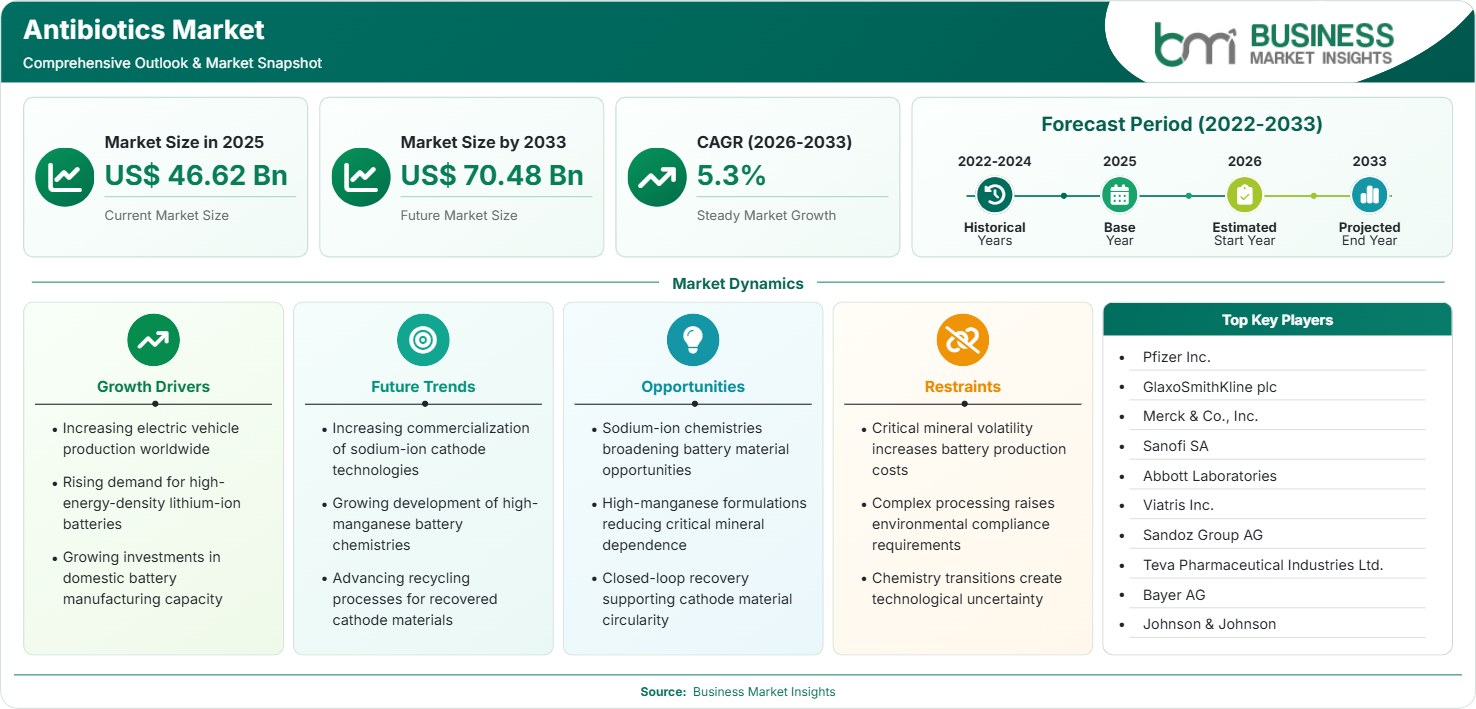
The Antibiotics Market size was valued at US$ 46.62 Billion in 2025 and is projected to reach US$ 70.48 Billion by 2033, growing at a CAGR of 5.3% during 2026–2033. Rising antimicrobial resistance, increasing infectious disease burden, expanding hospital admissions, and growing investment in next-generation anti-infective therapies continue creating substantial commercial opportunities.

Report Coverage
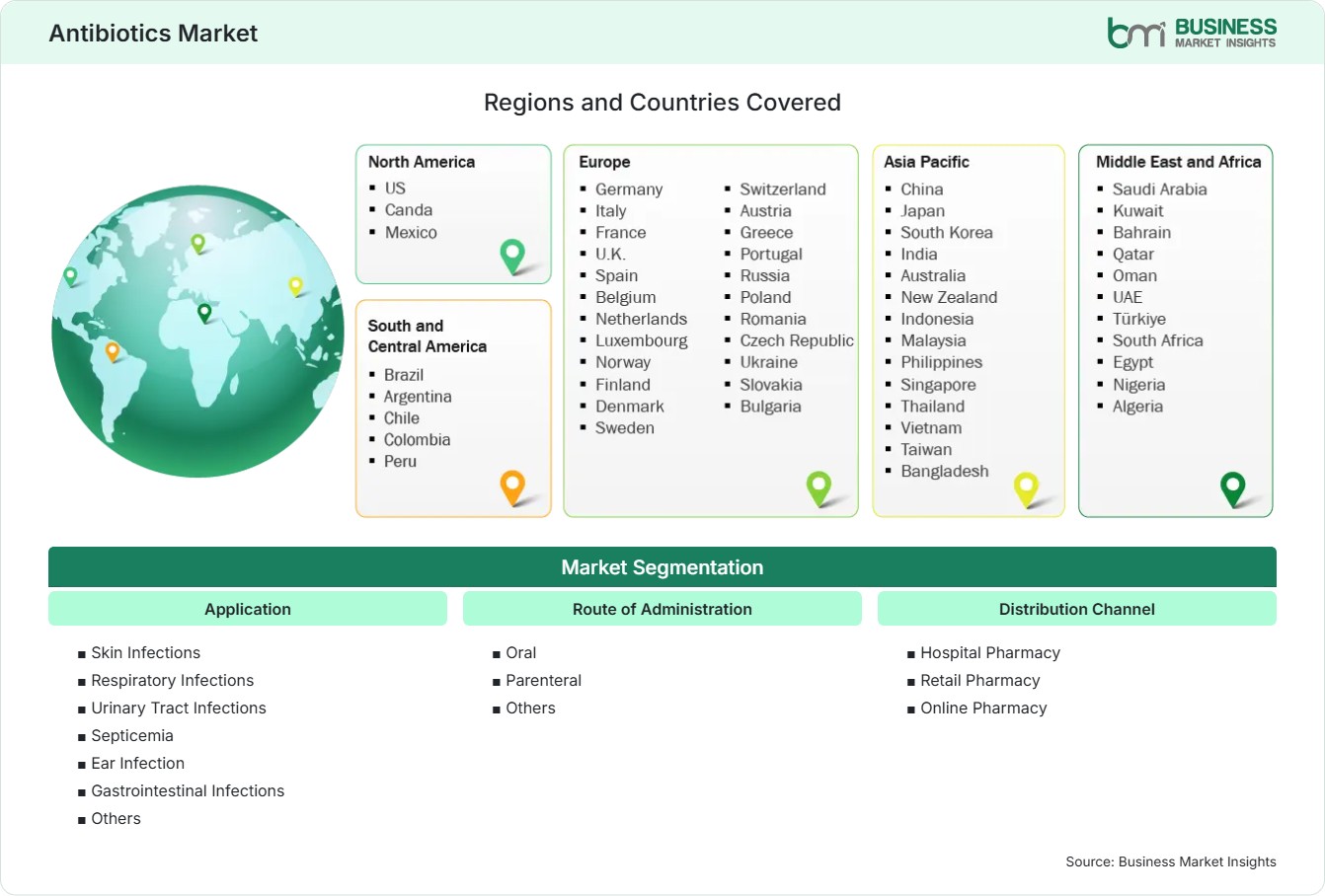
  • Application: Skin Infections, Respiratory Infections, Urinary Tract Infections, Septicemia, Ear Infection, Gastrointestinal Infections, Others
  • Route of Administration: Oral, Parenteral, Others
  • Distribution Channel: Hospital Pharmacy, Retail Pharmacy, Online Pharmacy
US$ 46.62 Bn Market size in 2025
US$ 70.48 Bn Market Size by 2033
5.3% CAGR, 2026 - 2033
2026-2033 Forecast Period

AI Overview

Antibiotics Market Summary

  • North America Region: North America holds a market share of 36%–39% in 2025, growing at a CAGR of 4.8%–5.2% during 2026–2033, supported by advanced healthcare infrastructure, strong reimbursement systems, antimicrobial stewardship programs, innovative drug development, hospital-acquired infection management, biopharmaceutical investments, and rising demand for targeted anti-infective therapies. The U.S. maintains regional leadership through extensive pharmaceutical innovation, high prescription volumes, and expanding infectious disease treatment demand, advancing at 4.9%–5.3% CAGR.
  • Fastest Growing Region: Asia Pacific accounts for 25%–28% share in 2025 and advances at a CAGR of 6.3%–6.8% during 2026–2033, supported by expanding healthcare access, rising infection incidence, increased pharmaceutical manufacturing capacity, government funding initiatives, stronger diagnostics adoption, and growing awareness regarding antimicrobial resistance management.
  • Leading Segment: Penicillin represents 26%–29% market share in 2025 and grows at 4.9%–5.4% CAGR during 2026–2033, supported by broad-spectrum utilization, cost-effectiveness, established clinical guidelines, extensive availability, bacterial infection treatment demand, healthcare affordability considerations, and continual inclusion within essential medicines programs.
  • High Growth Segment: Online Pharmacy contributes 11%–14% share in 2025 and expands at 7.2%–7.8% CAGR during 2026–2033, supported by digital healthcare adoption, convenience-driven purchasing behavior, telemedicine integration, prescription fulfillment efficiency, remote patient accessibility, e-commerce expansion, and increasing chronic infection management requirements.
  • Key Market Opportunity: Development of novel antimicrobial agents addressing multidrug-resistant pathogens offers significant revenue potential, supported by public-private research partnerships, incentive programs, precision medicine approaches, and expanding infectious disease surveillance initiatives.
  • Major Market Players: Pfizer Inc.; GlaxoSmithKline plc; Merck & Co., Inc.; Sanofi SA; Abbott Laboratories; Viatris Inc.; Sandoz Group AG; Teva Pharmaceutical Industries Ltd.; Bayer AG; Johnson & Johnson.
Strategic Insights

Antibiotics Market: Strategic Insights

Antibiotics Market Strategic Framework
FREE PDF
Request your free sample
Request free sample
Stakeholder View

Key Takeaways

  • The industry operates through a complex value chain involving active pharmaceutical ingredient manufacturers, generic drug producers, contract manufacturing organizations, distributors, hospital systems, retail pharmacies, and digital healthcare providers, creating resilient supply networks across major healthcare economies.
  • Respiratory infections, urinary tract infections, and septicemia treatment applications continue presenting substantial revenue opportunities, while online distribution channels and emerging economies provide the strongest long-term expansion potential.
  • Innovation is shifting toward pathogen-specific therapies, beta-lactam inhibitor combinations, rapid susceptibility testing integration, bacteriophage research, and antimicrobial stewardship-compatible solutions designed to improve treatment outcomes while limiting resistance development.
  • Asia Pacific presents a compelling investment case due to rising healthcare expenditure, expanding pharmaceutical manufacturing capabilities, favorable demographics, growing insurance coverage, and increasing public health initiatives targeting infectious disease management.
  • Strategic collaborations between pharmaceutical companies, biotechnology firms, research institutes, and government agencies are accelerating antibiotic discovery programs as global health systems prioritize antimicrobial resistance mitigation and treatment innovation.
  • Digital health integration is transforming prescription fulfillment, treatment adherence monitoring, and remote consultation capabilities, enabling broader patient access while improving efficiency across antibiotic distribution and care delivery channels.
Geographic Outlook

Antibiotics Market Regional Highlights

North America Antibiotics Market

North America accounted for approximately 36%–39% of global revenue in 2025 and is projected to expand at a CAGR of 4.8%–5.2% through 2033. Regional leadership is further fortified through superior healthcare infrastructure, solid pharmaceutical R&D expenditure, high levels of diagnostics, and infection surveillance systems. Continued success in treating respiratory, skin, and hospital infections will further boost regional demand. Additionally, there are various antimicrobial stewardship programs, which have helped in fostering innovations in anti-infectives. The regional Antibiotics Market share remains the highest globally.

  • Strong hospital networks and infectious disease surveillance programs support early diagnosis, effective therapy deployment, and sustained product utilization across acute and chronic care settings throughout the region.
  • Pharmaceutical innovation remains robust, with companies investing in novel antibiotics, combination therapies, and resistance-targeting approaches aimed at addressing increasingly complex bacterial pathogens.
  • Growing prevalence of healthcare-associated infections strengthens demand for advanced treatment options while encouraging healthcare facilities to adopt evidence-based antimicrobial management practices.
  • Public health agencies continue supporting antimicrobial resistance monitoring programs, improving treatment guidelines and helping healthcare providers optimize therapeutic decision-making across patient populations.
  • Increased adoption of molecular diagnostics enhances pathogen identification speed and treatment accuracy, supporting improved clinical outcomes and more efficient antibiotic utilization.

US Antibiotics Market

The United States represents approximately 82%–86% of North American revenue and is expected to grow at a CAGR of 4.9%–5.3% between 2026 and 2033. High healthcare costs, substantial investments in research, and strong drug-manufacturing ability support national dominance. Antimicrobial resistance programs by the federal government, comprehensive insurance coverage, and a well-established hospital system keep supporting demand for drugs treating respiratory, urinary tract, skin, and bloodstream infections.

  • Significant biopharmaceutical R&D expenditure supports the development of innovative anti-infective therapies and resistance-focused treatment solutions addressing unmet clinical needs.
  • Rising prevalence of multidrug-resistant organisms reinforces demand for advanced antibiotics while encouraging greater investment in emerging antimicrobial technologies.
  • Regulatory mechanisms supporting priority anti-infective development facilitate commercialization opportunities for innovative therapies targeting critical bacterial pathogens.
  • Expansion of outpatient treatment models and integrated care systems enhances accessibility while improving prescription management and treatment adherence.

Europe Antibiotics Market

Europe holds approximately 27%–30% market share in 2025 and is anticipated to expand at a CAGR of 4.7%–5.1% through 2033. Regional growth is enabled through universal health care schemes, anti-microbial resistance policies, and the development of the pharmaceutical industry. The top contributor to regional revenues is Germany, whereas the countries in Eastern Europe are showing rapid adoption rates. Public health campaigns focused on antibiotic usage, along with increased demand for better medicines, influence regional business prospects.

  • Germany remains the leading regional market due to strong healthcare spending, pharmaceutical innovation capabilities, and broad access to advanced infection treatment services.
  • Poland and selected Central European countries represent high-growth markets, supported by healthcare modernization initiatives and increased pharmaceutical investments.
  • Regional antimicrobial stewardship programs encourage evidence-based prescribing practices while supporting appropriate utilization of anti-infective therapies.
  • Increasing collaboration between industry participants and public health agencies accelerates research efforts addressing multidrug-resistant bacterial infections.
  • Growing adoption of rapid diagnostic technologies improves treatment precision and supports optimization of clinical antibiotic management strategies.

Asia Pacific Antibiotics Market

Asia Pacific accounts for approximately 25%–28% of global revenue in 2025 and is forecast to register the fastest CAGR of 6.3%–6.8% through 2033. Expanding healthcare infrastructure, population growth, increasing pharmaceutical manufacturing output, and improving healthcare accessibility drive regional expansion. China remains the largest market, while India exhibits among the fastest growth trajectories. Rising awareness regarding antimicrobial resistance, government healthcare investments, and increasing infection diagnosis rates continue stimulating industry demand.

  • China leads regional revenue generation through extensive pharmaceutical manufacturing capabilities, expanding healthcare services, and large patient populations requiring infection treatment.
  • India demonstrates the highest growth potential owing to healthcare infrastructure improvements, increasing insurance penetration, and expanding access to prescription medicines.
  • Government efforts addressing infectious disease burden continue supporting antibiotic availability and treatment accessibility across developing healthcare systems.
  • Regional contract manufacturing growth strengthens supply-chain resilience while enhancing production capacity for both domestic and export markets.
  • Rising urbanization and healthcare utilization contribute to increased diagnosis rates and broader adoption of pharmaceutical infection management solutions.

Rest of World Antibiotics Market

The Rest of World region, including South & Central America and the Middle East & Africa, represents approximately 8%–10% of global Antibiotics Market revenue in 2025 and is expected to grow at a CAGR of 5.4%–5.9% through 2033. Healthcare infrastructure development, increasing public health expenditure, and improving access to essential medicines support demand growth. Brazil leads South & Central America, while Saudi Arabia demonstrates strong expansion prospects within the Middle East.

Expanding pharmaceutical distribution networks and infectious disease control initiatives continue enhancing treatment accessibility across underserved populations and emerging healthcare systems.

  • Brazil remains the largest South & Central American market, supported by expanding healthcare programs, pharmaceutical manufacturing investments, and broadening treatment accessibility.
  • Saudi Arabia exhibits strong growth potential through healthcare transformation initiatives, infrastructure investments, and increasing adoption of advanced pharmaceutical therapies.
  • Rising infectious disease awareness supports greater utilization of prescription anti-infective products across both public and private healthcare facilities.
  • Expanding healthcare coverage programs enhance patient access to hospital and retail pharmacy channels throughout developing markets.
  • Investments in healthcare infrastructure and laboratory diagnostics improve disease detection capabilities and strengthen long-term treatment demand.
Global Market Geography
FREE PDF
Request your free sample
Request free sample
Segment Analysis

Antibiotics Market Segmentation

Drug Class

Drug class segmentation remains fundamental to prescribing patterns and treatment outcomes across infectious disease management. This segment accounted for the entire market structure, with Penicillin maintaining the leading position at 26%–29% market share in 2025 and expanding at a 4.9%–5.4% CAGR through 2033. The Antibiotics Market scope continues broadening as resistance patterns encourage diversification across multiple therapeutic classes while preserving demand for established first-line treatment options.

  • Penicillin: Maintains extensive utilization across respiratory, skin, and soft tissue infections due to proven efficacy, favorable safety profile, established clinical guidelines, and widespread availability in developed and emerging healthcare systems.
  • Cephalosporin: Strong adoption is supported by broad-spectrum antibacterial coverage and effectiveness against hospital-acquired infections, making this class important for inpatient treatment protocols and surgical infection prevention strategies.
  • Aminoglycosides: Frequently prescribed for severe gram-negative bacterial infections and critical care applications where rapid bactericidal activity remains essential for effective patient management and clinical outcomes.
  • Tetracycline: Utilized extensively in respiratory infections, dermatological conditions, and selected zoonotic diseases, supported by versatility, affordability, and expanding use across outpatient healthcare settings.
  • Macrolides: Widely preferred in respiratory tract infection treatment and among patients requiring alternatives to beta-lactam therapies, supported by convenient dosing schedules and broad therapeutic applicability.
  • Fluoroquinolones: Important for treating complicated urinary, gastrointestinal, and respiratory infections where extensive tissue penetration and broad antibacterial coverage provide significant therapeutic advantages.
  • Sulfonamides: Continue serving niche treatment requirements, particularly combination therapies and selected bacterial infections where cost-effectiveness and clinical familiarity support sustained demand.

Application

Application diversity reflects the extensive role of anti-infective therapies across healthcare systems. Respiratory infections represent the largest application segment, accounting for approximately 29%–32% Antibiotics Market share in 2025, while septicemia-related treatments demonstrate accelerated clinical demand due to increasing hospitalization rates. The segment is forecast to advance at a 5.2%–5.7% CAGR through 2033 as infection surveillance and treatment accessibility improve globally.

  • Skin Infections: Demand is driven by increasing incidence of cellulitis, wound infections, and surgical site complications requiring effective antibacterial treatment across hospital and outpatient care environments.
  • Respiratory Infections: Represents the largest application category due to substantial patient volumes associated with pneumonia, bronchitis, and upper respiratory conditions requiring evidence-based antibacterial interventions.
  • Urinary Tract Infections: Supported by growing prevalence among elderly populations, women, and catheterized patients, generating consistent prescription volumes across primary and specialist care settings.
  • Septicemia: Rising critical care admissions and increasing awareness of bloodstream infection management strengthen treatment demand and encourage adoption of advanced antibacterial therapeutic regimens.
  • Ear Infection: Sustained pediatric and adult patient prevalence continues supporting prescription volumes, particularly within primary care settings and community healthcare systems.
  • Gastrointestinal Infections: Growth reflects increasing diagnosis rates, international travel patterns, and expanding access to healthcare services capable of identifying and treating bacterial gastrointestinal conditions.

Route of Administration

Route of administration influences treatment compliance, clinical outcomes, and healthcare resource utilization. Oral formulations dominate with approximately 56%–60% Antibiotics Market share in 2025, supported by patient convenience and broad therapeutic applicability. The segment is expected to register a 5.0%–5.5% CAGR through 2033, while parenteral administration continues benefiting from critical care and hospital-based treatment requirements.

  • Oral: Preferred across outpatient settings due to convenience, lower administration costs, strong patient adherence potential, and broad availability for common bacterial infection treatment requirements.
  • Parenteral: Essential for severe infections, critical care management, and hospitalized patients requiring rapid therapeutic action, controlled dosing, and enhanced bioavailability for optimal treatment outcomes.

Distribution Channel

Distribution channels continue evolving alongside healthcare digitization and changing patient purchasing behaviors. Hospital pharmacies maintain leadership with approximately 46%–49% share in 2025, while online pharmacies emerge as the fastest-growing category with a 7.2%–7.8% CAGR through 2033. Antibiotics Market trends indicate increasing integration between digital healthcare platforms and pharmaceutical dispensing networks.

  • Hospital Pharmacy: Leads distribution due to high inpatient treatment volumes, critical care requirements, formulary-driven purchasing, and growing incidence of complex bacterial infections requiring supervised therapy.
  • Retail Pharmacy: Remains a major channel supported by extensive geographic coverage, physician prescription fulfillment, accessibility, and strong consumer trust across both developed and developing markets.
  • Online Pharmacy: Experiencing rapid adoption through telehealth integration, prescription digitization, home delivery services, and growing consumer preference for convenient medication access solutions.
Market Forces

Antibiotics Market Dynamics

Key Market Drivers

Rising Burden of Antimicrobial Resistance Worldwide

Antimicrobial resistance has emerged as one of the most significant public health challenges influencing demand for innovative anti-infective therapies. As per the WHO, the global prevalence of antibiotic resistance is responsible for millions of infections per year and raises the cost of health care due to increased hospital stays and complicated treatments. Resistance in disease-causing organisms such as E. coli, K. pneumoniae, and S. aureus has prompted health practitioners to explore new treatment options. This situation offers enough reasons why there needs to be research on the creation of new antibiotics or combination drugs. Surveillance measures, better infection control practices, and increased knowledge on the part of the doctors have made this even more important.

Increasing Incidence of Respiratory and Hospital-Acquired Infections

Respiratory diseases, healthcare-associated infections, bloodstream infections, and postoperative bacterial infections remain key drivers of therapeutic needs worldwide. Increased population aging, increased hospitalizations, increased admissions to intensive care units, and the prevalence of chronic conditions make individuals more prone to bacterial infections. Medical practitioners are increasingly issuing prescriptions for broad- and narrow-spectrum antibiotics. Advancements in technology have also facilitated early detection and treatment of patients. The demand is especially high in hospitals, where there is a need to prevent and treat infections. This ensures business growth and provides ideal conditions for the use of the products.

Expansion of Global Healthcare Infrastructure and Access

Healthcare spending growth across emerging economies continues to improve access to prescription medicines and infectious disease treatment services. The government is investing in hospitals, community health centers, laboratory diagnostics, and public health initiatives to improve the quality of healthcare. Increased insurance coverage and payment options make it easier for patients to access antibiotics. Increased urbanization and awareness regarding the handling of infections have led to increased diagnosis and treatment. Pharmaceutical companies gain through expanded distribution channels, improved logistics, and improved healthcare delivery. This creates a wider base for the treatment of infections, which helps to sustain growth in the industry.

Key Market Opportunities

Development of Next-Generation Anti-Infective Therapies

The search for innovative therapies capable of overcoming multidrug-resistant pathogens represents one of the industry's most attractive investment opportunities. Pharma firms are focusing on developing new mechanisms of action, beta-lactamase inhibitors, pathogen-specific products, and precision anti-infection drugs. Government-supported funding programs, public-private partnerships, and incentives from regulatory authorities drive research and development in this field. The focus of health care systems on overcoming the problem of resistance creates an opportunity for pharma firms that can offer superior clinical outcomes. The long duration of the development process and huge unmet medical needs are creating high commercial value. Future Antibiotics Market Forecasts are expected to be increasingly influenced by innovative therapies addressing critical resistance challenges and specialized infection categories.

Growth of Digital Healthcare and Online Pharmacy Platforms

Rapid expansion in telemedicine, electronic prescribing, and digital pharmacy services is creating new distribution opportunities across developed and emerging regions. There is an increasing trend among patients to use virtual visits and delivery services for their medications. Internet pharmacies are making efforts in developing secured prescription verification systems, healthcare ecosystems, and engagement tools for patients. Such innovations will contribute to enhancing the accessibility of treatments for the underprivileged communities as well. Pharmaceutical companies will be able to use such innovations to make more customers available through online distribution channels. The digitization of the healthcare industry is likely to benefit the pharma supply chain in the future.

Emerging Market Manufacturing and Localization Initiatives

Many governments are promoting domestic pharmaceutical production to strengthen supply security and reduce dependence on imported medicines. Localization, manufacturing investments, and industrial policies will spur the development of production capacities in Asia, Latin America, and the Middle East regions. They open up avenues for collaboration, technology transfer, and regional production capabilities. Manufacturing on local levels makes the company's supply chain more reliable while allowing it to better deal with healthcare settings where costs are an issue. With the continued development of healthcare systems and the pharmaceutical infrastructure in emerging markets, those firms that localize their production and distribution will benefit competitively.

Market Restraints and Challenges

Stringent Stewardship Programs and Reduced Prescription Volumes

Factor: With more antimicrobial stewardship programs being implemented, healthcare professionals are encouraged to lower the improper usage of antibiotics. Impact: Although such efforts benefit patients and help fight antibiotic resistance, they may limit manufacturers' volume-related growth potential. Increasing attention is paid to the evidence-based guidelines for prescriptions, limiting their application only to certain circumstances of treatment. Additional steps taken to improve physician education and monitor prescriptions also contribute to the limited use of the drugs. In spite of the clinical benefits, such efforts might decrease demand for some already existing medicines.

High Development Costs and Limited New Product Commercialization

Factor: Research and development in the area of antibiotics still poses scientific and economic challenges owing to the time-consuming process of clinical trials and low revenue generation compared to other drugs for chronic diseases. Impact: There have been several pharmaceutical companies that have reduced their expenditures on antibacterial R&D programs because of various commercial risks associated with them. It could be a problem of an innovation gap that could prevent access to medicines and innovation in the treatment of drug-resistant bacteria. Bio-tech companies often face budget constraints, which might limit their ability to carry out late-stage R&D programs. Hence, it is necessary for companies in the industry to collaborate in order to innovate.

Company Analysis

Competitive Landscape

The competitive environment remains characterized by established multinational pharmaceutical manufacturers, generics specialists, and innovation-driven developers focused on resistance management and infectious disease treatment. Current Antibiotics Market analysis indicates that product portfolio diversification, manufacturing scale, regulatory expertise, and strategic collaborations remain critical competitive differentiators.

Company Name

Overview

Products and Services relevant to this market

Pfizer Inc.

Global biopharmaceutical company with extensive anti-infective expertise and strong research capabilities across infectious disease treatment categories.

Broad portfolio of antibacterial medicines, hospital anti-infectives, injectable therapies, and research programs targeting resistant bacterial pathogens.

GlaxoSmithKline plc

Major healthcare company focused on specialty medicines, vaccines, and infectious disease research initiatives worldwide.

Anti-infective products, respiratory infection therapies, vaccine solutions, and research collaborations addressing bacterial disease challenges.

Merck & Co., Inc.

Research-driven pharmaceutical company maintaining significant presence in hospital and infectious disease therapeutic markets.

Antibacterial medications, hospital treatment solutions, anti-infective research programs, and resistance-focused therapeutic development initiatives.

Sanofi SA

Diversified healthcare company operating across pharmaceuticals, specialty treatments, and global healthcare markets.

Prescription anti-infective medicines, infectious disease treatment products, and healthcare solutions supporting bacterial infection management.

Abbott Laboratories

Global healthcare organization serving pharmaceutical, diagnostics, and medical technology sectors.

Diagnostics, infection detection technologies, pharmaceutical products, and healthcare solutions improving infectious disease treatment pathways.

Viatris Inc.

Large global provider of branded and generic medicines with broad therapeutic market coverage.

Generic antibiotics, oral formulations, injectable anti-infectives, and healthcare access solutions supporting broad patient populations.

Sandoz Group AG

Leading generic and biosimilar manufacturer with extensive global supply capabilities.

Generic antibiotic portfolio, hospital treatment products, and cost-effective anti-infective solutions for healthcare providers.

Teva Pharmaceutical Industries Ltd.

Multinational pharmaceutical company with strong generic medicine manufacturing and distribution capabilities.

Broad generic antibiotic offerings, injectable products, and pharmaceutical supply solutions serving global healthcare systems.

Bayer AG

Diversified life sciences enterprise operating across pharmaceuticals and healthcare innovation activities.

Anti-infective therapies, healthcare products, research capabilities, and infection-management solutions supporting clinical treatment needs.

Johnson & Johnson

Global healthcare leader engaged in pharmaceutical innovation and specialized therapeutic development.

Infectious disease therapies, pharmaceutical research programs, hospital treatment solutions, and healthcare innovation initiatives.

Trust & Transparency

Research Methodology

The market analysis combines proprietary research with secondary data from government agencies, company disclosures, regulatory filings, industry databases and expert interviews. Market estimates are validated through data triangulation, cross-market benchmarking and analyst review.

View Full Research Methodology

Questions Answered

Frequently Asked Questions

What does an Antibiotics Market Report typically evaluate?

An Antibiotics Market Report commonly assesses industry size, competitive positioning, product segments, regional dynamics, regulatory influences, innovation trends, growth opportunities, and future commercial prospects.

How does antimicrobial resistance affect industry innovation?

Resistance pressures pharmaceutical companies to invest in novel mechanisms of action, targeted therapies, combination treatments, and advanced research programs focused on multidrug-resistant bacterial pathogens.

Which distribution channel is expected to grow the fastest?

Online pharmacies are projected to register the fastest expansion because of telemedicine adoption, electronic prescribing growth, convenient home delivery services, and increasing healthcare digitization worldwide.

Which region currently leads industry revenue generation?

North America remains the leading regional market due to advanced healthcare infrastructure, strong pharmaceutical innovation, extensive reimbursement systems, and high treatment rates for infectious diseases.

What factors are driving demand for antibacterial medicines globally?

Rising antimicrobial resistance, growing infection incidence, expanding healthcare access, increasing hospital admissions, and improved diagnostic capabilities are among the primary factors supporting demand across developed and emerging healthcare systems.

Access the Full Antibiotics Market Report

Get segment-level forecasts, regional estimates, competitive benchmarking, company profiles and downloadable Excel datasets.

Access the full Antibiotics Market Report
350 pages PDF & Excel | 2026-09-10
Similar Research

Related Market Reports