
Non Small Cell Lung Cancer Therapeutics Market Outlook: Size, Share, Trends, Growth Analysis, Competitive Landscape & Forecast, 2026-2033

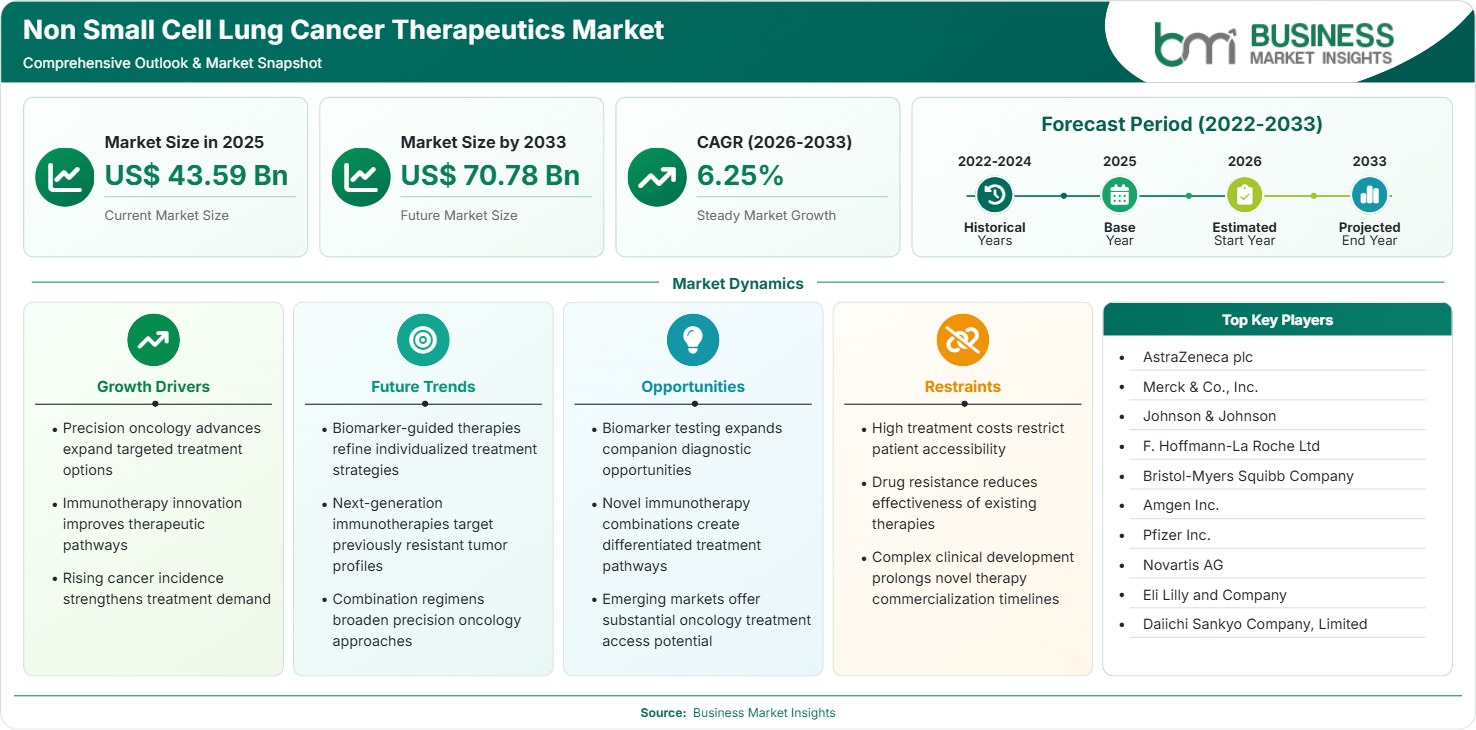
The Non Small Cell Lung Cancer Therapeutics Market size was valued at US$ 43.59 Billion in 2025 and is projected to reach US$ 70.78 Billion by 2033, growing at a CAGR of 6.25% during 2026–2033, driven by biomarker-guided treatment, immunotherapy adoption, targeted regimens, diagnostic advances, and expanding access to oncology care.

Report Coverage
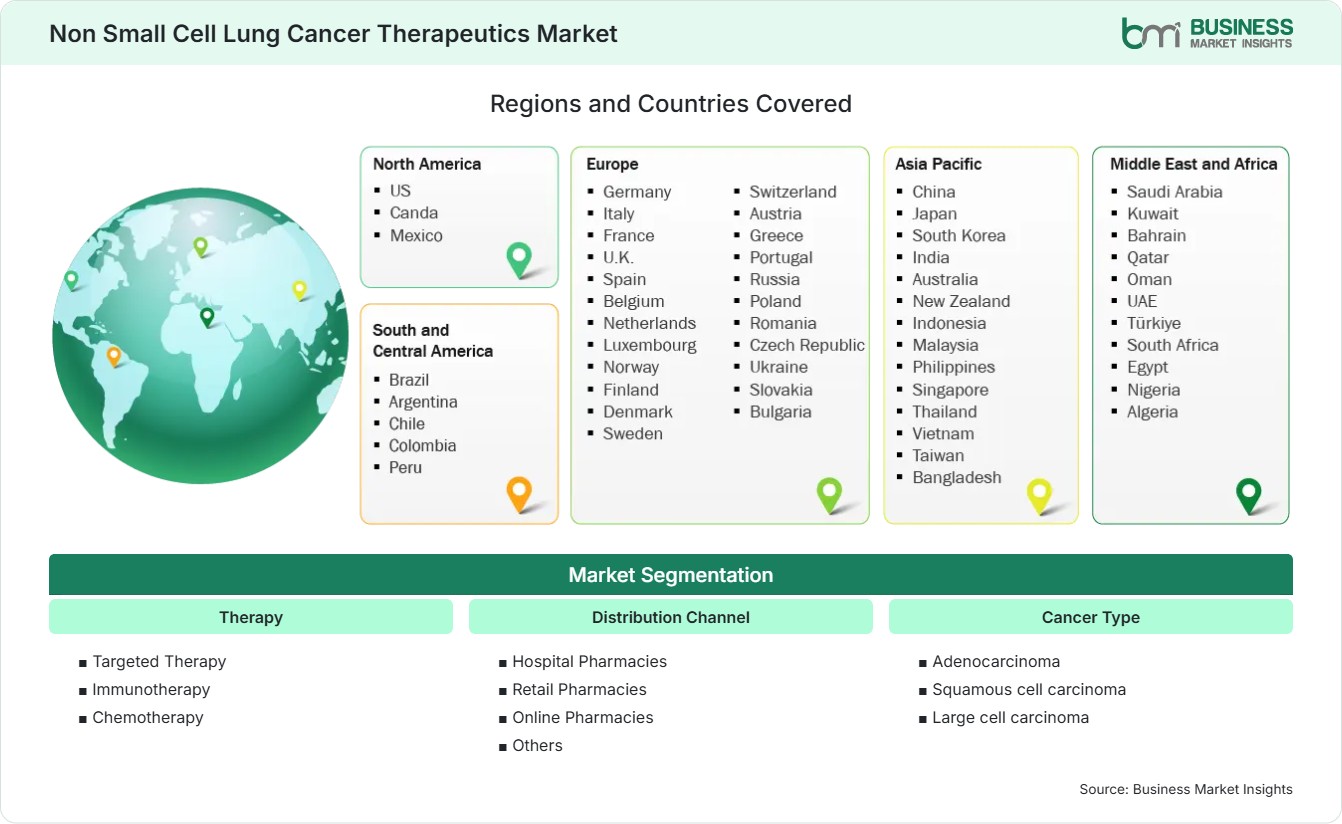
  • Therapy: Targeted Therapy, Immunotherapy, Chemotherapy
  • Distribution Channel: Hospital Pharmacies, Retail Pharmacies, Online Pharmacies, Others
  • Cancer Type: Adenocarcinoma, Squamous cell carcinoma, Large cell carcinoma
US$ 43.59 Bn Market size in 2025
US$ 70.78 Bn Market Size by 2033
6.25% CAGR, 2026 - 2033
2026-2033 Forecast Period

AI Overview

Non Small Cell Lung Cancer Therapeutics Market Summary

  • North America Region: North America holds a Non Small Cell Lung Cancer Therapeutics Market share of 38%–41% in 2025, growing with a CAGR of 6.0%–6.4%, influenced by precision oncology, reimbursement, clinical trials, biomarker testing, and strong pharmaceutical pipelines. The US accounts for most regional revenue, supported by broad adoption of targeted therapies, immunotherapies, companion diagnostics, and combination regimens. US growth is estimated at 6.1%–6.5% CAGR through 2033.
  • Fastest Growing Region: Asia Pacific holds market share of 22%–25% in 2025, growing with a CAGR of 7.0%–7.5%, supported by increasing cancer incidence, expanding oncology infrastructure, molecular testing, domestic pharmaceutical investment, and improving access to innovative therapies.
  • Leading Segment: Immunotherapy holds market share of 45%–48% in 2025, growing with a CAGR of 7.0%–7.4%, supported by checkpoint inhibitors, perioperative treatment, combination regimens, biomarker selection, and expanding use across advanced and earlier-stage disease.
  • High Growth Segment: Targeted Therapy holds Non Small Cell Lung Cancer Therapeutics Market share of 27%–30% in 2025, growing with a CAGR of 8.0%–8.5%, driven by EGFR, ALK, ROS1, MET, RET, BRAF, KRAS, and HER2-directed treatments and increasingly precise molecular diagnosis.
  • Key Market Opportunity: Companion diagnostics, antibody-drug conjugates, resistance-directed combinations, subcutaneous administration, and molecularly selected therapies create opportunities for differentiated products that improve outcomes while reducing treatment burden.
  • Major Market Players: AstraZeneca plc, Merck & Co., Inc., Johnson & Johnson, F. Hoffmann-La Roche Ltd, Bristol-Myers Squibb Company, Amgen Inc., Pfizer Inc., Novartis AG, Eli Lilly and Company, and Daiichi Sankyo Company, Limited.
Strategic Insights

Non Small Cell Lung Cancer Therapeutics Market: Strategic Insights

Non Small Cell Lung Cancer Therapeutics Market Strategic Framework
FREE PDF
Request your free sample
Request free sample
Stakeholder View

Key Takeaways

  • The value chain is becoming increasingly integrated across pharmaceutical developers, molecular diagnostic companies, contract manufacturers, specialty distributors, hospitals, and oncology networks. Companion diagnostics increasingly influence therapy selection, creating stronger interdependence between drug development and testing infrastructure.
  • Targeted therapy offers the strongest upside among the specified therapy categories because growing molecular characterization expands addressable patient groups. EGFR, ALK, MET, RET, ROS1, KRAS, BRAF, and HER2 alterations support differentiated treatment pathways.
  • Innovation is moving beyond conventional kinase inhibition and checkpoint blockade toward antibody-drug conjugates, bispecific antibodies, chemotherapy-free combinations, resistance-directed therapy, and subcutaneous delivery. These approaches can improve convenience while addressing biological mechanisms of treatment failure.
  • Asia Pacific presents an attractive expansion opportunity as oncology capacity, diagnostic infrastructure, and pharmaceutical manufacturing develop across China, Japan, South Korea, India, and Southeast Asia. Increasing access can broaden adoption of innovative therapies beyond established Western markets.
  • Investment priorities increasingly favor platform technologies that can generate multiple oncology indications. Partnerships, licensing, co-development, and acquisitions remain strategically relevant because successful assets can combine biomarkers, targeted mechanisms, and established commercial infrastructure.
Geographic Outlook

Non Small Cell Lung Cancer Therapeutics Market Regional Highlights

North America Non Small Cell Lung Cancer Therapeutics Market

North America accounted for 38%-41% of the Non Small Cell Lung Cancer Therapeutics Market share in 2025 and is expected to grow at a 6.0%-6.4% CAGR from 2026 to 2033. North America has oncology infrastructure, reimbursement, biomarker testing, clinical trials, and rapid adoption of new therapies. The United States continues to hold the leading contribution because specialized cancer centers facilitate therapy sequencing and patient involvement in clinical trials. Canada contributes a stable demand through centralized healthcare procurement and precision oncology facilities.

  • Advanced molecular testing increasingly guides therapy selection, especially for patients with actionable driver alterations. This strengthens demand for targeted treatments and companion diagnostic workflows across specialized oncology centers.
  • The US maintains substantial treatment capacity through academic cancer centers, community oncology networks, specialty pharmacies, and integrated diagnostic services, enabling rapid adoption of newly approved therapies.
  • Canada continues expanding precision oncology capabilities, although reimbursement processes and healthcare procurement structures can influence the timing of innovative therapy uptake.
  • Pharmaceutical companies increasingly use North America for pivotal clinical trials, evidence generation, regulatory submissions, and commercial launches, reinforcing the region’s strategic importance.

US Non Small Cell Lung Cancer Therapeutics Market

The United States accounted for around 88%-91% of North America's revenues in 2025 and is projected to grow at a 6.1%-6.5% CAGR during 2033. Extensive insurance coverage, an expert oncologist network, molecular diagnostics, and clinical research drive the adoption rate. FDA approvals increase the number of therapies. The NCI guidelines consider targeted therapy and immunotherapy for various stages of disease.

  • FDA-approved biomarker-directed therapies create differentiated treatment pathways, particularly for EGFR, ALK, KRAS, MET, RET, ROS1, BRAF, NTRK, and HER2-altered tumors, supporting premium pharmaceutical demand.
  • Academic and community oncology providers increasingly coordinate molecular testing with systemic therapy selection, shortening treatment decision cycles and supporting adoption of precision medicines.
  • Specialty pharmacy infrastructure supports oral targeted medicines, while hospital systems remain important for intravenous immunotherapies, chemotherapy, monitoring, and complex combination treatment.

Europe Non Small Cell Lung Cancer Therapeutics Market

Europe accounted for the largest share, 25%–28%, in 2025, and is forecast to grow at a CAGR of 5.7%–6.1% till 2033 in the Non Small Cell Lung Cancer Therapeutics Market. Germany has the highest regional revenues due to its strong capabilities in oncology and access to pharmaceuticals, and Spain has the potential to be among the high-growth markets, with a modeled CAGR of 6.4%–6.9%. France, Italy, and the UK have significant volumes of treatments. European adoption depends on national reimbursement, health technology assessments, diagnostic access, and availability of innovative medicines.

  • Germany benefits from specialized cancer centers, established molecular diagnostics, and strong pharmaceutical participation, making it the leading European commercial market for innovative oncology products.
  • The UK continues emphasizing molecular stratification and evidence-based treatment pathways, although National Health Service funding decisions can influence the speed of product adoption.
  • France and Italy offer substantial patient pools and specialist infrastructure, with reimbursement and regional procurement remaining important determinants of commercial penetration.
  • Spain provides stronger growth potential as oncology capacity and access to precision diagnostics expand, supporting faster adoption of targeted and immune-based treatment strategies.

Asia Pacific Non Small Cell Lung Cancer Therapeutics Market

Asia Pacific accounted for 22%-25% market share, growing at a CAGR of 7.0%-7.5% through 2033. China dominates regional revenues while India, Japan, and South Korea generate considerable demand. Japan is a mature market owing to sophisticated oncology services, while India and China offer lucrative expansion options as diagnostic capabilities and treatment facilities are still evolving in these countries. According to AstraZeneca, about 30%- 40% of NSCLC cases in Asia carry EGFR mutations.

  • China combines a large patient population with expanding domestic drug development, regulatory modernization, and increasing availability of molecularly selected oncology therapies.
  • Japan represents a mature precision oncology market with established diagnostic infrastructure, specialist care, and sustained demand for targeted therapies and immune checkpoint inhibitors.
  • India offers high long-term potential as cancer centers expand molecular testing, specialty pharmacy networks, and access to innovative oncology medicines across major metropolitan areas.
  • South Korea combines advanced biotechnology capabilities with sophisticated oncology infrastructure, supporting clinical research, targeted treatment adoption, and regional commercialization opportunities.

Rest of World Non Small Cell Lung Cancer Therapeutics Market

Rest of World represented 8%–11% of global revenue in 2025 and is projected to expand at a 5.0%–5.5% CAGR through 2033 in the Non Small Cell Lung Cancer Therapeutics Market. South and Central America benefit from improving cancer-center capacity and private healthcare investment. Brazil leads regional demand, while Mexico offers expansion potential. In Middle East and Africa, Saudi Arabia, the UAE, and South Africa are important markets, although affordability, specialist availability, diagnostics, and medicine procurement remain key commercial considerations.

Latin American development is highly dependent on public health budgets, private insurance coverage, and molecular diagnostics. While the Middle East is developing tertiary care centers for oncology and diagnostics, in Africa, such centers remain limited to major urban centers.

  • Brazil’s large healthcare system and oncology network support regional demand, while expanded molecular diagnostics can improve identification of patients eligible for targeted treatments.
  • Mexico benefits from private hospital investment and specialist oncology services, creating opportunities for innovative therapies through urban healthcare networks.
  • Saudi Arabia and the UAE continue investing in advanced cancer centers, precision medicine programs, and international healthcare partnerships, supporting premium therapy adoption.
  • South Africa remains an important African oncology market, although diagnostic access, affordability, and specialist concentration influence treatment availability outside major cities.
Global Market Geography
FREE PDF
Request your free sample
Request free sample
Segment Analysis

Non Small Cell Lung Cancer Therapeutics Market Segmentation

Therapy

Therapy continues to be the primary basis for segmentation, with greater reliance on histology, biomarkers, stage, and the immune system in selecting treatment options. Immunotherapy accounted for 45%–48% of the Non Small Cell Lung Cancer Therapeutics Market share in 2025, with a 7.0%–7.4% CAGR. Targeted therapy is becoming more popular due to biomarker testing, but chemotherapy still matters in combination therapy and when no biomarkers are available.

  • Targeted Therapy: Molecularly selected medicines address EGFR, ALK, ROS1, MET, RET, BRAF, KRAS, and HER2 alterations, supporting precision treatment and increasing demand for companion diagnostics and resistance management.
  • Immunotherapy: Checkpoint inhibitors support advanced, perioperative, and adjuvant treatment strategies, with combination regimens broadening eligibility across biomarker-defined and biomarker-independent patient populations.
  • Chemotherapy: Platinum-based combinations remain foundational across multiple treatment settings, particularly when combined with immunotherapy or targeted approaches and when molecularly actionable alterations are absent.

Distribution Channel

The distribution channels determine how accessible therapy is, how treatment is coordinated, how inventory is managed, and how convenient it is for patients. Hospitals are still important since the intravenous drugs have to be administered in a clinical setting. Retail pharmacies help administer oral medications and continue treatments. Distribution strategy increasingly reflects therapy formulation, reimbursement, specialty handling, and patient-support requirements.

  • Hospital Pharmacies: Hospitals manage complex intravenous oncology products, combination regimens, adverse-event monitoring, cold-chain requirements, and multidisciplinary treatment protocols across specialist cancer centers.
  • Retail Pharmacies: Retail channels support oral targeted therapies and selected supportive medicines, improving refill convenience and reducing dependence on hospital-based dispensing.
  • Online Pharmacies: Digital channels improve accessibility for eligible oral treatments, refill management, price comparison, and home delivery, although prescription verification and regulatory requirements remain important.

Cancer Type

Cancer types will impact how the treatment is picked because the type of cancer will affect molecular testing, response to therapy, and combinations. Adenocarcinoma is the most common histology type because it often shows alterations that can be targeted for treatment. Squamous cell carcinoma accounts for a significant portion of the treatment, whereas large cell carcinoma is less significant.

  • Adenocarcinoma: Frequent actionable alterations make adenocarcinoma highly relevant to precision oncology, supporting demand for molecular diagnostics and targeted EGFR, ALK, ROS1, MET, RET, and other therapies.
  • Squamous cell carcinoma: Treatment increasingly combines immunotherapy with chemotherapy, while molecular testing and clinical characteristics guide selected targeted treatment decisions and patient stratification.
  • Large cell carcinoma: This uncommon and heterogeneous category requires accurate pathology assessment, with treatment generally aligned to molecular findings, disease stage, and broader NSCLC therapeutic protocols.
Market Forces

Non Small Cell Lung Cancer Therapeutics Market Dynamics

Key Market Drivers

Expansion of Biomarker-Guided Treatment

Biomarker testing is transforming market growth by integrating molecular diagnostics with treatments. According to NCI guidelines, therapies targeting alterations in EGFR, ALK, ROS1, BRAF, NTRK, RET, MET, KRAS G12C, and HER2 are listed, providing numerous precision therapy options. Genomic testing will reduce unnecessary empirical treatments and help identify patients eligible for targeted drugs. According to AstraZeneca, 10%-15% of NSCLC patients have EGFR mutations in the US and Europe, whereas 30%-40% have them in Asia. Thus, as testing gains a foothold in the treatment process, Non Small Cell Lung Cancer Therapeutics Market trends will increasingly benefit treatment therapies associated with specific molecular groups.

Rising Use of Immunotherapy Combinations

Immunotherapy has expanded from advanced cancers to perioperative and adjuvant therapies, thereby increasing its commercial significance. According to NCI, pembrolizumab, nivolumab, atezolizumab, cemiplimab, durvalumab, and other immune-related therapies can be used to treat NSCLC in combination with chemotherapy and selected targeted therapies. According to Merck’s 2025 statement, prolonged KEYNOTE studies showed a survival benefit for certain NSCLC patients at both early and advanced stages of cancer. This acts as a catalyst for the Non Small Cell Lung Cancer Therapeutics Market growth through long-term treatments, greater patient pools, and extended product life cycles. Immune checkpoint combinations are being assessed by developers at an early stage, with treatment sequences and biomarker selection remaining key competitive aspects.

Increasing Therapeutic Innovation Against Resistance

Resistant treatments have created a need for ways to prolong disease control following progression on existing targeted drugs. The third-generation EGFR inhibitors, antibody combinations, MET inhibitors, KRAS inhibitors, and antibody drug conjugates are contributing to the expansion of the therapeutic arsenal. In August 2026, AstraZeneca reported positive results in Phase III trials of Tagrisso with Orpathys for the treatment of EGFR mutation-positive NSCLC with Tagrisso resistance due to MET. These developments will contribute to the Non Small Cell Lung Cancer Therapeutics Market shift toward sequencing treatments, combination treatments, and resistance management based on biomarkers. The identification of mechanisms is useful for understanding disease progression in first-line standard therapy, but not for comparing first-line therapies.

Key Market Opportunities

Expansion of Antibody-Drug Conjugates and Novel Modalities

Antibody-drug conjugates represent a promising strategy for selectively targeting tumor-associated proteins and delivering an effective payload directly into cancer cells. The potential applicability of TROP2-targeted agents is particularly important because the target is widely expressed in NSCLC tumors. Currently, AstraZeneca and Daiichi Sankyo are investigating Datroway alone and in combination with Tagrisso in patients with advanced EGFR-mutant NSCLC. Thus, there appear to be opportunities to develop a platform-based oncology pipeline capable of tackling multiple lines of therapy. For pharmaceutical companies with a proven linker-payload approach, drug manufacturing capacity, and biomarker experience, a competitive advantage might be gained. It may also be beneficial for commercialization to develop combination treatment options.

Development of Patient-Centric Treatment Delivery

The method of treatment delivery has become another differentiating factor aside from efficacy. A subcutaneous formulation can save time, reduce the facility burden, and potentially enhance convenience. According to Johnson & Johnson, RYBREVANT FASPRO brought down administration time from hours to minutes, and with the February 2026 US approval, monthly administration of the EGFR-targeted regimen has been added. Such developments allow companies to differentiate their mature products through formulation innovations and delivery partnerships. Consequently, Non Small Cell Lung Cancer Therapeutics Market Forecasts should consider convenience value, reduced chair time, administration workflow, and unit volume. The limitations of hospital capacity may additionally boost demand for such treatments.

Broader Access Across Emerging Oncology Markets

The potential exists in emerging markets to increase access to innovative treatments as cancer infrastructure, molecular testing capabilities, and specialists' expertise continue to develop. Commercial success may be achieved through tiered pricing, local production, diagnostic collaborations, patient assistance programs, and clinical research in regional settings. Emerging markets such as China, India, South Korea, Brazil, and the Gulf region present different business models depending on the healthcare system financing and regulations in place. The greatest opportunity lies in the company's ability to link low-cost diagnostics with appropriate treatment selection. Collaborations with regional oncology networks would be beneficial for doctor training and patient selection. Digital patient-support infrastructure provides an additional route to treatment adherence, especially for oral targeted therapies requiring long-term monitoring and refill management.

Market Restraints and Challenges

High Treatment Costs and Reimbursement Constraints

Factor: Expensive targeted medications, immune checkpoint inhibitors, ADCs, and combinations have the potential to impose significant financial burdens on the healthcare system and patients. Impact: Reimbursement limitations may delay the introduction of new drugs, limit the eligible population, or lead physicians to prescribe less expensive alternatives. This barrier is especially important for those countries that have different public funding of molecular diagnostics and novel medications. In addition, health technology assessment procedures will impact the launch and formulary decision process. It is necessary for manufacturers to demonstrate clinical significance, the durability of the effect, and the economic value of their products.

Biological Heterogeneity and Acquired Treatment Resistance

Factor: There is a wide variety of molecular aberrations in NSCLC, and resistance can arise due to mutations, pathway activation, histological differences, or immune evasion. Impact: Response to treatment will wane, requiring repeated molecular profiling, treatment changes, and complex treatment sequences. The NCI guidance outlines several molecularly guided treatment options for advanced NSCLC and highlights the piecemeal nature of the landscape. Resistance complicates drug development, as new drugs must demonstrate a clinically meaningful effect against evolving standards of care. Companies developing resistance-driven drugs have to build substantial data packages. Delays in diagnosis will further diminish the clinical value of these drugs.

Company Analysis

Competitive Landscape

The Non Small Cell Lung Cancer Therapeutics Market analysis indicates competition is concentrated among companies with established oncology portfolios, biomarker capabilities, global regulatory infrastructure, and strong clinical development pipelines.

Company Name

Overview

Products and Services relevant to this market

AstraZeneca plc

Global biopharmaceutical company with a major oncology franchise and extensive lung cancer development capabilities.

Tagrisso, Imfinzi, Datroway, molecularly targeted development programs, clinical trials, and oncology lifecycle management.

Merck & Co., Inc.

Major pharmaceutical company with a leading immuno-oncology franchise and broad NSCLC clinical evidence base.

KEYTRUDA, combination regimens, perioperative treatment programs, clinical development, and biomarker-driven oncology research.

Johnson & Johnson

Diversified healthcare company with growing precision oncology capabilities through its Innovative Medicine business.

RYBREVANT, RYBREVANT FASPRO, LAZCLUZE, EGFR-directed treatment combinations, and companion diagnostic collaborations.

F. Hoffmann-La Roche Ltd

Global healthcare company combining pharmaceuticals with diagnostics and precision oncology capabilities.

Tecentriq, Alecensa, companion diagnostics, molecular testing, and targeted lung cancer research programs.

Bristol-Myers Squibb Company

Established biopharmaceutical company with extensive immuno-oncology expertise and global cancer commercialization.

Opdivo, Yervoy, combination immunotherapy, perioperative treatment, and clinical development programs.

Amgen Inc.

Biotechnology company with a significant oncology portfolio and expertise in genetically defined cancer populations.

Lumakras, KRAS-directed development, oncology clinical trials, and targeted treatment research.

Pfizer Inc.

Global biopharmaceutical company with targeted oncology medicines and broad international commercialization infrastructure.

Lorbrena, targeted oncology medicines, molecularly selected treatment programs, and clinical development services.

Novartis AG

Global medicines company emphasizing precision oncology and genetically defined patient populations.

Targeted oncology research, molecularly selected therapies, clinical trials, and precision medicine development.

Eli Lilly and Company

Global pharmaceutical company with a growing oncology portfolio and targeted cancer development capabilities.

EGFR-directed oncology development, targeted medicines, clinical trials, and precision oncology research.

Daiichi Sankyo Company, Limited

Japanese pharmaceutical company specializing in antibody-drug conjugates and oncology innovation.

Datroway collaboration, TROP2-directed ADC development, combination trials, and next-generation oncology platforms.

Trust & Transparency

Research Methodology

The market analysis combines proprietary research with secondary data from government agencies, company disclosures, regulatory filings, industry databases and expert interviews. Market estimates are validated through data triangulation, cross-market benchmarking and analyst review.

View Full Research Methodology

Questions Answered

Frequently Asked Questions

How could treatment delivery influence future NSCLC competition?

Convenience can become a meaningful differentiator as manufacturers develop subcutaneous formulations, shorter administration schedules, oral combinations, and patient-support services. Reduced clinic time may improve healthcare workflow and patient experience while strengthening product lifecycle strategies.

What does the Non Small Cell Lung Cancer Therapeutics Market Report cover?

The report evaluates therapy categories, distribution channels, cancer types, regional dynamics, competitive strategies, market drivers, opportunities, restraints, recent developments, and growth patterns through 2033.

Why are companion diagnostics important for NSCLC therapies?

Companion diagnostics identify biomarkers that can predict whether a patient may benefit from a specific medicine. Their importance increases as therapies become more molecularly selective, particularly for EGFR, MET, ALK, RET, ROS1, and other actionable alterations.

How are antibody-drug conjugates changing NSCLC treatment?

Antibody-drug conjugates connect tumor-targeting antibodies with potent therapeutic payloads. TROP2-directed development is expanding this approach in NSCLC, while ongoing trials are evaluating ADCs alongside established targeted therapies to improve outcomes after progression.

What factors influence treatment selection in the Non Small Cell Lung Cancer Therapeutics Market?

Treatment selection depends on disease stage, histology, molecular alterations, PD-L1 expression, previous therapy, performance status, comorbidities, and treatment goals. NCI guidance emphasizes molecular and immunologic characteristics when selecting targeted therapy and immunotherapy.

Access the Full Non Small Cell Lung Cancer Therapeutics Market Report

Get segment-level forecasts, regional estimates, competitive benchmarking, company profiles and downloadable Excel datasets.

Access the full Non Small Cell Lung Cancer Therapeutics Market Report
350 pages PDF & Excel | 2026-09-22
Similar Research

Related Market Reports