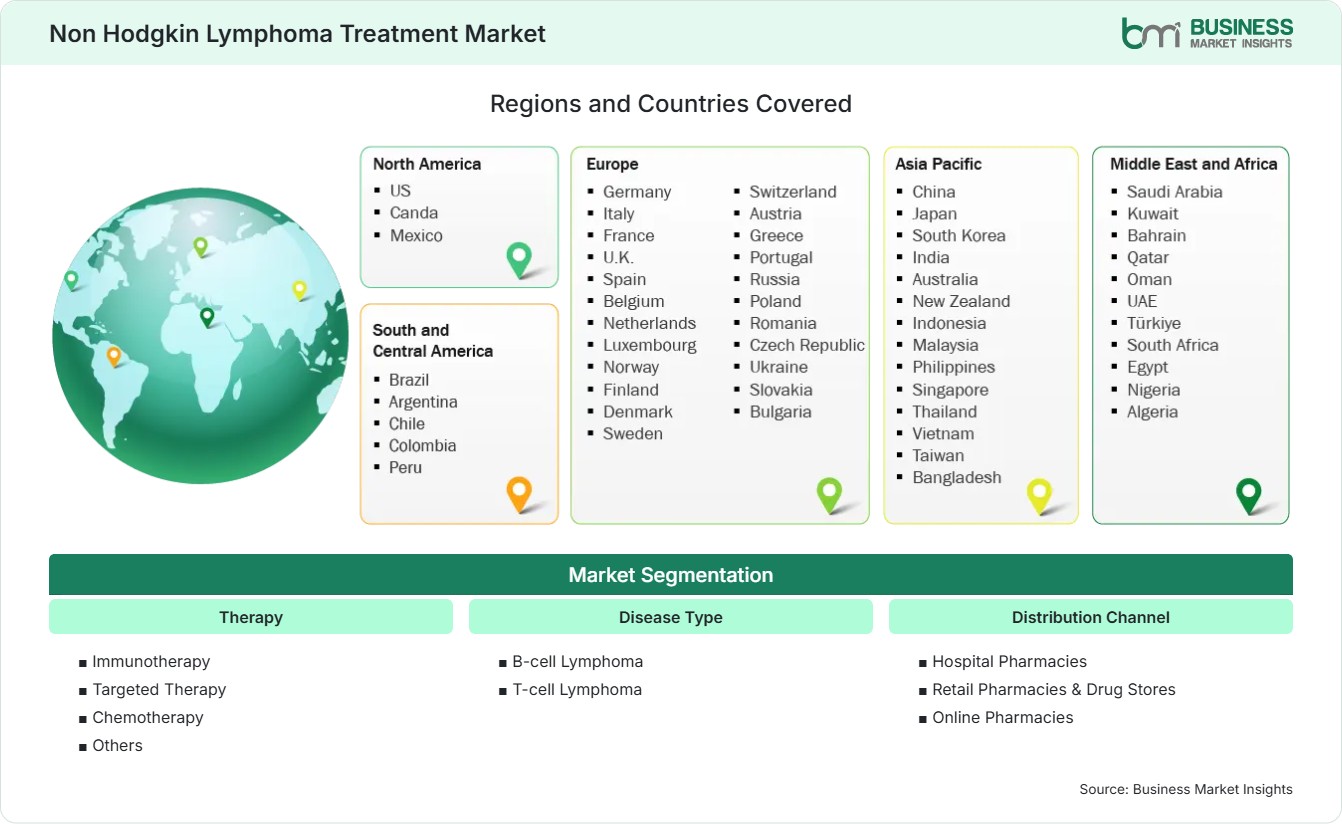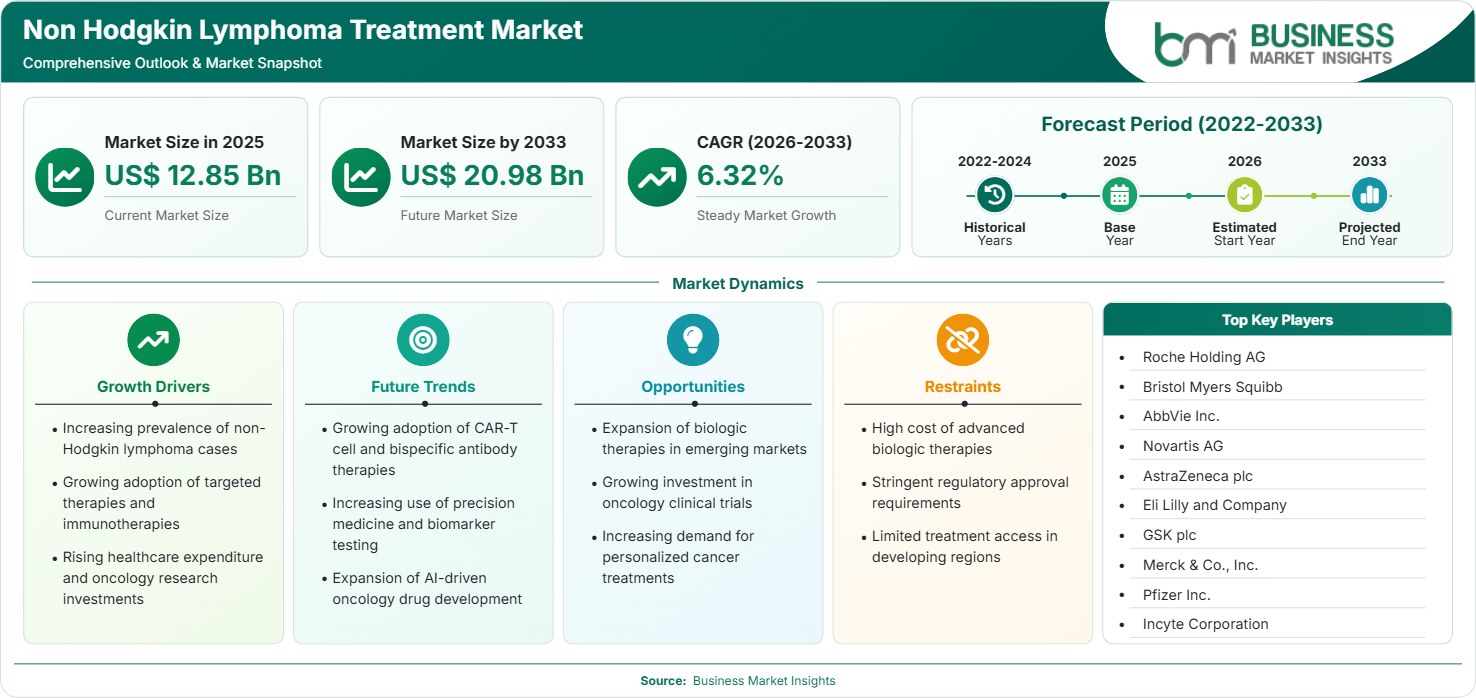
Non Hodgkin Lymphoma Treatment Market Regional Highlights
North America Non-Hodgkin Lymphoma Treatment Market
North America accounted for approximately 39%–42% of the global Non-Hodgkin Lymphoma Treatment Market share in 2025 and is projected to expand at a 5.8%–6.3% CAGR through 2033. The region benefits from widespread access to advanced biologics, favorable reimbursement frameworks, strong oncology clinical research networks, and rapid adoption of precision medicine.
- The United States leads regional revenue through high biologic adoption, clinical trial activity, advanced diagnostics, and strong reimbursement support for innovative lymphoma therapies.
- Canada expands oncology capacity through government cancer programs, specialty medicine access, research collaborations, and personalized medicine adoption.
- Investments in cellular therapies, antibody-drug conjugates, and biomarker-guided treatments are improving outcomes and strengthening regional research and manufacturing.
- Regulatory support for accelerated approvals enables faster access to breakthrough therapies while promoting continued clinical development.
- Collaboration among academia, biotech firms, hospitals, and pharmaceutical companies advances research, treatment standards, and market growth.
US Non-Hodgkin Lymphoma Treatment Market
The United States represented approximately 82%–85% of North American revenue in 2025 and is anticipated to register a 5.9%–6.4% CAGR during 2026–2033. Strong oncology infrastructure, extensive reimbursement coverage, widespread availability of targeted therapies, and continuous innovation in immuno-oncology maintain the country's leadership position.
- Leading cancer centers drive innovation through clinical trials of monoclonal antibodies, bispecific antibodies, CAR-T therapies, and combination treatments for relapsed and refractory lymphoma.
- Medicare, insurers, and specialty pharmacy networks improve access to advanced oncology medicines, supporting wider adoption of innovative therapies.
- Pharmaceutical research funding advances biomarker discovery, genomic sequencing, AI-driven drug development, and personalized oncology programs.
- Biotechnology and pharmaceutical collaborations accelerate commercialization and expand manufacturing capacity for biologics and cellular therapies.
Europe Non-Hodgkin Lymphoma Treatment Market
Europe represented approximately 28%–31% of global revenue in 2025 and is forecast to expand at a 5.9%–6.5% CAGR during 2026–2033. The regional market is supported by universal healthcare systems, increasing availability of innovative biologics, robust oncology research, and expanding access to precision diagnostics. Germany remains the leading country, while Spain demonstrates the fastest growth owing to increasing oncology investments and improved access to innovative treatment options.
- Germany leads the regional market with advanced oncology infrastructure, strong pharmaceutical manufacturing, clinical research activity, and broad access to innovative therapies.
- The UK expands precision oncology through genomic testing, biologic therapy adoption, and pharmaceutical–academic collaborations.
- France supports treatment growth through cancer strategies, specialty medicine access, and investment in oncology departments.
- Spain is projected to achieve the fastest regional growth with a 6.6%–7.1% CAGR, driven by healthcare investment, oncology centers, and clinical trial participation.
- European regulatory alignment and research partnerships continue accelerating commercialization and investment in advanced therapies and personalized medicine.
Asia Pacific Non-Hodgkin Lymphoma Treatment Market
Asia Pacific accounted for approximately 24%–27% of global revenue in 2025 and is projected to register the fastest regional expansion at a 7.2%–7.8% CAGR through 2033. Rising healthcare expenditure, expanding insurance coverage, improving cancer diagnosis rates, and growing availability of biologics continue supporting regional demand. China leads the regional market, while India records the strongest projected growth supported by healthcare modernization.
- China remains the largest regional contributor, driven by expanding oncology hospitals, domestic biologics manufacturing, healthcare reforms, and precision oncology investments.
- India is expected to achieve the fastest regional growth with a 7.8%–8.3% CAGR, supported by specialty healthcare expansion, targeted therapy access, and rising cancer awareness.
- Japan advances innovative treatments through precision medicine adoption, regulatory support, and pharmaceutical–academic collaborations.
- South Korea strengthens its position through biotechnology innovation, clinical trial growth, and advanced cell therapy manufacturing investments.
- Southeast Asia is improving patient access through greater healthcare affordability and broader reimbursement frameworks, creating opportunities for global pharmaceutical companies.
Rest of World Non-Hodgkin Lymphoma Treatment Market
The Rest of World region accounted for approximately 8%–10% of global revenue in 2025 and is expected to expand at a 6.3%–6.9% CAGR during 2026–2033. South and Central America continue benefiting from improved oncology infrastructure and increasing biologic availability, while Middle East and Africa experience gradual expansion supported by healthcare modernization and public investment.
Brazil is the leading Non-Hodgkin Lymphoma Treatment market in South and Central America because of the enhanced treatment in oncology and greater use of biologics, whereas Saudi Arabia is the fastest-growing market in the Middle East due to higher health-care expenditures and development of oncology centers in the country.
- Brazil leads regional revenue through expanding public healthcare programs, greater biologic availability, stronger oncology networks, and investment in cancer diagnosis and treatment infrastructure.f
- Mexico improves patient access through specialty pharmaceutical distribution, reimbursement initiatives, and partnerships with multinational companies introducing advanced lymphoma therapies.
- Saudi Arabia is expected to record the fastest Middle East growth with a 6.9%–7.4% CAGR, driven by healthcare diversification, specialized cancer centers, and precision oncology adoption.
- The UAE strengthens oncology capabilities through international partnerships, advanced hospitals, and increased access to personalized cancer treatments.
- South Africa remains a key African market, supported by improved diagnostics, oncology workforce development, and specialty drug access despite resource challenges.