
Multiple Sclerosis Drugs Market Outlook: Size, Share, Trends, Growth Analysis, Competitive Landscape & Forecast, 2026-2033

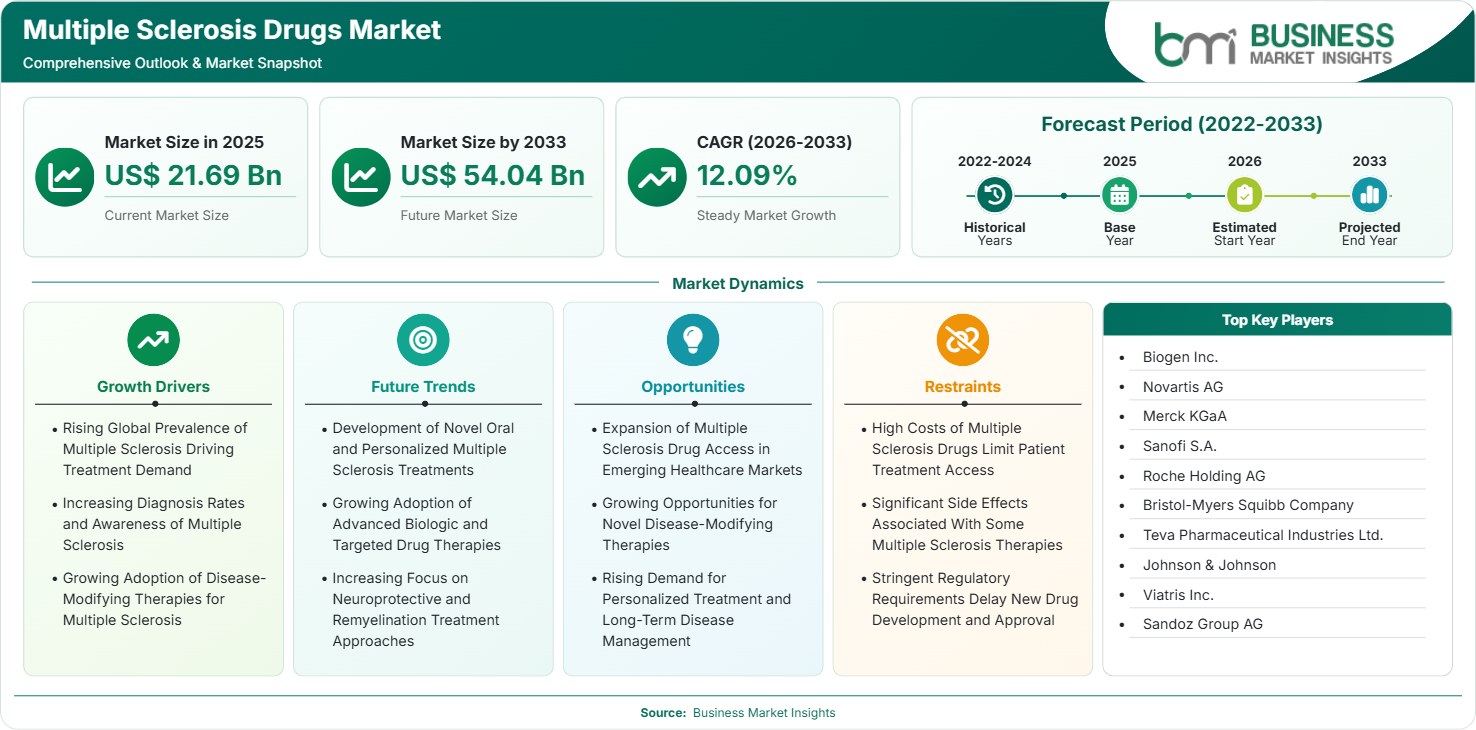
The multiple sclerosis drugs market size was valued at US$ 21.69 Billion in 2025 and is projected to reach US$ 54.04 Billion by 2033, growing at a CAGR of 12.09% during 2026–2033, driven by rising disease prevalence, improved diagnosis, broader use of disease-modifying therapies, and increasing demand for personalized long-term treatment.

Report Coverage
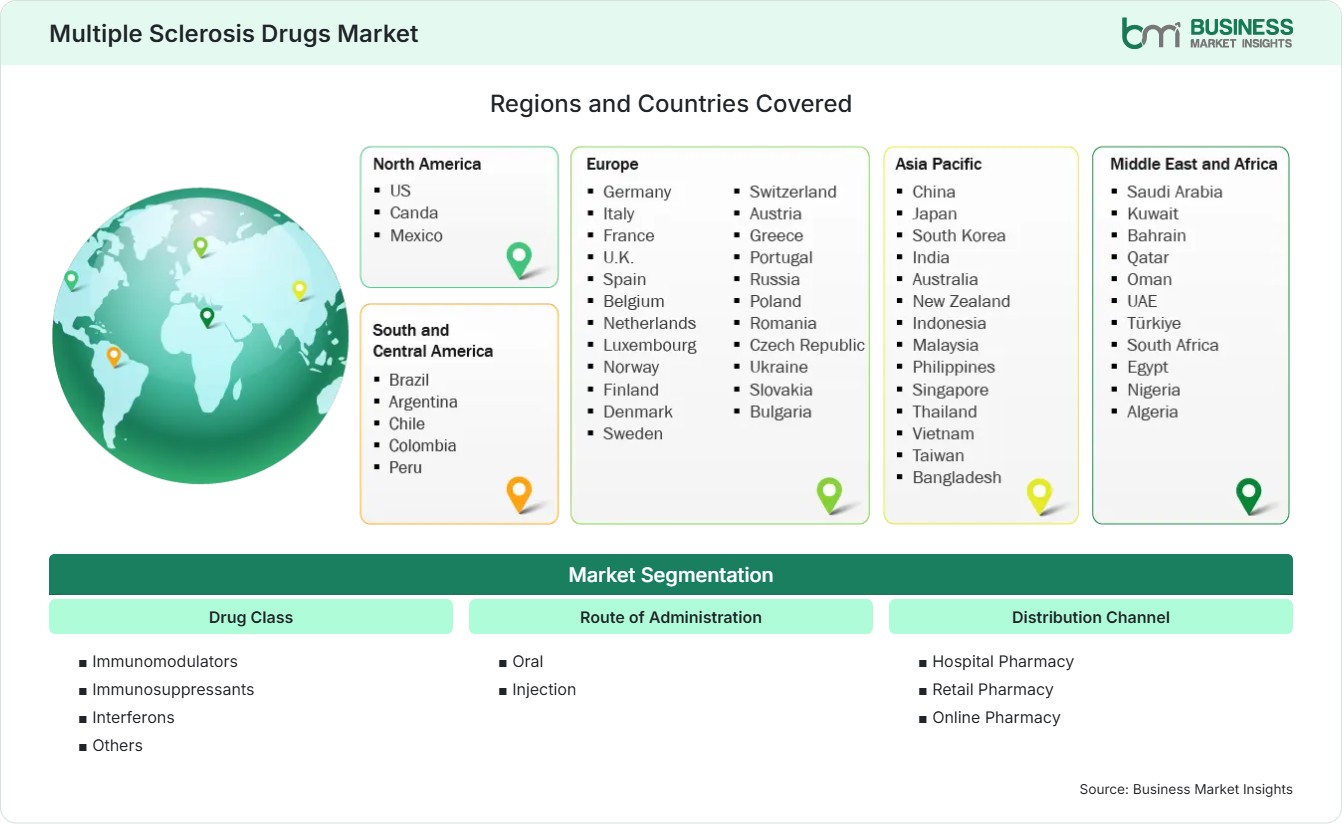
  • Drug Class: Immunomodulators, Immunosuppressants, Interferons, Others
  • Route of Administration: Oral, Injection
  • Distribution Channel: Hospital Pharmacy, Retail Pharmacy, Online Pharmacy
US$ 21.69 Bn Market size in 2025
US$ 54.04 Bn Market Size by 2033
12.09% CAGR, 2026 - 2033
2026-2033 Forecast Period

AI Overview

Multiple Sclerosis Drugs Market Summary

  • North America Region: North America accounted for a 42%–46% share in 2025 and is projected to grow at an 11.0%–13.0% CAGR during 2026–2033, supported by high diagnosis rates, advanced neurological care, established reimbursement systems, strong clinical research, and increasing adoption of disease-modifying therapies. The US market is projected to grow at an 11.5%–13.5% CAGR through 2033, supported by specialized treatment centers, expanded diagnosis, innovative therapies, and increasing patient access to advanced disease management.
  • Fastest Growing Region: Asia Pacific represented a 12%–16% of global multiple sclerosis drugs market share in 2025 and is projected to expand at a 14.0%–17.0% CAGR through 2033, driven by improving diagnosis, expanding neurological care infrastructure, greater disease awareness, increasing healthcare expenditure, and broader access to innovative multiple sclerosis therapies.
  • Leading Segment: Drug Class, Immunomodulators represented a 34%–38% share in 2025 and is projected to grow at a 10.0%–12.0% CAGR through 2033, supported by established clinical use, continued disease-modifying treatment demand, expanding patient diagnosis, and physician preference for therapies that reduce disease activity.
  • High Growth Segment: Route of Administration, Oral represented a 39%–43% share in 2025 and is projected to grow at a 13.0%–16.0% CAGR through 2033, driven by convenience, improved patient adherence, reduced administration burden, expanding oral therapy portfolios, and growing preference for at-home treatment options.
  • Key Market Opportunity: Expanding diagnosis and treatment access in emerging markets, alongside development of novel disease-modifying therapies and personalized treatment approaches, creates opportunities to address unmet needs across diverse multiple sclerosis patient populations.
  • Major Market Players: Biogen Inc., Novartis AG, Merck KGaA, Sanofi S.A., Roche Holding AG, Bristol-Myers Squibb Company, Teva Pharmaceutical Industries Ltd., Johnson & Johnson, Viatris Inc., and Sandoz Group AG.
Strategic Insights

Multiple Sclerosis Drugs Market: Strategic Insights

Multiple Sclerosis Drugs Market Strategic Framework
FREE PDF
Request your free sample
Request free sample
Stakeholder View

Key Takeaways

  • The value chain spans pharmaceutical innovators, biotechnology companies, contract research organizations, clinical trial networks, specialist neurologists, hospitals, specialty pharmacies, distributors, and patient support providers, making treatment access dependent on an integrated healthcare ecosystem.
  • Oral therapies and novel disease-modifying treatments provide strong growth opportunities as patients and physicians increasingly prioritize convenient administration, improved adherence, differentiated mechanisms, and therapies capable of addressing diverse disease progression patterns.
  • Innovation is shifting toward targeted immune mechanisms, progressive disease treatment, biomarker-led patient stratification, and therapies designed to improve efficacy while reducing safety concerns associated with broad immune suppression.
  • Asia Pacific offers a compelling expansion opportunity as diagnosis improves, neurological infrastructure develops, and healthcare expenditure increases, creating greater demand for disease-modifying therapies and specialist multiple sclerosis care.
  • Pharmaceutical companies are increasingly using licensing agreements, acquisitions, strategic collaborations, and pipeline investments to strengthen portfolios, access innovative mechanisms, and accelerate development of next-generation multiple sclerosis treatments.
  • Manufacturers that combine innovative therapies with patient support programs, affordability strategies, adherence services, and digital monitoring capabilities can strengthen treatment persistence and improve access across diverse healthcare systems.
Geographic Outlook

Multiple Sclerosis Drugs Market Regional Highlights

North America Multiple Sclerosis Drugs Market

North America multiple sclerosis drugs market held a 42%–46% share in 2025 and is projected to grow at an 11.0%–13.0% CAGR through 2033. The region benefits from high diagnosis rates, advanced neurological care, established reimbursement systems, and extensive clinical research. The US dominates regional demand, supported by specialized treatment centers and broad access to disease-modifying therapies. Canada contributes through public healthcare systems and expanding specialist services.

  • The US remains the leading regional market as established neurological care networks, specialist access, and broad availability of disease-modifying therapies support sustained treatment demand.
  • Clinical research activity continues supporting innovation, with pharmaceutical companies investing in therapies targeting relapse reduction, disability progression, progressive disease, and improved long-term treatment outcomes.
  • Patient support programs and specialty pharmacy networks help improve treatment initiation and persistence, particularly for high-cost therapies requiring ongoing clinical monitoring and adherence assistance.

US Multiple Sclerosis Drugs Market

The US multiple sclerosis drugs market represented approximately 88%–92% of North American demand in 2025 and is projected to grow at an 11.5%–13.5% CAGR through 2033. The market benefits from established specialist care, advanced pharmaceutical research, broad availability of disease-modifying treatments, and extensive clinical trial activity. Increasing diagnosis and treatment awareness continue expanding the addressable patient population.

  • Specialist neurologists and dedicated multiple sclerosis centers play an important role in diagnosis, treatment selection, disease monitoring, and long-term management across patient populations.
  • Oral disease-modifying therapies are gaining interest among patients seeking convenient administration, while high-efficacy infusion and injectable treatments remain important for selected disease profiles.
  • Pharmaceutical companies are strengthening patient support services, reimbursement assistance, and treatment education to address affordability barriers and improve long-term therapy persistence.

Europe Multiple Sclerosis Drugs Market

Europe multiple sclerosis drugs market accounted for a 30%–34% share in 2025 and is projected to grow at a 10.0%–12.5% CAGR through 2033. Germany, France, the United Kingdom, Italy, and Spain represent leading markets supported by established healthcare systems and specialist neurological services. Germany is projected to grow at a 10.5%–12.5% CAGR, while Spain represents a high-growth opportunity supported by improving diagnosis and treatment access.

  • Germany remains a major market due to established neurological care infrastructure, specialist access, and broad availability of disease-modifying treatments across multiple sclerosis patient populations.
  • The United Kingdom benefits from structured healthcare pathways and specialist services, while treatment access is increasingly influenced by cost-effectiveness assessments and healthcare system priorities.
  • France and Italy provide opportunities through established specialist care networks and growing adoption of innovative therapies designed to improve long-term disease management.
  • Spain represents an attractive growth market as improving diagnosis, specialist access, and increasing awareness contribute to greater treatment penetration and disease management.
  • European pharmaceutical competition is shaped by innovative therapies, established brands, biosimilar opportunities, and healthcare policies influencing reimbursement and treatment access.

Asia Pacific Multiple Sclerosis Drugs Market

Asia Pacific multiple sclerosis drugs market held a 12%–16% share in 2025 and is projected to achieve a 14.0%–17.0% CAGR through 2033, making it the fastest-growing region. Japan, China, Australia, South Korea, and India represent important markets, while India is projected to grow at a 15.0%–18.0% CAGR. Increasing disease awareness, improving diagnosis, expanding specialist care, and rising healthcare investment are supporting treatment demand.

  • Japan remains an important market due to advanced healthcare infrastructure, specialist neurological services, and established access to disease-modifying therapies and long-term patient management.
  • China offers significant potential as healthcare infrastructure expands, neurological diagnosis improves, and pharmaceutical companies increase access to innovative therapies through local partnerships and commercialization strategies.
  • India represents a high-growth opportunity as specialist healthcare access expands and awareness of multiple sclerosis improves, although affordability remains an important consideration for treatment adoption.
  • Australia and South Korea benefit from developed healthcare systems and increasing access to specialist neurological care, supporting adoption of innovative disease-modifying therapies.

Rest of World Multiple Sclerosis Drugs Market

South and Central America multiple sclerosis drugs market accounted for a 5%–7% share in 2025 and is projected to grow at a 10.0%–13.0% CAGR through 2033. Brazil and Mexico lead regional demand, supported by expanding specialist care and improving diagnosis. The Middle East and Africa represented a 4%–6% share in 2025 and is projected to grow at an 11.0%–14.0% CAGR through 2033. Brazil remains a leading South American market as healthcare infrastructure develops and specialist neurological services improve access to multiple sclerosis diagnosis and treatment.

  • Mexico offers growth potential as awareness increases and healthcare providers strengthen diagnosis and long-term management of neurological disorders, supporting greater demand for disease-modifying therapies.
  • Saudi Arabia and the United Arab Emirates are expanding healthcare capabilities and specialist services, creating opportunities for innovative multiple sclerosis therapies and improved treatment access.
  • South Africa represents an important African market as healthcare providers increase focus on neurological disease recognition, specialist treatment, and long-term management.
Global Market Geography
FREE PDF
Request your free sample
Request free sample
Segment Analysis

Multiple Sclerosis Drugs Market Segmentation

Drug Class

Immunomodulators represented a 34%–38% share in 2025 and are projected to grow at a 10.0%–12.0% CAGR during 2026–2033. Established clinical use and continued demand for disease modification support the segment. Immunosuppressants and interferons remain important treatment options, while evolving therapies increasingly focus on improved efficacy, safety, and long-term disease control.

  • Immunomodulators: Immunomodulators remain important for reducing disease activity and relapse risk. Their established clinical role and broad physician familiarity support continued demand across multiple sclerosis treatment pathways.
  • Immunosuppressants: Immunosuppressive therapies provide high-efficacy treatment options for selected patients with active disease. Demand is influenced by clinical effectiveness, safety monitoring requirements, and treatment positioning.
  • Interferons: Interferons remain established disease-modifying therapies with extensive clinical experience. Their continued use is supported by physician familiarity, established treatment pathways, and availability across several markets.

Route of Administration

Oral therapies represented a 39%–43% share in 2025 and are projected to grow at a 13.0%–16.0% CAGR during 2026–2033. Convenience and reduced administration burden are supporting adoption.

  • Oral: Oral therapies offer convenient administration and can reduce treatment burden for eligible patients. Growing availability of oral disease-modifying options is supporting adoption and treatment preference.
  • Injection: Injectable therapies remain important for established treatment pathways and high-efficacy disease management. Delivery innovations and improved administration protocols continue supporting patient convenience and treatment persistence.

Distribution Channel

Hospital pharmacies represented a 45%–49% share in 2025 and are projected to grow at a 10.0%–12.0% CAGR during 2026–2033. Specialty therapies often require specialist supervision, infusion services, or controlled distribution, supporting hospital pharmacy importance.

  • Hospital Pharmacy: Hospital pharmacies support access to specialty medicines, infusion-based therapies, and treatments requiring specialist oversight. Their role remains important for complex disease management and monitored administration.
  • Retail Pharmacy: Retail pharmacies provide convenient access to prescription medicines and maintenance therapies, supporting treatment continuity for patients using established oral or injectable disease-modifying treatments.
  • Online Pharmacy: Online pharmacies are improving prescription access and medication convenience, particularly for patients requiring recurring therapies. Digital ordering and home delivery can support treatment continuity.
Market Forces

Multiple Sclerosis Drugs Market Dynamics

Key Market Drivers

Rising Global Prevalence of Multiple Sclerosis Driving Treatment Demand

The growing incidence of multiple sclerosis is leading to an increase in the number of patients requiring treatment for the condition. Better awareness about the disease along with recognition of neurological symptoms, is also driving up the number of patients who have gone undiagnosed. Growth in the market is thus being driven not only by an increase in population size but also by the intensification of treatment for diagnosed patients. Companies in the pharmaceutical industry are catering to this need by developing drugs with varying mechanisms of action and targeting different stages of disease. The multiple sclerosis drugs market trend increasingly reflects a shift toward earlier intervention and differentiated treatment strategies.

Increasing Diagnosis Rates and Awareness of Multiple Sclerosis

Increased awareness of diseases leads patients to seek medical assistance when signs and symptoms of multiple sclerosis become apparent, enabling earlier diagnosis and treatment initiation. Healthcare specialists have also been able to recognize multiple sclerosis owing to better imaging technology, diagnostics, and neurological services. Early diagnosis increases the window period during which a patient can receive disease-modifying therapy and increases the need for prolonged treatment. Increased awareness helps not only by raising awareness but also by providing information about the symptoms and available treatments.

Growing Adoption of Disease-Modifying Therapies for Multiple Sclerosis

Disease-modifying therapies play an important role in the treatment of multiple sclerosis since they are helpful in decreasing the relapse activity and having an impact on the disease progression in the appropriate patients. The range of drug treatment possibilities includes not only interferons but also oral agents, immunomodulatory and immunosuppressive drugs, and highly effective ones. It gives doctors the opportunity to prescribe appropriate therapy based on disease activity, the patient's individual characteristics, safety, and preferences. Increased trust in earlier treatment is encouraging the use among new patients.

Key Market Opportunities

Expansion of Multiple Sclerosis Drug Access in Emerging Healthcare Markets

Emerging healthcare markets offer substantial opportunities as diagnosis improves and specialist neurological infrastructure expands. Patients in many developing countries continue to face limited access to advanced disease-modifying therapies because of affordability, reimbursement, and specialist availability constraints. Pharmaceutical companies can address these gaps through tiered pricing, local partnerships, patient assistance programs, and expanded distribution networks. Companies that establish sustainable market access strategies can capture long-term demand while supporting improved treatment availability. Multiple Sclerosis Drugs Market Forecast are therefore increasingly influenced by the pace of healthcare infrastructure development and specialty medicine access in emerging economies.

Growing Opportunities for Novel Disease-Modifying Therapies

Novel disease-modifying therapies represent a major opportunity because unmet needs remain across progressive disease, treatment-resistant patients, and individuals requiring improved safety or convenience. Pharmaceutical research is increasingly focused on mechanisms that selectively target immune pathways, reduce disease activity, and potentially address neurodegeneration. Advances in biotechnology and biomarker research may also enable more precise identification of patients most likely to respond to specific treatments. Companies with differentiated pipelines can strengthen competitive positioning by demonstrating superior efficacy, improved safety, or more convenient administration.

Rising Demand for Personalized Treatment and Long-Term Disease Management

Personalized treatment approaches offer opportunities to improve outcomes by aligning therapy selection with disease activity, progression patterns, patient characteristics, and treatment response. Multiple sclerosis presents considerable clinical variability, making a uniform treatment strategy unsuitable for every patient. Advances in biomarkers, imaging, digital monitoring, and real-world evidence can help physicians make more informed treatment decisions. Pharmaceutical companies can differentiate therapies by supporting patient monitoring and treatment optimization alongside drug development. Long-term disease management also creates opportunities for integrated patient support programs that address adherence, side effects, lifestyle factors, and treatment persistence.

Market Restraints and Challenges

High Costs of Multiple Sclerosis Drugs Limit Patient Treatment Access

Factor: Disease modifying treatments can be costly to develop and manufacture, and the need for specialized distribution and extended treatments can lead to expensive medications. Patients can be burdened by out-of-pocket costs when insurance coverage is not comprehensive. Impact: Expensive treatments may become an obstacle to access, especially in developing markets for healthcare or poorer regions, and can affect timely initiation and adherence to the treatment regimen. Payers are evaluating the cost-effectiveness of treatments when making reimbursement decisions, which can influence the acceptance of expensive innovations.

Significant Side Effects Associated with Some Multiple Sclerosis Therapies

Factor: Some disease-modifying treatments can cause side effects, ranging from minor drug-related effects to more serious ones, such as infections and immune system side effects, depending on how the treatment works and the patient’s profile. Some treatments may also require regular monitoring through lab tests. Impact: Safety risks may affect doctor’s prescribing practices, decrease patient compliance, and increase treatment monitoring requirements.

Company Analysis

Competitive Landscape

Multiple Sclerosis Drugs Market analysis depends on competition among pharmaceutical giants, biotech companies, specialists, and firms developing various disease-modifying medications. Firms compete on parameters such as clinical effectiveness, safety, ease of administration, treatment adherence, pipeline, reimbursement, and patient support.

Company Name

Overview

Products and Services relevant to this market

Biogen Inc.

Biotechnology company with extensive expertise in neurological diseases and a significant portfolio of multiple sclerosis therapies.

Disease-modifying therapies, oral and injectable treatments, neurological medicines, clinical research, and patient support programs.

Novartis AG

Global pharmaceutical company with a strong neuroscience portfolio and established multiple sclerosis treatment presence.

Disease-modifying therapies, oral treatments, injectable medicines, specialty pharmaceuticals, clinical research, and patient support.

Merck KGaA

Healthcare and life sciences company with a major pharmaceutical business focused on innovative neurological treatments.

Multiple sclerosis disease-modifying therapies, oral treatments, specialty medicines, clinical research, and patient support services.

Sanofi S.A.

Global pharmaceutical company developing specialty medicines and therapies across chronic and neurological disease areas.

Multiple sclerosis-related research, specialty pharmaceuticals, immunology expertise, clinical development, and patient support programs.

Roche Holding AG

Healthcare company with strong neuroscience capabilities and a growing focus on innovative multiple sclerosis treatment.

Disease-modifying therapies, infusion-based treatments, neurological medicines, diagnostic research, and personalized healthcare solutions.

Bristol-Myers Squibb Company

Biopharmaceutical company expanding its neuroscience portfolio through innovative therapies and strategic development programs.

Specialty medicines, neurological therapies, immunology-focused research, clinical development, and patient support initiatives.

Teva Pharmaceutical Industries Ltd.

Pharmaceutical company with established expertise in generic and specialty medicines and longstanding multiple sclerosis treatment experience.

Multiple sclerosis therapies, injectable and oral medicines, generic pharmaceuticals, specialty products, and patient support services.

Johnson & Johnson

Global healthcare company with pharmaceutical capabilities spanning innovative medicines and specialty therapeutic areas.

Neurology medicines, specialty pharmaceuticals, clinical development, research programs, and healthcare solutions relevant to multiple sclerosis care.

Viatris Inc.

Global healthcare company providing branded, generic, and specialty medicines across diverse therapeutic categories and markets.

Specialty pharmaceuticals, generic medicines, neurological treatments, distribution capabilities, and patient access solutions.

Sandoz Group AG

Global medicines company specializing in generic and biosimilar products, supporting broader access to affordable treatments.

Generic and biosimilar medicines, specialty pharmaceuticals, neurology-related products, and global commercialization capabilities.

Trust & Transparency

Research Methodology

The market analysis combines proprietary research with secondary data from government agencies, company disclosures, regulatory filings, industry databases and expert interviews. Market estimates are validated through data triangulation, cross-market benchmarking and analyst review.

View Full Research Methodology

Questions Answered

Frequently Asked Questions

How are pharmaceutical companies addressing treatment affordability?

Companies are using patient assistance programs, expanded distribution, tiered pricing approaches, strategic partnerships, and lower-cost alternatives to improve access while maintaining commercial sustainability.

What is the role of personalized treatment in multiple sclerosis care?

Personalized treatment helps physicians select therapies according to disease activity, progression, patient characteristics, safety considerations, and treatment response, potentially improving long-term disease management.

Which region offers the growth potential in multiple sclerosis drugs market report?

Asia Pacific offers the highest growth potential due to improving diagnosis, expanding healthcare infrastructure, increasing disease awareness, and greater access to specialty neurological treatments.

Why are oral therapies gaining popularity in multiple sclerosis treatment?

Oral therapies offer greater convenience than many injectable options, potentially reducing administration burden and supporting treatment adherence. Their expanding availability is increasing patient and physician choice.

What factors are driving demand for multiple sclerosis drugs?

Increasing diagnosis, rising disease awareness, broader use of disease-modifying therapies, and improved access to specialist neurological care are expanding the treated patient population and supporting long-term treatment demand.

Access the Full Multiple Sclerosis Drugs Market Report

Get segment-level forecasts, regional estimates, competitive benchmarking, company profiles and downloadable Excel datasets.

Access the full Multiple Sclerosis Drugs Market Report
350 pages PDF & Excel | 2026-08-06