
Milk Protein Market Size, Share, Trends & Forecast Report, 2026–2033

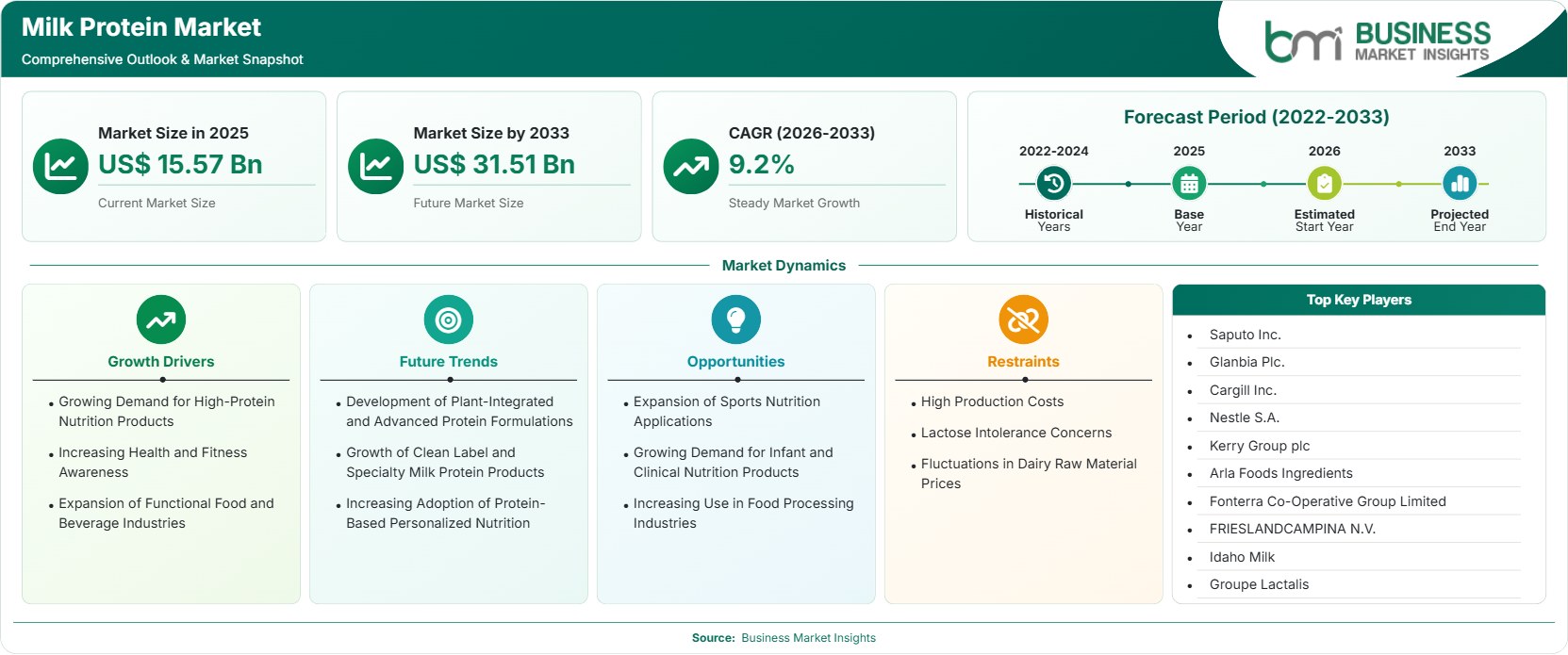
The Milk Protein Market size was valued at US$ 15.57 Billion in 2025 and is projected to reach US$ 31.51 Billion by 2033, growing at a CAGR of US$ 9.2% during 2026–2033, driven by rising protein consumption, functional nutrition demand, sports nutrition expansion, and innovation in dairy-derived ingredients.

Report Coverage
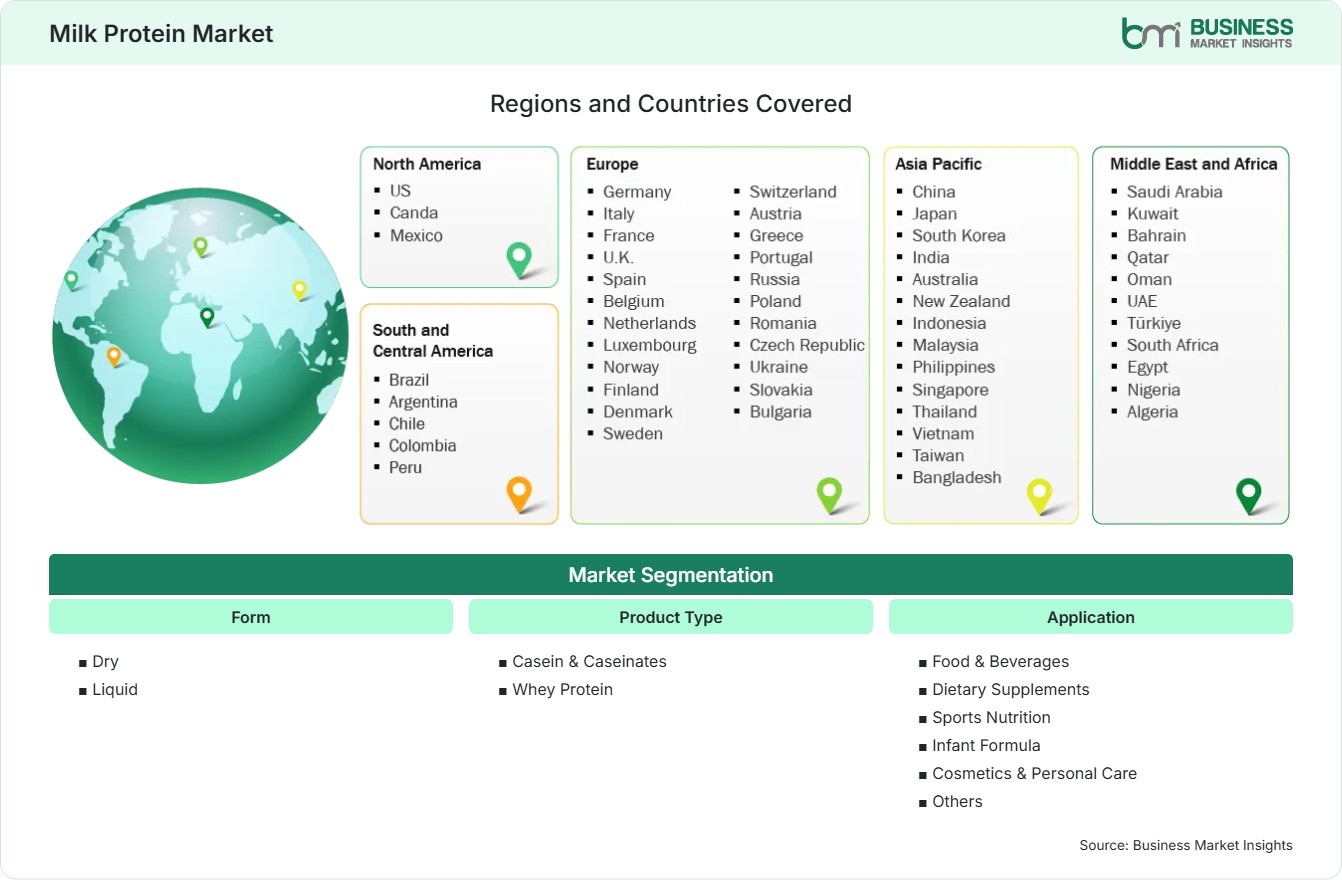
  • Form: Dry, Liquid
  • Product Type: Casein & Caseinates, Whey Protein
  • Application: Food & Beverages, Dietary Supplements, Sports Nutrition, Infant Formula, Cosmetics & Personal Care, Others
US$ 15.57 Bn Market size in 2025
US$ 31.51 Bn Market Size by 2033
9.2% CAGR, 2026 - 2033
2026-2033 Forecast Period

AI Overview

Milk Protein Market Summary

  • North America Region: North America holds a 28%–31% share in 2025, growing with a CAGR of 8%–10% through 2026–2033, influenced by sports nutrition adoption, functional foods, dietary supplements, and advanced dairy processing capabilities. The US market expands at a CAGR of 8%–10% supported by protein-focused diets, wellness trends, and food innovation.
  • Fastest Growing Region: Asia Pacific captures a 24%–27% share in 2025 and records a CAGR of 10%–12% during 2026–2033, supported by rising disposable income, nutrition awareness, infant formula demand, and expanding health-oriented consumer segments.
  • Leading Segment: Whey Protein maintains a 55%–58% share in 2025, expanding at a CAGR of 9%–11% due to sports nutrition demand, supplement consumption, high digestibility, and applications in functional food formulations.
  • High Growth Segment: Micellar casein achieves a 7%–10% share in 2025 with a CAGR of 11%–13%, driven by slow-release protein demand, fitness applications, premium nutrition products, and clean-label ingredient development.
  • Key Market Opportunity: Growth opportunities are emerging through personalized nutrition, clinical nutrition applications, premium protein formulations, and expanding consumption of functional dairy ingredients across developing economies.
  • Major Market Players: Saputo Inc., Glanbia Plc., Cargill Inc., Nestlé S.A., Kerry Group plc, Arla Foods Ingredients, Fonterra Co-Operative Group Limited, FRIESLANDCAMPINA N.V., Idaho Milk, and Groupe Lactalis.
Strategic Insights

Milk Protein Market: Strategic Insights

Milk Protein Market Strategic Framework
FREE PDF
Request your free sample
Request free sample
Stakeholder View

Key Takeaways

  • Dairy ingredient producers are strengthening integrated supply chains by combining milk procurement networks, processing technologies, and distribution partnerships to improve ingredient consistency, scalability, and application-specific product development.
  • Whey-based ingredients and advanced casein solutions offer strong commercial opportunities as manufacturers target sports nutrition, functional beverages, infant nutrition, and clinical formulations requiring high-quality protein sources.
  • Innovation priorities are shifting toward customized protein blends, improved bioavailability, clean-label processing, and sustainable dairy ingredient production methods that address evolving consumer expectations.
  • Asia Pacific presents a compelling investment landscape due to expanding middle-class populations, increasing protein consumption, and government initiatives supporting nutrition improvement and food processing modernization.
  • Strategic collaborations, capacity expansions, and portfolio diversification are shaping competitive strategies as companies seek growth across premium protein categories and specialized nutrition applications.
Geographic Outlook

Milk Protein Market Regional Highlights

North America Milk Protein Market

North America represents a leading regional market with a 28%–31% share in 2025 and a CAGR of 8%–10% during 2026–2033. Strong demand from sports nutrition, dietary supplements, and functional foods supports expansion. Milk Protein Market share remains influenced by established dairy processing infrastructure, consumer preference for high-protein diets, and innovation in value-added nutritional ingredients across the United States and Canada.

  • The United States remains a major contributor due to strong sports nutrition consumption, expanding wellness trends, and increasing incorporation of protein ingredients in everyday food products.
  • Canada supports regional growth through established dairy production systems, ingredient exports, and investments in advanced processing technologies for specialized nutritional applications.
  • Food manufacturers are increasing protein enrichment initiatives by incorporating dairy-based ingredients into beverages, snacks, and functional formulations targeting health-conscious consumers.
  • Advanced filtration technologies are improving ingredient performance by enhancing purity, solubility, and nutritional functionality for diverse commercial applications.

US Milk Protein Market

The US market accounts for a 23%–26% share in 2025 and expands at a CAGR of 8%–10% through 2026–2033. Strong consumer interest in fitness, wellness, and high-protein diets supports adoption. Milk Protein Market applications are expanding across sports nutrition, functional foods, and supplement categories, supported by developed dairy infrastructure and continuous product innovation.

  • Sports nutrition brands are increasing whey and casein utilization to develop protein powders, recovery products, and performance-focused nutritional solutions.
  • Growing demand for convenient nutrition products is encouraging manufacturers to launch protein-enriched beverages, snacks, and ready-to-consume formulations.
  • Domestic dairy ingredient suppliers are investing in processing efficiency and product specialization to address premium nutrition market requirements.

Europe Milk Protein Market

Europe holds a 25%–28% share in 2025 with a CAGR of 7%–9% during 2026–2033. Germany, France, the Netherlands, and Ireland contribute significantly through advanced dairy industries, ingredient exports, and nutritional innovation. Milk Protein Market share is shaped by strong dairy processing capabilities, regulatory compliance, and rising demand for functional ingredients supporting sports, infant, and clinical nutrition sectors.

  • Germany drives adoption through advanced food manufacturing capabilities, strong supplement demand, and investments in high-value dairy ingredient development.
  • France contributes through established dairy production networks, premium nutrition brands, and expanding applications in functional food categories.
  • The Netherlands demonstrates growth through export-oriented dairy ingredient manufacturing and specialized protein processing expertise.
  • Ireland benefits from dairy production advantages and increasing focus on sustainable ingredient supply chains for global nutrition markets.
  • European manufacturers are developing clean-label protein solutions aligned with consumer demand for transparent and functional nutritional products.

Asia Pacific Milk Protein Market

Asia Pacific represents the fastest-growing regional market with a 24%–27% share in 2025 and records a CAGR of 10%–12% during 2026–2033. Rising health awareness, increasing disposable incomes, and expanding nutrition industries support demand. Milk Protein Market growth is accelerated by China, India, Japan, and Southeast Asian economies where consumers increasingly adopt protein-rich diets and functional nutrition products.

  • China shows strong demand due to expanding sports nutrition categories, infant formula consumption, and investments in domestic dairy ingredient production.
  • India offers growth potential through increasing protein awareness, dairy availability, and expanding food processing industries targeting nutritional improvement.
  • Japan and South Korea support premium applications through advanced food technologies, functional beverages, and specialized nutrition products.
  • Southeast Asian markets are adopting dairy protein ingredients through urbanization, wellness trends, and increasing availability of modern retail channels.
  • Regional manufacturers are expanding processing capabilities to reduce import dependency and serve growing domestic nutrition markets.

Rest of World Milk Protein Market

The Rest of World market accounts for a 16%–19% share in 2025 and grows at a CAGR of 8%–10% during 2026–2033. Latin America, the Middle East, and Africa are developing markets supported by nutrition awareness, dairy sector expansion, and rising demand for functional ingredients. Milk Protein Market share is influenced by Brazil, Mexico, Saudi Arabia, and South Africa through improving food processing infrastructure and dietary modernization.

  • Brazil represents a growing market through expanding dairy processing activities, sports nutrition demand, and increased functional food adoption among consumers.
  • Mexico supports consumption growth through rising protein awareness, processed food expansion, and increasing availability of nutritional products.
  • Middle Eastern countries are investing in food security initiatives, dairy processing facilities, and imported ingredient utilization.
  • Saudi Arabia demonstrates opportunities through nutrition-focused programs, retail expansion, and growing demand for premium food products.
  • African markets show long-term potential through improving nutrition access, urbanization, and development of modern food supply chains.
Global Market Geography
FREE PDF
Request your free sample
Request free sample
Segment Analysis

Milk Protein Market Segmentation

Form

Form segment includes Dry and Liquid formats used across nutritional, food, and beverage applications. Dry form dominates adoption due to longer shelf stability, transportation efficiency, and broad industrial usability. The segment accounted for a 78%–82% share in 2025 and is projected to grow at a CAGR of 9%–11% between 2026–2033. Milk Protein Market scope continues expanding as manufacturers prioritize convenient storage, processing flexibility, and ingredient performance.

  • Dry: Dry milk protein ingredients provide extended shelf life, easy transportation, and improved formulation flexibility across supplements, beverages, and processed food applications.
  • Liquid: Liquid formats support applications requiring immediate processing, including beverages, dairy formulations, and specialized nutritional products with enhanced freshness characteristics.

Product Type

Product Type segment consists of Casein & Caseinates and Whey Protein categories serving diverse nutritional and industrial requirements. Whey Protein leads demand due to high digestibility, amino acid composition, and strong sports nutrition adoption. The segment represented a 55%–58% share in 2025 and is expected to expand at a CAGR of 9%–11% during 2026–2033. Milk Protein Market trends indicate increasing diversification through premium formulations and specialized applications.

  • Casein & Caseinates: Casein ingredients provide functional properties, slow digestion characteristics, and application benefits in nutrition products, beverages, and food processing formulations.
  • Acid casein: Acid casein supports cheese manufacturing, nutritional formulations, and industrial food applications requiring controlled protein functionality and consistent ingredient performance.
  • Rennet casein: Rennet casein serves dairy processing applications where structural properties, texture enhancement, and formulation stability are important.
  • Sodium caseinate: Sodium caseinate is utilized for emulsification, protein enrichment, and beverage applications requiring improved solubility and nutritional value.
  • Calcium caseinate: Calcium caseinate provides protein fortification benefits and is incorporated into sports nutrition, wellness products, and specialized dietary formulations.
  • Micellar casein: Micellar casein supports slow-release protein applications, particularly in sports nutrition products targeting prolonged amino acid availability.
  • Whey Protein: Whey protein products are widely adopted due to high nutritional quality, rapid absorption characteristics, and demand across fitness and wellness categories.
  • Whey Protein Concentrate (WPC): WPC is used in beverages, supplements, and food products requiring balanced protein content and functional processing advantages.
  • Whey Protein Isolate (WPI): WPI serves premium nutrition categories through high protein purity, low lactose characteristics, and specialized health-focused formulations.
  • Whey Protein Hydrolysate (WPH): WPH supports advanced nutrition applications through improved digestibility and faster absorption properties for specialized consumer groups.
  • Native Whey Protein: Native whey protein provides minimally processed nutritional benefits and supports premium formulations emphasizing protein quality and clean-label positioning.

Application

Application segment includes Food & Beverages, Dietary Supplements, Sports Nutrition, Infant Formula, Cosmetics & Personal Care, and Others. Food & Beverages represent the largest application area due to widespread ingredient integration across consumer products. The segment accounted for a 42%–46% share in 2025 and is projected to grow at a CAGR of 8%–10% during 2026–2033. Adoption continues through functional product innovation and nutrition-focused consumption patterns.

  • Food & Beverages: Food and beverage applications utilize dairy proteins for fortification, texture improvement, nutritional enhancement, and development of functional consumer products.
  • Dietary Supplements: Dietary supplements incorporate milk proteins to deliver convenient protein sources supporting wellness, active lifestyles, and nutritional supplementation needs.
  • Sports Nutrition: Sports nutrition applications use whey and casein ingredients for muscle recovery products, performance formulations, and fitness-oriented nutritional solutions.
  • Infant Formula: Infant formula manufacturers use specialized milk proteins to develop nutritional products supporting early-life dietary requirements and balanced formulations.
  • Cosmetics & Personal Care: Cosmetics and personal care applications utilize dairy-derived proteins in formulations focused on skin conditioning, moisturizing, and functional ingredient benefits.
Market Forces

Milk Protein Market Dynamics

Key Market Drivers

Growing Demand for High-Protein Nutrition Products

Increasing attention from consumers towards protein consumption is driving up the demand for dairy-based ingredients in supplements, beverages, and functional foods. The global nutrition trends reveal that there is an increasing inclination towards consuming high protein foods by people who are fitness conscious and elderly consumers requiring nutritional aid. The Milk Protein Market growth is driven by the emergence of new high-protein products with enhanced taste, functionality, and convenience by companies. International Food Information Council has stated that there is consistent interest from consumers in protein as one of the important parts of their diet.

Increasing Health and Fitness Awareness

The growing involvement in physical exercise and wellness programs is boosting the demand for nutritional supplements that contain whey and casein proteins. The sports nutrition products have become increasingly popular among recreational consumers besides professional athletes who consume protein supplements to maintain muscles and live a healthy life. More and more consumers are becoming aware of balanced nutrition and the concept of active aging. Special formulations of manufacturers have been developed, which provide enhanced digestion and flavors along with health benefits. The growing trend of home-based exercise and preventive healthcare practices will further boost premium protein intake.

Expansion of Functional Food and Beverage Industries

Food and beverage producers have been making use of dairy proteins in their products for better nutritional value and product differentiation purposes. Beverage companies are coming up with protein-based beverages, meal replacement products, and fortified products for consumers who are health conscious. Food processors are using dairy proteins in their products for texturization and nutritional purposes among others. The rising demand for foods that provide convenience coupled with nutritional values has opened up opportunities for more uses than just for the usual dairy products.

Key Market Opportunities

Expansion of Sports Nutrition Applications

Sports nutrition continues to be a huge opportunity field as customers become more interested in finding ways to easily get their protein during recovery and enhancement from exercise. Companies are working on producing new blends that combine whey, casein, and other elements to suit various fitness needs. Emerging markets also offer a great opportunity since there is increased awareness about health and fitness in young people. Premium products, ready to drink blends, and personal nutrition systems have opened up new income streams. Milk Protein Market Forecasts confirm investment potential in these sports nutrition fields.

Growing Demand for Infant and Clinical Nutrition Products

Nutritional and clinical uses offer possibilities owing to increased demand for specific formulas that enhance health during infancy. The production companies are developing advanced protein modification techniques for better digestion, nutritional value, and functionality. Other areas that could boost the demand for clinical nutrition products include aging demographics and consumption behaviors. Emerging markets with improved health care systems are also offering growth opportunities for the supply of specific dairy ingredients. Companies focusing on scientific research, regulatory compliance, and customized formulations can strengthen positions in these high-value application areas.

Increasing Use in Food Processing Industries

The food processing industries have begun using dairy proteins to enhance the qualities of their products and make them more nutritious and appealing. The application of dairy proteins in bakery, confectionery, beverages, and other processed foods is on the rise as companies look to obtain functional ingredients which work well in practice. Protein fortification has become an integral strategy in the development of products for health-conscious consumers. Advances in processing techniques and customization of ingredients have made it possible for suppliers to cater to the varied demands of the industry.

Market Restraints and Challenges

High Production Costs

Factor: Increasing energy expenses, advanced processing requirements, and raw milk price fluctuations contribute to elevated production costs for dairy protein manufacturers. Impact: High operating costs can impact the pricing of ingredients and hinder their usage by food manufacturers and customers who are sensitive about costs in developing countries. The food manufacturers have been able to address this issue by adopting process improvement, energy-efficient systems, and improved supply chains. But profitability continues to be a problem because of the need to deliver quality products at affordable prices.

Lactose Intolerance Concerns

Factor: Consumer concerns regarding lactose sensitivity and digestive tolerance influence purchasing decisions for certain dairy-derived protein products. Impact: These issues can limit acceptance in lactose-intolerant individuals and increase the desire for alternatives. These problems are being solved by manufacturers through the use of products with low levels of lactose, isolation techniques, and proper labelling. There are now whey protein isolates and other special dairy ingredients for consumers who require greater tolerance. Innovation in formulating technology is allowing manufacturers to increase accessibility without reducing nutrition.

Company Analysis

Competitive Landscape

The Milk Protein Market analysis highlights a competitive environment shaped by integrated dairy processors, specialized ingredient manufacturers, and global nutrition companies. Leading participants are focusing on capacity expansion, product innovation, sustainable sourcing, and development of application-specific protein solutions. Companies are strengthening positions through investments in advanced processing technologies, strategic partnerships, and expansion across sports nutrition, infant formula, and functional food categories.

Company Name

Overview

Products and Services relevant to this market

Saputo Inc.

Global dairy processor with extensive operations across multiple regions and value-added dairy categories.

Milk protein ingredients, dairy nutrition solutions, cheese, and specialty dairy products.

Glanbia Plc.

Nutrition-focused company specializing in performance and lifestyle ingredient solutions.

Whey proteins, sports nutrition ingredients, and advanced nutritional formulations.

Cargill Inc.

Global food ingredient provider supporting diverse nutrition and food processing industries.

Dairy proteins, functional ingredients, customized nutrition solutions, and formulation support.

Nestle S.A.

Global food and nutrition company with strong health-focused product portfolios.

Infant nutrition ingredients, dairy-based proteins, wellness products, and nutritional solutions.

Kerry Group plc

Ingredient and taste solutions provider serving global food and beverage manufacturers.

Protein ingredients, functional nutrition solutions, and food application technologies.

Arla Foods Ingredients

Specialized dairy ingredient supplier focused on nutritional and functional applications.

Whey proteins, casein products, infant nutrition ingredients, and clinical nutrition solutions.

Fonterra Co-Operative Group Limited

Major dairy cooperative producing ingredients for global nutrition markets.

Whey protein, casein, milk protein concentrates, and dairy ingredient solutions.

FRIESLANDCAMPINA N.V.

International dairy company with strong nutrition and ingredient capabilities.

Milk protein concentrates, whey ingredients, infant nutrition, and functional dairy products.

Idaho Milk

Dairy ingredient manufacturer focused on nutritional and food processing applications.

Milk protein concentrates, milk powders, and dairy ingredient solutions.

Groupe Lactalis

Global dairy company producing a wide range of dairy and nutrition products.

Dairy proteins, nutritional ingredients, cheese-based applications, and specialty dairy products.

Industry Activity

Recent Developments

March 2026

Royal FrieslandCampina N.V. (FrieslandCampina Ingredients) completed the strategic expansion of its Borculo facility in the Netherlands, doubling production capacity for whey protein isolate (WPI) and milk fat globule membrane (MFGM) ingredients. The expansion strengthens supply of premium milk-derived protein ingredients for global nutrition markets.

December 2025

Royal FrieslandCampina N.V. announced the planned acquisition of Wisconsin Whey Protein in the United States to expand its whey protein isolate production capacity and strengthen its North American presence in high-value dairy protein ingredients.

November 2025

Arla Foods Ingredients (Arla Foods amba) presented new high-protein food and beverage concepts using milk and whey protein ingredients at Fi Europe 2025. The company showcased applications targeting sports nutrition, functional foods, and protein-enriched beverages.

July 2025

Nestle S.A. launched Milo Pro, a high-protein version of its Milo beverage, available in ready-to-drink and powder formats. The product uses increased protein content to target active consumers and expand Nestlé’s nutrition-focused product portfolio in Southeast Asia.

Trust & Transparency

Research Methodology

The market analysis combines proprietary research with secondary data from government agencies, company disclosures, regulatory filings, industry databases and expert interviews. Market estimates are validated through data triangulation, cross-market benchmarking and analyst review.

View Full Research Methodology

Questions Answered

Frequently Asked Questions

How does the Milk Protein Market Report help industry stakeholders?

The Milk Protein Report provides insights into market structure, competitive strategies, application trends, regional opportunities, and growth factors supporting strategic planning for manufacturers, investors, and suppliers.

What role does technology play in protein ingredient development?

Advanced filtration, separation, and drying technologies enable manufacturers to improve protein purity, functionality, solubility, and customization for different nutritional and industrial applications.

How are manufacturers improving sustainability in dairy protein production?

Companies are adopting energy-efficient processing, responsible sourcing practices, waste reduction initiatives, and improved resource management to reduce environmental impact while maintaining ingredient quality.

Which product category leads the Milk Protein Market?

Whey Protein leads adoption because of its high digestibility, amino acid profile, and widespread use in sports nutrition, dietary supplements, and functional food products.

What factors are driving demand for milk protein ingredients?

Demand is increasing due to higher protein consumption, sports nutrition adoption, functional food development, and growing interest in convenient nutritional products. Manufacturers are expanding applications across beverages, supplements, infant nutrition, and clinical formulations.

Access the Full Milk Protein Market Report

Get segment-level forecasts, regional estimates, competitive benchmarking, company profiles and downloadable Excel datasets.

Access the full Milk Protein Market Report
350 pages PDF & Excel | 2026-07-31
Similar Research

Related Market Reports