
Milk Chocolate Market Outlook: Size, Share, Trends, Growth Analysis, Competitive Landscape & Forecast, 2026-2033

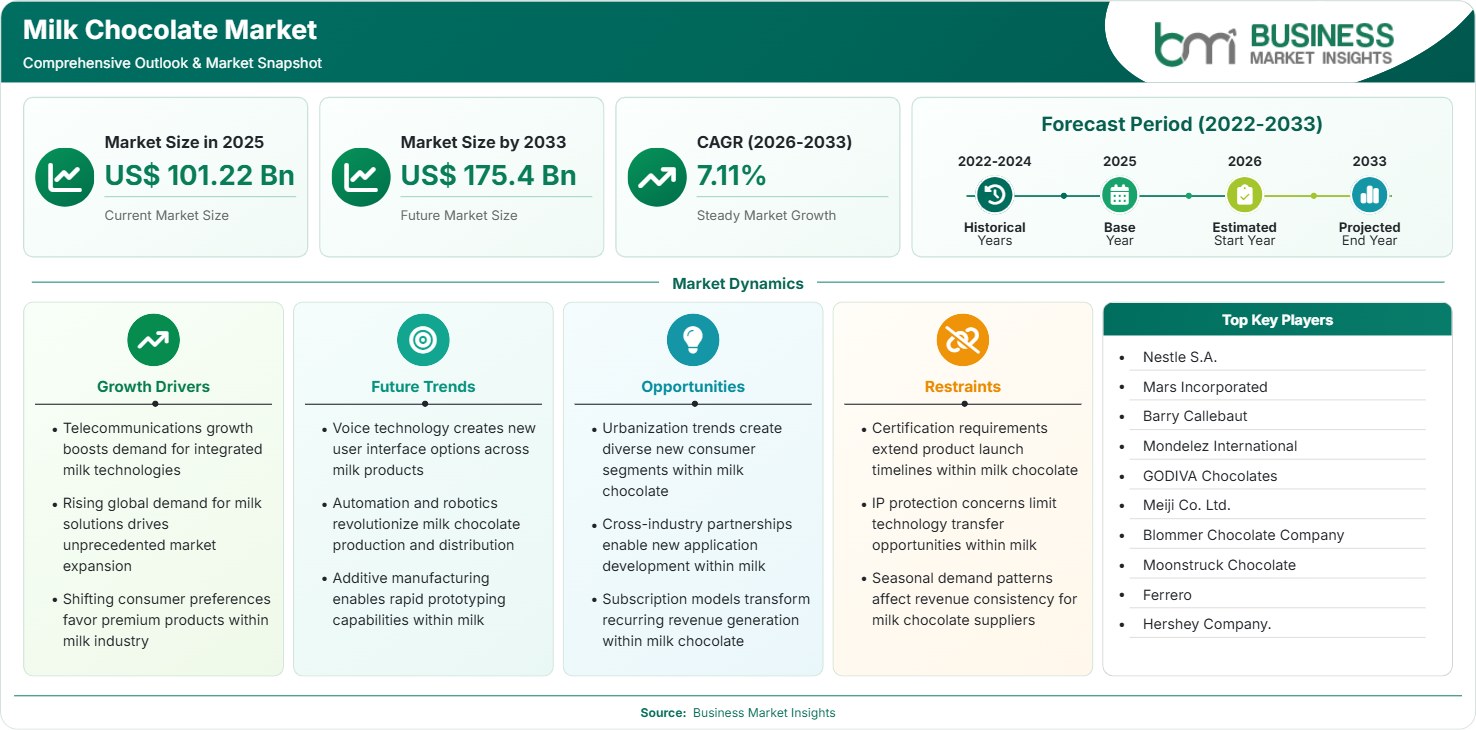
The Milk Chocolate Market size was valued at US$ 101.22 Billion in 2025 and is projected to reach US$ 175.4 Billion by 2033, growing at a CAGR of 7.11% during 2026–2033, driven by premiumization, product innovation, expanding online retail, and rising demand for organic and ethically sourced chocolate products.

Report Coverage
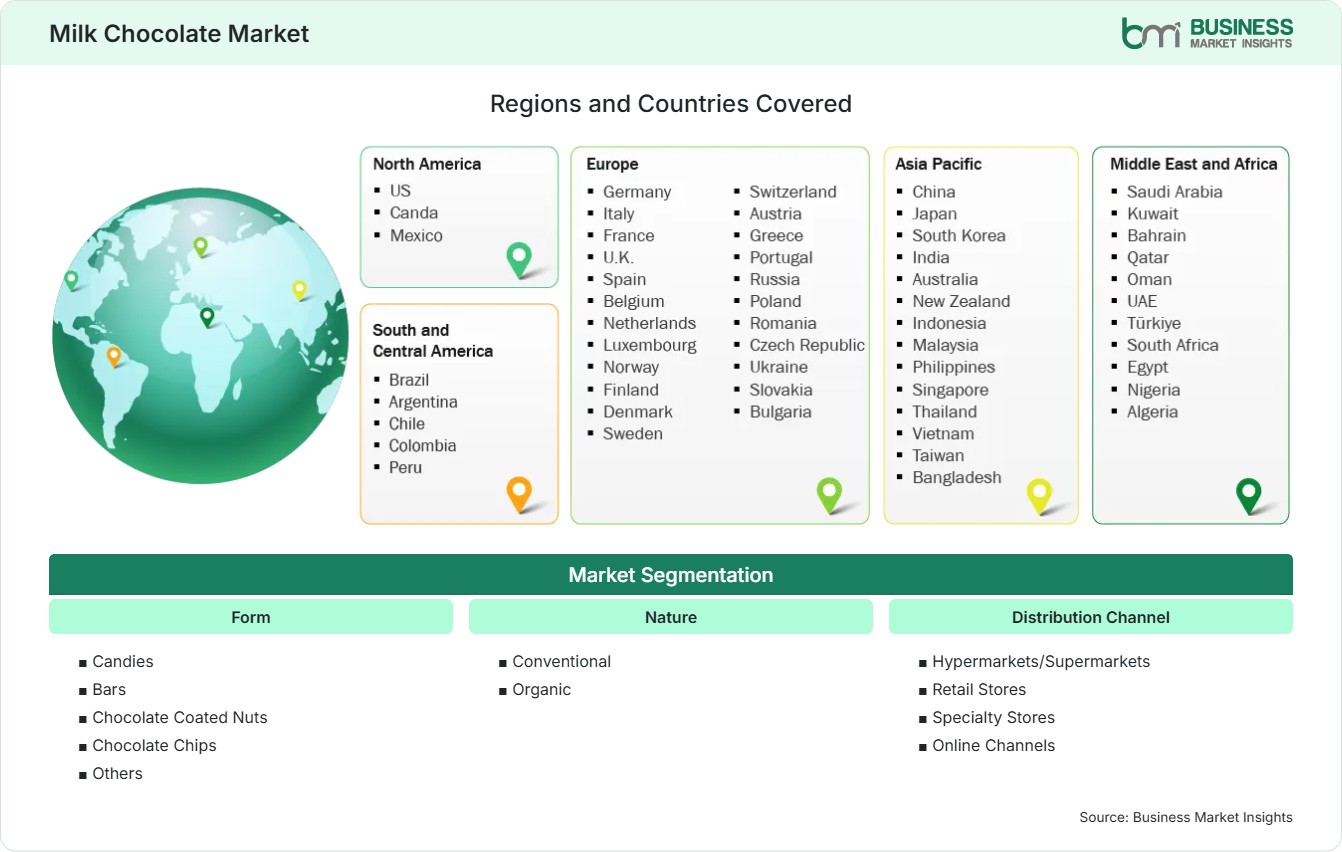
  • Form: Candies, Bars, Chocolate Coated Nuts, Chocolate Chips, Others
  • Nature: Conventional, Organic
  • Distribution Channel: Hypermarkets/Supermarkets, Retail Stores, Specialty Stores, Online Channels
US$ 101.22 Bn Market size in 2025
US$ 175.4 Bn Market Size by 2033
7.11% CAGR, 2026 - 2033
2026-2033 Forecast Period

AI Overview

Milk Chocolate Market Summary

  • North America Region: North America holds a market share of 32%–35% in 2025, growing with a CAGR of 6.50%–7.20% during 2026–2033. Premium chocolate adoption, established confectionery brands, sustainable cocoa sourcing, and innovative product launches support expansion. The U.S. market demonstrates steady adoption with a CAGR of 6.70%–7.10%, supported by strong retail penetration and consumer preference for premium chocolate offerings.
  • Fastest Growing Region: Asia Pacific represents a share of 24%–27% in 2025, expanding at a CAGR of 8.20%–9.10% during 2026–2033. Increasing disposable income, urbanization, growing gifting culture, and rising acceptance of international confectionery brands are accelerating demand across emerging economies.
  • Leading Segment: Bars segment accounts for a share of 38%–41% in 2025, advancing at a CAGR of 7.00%–7.80% during 2026–2033. Convenience, portion-controlled formats, premium flavors, and extensive availability through retail channels strengthen segment performance.
  • High Growth Segment: Online Channels segment captures a share of 14%–17% in 2025, progressing at a CAGR of 9.00%–10.00% during 2026–2033. Digital commerce expansion, direct-to-consumer models, personalized offerings, and improved cold-chain logistics create new growth opportunities.
  • Key Market Opportunity: Manufacturers can leverage clean-label formulations, functional ingredients, sustainable cocoa supply chains, and emerging digital distribution networks to capture evolving consumer preferences and strengthen long-term competitive positioning.
  • Major Market Players: Nestle S.A., Mars Incorporated, Barry Callebaut, Mondelez International, GODIVA Chocolates, Meiji Co. Ltd., Blommer Chocolate Company, Moonstruck Chocolate, Ferrero, Hershey Company.
Strategic Insights

Milk Chocolate Market: Strategic Insights

Milk Chocolate Market Strategic Framework
FREE PDF
Request your free sample
Request free sample
Stakeholder View

Key Takeaways

  • The value chain is becoming increasingly integrated, with cocoa processors, chocolate manufacturers, retailers, and digital platforms collaborating to improve sourcing transparency, production efficiency, and consumer engagement.
  • Premium bars, specialty formulations, and customized chocolate products provide strong commercial opportunities as consumers increasingly prioritize quality ingredients, unique flavors, and differentiated consumption experiences.
  • Product innovation is shifting toward reduced sugar, organic certifications, ethical cocoa sourcing, and functional ingredients that align with changing nutritional awareness and sustainability expectations.
  • Asia Pacific provides a compelling investment landscape due to expanding urban populations, increasing disposable incomes, and rising demand for international confectionery brands across developing economies.
  • Industry consolidation continues through strategic partnerships, portfolio expansion, and investments in sustainable cocoa initiatives as major companies seek stronger supply chain resilience and market positioning.
Geographic Outlook

Milk Chocolate Market Regional Highlights

North America Milk Chocolate Market

North America maintained a strong position with a share of 32%–35% in 2025 and is estimated to expand at a CAGR of 6.50%–7.20% during 2026–2033. The region benefits from established confectionery infrastructure, premium product demand, and advanced retail networks. Milk Chocolate Market share remains influenced by consumer preference for branded products, seasonal purchases, and innovative flavors. The United States and Canada continue supporting regional expansion through product diversification and sustainable sourcing initiatives.

  • Premium chocolate demand is increasing as consumers seek higher cocoa quality, specialty flavors, and ethically sourced ingredients from established manufacturers.
  • Retailers are expanding private-label chocolate offerings, creating competitive opportunities while encouraging manufacturers to improve quality differentiation and packaging innovation.
  • Sustainable cocoa programs are gaining importance as companies invest in traceable supply chains and responsible agricultural partnerships across producing regions.
  • Digital purchasing channels are supporting convenient access to premium chocolate products through subscription models and direct-to-consumer platforms.

US Milk Chocolate Market

The U.S. market represents a significant portion of North America, accounting for 26%–29% share in 2025 and developing at a CAGR of 6.70%–7.10% during 2026–2033. Strong brand presence, seasonal chocolate consumption, and innovation in premium offerings continue driving demand. Consumer interest in organic, sustainable, and reduced sugar products is influencing manufacturing strategies. Milk Chocolate Market growth in the country is supported by advanced retail infrastructure and expanding online shopping adoption.

  • Leading confectionery companies are introducing premium collections, limited-edition flavors, and customized packaging to attract diverse consumer groups.
  • Online retailers are improving cold-chain delivery capabilities, enabling broader access to specialty and premium chocolate products.
  • Health-conscious consumers are encouraging manufacturers to develop cleaner formulations with alternative sweeteners and organic ingredients.
  • Food safety standards and labeling requirements continue shaping product development strategies among domestic and international brands.

Europe Milk Chocolate Market

Europe accounted for a share of 28%–31% in 2025 and is projected to grow at a CAGR of 6.80%–7.50% during 2026–2033. The region remains a mature chocolate consumption hub supported by strong manufacturing capabilities and established premium brands. Switzerland, Germany, Belgium, and the United Kingdom represent important markets with continued product innovation. Milk Chocolate Market share reflects strong consumer loyalty toward traditional chocolate categories combined with growing demand for sustainable and organic options.

  • European manufacturers are increasing investments in ethical cocoa sourcing programs to address sustainability expectations among consumers and regulators.
  • Germany demonstrates strong demand for premium chocolate products due to developed retail channels and established confectionery consumption patterns.
  • Belgium continues strengthening its position through artisanal chocolate production, specialty products, and export-oriented manufacturing capabilities.
  • Regulatory focus on food quality, ingredient transparency, and environmental responsibility influences product development across the region.
  • The United Kingdom market benefits from online retail expansion and increasing demand for premium gifting chocolates.

Asia Pacific Milk Chocolate Market

Asia Pacific held a share of 24%–27% in 2025 and is anticipated to register a CAGR of 8.20%–9.10% during 2026–2033. Rising disposable incomes, urbanization, and changing food preferences are accelerating chocolate consumption. Countries including China, India, Japan, and South Korea are experiencing increased demand for premium confectionery products. Milk Chocolate Market growth is supported by expanding modern retail formats, e-commerce penetration, and international brand expansion strategies.

  • China is becoming an attractive market due to increasing premium chocolate consumption among urban consumers and younger demographics.
  • India presents growth potential through rising gifting culture, expanding supermarkets, and growing acceptance of global confectionery brands.
  • Japan continues supporting premium chocolate demand through seasonal gifting traditions and innovative flavor combinations.
  • South Korea demonstrates strong online chocolate purchasing activity supported by digital platforms and consumer-focused product launches.
  • Manufacturers are adapting products to regional taste preferences through localized ingredients and customized packaging formats.

Rest of World Milk Chocolate Market

South and Central America, along with the Middle East and Africa, accounted for a combined share of 10%–13% in 2025 and are expected to grow at a CAGR of 7.50%–8.40% during 2026–2033. Cocoa-producing countries and developing consumer markets create opportunities for value chain expansion. Brazil, Mexico, UAE, and South Africa are emerging contributors due to improving retail infrastructure and premium chocolate acceptance.

  • Latin American countries benefit from proximity to cocoa production regions and increasing investments in chocolate processing capabilities.
  • Brazil demonstrates expanding demand through supermarkets, specialty stores, and domestic confectionery innovation.
  • Middle Eastern markets are adopting premium chocolate products through luxury retail channels and gifting-focused consumption patterns.
  • African markets show potential through urbanization, rising incomes, and development of modern food distribution networks.
  • Regional manufacturers are exploring sustainable sourcing and local flavor adaptation to compete with international brands.
Global Market Geography
FREE PDF
Request your free sample
Request free sample
Segment Analysis

Milk Chocolate Market Segmentation

Form

The Form segment represents diverse consumption preferences across confectionery applications, with bars leading adoption due to convenience and strong retail visibility. This segment held approximately 38%–41% share in 2025 and is projected to grow at a CAGR of 7.00%–7.80% between 2026–2033. Product innovation, premium ingredients, and customized formats continue shaping demand. The Milk Chocolate Market scope is expanding through increasing applications in snacks, desserts, gifting, and bakery products.

  • Candies: Candies remain popular for impulse consumption, seasonal occasions, and affordable indulgence. Manufacturers are introducing varied flavors, textures, and portion sizes to attract younger consumers.
  • Bars: Bars dominate due to portability, broad availability, and premium positioning. Companies are launching innovative combinations, including nuts, caramel, and specialty fillings, to enhance consumer appeal.
  • Chocolate Coated Nuts: Chocolate coated nuts are gaining attention among consumers seeking indulgent snacks with perceived nutritional benefits. Premium nut varieties and gift packaging support category expansion.
  • Chocolate Chips: Chocolate chips maintain demand from bakery, dessert, and home-baking applications. Growth is supported by increased household baking activities and foodservice industry requirements.

Nature

The Nature segment reflects changing consumer priorities toward ingredient transparency, sustainability, and responsible sourcing. Conventional products accounted for the majority share with approximately 72%–75% in 2025, while organic offerings are expanding rapidly due to increased awareness. The segment is projected to grow at a CAGR of 7.00%–7.80% between 2026–2033 as manufacturers introduce cleaner formulations and certified products.

  • Conventional: Conventional chocolate continues leading Milk Chocolate Market consumption due to affordability, established supply chains, and extensive availability across supermarkets, convenience stores, and online platforms.
  • Organic: Organic chocolate demand is increasing as consumers seek ethically sourced cocoa, natural ingredients, and environmentally responsible products aligned with sustainability-focused purchasing decisions.

Distribution Channel

The Distribution Channel segment demonstrates evolving purchasing behavior through physical retail and digital commerce expansion. Hypermarkets and supermarkets maintained a leading position with approximately 40%–43% share in 2025, supported by strong consumer accessibility. The segment is expected to advance at a CAGR of 7.20%–8.00% between 2026–2033. The Milk Chocolate Market trends indicate increasing importance of omnichannel strategies and direct consumer engagement.

  • Hypermarkets/Supermarkets: Hypermarkets and supermarkets remain key sales channels due to extensive product availability, promotional activities, and consumer preference for convenient one-stop shopping experiences.
  • Retail Stores: Retail stores support frequent purchases through neighborhood accessibility, impulse buying opportunities, and strong presence in urban and semi-urban communities.
  • Specialty Stores: Specialty stores attract premium chocolate buyers through exclusive collections, artisanal products, personalized services, and differentiated shopping experiences focused on quality.
  • Online Channels: Online channels are expanding rapidly through digital marketplaces, brand websites, subscription services, and improved delivery infrastructure supporting premium chocolate accessibility.
Market Forces

Milk Chocolate Market Dynamics

Key Market Drivers

Rising Demand for Premium and Innovative Chocolate Products

Consumers are increasingly shifting toward premium chocolate experiences, encouraging manufacturers to develop advanced formulations, unique flavors, and luxury packaging. The market growth is supported by rising disposable incomes, changing lifestyles, and increased preference for high-quality confectionery products. Premiumization remains a major strategy among leading companies investing in specialty ingredients and differentiated offerings. The Milk Chocolate Market trends reflect growing demand for organic cocoa, ethical sourcing, and reduced sugar alternatives. According to industry observations, manufacturers are expanding product portfolios to address evolving consumer expectations around taste, quality, and sustainability. This shift is strengthening brand competition while creating opportunities for innovation across multiple product categories.

Expansion of Sustainable Cocoa Supply Chains

Sustainability has become a critical driver as chocolate producers focus on responsible cocoa procurement, farmer support programs, and supply chain transparency. More regulatory scrutiny on environmental and social conduct is driving companies to implement tracing of their sourcing processes. Challenges within the global cocoa industry linked to climatic conditions and income generation for farmers have shaped procurement policies. Groups like the International Cocoa Organization keep advocating for sustainable methods of producing cocoa to ensure its long-term availability. Companies are engaging in certification programs, regenerative agriculture projects, and working with suppliers. These efforts foster consumer trust as well as resiliency in the cocoa-based production supply chains.

Growth of Digital Commerce and Direct Consumer Sales

The expansion of online retail platforms is transforming chocolate purchasing behavior by improving product discovery and accessibility. Digital channels enable manufacturers to introduce limited editions, personalized gifting solutions, and subscription-based offerings. Consumers are more inclined to look up for quality and speciality chocolates that might not be readily available in regular shops. Better logistics and temperature-sensitive delivery mechanisms, along with better digital marketing efforts, are helping the category grow. Customer insights being gathered through digital platforms are helping manufacturers fine-tune their offerings and their marketing campaigns. The growing integration of e-commerce with traditional distribution channels is giving rise to an omnichannel approach.

Key Market Opportunities

Expansion into Emerging Consumer Markets

Emerging markets offer great potential because of increased disposable income, population urbanization, and greater consumer awareness of foreign confectionery brands. The emphasis in companies is on localization of products, affordable premiums, and regional flavors for enhancing penetration. Milk Chocolate Market Forecasts indicate that manufacturers can benefit from expanding retail infrastructure and digital commerce adoption across developing regions. Cost savings can be achieved through investment in manufacturing infrastructure and distribution logistics; at the same time, market access can be enhanced. The Asian Pacific region, Latin America, and the Middle East present appealing prospects since the young generation of consumers tends to use more packaged indulgences.

Development of Functional and Health-Oriented Products

Increasing consciousness about health issues has motivated companies to consider making chocolate products with functional ingredients, less sugar content, and added nutrition. Companies are looking for ways to incorporate alternative sweeteners, plant-based ingredients, and increased amounts of cocoa. Functional chocolate offerings can attract consumers seeking indulgence combined with perceived wellness benefits. Research and Development can help companies in developing unique products amid increasing competition in the market. There are innovative possibilities in fortifying chocolates, producing clean-label products, and formulations based on consumer dietary needs. Such innovations present opportunities for premium positioning by dealing with the issues associated with conventional consumption patterns of chocolate.

Investment in Sustainable Manufacturing Technologies

Advancements in manufacturing technologies create opportunities for improved efficiency, reduced waste, and enhanced product consistency. Companies are adopting automation, energy-efficient processing systems, and advanced quality monitoring solutions to optimize production. Investment in sustainable manufacturing may enhance operational efficiency while also helping to achieve environmental objectives. Digital solutions facilitate inventory management, maintenance planning, and increased visibility within the supply chain. Manufacturing organizations utilizing innovative manufacturing methods gain more competitive advantage and adaptability in addressing changing customer demands. Working partnerships between technology companies and chocolate manufacturers have opened up new avenues in smart manufacturing.

Market Restraints and Challenges

Volatility in Cocoa Raw Material Prices

Factor: Cocoa price fluctuations caused by climate variability, supply disruptions, and agricultural challenges create uncertainty for chocolate manufacturers.

Impact: Increasing cost of raw materials might affect profit margins, cause inflation of prices of products, and affect consumers’ decision-making. Availability of cocoa is highly dependent on the environment in which it is grown, thus supply chain management becomes a challenging task for businesses. It is important to diversify sourcing, engage in long-term relationships with suppliers and manage inventories in order to avoid potential risks. This might be especially relevant to small companies that have little negotiating power.

Changing Consumer Health Perceptions

Factor: Increasing awareness regarding sugar consumption and nutritional concerns influences consumer attitudes toward traditional chocolate products.

Impact: These manufacturers might be under pressure to reformulate their products, create healthier versions, and be transparent about their ingredients. There is increased interest in healthy diets, which creates the need for low-sugar, organic, and functional chocolate. Research and development become critical investments in order to continue providing indulgence while taking into consideration the health concerns of consumers. It is important to consider how to preserve taste, texture, and quality of the product, as well as minimizing the use of harmful ingredients.

Company Analysis

Competitive Landscape

The Milk Chocolate Market analysis highlights a competitive ecosystem shaped by multinational confectionery companies, premium chocolate producers, ingredient suppliers, and regional specialists. Companies are focusing on product innovation, sustainable cocoa sourcing, premiumization, healthier formulations, and digital distribution strategies to strengthen consumer engagement. Leading participants are investing in organic product lines, ethically sourced cocoa programs, and advanced manufacturing capabilities to address evolving preferences across developed and emerging economies.

Company Name

Overview

Products and Services relevant to this market

Nestle S.A.

Nestle is a global food and beverage company with extensive confectionery operations and strong brand recognition across multiple consumer markets.

Offers milk chocolate products, confectionery brands, cocoa-based snacks, and innovation-driven chocolate formulations through global distribution networks.

Mars Incorporated

Mars is a leading confectionery manufacturer known for iconic chocolate brands and vertically integrated production capabilities worldwide.

Provides milk chocolate bars, bite-sized chocolates, seasonal confectionery products, and cocoa sustainability initiatives supporting chocolate production.

Barry Callebaut

Barry Callebaut is a major cocoa and chocolate ingredient supplier serving manufacturers, retailers, and foodservice companies globally.

Supplies chocolate coatings, cocoa products, customized milk chocolate solutions, and industrial chocolate ingredients for confectionery applications.

Mondelez International

Mondelez International operates a broad portfolio of snack and chocolate brands with strong international market presence.

Manufactures milk chocolate bars, filled chocolates, biscuits with chocolate components, and consumer-focused confectionery products.

GODIVA Chocolates

GODIVA Chocolates is a premium chocolate company recognized for luxury confectionery products and gifting-oriented chocolate experiences.

Provides premium milk chocolate collections, truffles, gift assortments, and specialty chocolate products targeting affluent consumers.

Meiji Co. Ltd.

Meiji is a Japanese food manufacturer with strong expertise in confectionery innovation and chocolate product development.

Produces milk chocolate bars, chocolate snacks, premium confectionery products, and consumer-oriented chocolate innovations.

Blommer Chocolate Company

Blommer Chocolate Company is a major North American cocoa processor and chocolate manufacturer serving industrial and retail markets.

Supplies chocolate ingredients, couverture chocolate, cocoa products, and customized milk chocolate solutions for manufacturers.

Moonstruck Chocolate

Moonstruck Chocolate specializes in premium handcrafted chocolate products with emphasis on quality ingredients and unique flavor profiles.

Offers artisan milk chocolates, specialty chocolate collections, gift products, and premium confectionery experiences.

Ferrero

Ferrero is a global confectionery company recognized for premium chocolate brands and strong international consumer loyalty.

Manufactures milk chocolate products, hazelnut-based chocolates, pralines, spreads, and premium confectionery offerings.

Hershey Company

Hershey is a leading confectionery company with extensive chocolate manufacturing capabilities and a strong North American presence.

Provides milk chocolate bars, chocolate candies, seasonal products, and branded confectionery solutions across retail channels.

Trust & Transparency

Research Methodology

The market analysis combines proprietary research with secondary data from government agencies, company disclosures, regulatory filings, industry databases and expert interviews. Market estimates are validated through data triangulation, cross-market benchmarking and analyst review.

View Full Research Methodology

Questions Answered

Frequently Asked Questions

How does the Milk Chocolate Report help businesses evaluate industry opportunities?

The Milk Chocolate Market Report provides insights into competitive positioning, regional opportunities, segmentation dynamics, consumer trends, and growth factors. It supports strategic planning by helping businesses identify investment priorities and emerging market opportunities.

Why are organic and clean-label chocolates gaining attention?

Organic and clean-label chocolates are gaining traction due to increasing consumer awareness about ingredient transparency, natural formulations, and sustainable food choices. Manufacturers are responding with simplified ingredient lists and certified organic product ranges.

How are digital channels changing chocolate purchasing behavior?

Online channels are enabling brands to reach wider audiences through direct-to-consumer platforms, subscription models, personalized offerings, and targeted promotions. Digital commerce is also supporting smaller premium chocolate producers in accessing global consumers.

What role does sustainability play in chocolate manufacturing?

Sustainability has become a critical focus as companies invest in traceable cocoa supply chains, farmer support programs, and responsible sourcing practices. These initiatives help address environmental concerns and strengthen consumer trust in chocolate brands.

What factors are influencing premiumization in the Milk Chocolate Market growth?

Premiumization is driven by consumer demand for higher cocoa content, unique flavors, ethical sourcing, luxury packaging, and gifting-oriented chocolate experiences. Brands are developing specialty formulations to attract consumers seeking differentiated products beyond conventional chocolate offerings.

Access the Full Milk Chocolate Market Report

Get segment-level forecasts, regional estimates, competitive benchmarking, company profiles and downloadable Excel datasets.

Access the full Milk Chocolate Market Report
350 pages PDF & Excel | 2026-08-17