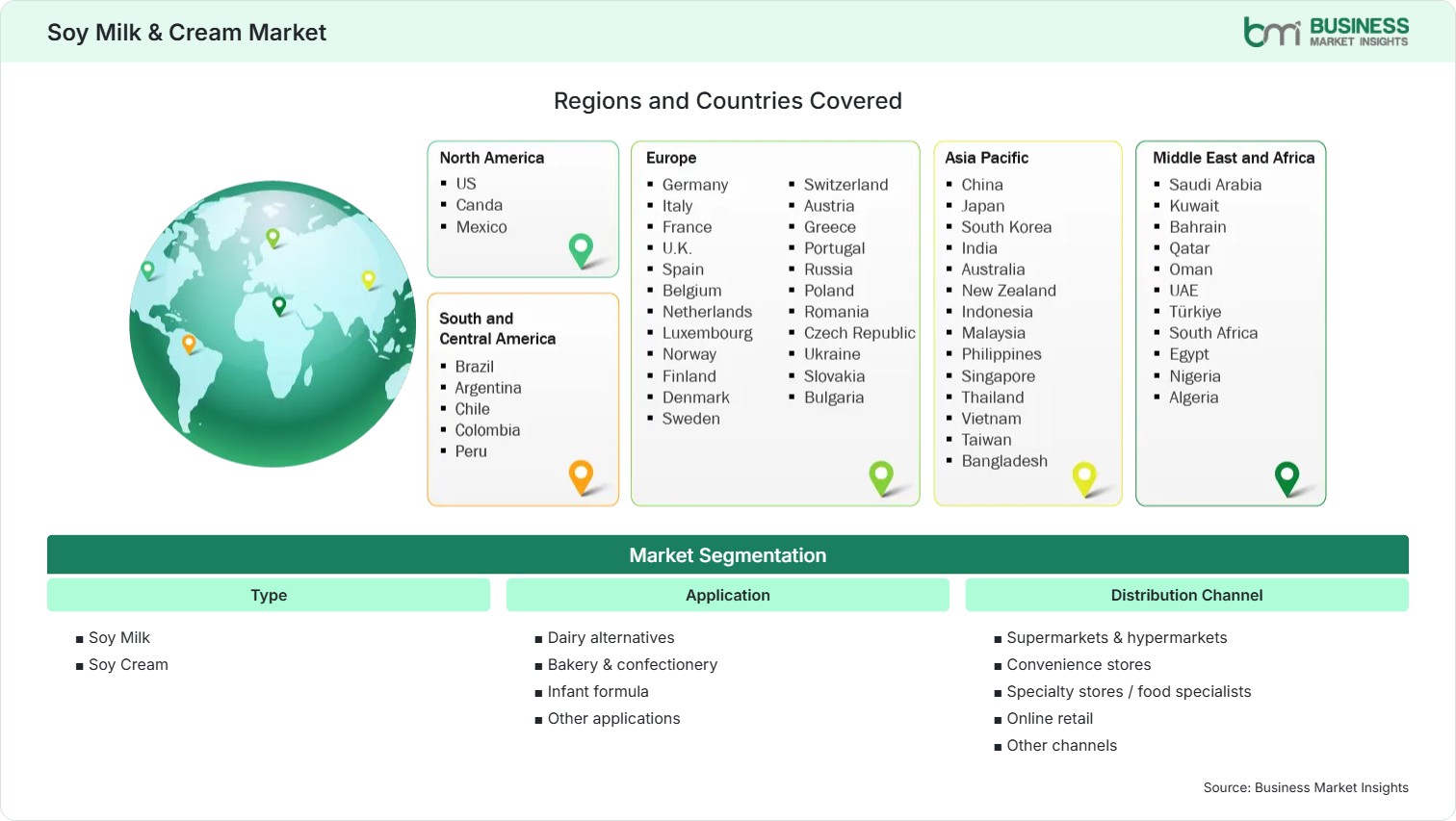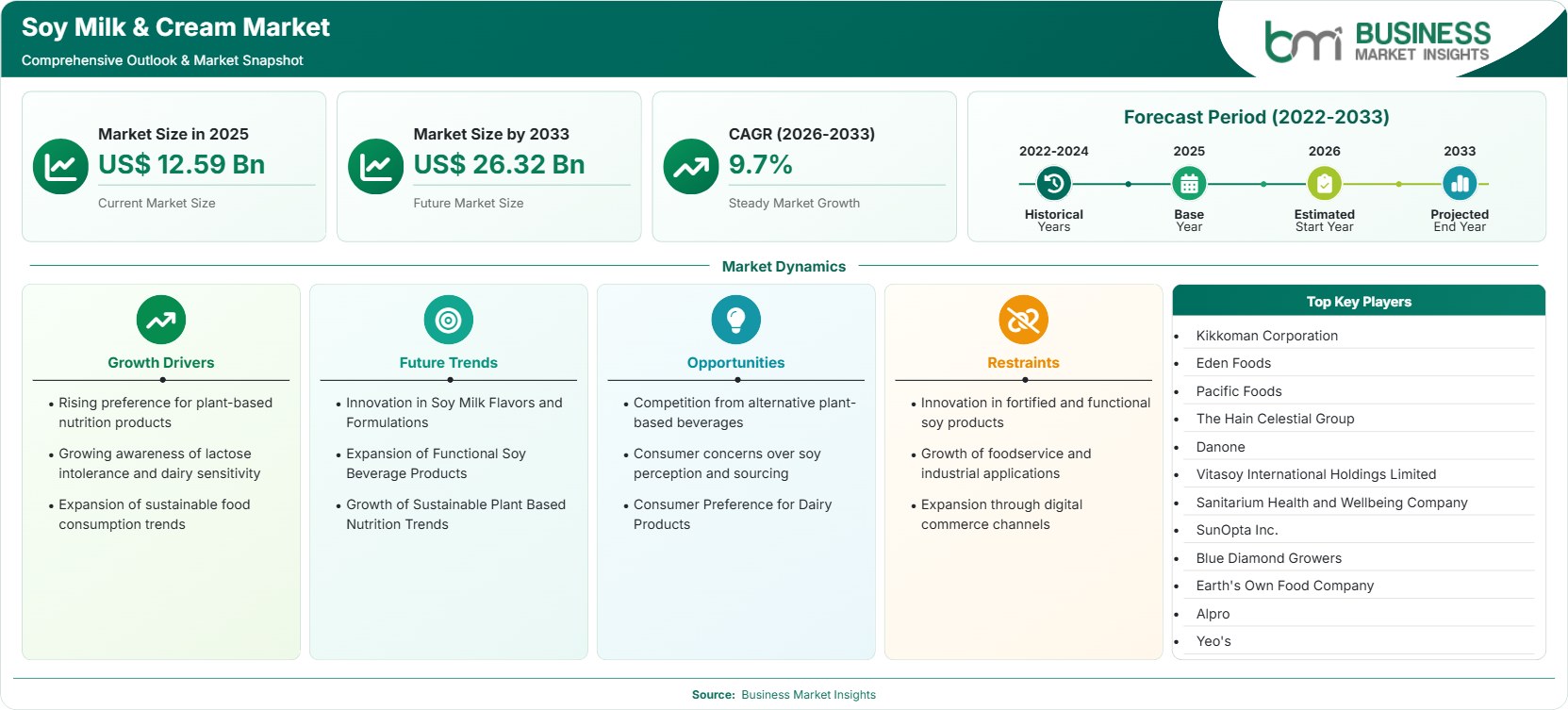
Soy Milk & Cream Market Regional Highlights
North America Soy Milk & Cream Market
North America accounts for 29%–32% Soy Milk & Cream Market share in 2025 while growing at a CAGR of 9.0% to 9.8% from 2026 to 2033. The growth of the region will be driven by an increase in plant-based diet consumption, health consciousness, and product innovation.
- The United States remains the dominant contributor due to strong demand for plant-based beverages, vegan products, and functional nutrition offerings.
- Retailers are expanding plant-based product categories, improving consumer accessibility through supermarkets, specialty stores, and online grocery platforms.
- Food manufacturers are developing soy-based ingredients for bakery, confectionery, and processed food applications.
- Consumers increasingly prefer fortified soy beverages containing protein, calcium, vitamins, and functional ingredients.
- Sustainability-focused purchasing behavior continues supporting demand for environmentally responsible dairy alternatives.
US Soy Milk & Cream Market
The United States represents the largest national market in North America, contributing to 25%–27% of global income by 2025 and growing at a CAGR of 9.2%–10.0% between 2026 and 2033. High consumer knowledge of the benefits of plant-based nutrition, widespread availability within stores, and innovations of food producers will keep supporting adoption.
- Alternative dairy consumption continues expanding as consumers seek lactose-free and environmentally sustainable beverage options.
- Beverage companies are introducing premium soy products with improved taste, texture, and nutritional benefits.
- Online grocery platforms are increasing accessibility for specialty soy milk and cream products across consumer segments.
- Foodservice operators are incorporating plant-based alternatives into menus to meet changing dietary preferences.
Europe Soy Milk & Cream Market
Europe provides 21%–24% of the total global revenue in 2025 and records a CAGR of 8.8%–9.6% between 2026 and 2033. Sustainability programs, vegan population growth, and demand for alternative milk products drive market growth in the region. Germany and the UK are the key markets, while France shows increasing popularity through premium plant-based foods.
- Germany maintains regional leadership due to strong demand for organic products and established alternative food consumption patterns.
- France demonstrates faster growth with a CAGR of 10.0%–10.8% supported by expanding plant-based retail offerings.
- European consumers increasingly prioritize sustainable food production and environmentally responsible packaging solutions.
- Manufacturers continue developing premium soy products targeting health-conscious and environmentally aware consumers.
- Regulatory focus on food transparency and nutritional labeling supports Soy Milk & Cream market credibility and consumer confidence.
Asia Pacific Soy Milk & Cream Market
The Asia Pacific contributes to 38%-41% of world income in 2025 and registers the fastest compound annual growth rate (CAGR) of 10.2%-11.0% between 2026 and 2033. This is due to the presence of traditional soy use, growing urban population, higher income, and increased requirement for health drinks in convenience form.
- China leads regional demand due to established soy consumption habits and large-scale beverage manufacturing capabilities.
- India records higher growth with a CAGR of 11.5%–12.3% driven by health awareness, urbanization, and expanding modern retail.
- Southeast Asian markets benefit from traditional soy beverage preferences and growing packaged food consumption.
- Japan and South Korea continue developing premium soy products with functional nutrition benefits.
- Regional manufacturers are expanding production capacity to meet increasing domestic and export demand.
Rest of World Soy Milk & Cream Market
The Rest of World region represents 7%–10% of global revenue in 2025 while expanding at a CAGR of 9.5%–10.3% during 2026–2033. Latin America benefits from increasing health awareness and alternative protein adoption, while the Middle East & Africa show rising interest in affordable nutritional beverages and imported plant-based products.
- Brazil leads Latin American demand, while Mexico demonstrates faster growth with a CAGR of 10.2%–11.0% supported by retail expansion.
- Middle Eastern markets are adopting soy beverages due to increasing interest in dairy alternatives and nutritional products.
- African markets present opportunities through urbanization, changing diets, and improving food distribution infrastructure.
- International brands are expanding regional availability through partnerships with local distributors and retailers.
- Growing awareness of plant-based nutrition continues supporting future market development across emerging economies.