
UHT Milk Market Outlook: Size, Share, Trends, Growth Analysis, Competitive Landscape & Forecast, 2022-2033

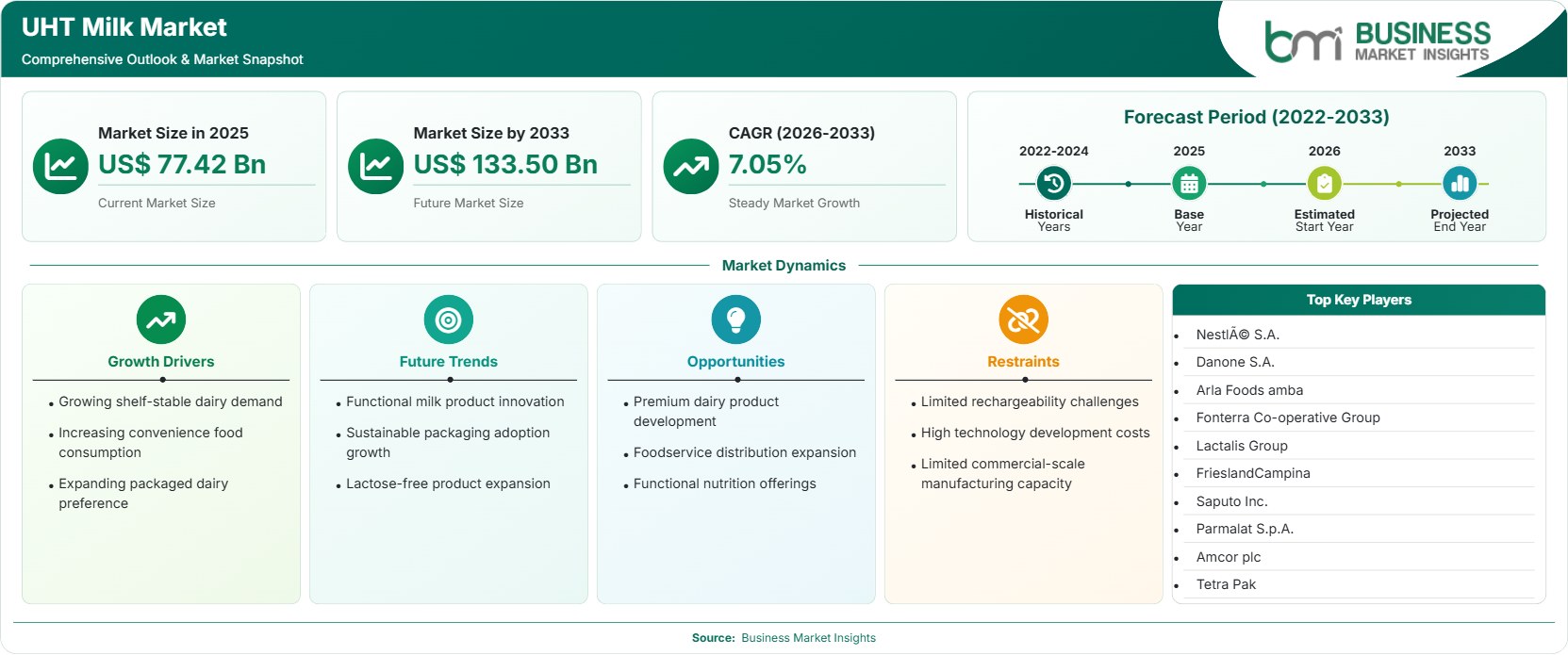
The UHT Milk Market size was valued at US$ 77.42 billion in 2025 and is projected to reach US$ 133.50 billion by 2033, growing at a CAGR of 7.05% during 2026–2033. Growing demand for shelf-stable dairy products, increasing convenience food consumption, and expanding consumer preference for packaged dairy products are driving market expansion. Rising functional nutrition offerings, premium dairy innovations, and foodservice distribution networks continue creating attractive growth opportunities.

Report Coverage
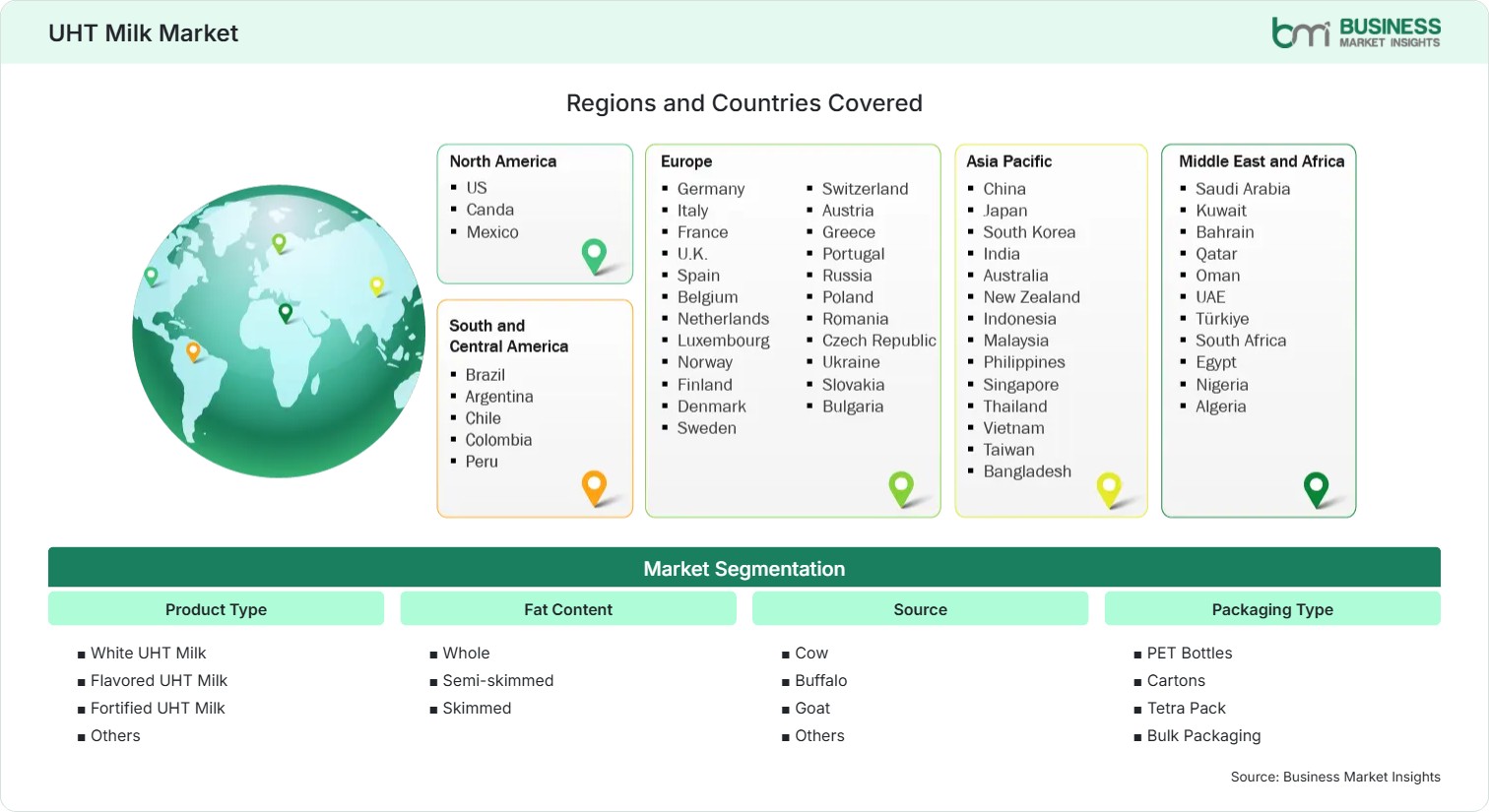
  • Product Type: White UHT Milk, Flavored UHT Milk, Fortified UHT Milk, Others
  • Fat Content: Whole, Semi-skimmed, Skimmed
  • Source: Cow, Buffalo, Goat, Others
  • Packaging Type: PET Bottles, Cartons, Tetra Pack, Bulk Packaging
  • End-Use: B2B, B2C
US$ 77.42 Bn Market size in 2025
US$ 133.50 Bn Market Size by 2033
7.05% CAGR, 2026 - 2033
2026-2033 Forecast Period

01 AI Overview

UHT Milk Market Summary

  • North America Region: North America holds a 23%–26% market share in 2025 and is projected to grow at a CAGR of 6.5%–7.1% during 2026–2033. Rising demand for long shelf-life dairy products, increasing retail distribution, and expanding foodservice applications continue supporting steady regional market growth.
  • U.S. Market: The United States represents the largest contributor within North America, supported by increasing demand for convenient dairy beverages, expanding retail availability, and growing institutional consumption, registering a projected CAGR of 6.7%–7.3% through 2033.
  • Fastest Growing Region: Asia Pacific accounts for 36%–39% of the global market in 2025 and is expected to register the fastest CAGR of 7.8%–8.5% during 2026–2033. Rising urbanization, expanding middle-class populations, growing dairy consumption, and increasing investments in modern retail infrastructure continue accelerating regional market expansion.
  • Leading Segment: White UHT Milk accounts for 48%–52% of the market share in 2025 and is anticipated to expand at a CAGR of 6.9%–7.5% during the forecast period. Strong household consumption, broad retail availability, and affordability continue supporting sustained segment leadership across developed and emerging markets.
  • High Growth Segment: Fortified UHT Milk represents 15%–18% of the market in 2025 while growing at a CAGR of 8.5%–9.2% through 2033. Increasing consumer awareness of nutrition, immunity support, and vitamin-enriched dairy products is driving strong adoption across multiple demographic groups.
  • Key Market Opportunity: Rising demand for functional dairy nutrition, premium fortified beverages, and expanding institutional distribution channels is creating significant opportunities for manufacturers to diversify product portfolios and strengthen market penetration.
  • Major Market Players: Nestlé S.A., Danone S.A., Arla Foods amba, Fonterra Co-operative Group, Lactalis Group, FrieslandCampina, Saputo Inc., Parmalat S.p.A., Amcor plc, Tetra Pak.
02 Strategic Insights

UHT Milk Market: Strategic Insights

UHT Milk Market Strategic Framework
FREE PDF
Request your free sample
Request free sample
03 Stakeholder View

Key Takeaways

  • Shelf-stable dairy products are becoming increasingly important within the global dairy value chain. Longer product shelf life, reduced refrigeration requirements before opening, and lower transportation losses enable manufacturers and retailers to improve supply chain efficiency while expanding distribution into remote and developing markets.
  • Functional and fortified dairy products represent the strongest long-term growth opportunity. Consumers increasingly seek UHT milk enriched with vitamins, minerals, protein, calcium, probiotics, and immunity-supporting ingredients, encouraging manufacturers to diversify premium product portfolios and capture higher-value consumer segments.
  • Packaging innovation is emerging as a major competitive differentiator. Companies continue investing in recyclable cartons, lightweight packaging materials, smart labeling technologies, and aseptic packaging systems that improve product safety, sustainability, convenience, and operational efficiency throughout the dairy supply chain.
  • Asia Pacific continues to provide the most attractive regional investment landscape. Rising disposable incomes, expanding urban populations, increasing dairy consumption, and growing investments in modern retail and cold-chain alternatives continue supporting sustained market expansion across China, India, Southeast Asia, and neighboring economies.
  • Strategic partnerships between dairy producers, packaging companies, and foodservice operators are strengthening market competitiveness. Collaborative innovation in processing technologies, packaging solutions, and retail distribution networks is enabling companies to improve operational efficiency while addressing evolving consumer preferences for premium dairy products.
04 Geographic Outlook

UHT Milk Market Regional Highlights

North America UHT Milk Market

North America accounted for approximately 23%–26% of the UHT Milk Market share in 2025 and is expected to grow at a CAGR of 6.5%–7.1% between 2026 and 2033. The factors contributing to the growth of this region include increased demand for shelf-stable milk products and the adoption of aseptic packaging technology.

  • Rising demand for convenient dairy products is encouraging manufacturers to expand UHT milk portfolios featuring improved nutritional profiles, extended shelf life, and sustainable packaging solutions across retail and institutional distribution channels.
  • Increasing investments in aseptic processing and packaging technologies improve product safety, minimize spoilage, and enhance supply chain efficiency throughout North American dairy operations.
  • Growing preference for fortified and lactose-free dairy beverages is supporting product innovation aimed at health-conscious consumers seeking convenient nutritional alternatives.
  • Foodservice operators increasingly utilize shelf-stable dairy products to improve inventory management, reduce refrigeration dependency, and minimize product wastage across commercial kitchens.
  • Expansion of e-commerce grocery platforms continues improving accessibility of packaged dairy products while strengthening nationwide distribution capabilities.

US UHT Milk Market

The United States is the largest national market in North America, accounting for about 18%–20% of total global consumption in 2025 and experiencing a CAGR of 6.7%–7.3% through 2033. The rise in consumer demand for convenient dairy drinks, higher institutional consumption, and the growth of premium dairy products are expected to drive future market growth.

  • Rising consumption of protein-rich and vitamin-fortified dairy beverages encourages manufacturers to diversify premium product portfolios for health-conscious consumers.
  • Expanding retail distribution and digital grocery channels improve product availability while supporting increasing consumer preference for packaged dairy products.
  • Growing adoption of sustainable packaging technologies aligns with consumer expectations for environmentally responsible dairy products and reduced packaging waste.
  • Continuous innovation in flavored, lactose-free, and functional milk beverages strengthens competitive differentiation across the U.S. dairy industry.

Europe UHT Milk Market

Europe captured approximately 30%–33% of the global market in 2025 and is projected to register a CAGR of 6.6%–7.2% during the forecast period. High consumer acceptance of UHT milk, established dairy processing infrastructure, and widespread aseptic packaging adoption continue supporting regional market leadership.

  • France remains the leading national market with a projected CAGR of 6.5%–7.1%, supported by high household consumption, mature dairy processing capabilities, and extensive retail distribution.
  • Poland represents one of the fastest-growing European markets, expanding at a CAGR of 7.3%–7.9% owing to rising disposable incomes and increasing demand for packaged dairy products.
  • Dairy manufacturers continue investing in recyclable packaging and carbon reduction initiatives to strengthen sustainability performance across European operations.
  • Functional dairy products enriched with vitamins, minerals, and protein continue gaining popularity among consumers seeking healthier beverage alternatives.
  • Increasing foodservice demand supports higher institutional purchases of shelf-stable dairy products throughout hotels, restaurants, and catering businesses.

Asia Pacific UHT Milk Market

Asia Pacific represented approximately 36%–39% of the global market in 2025 and is anticipated to register the fastest CAGR of 7.8%–8.5% during 2026–2033. Rapid urbanization, expanding dairy consumption, and growing investments in modern retail infrastructure continue driving UHT Milk Market growth throughout emerging economies.

  • China dominates regional demand with an estimated CAGR of 8.0%–8.7%, supported by expanding dairy consumption, modern retail expansion, and strong investments in domestic dairy processing.
  • India is projected to record a CAGR of 8.3%–8.9%, driven by increasing urbanization, rising packaged food consumption, and expanding organized dairy distribution networks.
  • Southeast Asian countries continue experiencing robust demand due to population growth, improving retail accessibility, and increasing consumer awareness regarding shelf-stable dairy products.
  • Growing investments in premium and fortified dairy beverages encourage product innovation targeted at children, working professionals, and aging populations.
  • Expansion of local dairy processing facilities improves supply chain efficiency while supporting increasing domestic production capacity.

Rest of World UHT Milk Market

The Rest of World region accounted for approximately 8%–10% of global revenue in 2025 and is expected to expand at a CAGR of 6.3%–6.9% through 2033. Market growth is supported by expanding packaged food industries, improving dairy distribution infrastructure, and increasing urban populations across South America, the Middle East, and Africa.

Brazil remains the largest South American market, while Saudi Arabia demonstrates strong growth supported by increasing packaged dairy consumption, expanding foodservice industries, and investments in modern food processing infrastructure.

  • Brazil is projected to register a CAGR of 6.5%–7.1%, supported by expanding retail distribution, growing packaged dairy demand, and increasing household consumption.
  • Saudi Arabia is anticipated to grow at a CAGR of 7.0%–7.6%, driven by rising demand for long shelf-life dairy products and continued investment in food security initiatives.
  • Expansion of modern supermarkets and convenience stores improves consumer access to packaged dairy products throughout emerging economies.
  • Increasing tourism and hospitality activities continue strengthening institutional demand for shelf-stable dairy products across hotels, restaurants, and catering services.
  • Product innovation focused on flavored and fortified milk beverages supports premiumization and long-term market expansion across developing regions.
Global Market Geography
FREE PDF
Request your free sample
Request free sample
05 Segment Analysis

UHT Milk Market Segmentation

Product Type

The Product Type segment accounted for approximately 48%–52% of the market share in 2025 and is anticipated to grow at a CAGR of 7.1%-7.7% from 2026 to 2033. The increasing popularity of long-shelf-life dairy products, consumer preference for healthy beverages, and innovations in flavoring are driving market growth. In addition, the UHT Milk Market scope has further expanded as manufacturers introduce differentiated products for health-conscious consumers.

  • White UHT Milk: White UHT milk remains the dominant product category owing to its affordability, widespread household consumption, extended shelf life, and extensive availability across supermarkets, convenience stores, and institutional distribution channels.
  • Flavored UHT Milk: Flavored UHT milk continues gaining popularity among children and young adults through innovations in chocolate, vanilla, fruit, and coffee-based formulations that enhance taste while maintaining nutritional value.
  • Fortified UHT Milk: Fortified UHT milk is witnessing strong adoption due to increasing demand for vitamin-enriched, calcium-fortified, protein-enhanced, and immunity-supporting dairy beverages among health-conscious consumers.
  • Others: Other specialty UHT milk products include lactose-free, organic, and high-protein variants designed to address evolving dietary preferences and specialized nutritional requirements across diverse consumer groups.

Fat Content

The Fat Content segment represented nearly 41%–44% of the market revenue in 2025 and is expected to register a CAGR of 6.9%–7.5% during the forecast period. Changing dietary habits, increasing health awareness, and growing product diversification are encouraging manufacturers to offer multiple fat-content options suitable for different consumer preferences. The UHT Milk Market trends indicate increasing demand for reduced-fat and healthier dairy alternatives without compromising nutritional quality.

  • Whole: Whole UHT milk continues leading consumption owing to its rich taste, balanced nutritional profile, and extensive household usage across both developed and emerging economies.
  • Semi-skimmed: Semi-skimmed milk is increasingly preferred by consumers seeking balanced nutrition with reduced fat content, making it popular among families and health-conscious adults.
  • Skimmed: Skimmed UHT milk experiences growing demand from calorie-conscious consumers, fitness enthusiasts, and healthcare institutions requiring low-fat dairy products with high nutritional value.

Source

The Source segment accounted for 69%–72% of overall market revenue in 2025 and is expected to grow at a CAGR of 7.0%–7.6% from 2026–2033. The dairy processors have been continuously growing their sourcing plans in accordance with regional consumption, nutrient demand, product diversification, and a steady supply of raw milk.

  • Cow: Cow milk dominates global production because of its abundant supply, established dairy infrastructure, consumer familiarity, and suitability for large-scale commercial UHT processing.
  • Buffalo: Buffalo milk maintains strong regional demand owing to its higher fat content, creamy texture, and popularity across South Asian and Middle Eastern dairy markets.
  • Goat: Goat milk serves niche consumer segments seeking improved digestibility, unique nutritional benefits, and specialty dairy products targeting premium and health-focused markets.
  • Others: Other milk sources support regional specialty products and premium dairy offerings, enabling manufacturers to diversify product portfolios while addressing evolving dietary preferences.

Packaging Type

The Packaging Type segment holds a market share of around 52%–55% in 2025 and is expected to grow at a CAGR of 7.2%–7.8% during 2033. The role of innovations in packaging cannot be underestimated, as they help improve product shelf life, food safety, transportation, and sustainability.

  • PET Bottles: PET bottles provide convenience, durability, product visibility, and resealability, making them increasingly popular for premium and single-serve UHT milk products.
  • Cartons: Cartons continue supporting widespread retail distribution through cost-effective packaging, excellent shelf stability, and growing adoption of recyclable paper-based materials.
  • Tetra Pack: Tetra Pack packaging remains the preferred solution for aseptic dairy processing by providing superior product protection, extended shelf life, efficient transportation, and reduced food waste.
  • Bulk Packaging: Bulk packaging serves institutional buyers, foodservice operators, and industrial users requiring economical large-volume dairy supplies for commercial applications.

End-Use

The End-Use segment accounted for approximately 67%–70% of the market in 2025 and is anticipated to grow at a CAGR of 7.0%–7.6% throughout the forecast period. Increasing retail consumption, expanding institutional demand, and growing foodservice applications continue strengthening long-term market growth across both business and consumer channels.

  • B2B: B2B demand continues expanding across hotels, restaurants, cafés, bakeries, hospitals, educational institutions, and food manufacturers requiring reliable long shelf-life dairy supplies.
  • B2C: B2C remains the largest end-use category owing to rising household consumption, increasing supermarket penetration, growing online grocery sales, and consumer preference for convenient packaged dairy products.
06 Market Forces

UHT Milk Market Dynamics

Key Market Drivers

Growing shelf-stable dairy demand

Growing consumer demand for dairy products with extended shelf life is significantly driving the UHT Milk Market. UHT processing enables milk to remain safe for consumption over extended periods without refrigeration before opening, making it highly suitable for modern retail distribution and regions with limited cold-chain infrastructure. Increasing urbanization, changing shopping habits, and rising demand for convenient food products continue accelerating adoption. The technology also helps reduce food waste and improves inventory management, supporting long-term UHT Milk Market growth across both developed and emerging economies.

Increasing convenience food consumption

Busy lifestyles, higher workforce participation, and expanding urban populations are encouraging consumers to purchase ready-to-use dairy products requiring minimal storage and preparation. UHT milk fits well within convenience-oriented consumption patterns by offering portability, extended usability, and broad retail availability. Growth in supermarkets, convenience stores, and e-commerce grocery platforms further strengthens accessibility.

Expanding packaged dairy preference

Consumers increasingly prefer hygienically processed and professionally packaged dairy products because of growing awareness regarding food safety, product quality, and nutritional reliability. Advanced aseptic packaging technologies preserve freshness while protecting products from contamination during transportation and storage. Manufacturers continue investing in innovative packaging materials, improved labeling, and sustainable formats to strengthen consumer confidence and enhance brand differentiation across competitive dairy markets.

Key Market Opportunities

Premium dairy product development

Growing demand for premium dairy nutrition presents significant opportunities for manufacturers introducing organic, lactose-free, protein-enriched, and specialty UHT milk products. Premiumization strategies enable companies to differentiate offerings while addressing evolving consumer expectations regarding nutrition, taste, and product quality. Increasing disposable incomes and willingness to pay for value-added dairy products continue supporting innovation across global dairy markets.

Foodservice distribution expansion

Hotels, restaurants, cafés, bakeries, hospitals, educational institutions, and catering companies increasingly utilize UHT milk because of its extended shelf life and simplified storage requirements. Expanding institutional demand creates opportunities for manufacturers to strengthen B2B distribution networks through customized packaging formats, reliable supply agreements, and long-term partnerships. Favorable UHT Milk Market Forecasts indicate continued expansion of foodservice consumption across both developed and emerging economies.

Functional nutrition offerings

Growing consumer awareness of preventive healthcare and balanced nutrition encourages development of functional dairy beverages enriched with vitamins, calcium, probiotics, protein, omega fatty acids, and immune-supporting ingredients. Manufacturers continue investing in research and product development to launch innovative formulations targeting children, athletes, senior citizens, and health-conscious adults, creating substantial long-term market opportunities.

Market Restraints and Challenges

Consumer fresh milk preference

Factor: Many consumers continue perceiving fresh milk as having superior taste, freshness, and nutritional quality compared with shelf-stable alternatives. Impact: Strong consumer loyalty toward refrigerated dairy products limits UHT milk penetration in several mature dairy markets, requiring manufacturers to invest heavily in consumer education, product innovation, and premium positioning strategies.

High processing equipment costs

Factor: Establishing UHT processing facilities requires substantial investment in sterilization systems, aseptic filling equipment, packaging technologies, and quality assurance infrastructure. Impact: High capital expenditure creates significant barriers for smaller dairy processors while increasing production costs, limiting manufacturing expansion and slowing adoption in price-sensitive developing markets.

07 Company Analysis

Competitive Landscape

The competitive environment is characterized by continuous investment in aseptic processing technologies, sustainable packaging, premium dairy formulations, and functional nutrition products. The UHT Milk Market analysis indicates that leading dairy manufacturers and packaging providers are strengthening their market positions through production capacity expansion, product innovation, strategic partnerships, and investments in recyclable packaging solutions to address evolving consumer preferences.

Company Name

Overview

Products and Services Relevant to this Market

Nestlé S.A.

Global food and beverage company with a strong portfolio of dairy and nutritional products across international markets.

UHT milk, fortified dairy beverages, flavored milk, nutritional dairy products, premium milk solutions.

Danone S.A.

Multinational food company specializing in dairy, plant-based products, and specialized nutrition.

UHT milk, fortified dairy beverages, protein-enriched milk, functional nutrition products.

Arla Foods amba

International dairy cooperative supplying premium dairy products across retail and foodservice channels.

White UHT milk, organic milk, lactose-free milk, dairy ingredients, foodservice dairy solutions.

Fonterra Co-operative Group

New Zealand-based dairy cooperative serving global dairy ingredient and consumer markets.

UHT milk, dairy ingredients, nutritional milk products, foodservice dairy solutions.

Lactalis Group

Global dairy manufacturer offering an extensive portfolio of branded milk and dairy products.

White UHT milk, flavored milk, premium dairy beverages, cheese, dairy nutrition products.

FrieslandCampina

International dairy cooperative focused on consumer nutrition and dairy innovation.

Fortified UHT milk, children's nutrition, dairy beverages, specialty dairy products.

Saputo Inc.

Canadian dairy processor with diversified dairy manufacturing and international distribution capabilities.

UHT milk, cream products, dairy beverages, value-added dairy products.

Parmalat S.p.A.

Established dairy producer recognized for shelf-stable milk and packaged dairy products.

UHT milk, flavored milk, dairy beverages, long-life milk products.

Amcor plc

Global packaging company providing advanced flexible and rigid packaging technologies.

Dairy packaging solutions, aseptic packaging materials, sustainable packaging technologies.

Tetra Pak

Global leader in food processing and aseptic packaging technologies for dairy manufacturers.

UHT processing systems, aseptic filling equipment, Tetra Pak cartons, packaging automation solutions.

08 Industry Activity

Recent Developments

August 2025

Danone announced a strategic partnership with an Indian dairy producer to expand its UHT milk production capacity in India, supporting growing demand for shelf-stable dairy products in the region.

July 2025

NewPrinces S.p.A. signed a binding agreement to acquire Carrefour Italia, significantly expanding its retail distribution network for dairy products, including UHT milk, across Italy.

April 2025

Arla Foods completed its acquisition of Semper's baby food business from the Hero Group, strengthening its long-life dairy and nutrition portfolio across the Nordic region and expanding its ambient dairy offerings.

April 2025

NewPrinces S.p.A. (formerly Newlat Food S.p.A.) approved the company's rebranding to NewPrinces S.p.A., following the integration of Princes Group, further strengthening its global dairy business, including UHT milk production and distribution.

10 Trust & Transparency

Research Methodology

The market analysis combines proprietary research with secondary data from government agencies, company disclosures, regulatory filings, industry databases and expert interviews. Market estimates are validated through data triangulation, cross-market benchmarking and analyst review.

View Full Research Methodology

11 Questions Answered

Frequently Asked Questions

What does the UHT Milk Market Report cover?

The UHT Milk Market Report provides comprehensive insights into market size, segmentation, regional performance, competitive landscape, technological advancements, growth drivers, opportunities, restraints, recent developments, and market forecasts through 2033.

Which packaging format is most widely used for UHT milk?

Tetra Pack packaging remains the preferred format due to its excellent aseptic protection, extended shelf life, efficient transportation, product safety, and growing availability of recyclable packaging materials.

Why is fortified UHT milk witnessing rapid growth?

Fortified UHT milk is gaining popularity because consumers increasingly seek products enriched with vitamins, minerals, calcium, protein, and immunity-supporting nutrients that provide additional health benefits while maintaining long shelf life.

Which region dominates the global UHT Milk Market?

Asia Pacific currently represents the largest regional market owing to rising dairy consumption, rapid urbanization, expanding middle-class populations, increasing retail penetration, and strong investments in dairy processing infrastructure.

What are the primary factors driving the UHT Milk Market?

The market is driven by increasing demand for shelf-stable dairy products, growing convenience food consumption, expanding preference for packaged dairy products, rising urbanization, and continuous innovation in premium and fortified milk offerings.

Access the Full UHT Milk Market Report

Get segment-level forecasts, regional estimates, competitive benchmarking, company profiles and downloadable Excel datasets.

Access the full UHT Milk Market Report
350 pages PDF & Excel | 2026-07-28