
Oat Milk Market Outlook: Size, Share, Trends, Growth Analysis, Competitive Landscape & Forecast, 2026-2033

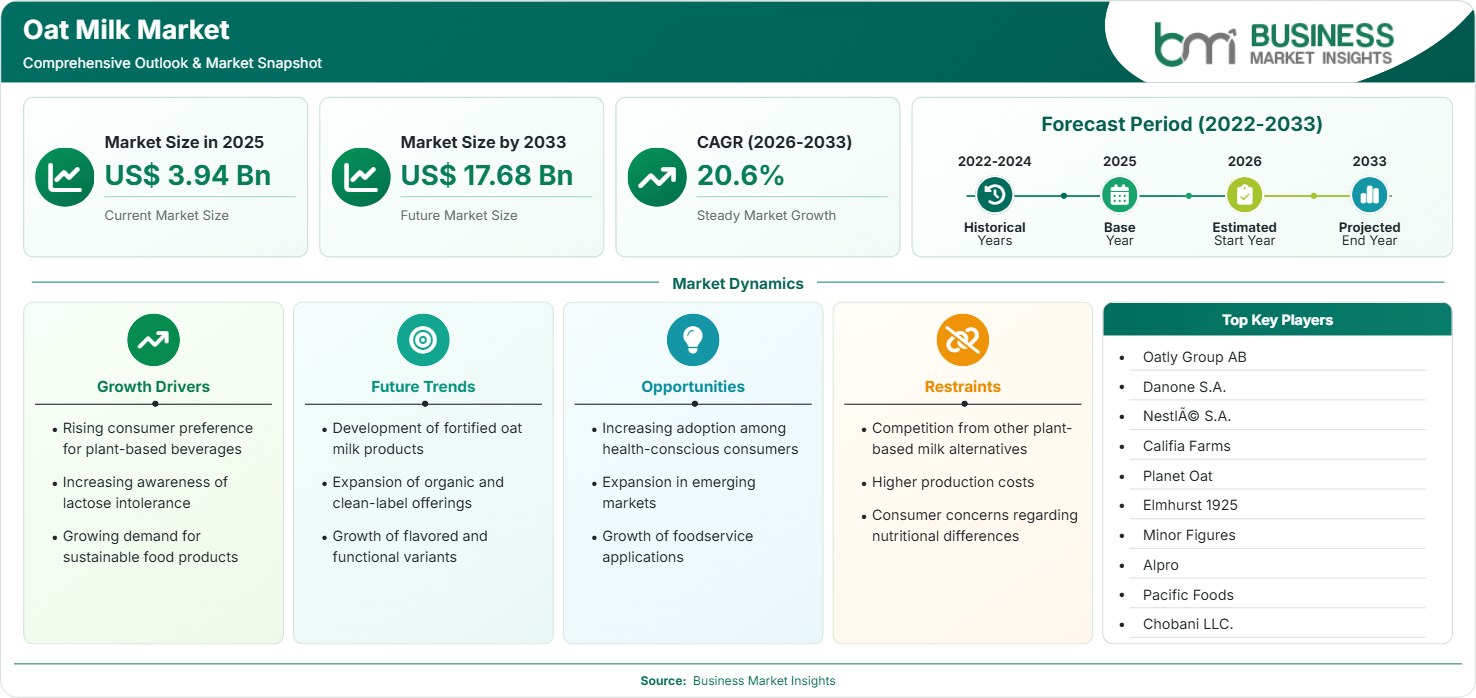
The Oat Milk Market size was valued at US$ 3.94 Billion in 2025 and is projected to reach US$ 17.68 Billion by 2033, growing at a CAGR of 20.6% during 2026–2033. Rising plant-based beverage adoption, increasing lactose intolerance awareness, sustainable food preferences, and expanding retail availability are supporting market expansion.

Report Coverage
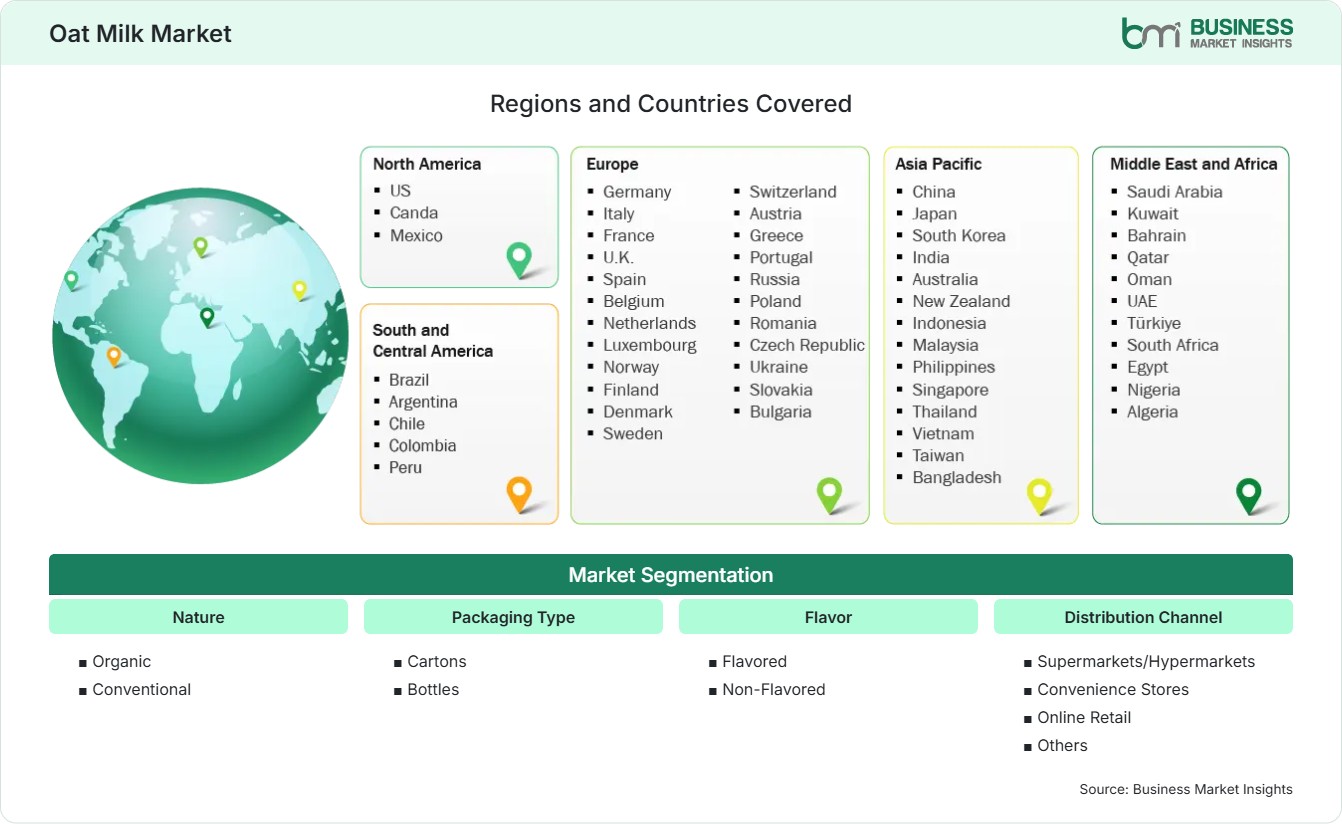
  • Nature: Organic, Conventional
  • Packaging Type: Cartons, Bottles
  • Flavor: Flavored, Non-Flavored
  • Distribution Channel: Supermarkets/Hypermarkets, Convenience Stores, Online Retail, Others
US$ 3.94 Bn Market size in 2025
US$ 17.68 Bn Market Size by 2033
20.6% CAGR, 2026 - 2033
2026-2033 Forecast Period

01 AI Overview

Oat Milk Market Summary

  • North America Region: North America holds a 38%–42% share in 2025, growing with a CAGR of 19.50%–20.30% due to strong plant-based beverage adoption, premium product demand, and sustainability-focused consumers. The US market is expanding at a CAGR of 19.80%–20.50% during 2026–2033, supported by health-conscious consumers, specialty coffee applications, and increasing retail penetration.
  • Fastest Growing Region: Asia Pacific accounts for a 20%–24% share in 2025 and is expanding at a CAGR of 22.00%–23.00%, driven by rising urbanization, increasing awareness of dairy alternatives, improving distribution networks, and growing adoption among younger consumers.
  • Leading Segment: Conventional oat milk represents a 65%–70% share in 2025 and is growing at a CAGR of 20.00%–20.60%, supported by wider availability, competitive pricing, mass-market acceptance, and established manufacturing capabilities.
  • High Growth Segment: Organic oat milk holds a 30%–35% share in 2025 and is advancing at a CAGR of 22.00%–23.00%, driven by clean-label preferences, premium nutrition positioning, and increasing demand for sustainably produced beverages.
  • Key Market Opportunity: Expansion into emerging markets, increased foodservice adoption, and rising demand among health-focused consumers create opportunities for manufacturers to develop innovative oat-based beverages and broaden consumption occasions.
  • Major Market Players: Oatly Group AB, Danone S.A., Nestlé S.A., Califia Farms, Planet Oat, Elmhurst 1925, Minor Figures, Alpro, Pacific Foods, and Chobani LLC.
02 Strategic Insights

Oat Milk Market: Strategic Insights

Oat Milk Market Strategic Framework
FREE PDF
Request your free sample
Request free sample
03 Stakeholder View

Key Takeaways

  • The market ecosystem includes oat farmers, ingredient suppliers, beverage manufacturers, packaging providers, retailers, foodservice operators, and online distribution platforms, creating an integrated value chain focused on product innovation and accessibility.
  • Organic products, flavored variants, and foodservice applications represent strong growth opportunities as consumers increasingly seek premium, sustainable, and convenient plant-based beverage options.
  • Product innovation is shifting toward fortified oat milk formulations containing added vitamins, minerals, protein, and functional ingredients to improve nutritional value and consumer acceptance.
  • Asia Pacific provides significant investment potential due to rising disposable incomes, expanding retail infrastructure, increasing health awareness, and growing acceptance of plant-based diets.
  • Strategic partnerships, manufacturing expansion, and portfolio diversification among beverage companies are intensifying competition as brands seek stronger positions in the alternative dairy category.
  • Digital commerce and direct-to-consumer channels are becoming important growth drivers by improving product discovery, consumer engagement, and access to specialized oat milk products.
04 Geographic Outlook

Oat Milk Market Regional Highlights

North America Oat Milk Market

North America accounted for a 38%–42% share of the Oat Milk Market in 2025 and is projected to expand at a CAGR of 19.50%–20.30% during 2026–2033. The region benefits from strong consumer acceptance of plant-based beverages, established retail infrastructure, premium product demand, and expanding foodservice applications. The US remains the leading contributor due to high demand for dairy alternatives, specialty coffee consumption, and sustainability-driven purchasing behaviour.

  • The region maintains strong demand through increasing consumer preference for dairy-free beverages, sustainable products, and functional nutrition-focused alternatives.
  • Retailers are expanding plant-based beverage offerings through dedicated sections, private-label products, and improved availability across supermarkets and online platforms.
  • Foodservice operators are incorporating oat milk into coffee, smoothie, and beverage menus to meet changing consumer preferences.
  • Manufacturers are investing in product innovation, including fortified formulations, organic variants, and improved taste profiles.

US Oat Milk Market

The US represented a 32%–36% share of the market in 2025 and is expected to grow at a CAGR of 19.80%–20.50% from 2026–2033. The country benefits from strong consumer awareness, extensive retail networks, and high adoption of plant-based beverages. Demand is supported by coffee shop applications, lactose intolerance awareness, sustainability concerns, and increasing interest in healthier beverage choices.

  • US consumers are increasingly adopting oat milk due to preferences for dairy-free, environmentally conscious, and convenient beverage options.
  • Coffee chains and foodservice providers are expanding oat milk offerings to address growing demand for customized beverage choices.
  • Online retail platforms are improving access to specialty oat milk products and increasing consumer product discovery.
  • Beverage companies are strengthening domestic production capabilities to support rising market demand.

Europe Oat Milk Market

Europe held a 28%–32% share of the market in 2025 and is estimated to grow at a CAGR of 20.50%–21.20% between 2026–2033. The region benefits from strong sustainability awareness, favorable consumer attitudes toward plant-based diets, and established alternative dairy markets. Sweden, Germany, the United Kingdom, and France are leading markets due to environmental consciousness, retail penetration, and growing demand for dairy substitutes.

  • Sweden demonstrates strong adoption through established oat beverage brands, sustainable consumption trends, and consumer acceptance of plant-based products.
  • Germany supports growth through expanding vegan populations, retail availability, and demand for environmentally responsible food products.
  • The United Kingdom continues increasing oat milk consumption through coffee culture expansion and foodservice adoption.
  • France is witnessing rising interest in plant-based beverages due to changing dietary preferences and premium product demand.
  • European manufacturers are focusing on clean-label formulations and sustainable production practices to strengthen market positioning.

Asia Pacific Oat Milk Market

Asia Pacific accounted for a 20%–24% share of the Oat Milk Market in 2025 and is forecast to achieve the highest regional growth rate with a CAGR of 22.00%–23.00% during 2026–2033. The region is supported by urbanization, increasing health awareness, expanding middle-class populations, and improving access through modern retail channels. China, Japan, Australia, and India represent major growth opportunities due to changing consumption patterns.

  • China is expanding rapidly through increasing awareness of plant-based nutrition, online retail growth, and rising premium beverage demand.
  • India presents opportunities through urban consumer adoption, expanding wellness trends, and increasing availability of dairy alternatives.
  • Japan supports adoption through interest in functional beverages, health-focused products, and innovative food categories.
  • Australia benefits from sustainability awareness, established alternative beverage markets, and strong consumer interest in plant-based products.
  • Regional manufacturers are increasing investments in production capacity to address rising demand across emerging economies.

Rest of World Oat Milk Market

Rest of World accounted for a 6%–10% share of the Oat Milk Market in 2025 and is projected to grow at a CAGR of 20.00%–21.00% during 2026–2033. South and Central America are witnessing gradual adoption through urban lifestyle changes and expanding retail channels, while Middle East and Africa markets are developing through increasing health awareness, premium food imports, and changing dietary preferences.

  • Brazil represents a developing market through increasing plant-based beverage awareness, urban consumption growth, and expanding modern retail channels.
  • Mexico is gaining opportunities through wellness trends, younger consumers, and increased availability of alternative dairy products.
  • Middle Eastern markets are adopting oat milk through premium food segments, international brands, and changing consumer preferences.
  • African markets are showing potential through urbanization, improving retail access, and growing interest in healthier beverages.
  • Emerging economies are creating opportunities for manufacturers through localized products, distribution expansion, and consumer education initiatives.
Global Market Geography
FREE PDF
Request your free sample
Request free sample
05 Segment Analysis

Oat Milk Market Segmentation

Nature

The nature segment accounted for a 100% share of the Oat Milk Market in 2025 and is projected to grow at a CAGR of 20.60%–21.20% between 2026–2034. Consumer demand for healthy, sustainable, clean-label beverages is gaining momentum, thereby favoring both organic and conventional beverages. Beverage companies are increasingly expanding their portfolios by developing better beverages and adopting varied positioning strategies.

  • Organic: Organic oat milk adoption is increasing due to clean-label preferences, environmental awareness, premium positioning, and demand for products perceived as naturally produced.
  • Conventional: Conventional oat milk maintains wider adoption due to affordability, extensive availability, established production networks, and strong acceptance among mainstream consumers.

Packaging Type

The packaging type segment represented a 100% share of the Oat Milk Market in 2025 and is expected to expand at a CAGR of 20.50%–21.00% during 2026–2034. Packaging innovation is becoming important as brands focus on convenience, sustainability, product protection, and consumer preferences. Manufacturers are adopting recyclable materials and efficient packaging formats to strengthen product differentiation across retail and foodservice channels.

  • Cartons: Cartons remain widely used due to lightweight design, longer shelf life capabilities, storage convenience, and suitability for large-scale retail distribution.
  • Bottles: Bottles are gaining adoption through premium product positioning, convenience-focused consumption, and increasing demand for ready-to-drink beverage formats.

Flavor

The flavor segment accounted for a 100% share of the Oat Milk Market in 2025 and is projected to grow at a CAGR of 20.40%–21.00% from 2026–2034. Consumer interest in variety, taste improvement, and customized beverage experiences is encouraging manufacturers to expand flavour portfolios. Companies are developing products targeting different consumption occasions, including coffee applications, breakfast routines, and direct beverage consumption.

  • Flavored: Flavored oat milk is gaining popularity through consumer interest in diversified taste profiles, indulgent beverage options, and innovative product launches.
  • Non-Flavored: Non-flavored oat milk remains important due to versatility in cooking, coffee preparation, smoothies, and everyday beverage consumption.

Distribution Channel

The distribution channel segment represented a 100% of the Oat Milk Market share in 2025 and is expected to grow at a CAGR of 20.60%–21.10% during 2026–2034. Retail expansion, online shopping growth, and improved product availability are strengthening market accessibility. Companies are increasing omnichannel strategies to reach diverse consumers through physical stores, digital platforms, and foodservice networks.

  • Supermarkets/Hypermarkets: These channels support growth through broad product visibility, consumer convenience, promotional activities, and increasing shelf space for plant-based beverages.
  • Convenience Stores: Convenience stores are expanding availability through quick purchase options, urban accessibility, and increasing demand for ready-to-consume beverage products.
  • Online Retail: Online retail growth is supported by direct-to-consumer strategies, subscription models, wider product selection, and improved consumer access.
06 Market Forces

Oat Milk Market Dynamics

Key Market Drivers

Rising Consumer Preference for Plant-Based Beverages

Increasing consumer preference for plant-based beverages is a primary factor supporting Oat Milk Market growth as customers seek alternatives to traditional dairy products. Health awareness, dietary flexibility, environmental considerations, and changing lifestyle patterns are influencing beverage purchasing decisions. The growing preference for oat milk can be attributed to its taste, versatility, and suitability for pairing with coffee and for culinary preparation. The growing prominence of plant-based products in supermarkets, café chains, and digital retail channels is prompting producers to expand their production capacity. Such market trends can be attributed to the following factors.

Increasing Awareness of Lactose Intolerance

Growing awareness of lactose intolerance is encouraging consumers to explore dairy-free alternatives, increasing demand for oat-based beverages. Consumers with digestion problems are looking for an alternative that offers the same ease of use as dairy milk. The campaigns by healthcare organizations, as well as increased access to nutrition facts, have resulted in a positive attitude towards plant products. The foodservice operators and grocery retailers are also responding by expanding their offerings of dairy-free drinks. The companies are developing fortified oat milk products to enhance nutritional value and customer satisfaction.

Growing Demand for Sustainable Food Products

Growing sustainability concerns are shaping Oat Milk Market trends as consumers increasingly consider the environmental impact of food production when making purchasing decisions. Oat milk will capitalize on is the growing consumer preference for environmentally friendly products, as it is plant-based. Companies marketing the products have been emphasizing their sustainable practices, responsible production processes, and recyclable packaging to attract environmentally conscious consumers. Retailers are also increasing the range of their environmentally responsible products in response to consumer expectations. This emphasis will provide oat-based drinks with long-term demand opportunities.

Key Market Opportunities

Increasing Adoption Among Health-Conscious Consumers

Health-conscious consumers represent a significant opportunity as demand increases for beverages associated with wellness, nutrition, and balanced lifestyles. Manufacturers are developing fortified oat milk products containing vitamins, minerals, and functional ingredients to attract consumers seeking additional health benefits. Premium product positioning, clean-label claims, and improved nutritional profiles are creating differentiation opportunities. Companies that align product development with evolving wellness preferences can strengthen market penetration. Expanding awareness of plant-based nutrition is expected to encourage adoption across households, fitness communities, and health-focused consumer segments.

Expansion in Emerging Markets

Emerging markets provide growth opportunities due to increasing urbanization, rising disposable incomes, and improving access to modern retail channels. Consumers in developing economies are becoming more aware of plant-based beverages through digital platforms, international brands, and changing dietary preferences. Manufacturers can expand opportunities by establishing local production capabilities, strengthening distribution networks, and adapting products to regional tastes. Strategic partnerships with retailers and foodservice providers can improve accessibility. Oat Milk Market Forecasts indicate that growing middle-class populations, expanding retail infrastructure, and rising health awareness across emerging regions will create favourable conditions for long-term category expansion.

Growth of Foodservice Applications

Foodservice expansion represents an important opportunity as cafes, restaurants, and beverage chains increasingly incorporate oat milk into menus. Rising demand for dairy-free coffee beverages, smoothies, and specialty drinks is encouraging commercial adoption. Partnerships between beverage manufacturers and foodservice operators can improve brand visibility and consumer trial. Companies are developing barista-focused formulations designed for improved texture and performance in professional applications. The expansion of coffee culture globally continues creating additional opportunities for oat milk consumption beyond household usage.

Market Restraints and Challenges

Competition from Other Plant-Based Milk Alternatives

Factor: Increasing availability of alternatives such as almond milk, soy milk, coconut milk, and other plant-based beverages creates competitive pressure within the category. Impact: Strong competition may limit consumer loyalty, influence pricing strategies, and require companies to invest more in differentiation, marketing, and product innovation. Manufacturers must improve taste, nutrition, sustainability positioning, and brand recognition to maintain competitive advantage in the expanding alternative dairy market.

Higher Production Costs

Factor: Raw material sourcing, processing requirements, specialized formulations, and sustainable packaging investments can increase oat milk market scope. Impact: Higher costs may affect pricing competitiveness and limit adoption among price-sensitive consumers, particularly in developing markets. Companies are addressing this challenge through supply chain optimization, manufacturing efficiency improvements, and production scale expansion. Managing cost structures remains important for maintaining profitability while delivering affordable plant-based beverage options.

07 Company Analysis

Competitive Landscape

The Oat Milk Market analysis highlights a competitive landscape shaped by global beverage companies, plant-based specialists, and nutrition-focused brands. Market participants are strengthening their positions through product innovation, sustainable sourcing strategies, expanded distribution networks, and investments in production capacity. Companies are focusing on organic offerings, fortified formulations, foodservice partnerships, and digital commerce channels to capture increasing demand for dairy alternatives. Competitive differentiation is influenced by taste improvement, brand recognition, sustainability credentials, and the ability to serve diverse consumer preferences.

Company Name

Overview

Products and Services relevant to this market

Oatly Group AB

Global plant-based beverage company specializing in oat-based products and sustainable nutrition solutions.

Offers oat milk beverages, barista editions, organic variants, and foodservice-focused products.

Danone S.A.

Global food and beverage company with strong alternative dairy product capabilities.

Provides plant-based beverages under brands including Alpro and other dairy alternatives.

Nestlé S.A.

Multinational food company operating across nutrition, beverages, and wellness categories.

Offers plant-based beverage solutions, dairy alternatives, and sustainable food products.

Califia Farms

US-based beverage company focused on premium plant-based drinks and innovation.

Provides oat milk, coffee creamers, almond beverages, and dairy-free beverage products.

Planet Oat

Plant-based beverage brand specializing in oat-based dairy alternatives.

Offers oat milk products including original, flavored, and refrigerated beverage formats.

Elmhurst 1925

Beverage company producing clean-label plant-based milk alternatives.

Provides oat milk with simple ingredients and nutrition-focused beverage formulations.

Minor Figures

Plant-based beverage company focused on oat products for coffee applications.

Offers barista oat milk and specialty coffee-focused dairy alternative solutions.

Alpro

European plant-based brand offering dairy-free food and beverage products.

Provides oat drinks, plant-based beverages, and alternative dairy products.

Pacific Foods

Natural food company producing organic and plant-based consumer products.

Offers oat milk, organic beverages, and plant-based nutrition products.

Chobani LLC

Food company expanding into dairy and plant-based beverage categories.

Provides oat-based beverages, dairy alternatives, and functional nutrition products.

08 Industry Activity

Recent Developments

August 2025

OMG Group Limited expanded the retail availability of its Oat Milk Goodness Barista Oat Milk range across Australia, increasing distribution through Woolworths stores and strengthening its presence in the oat milk category.

April 2025

Minor Figures expanded its functional oat beverage category with the launch of Hyper Oat, a flavored oat beverage range targeting everyday consumer use beyond traditional coffee applications.

March 2025

Minor Figures announced new oat beverage product innovations, including expanded barista-focused oat milk offerings, to support growth in café, coffee, and consumer beverage channels globally.

January 2025

Oatly Group AB & Nespresso launched a co-created Oatly Barista Edition Coffee, a limited-edition coffee blend designed to pair with Oatly oat drink. The collaboration expanded Oatly’s presence in the premium coffee and plant-based beverage segment.

10 Trust & Transparency

Research Methodology

The market analysis combines proprietary research with secondary data from government agencies, company disclosures, regulatory filings, industry databases and expert interviews. Market estimates are validated through data triangulation, cross-market benchmarking and analyst review.

View Full Research Methodology

11 Questions Answered

Frequently Asked Questions

What does the Oat Milk Market Report indicate about future opportunities?

The market Report indicates opportunities through emerging market expansion, foodservice adoption, premium product development, and increasing demand for sustainable plant-based beverages.

How are manufacturers improving oat milk products?

Manufacturers are developing fortified formulations, organic variants, improved textures, sustainable packaging, and specialized products for household and professional foodservice applications.

Which distribution channel is contributing to market expansion?

Supermarkets, online retail platforms, and foodservice channels are contributing strongly by improving product accessibility and increasing consumer awareness of oat-based beverages.

Why is oat milk gaining popularity compared with traditional dairy beverages?

Oat milk is gaining popularity due to its dairy-free positioning, versatile applications, consumer-friendly taste profile, sustainability appeal, and compatibility with coffee and food preparation.

What factors are driving the market growth?

Rising consumer preference for plant-based beverages, increasing lactose intolerance awareness, sustainability concerns, and expanding retail availability are major factors supporting market development.

Access the Full Oat Milk Market Report

Get segment-level forecasts, regional estimates, competitive benchmarking, company profiles and downloadable Excel datasets.

Access the full Oat Milk Market Report
350 pages PDF & Excel | 2026-07-28