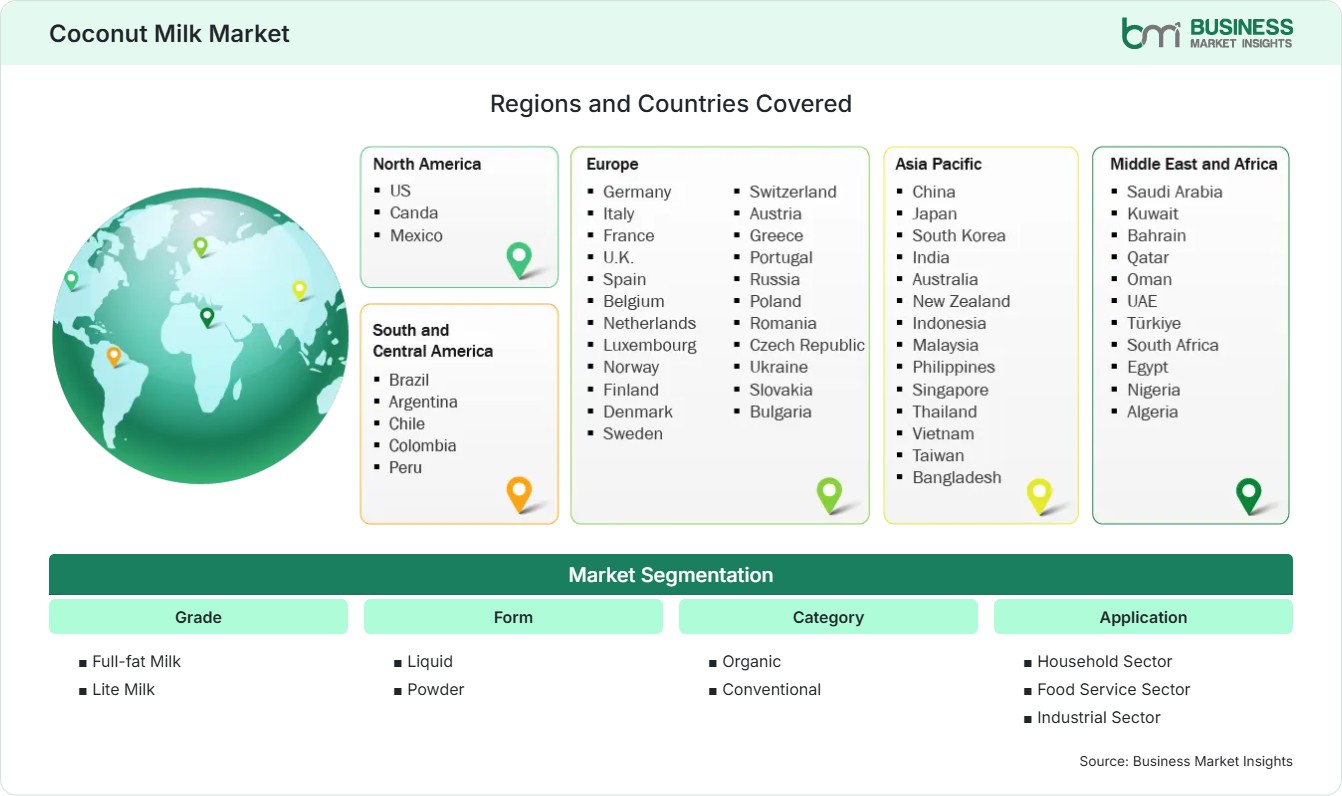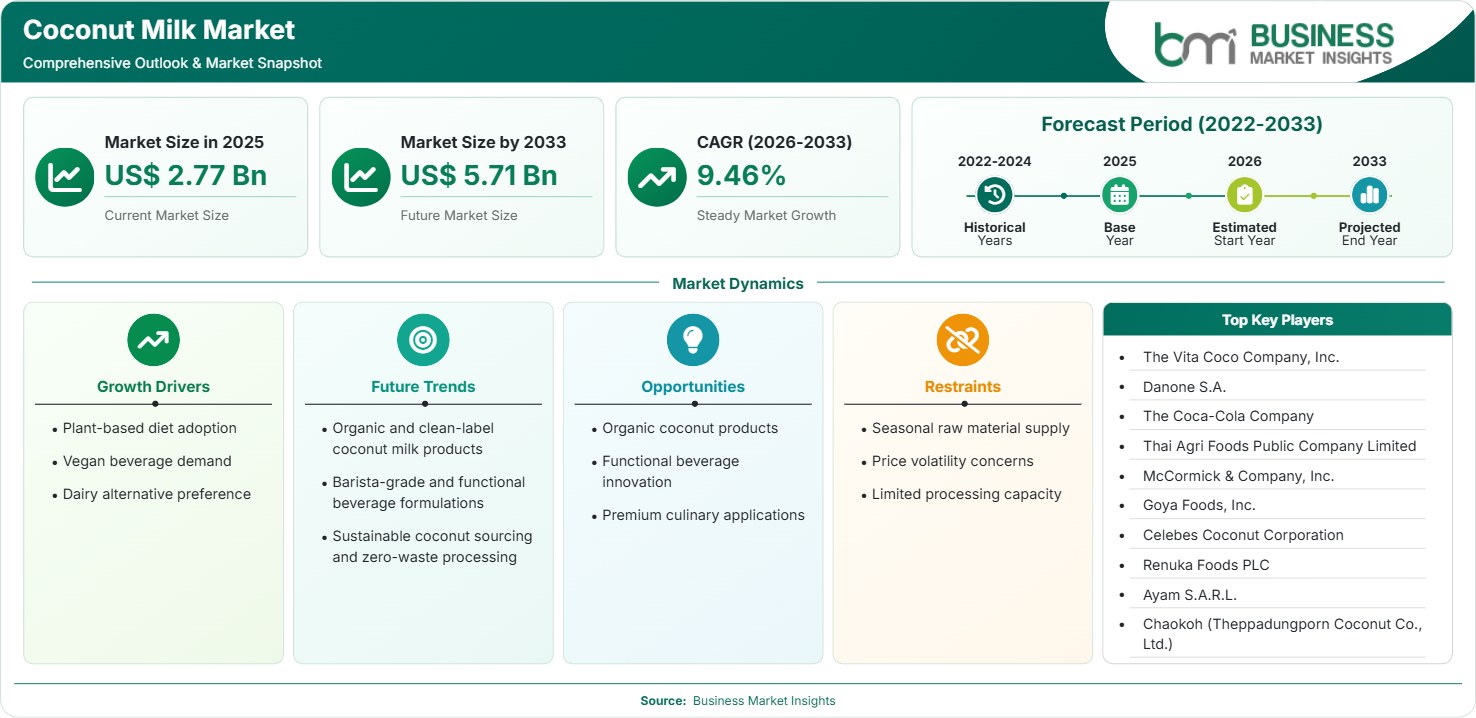
Coconut Milk Market Regional Highlights
North America Coconut Milk Market
North America accounts for an estimated 34%–38% market share in 2025, supported by increasing dairy alternative consumption, vegan product adoption, and strong retail availability of plant-based beverages. The region is projected to expand at an 8.9%–9.5% CAGR during 2026–2033. Demand is underpinned by consumption from households, foodservice growth, and the increased usage of coconut milk in beverages, desserts, and processed foods.
- The United States leads demand in the region because of high consumer uptake of dairy-free drinks and plant-based food segments.
- The distribution of coconut milk products is increasing as a result of health food sections and alternative beverage offerings from retailers.
- There is an increase in foodservice applications of coconut milk in smoothies, curries, desserts, and specialty beverages.
- Premium organic and clean-label coconut products are gaining traction among health-conscious consumers.
US Coconut Milk Market
The US market represents an estimated 82%–86% share of North America's Coconut Milk Market in 2025 and is expected to grow at 9.0%–9.7% CAGR through 2033. Growth is supported by expanding plant-based beverage consumption, increasing vegan and flexitarian diets, and broader adoption across retail and food service channels.
- Dairy alternative demand continues increasing as consumers seek lactose-free and plant-based nutritional options.
- Beverage companies are introducing innovative coconut-based drinks targeting wellness-oriented consumers.
- Food manufacturers are incorporating coconut milk into bakery, confectionery, and prepared meal formulations.
Europe Coconut Milk Market
Europe represents an estimated 22%–26% share in 2025, expanding at an 8.7%–9.4% CAGR during 2026–2033. Growth is supported by sustainability-focused consumers, vegan dietary trends, and increasing demand for dairy alternatives. Germany, the United Kingdom, France, and the Netherlands remain important markets due to strong retail networks and plant-based food adoption.
- Germany maintains strong demand through established organic food channels and plant-based product consumption.
- The United Kingdom continues expanding coconut beverage adoption through vegan and wellness-focused retail segments.
- France shows increasing interest in premium culinary coconut products for home cooking and food service applications.
- European manufacturers are emphasizing sustainable sourcing and transparent supply chains.
Asia Pacific Coconut Milk Market
Asia Pacific represents the largest regional market with an estimated 39%–43% share in 2025 and the fastest growth rate of 10.0%–10.7% CAGR during 2026–2033. Strong coconut cultivation, traditional consumption, export-oriented processing industries, and rising packaged food demand support regional leadership. Thailand, Indonesia, the Philippines, India, and Vietnam remain key contributors.
- Thailand remains a major production and export center for processed coconut products.
- Indonesia and the Philippines benefit from extensive coconut cultivation and processing capabilities.
- India is experiencing increasing packaged coconut milk consumption through expanding retail channels.
- Southeast Asian food industries continue adopting coconut milk across beverages, desserts, and prepared foods.
- Regional manufacturers are increasing investment in value-added coconut-based products.
Rest of World Coconut Milk Market
Latin America, the Middle East, and Africa collectively represent an estimated 8%–11% share in 2025, growing at an 8.8%–9.6% CAGR through 2033. Growth is supported by expanding international food trends, urbanization, hospitality sector development, and increasing availability of imported plant-based products. Brazil, UAE, Saudi Arabia, and South Africa represent important emerging markets.
- Middle Eastern markets are increasing adoption through premium food imports and hospitality applications.
- Brazil is expanding demand through health-conscious consumers and alternative food trends.
- Hospitality and restaurant sectors are increasing usage of coconut-based culinary ingredients.
- Urban consumers are showing growing interest in international cuisines and plant-based products.
- Retail modernization is improving accessibility of packaged coconut milk products.