
Coconut Syrup Market Outlook: Size, Share, Trends, Growth Analysis, Competitive Landscape & Forecast, 2022-2033

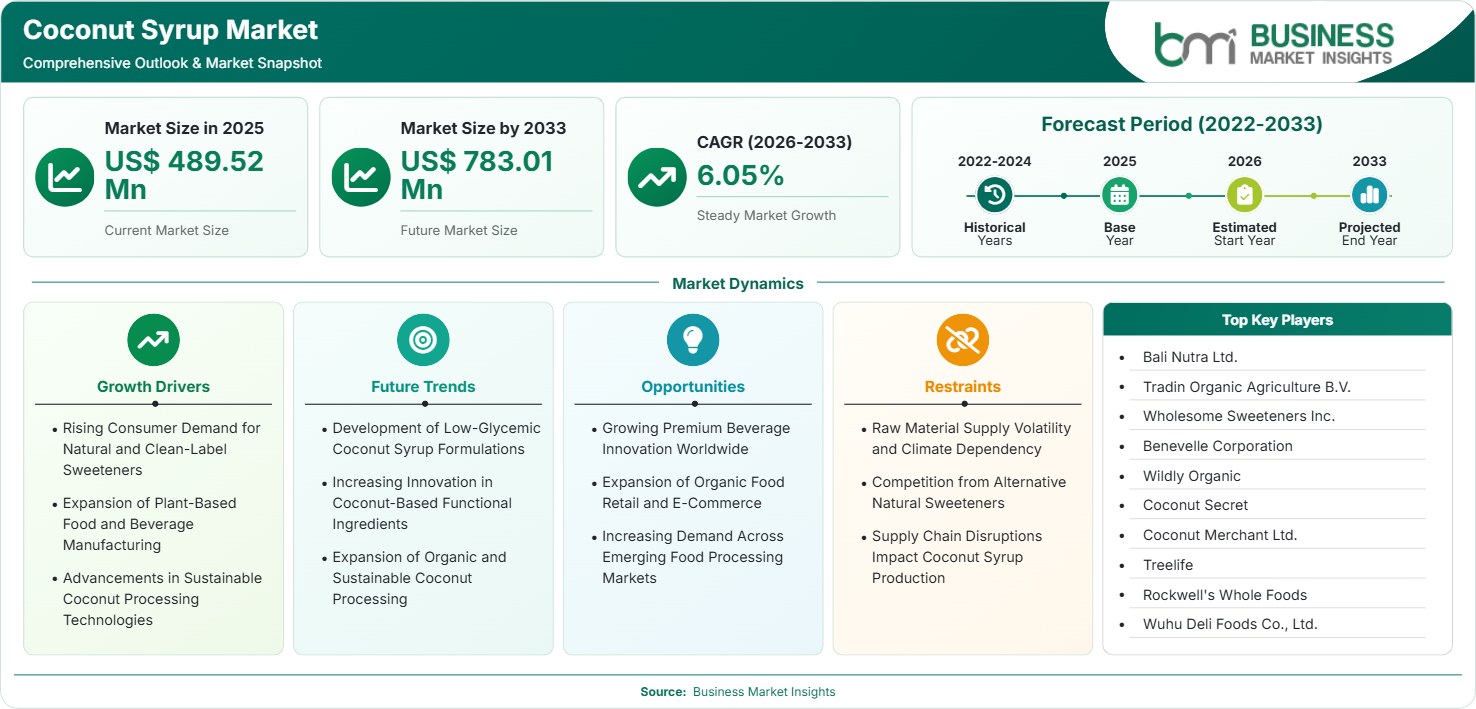
The Coconut Syrup Market size was valued at US$ 489.52 Million in 2025 and is projected to reach US$ 783.01 Million by 2033, growing at a CAGR of 6.05% during 2026–2033. Rising consumer demand for natural sweeteners, expanding clean-label food formulations, increasing vegan product launches, and wider adoption across bakery and beverage applications are creating attractive growth opportunities for manufacturers and ingredient suppliers worldwide.

Report Coverage
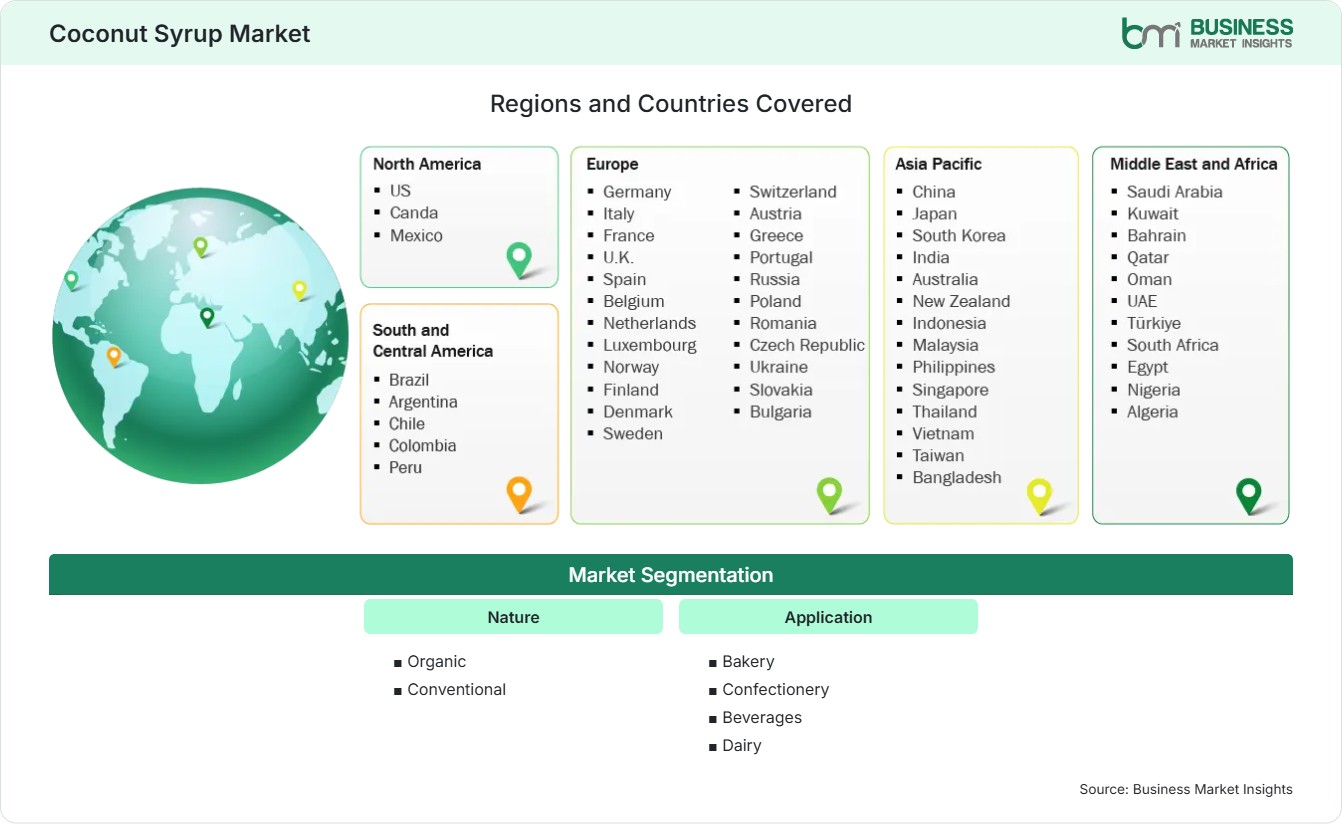
  • Nature: Organic, Conventional
  • Application: Bakery, Confectionery, Beverages, Dairy
US$ 489.52 Mn Market size in 2025
US$ 783.01 Mn Market Size by 2033
6.05% CAGR, 2026 - 2033
2026-2033 Forecast Period

AI Overview

Coconut Syrup Market Summary

  • North America Region: North America holds 34%–37% market share in 2025 and is projected to grow at a 5.4%–5.8% CAGR during 2026–2033. Strong clean-label adoption, premium food innovations, expanding organic retail channels, and increasing demand for plant-based sweeteners continue supporting long-term market expansion across foodservice and packaged food industries.
    U.S. Coconut Syrup Market: The United States dominates regional demand through premium food innovation, strong retail distribution, and growing organic sweetener consumption, advancing at an estimated 5.5%–5.9% CAGR through 2033.
  • Fastest Growing Region: Asia Pacific accounts for 26%–29% market share in 2025 while expanding at a 7.2%–7.8% CAGR during 2026–2033. Growing coconut cultivation, increasing disposable income, rapid food processing investments, expanding export capabilities, and healthier sugar alternatives continue accelerating regional demand across multiple consumer industries.
  • Leading Segment: Application – Beverages represents 36%–39% market share in 2025 and is anticipated to register a 6.3%–6.7% CAGR through 2033. Rising demand for naturally sweetened beverages, functional drinks, premium cafés, and clean-label beverage formulations continues encouraging ingredient innovation among manufacturers globally.
  • High Growth Segment: Nature – Organic captures 42%–45% market share in 2025 and is forecast to expand at a 7.1%–7.6% CAGR during 2026–2033. Consumer preference for certified organic ingredients, sustainable farming practices, premium pricing opportunities, and expanding health-conscious purchasing behavior continue strengthening long-term segment attractiveness.
  • Key Market Opportunity: Expanding premium food manufacturing, increasing demand for minimally processed natural sweeteners, stronger organic certification adoption, innovative beverage formulations, and wider e-commerce availability collectively create attractive long-term opportunities for global ingredient suppliers and food manufacturers.
  • Major Market Players: Bali Nutra Ltd., Tradin Organic Agriculture B.V., Wholesome Sweeteners Inc., Benevelle Corporation, Wildly Organic, Coconut Secret, Coconut Merchant Ltd., Treelife, Rockwell's Whole Foods, and Wuhu Deli Foods Co., Ltd.
Strategic Insights

Coconut Syrup Market: Strategic Insights

Coconut Syrup Market Strategic Framework
FREE PDF
Request your free sample
Request free sample
Stakeholder View

Key Takeaways

  • The industry increasingly relies on integrated supply chains connecting coconut farmers, processing facilities, ingredient distributors, and food manufacturers, improving product consistency, traceability, and sustainable sourcing capabilities across international markets.
  • There is a tremendous opportunity within beverages and premium bakery industries since the consumer trend now is towards natural sweeteners that have visible labels and less intensive processing.
  • Product development is increasingly centering around organic product certification, green production practices, consistency in flavor, and sustainable packaging as ways to distinguish themselves in premium retail and food service sectors.
  • The Asia Pacific region provides excellent investment opportunities based on the growth of coconut cultivation and processing industry exports, while North America is still the biggest market for premium products consumption.
  • Strategic partnerships between ingredient suppliers and food manufacturers continue accelerating customized syrup formulations, strengthening long-term supply agreements, and supporting premium product launches across international retail markets.
  • Digital commerce platforms and direct-to-consumer premium food brands are creating new distribution channels, enabling manufacturers to improve consumer engagement while expanding geographic market reach.
Geographic Outlook

Coconut Syrup Market Regional Highlights

North America Coconut Syrup Market

North America remains the largest regional market, accounting for 34%–37% of global demand in 2025 while advancing at a 5.4%–5.8% CAGR through 2033. The region benefits from high consumer spending on premium food ingredients, strong retail penetration, and growing preference for clean-label sweeteners. Coconut Syrup Market share continues expanding through natural food retailers, specialty grocery chains, and foodservice innovation supported by rising vegan and organic product consumption.

  • Growing demand for natural sugar alternatives among health-conscious consumers continues encouraging beverage manufacturers to reformulate products using minimally processed sweeteners while supporting premium pricing strategies across supermarkets and specialty retailers.
  • Foodservice operators increasingly incorporate coconut-derived ingredients into specialty beverages, desserts, and bakery products as consumers seek authentic flavor profiles, cleaner ingredient declarations, and sustainable sourcing credentials.
  • Organic certification programs and retailer sustainability commitments continue supporting procurement of responsibly sourced coconut ingredients, encouraging manufacturers to strengthen supplier partnerships throughout Southeast Asian production regions.
  • Innovation across functional beverages, dairy alternatives, and artisanal bakery applications continues improving commercial opportunities for premium ingredient suppliers while supporting broader consumer acceptance.
  • Higher disposable income, advanced retail infrastructure, and expanding e-commerce food distribution continue strengthening regional purchasing patterns for premium natural sweeteners.

US Coconut Syrup Market

The United States contributes 76%–79% of North American revenue while registering an estimated 5.5%–5.9% CAGR through 2033. Premium grocery retailers, expanding organic food consumption, and rapid innovation in plant-based beverages continue supporting demand.

  • Large beverage companies increasingly introduce naturally sweetened functional drinks to address evolving wellness preferences and improve product differentiation in competitive retail environments.
  • Independent cafés and premium bakery chains continue expanding menu offerings incorporating coconut-based ingredients to satisfy demand for distinctive flavor experiences and healthier alternatives.
  • E-commerce platforms improve nationwide accessibility for premium organic sweeteners, supporting direct-to-consumer brand expansion and subscription-based purchasing models.
  • Rising investment in sustainable sourcing programs strengthens long-term supplier relationships, ensuring consistent ingredient quality for domestic food manufacturers.

Europe Coconut Syrup Market

Europe accounts for approximately 27%–30% of the Coconut Syrup Market share in 2025 and is projected to expand at a 5.8%–6.2% CAGR through 2033. Strong sustainability regulations, increasing organic food purchases, and expanding premium bakery industries continue driving adoption. Germany leads regional consumption, while France demonstrates the fastest expansion owing to premium food innovation and growing clean-label preferences.

  • Germany benefits from established organic retail networks and increasing demand for plant-based food ingredients across packaged food and beverage manufacturing sectors.
  • France records stronger expansion through premium confectionery innovation, artisanal bakery production, and increasing consumer preference for minimally processed sweetening ingredients.
  • European sustainability regulations encourage traceable sourcing and responsible agricultural practices, improving demand for certified coconut ingredient suppliers.
  • Food manufacturers continue investing in sugar reduction initiatives while maintaining flavor quality, creating broader commercial opportunities for natural syrup ingredients.
  • Premium cafés and specialty food retailers continue expanding shelf space for naturally derived sweeteners targeting wellness-oriented consumers.

Asia Pacific Coconut Syrup Market

Asia Pacific represents 26%–29% of the Coconut Syrup Market share in 2025 while recording the fastest regional expansion at 7.2%–7.8% CAGR through 2033. Indonesia leads regional production capabilities, whereas India demonstrates the fastest consumer demand growth due to expanding food processing industries, and increasing awareness of healthier sweetening alternatives.

  • Indonesia maintains leadership through abundant coconut cultivation, export-oriented manufacturing infrastructure, and established global supply relationships with ingredient buyers.
  • India experiences accelerated demand as premium food brands expand clean-label portfolios supported by increasing urbanization and changing dietary preferences.
  • Investments in processing automation and export quality certifications improve international competitiveness among regional manufacturers.
  • Expanding modern retail channels and digital grocery platforms strengthen consumer accessibility across developing economies.
  • Government initiatives supporting agricultural value addition encourage stronger investments throughout coconut processing ecosystems.

Rest of World Coconut Syrup Market

The Rest of World region contributes 8%–10% of the Coconut Syrup Market share in 2025 and is expected to grow at a 6.0%–6.4% CAGR through 2033. South and Central America increasingly benefit from premium food manufacturing investments, while the Middle East and Africa experience stronger demand through expanding hospitality sectors and imported natural food ingredients.

Brazil leads demand across South and Central America, while the United Arab Emirates records the fastest regional expansion through premium retail development, tourism-driven foodservice growth, and increasing consumer interest in healthier imported sweeteners.

  • Premium hospitality industries continue introducing naturally sweetened beverages and desserts, supporting ingredient demand across hotels, cafés, and restaurants.
  • Importers increasingly prioritize certified sustainable sourcing to meet retailer quality standards and premium consumer expectations.
  • Expanding gourmet food retail networks improve accessibility for specialty natural sweeteners across urban markets.
  • International ingredient suppliers strengthen regional distribution partnerships to improve product availability and shorten delivery timelines.
  • Rising health awareness and premium food consumption continue supporting long-term commercial opportunities across developing consumer markets.
Global Market Geography
FREE PDF
Request your free sample
Request free sample
Segment Analysis

Coconut Syrup Market Segmentation

Nature

The Nature segment represents one of the most influential classifications in the market, accounting for 54%–57% market share in 2025 and projected to expand at a 6.3%–6.7% CAGR during 2026–2033. Consumer preference for clean-label ingredients, sustainable sourcing practices, and premium food products continues encouraging manufacturers to strengthen certified production capabilities. The Coconut Syrup Market scope continues widening as food processors increasingly prioritize naturally derived sweeteners for diverse product formulations.

  • Organic: Certified organic coconut syrup continues gaining strong commercial acceptance due to growing health awareness, transparent ingredient labeling, premium retail positioning, and increasing utilization across natural food, beverage, and specialty bakery formulations.
  • Conventional: Conventional coconut syrup maintains broad commercial relevance through competitive pricing, dependable supply availability, and extensive adoption by large-scale food manufacturers seeking consistent quality for mass-market processed food applications.

Application

Application remains the dominant market segment, supported by diversified end-use industries and increasing incorporation into premium food formulations. The segment contributes approximately 43%–46% Coconut Syrup Market share in 2025 and is expected to register a 6.5%–6.9% CAGR during 2026–2033. Expanding functional food innovation, consumer demand for natural sugar alternatives, and broader industrial adoption continue strengthening long-term commercial opportunities across multiple application categories.

  • Bakery: Coconut syrup enhances moisture retention, caramel flavor development, and natural positioning in artisan breads, cakes, cookies, and premium baked products while supporting clean-label product differentiation among commercial bakeries.
  • Confectionery: Manufacturers increasingly utilize coconut syrup in chocolates, candies, snack bars, and gourmet confectionery products to deliver distinctive flavor profiles, reduced refined sugar formulations, and premium consumer appeal.
  • Beverages: Beverage producers continue expanding utilization across functional drinks, flavored coffees, smoothies, ready-to-drink beverages, and premium café offerings as consumers increasingly prefer naturally sweetened formulations over refined sugar alternatives.
  • Dairy: Dairy manufacturers integrate coconut syrup into flavored milk, yogurt, ice cream, and specialty dairy desserts to improve taste, provide natural sweetness, and satisfy increasing demand for premium ingredient formulations.
Market Forces

Coconut Syrup Market Dynamics

Key Market Drivers

Rising Consumer Demand for Natural and Clean-Label Sweeteners

The increasing consumer desire for minimally processed sweeteners has led to changes in the purchasing behavior of consumers in the global food and beverages sector. Consumers have shown an inclination towards finding sweetener substitutes that are healthy and also have visible ingredients. As per trends in the global food industry, there have been consistent increases in the number of launches of clean-label products in the bakery, beverage, and dairy segments. This provides support for the Coconut Syrup Market growth through increased commercial usage in premium foods.

Expansion of Plant-Based Food and Beverage Manufacturing

The rapid growth of vegan, vegetarian, and flexitarian diets keeps on fueling innovation across the global food production sector. More plant-based drinks, dairy alternatives, nutritional snacks, and bakery products require natural sweeteners for use in their formulas, as they adopt the clean label concept. The coconut syrup contributes to this trend because of its ability to provide sweetness, flavor properties, and a premium ingredient status. The investment made in developing plant-based foods by large international food companies has increased the need for alternative sweeteners.

Advancements in Sustainable Coconut Processing Technologies

Technical advancements in coconut sap production, filtration, concentration, and packaging have increased the efficiency and consistency of products. Companies are now spending more on the purchase of advanced equipment to process products, traceability techniques, and quality assurance tools that comply with international food safety regulations. Sustainable agriculture techniques, responsible sourcing methods, and certification programs ensure better transparency of supply chains and a competitive advantage in exports. Advanced processing plants have reduced losses in raw materials and increased efficiency to cater to international demands. These advancements make producers more profitable and motivate other companies in international markets to adopt these techniques.

Key Market Opportunities

Growing Premium Beverage Innovation Worldwide

There have been several innovations made by premium beverage manufacturers with functional drinks, specialty coffees, kombucha, flavored teas, and nutritional beverages using natural sugars. People prefer beverages that have visible ingredients and less refined sugar; therefore, it becomes an ideal situation for the ingredient suppliers. The rise in coffee culture, specialized beverage chains, and wellness products is also expected to boost the demand. According to the Coconut Syrup Market forecasts, there are ample business opportunities because of customized products that help with flavor innovation and premium products. Collaborations between ingredient suppliers and beverage manufacturers could speed up the process of commercialization.

Expansion of Organic Food Retail and E-Commerce

The rising number of organic food supermarkets, specialty grocers, and digital platforms provides many business opportunities for premium coconut syrup manufacturers. People now buy health-focused foods via online shopping, which helps manufacturers target a larger consumer base that lies outside their conventional retail chains. Subscription-based shopping and direct-to-consumer approaches also help improve access while fostering brand loyalty. Digital marketing and transparency about sourcing and certification help in generating opportunities for premium pricing. The growing organic food distribution framework in developing nations is also likely to maintain demand in the coming years.

Increasing Demand Across Emerging Food Processing Markets

The fast pace at which food manufacturing industries have been industrialized in regions like Southeast Asia, Latin America, the Middle East, and Africa represents a promising market opportunity for coconut syrup producers. High disposable income levels, increasing levels of urbanization, rising trends in the consumption of packaged foods, and increasing health awareness levels make manufacturers of food products invest in the production of high-quality natural sweeteners. This makes investments in processing plants, export capabilities, and sustainable cultivation of coconuts in these regions beneficial.

Market Restraints and Challenges

Raw Material Supply Volatility and Climate Dependency

Factor: Production of coconut syrup relies greatly on the planting of coconut palms, thus rendering raw material sourcing susceptible to alterations in weather patterns, the presence of pests, and other agricultural variables. Impact: Disruptions in the supply chain affect production costs, export capabilities, and price uncertainties in the food processing industry. This situation poses problems for future procurement planning, cuts into profit margins, and complicates inventory management, especially for those catering to foreign markets.

Competition from Alternative Natural Sweeteners

Factor: Increasing availability of maple syrup, agave syrup, date syrup, honey, monk fruit sugars, and stevia-based products increases competition in the market of natural sweeteners. Impact: The impact of price competition and varying consumer tastes can hinder market expansion for certain application segments. Product innovation, certification, marketing, sustainability, and consumer education efforts will be needed consistently to make coconut syrup stand out while remaining profitable and cultivating customer loyalty amidst increased competition within the food ingredients industry.

Company Analysis

Competitive Landscape

The competitive environment is characterized by increasing investment in sustainable sourcing, organic certification, product innovation, and global distribution expansion. The Coconut Syrup Market analysis indicates that manufacturers are strengthening partnerships with coconut growers, improving processing capabilities, and expanding premium product portfolios to meet rising demand from bakery, beverage, dairy, and confectionery industries.

Company Name

Overview

Products and Services Relevant to this Market

Bali Nutra Ltd.

Producer specializing in coconut-based ingredients with emphasis on sustainable sourcing, export capabilities, and premium food ingredients for global customers.

Organic coconut syrup, coconut sugar, coconut nectar, private-label manufacturing, bulk ingredient supply, and customized food ingredient solutions.

Tradin Organic Agriculture B.V.

Global supplier of certified organic ingredients with extensive sourcing networks and strong sustainability initiatives serving international food manufacturers.

Organic coconut syrup, organic sweeteners, ingredient sourcing, supply chain management, sustainability certification, and industrial ingredient distribution.

Wholesome Sweeteners Inc.

Leading natural sweetener company offering responsibly sourced products across retail and foodservice channels with strong organic product expertise.

Organic coconut syrup, natural sweeteners, baking ingredients, foodservice packaging, retail products, and private-label solutions.

Benevelle Corporation

Manufacturer focused on organic coconut-derived products supporting premium health food and wellness applications across international markets.

Organic coconut syrup, coconut oil, coconut flour, natural food ingredients, and export-oriented ingredient supply.

Wildly Organic

U.S.-based organic food company serving health-conscious consumers through premium natural ingredient portfolios and sustainable sourcing practices.

Organic coconut syrup, natural sweeteners, pantry ingredients, organic food products, and direct-to-consumer retail offerings.

Coconut Secret

Premium natural foods brand recognized for coconut-based sweeteners and clean-label ingredient innovations targeting health-conscious consumers globally.

Coconut syrup, coconut aminos, coconut sugar, seasoning products, and natural pantry ingredients.

Coconut Merchant Ltd.

UK-based supplier focused on ethically sourced coconut food products distributed through retail and online grocery channels.

Organic coconut syrup, coconut oil, coconut milk, coconut flour, and consumer-packaged coconut products.

Treelife

Food ingredient company supplying natural and organic products with growing presence across health food and wellness categories.

Coconut syrup, organic ingredients, plant-based food products, and retail distribution solutions.

Rockwell's Whole Foods

Supplier of natural food ingredients serving specialty food retailers and wellness-oriented product manufacturers.

Coconut syrup, organic pantry ingredients, natural sweeteners, and specialty food distribution.

Wuhu Deli Foods Co., Ltd.

Chinese manufacturer and exporter of natural sweeteners with broad international distribution across food processing industries.

Coconut syrup, malt syrup, rice syrup, glucose syrup, customized sweetener formulations, and industrial ingredient exports.

Trust & Transparency

Research Methodology

The market analysis combines proprietary research with secondary data from government agencies, company disclosures, regulatory filings, industry databases and expert interviews. Market estimates are validated through data triangulation, cross-market benchmarking and analyst review.

View Full Research Methodology

Questions Answered

Frequently Asked Questions

Why should businesses invest in the Coconut Syrup Market Report?

The report provides comprehensive insights into regional opportunities, competitive positioning, market dynamics, emerging application trends, investment potential, and strategic developments, enabling informed business decisions across the global value chain.

What factors are driving long-term industry demand?

According to Coconut Syrup Market trends, major growth drivers include increasing health awareness, expansion of plant-based food manufacturing, rising demand for natural sweeteners, sustainable sourcing initiatives, and continuous innovation across premium food and beverage applications.

Which segment is expected to witness the highest growth?

The Organic nature segment is projected to record the fastest expansion owing to increasing consumer preference for certified organic ingredients, sustainable sourcing, and premium health-focused food products.

Which region currently leads the global market?

North America remains the leading regional market due to strong consumer demand for organic foods, premium beverages, clean-label ingredients, and well-established specialty retail distribution networks.

What are the primary applications of coconut syrup?

Coconut syrup is widely used in bakery, confectionery, beverages, and dairy products because it provides natural sweetness, distinctive flavor, clean-label positioning, and compatibility with premium food formulations.

Access the Full Coconut Syrup Market Report

Get segment-level forecasts, regional estimates, competitive benchmarking, company profiles and downloadable Excel datasets.

Access the full Coconut Syrup Market Report
350 pages PDF & Excel | 2026-08-17