
Coconut Water Market Outlook: Size, Share, Trends, Growth Analysis, Competitive Landscape & Forecast, 2026-2033

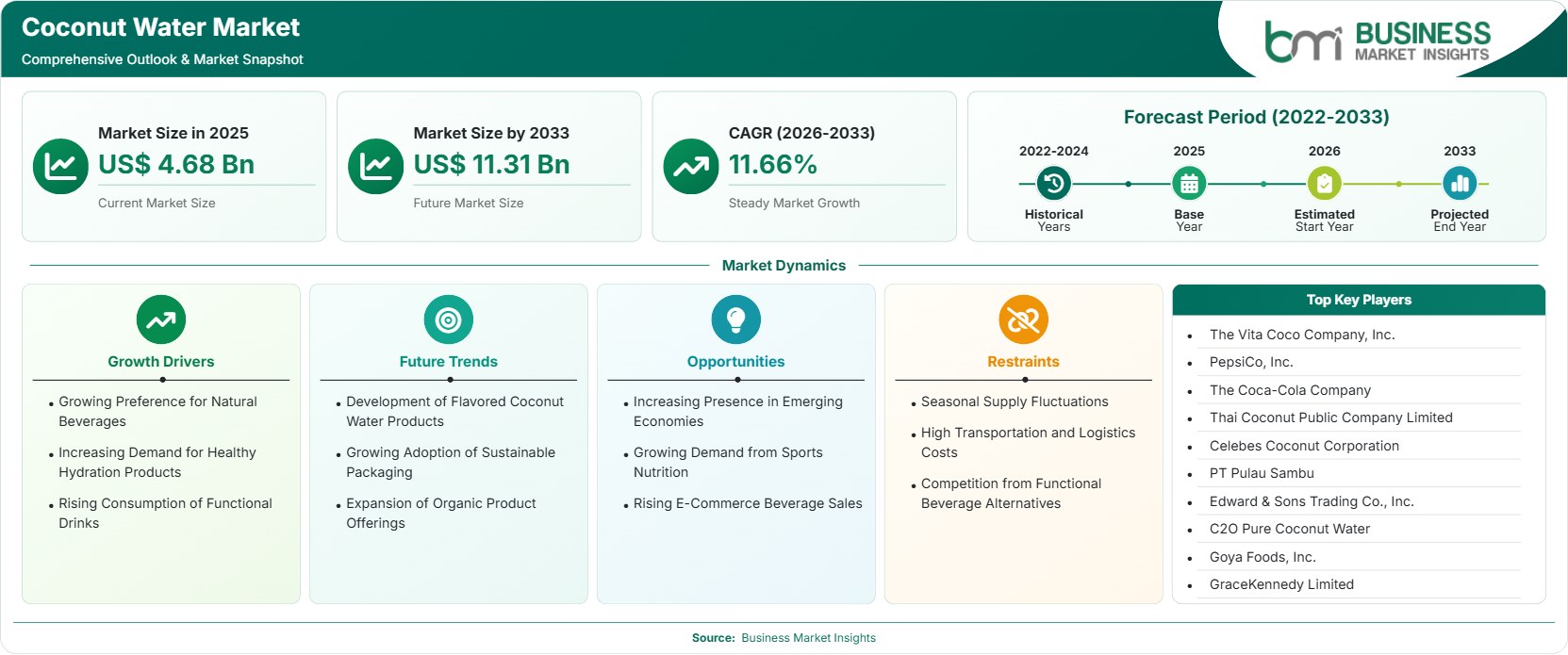
The Coconut Water Market size was valued at US$ 4.68 Billion in 2025 and is projected to reach US$ 11.31 Billion by 2033, growing at a CAGR of US$ 11.66% during 2026–2033, driven by rising health consciousness, functional beverage adoption, premium product innovation, and expanding online beverage distribution channels.

Report Coverage
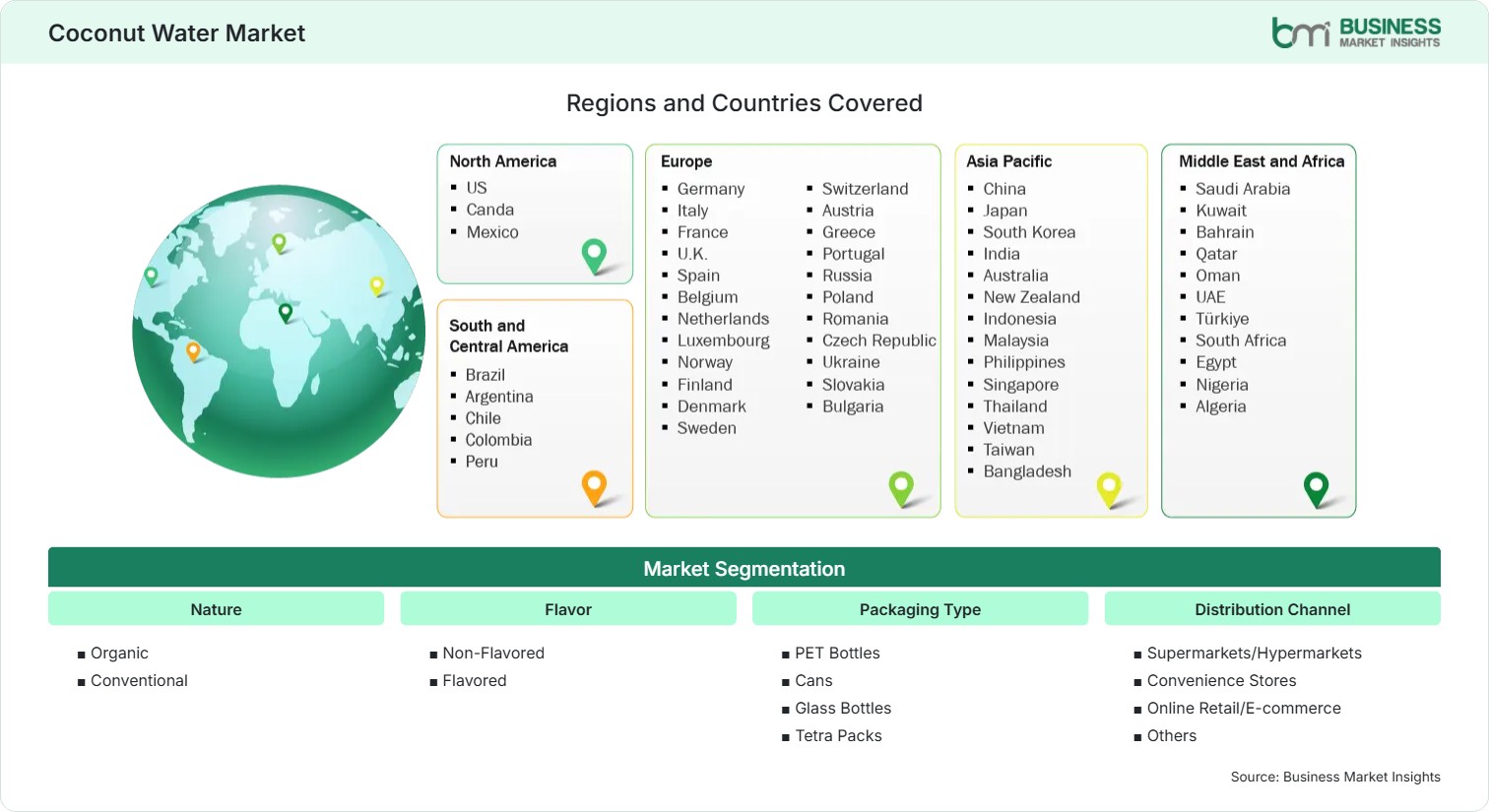
  • Nature: Organic, Conventional
  • Flavor: Non-Flavored, Flavored
  • Packaging Type: PET Bottles, Cans, Glass Bottles, Tetra Packs
  • Distribution Channel: Supermarkets/Hypermarkets, Convenience Stores, Online Retail/E-commerce, Others
US$ 4.68 Bn Market size in 2025
US$ 11.31 Bn Market Size by 2033
11.66% CAGR, 2026 - 2033
2026-2033 Forecast Period

01 AI Overview

Coconut Water Market Summary

  • North America Region: North America holds a 35%–38% share in 2025, growing with a CAGR of 10.5%–11.5% influenced by sports hydration demand, clean-label preferences, and premium beverage adoption. The US market analysis indicates steady expansion with a CAGR of 10.8%–11.3% through 2033, supported by retail penetration and wellness trends.
  • Fastest Growing Region: Asia Pacific holds a 28%–31% share in 2025, growing with a CAGR of 12.5%–13.5% due to coconut availability, rising disposable incomes, expanding beverage processing infrastructure, and increasing demand for natural hydration products.
  • Leading Segment: Conventional nature-based products hold a 65%–68% share in 2025, growing with a CAGR of 10.5%–11.5% supported by established supply chains, affordable pricing, mass retail availability, and strong consumer familiarity across global markets.
  • High Growth Segment: Organic products represent a 32%–35% share in 2025, expanding with a CAGR of 13.0%–14.0% driven by clean-label preferences, sustainable agriculture practices, certification growth, and premium positioning among health-focused consumers.
  • Key Market Opportunity: Manufacturers can capture growth through functional formulations, emerging market expansion, sustainable packaging innovation, and direct-to-consumer channels that improve product differentiation and consumer engagement.
  • Major Market Players: The Vita Coco Company, Inc., PepsiCo, Inc., The Coca-Cola Company, Thai Coconut Public Company Limited, Celebes Coconut Corporation, PT Pulau Sambu, Edward & Sons Trading Co., Inc., C2O Pure Coconut Water, Goya Foods, Inc., and GraceKennedy Limited.
02 Strategic Insights

Coconut Water Market: Strategic Insights

Coconut Water Market Strategic Framework
FREE PDF
Request your free sample
Request free sample
03 Stakeholder View

Key Takeaways

  • 1. Integration in the supply chain is increasing, with producers, processors, packaging manufacturers, and drinks producers working together to make the procurement of coconuts more efficient, consistent, and effective internationally.
  • There are more possibilities for growth in premium and organic categories because people today prefer natural, functional, and sustainable drinks.
  • Product innovation is moving beyond traditional coconut water through electrolyte enrichment, vitamin additions, flavor combinations, and environmentally responsible packaging solutions designed for differentiated consumer experiences.
  • Asia Pacific provides a compelling investment landscape due to strong coconut cultivation resources, increasing domestic consumption, expanding beverage manufacturing infrastructure, and improving export capabilities.
  • The level of strategic investments and partnerships has increased due to the need for large beverage corporations to get into the natural hydration space.
  • The digital retail revolution has led to changing buying patterns by giving smaller brands a chance to connect with consumers while also giving established companies data-driven marketing channels.
04 Geographic Outlook

Coconut Water Market Regional Highlights

North America Coconut Water Market

North America accounted for a 35%–38% share in 2025, with a CAGR of 10.5%–11.5% between 2026 and 2033. The region benefits from mature beverage infrastructure, strong wellness awareness, and premium product acceptance. Coconut Water Market share in this region is supported by high consumption in the US and Canada, where functional beverages continue replacing conventional sugary drinks.

  • Rising demand for electrolyte beverages is encouraging manufacturers to position coconut water as a natural alternative for sports recovery and daily hydration needs.
  • Retailers are expanding shelf space for organic and clean-label beverages, improving consumer access across supermarkets, specialty stores, and online platforms.
  • Sustainable packaging initiatives are influencing product development as brands focus on recyclable materials and environmentally responsible supply chains.
  • Premium pricing strategies are gaining acceptance among consumers seeking healthier beverage choices with natural nutritional benefits.

US Coconut Water Market

The US represented a 30%–33% share in 2025, expanding at a CAGR of 10.8%–11.3% during 2026–2033. The market is supported by strong fitness culture, rising demand for plant-based beverages, and widespread availability through retail networks. Coconut Water Market growth in the country is reinforced by brand investments in marketing, product innovation, and e-commerce expansion.

  • Sports nutrition consumers increasingly adopt coconut water products due to natural electrolyte content and hydration positioning compared with traditional energy beverages.
  • Beverage companies are introducing flavored and functional variants to attract younger consumers seeking convenient wellness-focused products.
  • Online grocery platforms are improving accessibility by enabling direct purchases, subscription models, and broader product discovery.
  • Premium brands are strengthening market presence through partnerships with retailers, gyms, and health-focused communities.

Europe Coconut Water Market

Europe held a 20%–23% share in 2025, recording a CAGR of 11.0%–12.0% through 2033. The region demonstrates strong demand for sustainable, organic, and ethically sourced beverages. Leading markets include Germany, the UK, and France, while Germany is expanding at approximately 11.5%–12.5% CAGR due to increasing functional beverage adoption and clean-label preferences.

  • Germany’s health-conscious consumers are supporting demand for organic coconut water products with certified sourcing and sustainable packaging attributes.
  • The UK market benefits from strong fitness participation, premium beverage retail channels, and expanding online grocery penetration.
  • France is witnessing increasing interest in plant-based beverages as consumers seek alternatives with natural ingredients and reduced additives.
  • European retailers are emphasizing responsible sourcing practices, encouraging suppliers to improve traceability throughout coconut supply chains.
  • Sustainability regulations are motivating brands to invest in recyclable packaging and lower-impact production methods.

Asia Pacific Coconut Water Market

Asia Pacific accounted for a 28%–31% share in 2025 and is projected to grow at a CAGR of 12.5%–13.5% between 2026 and 2033. The region benefits from abundant coconut cultivation, improving processing infrastructure, and rising consumer awareness. Countries such as India, Thailand, Indonesia, and the Philippines are key contributors, with India growing at approximately 13.0%–14.0% CAGR.

  • Thailand and the Philippines maintain strong positions due to established coconut farming ecosystems and export-oriented processing capabilities.
  • India’s expanding urban population is increasing demand for natural beverages through modern retail and digital commerce channels.
  • Local manufacturers are investing in advanced processing technologies to improve shelf stability and international competitiveness.
  • Rising disposable income across Asian economies is supporting premium beverage adoption among younger consumers.
  • Regional governments are promoting agricultural development programs that strengthen coconut cultivation and value-added processing.

Rest of World Coconut Water Market

Rest of World accounted for a 9%–12% share in 2025, growing at a CAGR of 10.0%–11.0% during 2026–2033. South and Central America benefit from coconut cultivation expansion and export opportunities, while the Middle East and Africa are developing through imported premium beverage channels. Brazil, Mexico, the UAE, and Saudi Arabia represent important growth markets with increasing consumer interest in healthier hydration options.

  • Brazil is strengthening domestic availability through tropical agriculture resources and expanding beverage processing investments focused on natural products.
  • Mexico is witnessing rising demand through modern retail channels as consumers adopt functional and plant-based beverages.
  • Middle Eastern markets are expanding premium beverage consumption due to health awareness, fitness trends, and diversified retail networks.
  • African countries are developing opportunities through urbanization, improved distribution systems, and increasing availability of imported coconut water products.
  • Regional suppliers are exploring partnerships with international beverage companies to improve market access and strengthen supply capabilities.
Global Market Geography
FREE PDF
Request your free sample
Request free sample
05 Segment Analysis

Coconut Water Market Segmentation

Nature

Nature-based segmentation remains central to the Coconut Water Market, with conventional products accounting for a 65%–68% share in 2025 and growing at a CAGR of 10.5%–11.5% between 2026–2034. The segment benefits from established sourcing networks, competitive pricing, and broad consumer familiarity. The Coconut Water Market scope continues expanding as organic offerings gain traction among premium consumers seeking sustainable and minimally processed beverages.

  • Organic: Organic coconut water products attract health-focused consumers through certified farming practices, chemical-free cultivation approaches, premium positioning, and increasing demand for transparent ingredient sourcing.
  • Conventional: Conventional products maintain strong adoption due to affordability, widespread availability, established processing infrastructure, and acceptance across mainstream beverage retail channels.

Flavor

Flavor segmentation reflects changing consumer preferences toward differentiated beverage experiences, with non-flavored products maintaining a larger market presence in 2025. The segment benefits from natural taste preference and broad application across hydration categories, while flavored variants continue expanding through innovation. Manufacturers are introducing combinations with fruits and functional ingredients to improve appeal among younger consumers and wellness-oriented buyers.

  • Non-Flavored: Non-flavored coconut water remains preferred for natural taste, simple formulations, hydration benefits, and compatibility with health-conscious consumer preferences.
  • Flavored: Flavored variants are gaining momentum through fruit blends, enhanced sensory experiences, and product innovation targeting consumers seeking variety in functional beverages.

Packaging Type

Packaging innovation is influencing purchasing decisions as manufacturers balance convenience, sustainability, and product protection. PET bottles remain widely used due to lightweight characteristics, while cartons and glass formats support premium positioning. The Coconut Water Market trends indicate increasing investment in packaging technologies that improve shelf life and reduce environmental impact across global distribution networks.

  • PET Bottles: PET packaging supports mass-market distribution through durability, portability, cost efficiency, and compatibility with convenience-focused beverage consumption patterns.
  • Cans: Cans are gaining adoption among younger consumers due to portability, recycling advantages, and suitability for sports and outdoor consumption occasions.
  • Glass Bottles: Glass packaging serves premium segments by offering enhanced product presentation, perceived quality, and compatibility with sustainable brand positioning strategies.
  • Tetra Packs: Tetra packs provide extended shelf stability, efficient transportation, and reduced packaging weight, supporting international distribution and emerging market expansion.

Distribution Channel

Distribution channels are becoming increasingly diversified as consumers combine traditional retail purchasing with digital buying platforms. Supermarkets and hypermarkets remain leading channels due to visibility and availability, while online retail continues expanding through convenience and subscription-based purchasing models. The segment reflects changing shopping behavior and stronger brand-to-consumer engagement opportunities.

  • Supermarkets/Hypermarkets: These channels provide extensive product visibility, promotional opportunities, competitive pricing, and access to large consumer groups seeking beverage variety.
  • Convenience Stores: Convenience outlets support impulse purchases through accessible locations, quick consumption formats, and strong presence near workplaces and transportation areas.
  • Online Retail/E-commerce: Digital platforms enable broader product discovery, direct brand interaction, subscription services, and targeted marketing based on consumer preferences.
06 Market Forces

Coconut Water Market Dynamics

Key Market Drivers

Growing Preference for Natural Beverages

Consumers are moving towards natural beverage products, thus increasing the demand for coconut water due to their decreased consumption of artificial beverages. The World Health Organization has pointed out the reduction in free sugar consumption as a significant factor in generating consumer interest in low sugar beverages. The Coconut Water Market growth is driven by the clean label, natural electrolyte, and plant-based nutrition properties of coconut water. Consumers prefer coconut water as they can trace back their origin, source, and production process.

Increasing Demand for Healthy Hydration Products

Growing awareness regarding hydration and its benefits is contributing to the increased use of coconut water by athletes, fitness enthusiasts, and consumers who drink beverages for everyday reasons. The presence of natural minerals such as potassium makes coconut water ideal for functional hydration product segments. Growing interest in an active way of life and preventive health measures is widening the scope of consumption occasions beyond sports-related purposes. Opportunities for growth are being created as consumers look for nutritious beverages.

Rising Consumption of Functional Drinks

There is increased functional beverage consumption because of consumer preference for drinks that provide health benefits apart from the basic refreshing value. This is where coconut water is being branded because of its electrolyte content and the source of the product which is from the plant. Products are now being created with vitamin and mineral contents to help differentiate them from other beverages. Increased availability in retail stores and the use of premium beverages will help drive acceptance by the consumer.

Key Market Opportunities

Increasing Presence in Emerging Economies

Emerging nations offer profitable possibilities for expansion because of urbanization, increased disposable income levels, and development in modern retail systems. Countries in Asia, Latin America, and the Middle East are witnessing growing demand for healthy drinks. Coconut Water Market Forecast suggests that companies will benefit from the use of localized marketing tactics, affordable packaging, and cooperation with local distributors. Processing plants set up in proximity to the region where coconuts grow will result in efficient delivery of products and export expansion.

Growing Demand from Sports Nutrition

Sports Nutrition is an opportunity that can be capitalized on owing to the rising need of consumers for natural sources of hydration during exercise and recovery. There are rising collaborations between coconut water products and various fitness groups, athletic organizations, and wellness platforms. The development of innovations such as electrolytes, functional ingredients, and even packaging can help position coconut water at a premium level. Companies that develop products through research can have competitive advantages due to the changing preferences towards natural hydration options.

Rising E-Commerce Beverage Sales

Digital commerce is offering new possibilities through better product access and direct customer interaction. Digital channels enable businesses to market niche organic products, subscription programs, and promotional activities. Increased usage of smartphones and digital payments is facilitating beverage purchases in emerging economies. Firms can leverage consumer data analysis for better product recommendations, stock management, and marketing initiatives. E-commerce also helps small businesses compete with larger ones through direct engagement of consumers without physical retail presence.

Market Restraints and Challenges

Seasonal Supply Fluctuations

Factor: Coconut production cycles and weather-dependent cultivation patterns can create inconsistent raw material availability. Impact: Seasonal variations have an effect on procurement cost, production scheduling, and even manufacturing companies' ability to ensure continuous supply. The variations in climate and rain fall together with agricultural considerations affect the number of coconuts that can be harvested from each of the major producing countries. This problem is being countered by various firms through supplier diversity, inventory management, and sourcing. Small firms, however, are likely to have more difficulty in this regard because of storage issues.

High Transportation and Logistics Costs

Factor: Global sourcing networks require transportation of coconut-based raw materials and finished beverages across long distances. Impact: Higher costs in logistics can decrease the profit margins, raise the prices of the retail products, and decrease competitiveness in price-sensitive environments. The transportation cost, cold chain considerations, and the weight of the packaging affect the logistics costs, especially those of the international companies working in different regions. Modern businesses are trying to minimize the weight of the logistics processes through the localized manufacturing sites and lightweight packaging.

07 Company Analysis

Competitive Landscape

The Coconut Water Market analysis highlights a competitive environment shaped by global beverage corporations, specialized coconut processors, and emerging wellness beverage brands. Companies are focusing on product diversification, sustainable packaging, supply chain optimization, and geographic expansion to strengthen market positions. Established players leverage distribution networks, while specialized producers compete through sourcing expertise and premium positioning.

Company Name

Overview

Products and Services relevant to this market

The Vita Coco Company, Inc.

Global coconut water brand focused on natural hydration beverages and wellness products.

Coconut water beverages, flavored variants, electrolyte hydration products, and retail distribution solutions.

PepsiCo, Inc.

Multinational beverage company with extensive global distribution and functional drink capabilities.

Coconut water products, beverage innovation, marketing networks, and consumer packaged goods solutions.

The Coca-Cola Company

Global beverage leader expanding presence in health-oriented beverage categories.

Coconut water beverages, hydration products, brand development, and worldwide beverage distribution.

Thai Coconut Public Company Limited

Thailand-based coconut processor specializing in coconut-based food and beverage exports.

Coconut water processing, private label manufacturing, and international coconut beverage supply.

Celebes Coconut Corporation

Coconut processing company supporting global coconut product supply chains.

Coconut water production, coconut processing services, and export-focused beverage solutions.

PT Pulau Sambu

Indonesian coconut processing company with integrated production capabilities.

Coconut water, coconut ingredients, processing facilities, and international supply services.

Edward & Sons Trading Co., Inc.

Natural food company offering organic and plant-based beverage products.

Organic coconut water, natural beverages, sustainable food products, and specialty distribution.

C2O Pure Coconut Water

Specialized coconut water brand focused on premium hydration products.

Pure coconut water beverages, organic options, and health-focused beverage products.

Goya Foods, Inc.

Food company offering diverse Hispanic and international beverage products.

Coconut water beverages, packaged drinks, and multicultural retail distribution.

GraceKennedy Limited

Caribbean-based company operating across food and consumer product categories.

Coconut beverages, packaged foods, distribution networks, and regional consumer products.

10 Trust & Transparency

Research Methodology

The market analysis combines proprietary research with secondary data from government agencies, company disclosures, regulatory filings, industry databases and expert interviews. Market estimates are validated through data triangulation, cross-market benchmarking and analyst review.

View Full Research Methodology

11 Questions Answered

Frequently Asked Questions

Where can investors find opportunities in the Coconut Water Market Report?

The report identifies opportunities across emerging markets, premium products, digital commerce, sustainable packaging, and value-added beverage innovations.

How does sustainability affect the coconut beverage industry?

Sustainable sourcing, recyclable packaging, and responsible agricultural practices are becoming important purchasing factors for consumers and strategic priorities for manufacturers.

Which consumer groups are driving demand for coconut water products?

Fitness enthusiasts, health-conscious consumers, younger demographics, and individuals seeking plant-based beverages are contributing strongly to category adoption.

How are manufacturers improving coconut water product differentiation?

Companies are introducing flavored varieties, organic certifications, functional ingredients, sustainable packaging, and direct-to-consumer strategies to create stronger brand positioning.

What factors are influencing the expansion of the Coconut Water Market?

Increasing demand for natural hydration beverages, wellness-focused consumption, premium product innovation, and expanding online retail access are major factors supporting market development.

Access the Full Coconut Water Market Report

Get segment-level forecasts, regional estimates, competitive benchmarking, company profiles and downloadable Excel datasets.

Access the full Coconut Water Market Report
350 pages PDF & Excel | 2026-08-05