
Soy Derivatives Market Outlook: Size, Share, Trends, Growth Analysis, Competitive Landscape & Forecast, 2026-2033

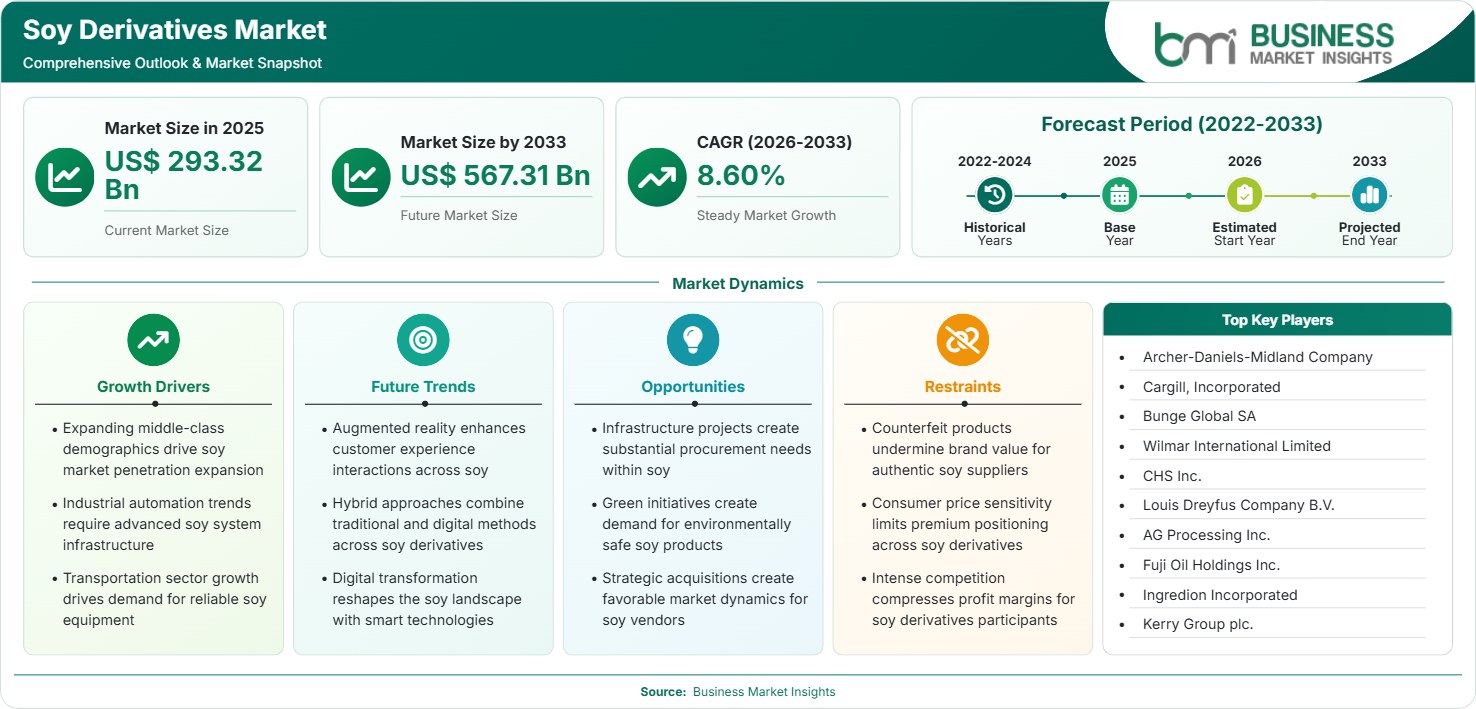
The Soy Derivatives Market size was valued at US$ 293.32 Billion in 2025 and is projected to reach US$ 567.31 Billion by 2033, growing at a CAGR of 8.60% during 2026–2033. Demand expansion is being driven by protein-rich feed consumption, plant-based food adoption, bio-based industrial applications, sustainable ingredient preferences, and investments in soybean crushing, processing efficiency, and value-added formulations.

Report Coverage
  • Type: Soy Meal, Soy Oil, Soy Milk, Soy Flour, Others
  • Application: Animal Feed , Food , Others
US$ 293.32 Bn Market size in 2025
US$ 567.31 Bn Market Size by 2033
8.60% CAGR, 2026 - 2033
2026-2033 Forecast Period

AI Overview

Soy Derivatives Market Summary

  • North America Region: North America holds a Soy Derivatives Market share of 31%–34% in 2025, growing at a CAGR of 7.8%–8.2% during 2026–2033. Strong crushing capacity, advanced feed production, renewable fuel demand, export competitiveness, biotechnology adoption, supply-chain modernization, food innovation, and protein ingredient investments support long-term regional expansion opportunities. Brief U.S. analysis: Large processing infrastructure, rising renewable diesel feedstock demand, and feed sector consumption support a CAGR of 7.9%–8.3%.
  • Fastest Growing Region: Asia Pacific holds a market share of 29%–32% in 2025, growing at a CAGR of 9.6%–10.0% during 2026–2033. Rising livestock production, protein consumption, urbanization, food manufacturing expansion, aquaculture development, dietary diversification, import dependency, and processing investments continue creating substantial revenue opportunities across developing economies.
  • Leading Segment: Soy Meal holds a Soy Derivatives Market share of 38%–42% in 2025, growing at a CAGR of 8.1%–8.5% during 2026–2033. Poultry, swine, dairy, and aquaculture feed demand, balanced amino-acid composition, affordability, and established supply chains maintain strong commercial relevance worldwide.
  • High Growth Segment: Meat Alternatives hold a market share of 11%–14% in 2025, growing at a CAGR of 11.2%–11.8% during 2026–2033. Consumer interest in plant-derived proteins, clean-label formulations, sustainability goals, and product innovation continues accelerating adoption in foodservice and retail channels.
  • Key Market Opportunity: Expansion of specialty soy proteins, fermented ingredients, and bio-based applications enables manufacturers to capture premium margins, strengthen sustainability positioning, diversify demand sources, and reduce dependence on traditional feed markets.
  • Major Market Players: Archer-Daniels-Midland Company, Cargill, Incorporated, Bunge Global SA, Wilmar International Limited, CHS Inc., Louis Dreyfus Company B.V., AG Processing Inc., Fuji Oil Holdings Inc., Ingredion Incorporated, Kerry Group plc.
Strategic Insights

Soy Derivatives Market: Strategic Insights

Soy Derivatives Market Strategic Framework
FREE PDF
Request your free sample
Request free sample
Stakeholder View

Key Takeaways

  • The value chain is becoming increasingly integrated, with processors linking soybean sourcing, crushing, ingredient production, logistics, and downstream distribution to improve margins and supply reliability.
  • Meat alternatives, specialty protein concentrates, and premium food ingredients provide stronger long-term upside than traditional commodity-based products due to higher value realization.
  • Innovation is shifting toward functional proteins, fermentation-enhanced ingredients, cleaner-label formulations, and traceable sourcing platforms capable of supporting premium positioning.
  • Asia Pacific presents the most compelling investment case because expanding livestock production, dietary shifts, and food manufacturing growth continue driving sustained consumption.
  • Strategic acquisitions and joint ventures increasingly focus on protein ingredients, specialty oils, and regional processing capacity to secure supply and expand customer reach.
  • Sustainability performance, including deforestation-free sourcing and carbon-reduction initiatives, is becoming a competitive differentiator in procurement decisions.
Geographic Outlook

Soy Derivatives Market Regional Highlights

North America Soy Derivatives Market

North America accounts for 31%–34% of the Soy Derivatives Market share in 2025 and is projected to expand at a CAGR of 7.8%–8.2% through 2033. Regional demand benefits from large-scale soybean cultivation, advanced crushing infrastructure, and strong consumption across animal nutrition and food applications. The region also benefits from renewable diesel investments that increase soybean oil utilization. Major processors continue expanding capacity while improving sustainability compliance and supply-chain efficiency. Export competitiveness and technology adoption strengthen regional positioning within the global industry.

  • Renewable diesel projects continue increasing soybean oil demand while stimulating additional crushing investments across the United States and Canada.
  • Large poultry and livestock industries sustain strong meal consumption, supporting stable demand through long-term feed procurement contracts.
  • Traceability and sustainability initiatives are influencing purchasing decisions among multinational food and feed manufacturers.
  • Biotechnology adoption improves crop productivity and enhances raw material availability for processors and ingredient suppliers.

US Soy Derivatives Market

The United States represents approximately 72%–76% of North American revenue and is expected to grow at a CAGR of 7.9%–8.3% through 2033. The country maintains a leading position due to extensive soybean production, strong export infrastructure, and advanced ingredient processing capabilities. Demand originates from renewable fuels, livestock feed, functional food ingredients, and plant-protein applications. Ongoing capital spending on crushing facilities and logistics systems supports future competitiveness while enhancing supply availability for domestic and export customers.

  • Expansion of soybean processing facilities increases ingredient output while supporting downstream food, feed, and industrial applications.
  • Strong export relationships with Asian importers contribute to volume stability and long-term production planning.
  • Food manufacturers continue introducing plant-protein products targeting health-conscious and flexitarian consumers.
  • Sustainability reporting requirements encourage investments in responsible sourcing and supply-chain transparency.

Europe Soy Derivatives Market

Europe is expected to capture 22% to 25% of the market share in 2025 and grow at a CAGR of 7.4% to 7.8% through 2033. The growth drivers include the requirement for animal nutrition, increased consumption of plant-based foods, and sustainability-driven procurement policies. Germany is a prominent market in the Soy Derivatives Market. The Netherlands acts as an important market for trading and processing soy derivatives. Spain shows some of the highest growth potential owing to livestock feeding requirements.

  • Germany remains a leading consumption center supported by food manufacturing and ingredient processing activities.
  • Spain demonstrates higher expansion potential, supported by feed demand and livestock production investments.
  • Sustainable sourcing certification programs increasingly influence procurement requirements throughout regional value chains.
  • Plant-based beverages and meat substitutes continue driving premium ingredient demand across retail channels.

Asia Pacific Soy Derivatives Market

The Asia Pacific region contributes between 29% and 32% of the world's revenues by 2025 and is the fastest-growing market, growing at a CAGR of 9.6%–10.0% through 2033. The Chinese market accounts for the largest share of consumption due to high demand and processing. India and Southeast Asian countries show robust growth due to increased urbanization, food manufacturing, and changing dietary preferences. Investment in processing infrastructure, aquaculture development, and protein ingredient manufacturing strengthens regional demand while improving value addition across local supply chains.

  • China leads regional consumption through extensive livestock production and feed manufacturing activities.
  • India records strong momentum from packaged food expansion and increasing protein-rich product adoption.
  • Southeast Asian aquaculture industries generate sustained requirements for nutritionally balanced feed formulations.
  • Processing investments improve local value capture while reducing dependence on imported finished ingredients.
  • The region contributes the strongest medium-term Soy Derivatives Market share gains globally.

Rest of World Soy Derivatives Market

Rest of World represents 13%–16% of global demand in 2025 and is projected to grow at a CAGR of 8.4%–8.8% through 2033. South and Central America benefit from strong agricultural production and export-oriented processing activities. In the Middle East and Africa, demand growth is linked to livestock expansion, food-security initiatives, and increasing consumption of plant-based ingredients. Brazil remains a leading revenue generator, while several Gulf economies demonstrate attractive growth potential through investments in food manufacturing and feed industries.

  • Brazil benefits from large soybean production volumes and expanding domestic processing investments.
  • Argentina strengthens regional competitiveness through exports and established crushing infrastructure.
  • Gulf countries increasingly invest in food processing capabilities to support security and diversification goals.
  • Feed demand growth across Africa supports rising consumption of protein-rich ingredients.
  • Infrastructure modernization improves trade efficiency and market accessibility across developing economies.
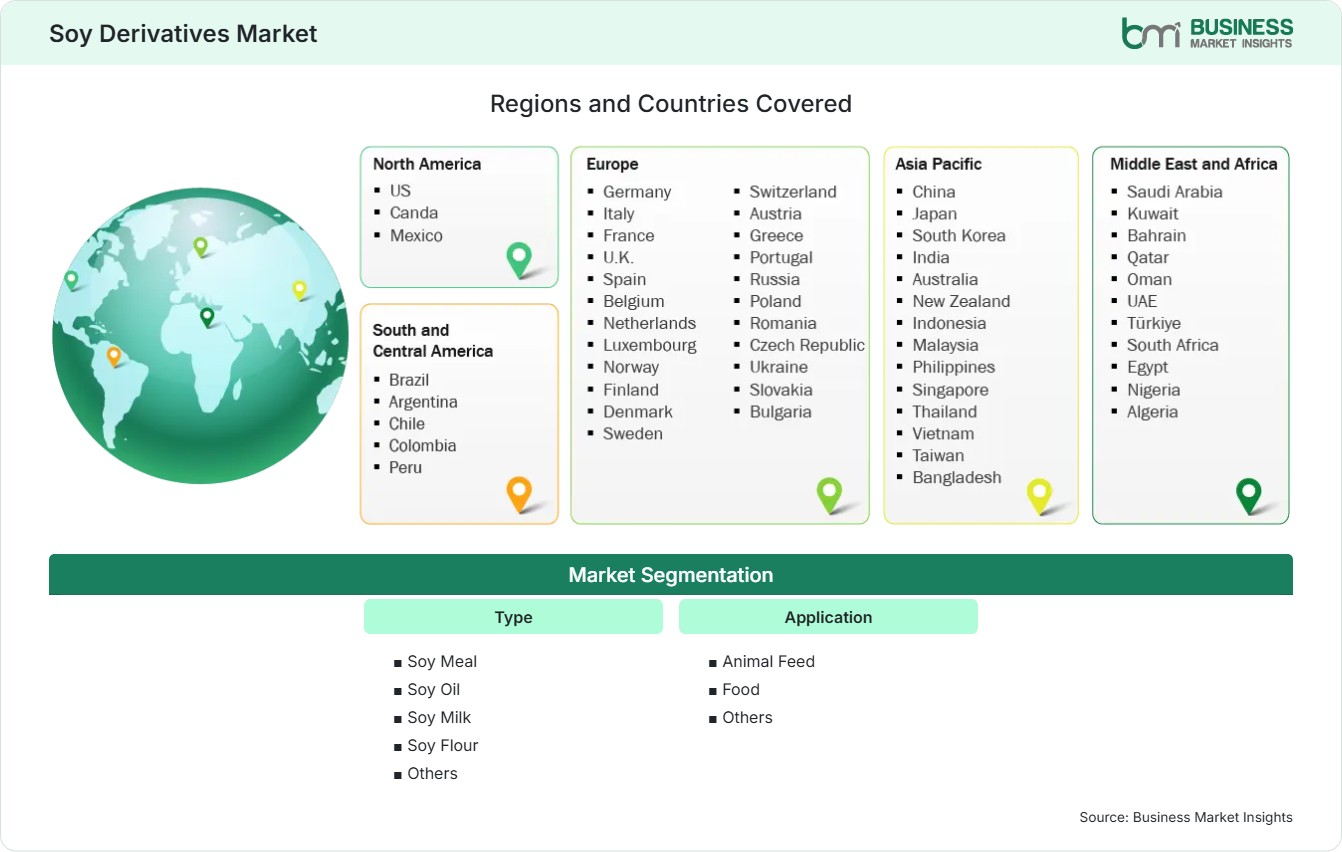
Global Market Geography
FREE PDF
Request your free sample
Request free sample
Segment Analysis

Soy Derivatives Market Segmentation

Type

Type Segment is headed by Soy Meal, holding a market share of 38% to 42% in 2025 and expected to grow at a CAGR of 8.1% to 8.5%. The scope of the Soy Derivatives Market has expanded due to the diversification of product portfolios into oils, beverages, and high-value proteins.

  • Soy Meal: Dominant feed ingredient due to balanced protein composition, broad livestock applicability, cost efficiency, and established global procurement networks supporting consistent consumption.
  • Soy Oil: Widely utilized across food manufacturing, frying applications, industrial products, and renewable fuel production, benefiting from diversified end-use demand.
  • Soy Milk: Growing consumer preference for dairy alternatives supports adoption, particularly among vegan, lactose-intolerant, and health-focused customer segments.
  • Soy Flour: Increasing use in baking, protein enrichment, and functional food formulations is strengthening commercial demand globally.

Application

The application category is dominated by Animal Feed, holding 47%-51% market share by 2025, with the forecasted CAGR being 8.0%-8.4%. The drivers of demand are linked to increasing livestock numbers and the requirement for a high-protein nutritional formula. The Soy Derivatives Market trends suggest growing diversification of applications in foods, especially plant-based proteins and functional ingredients.

  • Poultry: Large-scale poultry operations rely heavily on soy-based feed ingredients due to nutritional efficiency, digestibility, and favorable economics.
  • Swine: Demand is supported by protein requirements, feed optimization strategies, productivity improvements, and commercial livestock expansion.
  • Baked Goods: Soy-derived ingredients improve functionality, texture, nutritional content, and shelf life across bakery applications.
  • Meat Alternatives: Rapid innovation and consumer interest in plant-based protein sources continue accelerating adoption across retail and foodservice sectors.
Market Forces

Soy Derivatives Market Dynamics

Key Market Drivers

Rising Global Demand for High-Protein Animal Feed

Soy meal remains one of the most commonly used protein sources in livestock diets due to its amino acid composition and nutrient reliability. Growth in poultry, aquaculture, and swine production worldwide has been driving consumption levels in leading markets. Producers use soy protein-based products because they offer scalable supply chain options and strong formulation capabilities. A growing population, rising meat consumption in emerging countries, and a production-oriented approach to agriculture help sustain demand. Efficient use in feeding, high protein content, and good availability influence buying decisions. This is why companies keep increasing their crushing capacity and improving their supply chains. Optimization to meet rising requirements from livestock and aquaculture industries worldwide.

Expansion of Plant-Based Food Consumption

The growing consumer demand for plant-based protein sources is creating new opportunities in beverages, meat analogs, bakery foods, and functional foods. Food processors rely more on soy proteins for their nutritional attributes, flexibility, and regulatory approval. The rise of flexitarians, vegans, and health-conscious people means that more and more food manufacturers are introducing new products. New formulations have enhanced the flavor and texture of foods, leading to greater acceptance through conventional distribution channels, and foodservice offerings further support commercialization. These developments strengthen the position of soy-derived ingredients as essential components within the evolving plant-based food ecosystem and contribute meaningfully to industry revenue expansion.

Development of Bio-Based Industrial Applications

Oils and specialized products derived from soy have found application in renewable fuels, lubricants, paints, and various industrial products. The sustainability targets and carbon reduction initiatives have motivated the replacement of petroleum-based raw materials with renewable raw materials. Investment in renewable diesel fuel is vital because it boosts soybean oil use and encourages upstream processing. Incentives that encourage low-emitting products motivate investments. Industrial consumers' use of bio-based products drives diversified demand, reducing reliance on conventional applications in food and animal feeds.

Key Market Opportunities

Specialty Protein Ingredient Premiumization

Premium Soy Protein Concentrates and Isolates, along with Functional Soy Protein Blends, offer promising opportunities for profit-seeking companies. Food companies are looking for ingredients with specific characteristics related to nutrition, emulsification, and structure. Advanced processing technologies enable producers to develop specialty products for beverages, snacks, performance nutrition, and convenience foods. Health-conscious consumers also play a role in driving the premiumization trend. As more people buy food based on its functionality rather than price alone, specialty ingredients gain importance. According to long-term Soy Derivatives Market Forecasts, premium formulations are expected to be among the fastest-growing value pools throughout the forecast period.

Growth Potential Across Emerging Asian Economies

Increasing middle-class demographics, dietary changes, and the development of the livestock industry create an environment conducive to market growth in new Asian nations. The food processing industries are still ramping up capacity to meet the demand from urban residents seeking cost-effective protein sources. Expansion of the aquaculture sector is yet another catalyst for demand creation. Governmental support in agriculture, food security, and manufacturing is further contributing to supply chain improvement. Businesses that establish themselves in these markets can take advantage of increased demand, logistics networks, and demand for value-added products. Long-term demographic and economic trends position the region as a strategic destination for expansion initiatives and production investments.

Sustainable and Traceable Supply Chains

Procurement departments within corporations have become more focused on traceability, responsible sourcing practices, and environmental performance indicators when choosing their suppliers. This trend offers opportunities for producers who can demonstrate their ability to ensure transparency at all stages of growing, harvesting, processing, and distribution. Certifications and traceability tools allow companies to set themselves apart from competitors and build trust among customers. Manufacturers, retailers, and buyers of ingredients are introducing sustainability considerations into their procurement models. Early adopters of these practices can win premium deals and ensure their brand reputation and resilience to changing regulations.

Market Restraints and Challenges

Volatile Agricultural Commodity Prices

Factor: Soybean production is heavily influenced by weather conditions, geopolitical developments, logistics disruptions, and changing trade policies. Impact: Price volatility complicates procurement planning, inventory management, and profitability across the value chain. Processors face uncertainty when raw material costs fluctuate rapidly, while end users experience challenges in maintaining stable input expenses. Extreme climate events can further influence crop yields and export availability. Although risk-management strategies such as hedging can reduce exposure, volatility remains an ongoing challenge. Persistent uncertainty may delay capital investments and make long-term contracting more complex for producers, processors, traders, and industrial consumers.

Regulatory Complexity and Sustainability Compliance

Factor: Global markets increasingly require compliance with sourcing, traceability, labeling, and environmental standards. Impact: Compliance costs rise as companies invest in monitoring systems, certification programs, reporting processes, and supplier verification. Requirements vary significantly across regions, creating operational complexity for multinational businesses. Smaller organizations may face greater resource constraints when implementing new compliance frameworks. Failure to meet customer or regulatory expectations can result in restricted market access or reputational risks. Consequently, sustainability governance and documentation capabilities are becoming essential operational requirements rather than optional competitive differentiators.

Company Analysis

Competitive Landscape

The competitive environment reflects a mix of integrated agribusiness leaders, ingredient specialists, and processing companies. This Soy Derivatives Market analysis indicates that scale, sourcing access, processing efficiency, and value-added ingredient capabilities remain the principal factors shaping competitive positioning.

Company Name

Overview

Products and Services relevant to this market

Archer-Daniels-Midland Company

Global agricultural processor with extensive soybean sourcing, crushing, and ingredient manufacturing capabilities.

Soy meal, soy oil, soy proteins, specialty ingredients, feed solutions, processing services.

Cargill, Incorporated

Diversified agribusiness company operating integrated global agricultural supply chains and processing assets.

Soy ingredients, feed products, oils, proteins, sourcing, logistics, risk management.

Bunge Global SA

Large oilseed processor with strong international presence and extensive export infrastructure.

Soy meal, soy oil, food ingredients, processing, trading and supply-chain services.

Wilmar International Limited

Major agribusiness and food-processing company with broad crushing and refining operations.

Soy oils, feed ingredients, food ingredients and downstream processing solutions.

CHS Inc.

Farmer-owned cooperative active across grain handling, processing, and agricultural distribution.

Soy processing, animal nutrition ingredients, oil products, sourcing and merchandising.

Louis Dreyfus Company B.V.

Global merchant and processor connecting agricultural supply chains worldwide.

Soybean sourcing, crushing, oils, meals, logistics and trading services.

AG Processing Inc.

U.S.-based soybean processor focused on value-added agricultural products.

Soy meal, soy flour, specialty ingredients and feed applications.

Fuji Oil Holdings Inc.

Ingredient specialist with strong capabilities in plant-based food technologies.

Soy proteins, plant-based food ingredients, emulsification and formulation solutions.

Ingredion Incorporated

Ingredient innovator serving food manufacturers globally through functional formulations.

Soy-based ingredients, protein solutions and formulation support services.

Kerry Group plc

Global taste and nutrition company serving food and beverage industries.

Plant proteins, nutrition systems and food innovation solutions.

Trust & Transparency

Research Methodology

The market analysis combines proprietary research with secondary data from government agencies, company disclosures, regulatory filings, industry databases and expert interviews. Market estimates are validated through data triangulation, cross-market benchmarking and analyst review.

View Full Research Methodology

Questions Answered

Frequently Asked Questions

What does a Soy Derivatives Market Report typically evaluate?

A comprehensive Market Report assesses regional demand, competitive dynamics, pricing trends, applications, technology developments, supply chains, regulations, and future growth potential.

How are sustainability requirements affecting industry participants?

Companies are investing in traceability systems, certification programs, responsible sourcing frameworks, and environmental reporting to satisfy customers and regulatory expectations.

What factors influence profitability for manufacturers?

Raw material pricing, processing efficiency, energy costs, logistics performance, product mix, and access to premium ingredient markets significantly affect profitability.

Which region offers the strongest long-term growth potential?

Asia Pacific presents the strongest long-term opportunity due to livestock expansion, rising incomes, urbanization, and increasing consumption of protein-rich foods.

Which application generates the highest demand for soy derivatives?

Animal feed remains the largest application because poultry, swine, dairy, and aquaculture industries require cost-effective protein ingredients with reliable nutritional performance.

Access the Full Soy Derivatives Market Report

Get segment-level forecasts, regional estimates, competitive benchmarking, company profiles and downloadable Excel datasets.

Access the full Soy Derivatives Market Report
350 pages PDF & Excel | 2026-08-31
Similar Research

Related Market Reports