
Wheat Protein Market Outlook: Size, Share, Trends, Growth Analysis, Competitive Landscape & Forecast, 2026-2033

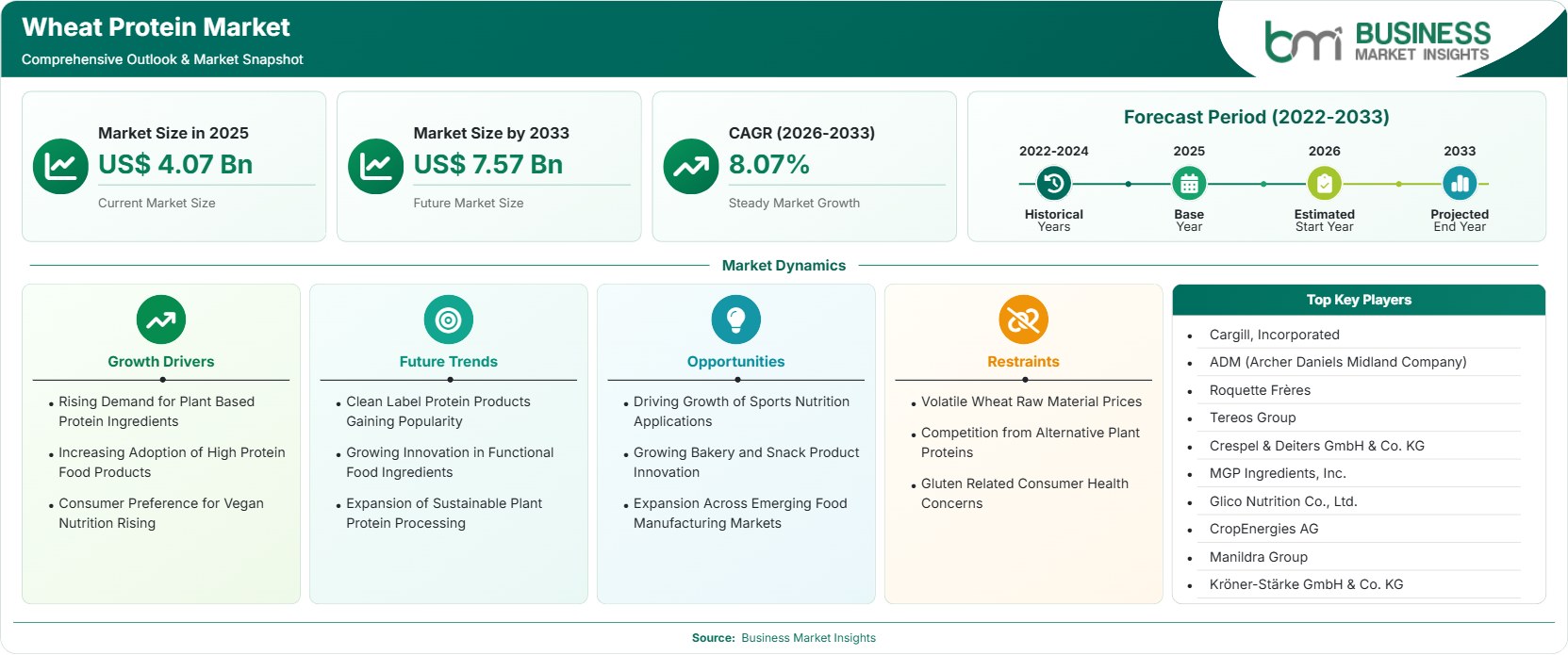
The Wheat Protein Market size was valued at US$ 4.07 Billion in 2025 and is projected to reach US$ 7.57 Billion by 2033, growing at a CAGR of 8.07% during 2026–2033, driven by rising plant-based protein demand, clean-label nutrition trends, alternative meat innovation, and expanding food manufacturing applications.

Report Coverage
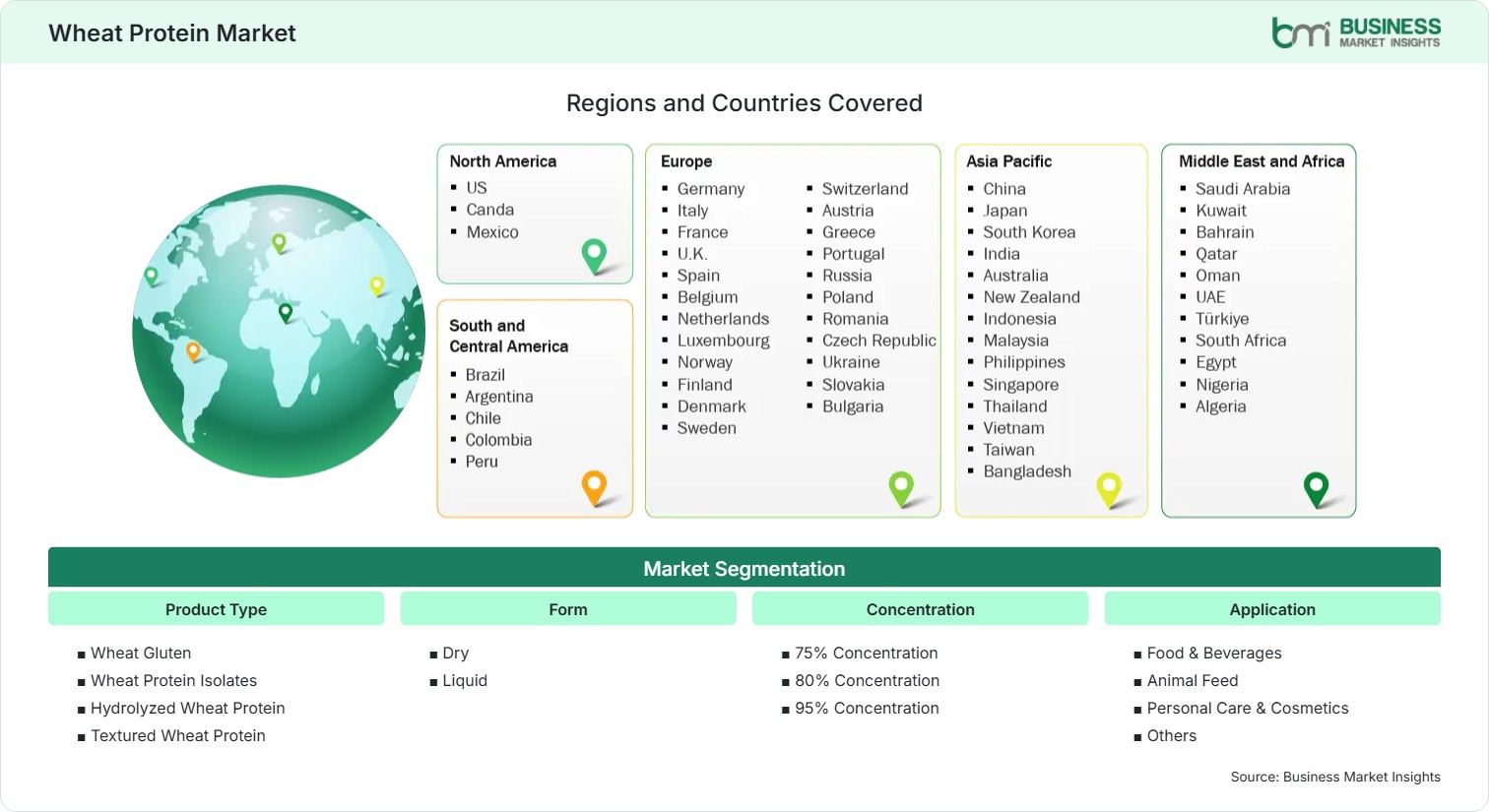
  • Product Type: Wheat Gluten, Wheat Protein Isolates, Hydrolyzed Wheat Protein, Textured Wheat Protein
  • Form: Dry, Liquid
  • Concentration: 75% Concentration, 80% Concentration, 95% Concentration
  • Application: Food & Beverages , Animal Feed, Personal Care & Cosmetics, Others
US$ 4.07 Bn Market size in 2025
US$ 7.57 Bn Market Size by 2033
8.07% CAGR, 2026 - 2033
2026-2033 Forecast Period

01 AI Overview

Wheat Protein Market Summary

  • North America Region: North America holds approximately 32%–35% share in 2025, growing at a CAGR of 7.60%–8.10% during 2026–2033, supported by plant-based diets, sports nutrition adoption, and advanced food processing investments. The U.S. market is expanding through protein ingredient innovation and functional food demand, recording a CAGR of 7.70%–8.20% between 2026 and 2033.
  • Fastest Growing Region: Asia Pacific captures around 25%–28% share in 2025 and is projected to grow at a CAGR of 8.70%–9.20% during 2026–2033, driven by rising disposable incomes, protein deficiency initiatives, expanding bakery sectors, and increasing adoption of alternative nutrition products.
  • Leading Segment: Food & Beverages application accounts for approximately 62%–65% share in 2025, growing at a CAGR of 8.20%–8.60% through 2033, supported by meat alternatives, bakery applications, dairy substitutes, nutritional products, and consumer preference for protein-enriched foods.
  • High Growth Segment: Textured Wheat Protein product type represents around 14%–17% share in 2025 and grows at a CAGR of 9.10%–9.50% through 2033, driven by plant-based meat innovation, improved texture performance, and increasing foodservice adoption.
  • Key Market Opportunity: Growing demand for sustainable protein sources creates opportunities through innovative wheat-based formulations, clean-label ingredients, personalized nutrition solutions, and expansion across emerging food processing markets seeking affordable protein alternatives.
  • Major Market Players: Cargill, Incorporated, Archer Daniels Midland Company, Roquette Frères, Tereos Group, Crespel & Deiters GmbH & Co. KG, MGP Ingredients, Inc., Glico Nutrition Co., Ltd., CropEnergies AG, Manildra Group, and Kröner-Stärke GmbH.
02 Strategic Insights

Wheat Protein Market: Strategic Insights

Wheat Protein Market Strategic Framework
FREE PDF
Request your free sample
Request free sample
03 Stakeholder View

Key Takeaways

  • The market ecosystem is structured around wheat cultivation networks, gluten extraction facilities, ingredient processors, food manufacturers, and distribution channels.
  • Food and beverage applications provide the strongest growth potential due to increasing demand for meat alternatives, protein-enriched snacks, bakery products, and nutritional formulations.
  • Innovation is shifting toward improved protein functionality, enhanced texture performance, allergen management solutions, and advanced hydrolysis technologies.
  • Asia Pacific presents a compelling investment opportunity due to increasing protein consumption, urbanization, expanding food processing industries, and government initiatives supporting nutritional improvement programs across emerging economies.
  • Industry consolidation is being shaped by investments from global ingredient companies expanding protein portfolios through capacity additions, strategic partnerships, and technology development initiatives to strengthen positions in alternative protein markets.
04 Geographic Outlook

Wheat Protein Market Regional Highlights

North America Wheat Protein Market

North America accounted for approximately 32%–35% share in 2025, supported by strong demand from alternative protein manufacturers, sports nutrition brands, and bakery producers. The region is projected to expand at a CAGR of 7.60%–8.10% during 2026–2033. The Wheat Protein Market share in North America is strengthened by established ingredient processing infrastructure, advanced food innovation capabilities, and consumer preference for sustainable protein sources. The United States and Canada remain major contributors due to growing plant-based food adoption.

  • Increasing investments in plant-based meat alternatives are encouraging food manufacturers to incorporate textured and functional wheat protein ingredients into new product formulations.
  • Advanced processing facilities across the United States are improving extraction efficiency, supporting consistent quality supply for food, beverage, and nutritional product manufacturers.
  • Rising consumer interest in high-protein diets is expanding demand for wheat-based nutritional ingredients across sports nutrition, wellness products, and functional foods.
  • Canadian agricultural strengths provide reliable wheat supply chains, supporting regional production capabilities and ingredient export opportunities for manufacturers.

US Wheat Protein Market

The U.S. represented approximately 24%–27% of the global Wheat Protein Market share in 2025, supported by strong food innovation activities, alternative protein startups, and established ingredient manufacturers. The country is expected to grow at a CAGR of 7.70%–8.20% between 2026 and 2033. Increasing demand for plant-based meat substitutes, clean-label products, and protein-fortified foods continues to influence market expansion.

  • Growing adoption of plant-based diets among American consumers is increasing demand for versatile wheat protein ingredients in processed food applications.
  • Food manufacturers are investing in improved texture technologies to enhance the sensory characteristics of wheat-based meat alternatives and protein products.
  • Expansion of sports nutrition and wellness categories is creating additional demand for concentrated wheat protein formulations with improved nutritional profiles.
  • Strong retail availability of functional foods is supporting broader consumer access to protein-enriched products across domestic markets.

Europe Wheat Protein Market

Europe held approximately 28%–31% share in 2025 and is forecast to grow at a CAGR of 7.90%–8.40% during 2026–2033. The Wheat Protein Market share in Europe benefits from strong sustainability initiatives, established bakery industries, and increasing demand for plant-based nutrition. Germany, France, and the Netherlands represent key markets, while countries including Spain and Italy are witnessing increasing adoption.

  • Germany remains a major contributor due to advanced ingredient processing capabilities, strong bakery demand, and increasing adoption of plant-based food products.
  • France is expanding wheat protein utilization through food innovation programs focused on sustainable nutrition and locally sourced agricultural ingredients.
  • Netherlands-based food technology companies are developing advanced protein applications supporting alternative meat and functional food categories.
  • European sustainability policies are encouraging manufacturers to adopt environmentally efficient protein processing methods and responsible sourcing practices.

Asia Pacific Wheat Protein Market

Asia Pacific accounted for approximately 25%–28% share in 2025 and represents the fastest-growing region, with a CAGR of 8.70%–9.20% during 2026–2033. The Wheat Protein Market growth in Asia Pacific is supported by rising population, increasing disposable income, changing dietary patterns, and expanding processed food industries. China, India, Japan, and South Korea are emerging as important markets due to growing demand for affordable protein ingredients and functional nutrition products.

  • China is strengthening wheat protein demand through expanding food manufacturing capacity and increasing consumer interest in alternative protein products.
  • India offers significant opportunities due to rising nutritional awareness, growing vegetarian populations, and increasing investment in food processing infrastructure.
  • Japan and South Korea are adopting wheat protein ingredients in advanced food applications including functional foods and plant-based alternatives.
  • Regional manufacturers are increasing production capabilities to reduce dependence on imported protein ingredients and improve supply chain resilience.
  • Urbanization across Asia Pacific is accelerating demand for convenient, protein-rich food products among younger consumers.

Rest of World Wheat Protein Market

South and Central America, along with Middle East and Africa markets, collectively represented approximately 10%–13% share in 2025 and are projected to grow at a CAGR of 7.20%–7.80% through 2033. The Wheat Protein Market share across these regions is supported by improving food processing infrastructure, rising nutrition awareness, and increasing demand for affordable protein sources. Brazil, Mexico, Gulf countries, and South Africa are developing markets with expanding opportunities for ingredient suppliers.

  • Brazil is increasing wheat protein adoption through growing processed food production and rising interest in sustainable nutrition solutions.
  • Mexico is witnessing demand growth from bakery, snack, and functional food manufacturers seeking cost-effective protein ingredients.
  • Middle Eastern countries are investing in food security initiatives that encourage alternative protein development and ingredient diversification.
  • South Africa is expanding food manufacturing capabilities, creating opportunities for wheat protein suppliers targeting nutritional product categories.
  • Regional partnerships between global ingredient companies and local manufacturers are improving market access and accelerating product innovation.
Global Market Geography
FREE PDF
Request your free sample
Request free sample
05 Segment Analysis

Wheat Protein Market Segmentation

Product Type

Product Type segmentation represents a core classification within the market, with wheat gluten accounting for the leading share of approximately 45%–48% in 2025 due to extensive bakery and meat alternative applications. The segment is projected to expand at a CAGR of 7.80%–8.20% between 2026–2034, supported by rising demand for functional proteins, improved processing technologies, and increasing adoption across food manufacturing industries.

  • Wheat Gluten: Widely used for elasticity improvement in bakery products, meat alternatives, and noodles due to its functional binding and texture-enhancing properties.
  • Wheat Protein Isolates: Demand is increasing among nutritional product manufacturers requiring high-protein ingredients with improved purity, digestibility, and formulation flexibility.
  • Hydrolyzed Wheat Protein: Adoption is expanding in personal care, beverages, and functional foods due to enhanced solubility and bioactive peptide characteristics.
  • Textured Wheat Protein: Growing utilization in plant-based meat products is driven by consumer demand for sustainable protein alternatives and improved meat-like textures.

Form

Form segmentation influences processing efficiency, storage requirements, and application suitability across food and industrial users. Dry form represented approximately 70%–73% share in 2025 due to longer shelf life, transportation advantages, and broad usage across food manufacturing. The segment is expected to grow at a CAGR of 7.60%–8.00% between 2026–2034. The Wheat Protein Market scope continues expanding as manufacturers optimize formulations using different ingredient forms.

  • Dry: Preferred by manufacturers due to stability, easy handling, extended storage capability, and compatibility with large-scale food processing operations.
  • Liquid: Used in specialized applications requiring faster integration, improved dispersion, and customized formulations in beverages and personal care products.

Concentration

Concentration-based segmentation reflects protein purity requirements across diverse applications, with 80% concentration products maintaining significant adoption among food manufacturers in 2025. This segment benefits from balanced functionality, cost efficiency, and nutritional performance. Growth between 2026–2034 is supported by increasing demand for protein-enriched products and formulation optimization. The Wheat Protein Market trends indicate rising preference for higher concentration ingredients in premium nutrition categories.

  • 75% Concentration: Utilized in cost-sensitive applications where functional performance and affordability remain primary purchasing considerations for manufacturers.
  • 80% Concentration: Favored for balanced nutritional value and processing performance across bakery, snacks, and alternative protein applications.
  • 95% Concentration: Increasing adoption in specialized nutritional formulations requiring high protein content and premium ingredient characteristics.

Application

Application segmentation demonstrates broad utilization across food, beverage, animal nutrition, and personal care industries. Food & Beverages represented approximately 65%–68% share in 2025 due to strong demand from bakery, alternative proteins, and nutritional products. This segment is projected to grow at a CAGR of 8.20%–8.60% between 2026–2034, driven by innovation in plant-based products and functional foods. The Wheat Protein Market analysis indicates increasing diversification of end-use applications.

  • Food & Beverages: Expanding applications include bakery products, dairy alternatives, meat substitutes, nutritional bars, and snacks driven by demand for sustainable protein sources.
  • Bakery & Confectionery: Wheat protein improves dough strength, texture, and product consistency, supporting widespread adoption among commercial bakery manufacturers.
  • Dairy Alternatives: Increasing use in plant-based beverages and products supports protein enhancement while meeting consumer preferences for non-dairy nutrition options.
  • Meat Alternatives: Textured wheat protein adoption is rising due to its ability to provide meat-like structure and improve plant-based product quality.
  • Nutritional Bars: Protein-rich formulations increasingly incorporate wheat-derived ingredients to support sports nutrition and wellness-focused product development.
  • Snacks: Manufacturers are using wheat protein to improve nutritional profiles and create high-protein snack offerings for health-conscious consumers.
  • Animal Feed: Adoption is supported by demand for alternative protein ingredients improving nutritional value and feed formulation efficiency.
  • Personal Care & Cosmetics: Hydrolyzed wheat protein is utilized in hair and skin care formulations due to conditioning and moisture-retention properties.
06 Market Forces

Wheat Protein Market Dynamics

Key Market Drivers

Rising Demand for Plant Based Protein Ingredients

Increasing consumer preference for sustainable nutrition is accelerating demand for wheat-derived protein ingredients across global food industries. The Wheat Protein Market growth is driven by increased investments in alternative protein production, clean-labeling, and development of functional foods. As per the Food and Agriculture Organization, there is an increasing need for diversification of sources of protein owing to the sustainability and nutritional security of the food system. Extraction efficiency of the manufacturers is being improved while developing unique wheat protein products for use in meat substitutes, baked goods, and sports nutrition.

Increasing Adoption of High Protein Food Products

Growing demand for protein-enriched foods is encouraging manufacturers to incorporate wheat-based ingredients into snacks, nutritional bars, bakery items, and meal replacement products. The increasing emphasis on health and the need for balanced nutrition are paving the way for protein-based formulations in the market through both retail and foodservice outlets. The International Food Information Council points out that there is an increase in interest shown by consumers in functional foods with health benefits, thus encouraging innovations within protein formulations. Food companies are researching new processes to increase the level of protein concentrations in terms of flavor and efficiency.

Consumer Preference for Vegan Nutrition Rising

Increasing vegan and flexitarian lifestyles are creating sustained demand for plant-based protein alternatives across developed and emerging markets. Wheat protein ingredients offer functionality attributes such as the ability to bind and improve texture, making them appropriate for use as meat analogs. The development of vegan food product segments within retail stores and foodservice venues has spurred companies into increasing their products portfolio through the incorporation of wheat protein ingredients. This has led to improvements in formulations to meet consumer demands in terms of flavor, texture, and nutritional benefits.

Key Market Opportunities

Driving Growth of Sports Nutrition Applications

Sports nutrition represents an attractive opportunity as consumers increasingly seek affordable protein sources supporting active lifestyles and wellness goals. Nutritional bars, powders, and health drinks are increasingly adopting wheat protein ingredients owing to their protein and formulation versatility. Future Wheat Protein Market Forecasts suggest more opportunities through personalized nutrition, fitness-oriented foods, and increased number of health-oriented consumers. Companies are creating custom ingredients that are easily digestible and perform well sensory-wise in order to compete in premium nutritional categories. Cooperation between ingredient producers and sports nutrition brands will speed up product development and use of wheat protein globally.

Growing Bakery and Snack Product Innovation

Bakery and snack manufacturers are creating opportunities through protein-enriched product launches designed to meet changing consumer expectations. Wheat protein ingredients support improved texture, nutritional enhancement, and product differentiation across breads, baked snacks, and convenience foods. Companies are investing in formulation research to balance taste, processing performance, and health benefits. Expanding demand for functional snacks and clean-label bakery products provides ingredient suppliers with opportunities to introduce specialized wheat protein solutions. Emerging product categories, including high-protein snacks and fortified bakery items, are expected to increase utilization among manufacturers targeting health-oriented consumers.

Expansion Across Emerging Food Manufacturing Markets

Developing food manufacturing markets are creating opportunities as urbanization, rising incomes, and changing dietary patterns increase demand for processed and nutritious foods. Food producers in Asia Pacific, Latin America, and Middle East regions are building up their food production capacity through the use of sophisticated ingredient technologies. Wheat protein providers may leverage on growing food production capacity and tie-ups with regional food companies. Growing food security projects and protein diversification efforts are prompting usage of alternative ingredients. This presents an opportunity for both regional and global players to develop their production capacity for wheat protein.

Market Restraints and Challenges

Volatile Wheat Raw Material Prices

Factor: Fluctuations in wheat prices caused by climate conditions, agricultural output variations, and global supply chain disruptions create uncertainty for ingredient manufacturers. Impact: Rising raw material costs can increase production expenses and pressure profit margins across the wheat protein supply chain. Weather-related challenges, geopolitical factors, and changing commodity markets influence wheat availability and pricing stability. Stable agricultural supply chains remain essential for maintaining consistent wheat protein production.

Competition from Alternative Plant Proteins

Factor: Increasing availability of soy, pea, rice, and other plant-based proteins creates competitive pressure for wheat-derived protein ingredients. Impact: Stronger competition may limit adoption among manufacturers seeking diverse protein portfolios with different nutritional and functional characteristics. Alternative proteins continue gaining investment due to consumer interest in allergen-free options and broader dietary compatibility. Wheat protein producers must focus on improving functionality, sustainability credentials, and application performance to maintain market relevance.

07 Company Analysis

Competitive Landscape

The Wheat Protein Market analysis highlights a competitive environment shaped by global ingredient manufacturers, specialty protein producers, and food technology companies. Leading companies are focusing on production expansion, product innovation, sustainable sourcing, and application-specific solutions to strengthen their positions across food, beverage, nutrition, and industrial segments.

Company Name

Overview

Products and Services relevant to this market

Cargill, Incorporated

Global food ingredient company providing agricultural solutions and protein ingredients with extensive processing capabilities worldwide.

Offers wheat-based protein ingredients, functional solutions, and customized formulations for food manufacturers and nutrition applications.

Archer Daniels Midland Company

Multinational food processing company specializing in agricultural commodities, nutrition, and ingredient innovation across global markets.

Provides wheat protein ingredients, plant-based nutrition solutions, and processing expertise for food and beverage applications.

Roquette Frères

Global plant-based ingredient manufacturer focused on nutrition, health, and sustainable ingredient solutions.

Develops wheat protein ingredients, plant proteins, and functional food solutions for nutritional and industrial applications.

Tereos Group

International cooperative specializing in agricultural processing and bio-based ingredient production.

Produces wheat-derived ingredients including protein solutions for food, nutrition, and industrial applications.

Crespel & Deiters GmbH & Co. KG

German specialty ingredient manufacturer focused on wheat-based functional ingredients and customized solutions.

Provides wheat proteins, wheat starch derivatives, and application-specific ingredients for bakery and food industries.

MGP Ingredients, Inc.

U.S.-based ingredient producer specializing in specialty proteins, spirits, and value-added food solutions.

Offers wheat protein ingredients, textured proteins, and clean-label solutions for alternative protein applications.

Glico Nutrition Co., Ltd.

Japanese nutrition company developing functional food ingredients and health-oriented solutions.

Supplies wheat-derived nutritional ingredients and specialty formulations supporting food and wellness applications.

CropEnergies AG

European renewable ingredient producer focused on sustainable agricultural processing and bio-based products.

Provides wheat-based protein ingredients and sustainable solutions derived from agricultural raw materials.

Manildra Group

Australian agricultural processing company specializing in wheat-based products and global ingredient supply.

Manufactures wheat proteins, gluten ingredients, and customized solutions for food and industrial customers.

Kröner-Stärke GmbH & Co. KG

German wheat processing specialist producing functional starch and protein ingredients.

Supplies wheat protein concentrates and customized ingredient solutions for bakery and food manufacturers.

10 Trust & Transparency

Research Methodology

The market analysis combines proprietary research with secondary data from government agencies, company disclosures, regulatory filings, industry databases and expert interviews. Market estimates are validated through data triangulation, cross-market benchmarking and analyst review.

View Full Research Methodology

11 Questions Answered

Frequently Asked Questions

What information is included in the Wheat Protein Market Report?

The report covers market size, growth dynamics, segmentation, competitive landscape, regional analysis, trends, opportunities, challenges, and future industry developments.

Which applications offer the strongest growth potential for suppliers?

Meat alternatives, nutritional products, bakery innovations, and sports nutrition applications provide strong opportunities due to increasing consumer interest in protein-rich and functional foods.

What role does sustainability play in wheat protein adoption?

Sustainability supports adoption by encouraging food companies to explore plant-based ingredients with lower environmental impact and efficient agricultural resource utilization.

How are manufacturers improving wheat protein functionality?

Manufacturers are investing in extraction technologies, texturization methods, and formulation improvements to enhance taste, texture, nutritional performance, and application flexibility across diverse food products.

What factors are increasing demand for wheat protein ingredients globally?

Growing demand is driven by plant-based diets, alternative meat adoption, protein-enriched foods, and increasing consumer preference for sustainable nutrition solutions across food and beverage categories.

Access the Full Wheat Protein Market Report

Get segment-level forecasts, regional estimates, competitive benchmarking, company profiles and downloadable Excel datasets.

Access the full Wheat Protein Market Report
350 pages PDF & Excel | 2026-08-21