
Protein Coffee Market Outlook: Size, Share, Trends, Growth Analysis, Competitive Landscape & Forecast, 2026-2033

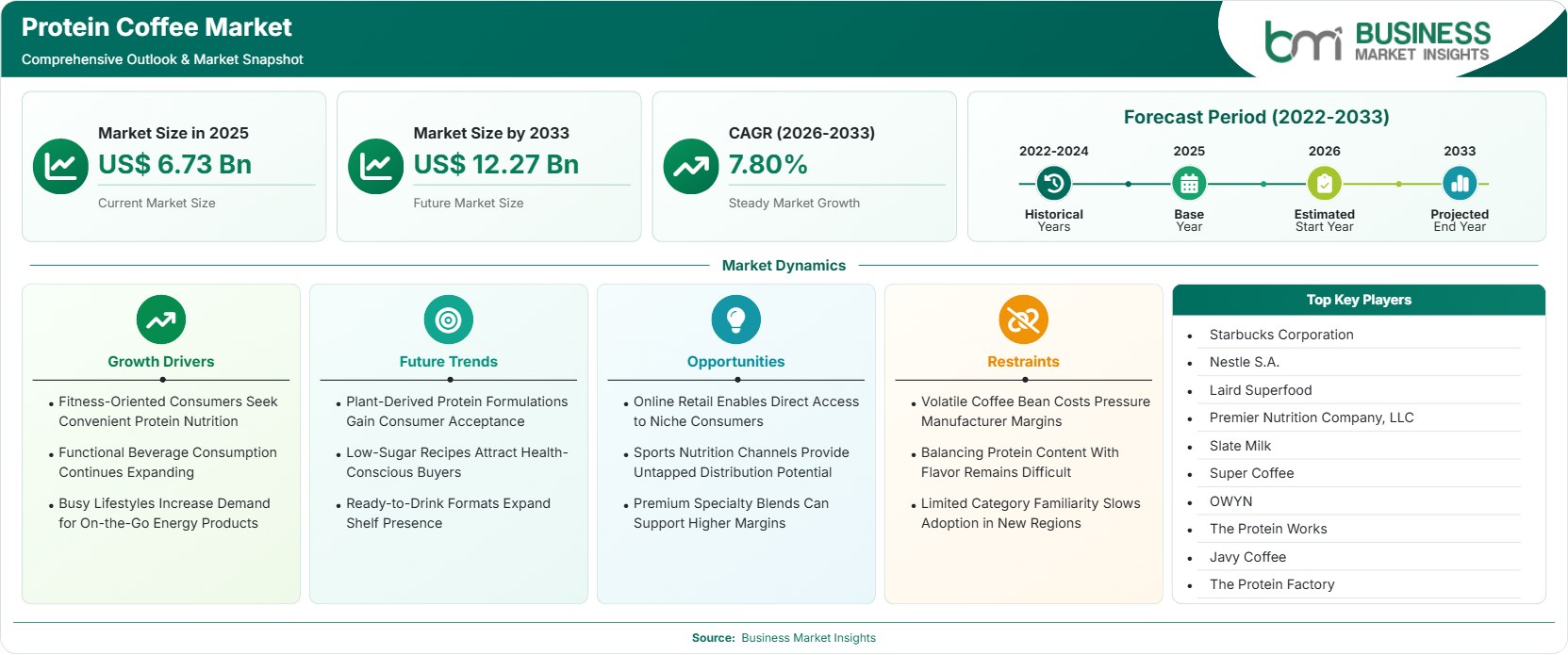
The Protein Coffee Market size was valued at US$ 6.73 billion in 2025 and is projected to reach US$ 12.27 billion by 2033, growing at a CAGR of 7.80% during 2026–2033. Fitness-oriented consumers, functional beverage adoption, convenient nutrition, premium formulations, and expanding online distribution are creating new opportunities across developed and emerging markets.

Report Coverage
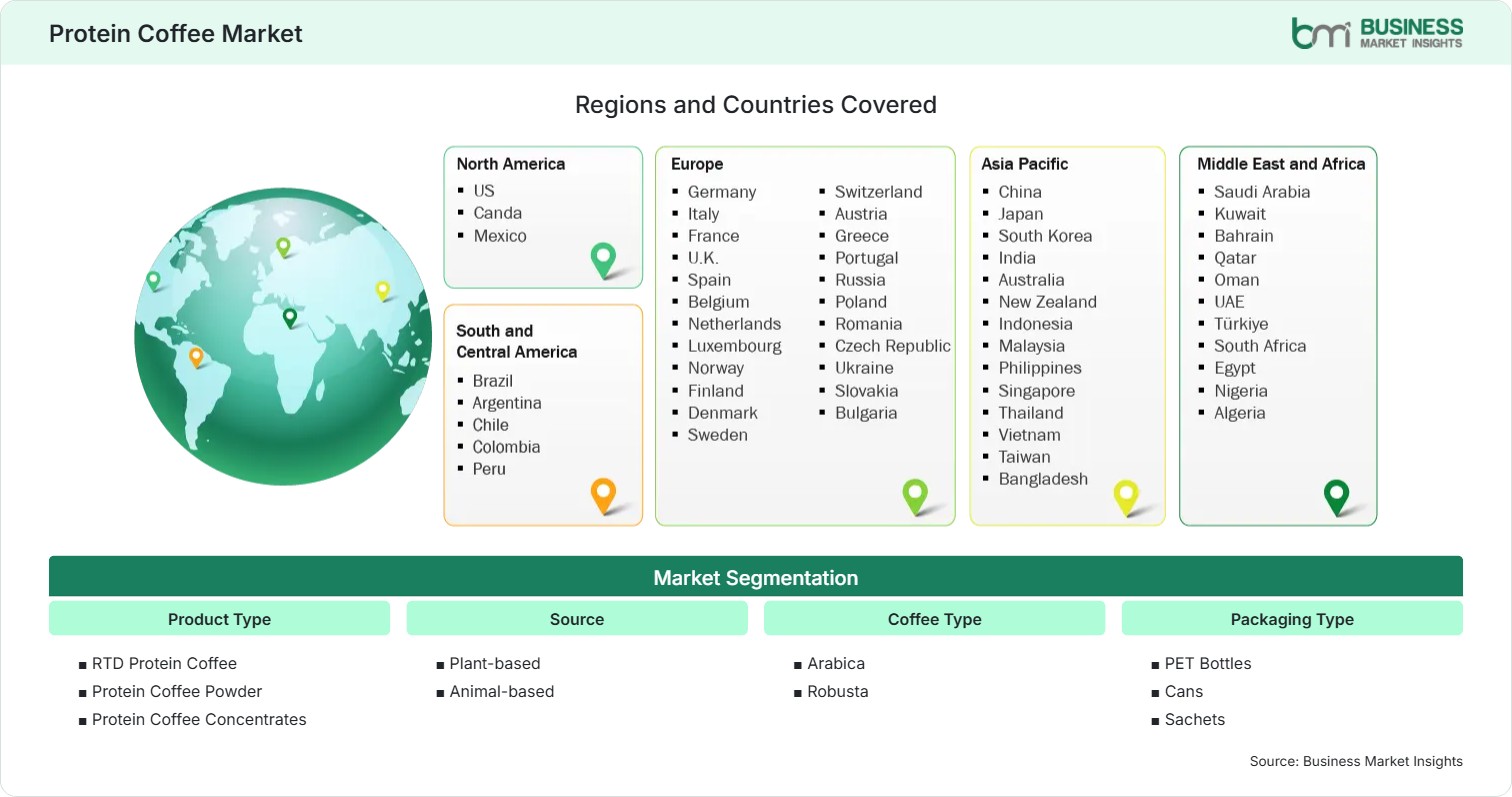
  • Product Type: RTD Protein Coffee, Protein Coffee Powder, Protein Coffee Concentrates
  • Source: Plant-based, Animal-based
  • Coffee Type: Arabica, Robusta
  • Packaging Type: PET Bottles, Cans, Sachets
  • Distribution Channel: Supermarkets/Hypermarkets, Convenience Stores, Specialty Stores, Online Stores
US$ 6.73 Bn Market size in 2025
US$ 12.27 Bn Market Size by 2033
7.80% CAGR, 2026 - 2033
2026-2033 Forecast Period

AI Overview

Protein Coffee Market Summary

  • North America Region: North America holds an estimated 41%–45% market share in 2025 and is projected to expand at a CAGR of 7.3%–7.8% during 2026–2033, supported by established coffee consumption, sports nutrition adoption, functional beverage innovation, and strong retail penetration. The U.S. remains the regional anchor, with an estimated CAGR of 7.4%–7.9%, as consumers increasingly combine daily coffee consumption with convenient protein intake.
  • Fastest Growing Region: Asia Pacific represents approximately 21%–25% market share in 2025 and is projected to register a CAGR of 8.5%–9.1%, supported by expanding fitness cultures, urbanization, premium beverage adoption, increasing disposable incomes, and wider availability of functional nutrition products.
  • Leading Segment: RTD Protein Coffee accounts for approximately 43%–47% market share in 2025 and is projected to grow at a CAGR of 8.0%–8.5%, supported by convenience, portability, immediate consumption, expanding refrigerated distribution, and growing preference for ready-to-drink functional beverages.
  • High Growth Segment: Online Stores represent approximately 17%–21% market share in 2025 and are projected to expand at a CAGR of 9.0%–9.6%, driven by direct-to-consumer models, broader product discovery, subscription purchasing, digital promotions, consumer reviews, and access to specialized protein coffee formulations.
  • Key Market Opportunity: Premium protein coffee can bridge coffee, sports nutrition, and functional beverage categories through differentiated protein sources, cleaner labels, improved flavor systems, lower sugar formulations, convenient packaging, and targeted positioning for active consumers.
  • Major Market Players: Starbucks Corporation, Nestlé S.A., Laird Superfood, Premier Nutrition Company, LLC, Slate Milk, Super Coffee, OWYN, The Protein Works, Javy Coffee, and The Protein Factory.
Strategic Insights

Protein Coffee Market: Strategic Insights

Protein Coffee Market Strategic Framework
FREE PDF
Request your free sample
Request free sample
Stakeholder View

Key Takeaways

  • The category comprises coffee bean sourcing, roasting, extraction, protein ingredient procurement, formulation, packaging, cold chain or ambient logistics, retail distribution, and digital fulfillment, so partnerships in the areas of formulation and manufacturing become essential.
  • RTD products have considerable commercial potential due to the elimination of preparation process and dual positioning in beverage and nutrition occasions, while powdered and concentrated product forms provide considerable opportunities for home consumption.
  • Product development trends include high-protein formulation, clean label, plant-based options, lower sugar content, functional ingredients, better solubility, improved sensory profile without any sacrifice of coffee attributes.
  • Asia Pacific presents an interesting market growth opportunity as there is a simultaneous development of coffee culture, fitness culture, organized retail, digital commerce, and nutrition convenience in large urban markets.
  • Strategic focus of investors is gradually shifting to functional beverage companies which could combine their differentiated formulations with scalable distribution. Increased recent activity of investors in category leaders confirms increasing interest to protein-based beverage platforms.
  • Businesses can minimize risks associated with category by keeping several product formats and protein sources, giving consumers an option to switch from RTD beverages to powders, concentrates, plant-based products, and specialty beverages.
Geographic Outlook

Protein Coffee Market Regional Highlights

North America Protein Coffee Market

North America holds 38%–41% Protein Coffee Market share in 2025 and is projected to grow at a CAGR of 7.2%–7.7% during 2026–2033. The region benefits from established coffee consumption, strong sports nutrition demand, premium RTD beverage availability, and developed convenience retail. The United States leads regional consumption, while Canada provides additional growth through expanding functional beverage adoption, specialty coffee culture, and health-conscious purchasing.

  • Established fitness culture encourages consumers to combine caffeine and protein within convenient daily nutrition routines, supporting broader adoption across gyms, workplaces, travel, and breakfast occasions.
  • Premium beverage brands are expanding product variety through flavored formulations, lower-sugar recipes, plant-based proteins, and differentiated coffee profiles designed for health-conscious consumers.
  • Convenience stores, supermarkets, specialty nutrition retailers, and online platforms provide extensive distribution coverage, allowing emerging brands to compete alongside established beverage manufacturers.
  • Direct-to-consumer subscriptions and digital marketing improve consumer retention by simplifying recurring purchases and enabling brands to communicate nutritional benefits directly to targeted audiences.

US Protein Coffee Market

The United States represents 82%–85% of North American Protein Coffee Market revenue and is projected to register a CAGR of 7.4%–7.9% during 2026–2033. Demand is supported by strong coffee consumption, developed sports nutrition channels, broad functional beverage availability, and high consumer familiarity with protein products.

  • Strong gym participation and sports nutrition awareness support protein coffee as a convenient alternative to separate coffee and protein consumption occasions.
  • Large beverage retailers and online marketplaces provide broad shelf and digital visibility, allowing niche brands to reach consumers without extensive physical distribution networks.
  • Consumers increasingly seek lower-sugar, high-protein, dairy-free, and clean-label products, encouraging manufacturers to refine recipes and expand plant-based product portfolios.

Europe Protein Coffee Market

Europe represents 25%–28% Protein Coffee Market share in 2025 and is projected to expand at a CAGR of 6.9%–7.4% during 2026–2033. Germany and the United Kingdom remain leading markets, while Spain and Italy offer attractive growth opportunities as functional beverages and specialty coffee gain consumer attention.

  • Growing interest in balanced nutrition supports beverages combining familiar coffee consumption with protein functionality, particularly among active consumers and younger urban populations.
  • Plant-based protein options are gaining attention as consumers seek dairy alternatives, cleaner ingredient profiles, and products compatible with flexitarian lifestyle preferences.
  • Sustainability considerations encourage brands to evaluate recyclable packaging, responsible ingredient sourcing, efficient manufacturing, and reduced material use across beverage formats.
  • Specialty coffee positioning provides opportunities for premium products using differentiated beans, stronger flavor profiles, and higher-quality preparation techniques.

Asia Pacific Protein Coffee Market

Asia Pacific accounts for 21%–24% Protein Coffee Market share in 2025 and is projected to register the fastest CAGR of 8.6%–9.1% during 2026–2033. China, Japan, Australia, and South Korea represent important markets, while India and Southeast Asia offer high-growth potential.

  • Rising disposable incomes are supporting greater experimentation with premium functional beverages, particularly among urban consumers seeking convenient nutrition and modern coffee experiences.
  • Fitness centers and sports nutrition retailers provide effective education channels for introducing protein coffee to consumers already familiar with protein supplementation.
  • Online marketplaces enable brands to reach consumers across fragmented markets while offering product reviews, subscription purchasing, promotional pricing, and extensive formulation choices.
  • Localized flavors and affordable package sizes can improve adoption by adapting international protein coffee concepts to regional taste preferences and purchasing patterns.

Rest of World Protein Coffee Market

Rest of World represents 9%–12% Protein Coffee Market share in 2025 and is projected to grow at a CAGR of 7.0%–7.5% during 2026–2033. Latin America provides opportunities through established coffee culture, while the Middle East and Africa benefit from expanding modern retail, fitness facilities, and premium consumer products. Brazil and the UAE represent particularly attractive markets.

Latin American markets can leverage strong coffee familiarity to introduce functional variants, while Middle Eastern markets offer opportunities for premium imported and locally formulated products.

  • Brazil provides a compelling opportunity because strong coffee familiarity can reduce consumer education requirements when protein functionality is introduced through recognizable beverage formats.
  • Gulf markets offer premiumization opportunities supported by modern retail, fitness-oriented lifestyles, high acceptance of imported consumer products, and expanding specialty beverage categories.
  • Digital commerce can overcome physical distribution limitations in developing markets by providing consumers access to specialized products unavailable through conventional retail.
  • Local partnerships with distributors, gyms, cafés, and nutrition retailers can improve market entry efficiency while building consumer awareness and strengthening product availability.
Global Market Geography
FREE PDF
Request your free sample
Request free sample
Segment Analysis

Protein Coffee Market Segmentation

Product Type

Product type remains central to category development because consumers prioritize convenience, portability, nutrition, and preparation flexibility. RTD Protein Coffee held 39%–42% Protein Coffee Market share in 2025 and is projected to register a CAGR of 8.0%–8.5% during 2026–2033. Product innovation, improved taste, and expanding refrigerated distribution continue widening adoption across active lifestyle and mainstream beverage occasions.

  • RTD Protein Coffee: Ready-to-drink formats simplify consumption and support portability across workouts, commuting, and breakfast occasions, with growth driven by convenience, improved flavor, and wider retail distribution.
  • Protein Coffee Powder: Powdered products provide preparation flexibility and customizable protein concentrations, attracting fitness consumers who prefer mixing products with milk, water, or other beverages.
  • Protein Coffee Concentrates: Concentrates enable rapid preparation and portion customization, supporting consumers seeking convenient coffee functionality while allowing manufacturers to develop compact packaging and differentiated serving experiences.

Source

Source selection increasingly influences consumer perceptions of nutrition, sustainability, digestibility, and lifestyle compatibility. Plant-based products accounted for 34%–37% Protein Coffee Market share in 2025, while the overall source segment is projected to expand at a CAGR of 7.7%–8.2% during 2026–2033. Product developers are refining protein systems to improve texture and sensory performance.

  • Plant-based: Plant-derived proteins appeal to vegan, flexitarian, and health-conscious consumers, with formulation development focused on reducing bitterness, improving solubility, and achieving smoother beverage texture.
  • Animal-based: Dairy-derived proteins remain important for consumers prioritizing familiar taste, complete protein profiles, and established sports nutrition functionality across mainstream and performance-oriented beverage categories.

Coffee Type

Coffee type affects flavor identity, perceived quality, caffeine positioning, and product differentiation. Arabica represented 57%–60% Protein Coffee Market share in 2025 and is projected to expand at a CAGR of 7.5%–8.0% during 2026–2033. Premium coffee positioning and consumer interest in smoother flavor profiles continue influencing ingredient selection and finished product development.

  • Arabica: Arabica supports premium positioning through smoother flavor characteristics and specialty coffee associations, helping brands differentiate functional beverages targeted toward quality-focused consumers.
  • Robusta: Robusta provides stronger coffee intensity and can support cost-conscious formulations, while its distinctive profile suits products designed around bold flavor and higher perceived coffee strength.

Packaging Type

Packaging increasingly affects portability, shelf presence, product protection, and sustainability positioning. PET Bottles represented 34%–37% Protein Coffee Market share in 2025 and are projected to grow at a CAGR of 7.6%–8.1% during 2026–2033. Packaging development increasingly balances lightweight construction, convenience, recyclability, and premium presentation.

  • PET Bottles: Lightweight bottles support portability, resealability, and efficient logistics, making them suitable for RTD protein coffee consumed during commuting, exercise, and outdoor activities.
  • Cans: Cans provide strong shelf visibility and convenient single-serving formats, supporting products positioned within mainstream energy, coffee, and functional beverage retail environments.
  • Sachets: Sachets offer compact packaging for powdered formulations, enabling portability, portion control, and efficient storage for consumers using protein coffee during travel or exercise.

Distribution Channel

Distribution strategy determines accessibility, brand discovery, pricing, and recurring purchasing behavior. Online Stores represented 17%–20% Protein Coffee Market share in 2025 and are projected to deliver a CAGR of 9.1%–9.6% during 2026–2033. Digital channels are particularly effective for niche formulations and subscription-based purchasing.

  • Supermarkets/Hypermarkets: Large-format retailers provide broad consumer exposure, promotional opportunities, and convenient product comparison, supporting mainstream adoption as protein coffee moves beyond specialist nutrition channels.
  • Convenience Stores: Convenience outlets support impulse and immediate-consumption occasions, particularly for RTD products purchased during commuting, travel, workdays, and pre-workout routines.
  • Specialty Stores: Specialty retailers provide targeted access to fitness and nutrition consumers while enabling brands to communicate detailed formulation, protein, ingredient, and performance attributes.
  • Online Stores: Online channels expand assortment, simplify recurring purchases, support direct consumer engagement, and enable niche brands to reach geographically dispersed audiences without extensive physical retail coverage.
Market Forces

Protein Coffee Market Dynamics

Key Market Drivers

Fitness-Oriented Consumers Seek Convenient Protein Nutrition

The increasing demand from fitness conscious consumers for drinks with more benefits other than hydration has set a positive tone for the coffee and protein drinks segment. This combination serves well to meet the need for pre-workout, post-workout, breakfast and afternoon drinks, all within a single drink without having to prepare each individually. This has boosted Protein Coffee Market development for consumers who buy protein shakes and other specialty drinks.

Functional Beverage Consumption Continues Expanding

There is an increasing competition between functional beverages and regular drinks based on their incorporation of consumption habits and nutritional functionality. Protein coffee is a beverage well-suited to this transition, as it integrates coffee consumption habits with nutritional functionality. This brings about additional distribution channels outside the sports nutrition stores. The resulting Protein Coffee Market trends favor products with clear benefit communication, attractive packaging, and straightforward nutritional claims. Companies that balance protein delivery with authentic coffee flavor can increase repeat consumption because the product becomes integrated into existing beverage habits rather than requiring consumers to establish an entirely new routine.

Busy Lifestyles Increase Demand for On-the-Go Energy Products

Time-constrained consumers increasingly favor products that combine familiar beverage occasions with nutritional convenience. This beverage provides a convenient way to combine coffee and protein without preparing them separately, saving time for breakfast or post-workout nutrition. The RTD bottles and cans are especially useful for commuting, work consumption, travel, and exercise in the gym. The producers have room to increase consumption opportunities by varying serving sizes, flavors, caffeine levels, and protein sources.

Key Market Opportunities

Online Retail Enables Direct Access to Niche Consumers

Online commerce gives new brands an entry point into customers who might not be catered to by traditional retail shelves. Specialty protein options, unique coffee mixes, nutrition-specific foods, and luxury foods can be marketed to specific consumers using online channels. Subscription programs can help increase purchase frequency for businesses while creating customer loyalty. The Protein Coffee Market Forecasts favor continued channel diversification as consumers become more comfortable purchasing functional beverages online. Brands can use educational content, reviews, sampling programs, and targeted advertising to communicate formulation differences that may be difficult to explain through limited shelf space.

Sports Nutrition Channels Provide Untapped Distribution Potential

Sports nutrition retailers, fitness centers, specialty supplement stores, and athletic communities can provide valuable distribution pathways for protein coffee products. The media used reaches consumers who are aware about protein supplements and functional foods, thus making the task of educating consumers easier. Gyms, sports nutritionists, sports retailers, and fitness trainers will help provide sampling facilities as well as increase credibility of the product among its users. The manufacturer may produce protein supplements that can be used as pre-workout, post-workout, for breakfast or as a convenient protein supplement. Such media will enable the manufacturer to charge higher prices for their product formulations.

Premium Specialty Blends Can Support Higher Margins

Premiumization offers opportunities for product differentiation through specialty coffee origins, higher protein content, unique roasting profiles, complex flavors, clean labels, and sustainable packaging. Consumers who are familiar with premium coffee will be willing to pay more for products that offer not only functional benefits but also high levels of sensory quality. It becomes possible for manufacturers to establish product ranges, from mass-market RTD drinks to specialty blends for customers seeking unique coffee experiences.

Market Restraints and Challenges

Volatile Coffee Bean Costs Pressure Manufacturer Margins

Factor: Coffee is an essential raw material in the production of protein coffee, implying that the company is vulnerable to changes in the supply, quality, cost, and other aspects of bean acquisition. Other raw materials such as ingredients and packaging materials could add to the rising costs if they all rise at once. Impact: Increased production costs may lead to squeezed margins, higher prices of the product in the market, and difficulty in formulating long-term pricing strategies.

Balancing Protein Content With Flavor Remains Difficult

Factor: The rise in protein content may influence the viscosity, mouthfeel, solubility, sweetness, aroma, and the true nature of the coffee, especially when companies formulate protein with acidic and/or concentrated coffee systems. Proteins vary in how they react during processing and storage. Impact: The formulation issues will make research and development more demanding, the product testing time-consuming, and customer discontentment due to nutritional value taking precedence over taste.

Company Analysis

Competitive Landscape

The competitive environment combines global coffee and food companies with specialized functional beverage brands. Protein Coffee Market analysis indicates that competitive positioning increasingly depends on formulation quality, brand recognition, retail reach, protein differentiation, convenience, and the ability to create credible links between coffee culture and sports nutrition. Large companies can leverage established distribution and marketing infrastructure, while specialist brands can move faster with niche flavors, direct-to-consumer models, and targeted nutritional positioning.

Company Name

Overview

Products and Services Relevant to this Market

Starbucks Corporation

Global coffee company with extensive beverage expertise, retail reach, and growing focus on protein-oriented coffee occasions.

Protein coffee beverages, RTD coffee, protein-enhanced café beverages, cold coffee products, and packaged coffee offerings.

Nestlé S.A.

Diversified food and beverage company with extensive coffee capabilities, global distribution, and functional nutrition expertise.

Coffee beverages, RTD coffee, coffee concentrates, nutritional products, and protein-oriented beverage platforms.

Laird Superfood

Functional food and beverage company focused on coffee enhancers, functional coffee, and nutrition-oriented products.

Protein coffee, functional coffee powders, creamers, superfood beverages, and wellness-focused coffee products.

Premier Nutrition Company

Nutrition-focused company with strong expertise in protein beverages and convenient nutritional products.

Protein shakes, RTD nutritional beverages, coffee-flavored protein products, and sports nutrition solutions.

Slate Milk

Beverage brand specializing in high-protein, low-sugar milk and coffee products for convenient consumption.

Protein coffee, iced coffee beverages, high-protein dairy drinks, and portable functional beverages.

Super Coffee

Functional beverage brand focused on coffee products positioned around protein, energy, and improved nutritional profiles.

Protein coffee, RTD coffee, coffee concentrates, creamers, and functional coffee beverages.

OWYN

Plant-based nutrition brand serving consumers seeking dairy-free protein and convenient functional beverages.

Plant-based protein beverages, coffee-flavored nutrition drinks, RTD protein products, and wellness beverages.

The Protein Works

Sports nutrition company providing protein products and functional nutrition solutions across multiple consumer applications.

Protein powders, coffee-related nutrition products, functional beverages, sports nutrition, and personalized supplementation.

Javy Coffee

Coffee brand specializing in concentrates and convenient coffee formats suited to customized beverage preparation.

Coffee concentrates, protein-compatible coffee products, flavored coffee solutions, and home beverage ingredients.

The Protein Factory

Protein-focused company addressing consumers seeking convenient nutritional products and specialized protein formulations.

Protein beverages, protein coffee concepts, nutritional powders, functional products, and sports nutrition solutions.

Trust & Transparency

Research Methodology

The market analysis combines proprietary research with secondary data from government agencies, company disclosures, regulatory filings, industry databases and expert interviews. Market estimates are validated through data triangulation, cross-market benchmarking and analyst review.

View Full Research Methodology

Questions Answered

Frequently Asked Questions

What does the Protein Coffee Market Report cover?

The Market Report covers market dynamics, product formats, protein sources, coffee types, packaging, distribution channels, regional opportunities, competitive positioning, innovation priorities, recent developments, drivers, opportunities, restraints, and strategic growth considerations.

Why are plant-based formulations becoming strategically important?

Plant-based formulations broaden the consumer base to include vegan, flexitarian, and dairy-avoiding consumers. They also allow manufacturers to create differentiated nutritional and sustainability positioning while participating in the wider plant-based functional beverage category.

How can brands differentiate protein coffee products?

Differentiation can come from protein source, coffee origin, flavor quality, sugar content, functional ingredients, packaging, sustainability positioning, and dietary suitability. Premium brands can combine specialty coffee characteristics with clearly communicated nutritional benefits.

Which product format offers the strongest commercial opportunity?

RTD Protein Coffee offers a strong opportunity because it removes preparation requirements and supports immediate consumption. Bottles and cans can be distributed through supermarkets, convenience stores, gyms, specialty outlets, and online channels.

What is driving adoption of protein coffee products?

Adoption is being supported by the convergence of coffee consumption, fitness nutrition, functional beverages, and convenience. Consumers can obtain caffeine and protein through one product, making the category relevant to breakfast, exercise, commuting, workplace, and afternoon consumption occasions.

Access the Full Protein Coffee Market Report

Get segment-level forecasts, regional estimates, competitive benchmarking, company profiles and downloadable Excel datasets.

Access the full Protein Coffee Market Report
350 pages PDF & Excel | 2026-08-19