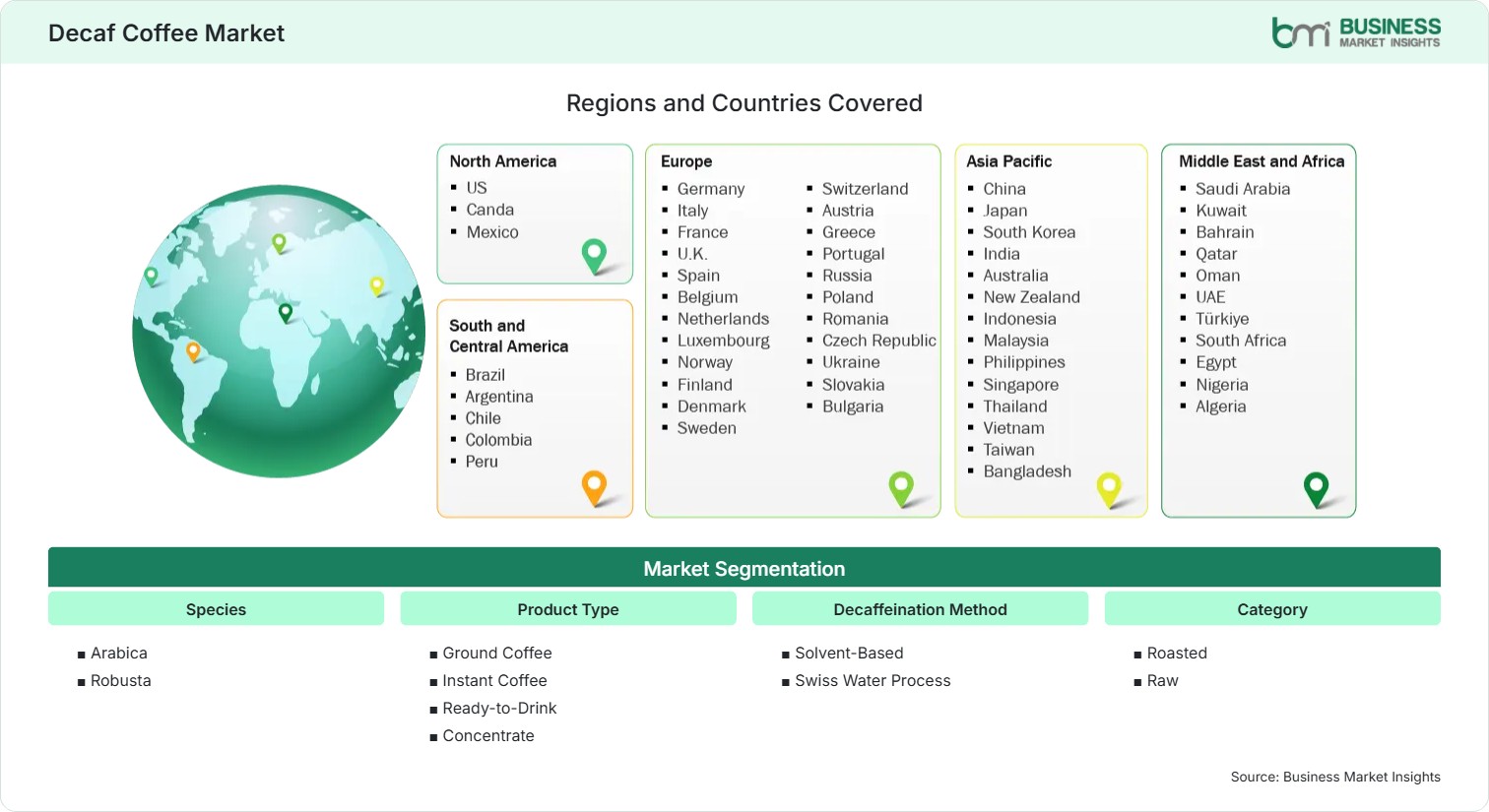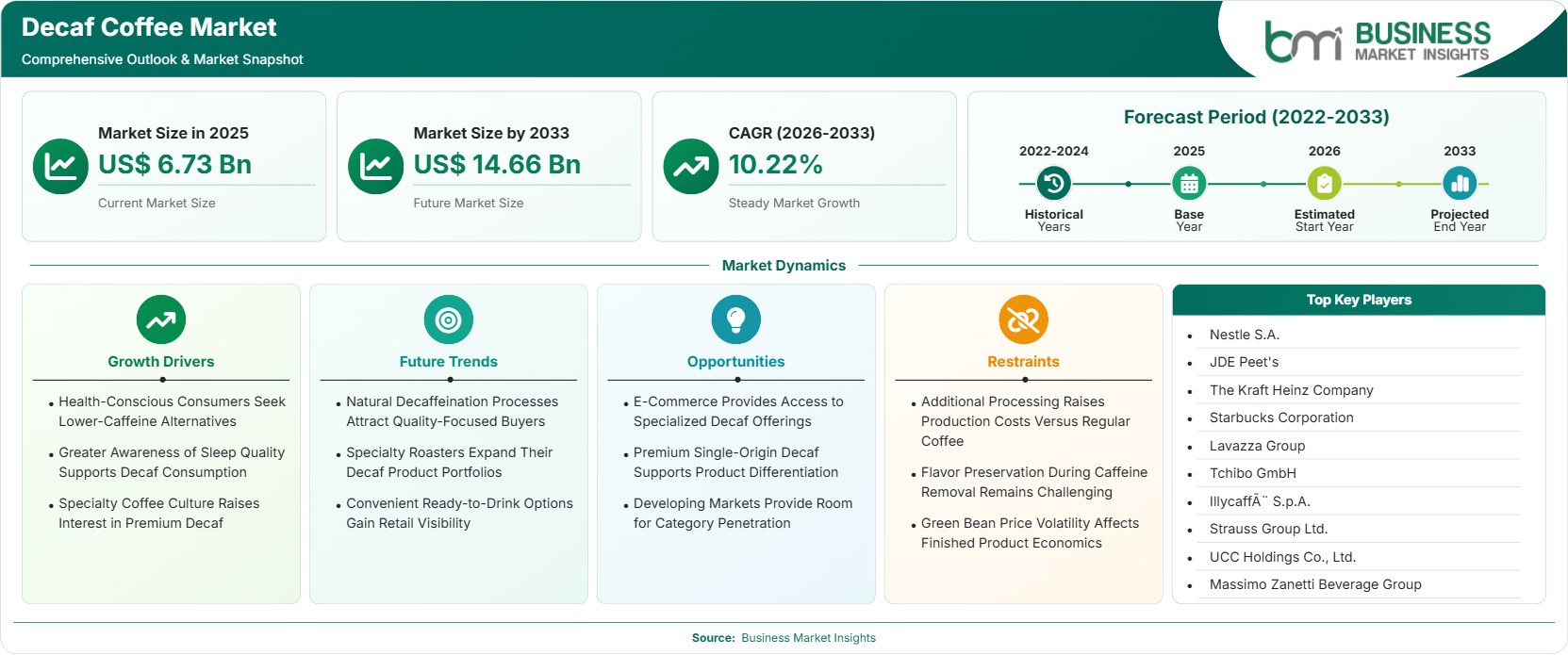
Decaf Coffee Market Regional Highlights
North America Decaf Coffee Market
North America represents 31%–34% Decaf Coffee Market share in 2025 and is projected to register a CAGR of 9.6%–10.2% during 2026–2033. Established coffee consumption, specialty café development, and broad retail availability support regional demand. Consumers increasingly seek lower-caffeine alternatives without sacrificing flavor. Premium roasted products, convenient formats, and online specialty retailers are strengthening category visibility, while manufacturers compete through origin, roast quality, processing claims, and differentiated packaging across supermarkets, cafés, and direct-to-consumer platforms.
- Specialty cafés are expanding decaf visibility by offering espresso-based and brewed alternatives, allowing consumers to experience premium products while reducing caffeine intake.
- Supermarkets provide broad access to roasted and instant decaf products, while premium retailers create space for differentiated origins, processing methods, and specialty roasting profiles.
- Online channels improve access to niche products that may not receive extensive physical shelf space, supporting subscriptions, repeat purchases, and direct brand relationships.
- U.S. demand remains regionally influential as established coffee habits create a substantial consumer base for premium decaf products and convenient preparation formats.
U.S. Decaf Coffee Market
The United States represents 82%–85% of North American Decaf Coffee Market revenue and is projected to grow at a CAGR of 9.8%–10.4% during 2026–2033. Mature coffee consumption and strong specialty retail infrastructure support adoption. Consumers can access decaffeinated products across supermarkets, cafés, specialty stores, and digital channels, allowing manufacturers to segment offerings by roast, origin, preparation format, and premium positioning while encouraging repeat purchases among established coffee drinkers.
- Specialty coffee culture supports demand for premium decaf beans as consumers increasingly evaluate flavor complexity, sourcing, roast quality, and brewing performance.
- E-commerce enables smaller specialty brands to reach consumers seeking specific decaffeination processes, single-origin offerings, and limited-production roasted products.
- Foodservice remains an important discovery channel because cafés can introduce consumers to premium decaf preparation while creating opportunities for packaged retail conversion.
Europe Decaf Coffee Market
Europe accounts for 36%–39% Decaf Coffee Market share in 2025 and is projected to expand at a CAGR of 9.2%–9.8% through 2026–2033. Established coffee traditions and widespread retail access support regional demand. Germany, Italy, France, and the United Kingdom represent important consumption markets, while Spain and selected Central European markets provide higher-growth opportunities. Specialty roasting, premium positioning, and improved availability of decaffeinated products across cafés and retail channels are reinforcing regional category development.
- Germany remains a leading opportunity because established coffee consumption provides a strong base for roasted and instant decaf products across mainstream and specialty channels.
- Italy's espresso culture creates opportunities for premium decaffeinated beans and blends designed to preserve crema, body, aroma, and traditional preparation characteristics.
- Spain is positioned for comparatively faster expansion as specialty cafés and premium beverage consumption broaden consumer exposure to differentiated decaffeinated products.
- Retailers increasingly support category differentiation through premium packaging, single-origin positioning, and clearer communication around processing and sensory attributes.
Asia Pacific Decaf Coffee Market
Asia Pacific represents 19%–22% Decaf Coffee Market share in 2025 and is expected to record a CAGR of 11.1%–11.8% during 2026–2033, making it the fastest-growing regional market. China, Japan, Australia, South Korea, and India offer distinct opportunities shaped by café expansion, urban lifestyles, premium beverage adoption, and digital commerce. Increasing consumer familiarity with specialty coffee is expanding the addressable audience for reduced-caffeine products across retail, foodservice, and online channels.
- Japan provides a mature coffee environment where established consumer familiarity with decaffeinated products supports premium roasted and convenient formats.
- China offers strong long-term potential as specialty cafés, online retail, and premium coffee consumption expand across major urban centers.
- India presents a developing opportunity as specialty coffee culture, modern retail, and digital purchasing broaden access to differentiated coffee products.
- Australia and South Korea provide attractive premium markets where café culture supports experimentation with specialty origins, alternative processing, and high-quality decaf offerings.
Rest of World Decaf Coffee Market
The Rest of World segment represents 7%–10% Decaf Coffee Market share in 2025 and is projected to expand at a CAGR of 9.0%–9.7% during 2026–2033. Latin America, the Middle East, and Africa present different market structures, with opportunities linked to urbanization, modern retail, tourism, specialty cafés, and online purchasing. Brazil and Mexico provide important Latin American opportunities, while the Gulf markets offer premium foodservice and retail potential.
Latin American markets benefit from proximity to coffee production ecosystems while simultaneously developing domestic specialty consumption. In the Middle East, premium cafés, hospitality venues, and affluent consumers support differentiated coffee offerings. Selected African urban markets offer longer-term opportunities as organized retail and café infrastructure develop.
- Brazil and Mexico can support category expansion through established coffee consumption and growing specialty retail environments.
- Gulf markets provide premium opportunities through hospitality, cafés, modern retail, and consumer willingness to explore differentiated beverage products.
- Urban African markets offer longer-term potential as specialty coffee outlets and organized retail networks improve product accessibility.
- Online channels can help international brands enter markets where physical distribution of specialized decaffeinated products remains limited.