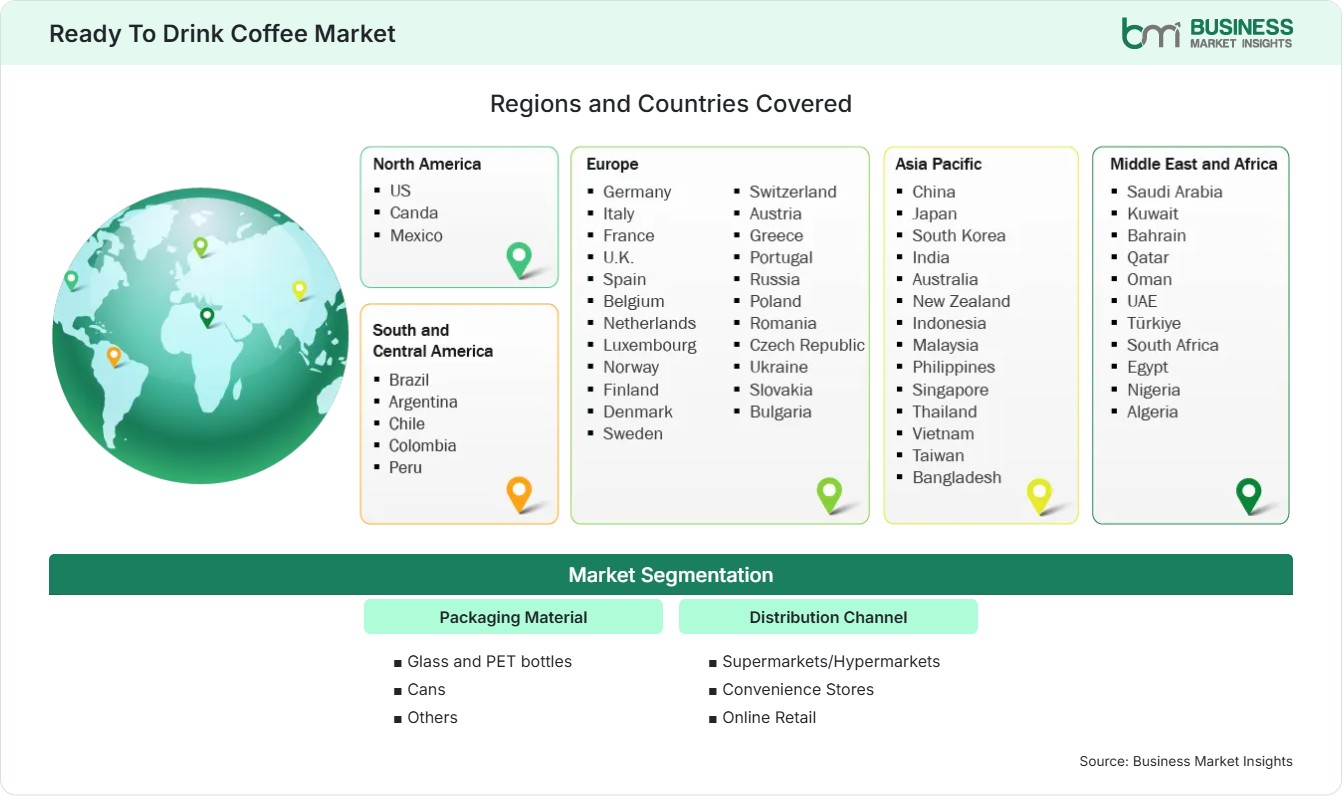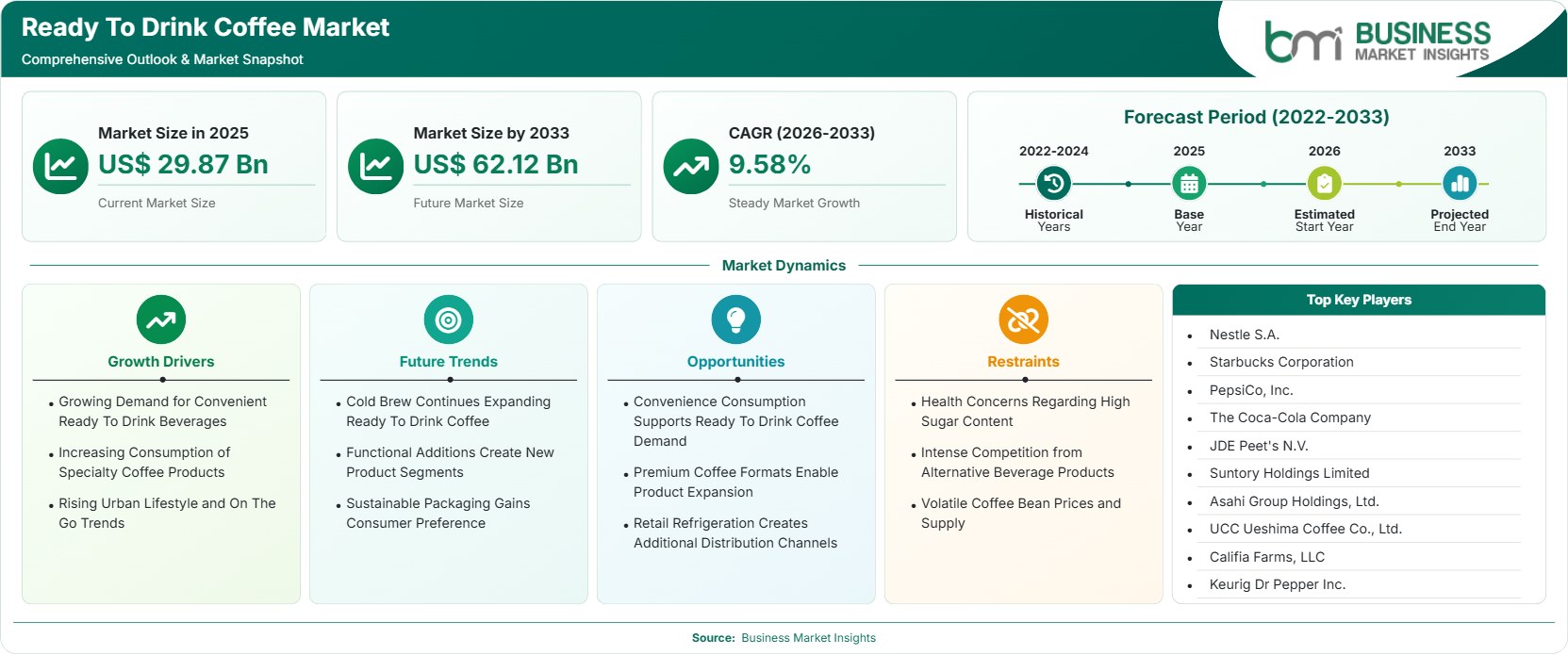
Ready To Drink Coffee Market Regional Highlights
North America Ready To Drink Coffee Market
North America represented 34%–37% of global revenue in 2025 and is projected to advance at an 8.4%–8.9% CAGR through 2033. The region benefits from established coffee consumption habits, sophisticated retail infrastructure, and premium cold brew adoption. The Ready To Drink Coffee Market share remains highest in North America due to strong brand recognition and extensive convenience store penetration. Innovation around functional beverages, reduced-sugar products, plant-based formulations, and recyclable packaging continues supporting category development across major metropolitan markets.
- Premium cold brew launches continue gaining traction among younger consumers seeking café-quality beverages with convenient consumption formats.
- Convenience stores remain critical distribution channels due to high impulse purchasing and growing refrigerated product visibility.
- Sustainability commitments encourage adoption of recyclable cans and lightweight packaging solutions throughout beverage portfolios.
- Partnerships between retailers and beverage producers improve product placement, category visibility, and repeat purchases.
- Demand for protein-enhanced and wellness-oriented beverages supports premium-priced innovation opportunities.
US Ready To Drink Coffee Market
The United States accounts for 78%–82% of the North American Ready To Drink Coffee Market revenue is growing at a rate of 8.5% to 9.0% CAGR. The strong coffee culture, robust retail presence, and innovation leadership enable continued growth. The nation leads the region in introducing new products in cold brew, functional coffee, and alternative dairy-based beverages. Preference among consumers for convenience products ensures the resilience of the category, while online shopping and subscriptions enable greater access to premium products.
- Functional beverages featuring vitamins, protein, and adaptogenic ingredients are establishing new premium consumption categories.
- E-commerce channels help specialty brands scale nationally without extensive traditional retail dependence.
- Growing adoption of aluminum can formats aligns with sustainability programs and consumer recycling preferences.
- Higher-income consumers continue driving demand for craft and specialty formulations.
Europe Ready To Drink Coffee Market
Europe held 24%–27% Ready To Drink Coffee Market share during 2025 and is forecast to register an 8.7%–9.3% CAGR through 2033. The presence of a well-established coffee culture, the growing trend of convenient consumption, and premium product development will facilitate growth. The German market is the largest, whereas the fastest growing market is the UK, which experiences a CAGR of 9.5%–10.1%. Retail private labeling and the need for low-sugar products will shape the competitive landscape. Sustainable regulations impact packaging decisions.
- Germany benefits from established coffee consumption habits and extensive supermarket distribution networks.
- The United Kingdom records rapid adoption of cold brew and premium flavored products among younger consumers.
- Recyclable packaging regulations are encouraging innovation in materials, labeling, and supply-chain practices.
- Specialty coffee trends are expanding into mainstream retail channels across Western Europe.
- Plant-based coffee beverages are gaining popularity among health-conscious and environmentally aware consumers.
Asia Pacific Ready To Drink Coffee Market
Asia Pacific accounted for 27%–30% of Ready To Drink Coffee Market revenue in 2025 and is expected to record the fastest expansion at 11.2%–11.8% CAGR. Japan remains the largest regional market due to mature vending and convenience-store ecosystems, while India represents the fastest-growing major market with 12.5%–13.2% CAGR. Rising urbanization, increasing disposable income, western beverage influence, and retail modernization are strengthening demand. The region continues attracting manufacturing investment as producers seek proximity to high-growth consumer bases.
- Japan maintains leadership through widespread vending machine distribution and product innovation.
- India experiences accelerating demand among young professionals seeking convenient premium beverages.
- Digital retail platforms significantly improve product visibility and consumer access across emerging markets.
- International beverage companies are increasing regional manufacturing and partnership investments.
- Flavor localization strategies enhance consumer engagement and support category penetration.
Rest of World Ready To Drink Coffee Market
The Rest of World region represented 11%–14% of revenue in 2025 and is projected to grow at 9.4%–10.0% CAGR through 2033. The economies that produce coffee in South and Central America are reaping the benefits of increasing beverage consumption. While Brazil is the biggest market, Colombia is showing promise in terms of category development. In the Middle East and Africa, the countries with the highest growth in demand include the UAE and Saudi Arabia due to increased modern retail presence.
- Brazil benefits from strong coffee culture and increasing demand for value-added packaged beverages.
- Colombia leverages domestic coffee expertise to support premium product innovation and exports.
- Gulf countries experience higher demand through convenience retail expansion and premium lifestyle trends.
- International brands are broadening distribution partnerships across emerging urban centers.
- Younger consumers increasingly drive experimentation with flavored and functional beverage offerings.