
Detox Drinks Market Outlook: Size, Share, Trends, Growth Analysis, Competitive Landscape & Forecast, 2026-2033

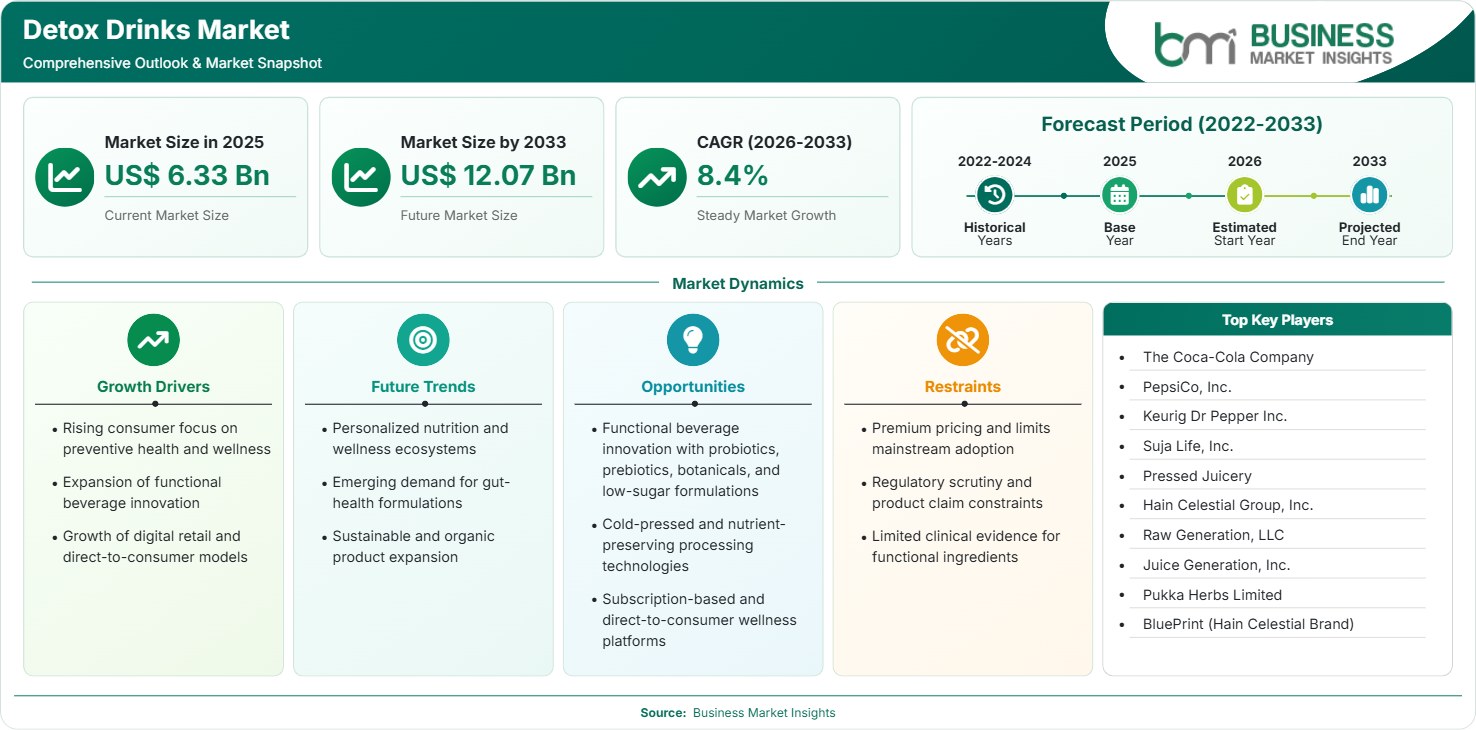
The Detox Drinks Market size was valued at US$ 6.33 Billion in 2025 and is projected to reach US$ 12.07 Billion by 2033, growing at a CAGR of 8.4% during 2026–2033, supported by rising wellness consumption, functional beverage innovation, clean-label demand, digestive health awareness, and expanding online retail opportunities.

Report Coverage
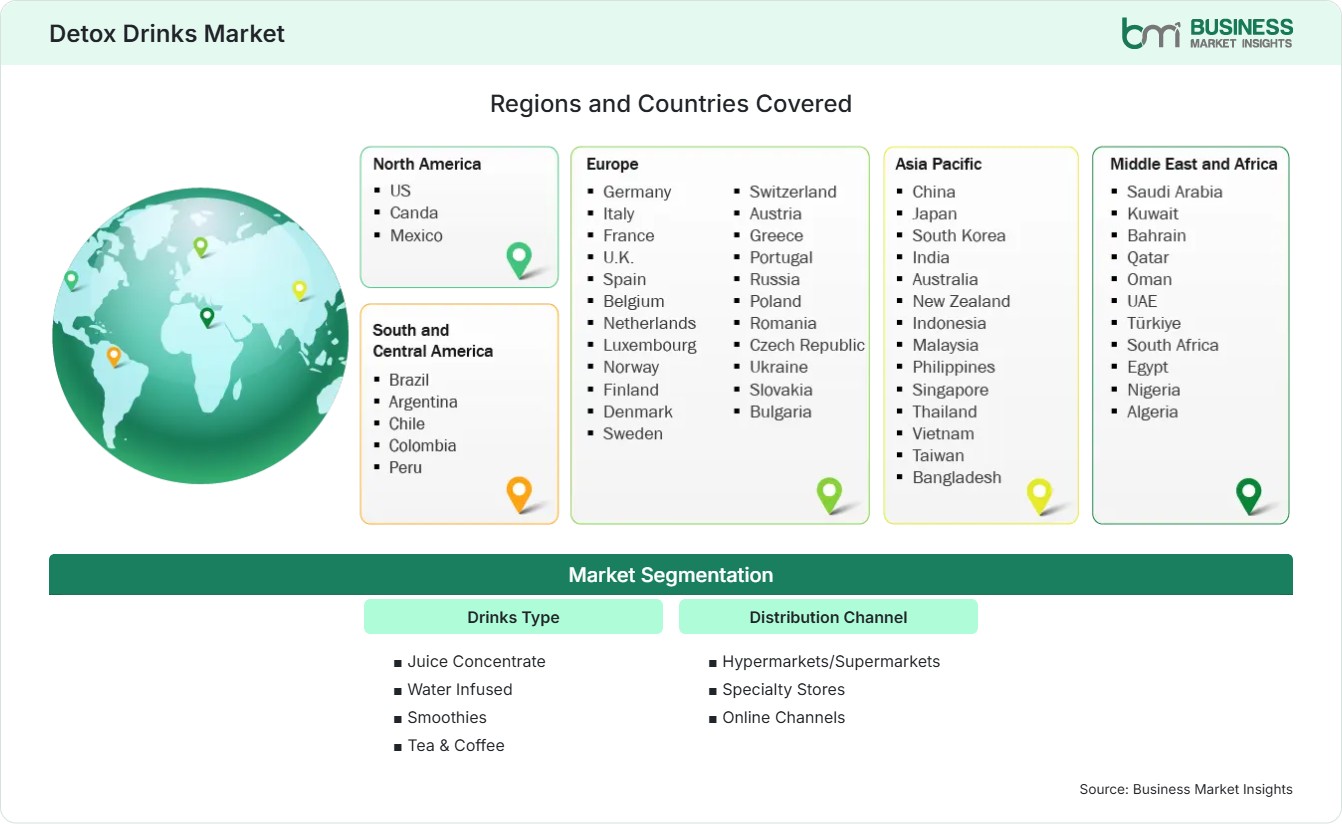
  • Drinks Type: Juice Concentrate, Water Infused, Smoothies, Tea & Coffee
  • Distribution Channel: Hypermarkets/Supermarkets, Specialty Stores, Online Channels
US$ 6.33 Bn Market size in 2025
US$ 12.07 Bn Market Size by 2033
8.4% CAGR, 2026 - 2033
2026-2033 Forecast Period

AI Overview

Detox Drinks Market Summary

  • North America Region: North America holds a market share of 34%–37% in 2025, growing with a CAGR of 7.6%–8.0% during 2026–2033. Growth is supported by premium wellness beverages, strong retail penetration, consumer detox programs, fitness-oriented lifestyles, and product innovation. The U.S. market benefits from advanced cold-pressed juice infrastructure and is projected to record a CAGR of 7.8%–8.2%.
  • Fastest Growing Region: Asia Pacific holds a Detox Drinks Market share of 24%–27% in 2025, growing with a CAGR of 10.0%–10.5% during 2026–2033. Drivers include urban wellness trends, increasing disposable income, botanical beverage adoption, expanding digital commerce, preventive healthcare awareness, and broadening premium beverage distribution.
  • Leading Segment: Juice Concentrate holds a market share of 41%–44% in 2025, advancing at a CAGR of 7.8%–8.3% through 2033. Demand stems from convenience, nutrient-rich fruit blends, extended shelf life, affordability, and expanding consumer preference for natural cleansing products.
  • High Growth Segment: Online Channels account for 18%–21% share in 2025 and are expected to grow at 10.8%–11.4% CAGR. Strong drivers include subscription models, direct-to-consumer strategies, digital health engagement, personalized recommendations, and rapid last-mile fulfillment improvements.
  • Key Market Opportunity: Expanding demand for gut-health beverages, probiotic formulations, low-sugar detox products, and personalized nutrition platforms creates valuable opportunities for premium brands targeting health-conscious consumers globally.
  • Major Market Players: The Coca-Cola Company, PepsiCo, Inc., Keurig Dr Pepper Inc., Suja Life, Inc., Pressed Juicery, Hain Celestial Group, Inc., Raw Generation, LLC, Juice Generation, Inc., Pukka Herbs Limited, The Hain Celestial Group BluePrint Brand.
Strategic Insights

Detox Drinks Market: Strategic Insights

Detox Drinks Market Strategic Framework
FREE PDF
Request your free sample
Request free sample
Stakeholder View

Key Takeaways

  • The value chain increasingly integrates organic farms, ingredient processors, cold-chain operators, digital retailers, and wellness platforms, creating opportunities for vertical integration and margin optimization.
  • Fruit- and vegetable-based concentrate products continue generating strong revenue streams, while online retail channels provide the highest long-term expansion potential among distribution formats.
  • Innovation is shifting toward probiotic beverages, adaptogenic botanicals, functional ingredients, reduced-sugar formulations, and personalized wellness packages supported by consumer health data analytics.
  • India, China, Indonesia, and Gulf countries present compelling investment destinations due to rising health expenditure, urbanization, and increasing adoption of preventive nutrition products.
  • Strategic acquisitions in functional beverages and gut-health categories are accelerating as multinational beverage companies seek exposure to high-growth wellness segments.
  • Sustainability initiatives involving recyclable packaging, local sourcing, and carbon-efficient logistics are becoming important competitive differentiators for premium beverage producers.
Geographic Outlook

Detox Drinks Market Regional Highlights

North America Detox Drinks Market

North America represents the largest regional market, accounting for 34%–37% Detox Drinks Market share in 2025 and expanding at a CAGR of 7.6%–8.0% through 2033. Consumer preference for functional beverages, plant-based nutrition, and cold-pressed juices remains strong. Extensive retail infrastructure and high awareness of wellness lifestyles support category maturity. Product innovation increasingly focuses on gut health, immunity support, and reduced sugar content, while premiumization continues influencing purchasing behavior across supermarkets, specialty retailers, and digital channels.

  • Functional wellness beverages increasingly incorporate probiotics, fiber, adaptogens, and botanical extracts targeting digestive wellness, immunity enhancement, and energy management among health-conscious consumers.
  • Subscription detox programs and direct-to-consumer distribution models strengthen customer loyalty while improving recurring revenue visibility for premium beverage brands.
  • Retailers continue expanding refrigerated beverage shelf space to meet increasing demand for fresh juices, wellness shots, and plant-based nutritional drinks.
  • Sustainable packaging adoption supports premium brand positioning as consumers increasingly evaluate environmental credentials alongside product functionality.

US Detox Drinks Market

The United States contributes around 76%–80% of regional revenue and records a CAGR of 7.8%–8.2%. The market benefits from strong consumer spending on health products, advanced product innovation ecosystems, and widespread availability through grocery, specialty, and online channels. Growing participation in fitness programs and preventive health initiatives supports consistent demand for nutrient-rich beverages and structured cleansing products.

  • Premium cold-pressed juice brands are broadening retail reach through mass merchants, convenience channels, and e-commerce platforms.
  • Consumer demand increasingly favors low-sugar, clean-label, and organic beverages aligned with broader wellness objectives.
  • Functional beverage acquisitions and investments continue reshaping competitive dynamics and accelerating innovation.
  • Digital subscriptions and personalized nutrition programs improve customer engagement and repeat purchasing behavior.

Europe Detox Drinks Market

The Europe region captures 27%-30% market share in 2025 and is expected to grow at a CAGR of 7.9%-8.4% in the Detox Drinks Market. Germany, the UK, and France dominate the regional market, while Spain and Poland stand out as rapidly growing regions with a CAGR of about 8.5%-9.0%. There is a trend toward regulations requiring label transparency and reduced sugar content, leading to innovation in the clean-label segment. Consumers are health-conscious and favor organic and botanical ingredients, encouraging premium positioning and product diversification.

  • Regulatory scrutiny encourages ingredient transparency and strengthens consumer confidence in functional beverage claims.
  • Germany remains the largest national market, supported by high organic food consumption and established wellness retail networks.
  • Poland exhibits strong expansion due to rising disposable income and increasing health-conscious beverage consumption.
  • Premium tea-based detox products gain traction among consumers seeking lower-calorie alternatives to sugary beverages.

Asia Pacific Detox Drinks Market

The Asia Pacific holds a market share of 24%-27% and is the fastest-growing region with a CAGR of 10.0%-10.5%. Value creation is driven by China, Japan, and Australia, while India and Indonesia exhibit strong growth potential. Factors driving the growth of this industry include urbanization, the rising middle-class population, and increased health care awareness. Ingredients from herbal remedies and those in contemporary beverages appeal to people seeking natural health solutions and convenient nutritional products.

  • India records one of the region's highest growth trajectories due to rising wellness spending and rapid e-commerce adoption.
  • Chinese consumers increasingly embrace functional beverages that combine traditional botanical ingredients with contemporary formulations.
  • Japanese demand remains influenced by digestive health, immunity, and premium convenience beverage preferences.
  • Regional manufacturers continue investing in localized flavors and culturally relevant ingredient combinations.

Rest of World Detox Drinks Market

Rest of World accounts for 11%–13% market share in 2025 and is anticipated to grow at a CAGR of 8.6%–9.1%. South and Central America benefit from abundant fruit resources and expanding health-conscious consumer bases. In the Middle East and Africa, premium beverage consumption is gradually increasing due to urbanization and wellness awareness. Brazil leads Latin America while the UAE represents a key high-growth Detox Drinks Market across the MEA region.

  • Brazil benefits from strong fruit-processing capabilities and increasing domestic demand for natural functional beverages.
  • Gulf Cooperation Council countries show growing interest in wellness nutrition and premium imported health drinks.
  • Organized retail expansion improves market accessibility across urban centers in Latin America and the Middle East.
  • Regional manufacturers increasingly emphasize natural ingredients and locally sourced fruit formulations.
Global Market Geography
FREE PDF
Request your free sample
Request free sample
Segment Analysis

Detox Drinks Market Segmentation

Drinks Type

This category accounts for about 68%–71% of overall income and is estimated to grow at a CAGR of 8.0%–8.5%. Innovations in products and functional ingredients, along with consumer inclination towards convenient wellness options, continue to drive growth in this category. The scope of the Detox Drinks Market is now not limited to conventional cleansing drinks but also includes digestive, hydration, and immunity drinks.

  • Juice Concentrate: Maintains strong demand through nutrient-rich formulations, broad flavor diversity, convenience benefits, and expanding availability across modern retail and digital commerce channels.
    • Fruit-Based: Popular due to familiar taste profiles, antioxidant content, and alignment with everyday wellness routines among mainstream consumers.
    • Mixed-Based: Combines fruits and vegetables to provide balanced nutrition and diverse flavor experiences supporting broader consumer adoption.
    • Vegetable-Based: Appeals to health-focused users seeking lower sugar alternatives and greater nutrient density from plant-derived ingredients.
  • Water Infused: Gains traction through low-calorie positioning, hydration benefits, and consumer demand for lightly flavored wellness beverages.
    • Fruit-Based: Supports refreshing hydration experiences while offering natural flavor enhancement and broad demographic appeal.
    • Vegetable-Based: Attracts consumers seeking subtle flavor characteristics and wellness-focused hydration solutions.
    • Mixed-Based: Combines fruit and vegetable ingredients to create balanced taste profiles supporting lifestyle-oriented consumption.
  • Smoothies: Benefit from rising demand for meal-replacement beverages enriched with proteins, fibers, and functional ingredients.
  • Tea & Coffee: Expands through herbal detox blends, botanical infusions, and functional caffeine formulations aligned with wellness consumption patterns.

Distribution Channel

Distribution channels provide market reach and brand exposure, with the share of Hypermarkets/Supermarkets at 43% - 46% in 2025 and a CAGR of 7.4% - 7.9%. The Detox Drinks market trends include a growing shift toward e-commerce purchases, but physical retail still plays an important role in discovering new products.

  • Hypermarkets/Supermarkets: Remain dominant through broad product assortment, high consumer traffic, promotional programs, and availability of refrigerated wellness beverage categories.
  • Specialty Stores: Attract health-focused consumers seeking premium products, expert guidance, and curated wellness assortments.
  • Online Channels: Benefit from subscription offerings, personalization capabilities, direct brand engagement, and efficient delivery infrastructure supporting premium product adoption.
Market Forces

Detox Drinks Market Dynamics

Key Market Drivers

Rising Consumer Focus on Preventive Health and Wellness

The increasing awareness of nutrition, obesity control, digestive improvement, and immune enhancement is driving beverage growth worldwide. The WHO and other public health organizations keep stressing the importance of making better food choices, prompting consumers to choose products that offer them wellness benefits. Beverages that include vitamins, minerals, probiotics, and plant ingredients appeal to people who care about their health. More engagement in fitness activities helps increase consumption. Organic and clear labeling of products helps in gaining consumer trust. These factors collectively sustain category expansion across developed and emerging markets while encouraging premium pricing strategies and product portfolio diversification.

Expansion of Functional Beverage Innovation

Increased spending on research and development is driving innovation in probiotics, prebiotics, hydration products, herbs, and low-sugar beverages. The large beverage firms continue to diversify into the wellness products space via mergers and product launches. The Poppi merger with PepsiCo and Simply Pop from Coca-Cola are examples of the growing trend towards functional nutrition products. Innovation enables product differentiation and broadens the consumer base beyond the usual detox consumers. Innovation enhances product differentiation and expands the addressable consumer segments beyond traditional detox users.

Growth of Digital Retail and Direct-to-Consumer Models

E-commerce websites enhance accessibility, customer engagement, and geographic presence for new and existing brands. Subscription plans, personalized wellness programs, and cleanse packages increase the chances of repeated purchases. Enhanced digital marketing techniques help attract customers in a targeted manner and make product recommendations through data analysis. The rapid adoption of online grocery shopping websites and mobile commerce makes niche wellness products more visible. Enhanced logistics infrastructure further supports product freshness and delivery reliability, contributing to sustained growth prospects.

Key Market Opportunities

Personalized Nutrition and Wellness Ecosystems

Innovations in health-monitoring devices present new possibilities for developing personalized beverages tailored to consumers’ health needs and lifestyles. Consumers want health products that fit their personal health needs. With the combination of digital health apps, nutritional analysis tools, and subscription services, manufacturers can provide more specific recommendations. High-end brands can use consumer data to improve product engagement and relevance. Long-term Detox Drinks Market forecasts indicate considerable opportunities to invest in personalized nutrition ecosystems that integrate beverages, wellness, and preventive healthcare services.

Emerging Demand for Gut-Health Formulations

Consumer interest in digestive health remains a major driver of innovation in drinks containing probiotics, prebiotics, fiber, and fermented ingredients. The growing appeal of health beverages, such as functional sodas and digestive drinks, reflects greater consumer acceptance of wellness beverages. Firms that can strike a balance between taste, function, and clean labeling are poised to benefit from the high margins. Innovation in gut health applications is a significant growth opportunity across North America, Europe, and Asia Pacific.

Sustainable and Organic Product Expansion

Environmental considerations are becoming increasingly relevant in purchase decisions for high-end beverages. The demand for organic products, ethical farming, and reusable packaging is growing. The efforts producers undertake to ensure sustainability can help them increase brand recognition and tap into eco-conscious consumers. Sustainability efforts supported by regulation also ensure good growth prospects. Companies that incorporate sustainability principles into their products and marketing strategies will be able to develop stronger customer loyalty and long-term value creation.

Market Restraints and Challenges

Premium Pricing and Limits Mainstream Adoption

High-quality ingredients, cold-chain logistics, organic certification, and specific processing technologies have significantly raised production costs. Higher retail prices might curb consumption among economically sensitive individuals, especially during uncertain economic times. Consumers will switch to regular fruit juice, bottled water, or cheaper drinks in such cases. Companies continue to be under pressure to strike a balance between good quality ingredients and reasonable prices. This issue is very common in developing countries where growth in disposable income is unevenly distributed.

Regulatory Scrutiny and Product Claim Constraints

There is no doubt that functional beverages often offer a variety of benefits related to cleansing, proper digestion, and immune system support. Nowadays, there is a need for greater attention to health claims that are substantiated at a higher level and meet proper labeling standards. Compliance with such requirements increases costs and the time required for product development and introduction. Different regulations in different countries complicate the process of entering the market. Companies must invest in research, documentation, and quality assurance systems to maintain compliance while preserving consumer trust and competitive positioning.

Company Analysis

Competitive Landscape

The competitive environment reflects ongoing consolidation, premium product innovation, and expanding investment in functional beverages. This Detox Drinks Market analysis indicates growing competition among multinational beverage companies and specialized wellness brands.

Company Name

Overview

Products and Services relevant to this market

The Coca-Cola Company

Global beverage leader expanding functional and wellness beverage offerings through innovation and strong distribution networks.

Functional beverages, juice drinks, prebiotic beverages, wellness-focused formulations, retail distribution solutions.

PepsiCo, Inc.

Diversified food and beverage company investing aggressively in health-oriented beverage categories.

Functional drinks, hydration products, wellness beverages, distribution and marketing capabilities.

Keurig Dr Pepper Inc.

Major beverage manufacturer with extensive retail presence and innovation capabilities.

Ready-to-drink beverages, flavored drinks, wellness beverage formats, retail partnerships.

Suja Life, Inc.

Specialized wellness beverage company focused on organic juices and functional health products.

Cold-pressed juices, wellness shots, organic detox beverages, functional nutrition products.

Pressed Juicery

Leading wellness beverage brand recognized for cleanse packages and nutrient-rich formulations.

Juice cleanses, functional smoothies, wellness shots, plant-based beverages.

Hain Celestial Group, Inc.

Natural and organic products company serving health-conscious consumers globally.

Organic beverages, plant-based drinks, wellness-focused nutrition products.

Raw Generation, LLC

Direct-to-consumer wellness company focused on plant-based nutritional beverages.

Detox cleanses, juice programs, wellness drinks, subscription-based offerings.

Juice Generation, Inc.

Premium juice company emphasizing fresh ingredients and nutritional wellness.

Fresh juices, smoothies, cleanse packages, functional beverage solutions.

Pukka Herbs Limited

Botanical wellness specialist supporting herbal beverage innovation.

Herbal teas, detox blends, botanical wellness formulations.

BluePrint (Hain Celestial Brand)

Established cold-pressed juice brand serving wellness-oriented consumers.

Cold-pressed juices, cleanse programs, plant-based nutritional beverages.

Trust & Transparency

Research Methodology

The market analysis combines proprietary research with secondary data from government agencies, company disclosures, regulatory filings, industry databases and expert interviews. Market estimates are validated through data triangulation, cross-market benchmarking and analyst review.

View Full Research Methodology

Questions Answered

Frequently Asked Questions

What does the Detox Drinks Market Report cover?

The report evaluates regional performance, segment trends, competition, investment opportunities, market dynamics, consumer behavior, and strategic developments influencing industry expansion through 2033.

What differentiates premium detox products from conventional beverages?

Premium products typically emphasize organic ingredients, cold-pressed processing, functional health benefits, ingredient transparency, and scientifically supported wellness positioning.

Which distribution channel is expanding most rapidly?

Online channels are experiencing the fastest expansion because of subscription models, personalized product recommendations, and increasing consumer comfort with digital purchasing.

What region offers the strongest long-term growth potential?

Asia Pacific presents the strongest growth outlook due to rising disposable income, urbanization, preventive healthcare awareness, and increasing acceptance of premium wellness beverages.

What factors are driving demand for detox beverages globally?

Growing health awareness, functional ingredient adoption, digestive wellness concerns, clean-label preferences, and wider e-commerce accessibility are encouraging higher consumption across multiple demographic groups.

Access the Full Detox Drinks Market Report

Get segment-level forecasts, regional estimates, competitive benchmarking, company profiles and downloadable Excel datasets.

Access the full Detox Drinks Market Report
350 pages PDF & Excel | 2026-09-02