
Energy Drinks Market Outlook: Size, Share, Trends, Growth Analysis, Competitive Landscape & Forecast, 2026-2033

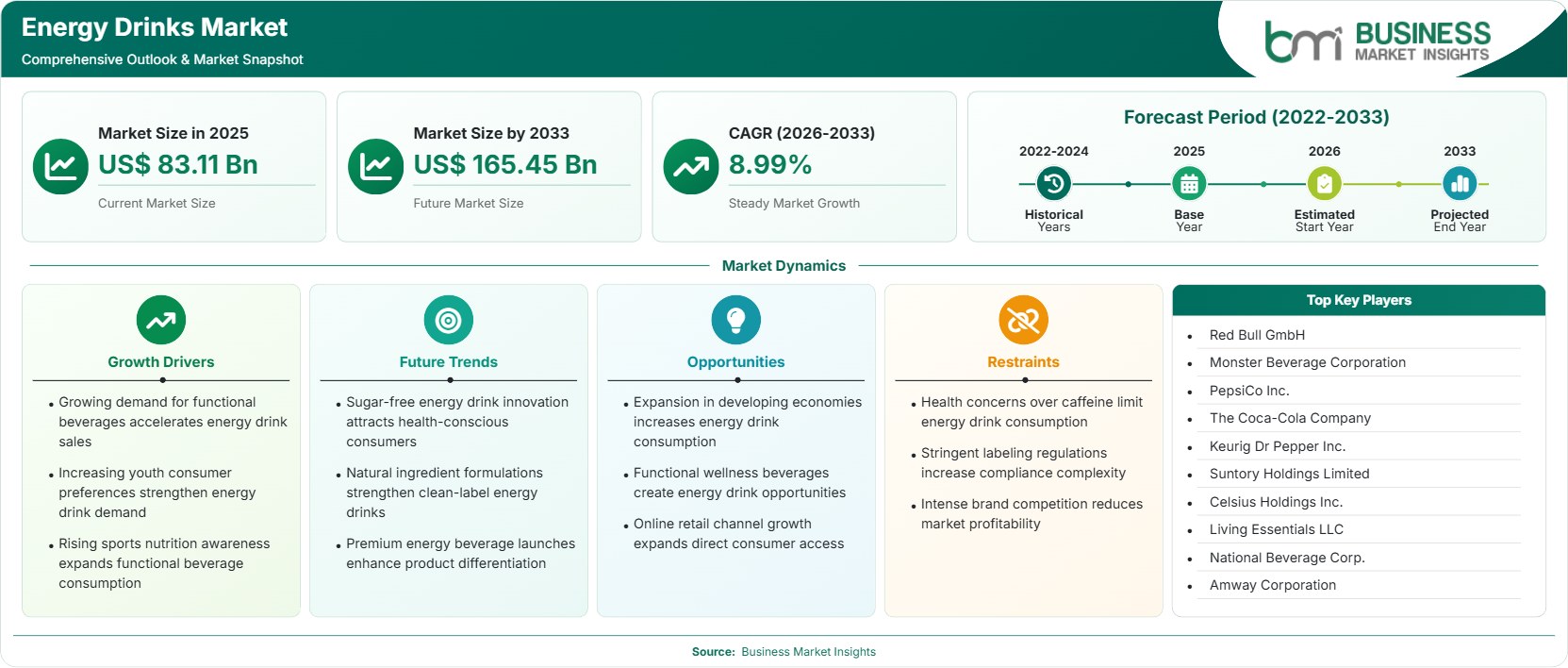
The Energy Drinks Market size was valued at US$ 83.11 billion in 2025 and is projected to reach US$ 165.45 billion by 2033, registering a CAGR of 8.99% during 2026–2033. The market is witnessing strong growth driven by growing demand for functional beverages, increasing youth consumer preferences, and rising sports nutrition awareness. Energy drinks have been transformed from being specialized performance drinks to refreshment drinks used by students, professionals, athletes, and fitness enthusiasts for enhanced energy levels, alertness, and physical performance. Product development, premiumization, and enhanced distribution continue to fuel the growth of the market.

Report Coverage
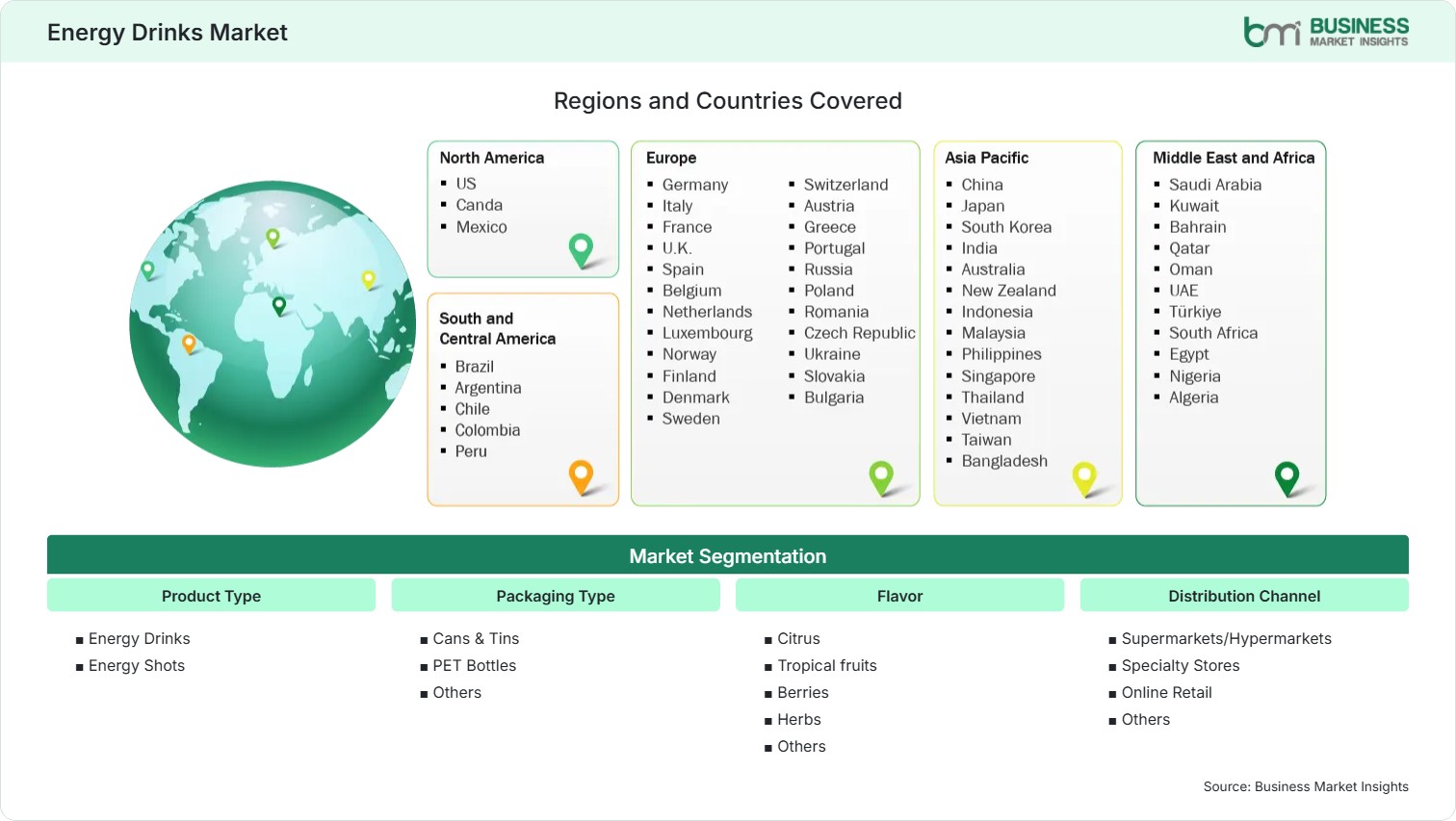
  • Product Type: Energy Drinks, Energy Shots
  • Packaging Type: Cans & Tins, PET Bottles, Others
  • Flavor: Citrus, Tropical fruits, Berries, Herbs, Others
  • Distribution Channel: Supermarkets/Hypermarkets, Specialty Stores, Online Retail, Others
US$ 83.11 Bn Market size in 2025
US$ 165.45 Bn Market Size by 2033
8.99% CAGR, 2026 - 2033
2026-2033 Forecast Period

01 AI Overview

Energy Drinks Market Summary

  • North America Region: North America accounted for 34%–37% of global revenue in 2025 and is projected to register a CAGR of 8.5%–9.0% during 2026–2033. High consumer awareness, established functional beverage markets, premium product adoption, and strong retail penetration continue supporting regional market growth. The United States contributes approximately 87%–90% of regional revenue and is expected to register a CAGR of 8.6%–9.1% owing to increasing fitness awareness, expanding sports nutrition consumption, and continued product innovation.
  • Fastest Growing Region: Asia Pacific represented 25%–28% of global revenue in 2025 and is projected to register the highest CAGR of 9.8%–10.3% during the forecast period. Rising disposable incomes, expanding urban populations, growing youth demographics, and increasing demand for functional beverages continue driving regional market expansion.
  • Leading Segment: Energy Drinks accounted for 83%–86% of market revenue in 2025 and is projected to register a CAGR of 8.9%–9.4% during the assessment period owing to widespread consumer acceptance, extensive product availability, and broad retail distribution.
  • High Growth Segment: Supermarkets/Hypermarkets represented 39%–42% of total market revenue in 2025 and is projected to expand at a CAGR of 9.2%–9.7% driven by extensive product assortments, promotional activities, and growing consumer preference for organized retail.
  • Key Market Opportunity: Developing economy expansion, functional wellness beverages, and online retail growth continue creating significant opportunities for energy drink manufacturers.
  • Major Market Players: Red Bull GmbH, Monster Beverage Corporation, PepsiCo Inc., The Coca-Cola Company, Keurig Dr Pepper Inc., Suntory Holdings Limited, Celsius Holdings Inc., Living Essentials LLC, National Beverage Corp., Amway Corporation.
02 Strategic Insights

Energy Drinks Market: Strategic Insights

Energy Drinks Market Strategic Framework
FREE PDF
Request your free sample
Request free sample
03 Stakeholder View

Key Takeaways

  • The market continues benefiting from growing demand for functional beverages, increasing youth consumer preferences, rising sports nutrition awareness, and expanding retail distribution.
  • The strongest Energy Drinks Market Growth opportunities continue emerging from developing economy expansion, functional wellness beverages, premium product innovation, and rapidly growing online retail channels.
  • Energy Drinks remain the dominant product type segment owing to their widespread availability, strong brand recognition, and broad consumer acceptance across multiple age groups.
  • Asia Pacific is projected to witness the fastest growth owing to rising disposable incomes, expanding urbanization, growing youth populations, and increasing functional beverage consumption.
  • Manufacturers are increasingly investing in sugar-free formulations, natural ingredients, clean-label products, sustainable packaging, and digital marketing strategies to strengthen market competitiveness.
  • Companies focusing on healthier formulations, premium positioning, sports nutrition partnerships, and omnichannel retail expansion are expected to strengthen their competitive positioning.
04 Geographic Outlook

Energy Drinks Market Regional Highlights

North America Energy Drinks Market

North America accounted for 34%–37% of global revenue in 2025 and is projected to register a CAGR of 8.5%–9.0% during 2026–2033. The region continues maintaining its leadership owing to high consumer awareness of functional beverages, strong purchasing power, widespread retail availability, and continuous product innovation. The Energy Drinks Market Share remains significant as consumers increasingly seek beverages that enhance energy, focus, endurance, and physical performance.

  • The United States remains the largest regional market owing to growing consumption among students, professionals, athletes, fitness enthusiasts, and gamers.
  • Canada continues supporting regional growth through rising demand for sugar-free energy drinks, natural ingredient formulations, and premium functional beverages.
  • Increasing health-conscious consumer preferences are encouraging manufacturers to introduce clean-label, low-calorie, and natural caffeine-based products.
  • Strong retail infrastructure, convenience stores, supermarkets, and digital commerce continue supporting widespread product availability.

US Energy Drinks Market

The United States accounted for approximately 87%–90% of North American revenue in 2025 and is projected to register a CAGR of 8.6%–9.1% during the forecast period. Expanding sports nutrition consumption, increasing fitness participation, and growing demand for convenient functional beverages continue driving domestic market growth.

  • Sports sponsorships, influencer marketing, and digital advertising continue strengthening brand awareness and consumer engagement.
  • Consumers continue shifting toward sugar-free, low-calorie, and vitamin-enriched energy drink formulations.
  • Growing convenience store penetration and online retail expansion continue improving product accessibility nationwide.
  • Product innovation focused on natural ingredients and functional wellness continues supporting premium market growth.

Europe Energy Drinks Market

Europe represented 27%–30% of global revenue in 2025 and is expected to expand at a CAGR of 8.3%–8.8% during 2026–2033. The region continues benefiting from increasing demand for functional beverages, expanding fitness culture, and growing preference for healthier energy drink formulations. Germany remains the largest regional market, while Poland is projected to register the fastest growth with a CAGR of 9.2%–9.7% owing to rising disposable incomes, urbanization, and expanding organized retail.

  • Germany continues leading regional demand through high consumer awareness, strong retail distribution, and premium beverage consumption.
  • Poland continues witnessing rapid market growth through increasing youth populations, changing consumption habits, and expanding modern retail channels.
  • The United Kingdom continues supporting market expansion through sports nutrition trends, convenience beverage demand, and product innovation.
  • Manufacturers continue introducing reduced-sugar and plant-based energy drink formulations to address evolving consumer preferences.
  • Sustainability initiatives encouraging recyclable packaging continue strengthening product competitiveness across Europe.

Asia Pacific Energy Drinks Market

Asia Pacific accounted for 25%–28% of global revenue in 2025 and is projected to register the highest CAGR of 9.8%–10.3% during the forecast period. Rising disposable incomes, rapid urbanization, expanding middle-class populations, and growing awareness of functional beverages continue driving strong regional demand. China remains the leading regional market, while India is projected to register the fastest growth with a CAGR of 10.3%–10.8% in energy drinks market owing to increasing youth demographics, fitness awareness, and expanding organized retail.

  • China continues dominating regional demand through large urban populations, premium beverage consumption, and strong retail distribution.
  • India continues witnessing robust growth through increasing disposable incomes, rising sports participation, expanding convenience retail, and digital commerce.
  • Japan continues supporting premium energy drink demand through continuous product innovation and health-oriented beverage consumption.
  • South Korea continues contributing through growing fitness culture, gaming communities, and functional beverage adoption.
  • Increasing online grocery platforms and convenience store expansion continue supporting regional market growth.

Rest of World Energy Drinks Market

The Rest of World accounted for 8%–10% of global revenue in 2025 and is projected to register a CAGR of 8.7%–9.2% during 2026–2033. Latin America, the Middle East, and Africa continue strengthening market growth through rising urbanization, expanding retail infrastructure, increasing disposable incomes, and growing demand for functional beverages.

Growing youth populations, changing lifestyles, and increasing participation in sports and fitness activities continue creating new opportunities for energy drink manufacturers across emerging energy drinks markets.

  • Brazil continues supporting regional demand through expanding functional beverage consumption and strong retail distribution.
  • Mexico continues strengthening market growth through increasing convenience beverage consumption and expanding supermarket penetration.
  • Saudi Arabia continues witnessing rising demand driven by urbanization, premium beverage consumption, and expanding modern retail.
  • The United Arab Emirates continues supporting premium energy drink sales through tourism, hospitality, and a growing fitness-conscious population.
  • Expanding e-commerce platforms and organized retail networks continue improving product accessibility across emerging economies.
Global Market Geography
FREE PDF
Request your free sample
Request free sample
05 Segment Analysis

Energy Drinks Market Segmentation

Product Type

The Product Type segment accounted for 83%–86% of market revenue in 2025 and is projected to register a CAGR of 8.9%–9.4% during the forecast period. Increasing consumer demand for functional beverages, convenient energy supplementation, and performance-enhancing products continues supporting market expansion. The Energy Drinks Market Trends indicate growing innovation in sugar-free formulations, natural caffeine ingredients, vitamin-enriched beverages, and clean-label products that appeal to health-conscious consumers.

  • Energy Drinks: Energy Drinks remain the dominant segment owing to their widespread consumer acceptance, broad flavor availability, extensive retail distribution, and strong demand across students, professionals, athletes, gamers, and fitness enthusiasts seeking sustained energy and improved mental focus.
  • Energy Shots: Energy Shots continue witnessing steady adoption due to their compact packaging, convenience, concentrated formulations, and suitability for consumers seeking quick energy supplementation without consuming larger beverage volumes.

Packaging Type

The Packaging Type segment represented 46%–49% of total market revenue in 2025 and is expected to expand at a CAGR of 9.1%–9.6% throughout the assessment period. Packaging innovation continues supporting product differentiation, convenience, sustainability, and extended shelf life while improving consumer appeal across multiple retail channels.

  • Cans & Tins: Cans & Tins remain the leading packaging segment owing to their portability, product protection, superior shelf stability, recyclability, and widespread adoption across premium and mainstream energy drink brands.
  • PET Bottles: PET Bottles continue gaining popularity due to their lightweight design, resealable convenience, cost-effectiveness, and suitability for larger serving sizes.
  • Others: Other packaging formats including glass bottles, pouches, and specialty packaging continue supporting premium product launches and niche market applications.

Flavor

The Flavor segment accounted for 31%–34% of market revenue in 2025 and is projected to register a CAGR of 9.2%–9.7% during the forecast period. Manufacturers continue expanding flavor portfolios to attract diverse consumer preferences while supporting premium product differentiation and repeat purchases.

  • Citrus: Citrus remains the leading flavor segment owing to its refreshing taste profile, broad consumer acceptance, and compatibility with functional beverage formulations.
  • Tropical fruits: Tropical fruits continue witnessing strong demand through innovative flavor combinations and premium product positioning.
  • Berries: Berry-based flavors continue attracting consumers seeking fruity taste profiles combined with functional wellness ingredients.
  • Herbs: Herbal formulations continue gaining popularity owing to increasing consumer preference for botanical ingredients, natural extracts, and wellness-focused beverages.
  • Others: Other flavor categories including mixed fruits, exotic blends, and seasonal flavors continue supporting product innovation across the market.

Distribution Channel

The Distribution Channel segment represented 39%–42% of total market revenue in 2025 and is expected to expand at a CAGR of 9.2%–9.7% during the assessment period. Expanding organized retail, digital commerce, and convenience shopping continue strengthening product accessibility across developed and emerging markets. The Energy Drinks Market Scope continues expanding as manufacturers diversify omnichannel distribution strategies.

  • Supermarkets/Hypermarkets: Supermarkets/Hypermarkets remain the dominant distribution channel owing to extensive product assortments, promotional campaigns, strong consumer footfall, and widespread geographic presence.
  • Specialty Stores: Specialty Stores continue supporting premium product sales through personalized customer engagement and broader availability of functional wellness beverages.
  • Online Retail: Online Retail continues registering rapid growth as consumers increasingly purchase beverages through e-commerce platforms, subscription services, and direct-to-consumer channels.
  • Others: Other distribution channels including convenience stores, vending machines, and independent retailers continue contributing significantly to overall market growth.
06 Market Forces

Energy Drinks Market Dynamics

Key Market Drivers

Growing demand for functional beverages accelerates energy drink sales

The consumers are becoming more demanding about functional benefits from beverages such as increased energy, mental alertness, physical endurance, and even productivity apart from the basic functionality of hydrating their body. The manufacturers of energy drinks are coming up with new products with additional nutrients like vitamins, amino acids, electrolytes, herbal extracts, and natural caffeine to cater to the changing preferences of the consumers. The increasing trend among consumers to consume healthy beverages is driving the companies to produce sugar-free, calorie-free, organic, and even functional energy drinks.

Increasing youth consumer preferences strengthen energy drink demand

Growing consumption among young adults, students, gamers, and people who workout regularly is driving further the demand for energy drinks in various parts of the world. New lifestyle, hectic schedule, engaging in more recreational activities, and strong branding efforts via digital marketing and sports endorsements have continued to ensure continuous growth of the market. Younger consumers are now opting for beverages that will help give them energy and better mental focus while working, studying, playing games, traveling, or engaging in various social events.

Rising sports nutrition awareness expands functional beverage consumption

Increased consumer awareness about sports nutrition and physical fitness is continuously motivating individuals to include energy drinks in their daily schedules. Increased involvement in sports, gym workouts, recreational fitness activities, and training is promoting the demand for drinks that can help increase stamina, concentration, hydration, and overall workout performance. Both athletes and recreational fitness fans are becoming more conscious about taking sports drinks with added benefits like electrolytes, B vitamins, taurine, and natural caffeine that promote physical stamina and recovery from workout sessions.

Key Market Opportunities

Expansion in developing economies increases energy drink consumption

Urbanization, disposable incomes, middle classes, and retail presence in developing countries will keep providing growth opportunities for energy drinks producers. Manufacturers are expanding their regional distribution channels, launching low-cost products, and utilizing localized marketing programs in order to improve their presence in the market.

Functional wellness beverages create energy drink opportunities

Growing consumer preference for healthier beverage alternatives is encouraging manufacturers to develop functional wellness energy drinks containing natural ingredients, adaptogens, herbal extracts, vitamins, minerals, and reduced sugar formulations. This shift toward wellness-oriented products continues opening new premium market opportunities.

Online retail channel growth expands direct consumer access

Rapid expansion of e-commerce platforms, online grocery services, subscription-based beverage delivery, and direct-to-consumer sales channels continues improving product accessibility. Digital retail platforms enable manufacturers to reach broader consumer audiences, strengthen brand engagement, and accelerate sales growth across global markets.

Market Restraints and Challenges

Health concerns over caffeine limit energy drink consumption

Factor: Rising consumer awareness about the adverse consequences of consuming large quantities of caffeine and sugar along with the possible impact on health due to regular energy drinks consumption is still affecting purchase decisions. There is encouragement by the healthcare sector for the consumption of such beverages in moderation and consumers are searching for alternatives that are healthier.

Impact: Health considerations may inhibit consumption by some consumers and drive producers to change the composition of products toward low sugar content, natural caffeine sources, functional ingredients, and clean labels.

Stringent labeling regulations increase compliance complexity

Factor: Energy drink manufacturers must comply with evolving food safety regulations, ingredient disclosure requirements, caffeine labeling standards, nutritional claims, and advertising guidelines across multiple countries. Regulatory frameworks continue becoming more stringent regarding health claims, warning labels, and marketing practices targeting younger consumers.

Impact: Increasing regulatory requirements can raise compliance costs, extend product approval timelines, and complicate international product launches. Manufacturers are strengthening regulatory compliance programs, enhancing product testing procedures, and adapting packaging and labeling strategies to meet regional regulatory standards while supporting global market expansion.

07 Company Analysis

Competitive Landscape

Competition within the energy drinks industry is driven by product innovation, brand recognition, flavor diversification, functional ingredient development, distribution strength, and global marketing capabilities. The Energy Drinks Market Analysis indicates that leading companies continue investing in healthier formulations, premium product positioning, digital marketing, sports sponsorships, and sustainable packaging solutions to strengthen their competitive positions.

Company Name

Overview

Products and Services relevant to this market

Red Bull GmbH

Global leader in premium energy beverages with an extensive international presence.

Energy drinks, sugar-free energy drinks, flavored energy beverages, and performance-focused functional drinks.

Monster Beverage Corporation

Leading manufacturer of energy beverages with a diversified product portfolio.

Energy drinks, zero-sugar variants, performance beverages, coffee-energy hybrids, and functional hydration products.

PepsiCo Inc.

Global food and beverage company expanding its functional beverage portfolio.

Energy drinks, functional beverages, ready-to-drink products, and performance-oriented beverage solutions.

The Coca-Cola Company

Multinational beverage manufacturer with a strong global distribution network.

Energy drinks, functional beverages, ready-to-drink refreshments, and premium beverage products.

Keurig Dr Pepper Inc.

Beverage company offering diversified refreshment and functional beverage products.

Energy drinks, flavored beverages, ready-to-drink products, and functional beverage solutions.

Suntory Holdings Limited

International beverage company focused on premium and functional drink innovation.

Energy drinks, wellness beverages, functional refreshments, and ready-to-drink beverage products.

Celsius Holdings Inc.

Functional beverage company specializing in fitness-oriented energy drinks.

Energy drinks, performance beverages, sugar-free functional drinks, and wellness-focused beverage solutions.

Living Essentials LLC

Beverage manufacturer recognized for concentrated energy formulations.

Energy shots, functional energy beverages, and portable performance drink solutions.

National Beverage Corp.

Beverage producer offering flavored and functional beverage products.

Functional beverages, sparkling drinks, energy beverages, and ready-to-drink refreshment products.

Amway Corporation

Global direct-selling company offering nutrition and wellness products.

Functional energy drinks, nutritional beverages, wellness supplements, and performance nutrition products.

10 Trust & Transparency

Research Methodology

The market analysis combines proprietary research with secondary data from government agencies, company disclosures, regulatory filings, industry databases and expert interviews. Market estimates are validated through data triangulation, cross-market benchmarking and analyst review.

View Full Research Methodology

11 Questions Answered

Frequently Asked Questions

How do market forecasts support strategic planning?

Energy Drinks Market Forecasts help beverage manufacturers, distributors, retailers, investors, and brand owners evaluate future demand, identify growth opportunities, optimize product portfolios, and support long-term business planning.

What does the market report include?

The Energy Drinks Market Report provides comprehensive insights covering market size, competitive landscape, segmentation analysis, regional outlook, consumer trends, investment opportunities, competitive benchmarking, and future growth prospects.

What factors are driving market expansion?

Growing demand for functional beverages, increasing youth consumer preferences, rising sports nutrition awareness, product innovation, expanding retail networks, and premium beverage consumption continue driving market growth.

Which distribution channel is expected to witness significant growth?

Supermarkets/Hypermarkets are expected to remain the largest distribution channel due to extensive product assortments, strong promotional activities, convenient consumer access, and expanding organized retail infrastructure.

Which product type dominates the market?

Energy Drinks represent the leading product type segment owing to their widespread consumer acceptance, extensive retail availability, broad flavor portfolio, and strong demand among students, professionals, athletes, and fitness enthusiasts.

Access the Full Energy Drinks Market Report

Get segment-level forecasts, regional estimates, competitive benchmarking, company profiles and downloadable Excel datasets.

Access the full Energy Drinks Market Report
350 pages PDF & Excel | 2026-08-07