Diet Soft Drinks Market Regional Highlights
North America Diet Soft Drinks Market
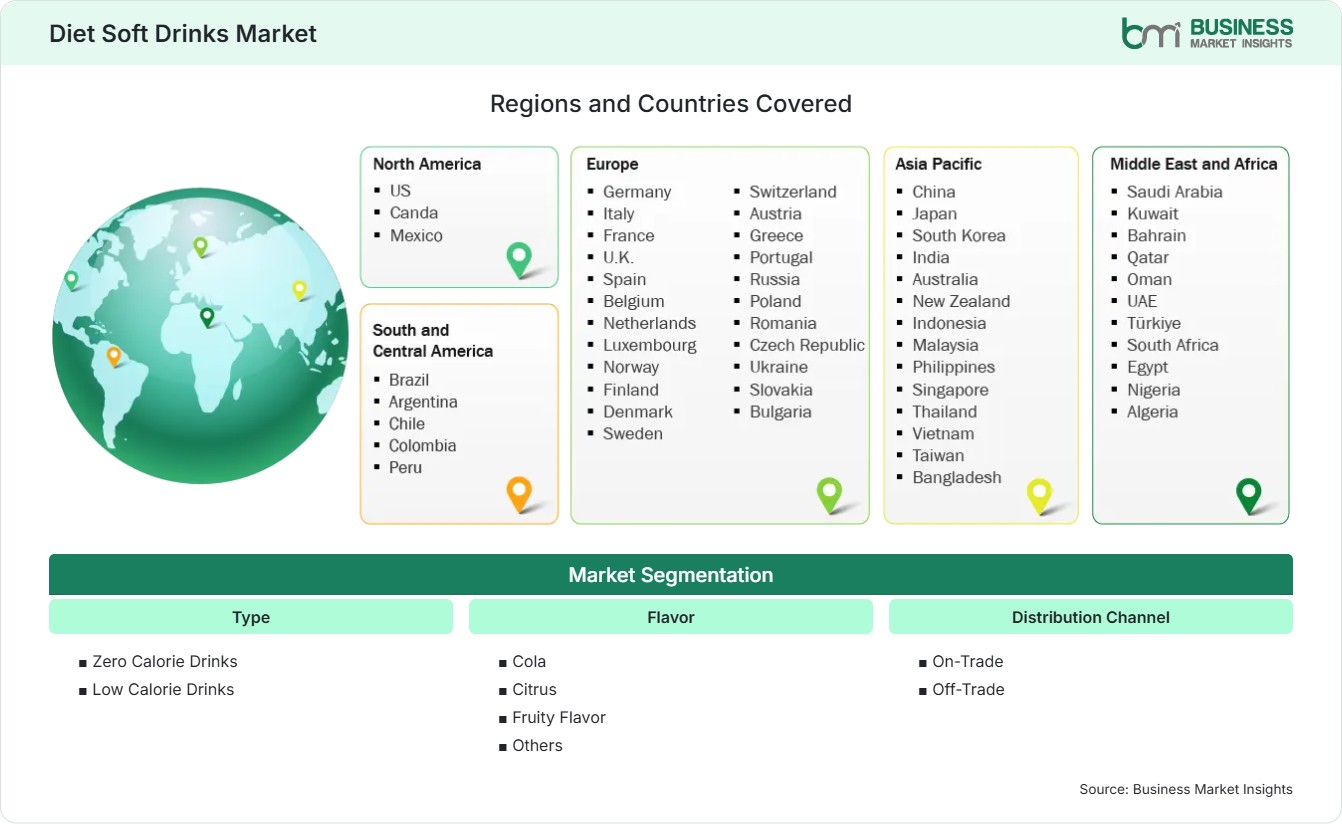
North America accounts for 35%–38% share in 2025 and is expected to grow at a CAGR of 5.80%–6.20% during 2026–2033. The region maintains strong demand due to established beverage consumption patterns, health awareness, and extensive retail availability. Diet Soft Drinks Market share remains supported by leading manufacturers, product reformulation, and premium beverage innovation across the United States and Canada.
- Consumers are increasingly choosing reduced sugar beverages as awareness regarding calorie intake and wellness-oriented lifestyles continues increasing across demographic groups.
- Major beverage companies are investing in flavor innovation, packaging upgrades, and alternative sweetener technologies to improve consumer acceptance.
- Retailers are expanding healthier beverage categories, creating additional shelf visibility for diet soft drink products.
- Sustainability initiatives are influencing packaging decisions among beverage manufacturers across North American markets.
US Diet Soft Drinks Market
The US represents 27%–30% share within North America in 2025 and is projected to expand at a CAGR of 5.90%–6.30% during 2026–2033. Strong brand presence, mature retail infrastructure, and consumer demand for healthier beverage options support market development. The country remains a key innovation center for new formulations, functional additions, and digital beverage sales strategies.
- Beverage manufacturers are reformulating established products to address consumer concerns regarding sugar consumption and nutritional transparency.
- Online grocery adoption is increasing availability of diet beverages through direct delivery and subscription-based purchasing models.
- Premium flavors and limited-edition product launches are supporting consumer engagement and brand differentiation.
Europe Diet Soft Drinks Market
Europe holds 26%–29% share in 2025 and is anticipated to register a CAGR of 6.10%–6.50% during 2026–2033. The region benefits from strong health awareness, sugar reduction initiatives, and advanced beverage manufacturing capabilities. Germany, the United Kingdom, and France remain important markets due to developed retail systems and increasing demand for low-calorie alternatives.
- Sugar reduction regulations are encouraging beverage companies to accelerate reformulation and alternative sweetener adoption.
- Consumers are showing increasing preference for beverages positioned around wellness, reduced calories, and balanced lifestyles.
- Beverage companies are introducing innovative flavors to maintain consumer interest in mature European markets.
- Sustainable packaging investments are becoming an important factor in product positioning.
Asia Pacific Diet Soft Drinks Market
Asia Pacific represents 28%–31% share in 2025 and is expected to grow at a CAGR of 7.20%–7.70% from 2026–2033. The region benefits from urbanization, expanding middle-class populations, and increasing awareness of healthier beverage choices. China, India, Japan, and Southeast Asian countries are contributing to market expansion through retail modernization and beverage diversification.
- Rising disposable incomes are increasing demand for premium and healthier beverage products across urban populations.
- International beverage companies are expanding production and distribution capabilities throughout developing Asian markets.
- Local flavor preferences are encouraging customized product launches and regional portfolio expansion.
- E-commerce platforms are improving access to diet beverage products in emerging markets.
Rest of World Diet Soft Drinks Market
Rest of World regions, including South and Central America, Middle East, and Africa, account for 7%–10% share in 2025 and are expected to grow at a CAGR of 5.50%–6.00% during 2026–2033. Brazil, Mexico, GCC countries, and South Africa are contributing through improving retail infrastructure and increasing beverage variety.
Growing urban populations and changing consumption patterns are supporting demand for healthier soft drink alternatives. Beverage companies are expanding distribution networks to capture emerging opportunities.
- Retail modernization is improving availability of diet soft drinks across developing markets.
- Rising health awareness is encouraging consumers to explore reduced sugar beverage options.
- Regional beverage manufacturers are introducing affordable low-calorie products for broader consumer segments.
- Distribution investments are strengthening supply availability in underserved locations.