
Ketogenic Diet Market Outlook: Size, Share, Trends, Growth Analysis, Competitive Landscape & Forecast, 2026-2033

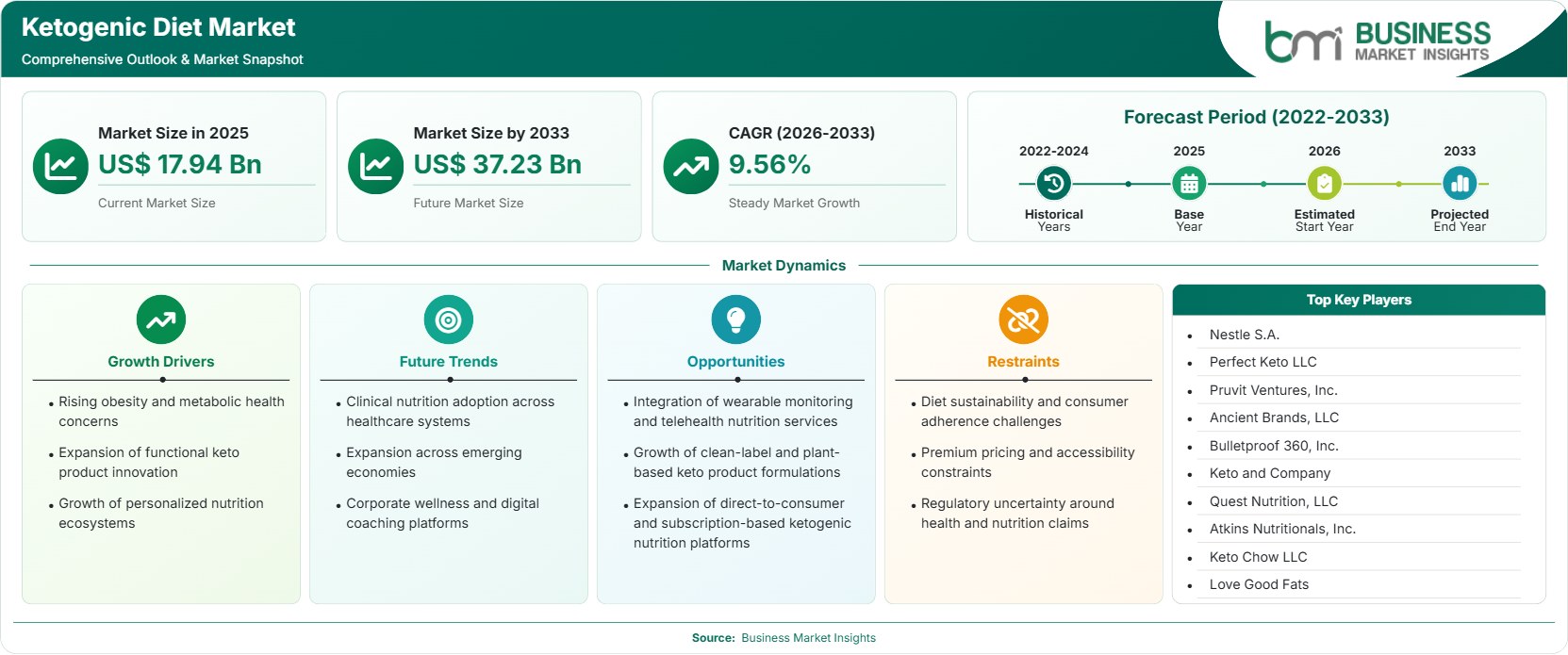
The Ketogenic Diet Market size was valued at US$ 17.94 Billion in 2025 and is projected to reach US$ 37.23 Billion by 2033, growing at a CAGR of 9.56% during 2026–2033. Rising obesity prevalence, increasing metabolic health awareness, expanding keto product availability, and growing adoption of personalized nutrition programs continue to create substantial growth opportunities across consumer and clinical applications.

Report Coverage
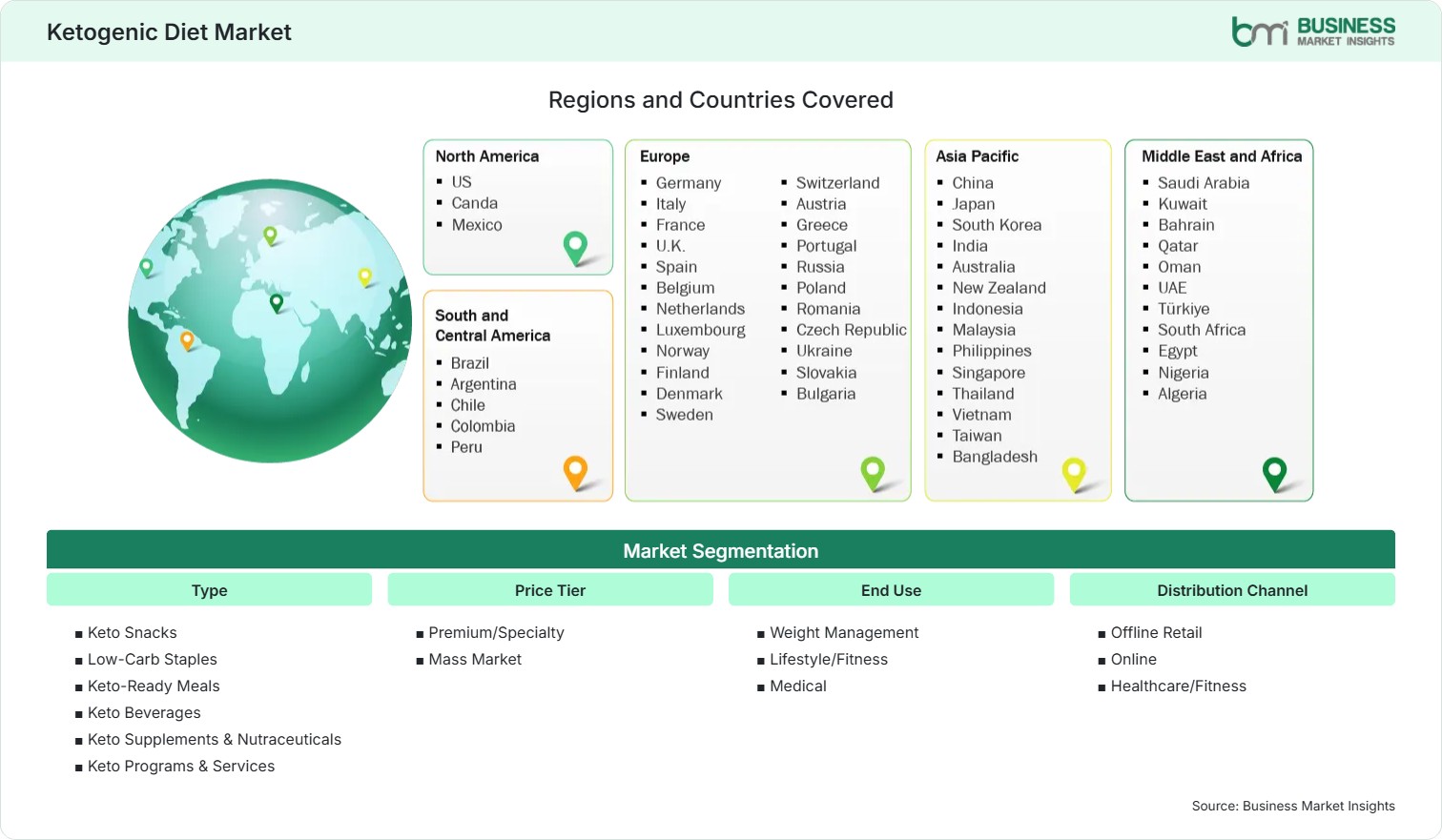
  • Type: Keto Snacks, Low-Carb Staples, Keto-Ready Meals, Keto Beverages, Keto Supplements & Nutraceuticals, Keto Programs & Services
  • Price Tier: Premium/Specialty, Mass Market
  • End Use: Weight Management, Lifestyle/Fitness, Medical
  • Distribution Channel: Offline Retail, Online, Healthcare/Fitness
US$ 17.94 Bn Market size in 2025
US$ 37.23 Bn Market Size by 2033
9.56% CAGR, 2026 - 2033
2026-2033 Forecast Period

01 AI Overview

Ketogenic Diet Market Summary

  • North America Region: North America holds a market share of 38%–42% in 2025, growing at a CAGR of 8.5%–9.0% during 2026–2033, supported by obesity management demand, strong wellness spending, retail penetration, digital nutrition platforms, clinical adoption, product innovation, preventive healthcare focus, dietary awareness, subscription models, and premium food expansion. The U.S. leads regional demand through broad consumer adoption and expanding metabolic-health-focused nutrition programs, with CAGR of 8.7%–9.2%.
  • Fastest Growing Region: Asia Pacific holds a market share of 22%–26% in 2025, growing at a CAGR of 11.5%–12.5% during 2026–2033, driven by urbanization, rising disposable income, preventive healthcare awareness, e-commerce expansion, fitness culture growth, premium nutrition demand, younger consumers, product localization, digital engagement, and wellness investments.
  • Leading Segment: Packaged Keto Foods & Beverages accounts for 46%–50% share in 2025 and grows at 8.8%–9.4% CAGR, supported by convenience preferences, omnichannel availability, product variety, impulse purchases, clean-label demand, premium formulations, brand visibility, flavor innovation, retail expansion, and repeat consumer adoption.
  • High Growth Segment: Keto Programs & Services represents 15%–19% share in 2025 and expands at 11.5%–12.5% CAGR, supported by telehealth integration, personalized coaching, subscription nutrition plans, wearable data usage, digital communities, preventive health awareness, consumer engagement, retention programs, outcome tracking, and premium wellness offerings.
  • Key Market Opportunity: Clinical nutrition adoption for diabetes, obesity, neurological conditions, corporate wellness programs, telehealth platforms, personalized meal planning, and digital coaching ecosystems offers significant long-term commercial expansion opportunities globally.
  • Major Market Players: Nestlé S.A., Perfect Keto LLC, Pruvit Ventures, Inc., Ancient Brands, LLC, Bulletproof 360, Inc., Keto and Company, Quest Nutrition, LLC, Atkins Nutritionals, Inc., Keto Chow LLC, Love Good Fats.
02 Strategic Insights

Ketogenic Diet Market: Strategic Insights

Ketogenic Diet Market Strategic Framework
FREE PDF
Request your free sample
Request free sample
03 Stakeholder View

Key Takeaways

  • Supply chains are increasingly integrating functional ingredients, MCT oils, alternative sweeteners, and specialized manufacturing networks to improve product quality and scalability.
  • Medical and lifestyle applications present the strongest upside as consumers seek evidence-backed nutrition programs supporting obesity, diabetes, and metabolic wellness.
  • Product innovation is shifting toward clean-label snacks, plant-based keto formulations, precision supplementation, and AI-driven nutrition recommendations.
  • Asia Pacific offers a compelling investment case due to accelerating e-commerce penetration, fitness culture expansion, and growing middle-class spending on wellness products.
  • Strategic acquisitions increasingly focus on direct-to-consumer brands, subscription nutrition platforms, functional foods, and personalized health services.
  • Integration of digital coaching, wearable monitoring, and telehealth consultations is strengthening customer retention and recurring revenue models.
04 Geographic Outlook

Ketogenic Diet Market Regional Highlights

North America Ketogenic Diet Market

North America accounted for 38%–42% Ketogenic Diet Market share in 2025 and is projected to grow at 8.5%–9.0% CAGR through 2033. Consumer awareness, obesity concerns, premium nutrition spending, and extensive retail infrastructure support leadership. Clinical acceptance of carbohydrate-restricted dietary interventions and a mature supplement ecosystem further reinforce demand. Strong innovation pipelines and direct-to-consumer distribution remain key differentiators across the region.

  • U.S. and Canada benefit from advanced nutrition retail networks and high consumer willingness to adopt specialized dietary products.
  • Functional snack launches and keto-friendly beverages continue driving category expansion across mainstream retail channels.
  • Subscription-based coaching services support recurring engagement and measurable wellness outcomes.
  • Healthcare professionals increasingly incorporate nutrition-based weight management approaches alongside conventional treatment pathways.

US Ketogenic Diet Market

The U.S. represents approximately 78%–82% of North American demand and is anticipated to expand at 8.7%–9.2% CAGR. High obesity prevalence, wellness spending, and extensive product availability support demand. Strong influencer marketing, digital platforms, and supplement adoption sustain category penetration across multiple demographic groups.

  • Online channels remain essential for premium product sales and personalized nutrition solutions.
  • Major food companies continue expanding low-carbohydrate product portfolios.
  • Sports nutrition and lifestyle consumers remain important adoption drivers.
  • Clinical nutrition applications are gaining greater institutional attention.

Europe Ketogenic Diet Market

Europe held 27%–31% share in 2025 and is expected to register 8.8%–9.5% CAGR. Rising preventive healthcare awareness, sugar reduction initiatives, and premium health-food consumption support regional expansion. Germany and the United Kingdom lead demand, while Spain and Poland represent faster-growing opportunities driven by fitness and wellness adoption.

  • Strong regulatory emphasis supports transparent ingredient labeling.
  • Specialty health-food stores contribute significantly to category visibility.
  • Demand for clean-label formulations continues increasing.
  • Germany leads regional revenue, while Poland records comparatively stronger growth momentum.

Asia Pacific Ketogenic Diet Market

Asia Pacific accounted for 22%–26% share in 2025 and is forecast to grow at 11.5%–12.5% CAGR, making it the fastest-growing region. Rising disposable income, rapid digital commerce adoption, and preventive wellness awareness support expansion. China leads consumption, while India demonstrates particularly strong growth potential.

  • E-commerce channels accelerate accessibility across developing markets.
  • Younger consumers increasingly adopt fitness-oriented nutrition lifestyles.
  • Localization of flavors improves product acceptance.
  • Growing urban populations support premium nutrition spending.
  • India and Southeast Asia attract increasing investment activity.

Rest of World Ketogenic Diet Market

The Rest of World region accounted for 8%–12% market share in 2025 and is projected to expand at 9.5%–10.5% CAGR. South and Central America benefit from growing wellness awareness, while Middle East and African markets are supported by premium retail growth and preventive health initiatives.

  • Brazil leads Latin American demand through expanding health-food consumption.
  • Mexico demonstrates rising interest in weight-management solutions.
  • UAE remains a leading Middle Eastern market for premium nutrition products.
  • Saudi Arabia records growing adoption among wellness-focused consumers.
  • Expanding online retail improves market accessibility across emerging economies.
Global Market Geography
FREE PDF
Request your free sample
Request free sample
05 Segment Analysis

Ketogenic Diet Market Segmentation

Type

Type remains the largest category, accounting for approximately 46%–50% share in 2025 and expanding at 8.8%–9.4% CAGR. The Ketogenic Diet Market scope continues broadening as consumers seek convenient foods, supplements, and structured nutrition services supporting long-term adherence.

  • Keto Snacks: Convenient consumption formats, expanding flavor innovation, and availability through multiple retail channels continue supporting adoption among weight-management and fitness-focused consumers.
  • Low-Carb Staples: Alternative flours, baking mixes, and pantry ingredients gain popularity among consumers preparing ketogenic meals at home.
  • Keto-Ready Meals: Time-constrained consumers increasingly prefer pre-prepared ketogenic meals supporting convenience and dietary compliance.
  • Keto Beverages: Functional drinks featuring electrolytes, MCT oils, and energy-supporting ingredients attract active lifestyle consumers.
  • Keto Supplements & Nutraceuticals: Exogenous ketones, MCT products, collagen supplements, and metabolic health formulations drive demand.
  • Keto Programs & Services: Personalized coaching, subscription models, and digital engagement platforms improve adherence and customer retention.

Price Tier

Price Tier segmentation shows premium products maintaining leadership with 58%–62% share in 2025 and 8.5%–9.2% CAGR. Product differentiation, ingredient quality, and brand trust remain key purchasing considerations.

  • Premium/Specialty: Consumers value clean ingredients, advanced formulations, personalized offerings, and transparent sourcing credentials.
  • Mass Market: Retail expansion and competitive pricing improve accessibility among broader consumer groups seeking ketogenic options.

End Use

End-use demand is driven by weight management applications, which account for 48%–52% share in 2025 and grow at 8.9%–9.5% CAGR. Healthcare-linked adoption and lifestyle-oriented consumption collectively support category expansion.

  • Weight Management: Consumers increasingly use ketogenic solutions to support calorie control and body-composition objectives.
  • Lifestyle/Fitness: Athletes and wellness-focused consumers adopt products supporting energy management and training programs.
  • Medical: Clinical evaluation of ketogenic interventions continues expanding in metabolic and neurological health contexts.

Distribution Channel

Distribution channels are evolving rapidly, with offline retail maintaining 44%–48% share in 2025 and growing at 8.2%–8.8% CAGR. Online channels continue gaining momentum.

  • Offline Retail: Supermarkets, specialty stores, and pharmacies remain important discovery and purchasing destinations.
  • Online: Direct-to-consumer platforms enhance product selection, education, and consumer engagement.
  • Healthcare/Fitness: Clinics, nutrition centers, and fitness facilities increasingly support specialized product distribution.
06 Market Forces

Ketogenic Diet Market Dynamics

Key Market Drivers

Rising Obesity and Metabolic Health Concerns

Global obesity prevalence continues increasing, creating stronger demand for structured nutrition interventions. The increasing number of metabolic disorders, such as type 2 diabetes, makes people opt for carbohydrate-reduced diet programs. The health sector focuses on preventive health, promoting the use of products in terms of supplements, food, and services. Increasing knowledge about the management of blood sugar levels and weight makes individuals more inclined towards these programs. Educative materials from health professionals and online sources aid the process.

Expansion of Functional Keto Product Innovation

Manufacturers continue introducing clean-label snacks, beverages, meal solutions, and supplementation products targeting diverse consumer needs. The innovation of ingredients such as MCT oils, new sweeteners, plant proteins, and specialty fats enhances the functionality and flavor of the product. There is increasing availability of shelf space for specialized nutrition segments at retailers. This development increases accessibility while decreasing obstacles related to commitment to diet plans. Innovation continues to be a very strong competitive tool.

Growth of Personalized Nutrition Ecosystems

Digital nutrition tracking, mobile applications, wearable devices, and telehealth platforms are transforming consumer engagement. Personalized dietary recommendations improve adherence and outcome measurement. Community-driven coaching models increase retention and recurring subscription revenues. The rise of Ketogenic Diet Market trends around customization enables companies to integrate food, supplements, and coaching services into comprehensive wellness solutions. These integrated ecosystems strengthen long-term commercial opportunities and brand loyalty.

Key Market Opportunities

Clinical Nutrition Adoption Across Healthcare Systems

Healthcare providers are increasingly adopting dietary interventions to support obesity management, diabetes care, and neurological health. Clinical research-based nutritional therapy programs present tremendous avenues for product development that will bring clinically-proven solutions from companies. The hospital, wellness center, telemedicine, and specialty clinics are becoming an integral part of the distribution strategy. In light of the growing popularity of preventive medicine and reimbursement model changes, there is a prospect of market expansion due to the adoption of nutrition therapies into treatment protocols.

Expansion Across Emerging Economies

Emerging economies present substantial growth opportunities due to rapid urbanization, increasing disposable incomes, and expanding access to digital commerce. Consumer awareness of health and wellness is rising through social media, online fitness communities, and educational campaigns. Global brands are investing in localized products, pricing strategies, and distribution networks. Ketogenic Diet Market forecasts highlight strong potential in Asia Pacific, Latin America, and the Middle East, where wellness spending continues to increase from a relatively low base.

Corporate Wellness and Digital Coaching Platforms

Organizations are increasingly investing in employee wellness programs to improve productivity, reduce healthcare costs, and enhance workforce well-being. Scalable growth can be achieved through digital coaching services, nutrition subscriptions, and performance-based wellness offerings. This is enhanced by the integration with wearable technology, mobile technology, and personal health tracking, which allows for customized solutions. The business models mentioned above ensure revenue generation and health impact.

Market Restraints and Challenges

Diet Sustainability and Consumer Adherence Challenges

Factor: Long-term adherence to highly restrictive dietary patterns remains difficult for many consumers. Impact: Customer retention and repeat purchases may be inconsistent. Although early acceptance tends to be high, consumers ultimately move away from rigid eating patterns because of social, cultural, and lifestyle pressures. Continuous monitoring for staying in ketosis makes people tired, thus affecting long-term adherence. It is important to educate customers, plan their diet, coach them using technology, and develop convenient products in order to maintain customer retention. Nutritional misconceptions and lack of consumer knowledge complicate the process of sustainable use by consumers.

Premium Pricing and Accessibility Constraints

Factor: Specialized ingredients, smaller production volumes, and premium product positioning increase overall costs. Impact: Availability concerns may limit adoption among consumers who are cost-conscious and individuals from developing countries. Keto snack products, keto-based supplements, beverages, and coaching services tend to be more expensive than traditional nutrition products. The higher cost leads to low adoption by consumers. Companies need to consider how to balance quality, innovation, and competition as far as pricing is concerned. Availability challenges in small stores and developing countries may limit market growth.

07 Company Analysis

Competitive Landscape

The following Ketogenic Diet Market analysis highlights leading participants operating across foods, beverages, supplements, and services.

Company Name

Overview

Products and Services relevant to this market

Nestlé S.A.

Global nutrition leader with extensive health science and wellness portfolio serving multiple dietary categories.

Medical nutrition, health supplements, functional foods, personalized wellness solutions.

Perfect Keto LLC

Specialist ketogenic nutrition brand focused on consumer lifestyle and performance markets.

Keto supplements, powders, snacks, meal enhancers, educational content.

Pruvit Ventures, Inc.

Direct-selling company with strong focus on ketone supplementation products.

Exogenous ketones, wellness programs, community-based nutrition support.

Ancient Brands, LLC

Functional nutrition company emphasizing natural health ingredients.

Collagen, supplements, keto-compatible nutritional products.

Bulletproof 360, Inc.

Wellness brand recognized for performance-oriented nutrition solutions.

Keto-friendly beverages, coffee products, supplements, snacks.

Keto and Company

Dedicated ketogenic food manufacturer serving convenience-focused consumers.

Baking mixes, meal products, low-carbohydrate food solutions.

Quest Nutrition, LLC

Major functional food company serving fitness and active lifestyle segments.

Protein bars, snacks, low-sugar nutrition products.

Atkins Nutritionals, Inc.

Established low-carbohydrate nutrition brand with global recognition.

Meal replacements, snacks, shakes, weight-management products.

Keto Chow LLC

Specialist provider focused on ketogenic meal solutions.

Meal replacement shakes, nutritional support products.

Love Good Fats

Consumer brand emphasizing healthy fats and balanced nutrition.

Snack bars and keto-compatible convenience foods.

10 Trust & Transparency

Research Methodology

The market analysis combines proprietary research with secondary data from government agencies, company disclosures, regulatory filings, industry databases and expert interviews. Market estimates are validated through data triangulation, cross-market benchmarking and analyst review.

View Full Research Methodology

11 Questions Answered

Frequently Asked Questions

What does the Ketogenic Diet Market Report typically evaluate?

A comprehensive Ketogenic Diet Market Report generally assesses competitive positioning, segmentation, consumer adoption patterns, regional performance, innovation trends, and future growth opportunities.

Which region offers the strongest long-term growth potential?

Asia Pacific presents the strongest long-term growth outlook due to rising disposable incomes, wellness awareness, digital commerce expansion, and growing fitness participation.

How are online channels influencing industry development?

Online channels improve accessibility, consumer education, product variety, subscription services, and personalized nutrition recommendations, strengthening overall market penetration.

What consumer group represents the largest revenue opportunity?

Weight-management consumers currently represent the largest revenue pool due to sustained demand for dietary approaches supporting calorie and carbohydrate reduction goals.

What factors are driving demand for ketogenic nutrition products?

Growing obesity concerns, metabolic health awareness, digital nutrition adoption, and expanding availability of convenient low-carbohydrate foods and supplements are supporting category demand.

Access the Full Ketogenic Diet Market Report

Get segment-level forecasts, regional estimates, competitive benchmarking, company profiles and downloadable Excel datasets.

Access the full Ketogenic Diet Market Report
350 pages PDF & Excel | 2026-08-26