Floriculture Market Regional Highlights
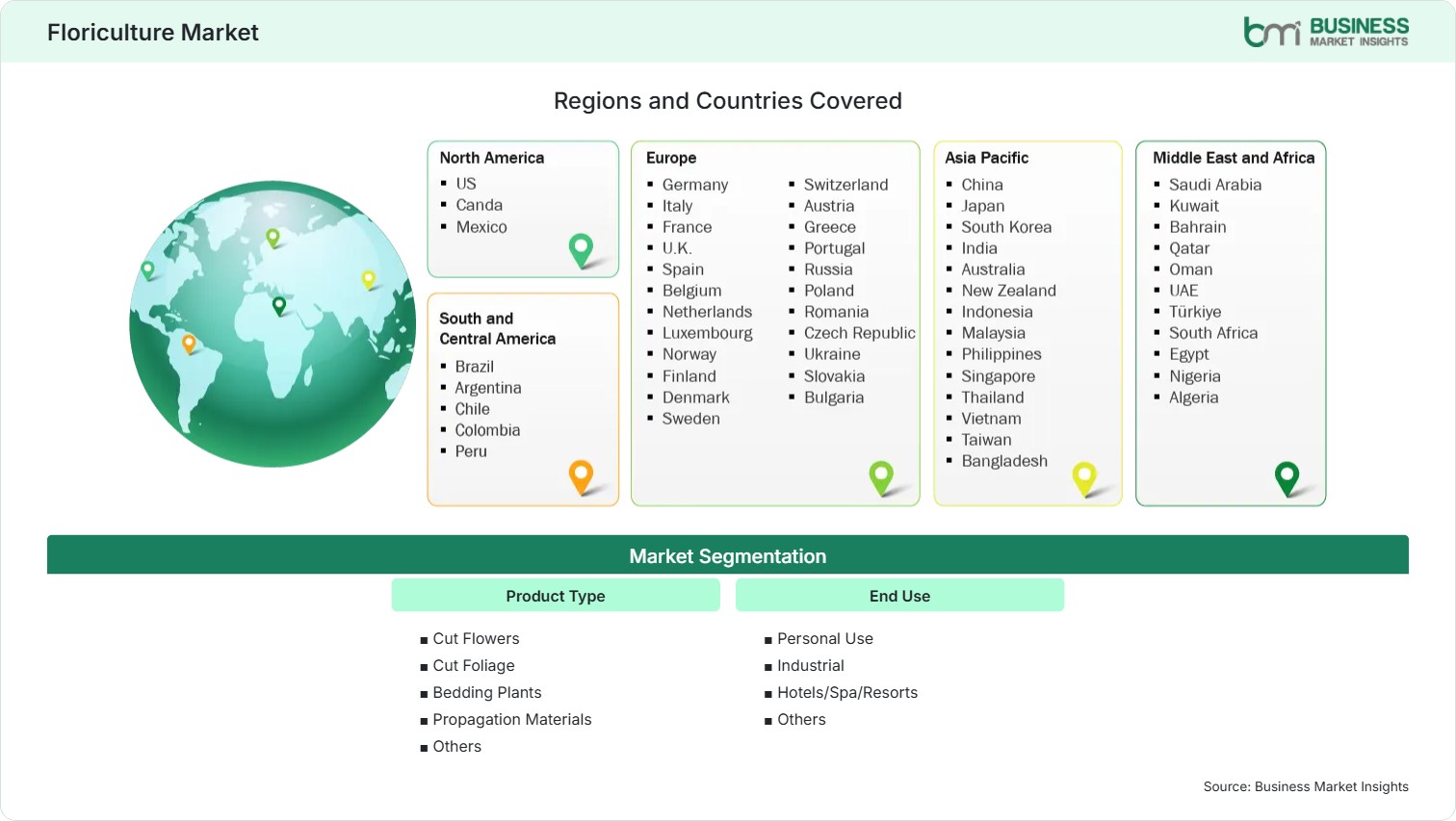
North America Floriculture Market
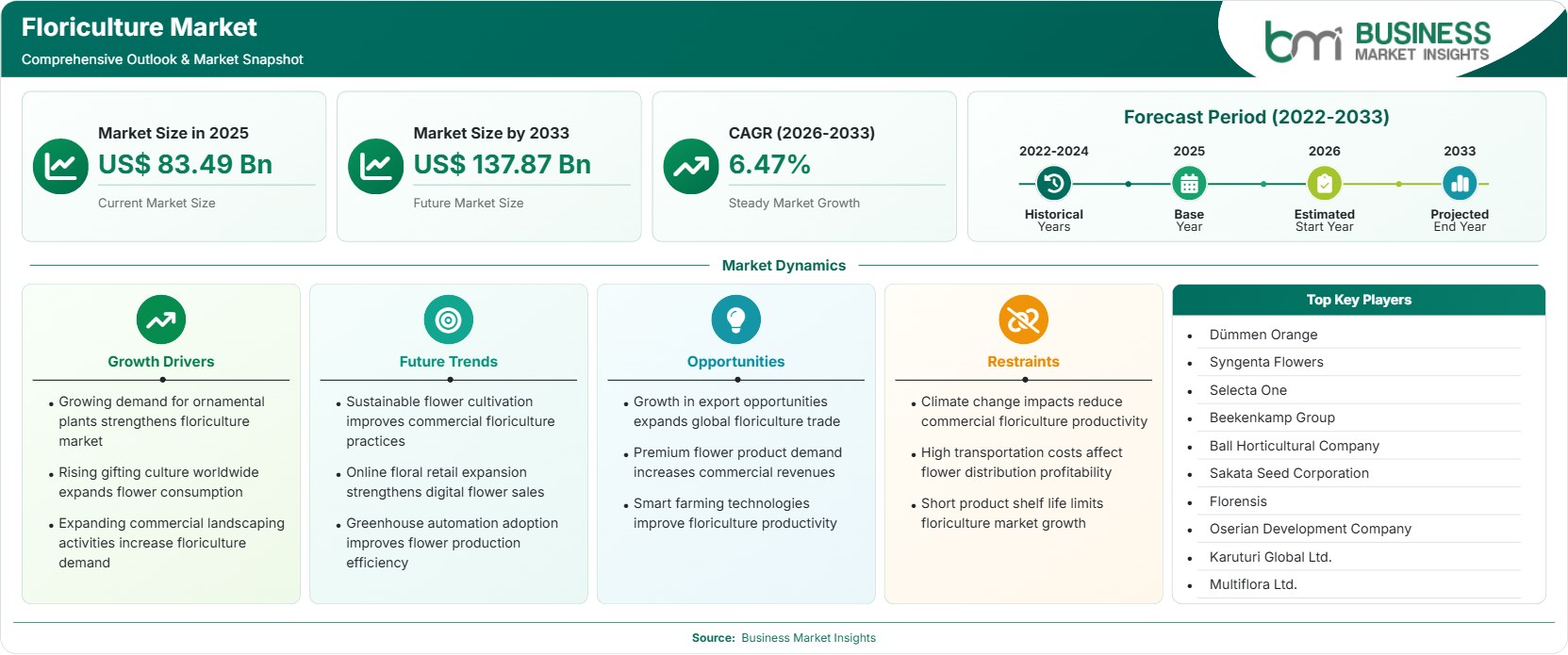
North America accounted for 24%–27% of global revenue in 2025 and is projected to register a CAGR of 6.2%–6.7% during 2026–2033. The region continues maintaining a strong position due to high consumer spending on ornamental plants, expanding residential gardening activities, well-established retail flower distribution networks, and growing commercial landscaping projects. The Floriculture Market Share remains significant as demand for fresh flowers, decorative plants, and premium floral products continues increasing across residential, hospitality, and corporate sectors.
- The United States remains the largest regional market owing to strong consumer demand for fresh flowers, increasing landscaping investments, and a well-developed floriculture supply chain.
- Canada continues supporting regional growth through rising residential gardening, expanding greenhouse production, and increasing demand for ornamental plants.
- Growing demand for seasonal flowers, indoor plants, and decorative landscaping products continues strengthening market expansion.
- Commercial producers continue investing in greenhouse technologies, precision cultivation, and sustainable farming practices to improve production efficiency and flower quality.
US Floriculture Market
The United States accounted for approximately 84%–87% of North American revenue in 2025 and is projected to register a CAGR of 6.3%–6.8% during the forecast period. The country continues benefiting from increasing flower consumption during festivals, weddings, corporate events, and gifting occasions, along with growing investments in commercial landscaping and ornamental horticulture.
- Consumer preference for decorative indoor plants and premium floral arrangements continues supporting year-round market demand.
- Hotels, offices, shopping centers, and public infrastructure projects continue increasing procurement of ornamental plants and fresh flowers.
- Expansion of greenhouse cultivation and controlled-environment agriculture continues improving domestic flower production.
- E-commerce flower delivery platforms continue strengthening accessibility and convenience for consumers nationwide.
Europe Floriculture Market
Europe represented 32%–35% of global revenue in 2025 and is expected to expand at a CAGR of 6.0%–6.5% during 2026–2033. The region continues benefiting from established floriculture industries, strong export capabilities, advanced greenhouse infrastructure, and growing demand for ornamental plants. The Netherlands remains the largest regional market, while Germany is projected to register the fastest growth with a CAGR of 6.6%–7.1% owing to increasing flower consumption, landscaping projects, and sustainable horticulture initiatives.
- The Netherlands continues leading regional production through advanced greenhouse cultivation, global flower auctions, and strong export networks.
- Germany continues supporting market growth through increasing residential gardening, hospitality demand, and ornamental landscaping activities.
- France continues contributing through expanding flower retail sales, decorative plant demand, and premium floral product consumption.
- Sustainable flower cultivation and environmentally friendly production practices continue gaining importance across European markets.
- Investments in cold chain logistics and digital flower trading platforms continue strengthening regional competitiveness.
Asia Pacific Floriculture Market
Asia Pacific accounted for 31%–34% of global revenue in 2025 and is projected to register the highest CAGR of 7.0%–7.5% during the forecast period. Rising urbanization, increasing disposable incomes, growing demand for decorative plants, expanding event management industries, and government support for horticulture continue accelerating regional growth. China remains the leading regional market, while India is projected to register the fastest growth with a CAGR of 7.4%–7.9% due to increasing commercial flower cultivation, export opportunities, and rising domestic consumption.
- China continues dominating regional demand through large-scale commercial flower production, greenhouse cultivation, and growing domestic consumption.
- India continues witnessing strong growth through expanding floriculture exports, increasing religious and cultural flower demand, and government support for horticulture development.
- Japan continues supporting premium flower consumption through gifting traditions, ornamental gardening, and advanced greenhouse technologies.
- Australia continues expanding demand through commercial landscaping, residential gardening, and hospitality sector growth.
- Increasing adoption of smart farming technologies continues improving flower quality, productivity, and export competitiveness across the region.
Rest of World Floriculture Market
The Rest of World accounted for 10%–12% of global revenue in 2025 and is projected to register a CAGR of 6.4%–6.9% during 2026–2033. Latin America, the Middle East, and Africa continue strengthening their presence through expanding flower cultivation, export-oriented production, and increasing investments in greenhouse infrastructure.
Growing international flower trade, improving cold chain logistics, and rising demand for premium floral products continue creating opportunities for producers across emerging markets.
- Kenya continues maintaining a strong position as a leading exporter of cut flowers through favorable climatic conditions and established export networks.
- Colombia continues strengthening global flower exports by supplying high-quality cut flowers to North America and Europe.
- The United Arab Emirates continues supporting market demand through premium hospitality projects, luxury landscaping, and increasing ornamental plant consumption.
- South Africa continues contributing through expanding commercial flower cultivation and export-oriented horticulture.
- Government initiatives supporting sustainable horticulture and export infrastructure continue encouraging floriculture market development across emerging economies.