Beer Market Regional Highlights
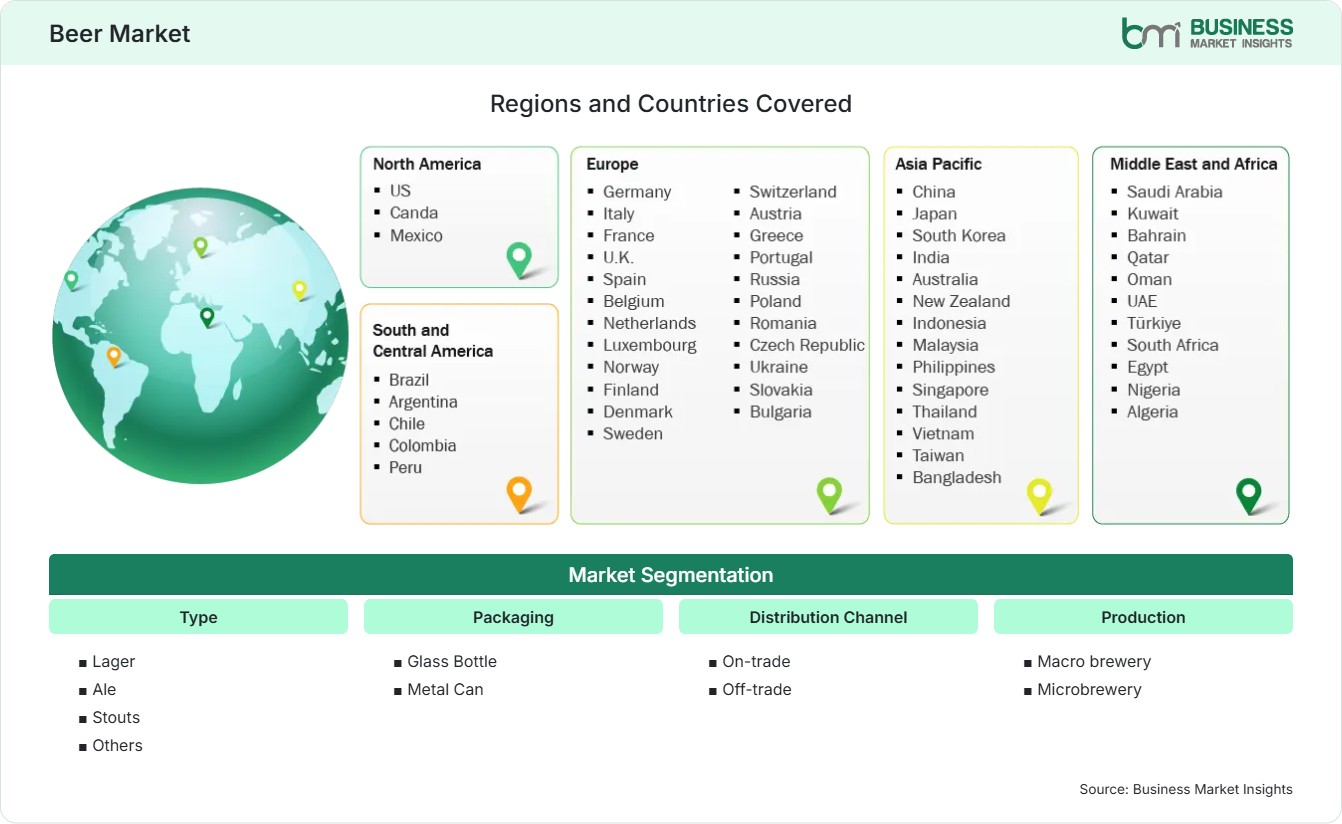
North America Beer Market
North America accounted for 27%–30% market share in 2025 and is projected to grow at a CAGR of 3.8%–4.4% from 2026–2033. The region remains a mature but innovative market supported by premium beer demand, craft brewery growth, and changing consumer preferences. The United States represents the largest contributor due to strong brand competition, established distribution networks, and growing interest in specialty and low-alcohol products.
- The US beer industry is experiencing premiumization as consumers increasingly choose higher-value products, specialty brews, and differentiated beverage experiences.
- Canada continues to support regional demand through established brewing culture, premium product adoption, and growth of independent breweries.
- Craft beer innovation remains important as smaller producers introduce unique flavors, seasonal products, and localized offerings.
- Breweries are investing in sustainable packaging, production efficiency, and responsible consumption initiatives to strengthen brand positioning.
US Beer Market
The US market represented a 23%–26% share in 2025 and is expected to expand at a CAGR of 3.9%–4.5% from 2026–2033. Growth is supported by premium beer consumption, evolving consumer preferences, and expansion of innovative beverage categories. The market remains highly competitive, with multinational companies and craft breweries competing through product differentiation, brand loyalty, and digital engagement.
- Premium and craft beer segments are gaining traction as consumers prioritize quality, unique flavors, and brand experiences.
- Non-alcoholic and low-alcohol beer categories are expanding due to changing lifestyle preferences and wellness-focused consumption patterns.
- E-commerce and direct-to-consumer platforms are improving access to specialty beer products and supporting brand discovery.
- Hospitality recovery is contributing to on-trade beer consumption through restaurants, bars, and entertainment venues.
Europe Beer Market
Europe accounted for a 22%–25% share in 2025 and is projected to grow at a CAGR of 3.2%–3.9% from 2026–2033. The region remains one of the most established beer markets due to strong brewing traditions, diverse product portfolios, and high per-capita consumption in several countries. Germany, the United Kingdom, Belgium, and the Netherlands remain important markets supported by premiumization, craft beer innovation, and sustainable brewing initiatives.
- Germany remains a major European market due to established brewing heritage, strong domestic consumption, and demand for traditional and premium beer varieties.
- The United Kingdom is experiencing increased interest in craft beer, premium lagers, and alcohol-free alternatives as consumer preferences continue evolving.
- Belgium continues supporting specialty beer demand through strong brand recognition, traditional brewing expertise, and premium product positioning.
- The Netherlands benefits from major global brewery operations, export capabilities, and investments in innovative beer categories.
- European breweries are adopting sustainable production practices, including energy efficiency improvements and recyclable packaging solutions.
Asia Pacific Beer Market
Asia Pacific represented a 34%–37% share in 2025, and APAC beer market forecast to register a CAGR of 5.2%–5.9% from 2026–2033, making it the fastest-growing region. The region benefits from urbanization, rising disposable income, expanding hospitality infrastructure, and increasing acceptance of international beer brands. China, India, Japan, South Korea, and Southeast Asian countries represent major growth contributors due to changing consumption patterns and brewery investments.
- China leads regional beer consumption due to its large consumer base, expanding premium segment, and strong domestic brewery presence.
- India is witnessing rising beer demand through urban population growth, expanding restaurants and bars, and increasing acceptance among younger consumers.
- Japan supports premium beer growth through established beverage culture, product innovation, and demand for high-quality formulations.
- South Korea is experiencing increased demand for premium and imported beer products through changing consumer preferences.
- Southeast Asian markets are attracting brewery investments due to tourism growth, urban development, and expanding retail networks.
Rest of World Beer Market
Rest of World accounted for a 11%–14% share in 2025 and is expected to grow at a CAGR of 4.0%–4.8% from 2026–2033. Latin America, the Middle East, and Africa are showing varied growth patterns influenced by demographics, tourism, economic development, and changing beverage preferences. Brazil, Mexico, South Africa, and selected Middle Eastern markets represent important opportunities for international and regional breweries.
Latin America markets have advantages in existing beer culture, premium beverage adoption, and a growing hospitality industry. The Middle East and Africa are building their markets through tourism, urbanization, and targeted investments in non-alcoholic and specialty beverages.
- Brazil remains a significant market due to strong domestic beer consumption, established brewery networks, and expanding premium product demand.
- Mexico supports regional growth through large-scale production capabilities, export activity, and international brewery investments.
- South Africa is developing through urban consumption growth, premium beer adoption, and expanding retail availability.
- Middle Eastern markets are increasingly adopting non-alcoholic beer options due to cultural preferences and regulatory considerations.
- Regional breweries are strengthening distribution networks to improve availability across emerging consumer markets.