
Non Alcoholic Beer Market Outlook: Size, Share, Trends, Growth Analysis, Competitive Landscape & Forecast, 2026-2033

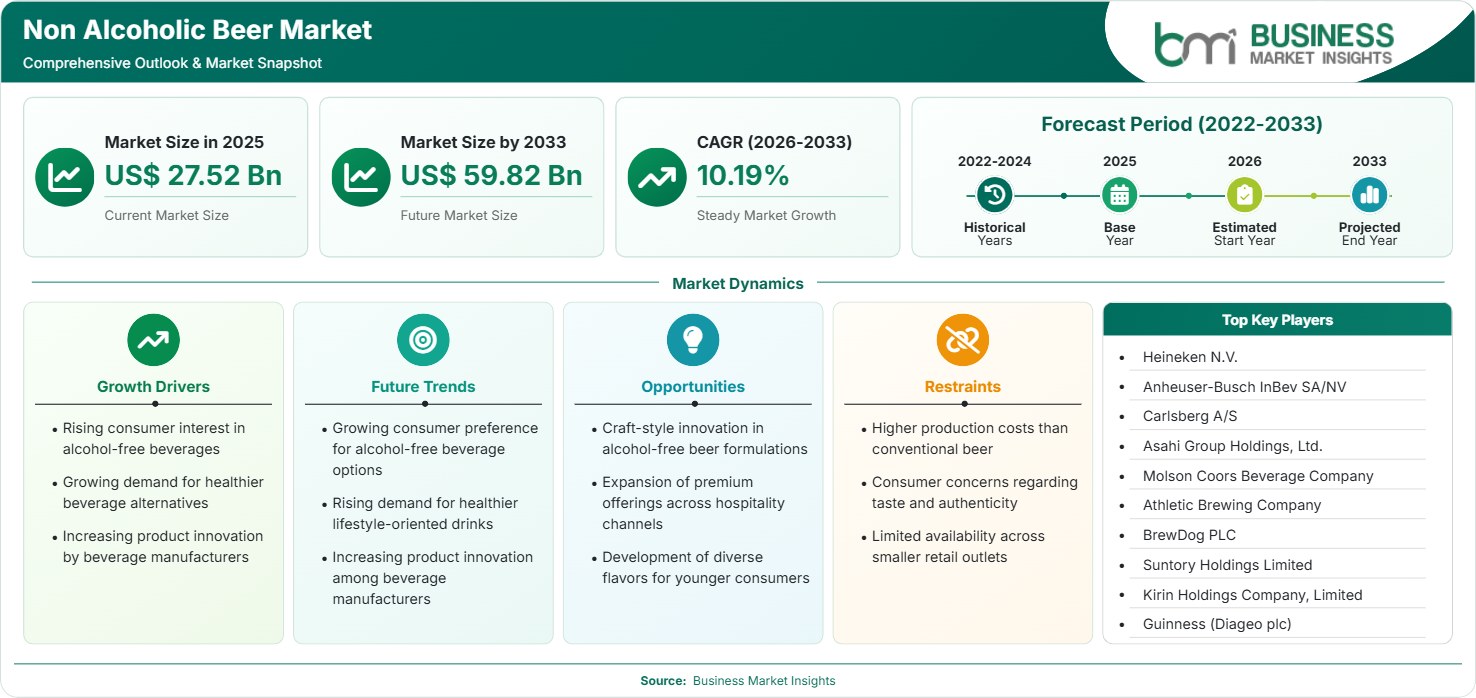
The Non Alcoholic Beer Market size was valued at US$ 27.52 Billion in 2025 and is projected to reach US$ 59.82 Billion by 2033, growing at a CAGR of 10.19% during 2026–2033. Rising health-conscious consumption, premium alcohol-free innovations, expanding retail penetration, sports sponsorships, and flavor diversification are accelerating adoption, while emerging markets, digital commerce, and functional beverage positioning create strong long-term opportunities.

Report Coverage
  • Raw Material: Malted Grains, Hops, Yeast, Others
  • Flavor: Plain, Flavored
  • Distribution Channel: Supermarkets/Hypermarkets, On-Premise, Liquor Stores, Convenience Stores, Online Stores, Others
US$ 27.52 Bn Market size in 2025
US$ 59.82 Bn Market Size by 2033
10.19% CAGR, 2026 - 2033
2026-2033 Forecast Period

AI Overview

Non Alcoholic Beer Market Summary

  • North America Region: North America holds a market share of 32%–35% in 2025, growing at a CAGR of 9.2%–9.8% during 2026–2033. Growth is supported by wellness-focused consumers, premium product launches, modern retail expansion, sporting partnerships, and increasing moderation habits across younger demographics seeking sophisticated alternatives without alcohol consumption.
    US market remains a regional leader, supported by strong retail availability and expanding craft alcohol-free offerings, CAGR 9.3%–9.9%.
  • Fastest Growing Region: Asia Pacific accounts for 24%–27% share in 2025 and advances at a CAGR of 11.8%–12.5%. Urbanization, expanding middle-class spending, westernized beverage preferences, digital commerce growth, and favorable demographic shifts support premium alcohol-free beverage consumption across developing consumer markets.
  • Leading Segment: Malted Grains represents a 58%–62% Non Alcoholic Beer Market share in 2025 and grows at 9.8%–10.4% CAGR. Manufacturers prioritize traditional beer flavor reproduction, ingredient quality, brewing consistency, and premium positioning, maintaining strong demand among consumers transitioning from conventional alcoholic beverages.
  • High Growth Segment: Online Stores hold 10%–13% share in 2025 while growing at 13.0%–13.8% CAGR. E-commerce convenience, subscription models, direct-to-consumer strategies, product discovery tools, wider assortment availability, and digital marketing effectiveness continue strengthening channel attractiveness.
  • Key Market Opportunity: Functional alcohol-free beverages incorporating vitamins, botanicals, adaptogens, and sports-oriented positioning offer manufacturers opportunities to capture wellness consumers while creating premium pricing potential and broader consumption occasions.
  • Major Market Players: Heineken N.V., Anheuser-Busch InBev SA/NV, Carlsberg A/S, Asahi Group Holdings, Ltd., Molson Coors Beverage Company, Athletic Brewing Company, BrewDog PLC, Suntory Holdings Limited, Kirin Holdings Company, Limited, and Guinness (Diageo plc).
Strategic Insights

Non Alcoholic Beer Market: Strategic Insights

Non Alcoholic Beer Market Strategic Framework
FREE PDF
Request your free sample
Request free sample
Stakeholder View

Key Takeaways

  • Ingredient suppliers, brewers, packaging firms, distributors, and retailers are becoming increasingly integrated, enabling faster commercialization of premium alcohol-free products and improved profitability across the value chain.
  • Online retail and flavored offerings present the strongest volume upside, particularly among younger consumers seeking convenience, product variety, and healthier lifestyle-aligned alternatives.
  • Brewing innovations focused on aroma retention, mouthfeel enhancement, and alcohol-removal efficiency are narrowing taste differences with conventional alcoholic products.
  • India, China, and Southeast Asian economies offer attractive expansion potential due to urbanization, rising disposable income, and increasing consumer acceptance of alcohol-free beverages.
  • Strategic investments by global brewers and partnerships with sports organizations continue strengthening brand visibility and accelerating category penetration.
  • Functional formulations combining hydration, wellness, and social drinking experiences may become an important premium revenue stream for leading producers.
Geographic Outlook

Non Alcoholic Beer Market Regional Highlights

North America Non Alcoholic Beer Market

North America accounts for approximately 32%–35% of the Non Alcoholic Beer Market share in 2025 and is projected to expand at a CAGR of 9.2%–9.8% through 2033. Demand is driven by health-focused consumers, moderation trends, premium alcohol-free alternatives, and expanding supermarket availability. Major brewers continue increasing investments in innovation and distribution. Sports partnerships and growing acceptance of mindful drinking support category visibility. Mature retail infrastructure, strong brand awareness, and growing demand for craft-style alcohol-free beverages reinforce regional leadership.

  • Wellness-driven purchasing is encouraging consumers to substitute alcoholic beverages with low-calorie alternatives while maintaining social drinking experiences.
  • Large retailers continue expanding shelf allocations, improving product visibility and encouraging trial purchases among mainstream consumers.
  • Craft brewing participation increases flavor diversity and attracts consumers seeking premium and differentiated beverage experiences.
  • Professional sports sponsorships provide category exposure among younger adult consumers and active lifestyle communities.

US Non Alcoholic Beer Market

The United States represents 78%–82% of North American revenue in 2025 and advances at a CAGR of 9.3%–9.9%. Consumer interest in moderation, expanding non-alcoholic product availability, and premium positioning support market development. National retailers and e-commerce platforms improve accessibility, while craft alcohol-free breweries strengthen innovation. Growing interest among fitness-focused consumers and millennials continues supporting demand. Product education campaigns and broader distribution networks further support category expansion.

  • Direct-to-consumer channels are helping emerging brands reach targeted customer segments efficiently.
  • Premium pricing strategies remain sustainable due to perceived health and lifestyle benefits.
  • Craft-focused innovation continues expanding flavor options beyond traditional lagers.
  • Foodservice operators increasingly include alcohol-free beer options on beverage menus.

Europe Non Alcoholic Beer Market

Europe represents 29% to 32% of market share by 2025 with a CAGR of 9.6% to 10.2%. Germany is the dominant regional market, and Spain has some of the highest consumption levels. The UK exhibits a high rate of adoption, with a CAGR of approximately 10.5%-11.2%. Regulations, the history of the brewing industry, and consumer awareness drive demand for non-alcoholic beverages. Premiumization and higher product quality are attracting traditional beer drinkers seeking healthier alternatives. Broad retail coverage sustains category accessibility.

  • Germany benefits from strong brewing expertise and consumer familiarity with alcohol-free formats.
  • The United Kingdom records rapid product innovation and growing participation from major retailers.
  • Premium flavored variants gain traction among younger urban consumers seeking differentiated experiences.
  • Hospitality establishments increasingly integrate alcohol-free offerings into beverage portfolios.
  • Sustainability initiatives encourage investment in efficient brewing and packaging technologies.

Asia Pacific Non Alcoholic Beer Market

The Asia Pacific region holds a market share of 24% to 27% and is the fastest-growing region in the Non Alcoholic Beer Market, with a CAGR of 11.8% to 12.5%. The highest market revenue is generated by China, while India has the potential for higher market growth, recording a CAGR of 12.5%-13.2%. Increasing urbanization, rising disposable income, the development of digital retail, and the consumption of alcohol-free drinks are driving market growth. International brands continue strengthening local distribution networks. Product localization strategies and premium launches improve penetration among younger consumers.

  • China benefits from extensive retail infrastructure and increasing consumer awareness of wellness beverages.
  • India offers substantial growth potential driven by urban demographics and changing social consumption patterns.
  • E-commerce channels accelerate product discovery and market accessibility across metropolitan areas.
  • International brewers continue investing in marketing and supply chain capabilities.
  • Premium products attract middle-income consumers seeking aspirational beverage experiences.

Rest of World Non Alcoholic Beer Market

The Rest of World segment accounts for 10% to 13% market share in 2025 and grows at a CAGR of 10.5% to 11.2% in the Non Alcoholic Beer Market. South and Central America derive their growth from increasing health consciousness and consumption of premium beverages, while the Middle East and Africa grow due to rising demand for non-alcoholic beverages and young populations. International brand expansion, hospitality growth, and modern retail development contribute to category penetration.

  • Brazil leads Latin American demand while Mexico records accelerating category awareness.
  • GCC countries provide opportunities due to established demand for alcohol-free beverage formats.
  • Retail modernization enhances product accessibility across urban centers.
  • Tourism growth supports hospitality-sector adoption of premium alcohol-free beverages.
  • International brands increasingly target underserved markets with localized offerings.
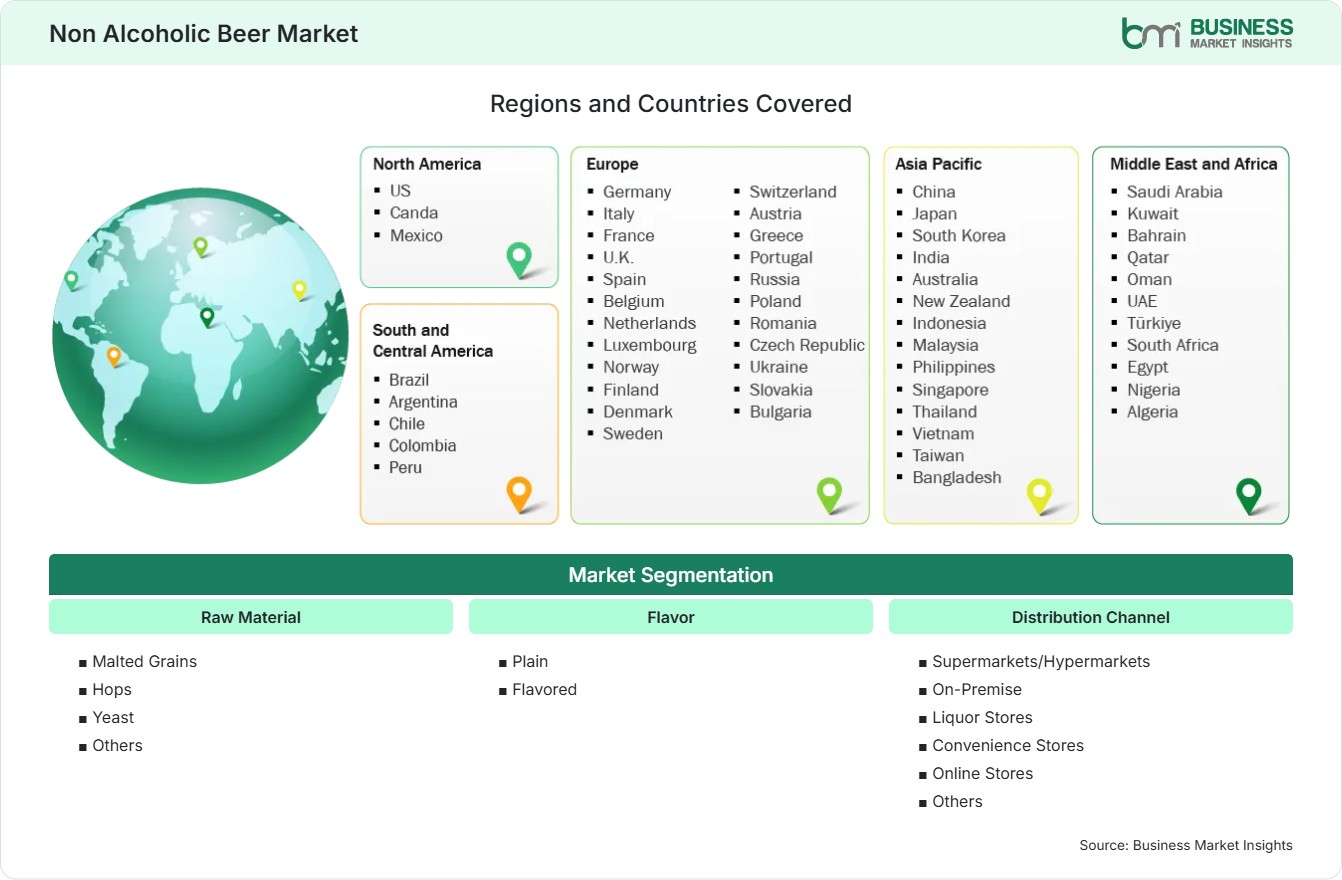
Global Market Geography
FREE PDF
Request your free sample
Request free sample
Segment Analysis

Non Alcoholic Beer Market Segmentation

Raw Material

The Raw Material segment contributes 58%-62% to market share in 2025 and grows at a 9.8%-10.4% CAGR. The quality of ingredients is very important for taste duplication and customer retention. The scope of the Non Alcoholic Beer Market is constantly expanding due to manufacturers' efforts to improve ingredient quality, taste, and technology.

  • Malted Grains: Primary ingredient supporting body, texture, and authentic beer flavor. Strong demand reflects consumer preference for products closely mirroring conventional beer experiences.
  • Hops: Increasingly important for premium and craft-style formulations emphasizing aroma, bitterness balance, and flavor complexity across product portfolios.
  • Yeast: Critical for fermentation control and flavor development. Innovation in yeast strains enhances brewing efficiency and sensory performance.

Flavor

Flavor segment remains central to category differentiation, representing a major purchasing factor. The segment holds 38%–42% market presence and progresses at 10.6%–11.2% CAGR as brands broaden offerings targeting both traditional and experimental consumer preferences.

  • Plain: Preferred by consumers seeking beer-like authenticity and compatibility with existing drinking occasions.
  • Flavored: Fruit-infused and specialty variants attract younger consumers seeking novelty, variety, and accessible entry points into the category.

Distribution Channel

Distribution channels have a 40%-44% market impact and grow at a 10.8%-11.5% CAGR. Accessibility in retail and omnichannel distribution is gaining significance. Non Alcoholic Beer Market trends show increased focus on e-commerce alongside existing physical retail networks.

  • Supermarkets/Hypermarkets: Remain dominant due to high visibility, broad assortment availability, and consumer convenience.
  • On-Premise: Restaurants, pubs, and hospitality venues support trial consumption and premium positioning.
  • Liquor Stores: Specialized beverage retailers provide wider product range and knowledgeable recommendations.
  • Convenience Stores: Capture impulse purchases and immediate consumption occasions, particularly in urban locations.
  • Online Stores: Fastest-growing distribution format supported by subscriptions, targeted marketing, and expanded product selection.
Market Forces

Non Alcoholic Beer Market Dynamics

Key Market Drivers

Rising Global Moderation and Wellness Consumption

The trend of consumers opting for healthier lifestyles is continuously affecting beverage purchase decisions. The guidance issued by WHO regarding the health consequences of alcohol and the increasing popularity of moderation-based lifestyles have made the category grow. Consumers within the legal drinking age are increasingly seeking products that retain socializing benefits without any consequences of alcohol. People who exercise or practice fitness and wellness have been a significant part of customers, motivating manufacturers to market their products through lifestyle benefits. Awareness about calories consumed also adds more strength to the demand trend. Retailers are increasingly stocking alcohol-free varieties of products, making them easily accessible.

Advances in Brewing and Alcohol-Removal Technologies

Improved technology has enhanced product quality in the industry. Advanced technologies such as vacuum distillation, reverse osmosis, and advanced fermentation techniques help retain aroma, flavor, and mouthfeel. Taste consistency is becoming increasingly easy, minimizing obstacles that have been limiting acceptance in the category. There is constant investment in research and development to better reproduce the features of a premium beer. Increased sensory experience leads to more repurchases and greater appeal to regular beer consumers. Higher quality ensures greater consumer confidence, resulting in premium pricing and brand loyalty.

Retail Expansion and Mainstream Brand Participation

The involvement of large multinational breweries has increased the category’s visibility and credibility. Placements in supermarkets and convenience stores, as well as in hospitality, have increased accessibility for consumers. These global brewers use existing supply chains and marketing capabilities to increase awareness. New product introductions by popular brands make it easier to increase trial among regular consumers who previously considered alcohol-free beer a niche category. All three elements of a solid brand- high availability and marketing efforts- help the category grow further. Retailers have recognized the high sales potential of these categories and are giving them premium shelf placements. Expanding availability across physical and digital channels continues to support category development.

Key Market Opportunities

Functional and Wellness-Oriented Product Innovation

There are possibilities for producers to formulate alcohol-free beer that includes ingredients such as vitamins, herbs, electrolytes, and adaptogens. These drinks could cater to consumer demand for well-being drinks. In this way, producers would have the opportunity to charge premium prices for their products and to find new applications beyond social occasions. The sports-oriented consumers are one such appealing target market. The increased demand for functional drinks is consistent with the existing demand for healthier drinks. In addition, Long-Term Non Alcoholic Beer Market Forecasts suggest value creation from a formulation that delivers both flavor and wellness benefits, supporting higher margins and stronger brand loyalty.

Expansion Across Emerging Economies

The emerging economies possess significant growth potential due to favorable demographics, rising disposable incomes, and shifting consumer tastes. Consumers in urban centers in Asia, Latin America, and some Middle Eastern nations are increasingly open to buying premium alcohol-free drinks. Foreign brewing companies continue to build capacity, collaboration, and logistics infrastructure in such regions. Localizing products enhances their cultural appeal and increases their acceptance. Early development of the category creates opportunities to establish dominant brand positions. Retail modernization and the penetration of digital commerce make them more accessible. The firms entering them can gain a sustained competitive advantage by virtue of first-mover status.

E-Commerce and Direct-to-Consumer Models

E-commerce is proving to be an effective driver of growth for non-alcoholic beverages. E-commerce platforms can provide more opportunities for product discovery, consumer education, and marketing. Subscription-based services promote repeat purchases and customer retention. Data analytics provides manufacturers with information about consumer preferences. It also allows personalization of offers to consumers. Small brands have easier access to the market than conventional brick-and-mortar retail channels. With the rise in e-commerce worldwide, online platforms will capture an increasing share of sales and support efficient market expansion.

Market Restraints and Challenges

Premium Pricing Relative to Conventional Beer

Factor: Higher costs of production because of special brewing processes, technology of alcohol extraction, and the use of quality ingredients. Impact: High retail prices could hinder the consumer’s ability to accept this product, particularly in developing nations. Although consumer awareness has increased, some consumers still view non-alcoholic beer as less valuable than traditional beer. Companies need to balance value creation with market-entry costs. Also, retailers find it difficult to sell expensive products in uncertain economic times.

Consumer Perception and Taste Expectations

Factor: Even with technological developments, some customers still perceive non-alcoholic beer as lacking in taste and authentic appeal. Impact: Perceptual issues will affect the trial and adoption of the product amongst consumers accustomed to the taste of regular beer. Building confidence will require continued efforts to improve product quality and educate customers, as well as product trials. Competition becomes fierce as brands vie for differentiation through innovative flavors and premium positioning. Taste differences also create challenges in product development.

Company Analysis

Competitive Landscape

The Non Alcoholic Beer Market analysis reflects a competitive environment characterized by multinational brewers, craft-focused innovators, and premium alcohol-free specialists.

Company Name

Overview

Products and Services relevant to this market

Heineken N.V.

Global brewer with extensive alcohol-free distribution network and strong premium brand recognition.

Heineken 0.0 and related alcohol-free beer products distributed across international retail channels.

Anheuser-Busch InBev SA/NV

Leading global beverage company investing heavily in alcohol-free category expansion.

Budweiser Zero, Corona Cero, and alcohol-free brewing innovations.

Carlsberg A/S

European brewing leader with established low- and zero-alcohol portfolio.

Alcohol-free lagers and premium brewing solutions across multiple markets.

Asahi Group Holdings, Ltd.

Diversified beverage company expanding alcohol-free product presence globally.

Alcohol-free beers and premium lifestyle beverage offerings.

Molson Coors Beverage Company

North American beverage producer focused on category diversification.

Non-alcoholic beer brands, distribution services, and retail partnerships.

Athletic Brewing Company

Specialist pioneer dedicated exclusively to alcohol-free brewing.

Craft non-alcoholic beers across multiple flavor profiles and styles.

BrewDog PLC

Craft brewer recognized for innovative alcohol-free portfolio development.

Alcohol-free IPA, lager, and specialty craft products.

Suntory Holdings Limited

Major beverage group with growing international alcohol-free focus.

Premium non-alcoholic beverage and brewing solutions.

Kirin Holdings Company, Limited

Japanese beverage company with extensive brewing expertise.

Alcohol-free malt beverages and regional distribution capabilities.

Guinness (Diageo plc)

Global stout brand extending presence in alcohol-free premium category.

Guinness 0.0 and associated alcohol-free product offerings.

Trust & Transparency

Research Methodology

The market analysis combines proprietary research with secondary data from government agencies, company disclosures, regulatory filings, industry databases and expert interviews. Market estimates are validated through data triangulation, cross-market benchmarking and analyst review.

View Full Research Methodology

Questions Answered

Frequently Asked Questions

How can a Non Alcoholic Beer Market Report support business strategy?

It helps organizations evaluate demand patterns, competitive positioning, segment opportunities, investment priorities, distribution strategies, and regional expansion prospects using structured market intelligence.

Which region offers the strongest future opportunity?

Asia Pacific presents the strongest growth outlook due to urbanization, rising incomes, digital commerce expansion, and increasing acceptance of premium alcohol-free beverages.

What role does e-commerce play in market development?

Online retail improves product discovery, subscription purchasing, consumer education, and access to niche brands that may have limited physical retail distribution.

Why are major breweries investing in alcohol-free products?

The category offers access to new consumption occasions, premium pricing opportunities, and consumers seeking beer flavor experiences without alcohol-related effects or restrictions.

Which consumer group is driving demand most strongly?

Health-conscious millennials, Gen Z adults of legal drinking age, fitness enthusiasts, and moderation-focused consumers are generating the strongest demand due to wellness priorities and changing social drinking behaviors.

Access the Full Non Alcoholic Beer Market Report

Get segment-level forecasts, regional estimates, competitive benchmarking, company profiles and downloadable Excel datasets.

Access the full Non Alcoholic Beer Market Report
350 pages PDF & Excel | 2026-09-15
Similar Research

Related Market Reports