
Alcoholic Beverages Market Outlook: Size, Share, Trends, Growth Analysis, Competitive Landscape & Forecast, 2026-2033

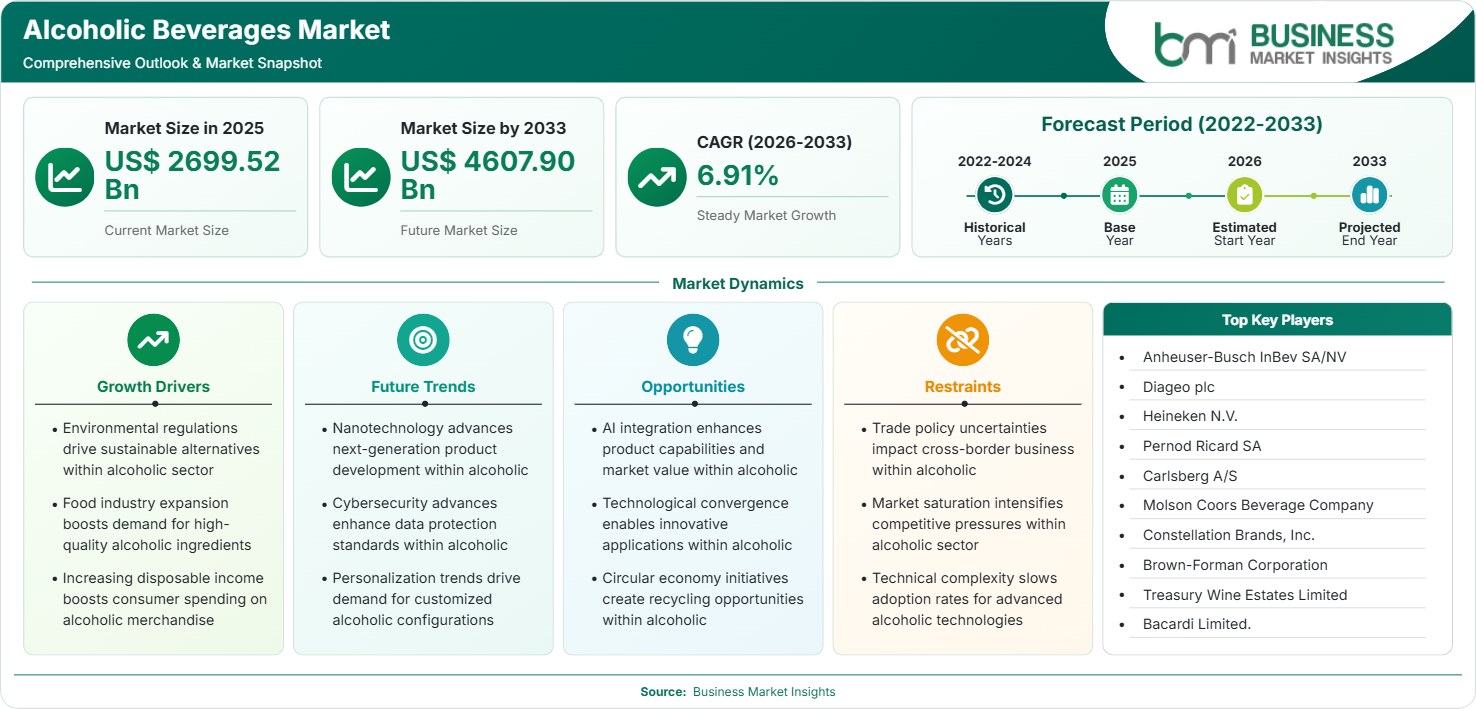
The Alcoholic Beverages Market size was valued at US$ 2699.52 Billion in 2025 and is projected to reach US$ 4607.9 Billion by 2033, growing at a CAGR of 6.91% during 2026–2033, supported by premiumization, expanding on-trade consumption, digital retail penetration, tourism recovery, craft innovation, and rising demand for premium spirits and branded beer portfolios globally.

Report Coverage
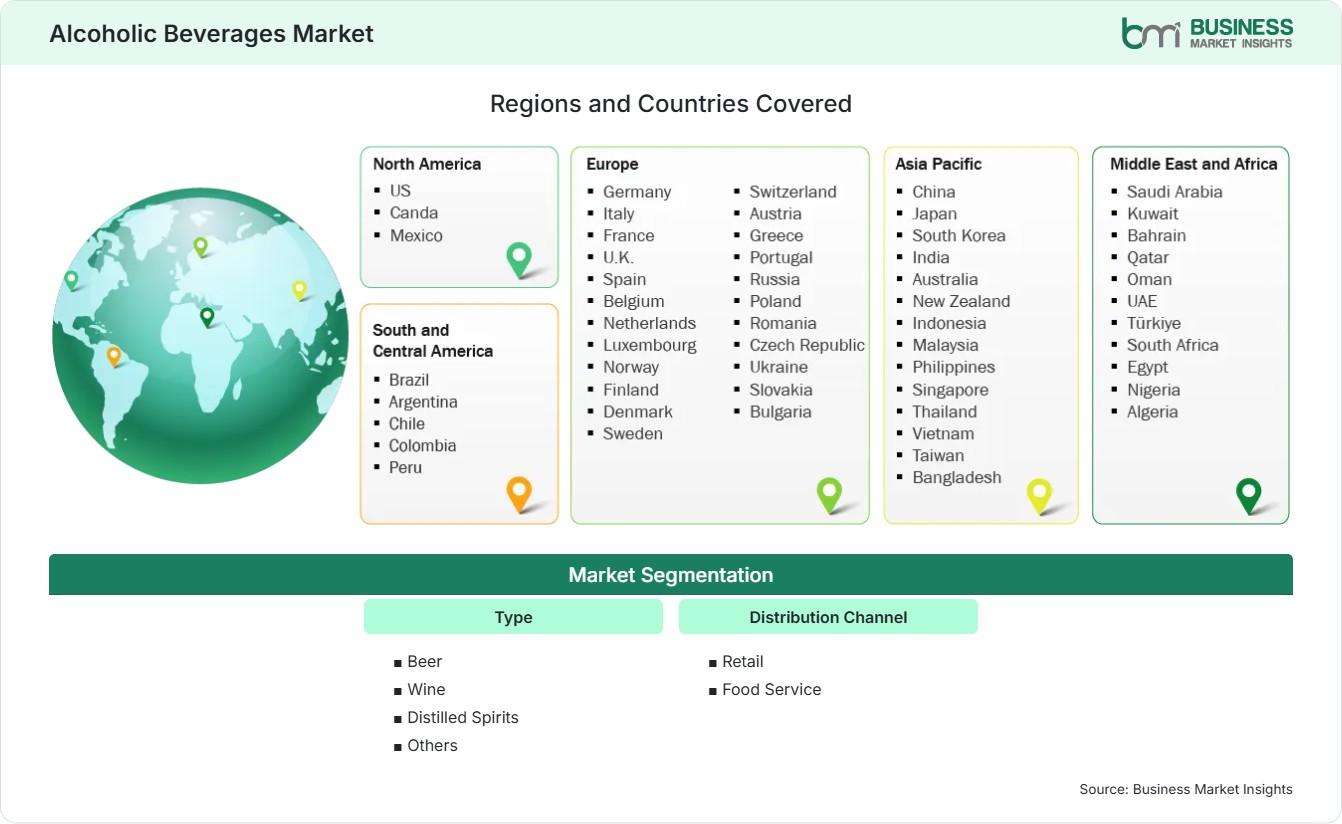
  • Type: Beer, Wine, Distilled Spirits, Others
  • Distribution Channel: Retail, Food Service
US$ 2699.52 Bn Market size in 2025
US$ 4607.90 Bn Market Size by 2033
6.91% CAGR, 2026 - 2033
2026-2033 Forecast Period

AI Overview

Alcoholic Beverages Market Summary

  • North America Region: North America holds a 34%–37% share in 2025, growing at a CAGR of 5.8%–6.3% during 2026–2033. Premium spirits demand, product innovation, and omnichannel retail expansion support revenue growth, while premium ready-to-drink portfolios create incremental opportunities. Brief U.S. analysis: mature premium categories and strong brand loyalty support a 5.9%–6.4% CAGR through 2033.
  • Fastest Growing Region: Asia Pacific holds 25%–28% share in 2025, growing at a CAGR of 8.1%–8.8% during 2026–2033. Rising disposable income, urbanization, premium consumption patterns, and expanding hospitality infrastructure encourage category diversification and investment opportunities.
  • Leading Segment: Beer holds 41%–44% share in 2025, growing at a CAGR of 5.7%–6.2% during 2026–2033. Established consumer preference, extensive distribution networks, and premium craft variants strengthen category resilience and profitability.
  • High Growth Segment: Online Retail holds 8%–11% share in 2025, growing at a CAGR of 10.2%–11.0% during 2026–2033. Digital convenience, rapid delivery platforms, and widening legal acceptance accelerate channel penetration across urban markets.
  • Key Market Opportunity: Expansion of alcohol e-commerce, premium ready-to-drink products, experiential consumption formats, data-driven marketing capabilities, and emerging middle-class populations are creating scalable revenue opportunities across multiple consumption occasions globally.
  • Major Market Players: Anheuser-Busch InBev SA/NV, Diageo plc, Heineken N.V., Pernod Ricard SA, Carlsberg A/S, Molson Coors Beverage Company, Constellation Brands, Inc., Brown-Forman Corporation, Treasury Wine Estates Limited, Bacardi Limited.
Strategic Insights

Alcoholic Beverages Market: Strategic Insights

Alcoholic Beverages Market Strategic Framework
FREE PDF
Request your free sample
Request free sample
Stakeholder View

Key Takeaways

  • The industry's value chain is increasingly integrated, linking agricultural sourcing, contract manufacturing, packaging suppliers, distributors, digital platforms, and hospitality operators into a coordinated ecosystem.
  • Premium spirits, ready-to-drink beverages, and online commerce channels offer the strongest upside due to higher margins and expanding consumer acceptance.
  • Product development is shifting toward flavor innovation, alcohol moderation options, sustainable packaging formats, and AI-enabled consumer engagement strategies.
  • Asia Pacific presents the strongest investment case, supported by urban population growth, rising disposable incomes, expanding tourism, and premium consumption trends.
  • Mergers, acquisitions, and strategic partnerships remain focused on premium brands, digital capabilities, and geographic expansion into emerging markets.
  • Sustainability investments in packaging, water efficiency, and carbon reduction are becoming key differentiators for global producers and investors.
Geographic Outlook

Alcoholic Beverages Market Regional Highlights

North America Alcoholic Beverages Market

The North American region is the largest regional market, with 34%-37% of the Alcoholic Beverages Market share in 2025, along with a CAGR of 5.8%–6.3% through 2033. Consumption expenditure is highly dominated by premium beer, tequila, whiskey, and RTD. Retail channel development, omni-channel distribution, and brand marketing support the competitive advantage in the category. Premiumization continues to outpace volume moderation in mature beverages, alongside hospitality sector recovery and event-based consumption.

  • Premium spirits continue gaining wallet share as consumers increasingly prioritize quality, heritage, authenticity, and experiential consumption.
  • Leading producers are investing in automation, packaging innovation, and digital marketing platforms to improve profitability and reach.
  • Convenience retail and licensed e-commerce channels strengthen market accessibility across urban and suburban regions.
  • Sustainable packaging adoption and responsible drinking initiatives increasingly influence purchasing decisions and corporate strategy.

US Alcoholic Beverages Market

The United States accounts for 76%-80% of North American demand and is projected to achieve a CAGR of 5.9%-6.4% through 2033. There is a tendency among consumers towards high-quality spirits, imported beer, ready-to-drink drinks, and artisanal beverages. The performance of categories is driven by innovation, robust distribution channels, and well-developed retailing facilities. Players in the market are employing digital engagement and local branding to retain their customer base.

  • Tequila and premium American whiskey categories continue attracting investment due to strong consumer demand and pricing power.
  • Online ordering and direct-to-consumer programs support convenience-focused purchasing behavior across urban demographics.
  • Hospitality recovery and experiential venues contribute incremental sales opportunities for premium beverage portfolios.
  • Brand owners increasingly leverage consumer analytics to improve segmentation, personalization, and product launch effectiveness.

Europe Alcoholic Beverages Market

The European market size is projected to be 27-30% in 2025, and its growth rate during 2026-2033 is estimated at around 5.4-5.9% CAGR. The existence of a strong cultural tradition of drinking beer and wine guarantees a stable demand, while the premium spirits and craft sub-segments guarantee high-value growth. The key countries in this segment are Germany, France, and the UK. Poland is growing at a CAGR of 6.5-7.1%. Sustainability initiatives, premium imports, and tourism-driven consumption support the region's long-term competitiveness and profitability.

  • Premium wine and craft beer segments maintain relevance through product differentiation and geographic heritage strategies.
  • Tourism-centered consumption supports hospitality channel revenue across Southern European countries.
  • Digital retail adoption continues improving accessibility while strengthening consumer engagement.
  • Premium spirits experience strong demand among younger urban consumers seeking branded experiences.
  • Sustainability regulations encourage packaging innovation and operational efficiency investments.

Asia Pacific Alcoholic Beverages Market

The Asia Pacific region holds a 25% to 28% market share in 2025 and records the highest growth, with an 8.1% to 8.8% CAGR from 2024 to 2033. The major regions that provide opportunities include China, Japan, and India. Other nations showing rapid uptake include Vietnam and the Philippines. Premium beverage consumption benefits from rising incomes, urbanization, demographic growth, and investments in the hospitality industry. Foreign firms are building their capabilities in production and distribution.

  • India remains a major opportunity supported by expanding middle-class populations and premiumization trends.
  • Chinese consumers increasingly support premium spirits and imported beverage categories.
  • Digital commerce integration expands product accessibility and customer engagement.
  • Hospitality infrastructure growth boosts on-premise consumption in tourism-driven destinations.
  • Local flavor innovation supports brand differentiation and category expansion.

Rest of World Alcoholic Beverages Market

The Rest of World segment holds a 10%-13% share in 2025 and is expected to witness growth at a CAGR of 6.7%-7.3% through 2033. South & Central America gain traction owing to premium beer consumption and a resurgence in travel. Brazil and Mexico lead the regional consumption, while Colombia shows strong momentum.

The Middle East & Africa markets are relatively smaller but have gained increasing traction. South Africa leads regional demand, while the UAE exhibits growing premium hospitality-driven consumption, aided by travel and retail investments.

  • Premium beer and spirits categories gain traction in major Latin American urban centers.
  • Tourism growth strengthens hospitality channel performance across multiple destinations.
  • International producers expand local partnerships to improve market penetration.
  • Modern retail formats improve product availability and consumer choice.
  • Premium imported products attract affluent consumers seeking differentiated experiences.
Global Market Geography
FREE PDF
Request your free sample
Request free sample
Segment Analysis

Alcoholic Beverages Market Segmentation

Type

The Type segment remains the main source of income and accounts for nearly 100% of category consumption across beverage types. Beer dominates, with market share increasing from 41% to 44% by 2025, at a CAGR of 5.7% to 6.2%. The Alcoholic Beverages Market Scope in this segment continues to grow due to premiumization, brand innovation, and flavor innovation.

  • Beer: Maintains broad consumer appeal through affordability, extensive distribution, craft innovation, and premium offerings that strengthen category resilience across developed and emerging economies.
  • Wine: Benefits from premium positioning, food-pairing culture, tourism influence, and increasing consumer interest in provenance, sustainability, and premium regional labels.
  • Distilled Spirits: Supported by premiumization, cocktail culture, and strong consumer demand for tequila, whiskey, vodka, and specialty craft formulations.

Distribution Channel

Distribution channels have been shifting due to changes in consumer behavior across both physical and online purchases. Retail holds 72%–75% market share in 2025 while Food Service develops as tourism and hospitality industries recover. The Alcoholic Beverages Market trends show increasing investment in omnichannel fulfillment and a more convenient purchasing experience.

  • Mass Merchandisers: High-volume sales channel benefiting from broad product assortment, price competitiveness, and strong consumer accessibility across urban and suburban locations.
  • Specialty Stores/Liquor Stores: Provide premium selections, knowledgeable staff, and access to niche brands that support higher-value consumer purchases.
  • Convenience Stores: Serve impulse purchases and immediate-consumption occasions through strategic locations, extended operating hours, and diversified product portfolios.
  • Online Retail: Gains momentum through delivery convenience, wider selection, personalized promotions, and supportive regulatory developments in multiple markets.
  • Food Service: Benefits from hospitality growth, experiential consumption, tourism expansion, and premium beverage programs implemented by restaurants and entertainment venues.
Market Forces

Alcoholic Beverages Market Dynamics

Key Market Drivers

Premiumization Across Spirits, Beer and Wine Categories

Consumers tend to opt for premium products, limited editions, and the brand's overall experience. According to statements from key players in the alcoholic beverage industry, premium and super-premium portfolios have outperformed mass segments. Increased disposable income in the Asia-Pacific region and growing demand for premium spirits in North America have led to value creation despite a relatively small increase in volume. The premium drink leads to profitability and investment in packaging and storytelling.

Hospitality and Tourism Recovery Supporting Consumption

Improvements in recovery across international tourism and hospitality, entertainment, and restaurant infrastructure are driving growth in on-premise demand. Tourism-centric destinations are experiencing increased visitor activity, creating greater opportunities for beverage consumption, including beer, wine, and spirits. Companies are gaining more visibility of their brands through bars, hotels, sports events, and experiential events. Investments in tourism infrastructure in regions such as Asia Pacific, the Middle East, and Latin America are expected to fuel demand in various beverage segments during the forecast period.

Digital Commerce and Data-Driven Consumer Engagement

The growing number of e-commerce enterprises and regulatory permission to sell alcoholic drinks via online channels are creating new possibilities for growth. Online platforms provide personalized recommendations, enhance brand engagement, and improve inventory management. Producers are using analytics to get insights into purchasing behavior and shape their marketing strategies. As regulations change, it is becoming possible to deliver goods via online channels and ship them faster. These trends will help retain customers, increase basket size, and improve geographical spread.

Key Market Opportunities

Expansion of Premium Ready-to-Drink Portfolios

Ready-to-drink beverages remain very attractive to youth seeking convenience and variety of flavors. Ready-to-drink beverages with premium recipes featuring spirits, natural components, and special packaging are promising for differentiation. The major market participants continue to expand their production capacity and form strategic alliances in response to growing consumer interest in such products. The Alcoholic Beverages Market forecasts become more and more focused on the ready-to-drink segment as being profitable and increasingly available in retail stores.

Growing Demand Across Emerging Asian Economies

India, Vietnam, Indonesia, and the Philippines offer significant long-term opportunities, driven by potential for income growth, urbanization, and expanding hospitality sectors. There is an increasing tendency for consumers to explore luxury brands and global products. Producers can gain a competitive edge by investing in local production capacity, distribution channels, and marketing programs. The positive demographics and higher spending capacity make it a very attractive proposition for multinational and regional beverage companies.

Low-Alcohol and Moderation-Oriented Innovation

Increasing consumer awareness of well-being is driving demand for low-alcohol beverages. Manufacturers can cash in on this trend by expanding their current brands into low-alcohol versions without compromising on taste. This trend is especially significant for younger adults looking for a balance between social life and healthy lifestyles. Advances in fermentation processes and ingredients will help manufacturers differentiate themselves. Those that meet the needs of consumers seeking moderation are set to discover new consumption occasions.

Market Restraints and Challenges

Regulatory Complexity and Taxation Pressure

Factor: Excise taxes, advertising restrictions, labeling requirements, and licensing regulations vary significantly between jurisdictions. Impact: Compliance costs increase, and market-entry timelines become more complex. Producers frequently adapt packaging, promotions, and distribution strategies to meet regional regulations. Regulatory uncertainty can constrain investment decisions and reduce operational flexibility. Smaller manufacturers are particularly vulnerable because compliance obligations consume a larger proportion of resources. As governments increasingly focus on public health objectives, evolving regulatory frameworks may continue affecting profitability, distribution efficiency, and product innovation across multiple markets.

Shifting Consumer Health and Wellness Preferences

Factor: Growing emphasis on wellness, moderation, and healthier lifestyles influences purchasing behavior. Impact: Traditional alcohol categories face volume pressure in certain mature markets. Consumers may reduce consumption frequency, alternate with alcohol-free beverages, or selectively purchase premium products. Producers must invest in brand innovation, portfolio diversification, and consumer education to remain competitive. While premiumization partially offsets volume moderation, ongoing health-conscious behaviors create strategic challenges for companies dependent on conventional product categories. Successful adaptation requires continuous innovation and balanced portfolio management.

Company Analysis

Competitive Landscape

The Alcoholic Beverages Market analysis indicates intense competition focused on premiumization, geographic expansion, innovation, and digital consumer engagement.

Company Name

Overview

Products and Services relevant to this market

Anheuser-Busch InBev SA/NV

Global beverage leader with extensive brewing operations and multinational distribution capabilities.

Beer brands, ready-to-drink beverages, premium products, brewing and distribution services.

Diageo plc

Major spirits producer with strong premium brand portfolio and global market presence.

Whisky, vodka, gin, tequila, liqueurs, premium beverage solutions.

Heineken N.V.

International brewer with diversified global footprint and premium beer offerings.

Beer brands, specialty beverages, distribution and hospitality partnerships.

Pernod Ricard SA

Global spirits company focused on premium and prestige categories.

Whisky, cognac, vodka, gin, rum, tequila, wine products.

Carlsberg A/S

International brewer emphasizing innovation and regional market expansion.

Beer, premium brewing products, beverage distribution services.

Molson Coors Beverage Company

Diversified beverage company across alcoholic and adjacent categories.

Beer, flavored beverages, ready-to-drink alternatives.

Constellation Brands, Inc.

Premium beverage supplier with strong North American positioning.

Imported beer, wine, spirits, premium beverage portfolios.

Brown-Forman Corporation

Established premium spirits producer with iconic heritage brands.

Whiskey, tequila, ready-to-drink and premium alcoholic products.

Treasury Wine Estates Limited

Global wine specialist with premium and luxury brand portfolio.

Premium wine production, distribution, and brand management services.

Bacardi Limited

Privately held global spirits company serving multiple international markets.

Rum, tequila, gin, vodka, premium cocktail and spirits products.

Trust & Transparency

Research Methodology

The market analysis combines proprietary research with secondary data from government agencies, company disclosures, regulatory filings, industry databases and expert interviews. Market estimates are validated through data triangulation, cross-market benchmarking and analyst review.

View Full Research Methodology

Questions Answered

Frequently Asked Questions

Why is this Alcoholic Beverages Market Report useful for stakeholders?

It supports strategy development by evaluating regional performance, segmentation dynamics, competitive positioning, investment opportunities, and structural industry shifts affecting future growth.

What makes Asia Pacific attractive for investors?

Large populations, rising urbanization, expanding middle-class spending, tourism growth, and premiumization trends create long-term demand expansion opportunities.

How is e-commerce changing industry competition?

Online retail improves accessibility, expands assortment visibility, enables personalized promotions, and creates new customer acquisition opportunities for producers and distributors.

What factors most influence premium beverage purchasing?

Brand heritage, product authenticity, flavor quality, packaging, experiential marketing, and rising disposable incomes are key influences on premium purchase decisions.

Which beverage category generates the highest revenue globally?

Beer remains the largest category due to widespread consumer adoption, broad distribution reach, affordability, and strong representation across developed and emerging markets.

Access the Full Alcoholic Beverages Market Report

Get segment-level forecasts, regional estimates, competitive benchmarking, company profiles and downloadable Excel datasets.

Access the full Alcoholic Beverages Market Report
350 pages PDF & Excel | 2026-08-31