Non Alcoholic RTD Beverages Market Regional Highlights
North America Non Alcoholic RTD Beverages Market
North America represents a 27%–30% share in 2025 and records a 6.0%–6.6% CAGR from 2026–2033. The regional base is supported by mature beverage infrastructure, high brand penetration, extensive convenience distribution, and strong innovation spending. Consumers increasingly favor zero-sugar, functional, premium, and energy-oriented products. The Non Alcoholic RTD Beverages Market share is still significant owing to the fact that existing organizations have the ability to expand successful launches fast across supermarkets, convenience stores, food service chains, and the Internet, as supported by efficient logistics.
- Zero-sugar formulations are expanding shelf space as consumers seek familiar flavors with lower calorie profiles and fewer added sugars across carbonated and energy categories.
- Functional positioning is becoming central to innovation, particularly in hydration, gut health, electrolytes, protein, and energy, creating premium price opportunities beyond conventional refreshment.
- Convenience stores remain strategically important because immediate-consumption occasions support single-serve bottles and cans, especially for energy drinks, sports beverages, coffee, and carbonated products.
- Digital commerce is strengthening discovery and replenishment, allowing emerging beverage brands to test products nationally before committing to extensive physical distribution.
US Non Alcoholic RTD Beverages Market
The United States accounts for 68%–72% of North American demand in 2025 and is projected to grow at a 5.8%–6.4% CAGR during 2026–2033. The market is characterized by strong consumer brands, efficient distribution, intense promotion, and innovative beverages. The market is moving towards zero-sugar, prebiotics, energy, hydration, and coffee drinks. Older companies are resorting to acquisitions and quick commercialization strategies to win over the youth generation in the competition with digital beverage brands.
- Functional soda is gaining strategic attention as established carbonated brands introduce prebiotic ingredients, lower sugar, and wellness-oriented positioning without abandoning recognizable flavor profiles.
- Energy drinks benefit from broad usage occasions spanning sports, work, gaming, commuting, and social activity, encouraging flavor innovation and differentiated functional claims.
- Online channels support limited releases and direct consumer testing, reducing barriers for emerging brands while providing established manufacturers with faster feedback on consumer response.
Europe Non Alcoholic RTD Beverages Market
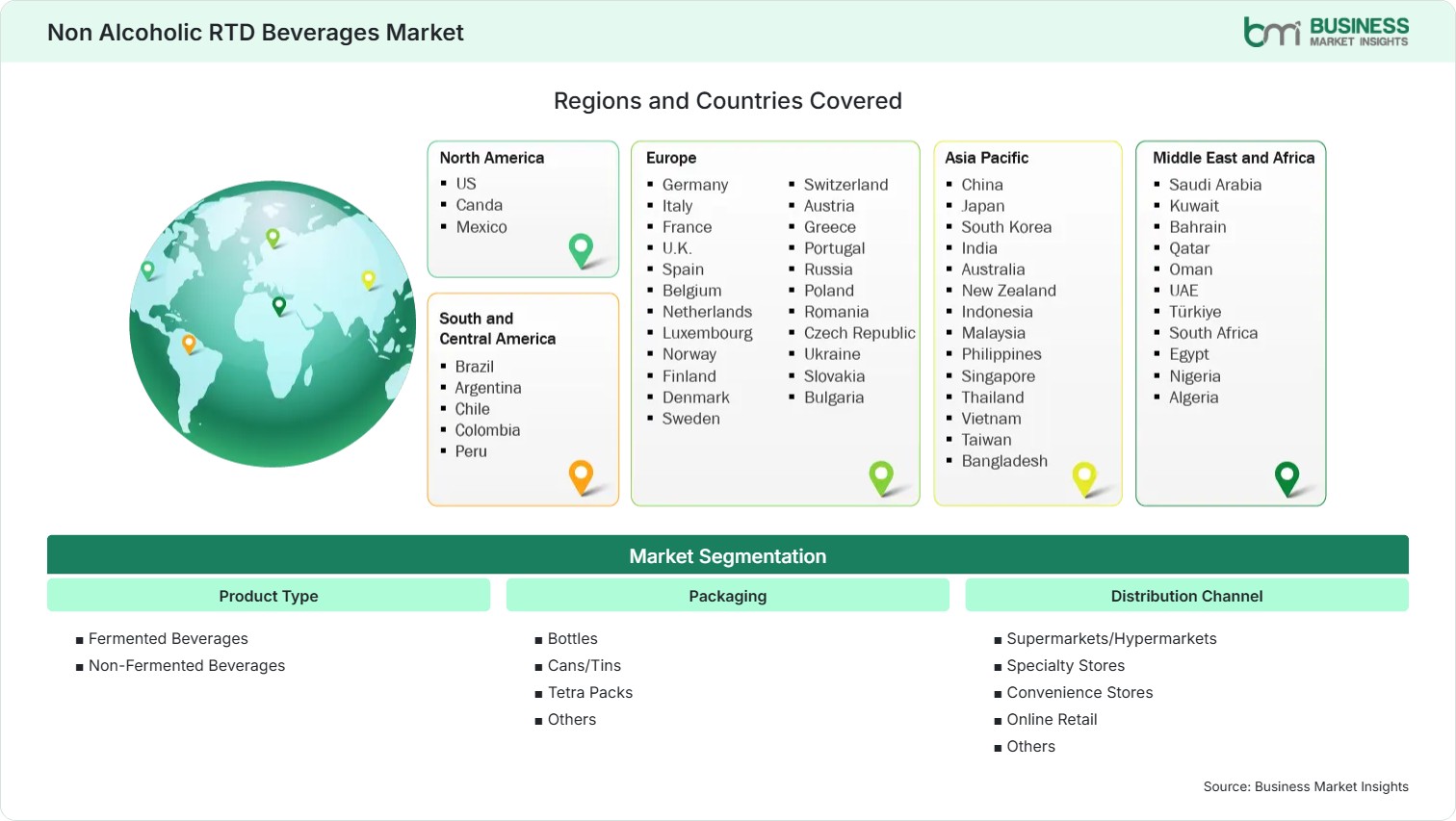
Europe holds a 24%–27% share in 2025 and expands at a 5.8%–6.4% CAGR through 2033. Adult beverages continue to be influenced by factors such as health regulations, sustainability, premiumization, and consumer desire for low sugar drinks. The major markets include Germany, the UK, and France, while Poland and other Central European economies offer greater growth prospects. The regional Non Alcoholic RTD Beverages Market share reflects established distribution, broad private-label activity, and increasing demand for functional, plant-based, and premium beverages.
- Germany benefits from extensive discount and supermarket networks, supporting broad penetration of bottled water, juices, functional beverages, energy products, and private-label offerings.
- The United Kingdom remains attractive for functional drinks and energy beverages, with consumers increasingly seeking reduced-sugar products and convenient formats for active lifestyles.
- France combines premium positioning with strong demand for natural ingredients, mineral water, juices, and dairy-based products, encouraging clean-label formulation and sustainable packaging.
- Poland and neighboring markets provide higher-volume expansion opportunities as organized retail, convenience outlets, and branded beverage penetration continue developing.
Asia Pacific Non Alcoholic RTD Beverages Market
Asia Pacific represents a 30%–34% share in 2025, with the strongest regional 8.0%–8.7% CAGR through 2033. China, Japan, India, South Korea, and Southeast Asia collectively provide diverse demand pools shaped by urbanization, rising incomes, convenience consumption, and younger demographics. The Non Alcoholic RTD Beverages Market growth is facilitated by cold coffee, tea, beverages, sports drinks, and packaged water. It is important to recognize the need for localization as tastes, costs, and retailing systems differ greatly from one country to another.
- China supports large-scale demand for ready-to-drink tea, coffee, dairy beverages, functional products, and carbonated drinks, with local flavors providing differentiation.
- India combines population scale with rapidly expanding modern retail, e-commerce, convenience formats, and cold coffee consumption, creating substantial runway for branded packaged beverages.
- Japan maintains strong demand for tea, coffee, water, and functional beverages, supported by vending machines, convenience stores, and sophisticated single-serve packaging.
- Southeast Asia offers high growth potential through urbanization, tropical climate conditions, modern retail expansion, and increasing consumer interest in energy and functional beverages.
Rest of World Non Alcoholic RTD Beverages Market
Rest of World accounts for a 12%–16% share in 2025 and grows at a 6.6%–7.3% CAGR through 2033. Urban retail development, lower beverage prices, and good consumption of fruits characterize South and Central America. Brazil and Mexico continue to be key markets, whereas Colombia and Chile offer innovative prospects. The Middle East and Africa continue to develop due to modern commerce, younger populations, thirst for hydration, and growth in packaged beverages.
In South America, Brazil provides the strongest scale, while Mexico combines large consumer demand with sophisticated beverage manufacturing. Gulf markets support premium hydration, energy, and functional beverages, while South Africa offers a relatively developed retail and manufacturing ecosystem.
- Brazil's large consumer base supports carbonated beverages, juices, energy products, bottled water, and regional flavor development through established retail networks.
- Mexico provides strong opportunities for convenience-oriented products, particularly carbonated drinks, flavored water, energy beverages, and affordable single-serve packaging.
- Gulf countries support premium hydration and functional propositions because hot climates and active lifestyles reinforce demand for convenient refreshment.
- South Africa offers a developed branded beverage ecosystem, with opportunities in energy, sports, functional, and affordable premium formats.