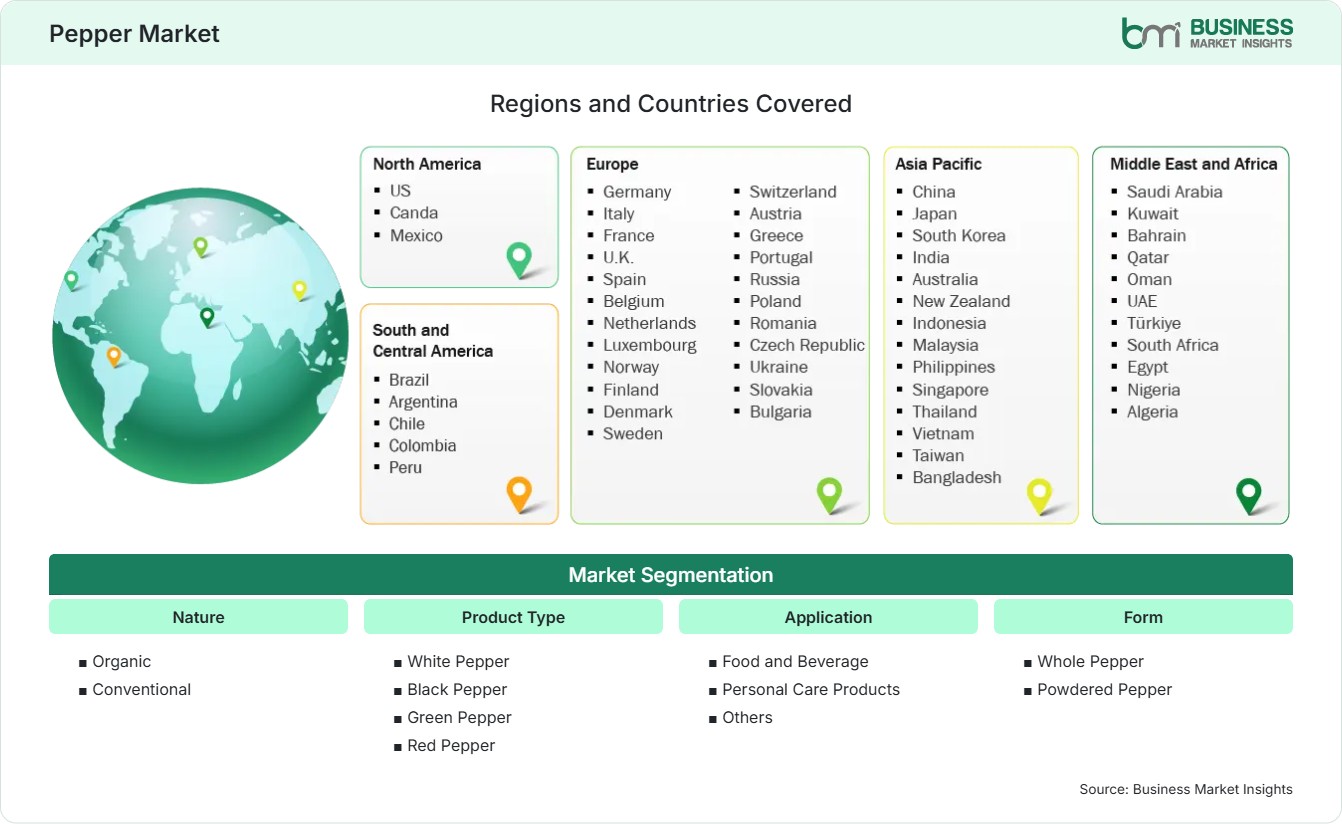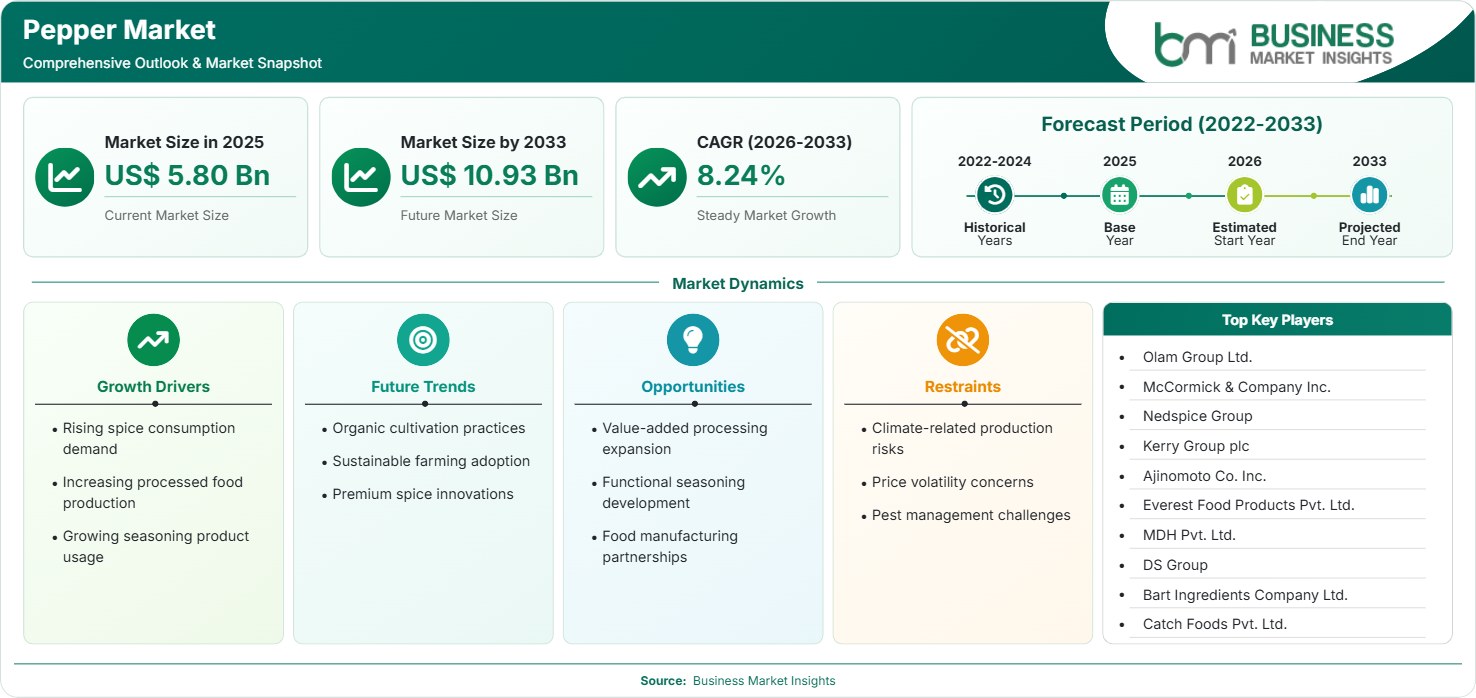
Pepper Market Regional Highlights
North America Pepper Market
North America accounted for 29%–32% of global revenue in 2025 and is projected to register a CAGR of 7.8%–8.4% during 2026–2033. Strong retail demand, expanding processed food manufacturing, and increasing consumer preference for premium spices continue supporting regional expansion. The Pepper Market share remains substantial due to advanced food processing capabilities, high seasoning consumption, and established import networks.
- Premium spice consumption continues increasing across packaged foods, restaurants, and household cooking applications.
- Clean-label food manufacturing supports growing adoption of natural seasoning ingredients.
- Retailers expand premium organic spice offerings to satisfy evolving consumer preferences.
- Foodservice operators increasingly utilize customized seasoning blends to enhance product differentiation.
- Modern packaging technologies improve product freshness, shelf life, and consumer convenience.
US Pepper Market
The United States represented approximately 24%–27% of global revenue in 2025 and is projected to expand at a CAGR of 7.9%–8.5% through 2026–2033. Increasing demand for processed foods, premium spices, and international cuisines continues supporting sustained market expansion.
- Food manufacturers increase usage of premium black pepper across processed food categories.
- Organic spice consumption continues expanding through specialty retail channels.
- Restaurant chains introduce globally inspired seasoning profiles across menu offerings.
- Strong import infrastructure ensures stable commercial supply throughout the country.
Europe Pepper Market
Europe accounted for 24%–27% of global market revenue in 2025 and is expected to register a CAGR of 7.6%–8.2% during 2026–2033. Demand is supported by premium food production, organic product consumption, and stringent food quality standards. Germany leads regional demand, while Poland records the fastest projected growth.
- Germany remains the largest regional importer and consumer of premium pepper products.
- Poland is projected to register a CAGR of 8.5%–9.1% through expanding food processing investments.
- Organic food production continues supporting premium spice demand.
- Food safety regulations encourage certified sourcing and traceable ingredient procurement.
- Functional seasoning innovations strengthen premium product development.
Asia Pacific Pepper Market
Asia Pacific represented 35%–38% of global market revenue in 2025 and is forecast to expand at the fastest CAGR of 8.8%–9.4% during 2026–2033. The Pepper Market growth is driven by expanding cultivation, strong export activity, increasing domestic consumption, and rapid growth in food manufacturing industries. India leads regional production, while Vietnam demonstrates the fastest export-driven growth.
- India maintains leadership through extensive pepper cultivation and strong domestic consumption.
- Vietnam is projected to register a CAGR of 9.1%–9.7% supported by export-oriented production.
- Expanding food manufacturing strengthens demand for processed pepper ingredients.
- Governments encourage value-added agricultural exports through modernization initiatives.
- Premium spice processing investments improve international competitiveness.
Rest of World Pepper Market
The Rest of World accounted for 10%–13% of global market revenue in 2025 and is projected to expand at a CAGR of 8.0%–8.6% during 2026–2033.
South & Central America continue expanding commercial pepper cultivation and exports, while the Middle East & Africa experience increasing demand through food processing and retail distribution. Brazil leads regional production, whereas the UAE demonstrates the fastest consumption growth.
- Brazil continues strengthening export capacity through commercial cultivation expansion.
- UAE is projected to register a CAGR of 8.6%–9.2% supported by growing foodservice demand.
- Regional distributors expand premium imported spice portfolios.
- Processing investments improve export quality and value-added production.
- Rising packaged food consumption supports long-term seasoning demand.