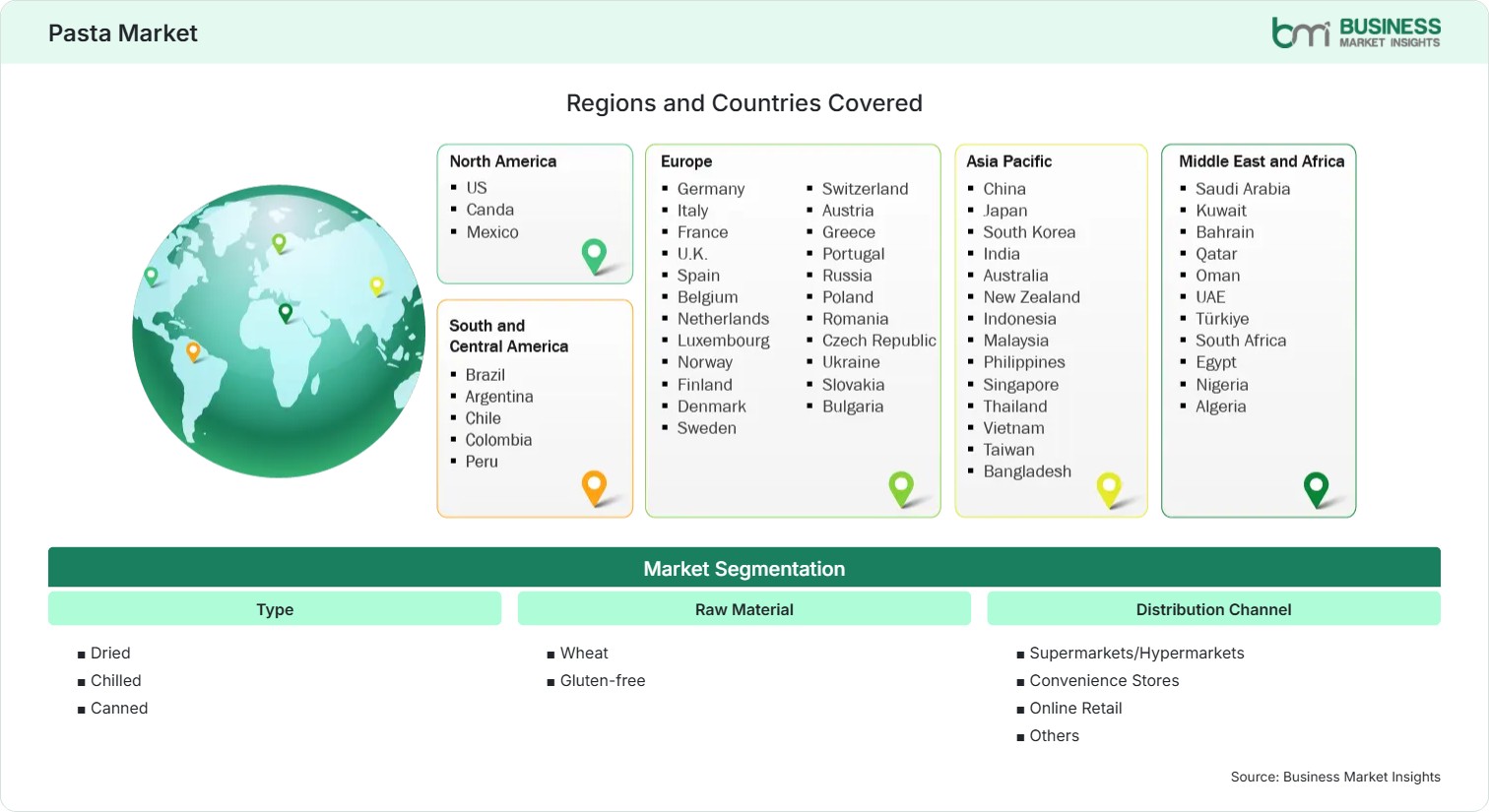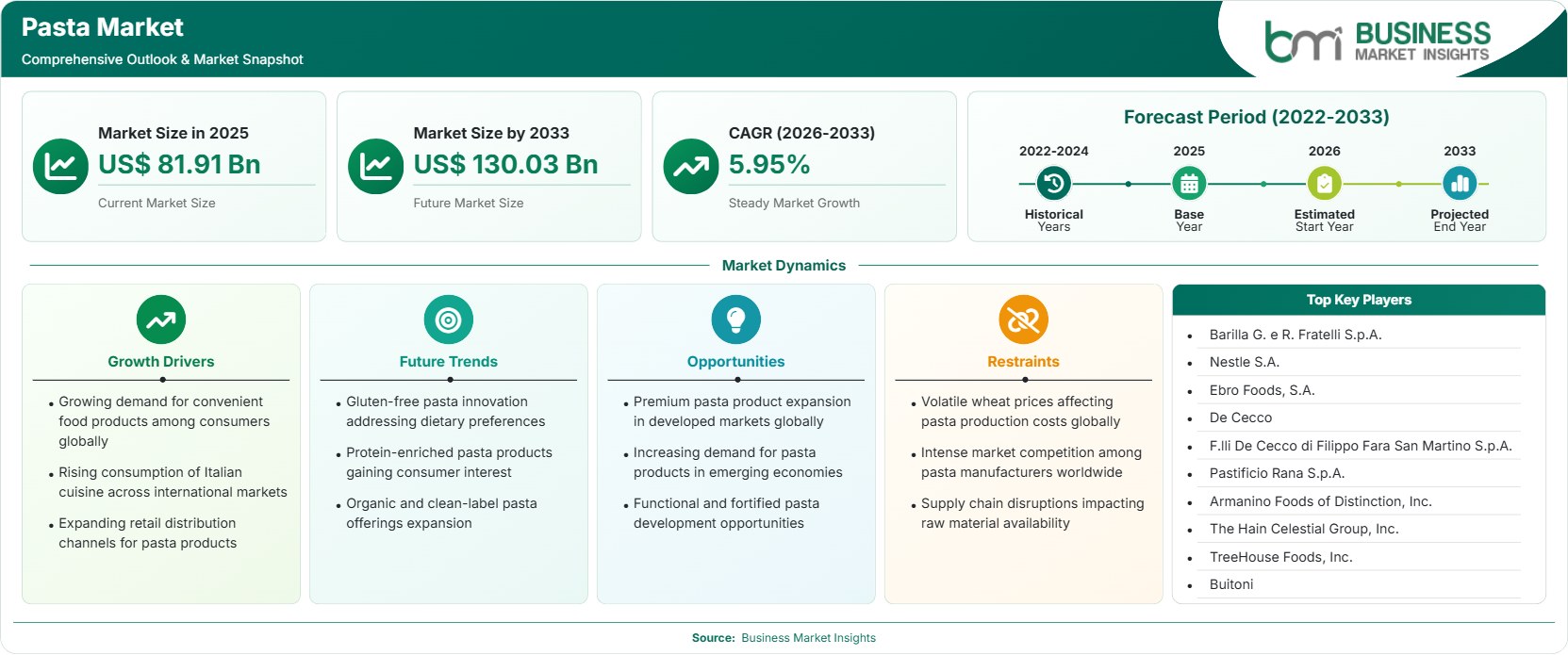
Pasta Market Regional Highlights
North America Pasta Market
North America accounted for 24%–27% of global revenue in 2025 and is projected to register a CAGR of 5.6%–6.1% during 2026–2033. The region continues maintaining a significant market position due to high consumption of packaged foods, growing demand for convenient meal solutions, expanding retail distribution networks, and increasing preference for premium and specialty pasta products. The Pasta Market Share remains strong as consumers increasingly seek nutritious, easy-to-prepare, and value-added food products suitable for busy lifestyles.
- The United States remains the largest regional market owing to high household consumption, strong retail penetration, increasing demand for premium pasta, and growing popularity of gluten-free and organic food products.
- Canada continues supporting regional growth through increasing consumer demand for healthy convenience foods, premium imported pasta, and expanding supermarket and online grocery channels.
- Rising demand for whole-grain, protein-enriched, and plant-based pasta products continues encouraging product innovation across the region.
- Expansion of foodservice establishments, quick-service restaurants, and Italian cuisine offerings continues strengthening pasta consumption.
US Pasta Market
The United States accounted for approximately 84%–87% of North American revenue in 2025 and is projected to register a CAGR of 5.7%–6.2% during the forecast period. Strong consumer demand for convenient packaged foods, increasing health-conscious purchasing behavior, and expanding premium food categories continue driving domestic market growth.
- Increasing preference for premium, organic, and gluten-free pasta products is encouraging manufacturers to diversify product offerings.
- Rising popularity of home cooking and international cuisines continues strengthening pasta market.
- Expansion of online grocery platforms is improving product accessibility while supporting direct-to-consumer sales.
- Food manufacturers continue investing in innovative packaging, healthier ingredients, and premium product positioning to strengthen market competitiveness.
Europe Pasta Market
Europe represented 34%–37% of global revenue in 2025 and is expected to expand at a CAGR of 5.4%–5.9% during 2026–2033. The region continues benefiting from strong pasta consumption traditions, well-established food manufacturing industries, premium product demand, and widespread availability across retail and foodservice channels. Italy remains the largest regional market, while Germany is projected to register the fastest growth with a CAGR of 6.0%–6.5% owing to increasing convenience food demand, premium product consumption, and expanding multicultural food preferences.
- Italy continues leading regional demand through its long-established pasta manufacturing industry, high domestic consumption, and strong export capabilities.
- Germany continues witnessing strong growth through increasing demand for ready-to-cook meals, expanding retail distribution, and rising health-conscious food consumption.
- France continues supporting market development through premium food consumption, increasing organic product demand, and growing interest in international cuisines.
- The U.K. continues contributing through expanding supermarket offerings, online grocery growth, and increasing consumption of convenient packaged meals.
- European manufacturers continue investing in sustainable production methods, healthier ingredients, and premium product innovation.
Asia Pacific Pasta Market
Asia Pacific accounted for 27%–30% of global revenue in 2025 and is projected to register the highest CAGR of 6.6%–7.1% during the forecast period. Rising urbanization, expanding middle-class populations, increasing disposable incomes, growing Western food consumption, and strengthening organized retail infrastructure continue driving regional market expansion. China remains the leading regional market, while India is projected to register the fastest growth with a CAGR of 7.1%–7.6% owing to changing dietary habits, increasing convenience food demand, and rapid expansion of modern retail channels.
- China continues dominating regional demand through increasing urban consumption, expanding retail distribution, and growing adoption of Western-style food products.
- India continues witnessing rapid growth due to rising disposable incomes, changing consumer lifestyles, expanding foodservice industries, and increasing availability of packaged pasta products.
- Japan continues supporting premium pasta demand through consumer preference for convenient, high-quality packaged foods and international cuisine.
- Australia continues contributing through strong consumption of premium pasta products, expanding retail availability, and increasing demand for healthier food alternatives.
- Southeast Asian countries continue creating new opportunities through growing urban populations, modern retail expansion, and increasing awareness of international food products.
Rest of World Pasta Market
The Rest of World accounted for 9%–11% of global revenue in 2025 and is projected to register a CAGR of 5.9%–6.4% during 2026–2033. Latin America, the Middle East, and Africa continue experiencing increasing pasta consumption due to rising urbanization, improving disposable incomes, expanding retail infrastructure, and growing acceptance of convenient packaged foods.
Increasing investments in food processing, retail modernization, international food trade, and packaged food distribution are creating new opportunities for pasta manufacturers across emerging economies.
- Brazil continues supporting regional demand through increasing household consumption, expanding food manufacturing, and strengthening supermarket networks.
- Mexico continues strengthening market growth through growing convenience food demand, expanding retail channels, and increasing adoption of international cuisines.
- Middle Eastern countries continue witnessing increasing demand for premium and imported pasta products due to changing dietary preferences and expanding foodservice sectors.
- South Africa continues contributing through increasing supermarket penetration, rising packaged food consumption, and improving consumer purchasing power.
- Emerging economies across Latin America, the Middle East, and Africa continue creating long-term growth opportunities through expanding retail accessibility and growing demand for affordable convenience foods.