
Functional Proteins Market Outlook: Size, Share, Trends, Growth Analysis, Competitive Landscape & Forecast, 2026-2033

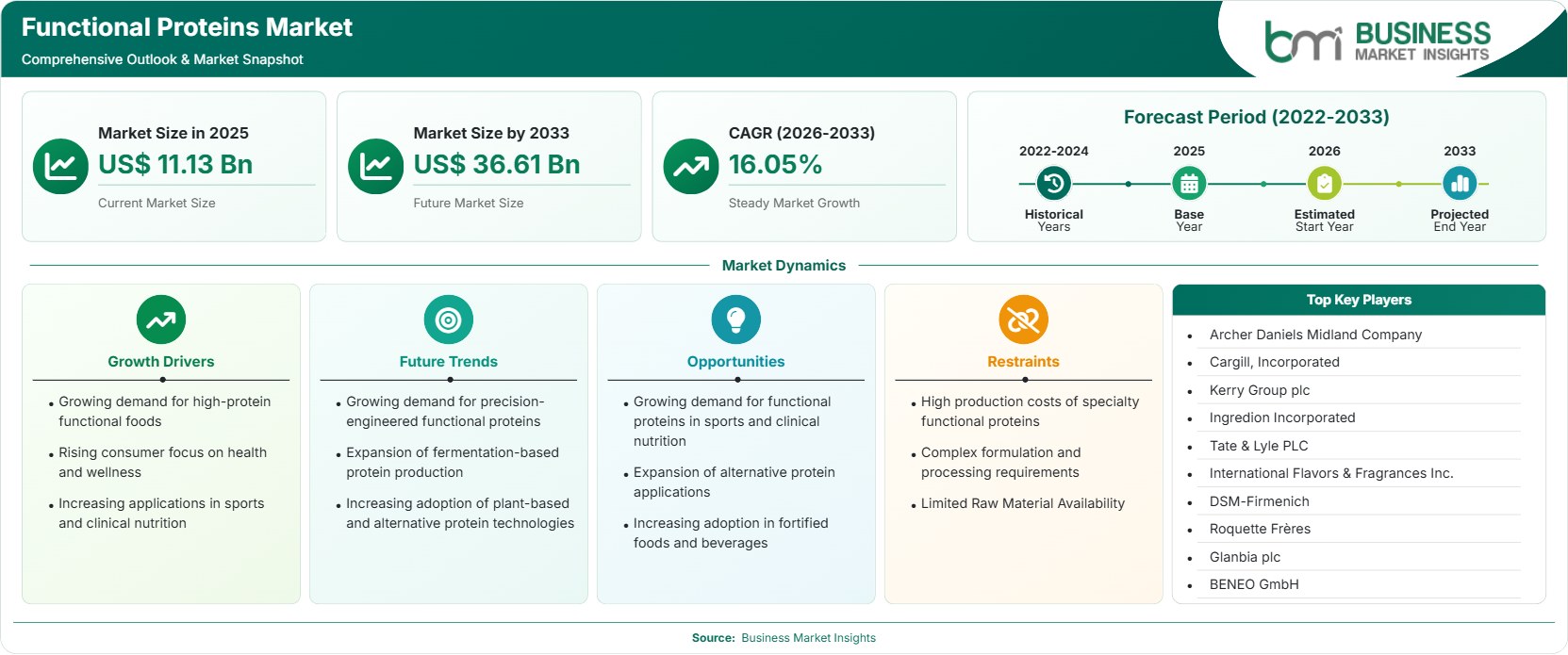
The Functional Proteins Market size was valued at US$ 11.13 Billion in 2025 and is projected to reach US$ 36.61 Billion by 2033, growing at a CAGR of 16.05% during 2026–2033. Market growth is driven by rising demand for high-protein functional foods, increasing consumer focus on health and wellness, and expanding applications in sports and clinical nutrition. Growing innovation in plant-based ingredients and fortified nutrition solutions continues creating significant opportunities across global food and nutrition industries.

Report Coverage
  • Source: Animal, Plant
  • Application: Functional Food & Beverages, Animal Feed, Dietary Supplements
US$ 11.13 Bn Market size in 2025
US$ 36.61 Bn Market Size by 2033
16.05% CAGR, 2026 - 2033
2026-2033 Forecast Period

01 AI Overview

Functional Proteins Market Summary

  • North America Region: North America holds a 35%–38% share in 2025 and is projected to expand at a 15.1%–15.8% CAGR during 2026–2033. Growth is supported by increasing consumption of protein-enriched foods, rising health awareness, strong sports nutrition demand, product innovation, expanding dietary supplement usage, premium nutrition trends, and growing functional ingredient adoption. The U.S. remains the leading market, growing at a 15.2%–15.9% CAGR.
  • Fastest Growing Region: Asia Pacific accounts for 24%–27% share in 2025 and is anticipated to register a 17.3%–18.1% CAGR through 2033. Expanding middle-class populations, rising nutrition awareness, growing demand for fortified products, and increasing health-focused food consumption continue supporting rapid expansion.
  • Leading Segment: Plant represents 52%–56% share in 2025 and is expected to grow at a 16.8%–17.4% CAGR during 2026–2033. Consumer preference for sustainable nutrition, vegan diets, and alternative protein solutions continues strengthening segment leadership.
  • High Growth Segment: Functional Food & Beverages accounts for 58%–62% share in 2025 and is projected to expand at a 16.9%–17.6% CAGR through 2033. Rising demand for fortified nutrition products and protein-enriched beverages continues supporting adoption.
  • Key Market Opportunity: Expanding use of functional proteins in personalized nutrition, clinical nutrition, sports performance products, and plant-based food innovation is creating substantial market opportunities.
  • Major Market Players: Archer Daniels Midland Company, Cargill, Incorporated, Kerry Group plc, Ingredion Incorporated, Tate & Lyle PLC, International Flavors & Fragrances Inc., DSM-Firmenich, Roquette Frères, Glanbia plc, and BENEO GmbH.
02 Strategic Insights

Functional Proteins Market: Strategic Insights

Functional Proteins Market Strategic Framework
FREE PDF
Request your free sample
Request free sample
03 Stakeholder View

Key Takeaways

  • The market value chain is increasingly centered on ingredient manufacturers, protein processors, nutrition brands, food and beverage companies, and specialty ingredient suppliers collaborating to develop high-performance nutrition solutions.
  • Functional food and beverage applications present the largest growth opportunity as consumers increasingly seek protein-enriched products that support wellness, fitness, weight management, and healthy aging objectives.
  • Innovation is focused on protein fortification technologies, clean-label formulations, plant-based protein extraction, texture enhancement, and bioavailability improvement to address evolving consumer preferences.
  • Asia Pacific offers a strong investment case due to rising disposable incomes, increasing health awareness, expanding urban populations, and growing demand for fortified nutrition products.
  • Strategic investments in alternative proteins, sustainable sourcing practices, and advanced ingredient processing technologies are strengthening competitive positioning across the industry.
  • Personalized nutrition trends are encouraging manufacturers to develop specialized protein solutions targeting sports nutrition, clinical nutrition, healthy aging, and functional wellness applications.
04 Geographic Outlook

Functional Proteins Market Regional Highlights

North America Functional Proteins Market

North America accounted for approximately 35%–38% share in 2025 and is projected to grow at a 15.1%–15.8% CAGR through 2033. The region benefits from strong consumer awareness regarding nutrition, widespread adoption of protein-enriched products, and robust sports nutrition demand. Functional proteins are increasingly incorporated into beverages, snacks, meal replacements, and dietary supplements. Growing preference for plant-based diets and premium nutrition products continues to support functional proteins market share expansion across the United States and Canada.

  • Sports nutrition brands continue introducing protein-enriched products designed to support athletic performance, muscle recovery, and active lifestyle requirements among health-conscious consumers.
  • Growing adoption of plant-derived proteins is encouraging food manufacturers to expand alternative protein offerings across multiple product categories.
  • Functional beverages remain a key growth area due to increasing demand for convenient nutrition solutions and wellness-focused products.
  • Investments in ingredient innovation are improving protein functionality, taste, texture, and product formulation flexibility.

US Functional Proteins Market

The United States accounts for approximately 80%–84% share within North America and is expected to expand at a 15.2%–15.9% CAGR during 2026–2033. Demand is driven by growing interest in fitness, weight management, preventive healthcare, and personalized nutrition. Strong product innovation activity and increasing consumer willingness to spend on health-oriented food products continue supporting functional proteins market growth across functional nutrition categories.

  • Rising demand for clean-label nutrition products is encouraging manufacturers to utilize high-quality protein ingredients.
  • Sports nutrition and healthy aging applications continue generating substantial demand for protein-enriched formulations.
  • Retail expansion and e-commerce growth are improving accessibility of functional protein products nationwide.
  • Clinical nutrition adoption is increasing due to growing awareness of nutrition-based health management.

Europe Functional Proteins Market

Europe represented approximately 28%–31% share in 2025 and is forecast to register a 15.4%–16.0% CAGR through 2033. Growing health consciousness, increasing demand for plant-based food products, and strong focus on sustainable nutrition continue driving market expansion. Germany, the United Kingdom, and France remain major markets, while broader regional adoption of fortified nutrition products supports long-term growth opportunities in functional proteins market forecasts.

  • Demand for sustainable plant-based protein ingredients continues increasing across food and beverage manufacturing.
  • Consumers are increasingly seeking protein-fortified products aligned with wellness and healthy lifestyle objectives.
  • Regulatory support for transparent labeling and nutritional quality continues supporting premium product demand.
  • Food manufacturers are investing in innovative formulations that improve nutritional value and consumer appeal.

Asia Pacific Functional Proteins Market

Asia Pacific accounted for approximately 24%–27% share in 2025 and is expected to witness the fastest growth at a 17.3%–18.1% CAGR through 2033. Rising disposable incomes, expanding middle-class populations, and growing awareness regarding healthy nutrition continue supporting functional proteins market expansion. Increasing urbanization and lifestyle changes are encouraging greater consumption of protein-enriched foods and beverages throughout the region.

  • China remains a major contributor due to increasing nutrition awareness and expanding functional food consumption.
  • India is emerging as a high-growth market supported by rising health consciousness and dietary diversification.
  • Functional beverage consumption continues increasing among younger consumer groups seeking convenient nutrition options.
  • Growing acceptance of plant-based proteins is supporting innovation across alternative nutrition categories.

Rest of World Functional Proteins Market

The Rest of World region accounted for approximately 6%–8% share in 2025 and is projected to grow at a 15.6%–16.3% CAGR through 2033. Expansion of health and wellness trends, increasing awareness of nutritional benefits, and improving availability of functional food products continue creating opportunities in functional proteins market. Growing demand for premium nutrition products is supporting adoption across Latin America, the Middle East, and Africa.

  • Brazil continues expanding its functional food sector through increasing consumer focus on nutrition and wellness.
  • Middle Eastern markets are witnessing growing demand for fortified foods and high-protein dietary products.
  • Retail modernization is improving accessibility of specialized nutrition products across emerging markets.
  • Increasing health awareness is encouraging adoption of protein-based wellness solutions across multiple demographics.
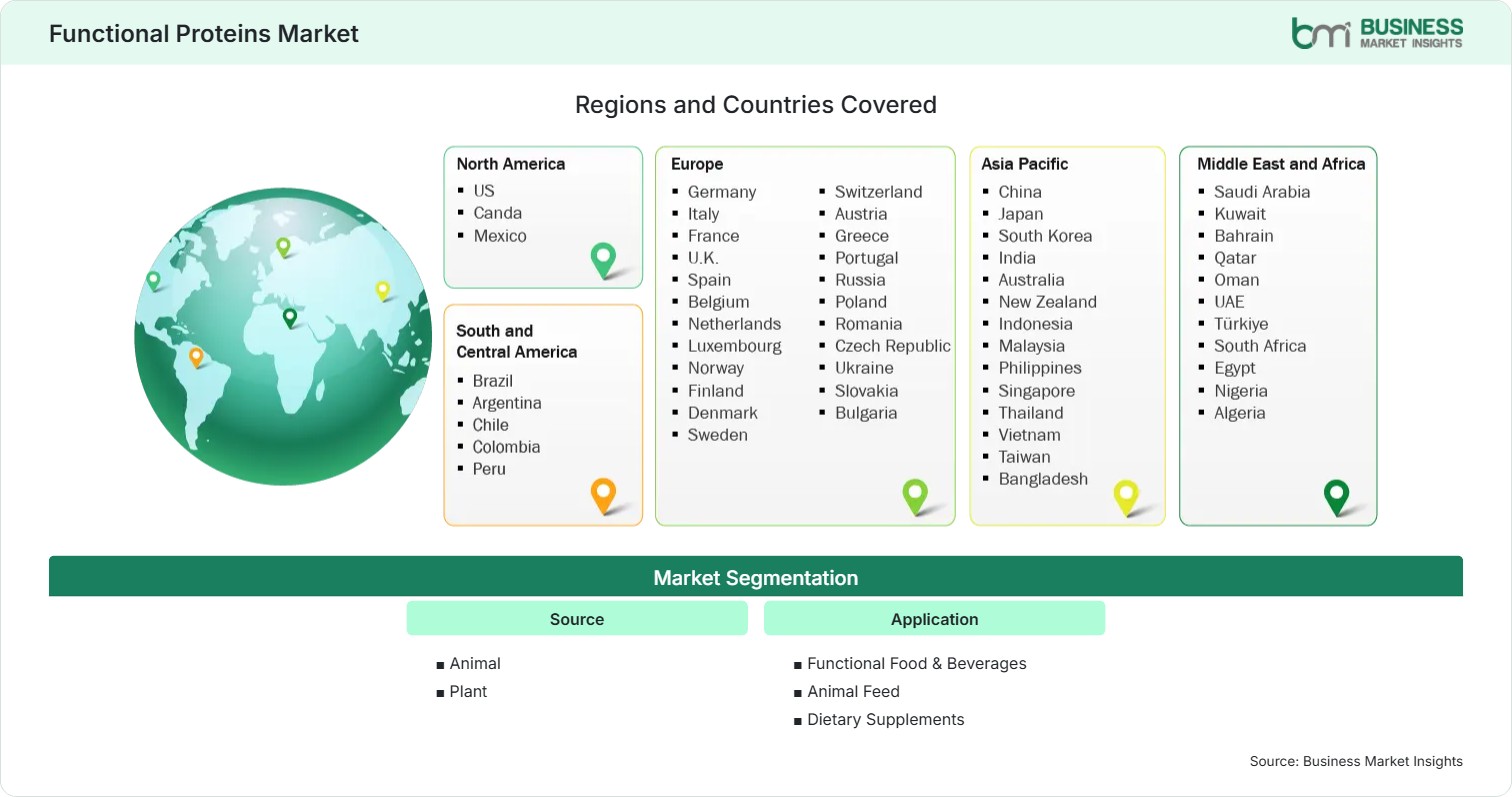
Global Market Geography
FREE PDF
Request your free sample
Request free sample
05 Segment Analysis

Functional Proteins Market Segmentation

Source

The source segment is led by plant-derived proteins, accounting for approximately 52%–56% share in 2025 and anticipated to grow at a 16.8%–17.4% CAGR through 2033. Rising consumer preference for sustainable nutrition, expanding vegan and flexitarian lifestyles, and increasing innovation in plant-based food products continue supporting functional proteins market growth. Food manufacturers are increasingly utilizing functional proteins to enhance nutritional value, texture, and product performance across diverse applications.

  • Animal: Animal-derived functional proteins continue to maintain strong demand in clinical nutrition, sports nutrition, dairy products, and specialized food formulations due to their high biological value and amino acid profile.
  • Plant: The leading source segment driven by growing demand for sustainable protein solutions, increasing adoption of plant-based diets, and wider application across functional foods, beverages, and dietary supplements.

Application

The application segment is dominated by functional food & beverages, accounting for approximately 58%–62% share in 2025 and projected to expand at a 16.9%–17.6% CAGR through 2033. Strong consumer demand for fortified nutrition products, protein-enriched beverages, and health-focused food formulations continues supporting segment leadership in functional proteins market. Increasing awareness regarding preventive health and wellness is further driving adoption across major consumer markets.

  • Functional Food & Beverages: The largest application segment owing to rising demand for protein-fortified products that support wellness, energy management, muscle health, and healthy lifestyle goals.
  • Animal Feed: Increasing utilization of functional proteins is driven by growing focus on livestock nutrition, feed efficiency, animal health, and productivity enhancement across commercial farming operations.
  • Dietary Supplements: Strong growth is supported by increasing consumer interest in fitness, healthy aging, sports performance, immunity support, and personalized nutrition products.
06 Market Forces

Functional Proteins Market Dynamics

Key Market Drivers

Growing Demand for High-Protein Functional Foods

Consumers are increasingly seeking food products that deliver enhanced nutritional benefits beyond traditional dietary requirements. High-protein functional foods have gained significant popularity due to their association with muscle health, weight management, satiety, and overall wellness. Food manufacturers are responding by incorporating functional proteins into snacks, beverages, dairy alternatives, meal replacements, and nutritional products. The growing preference for convenient and nutrient-rich foods continues to accelerate product innovation across the food industry. In addition, increasing awareness regarding preventive healthcare and balanced nutrition is supporting sustained demand for protein-fortified products among consumers of all age groups.

Rising Consumer Focus on Health and Wellness

Increasing health awareness is affecting consumer behavior worldwide. Consumers are choosing food and beverage products based on their nutritional value, labeling, and health attributes. Functional proteins have earned a reputation as a great source of support for active lifestyle, healthy aging, good immunity, and nutrition. Such trends are prompting the introduction of new formulations that not only offer functionality but also good taste and convenience. The rising trend towards wellness among consumers, along with growing demand for clean-label and natural ingredients, will continue to provide growth opportunities for functional proteins manufacturers.

Increasing Applications in Sports and Clinical Nutrition

Sports nutrition and clinical nutrition are emerging as major demand centers for functional proteins due to their ability to support muscle recovery, strength development, nutritional supplementation, and specialized dietary requirements. Protein-enriched formulations are becoming an integral part of achieving desired results by athletes, fitness buffs, and individuals who need medical nutrition. In addition, even healthcare professionals have begun to recognize the benefits of functional proteins in managing diseases and promoting healthy aging and recovery. Innovations in product development, scientific research, and growing awareness of health benefits are among the factors that have led to increased usage.

Key Market Opportunities

Growing Demand for Functional Proteins in Sports and Clinical Nutrition

The expanding sports nutrition and clinical nutrition industries are creating significant opportunities for functional protein manufacturers. Consumers are increasingly prioritizing products that support physical performance, post-exercise recovery, healthy aging, and disease-related nutritional management. Healthcare providers are also incorporating specialized protein formulations into dietary programs designed to improve patient outcomes. As awareness regarding protein quality and targeted nutrition continues to increase, manufacturers have opportunities to develop innovative ingredients and customized formulations that address specific health and wellness requirements. This trend is expected to generate substantial long-term growth opportunities across premium nutrition markets.

Expansion of Alternative Protein Applications

The growing acceptance of alternative proteins has opened new possibilities for the adoption of functional proteins across various categories of food, beverages, and nutritional products. The trend towards using plant-based, blended, and sustainable proteins is becoming evident as consumer needs change. The progress in extraction methods, sensory improvements, and formulation has increased the attractiveness and viability of alternative proteins. The increased awareness of environmental issues and the need for sustainable food production have contributed to growth. Such trends present opportunities for ingredient manufacturers to diversify their offerings and cater to different protein markets.

Increasing Adoption in Fortified Foods and Beverages

The trend towards fortification is encouraging the use of more functional proteins in conventional food and beverage items. Consumers are looking for convenient nutrition options which deliver extra health benefits without making drastic changes in their diet. In this way, companies are coming up with drinks, cereals, dairy, snack, and meal replacement options which have been fortified with proteins and target consumers at large. The rising demand for wellness products and preventive nutrition is also helping in the adoption of fortified formulas in the market.

Market Restraints and Challenges

High Production Costs of Specialty Functional Proteins

Factor: Production of specialty functional proteins often requires advanced extraction methods, purification technologies, quality control systems, and specialized raw materials. Manufacturers must invest significantly in processing infrastructure, research, development activities, and regulatory compliance to ensure product quality and functionality. The increasing need for sustainable sourcing and premium-grade ingredients can further elevate manufacturing costs.

Impact: High production costs can result in premium product pricing, limiting adoption among price-sensitive consumers and manufacturers. Cost pressures may also affect profit margins and restrict market expansion in emerging economies. Companies are therefore challenged to balance product performance, affordability, and sustainability while maintaining competitiveness in a rapidly evolving marketplace.

Complex Formulation and Processing Requirements

Factor: Functional proteins must maintain stability, solubility, texture, taste, and performance throughout processing and storage. Achieving these characteristics often requires sophisticated formulation expertise, specialized processing techniques, and compatibility with multiple food and beverage systems. Variations in protein source characteristics can further complicate product development activities.

Impact: Complex formulation requirements can increase product development timelines and manufacturing costs while creating technical challenges for food and beverage producers. Inconsistent functionality or sensory performance may affect product acceptance and market success. Consequently, manufacturers must continuously invest in research and process optimization to ensure reliable product performance and commercial viability.

07 Company Analysis

Competitive Landscape

The competitive landscape is characterized by investments in protein extraction technologies, plant-based ingredient innovation, clean-label product development, and specialized nutrition solutions. The Functional Proteins Market analysis indicates that leading companies are expanding production capabilities, strengthening sustainable sourcing strategies, and developing advanced protein ingredients to meet growing demand across food, beverage, dietary supplement, and animal nutrition applications.

Company Name

Overview

Products and Services relevant to this market

Archer Daniels Midland Company

Global agricultural processing and nutrition company with extensive capabilities in protein ingredient development and food innovation.

Plant proteins, specialty protein ingredients, functional food solutions, nutrition ingredients, and formulation support services.

Cargill, Incorporated

International food and agriculture company serving food, beverage, and nutrition industries with advanced ingredient solutions.

Functional proteins, plant proteins, food ingredients, nutritional solutions, and protein formulation technologies.

Kerry Group plc

Global taste and nutrition company focused on delivering health-focused functional ingredient solutions.

Functional proteins, nutritional ingredients, protein fortification solutions, beverage systems, and wellness formulations.

Ingredion Incorporated

Ingredient solutions provider specializing in food formulation, texture optimization, and nutritional enhancement.

Plant protein ingredients, protein-enriched formulations, functional food ingredients, and specialty nutrition solutions.

Tate & Lyle PLC

Global provider of food and beverage ingredient solutions emphasizing healthier product development.

Protein ingredients, fortification solutions, nutritional formulations, and specialty food components.

International Flavors & Fragrances Inc.

Ingredient innovation company supporting food, beverage, health, and wellness markets.

Functional proteins, nutritional ingredients, formulation technologies, and health-focused ingredient solutions.

DSM-Firmenich

Science-based nutrition and health company delivering innovative food and dietary ingredient solutions.

Protein nutrition solutions, dietary ingredients, health-focused formulations, and specialized nutrition technologies.

Roquette Frères

Leading producer of plant-based ingredients with a strong focus on protein innovation and sustainable nutrition.

Pea proteins, plant proteins, nutritional ingredients, sports nutrition solutions, and food formulation products.

Glanbia plc

Global nutrition company with a strong presence in sports nutrition and functional ingredient markets.

Functional proteins, sports nutrition ingredients, protein concentrates, and wellness nutrition solutions.

BENEO GmbH

Ingredient manufacturer focused on health-promoting food and nutrition solutions.

Functional ingredients, nutritional formulations, protein solutions, and food fortification technologies.

10 Trust & Transparency

Research Methodology

The market analysis combines proprietary research with secondary data from government agencies, company disclosures, regulatory filings, industry databases and expert interviews. Market estimates are validated through data triangulation, cross-market benchmarking and analyst review.

View Full Research Methodology

11 Questions Answered

Frequently Asked Questions

What are the primary challenges faced by manufacturers?

Major challenges include high production costs for specialty proteins, formulation complexity, processing difficulties, ingredient stability concerns, and maintaining affordability while delivering desired functionality and nutritional benefits.

Which region is expected to grow the fastest in functional proteins market report?

Asia Pacific is projected to register the fastest growth owing to rising health awareness, increasing disposable incomes, growing demand for fortified foods, and expanding nutrition-focused consumer markets.

Why are functional food and beverage applications growing rapidly?

Consumers increasingly seek protein-fortified foods and beverages that support wellness, weight management, active lifestyles, and preventive healthcare objectives, driving strong demand across this application segment.

Which source segment dominates the functional proteins market?

Plant-based functional proteins hold the largest market share due to increasing consumer preference for sustainable nutrition, vegan diets, and alternative protein products.

What are functional proteins?

Functional proteins are specialized protein ingredients that provide nutritional benefits while also improving functionality such as texture, stability, emulsification, hydration, or nutritional performance in food and beverage products.

Access the Full Functional Proteins Market Report

Get segment-level forecasts, regional estimates, competitive benchmarking, company profiles and downloadable Excel datasets.

Access the full Functional Proteins Market Report
350 pages PDF & Excel | 2026-08-20