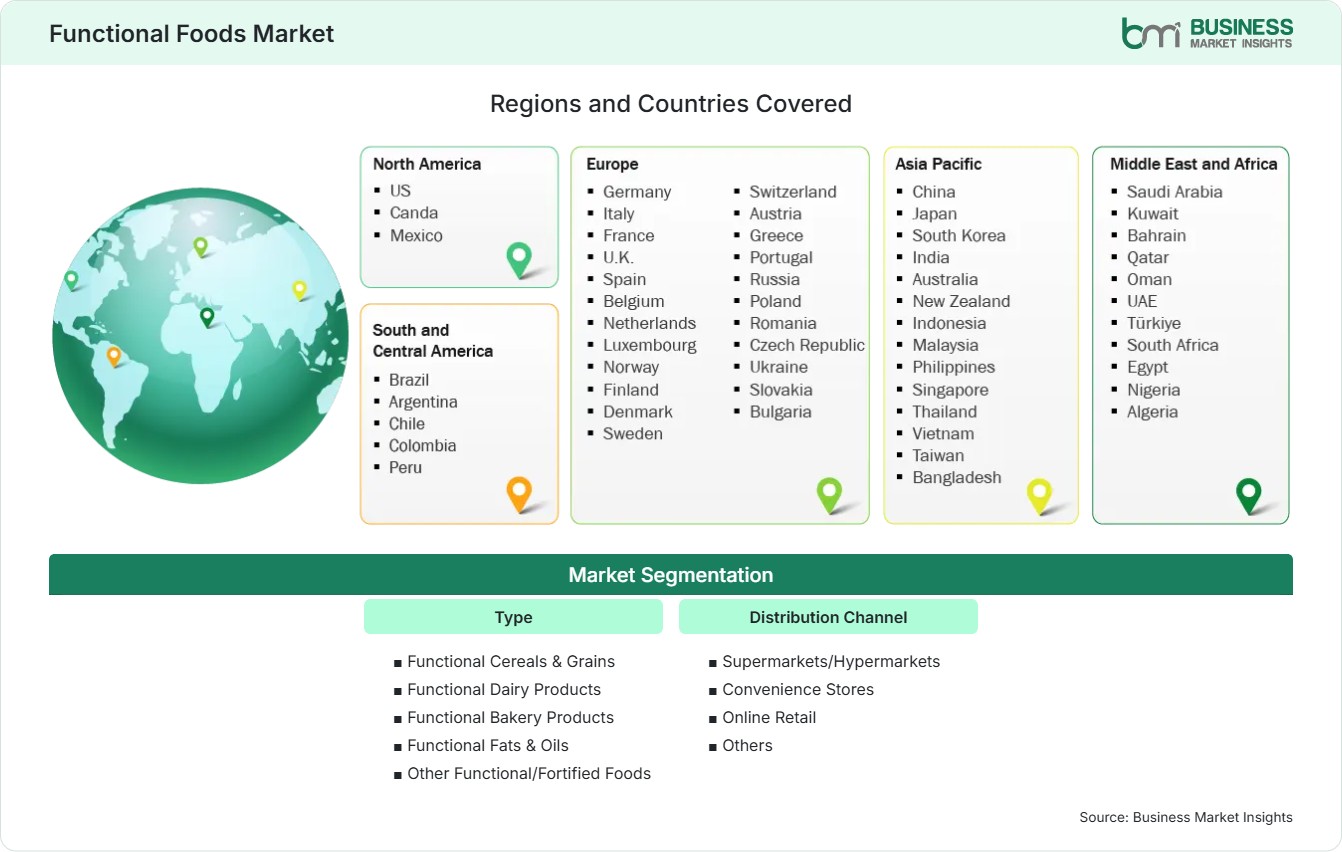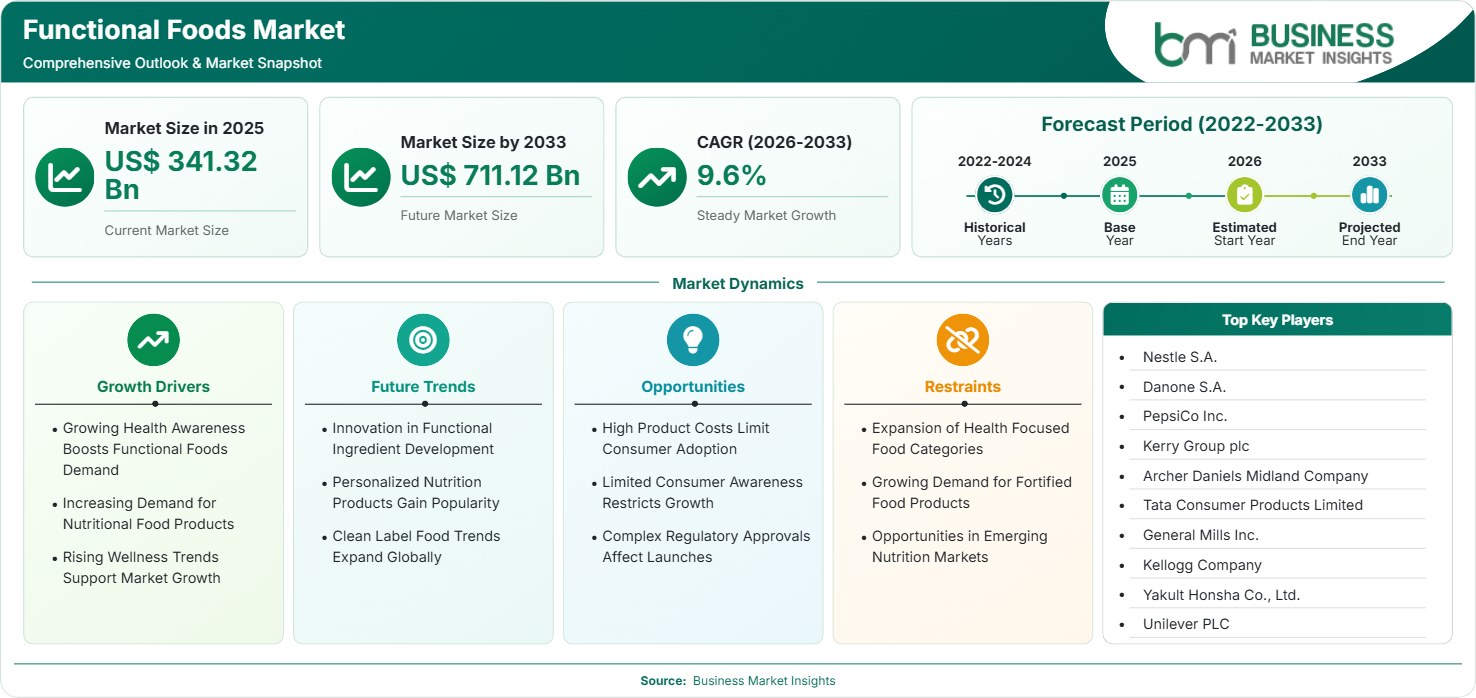
Functional Foods Market Regional Highlights
North America Functional Foods Market
North America represents a leading regional market with a share of 34%–37% in 2025 and is projected to grow at a CAGR of 8%–10% during 2026–2033. Strong consumer awareness, developed retail infrastructure, and high adoption of health-focused products support regional leadership. Functional Foods Market share remains concentrated in the United States and Canada due to established food innovation capabilities.
- Consumer demand for immunity, digestive health, and nutritional wellness products continues supporting market expansion across retail categories.
- The United States remains a major innovation hub due to strong investments in food technology and brand competition.
- Canada is experiencing growing adoption of wellness-focused consumption patterns and expanded availability of functional products.
- Manufacturers are investing in clean-label formulations and the integration of advanced functional ingredients to meet consumer expectations.
US Functional Foods Market
The US market holds a share of 30%–33% in 2025 and is estimated to register a CAGR of 8%–10% from 2026–2033. The country remains a significant market due to strong consumer spending on wellness products, advanced food manufacturing capabilities, and widespread retail accessibility. Growing demand for preventive nutrition continues supporting product innovation and category expansion.
- Health-conscious consumers are increasing demand for products supporting immunity, energy management, and digestive wellness.
- Food companies are expanding functional product portfolios through research-driven formulations and ingredient innovation.
- Online platforms are improving access to specialized nutrition products and emerging functional food brands.
- Retailers are increasing shelf space allocation for wellness-oriented food and beverage categories.
Europe Functional Foods Market
Europe accounts for a share of 25%–28% in 2025 and is expected to expand at a CAGR of 8%–10% during 2026–2033. The region benefits from strong health awareness, established food regulations, and demand for premium nutrition products. Germany, the United Kingdom, and France represent leading markets, while Italy and Spain demonstrate continued category development.
- Germany maintains strong demand through advanced food processing capabilities and consumer interest in healthy diets.
- The United Kingdom is expanding functional product adoption through wellness trends and retail innovation.
- France is supporting market development through demand for premium nutritional and fortified food products.
- European manufacturers are emphasizing scientific validation and clean-label positioning to attract consumers.
Asia Pacific Functional Foods Market
Asia Pacific represents the fastest-growing regional market with a share of 27%–30% in 2025 and a projected CAGR of 11%–13% during 2026–2033. Functional Foods Market growth is supported by rising health awareness, changing dietary habits, and increasing disposable incomes. China, Japan, India, and South Korea are key contributors, with India and China showing strong expansion potential.
- China continues to expand the adoption of functional foods through growing wellness awareness and product innovation.
- Japan benefits from established consumer acceptance of probiotic and fortified food products.
- India is experiencing rising demand due to growing nutritional awareness and changes in urban lifestyles.
- South Korea is supporting category growth through advanced food technology and health-focused consumption.
Rest of World Functional Foods Market
Rest of World markets represent a share of 10%–13% in 2025 and are projected to grow at a CAGR of 9%–11% during 2026–2033. Latin America, Middle East, and Africa markets are developing through rising health awareness, improving retail networks, and expanding access to nutritional products. Brazil, Mexico, UAE, and South Africa represent important growth contributors.
- Brazil is increasing functional food adoption through expanding wellness trends and consumer interest in healthier diets.
- Mexico is experiencing growing demand due to rising awareness of nutritional benefits and fortified products.
- Middle Eastern markets are adopting premium health-focused foods through increasing consumer purchasing power.
- South Africa is developing functional nutrition categories through improved retail availability and health awareness.