
Pet Food Market Outlook: Size, Share, Trends, Growth Analysis, Competitive Landscape & Forecast, 2026-2033

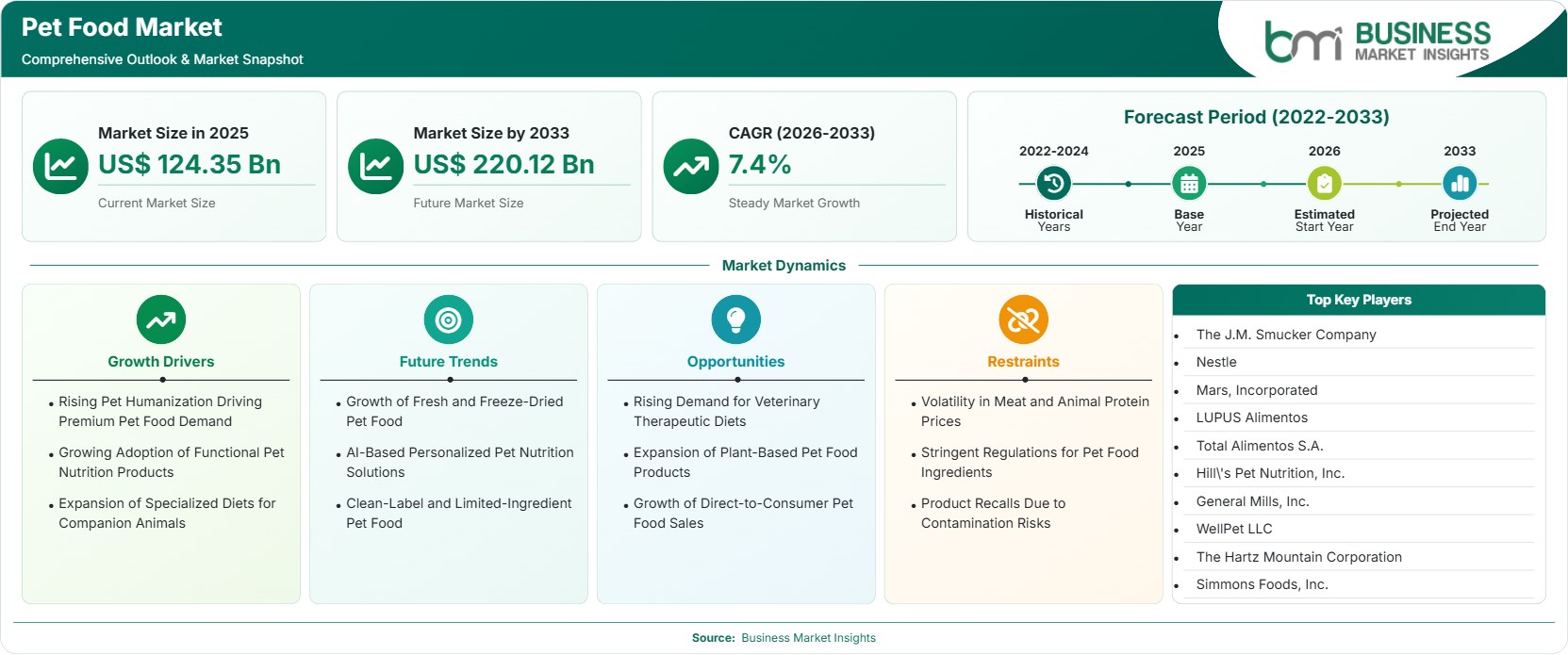
The Pet Food Market size was valued at US$ 124.35 Billion in 2025 and is projected to reach US$ 220.12 Billion by 2033, growing at a CAGR of 7.4% during 2026–2033. Growth is driven by increasing pet ownership, rising pet humanization trends, growing demand for premium nutrition products, expanding adoption of functional pet foods, and increasing expenditure on pet health and wellness globally.

Report Coverage
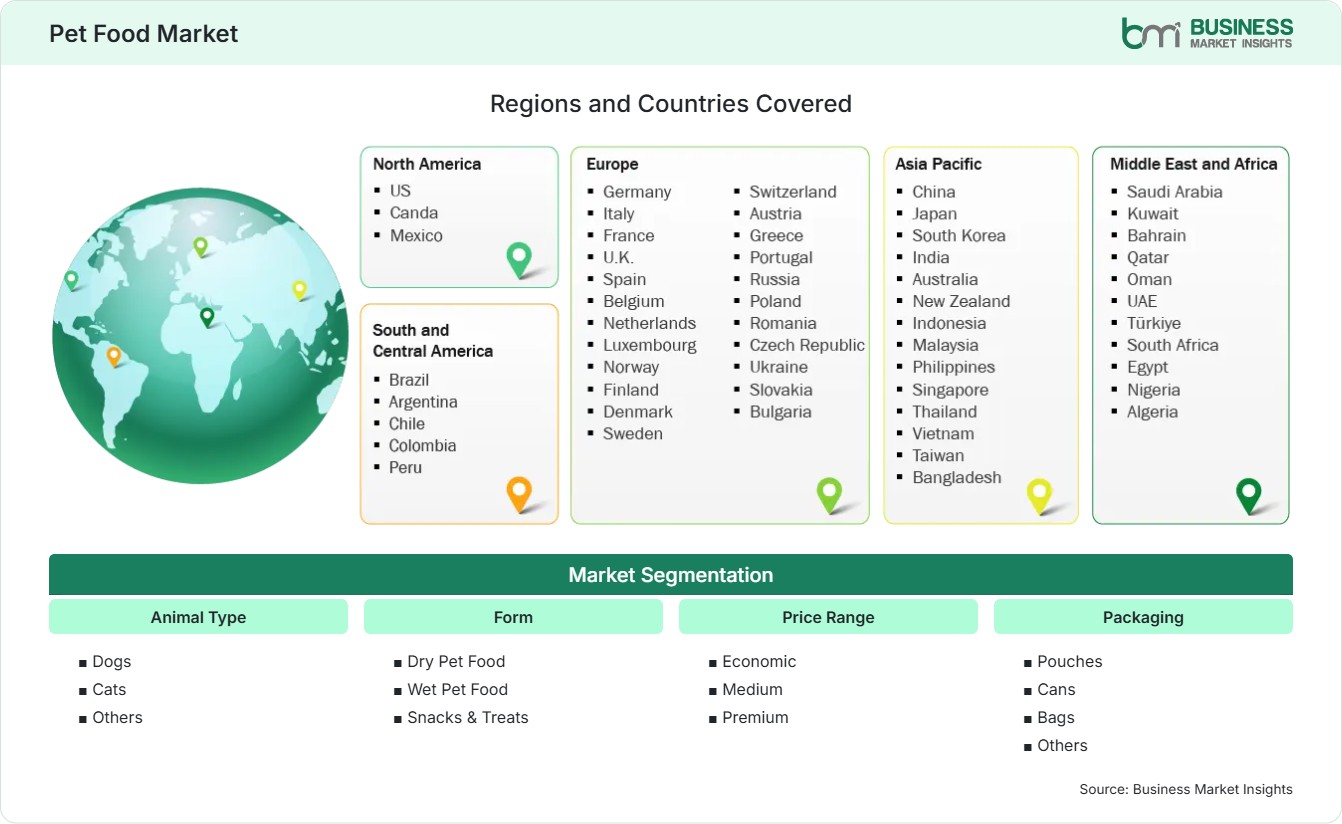
  • Animal Type: Dogs, Cats, Others
  • Form: Dry Pet Food, Wet Pet Food, Snacks & Treats
  • Price Range: Economic, Medium, Premium
  • Packaging: Pouches, Cans, Bags, Others
  • Distribution Channel: Supermarket/Hypermarket, Specialty Stores, Online Channel, Others
US$ 124.35 Bn Market size in 2025
US$ 220.12 Bn Market Size by 2033
7.4% CAGR, 2026 - 2033
2026-2033 Forecast Period

AI Overview

Pet Food Market Summary

  • North America Region: North America holds a market share of 36%–39% in 2025, growing at a CAGR of 6.8%–7.4% during 2026–2033. Demand is supported by high pet ownership rates, premium pet food consumption, and growing focus on pet nutrition. The U.S. remains the dominant market, advancing at a CAGR of 6.9%–7.5%.
  • Fastest Growing Region: Asia Pacific accounts for 25%–28% of revenue in 2025 and is projected to register a CAGR of 8.5%–9.2% through 2033. Increasing pet adoption, rising disposable incomes, and expanding premium pet food availability continue supporting market development.
  • Leading Segment: Dogs hold a market share of 52%–56% in 2025 and are expected to grow at a CAGR of 7.2%–7.8%. Demand is driven by higher spending on canine nutrition, healthcare, and premium pet food products.
  • High Growth Segment: Premium pet food accounts for 28%–32% of market revenue in 2025 and is projected to register a CAGR of 8.4%–9.1% during the forecast period. Growing consumer preference for high-quality ingredients and functional nutrition continues supporting expansion.
  • Key Market Opportunity: Rising demand for natural, grain-free, functional, and personalized pet nutrition products is creating significant opportunities for manufacturers and premium pet food brands.
  • Major Market Players: The J.M. Smucker Company, Nestlé Purina PetCare Company, Mars, Incorporated, LUPUS Alimentos, Total Alimentos S.A., Hill’s Pet Nutrition, Inc., General Mills, Inc., WellPet LLC, The Hartz Mountain Corporation, and Simmons Foods, Inc.
Strategic Insights

Pet Food Market: Strategic Insights

Pet Food Market Strategic Framework
FREE PDF
Request your free sample
Request free sample
Stakeholder View

Key Takeaways

  • The market ecosystem includes ingredient suppliers, pet food manufacturers, distributors, veterinarians, specialty retailers, e-commerce platforms, and pet care service providers.
  • Dog food remains among the most attractive opportunities due to high ownership rates, premium product demand, and growing expenditure on canine health.
  • Product innovation increasingly focuses on functional ingredients, natural formulations, personalized nutrition, and sustainable sourcing initiatives.
  • Asia Pacific provides the strongest growth potential supported by rising pet adoption, increasing household incomes, and expanding premium product availability.
  • Digital commerce channels continue transforming market dynamics by enabling broader product access and direct-to-consumer engagement.
  • Premium nutrition, specialized veterinary diets, and health-focused pet food products are increasingly becoming key revenue generators across global markets.
  • A key pet food market trend is the increasing demand for premium, natural, and functional pet food products, with manufacturers emphasizing clean-label ingredients, personalized nutrition, sustainable sourcing, and health-focused formulations for companion animals.
Geographic Outlook

Pet Food Market Regional Highlights

North America Pet Food Market

North America accounted for 36%–39% of global revenue in 2025 and is projected to expand at a CAGR of 6.8%–7.4% through 2033. Rising pet ownership, strong demand for premium nutrition, and increasing expenditure on pet health continue supporting market growth. The Pet Food Market share in the region is strengthened by high penetration of branded products and growing adoption of functional and veterinary nutrition solutions.

  • Pet owners increasingly seek premium, natural, and health-focused food products that support long-term pet wellness.
  • Veterinary-recommended diets continue gaining popularity for weight management, digestive health, and specialized nutritional needs.
  • E-commerce platforms are expanding accessibility to premium pet food products across urban and suburban areas.
  • Manufacturers are investing in ingredient transparency and sustainable sourcing to meet changing consumer expectations.
  • Functional ingredients supporting immunity, mobility, and digestive health continue driving product innovation.

US Pet Food Market

The United States represented 31%–34% of global revenue in 2025 and is anticipated to register a CAGR of 6.9%–7.5% during the forecast period. Demand is driven by growing pet humanization, increasing spending on premium products, and rising consumer awareness regarding pet nutrition. Expanding adoption of personalized feeding solutions continues supporting market growth.

  • Premium pet food products continue witnessing strong demand across both dog and cat nutrition categories.
  • Subscription-based pet food services are gaining momentum among consumers seeking convenience and customization.
  • Demand for grain-free, natural, and organic formulations continues increasing across multiple pet segments.
  • Veterinary and specialty nutrition products remain key growth contributors within the market.

Europe Pet Food Market

Europe held 27%–30% of global revenue in 2025 and is projected to grow at a CAGR of 7.0%–7.6% through 2033. Growing awareness regarding animal welfare, increasing premium pet food demand, and strong pet ownership rates continue supporting market expansion. Germany remains the leading market with a CAGR of 7.1%–7.7%, while Poland is the fastest-growing country, expanding at a CAGR of 7.8%–8.4%.

  • Consumers increasingly prioritize high-quality ingredients and nutritionally balanced pet food formulations.
  • Premium and functional pet food products continue gaining market share across dog and cat categories.
  • Germany maintains leadership through strong consumer spending and a mature pet care industry.
  • Poland is witnessing accelerated growth due to rising disposable incomes and increasing pet adoption.
  • Sustainable packaging and environmentally responsible sourcing continue influencing purchasing decisions.

Asia Pacific Pet Food Market

Asia Pacific accounted for 25%–28% of global revenue in 2025 and is expected to remain the fastest-growing region, registering a CAGR of 8.5%–9.2% through 2033. The pet food market forecast indicates that the increasing pet ownership, rising disposable incomes, and expanding availability of premium products is driving market growth. China remains the largest regional market with a CAGR of 8.4%–9.0%, while India records the highest growth at 9.0%–9.7%.

  • Urbanization and changing lifestyles continue encouraging pet ownership across major economies.
  • China benefits from strong growth in premium pet care and expanding e-commerce penetration.
  • India is witnessing increasing demand for branded pet nutrition products and specialized formulations.
  • International pet food brands continue expanding product portfolios and regional distribution networks.
  • Growth in online retail channels is improving accessibility to premium and imported pet food products.

Rest of World Pet Food Market

The Rest of World region accounted for 7%–10% of global revenue in 2025 and is expected to register a CAGR of 6.9%–7.5% through 2033. The market growth is supported by rising pet ownership, expanding retail infrastructure, and increasing awareness regarding pet nutrition. Demand remains particularly strong for premium dog food, cat food, and functional nutrition products.

Brazil is the leading market in South & Central America and is forecast to grow at a CAGR of 7.1%–7.7%. In the Middle East & Africa, the United Arab Emirates is expected to be the fastest-growing country with a CAGR of 7.4%–8.0%.

  • Brazil continues benefiting from a large pet population and increasing consumer spending on pet care products.
  • The United Arab Emirates is witnessing growing demand for premium imported pet food offerings.
  • Modern retail expansion continues improving product availability across emerging markets.
  • Increasing awareness of proper nutrition is supporting adoption of specialized pet food products.
  • Growth in veterinary services is contributing to demand for health-focused and therapeutic nutrition solutions.
Global Market Geography
FREE PDF
Request your free sample
Request free sample
Segment Analysis

Pet Food Market Segmentation

Animal Type

Animal type remains a fundamental segmentation category as nutritional requirements differ significantly across companion animals. Dogs lead the segment with 52%–56% share in 2025 and are projected to grow at a CAGR of 7.2%–7.8% through 2033. The Pet Food Market scope continues expanding due to increasing dog ownership, higher spending on canine nutrition, and rising demand for breed-specific and health-oriented formulations.

  • Dogs: Dominates demand owing to larger pet populations, premium nutrition spending, and increasing adoption of functional food products supporting canine health.
  • Cats: Benefits from growing cat ownership, urban living trends, and rising demand for specialized nutrition targeting digestive, urinary, and weight management needs.
  • Others: Includes food products formulated for birds, fish, and small companion animals supported by expanding pet ownership diversity.

Form

Form-based product innovation continues shaping purchasing preferences across global markets. Dry pet food remains the most widely consumed format due to convenience, shelf stability, and affordability. The Pet Food Market trends indicate increasing demand for premium wet food and treat categories as owners seek enhanced nutrition and engagement benefits for their pets.

  • Dry Pet Food: Leads consumption due to convenience, longer shelf life, cost effectiveness, and widespread availability through retail and online channels.
  • Wet Pet Food: Increasingly preferred for improved palatability, hydration benefits, and premium nutritional positioning among pet owners.
  • Snacks & Treats: Experiences strong demand driven by pet training, reward-based feeding, and growing premiumization within companion animal care.

Price Range

Price segmentation reflects changing consumer preferences toward higher-quality nutrition solutions. Premium products account for 28%–32% share in 2025 and are expected to register the fastest growth at a CAGR of 8.4%–9.1% through 2033. Rising pet humanization and growing emphasis on health-focused nutrition continue supporting premium category expansion and Pet Food Market share gains globally.

  • Economic: Maintains relevance among price-sensitive consumers seeking nutritionally balanced and affordable pet food products.
  • Medium: Serves mainstream consumers looking for a balance between nutritional quality, affordability, and brand recognition.
  • Premium: Benefits from increasing demand for functional ingredients, natural formulations, and specialized nutritional solutions.

Packaging

Packaging innovations continue improving convenience, product preservation, and consumer appeal. Manufacturers are investing in sustainable materials and flexible packaging solutions that enhance shelf life while addressing environmental concerns.

  • Pouches: Gaining popularity due to convenience, portability, portion control, and suitability for wet pet food products.
  • Cans: Continue serving premium wet food categories by providing durability and effective product preservation.
  • Bags: Remain the dominant packaging choice for dry pet food owing to cost efficiency and bulk purchasing preferences.
  • Others: Includes tubs, cartons, and specialty packaging formats developed for niche applications and premium product offerings.

Distribution Channel

Distribution channels continue evolving as digital commerce complements traditional retail networks. Online sales are witnessing rapid expansion due to convenience and subscription-based purchasing models. The Pet Food Market share generated through omnichannel strategies is increasing as brands strengthen both online and offline presence.

  • Supermarket/Hypermarket: Remains a major purchase destination due to wide product availability and strong consumer accessibility.
  • Specialty Stores: Attract pet owners seeking premium brands, expert recommendations, and specialized nutrition products.
  • Online Channel: Expanding rapidly through subscription services, direct-to-consumer platforms, and e-commerce marketplaces.
  • Others: Includes veterinary clinics, independent retailers, and local distribution outlets serving diverse consumer needs.

Source

Source-based segmentation is increasingly important as consumers evaluate ingredient quality, sustainability, and nutritional value. Demand for alternative protein and plant-based formulations continues growing alongside traditional animal-based nutrition products.

  • Animal: Represents the dominant source category due to high protein content and widespread use in conventional pet food formulations.
  • Plant: Benefits from growing interest in sustainable ingredients, alternative proteins, and specialized dietary solutions.
Market Forces

Pet Food Market Dynamics

Key Market Drivers

Rising Pet Humanization Driving Premium Pet Food Demand

With more people viewing their pets as members of their families, there is a greater need for investment into proper feeding and good health. This trend has brought about a rise in the demands for pet foods of superior quality that offer functional and nutritional benefits. This includes foods similar to human foods with clean labels and natural ingredients. Manufacturers continue responding through premium product launches and targeted marketing strategies. As pet humanization trends strengthen globally, demand for value-added nutrition products is expected to remain a key driver of pet food market growth.

Growing Adoption of Functional Pet Nutrition Products

Demand for functional pet nutrition is increasing as owners become more aware of the link between diet and long-term animal health. Products formulated to support digestion, immunity, mobility, skin health, and cognitive function are gaining significant popularity. Veterinary recommendations and growing consumer education regarding preventive pet healthcare are further supporting adoption. Manufacturers are investing in research and development to introduce formulations incorporating probiotics, omega fatty acids, and specialty nutrients. This growing emphasis on health-focused nutrition continues creating strong demand across both canine and feline food categories.

Expansion of Specialized Diets for Companion Animals

Specialized pet diets designed for age, breed, activity level, and medical conditions are becoming increasingly important within the industry. Pet owners are looking for more personalized products that provide nutrients based on certain health problems of their pets and improve their quality of life. Growth of this segment is driven by veterinary nutrition advice and rise in diagnoses of chronic disorders in companion pets. Suppliers have developed various products, including breed-specific, weight management, digestive health, and allergy-based foods. Personalized pet nutrition will remain an important growth driver during the forecast period.

Key Market Opportunities

Rising Demand for Veterinary Therapeutic Diets

Growing awareness of pet health management is increasing demand for therapeutic diets developed to address medical conditions such as obesity, kidney disease, digestive disorders, and food sensitivities. The use of nutrition-based techniques is gaining popularity in veterinary clinics and among pet owners as a supplement to the overall strategy. The production of therapeutic products continues to grow, and collaboration with veterinary specialists continues to develop. With rising expenditure on companion animal health care, market players will benefit from increased demand for scientifically designed therapeutic diets.

Expansion of Plant-Based Pet Food Products

Sustainability considerations and changing consumer values are encouraging interest in plant-based pet food alternatives. Manufacturers are developing formulations that utilize alternative protein sources while maintaining nutritional adequacy and palatability. The increasing awareness about the environmental consequences of conventional protein sources is driving innovation within this industry. While ingredients from animals still have a strong market presence, those based on plants are gaining recognition due to environmental concerns and special interest from certain consumers. Innovation will likely increase acceptance of these products in the marketplace.

Growth of Direct-to-Consumer Pet Food Sales

The direct-to-consumer business model is revolutionizing the way pet food brands interact with customers. Subscription, customized nutrition, and e-commerce are increasing customer retention while providing the means for regular income generation. Pet food brands have access to valuable customer insight and increased brand loyalty. Consumers increasingly value the convenience of home delivery and customized feeding solutions. Ongoing expansion of e-commerce infrastructure and digital purchasing behavior is expected to create significant growth opportunities for pet food manufacturers and retailers.

Company Analysis

Competitive Landscape

The market remains highly competitive, with multinational pet nutrition companies, specialty pet food manufacturers, ingredient suppliers, and regional producers. Companies are focusing on premium nutrition, functional ingredients, veterinary diets, sustainable sourcing, and digital commerce expansion. Growing demand for health-focused pet products continues shaping Pet Food Market analysis and competitive strategies across the global pet care value chain.

Company Name

Overview

Products and Services Relevant to this Market

The J.M. Smucker Company

Consumer goods company with a strong presence in pet nutrition and pet care categories.

Dry pet food, wet pet food, treats, premium pet nutrition products.

Nestlé Purina PetCare Company

Global leader in pet nutrition with extensive product portfolio and research capabilities.

Dog food, cat food, veterinary diets, functional pet nutrition products.

Mars, Incorporated

Major pet care company operating numerous pet food and pet health brands globally.

Premium pet food, veterinary nutrition, treats, specialized diets.

LUPUS Alimentos

Latin American pet food manufacturer serving multiple pet nutrition categories.

Dry pet food, economy and premium pet food formulations.

Total Alimentos S.A.

Pet nutrition company focused on companion animal food products.

Dog food, cat food, premium nutrition solutions, pet treats.

Hill’s Pet Nutrition, Inc.

Science-based pet nutrition company specializing in therapeutic and premium diets.

Veterinary diets, prescription pet food, specialty nutrition products.

General Mills, Inc.

Consumer food company with growing participation in premium pet food categories.

Natural pet food, premium nutrition products, pet treats.

WellPet LLC

Premium pet food manufacturer known for natural and wellness-focused nutrition.

Natural pet food, grain-free products, functional nutrition solutions.

The Hartz Mountain Corporation

Pet care company offering nutrition and wellness products for companion animals.

Pet food, treats, pet supplements, animal care products.

Simmons Foods, Inc.

Food processor and ingredient supplier supporting pet food manufacturing operations.

Pet food ingredients, protein products, companion animal nutrition solutions.

Industry Activity

Recent Developments

July 2026

Royal Canin announced the U.S. launch of Royal Canin Fresh Veterinary Diets, its first fresh, fully cooked therapeutic diet portfolio available exclusively through veterinarians. The launch expands specialized clinical nutrition offerings while providing pets with fresh diet options tailored to specific health conditions.

May 2026

Hill’s Pet Nutrition and Bond Pet Foods announced that the FDA issued a No-Objection Letter for Lamb Protein Yeast, the first precision fermentation-derived animal protein approved for use in pet food. The milestone supports commercialization of sustainable, high-quality protein ingredients for adult dog nutrition.

April 2026

Nestlé Purina PetCare Company expanded its premium pet nutrition portfolio with new functional formulations focused on digestive health and immune support. The product expansion addresses growing consumer demand for science-backed nutrition that promotes long-term pet wellness.

January 2026

Mars, Incorporated increased investments in pet health and nutrition innovation programs supporting personalized feeding solutions and premium product development. The initiative strengthens the company's focus on tailored nutrition, advanced research, and evolving consumer preferences for high-quality pet care products.

Trust & Transparency

Research Methodology

The market analysis combines proprietary research with secondary data from government agencies, company disclosures, regulatory filings, industry databases and expert interviews. Market estimates are validated through data triangulation, cross-market benchmarking and analyst review.

View Full Research Methodology

Questions Answered

Frequently Asked Questions

What challenge has the greatest long-term impact on the industry?

Volatility in animal protein and meat prices remains a significant challenge because it directly affects manufacturing costs, product pricing, and profit margins across the industry.

How are online channels influencing market growth?

Online channels improve product accessibility, support subscription-based purchasing models, enable direct-to-consumer engagement, and provide broader product selection for pet owners.

Why is Asia Pacific the fastest-growing region?

The region benefits from rising pet adoption, increasing disposable incomes, growing awareness of pet health, and expanding access to premium pet nutrition products.

Which animal type segment leads the market?

Dogs represent the leading segment due to higher ownership levels, increased spending on pet care, and strong demand for premium canine nutrition products.

What is driving growth in the pet food pet food market report?

Increasing pet ownership, rising pet humanization, growing demand for premium nutrition products, and expanding adoption of functional pet food solutions are the primary growth drivers.

Access the Full Pet Food Market Report

Get segment-level forecasts, regional estimates, competitive benchmarking, company profiles and downloadable Excel datasets.

Access the full Pet Food Market Report
350 pages PDF & Excel | 2026-07-31
Similar Research

Related Market Reports