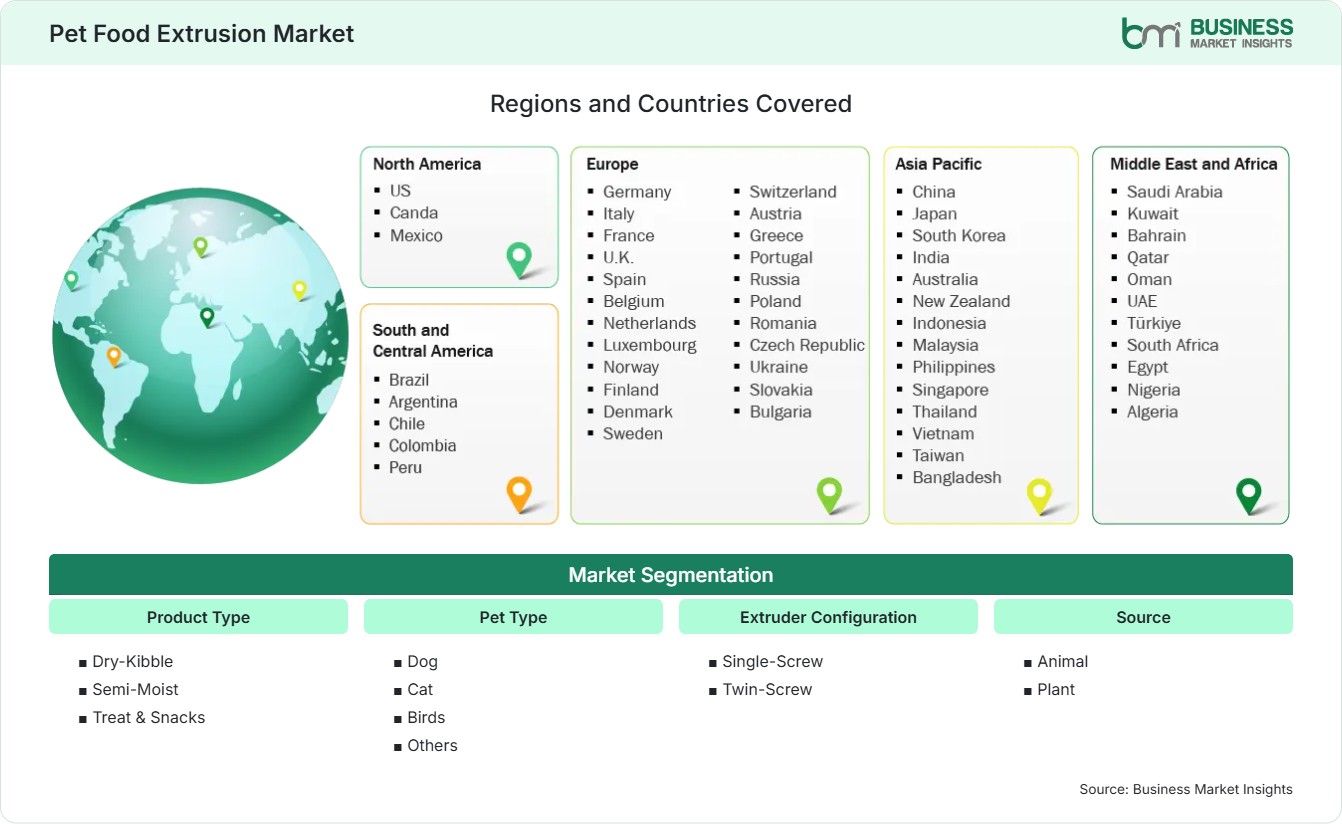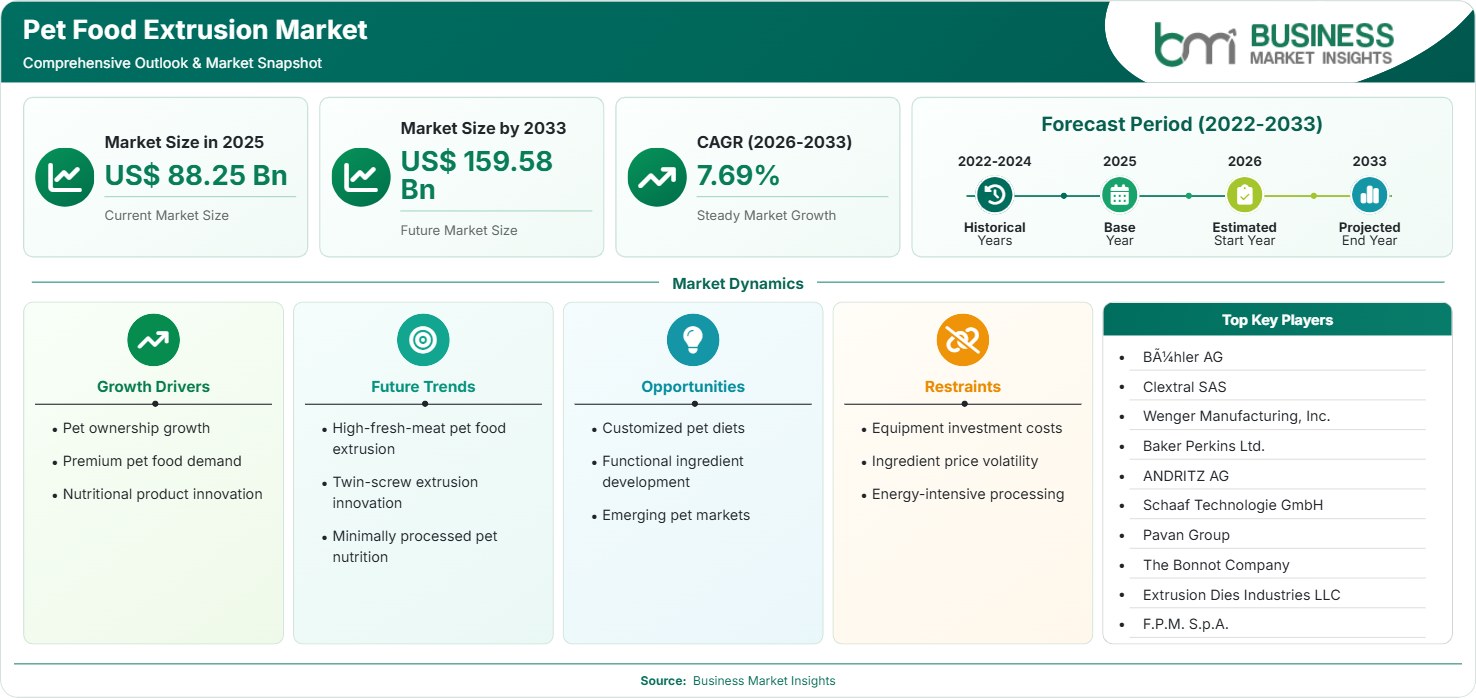
Pet Food Extrusion Market Regional Highlights
North America Pet Food Extrusion Market
North America is the leading regional market, accounting for an estimated 34%–37% share of the pet food extrusion market in 2025 and expanding at a projected 7.2%–7.8% CAGR during 2026–2033. The region benefits from strong pet ownership penetration, established pet food manufacturing infrastructure, and increasing demand for premium nutrition products. The United States remains the dominant contributor due to advanced processing capabilities, high spending on pet wellness, and continuous investment in automated extrusion technologies.
- The United States maintains regional leadership through extensive pet food manufacturing capacity, strong premium product demand, and adoption of advanced extrusion systems supporting specialized nutritional formulations.
- Canada continues expanding through increasing pet ownership, growing preference for natural and functional pet foods, and investments in modern manufacturing facilities equipped with efficient extrusion technologies.
- Manufacturers are upgrading production lines with automated controls, energy-efficient systems, and flexible processing equipment to support diverse product development and improve operational performance.
US Pet Food Extrusion Market
The United States accounts for approximately 29%–32% of global revenue in 2025 and is forecast to grow at a 7.3%–7.9% CAGR through 2033. Strong pet humanization trends, high expenditure on companion animal care, and widespread adoption of premium pet food products support continued expansion. The country’s advanced food-processing ecosystem enables manufacturers to adopt sophisticated extrusion technologies to develop innovative products.
- High pet ownership levels continue supporting demand for advanced manufacturing capabilities, particularly for premium dry food, therapeutic diets, and functional pet nutrition products.
- Leading pet food producers are investing in automated extrusion equipment to improve production flexibility, reduce operational costs, and respond faster to changing consumer preferences.
- Growing demand for alternative proteins and specialized formulations is encouraging equipment suppliers to develop extrusion systems capable of processing complex ingredient combinations efficiently.
Europe Pet Food Extrusion Market
Europe represents an estimated 27%–30% pet food extrusion market share of the global market in 2025 and is projected to achieve a 7.0%–7.6% CAGR during 2026–2033. The region benefits from strong pet ownership, strict food safety standards, and increasing demand for sustainable and premium pet nutrition products. Germany remains the leading market due to its established manufacturing base, while Poland and the Netherlands demonstrate attractive growth potential through expanding pet food production investments.
- Germany leads European demand through advanced food processing infrastructure, strong equipment manufacturing capabilities, and established pet food producers adopting innovative extrusion technologies.
- The Netherlands benefits from a strong agricultural ecosystem, ingredient availability, and increasing investments in sustainable pet food production systems.
- Poland demonstrates faster growth as manufacturers expand production capacity to serve rising domestic demand and broader European export opportunities.
Asia Pacific Pet Food Extrusion Market
Asia Pacific accounts for approximately 24%–27% of pet food extrusion market revenue in 2025 and is expected to register the fastest growth at a 8.5%–9.3% CAGR through 2033. Increasing urbanization, rising disposable incomes, expanding pet ownership, and growing awareness of premium pet nutrition are accelerating regional investment. China represents the largest market, while India and Southeast Asian economies demonstrate strong future growth potential due to expanding companion animal markets.
- China dominates regional demand through expanding pet ownership, increasing premium food consumption, and continuous investment in domestic pet food manufacturing infrastructure.
- India is experiencing rapid growth as urban households increasingly adopt companion animals and seek higher-quality nutrition products supported by modern retail channels.
- Japan maintains steady demand through advanced manufacturing standards, premium pet care preferences, and adoption of specialized nutrition products.
- Southeast Asian countries are attracting investment due to improving distribution networks, rising disposable incomes, and increasing availability of international pet food brands.
- Regional manufacturers are adopting advanced extrusion systems to improve production efficiency, expand product portfolios, and meet evolving consumer expectations.
Rest of World Pet Food Extrusion Market
The Rest of the World contributes approximately 10%–12% of pet food extrusion market revenue in 2025 and is forecast to expand at a 7.8%–8.5% CAGR through 2033. South and Central America are benefiting from increasing pet ownership and expanding pet food manufacturing activity, particularly in Brazil and Mexico.
Middle East and Africa markets are gradually developing due to rising urban populations, improving retail infrastructure, and increasing awareness of premium pet nutrition. The United Arab Emirates and Saudi Arabia represent attractive markets due to growing demand for imported and locally produced premium pet foods.
- Brazil remains the largest regional market due to high pet ownership rates, expanding pet food production, and increasing consumer interest in premium nutrition products.
- Mexico benefits from growing manufacturing capabilities, proximity to major markets, and increasing adoption of advanced processing technologies in pet food production.
- The United Arab Emirates shows strong potential through premium pet ownership, expanding specialty retail channels, and demand for high-quality imported and locally produced pet foods.
- Saudi Arabia demonstrates rising demand supported by urbanization, increasing companion animal ownership, and growing investment in modern pet care infrastructure.