
Dog Food Market Outlook: Size, Share, Trends, Growth Analysis, Competitive Landscape & Forecast, 2026-2033

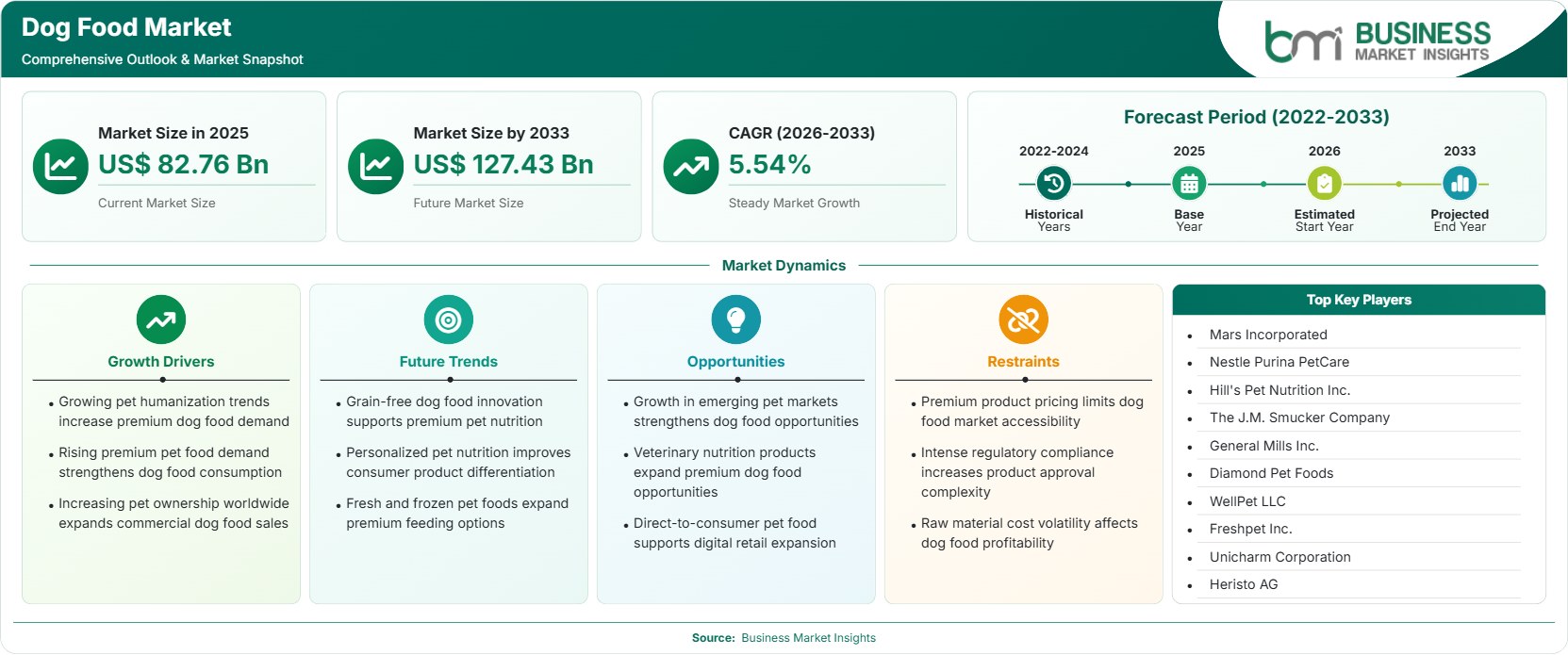
The Dog Food Market size was valued at US$ 82.76 billion in 2025 and is projected to reach US$ 127.43 billion by 2033, registering a CAGR of 5.54% during 2026–2033. The market is witnessing steady growth driven by growing pet humanization trends, rising premium pet food demand, and increasing pet ownership worldwide. Dog owners are increasingly prioritizing balanced nutrition, functional ingredients, and breed- or life stage-specific diets to improve the health, longevity, and overall well-being of their pets. This evolving consumer behavior continues encouraging manufacturers to introduce nutritionally advanced, premium-quality, and customized dog food products across multiple price segments.

Report Coverage
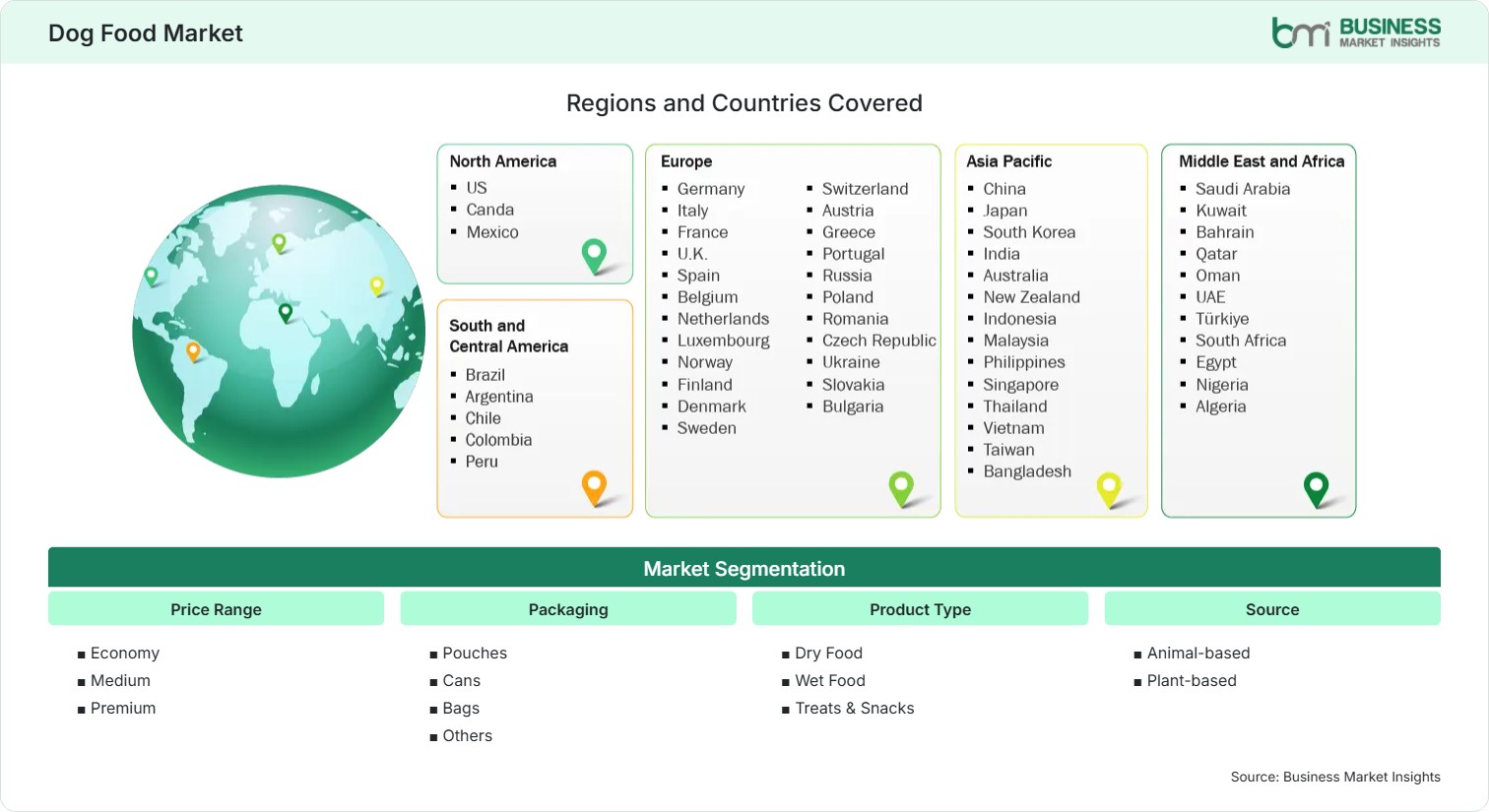
  • Price Range: Economy, Medium, Premium
  • Packaging: Pouches, Cans, Bags, Others
  • Product Type: Dry Food, Wet Food, Treats & Snacks
  • Source: Animal-based, Plant-based
  • End-Use: Puppy, Adult, Senior
US$ 82.76 Bn Market size in 2025
US$ 127.43 Bn Market Size by 2033
5.54% CAGR, 2026 - 2033
2026-2033 Forecast Period

AI Overview

Dog Food Market Summary

  • North America Region: North America accounted for 37%–40% of global revenue in 2025 and is projected to register a CAGR of 5.2%–5.7% during 2026–2033. High pet ownership rates, strong premium pet food adoption, increasing spending on pet health, and a well-established pet care industry continue supporting regional market growth. The United States contributes approximately 84%–87% of regional revenue and is expected to register a CAGR of 5.3%–5.8% owing to increasing demand for premium nutrition, functional dog food products, and online pet food purchases.
  • Fastest Growing Region: Asia Pacific represented 25%–28% of global revenue in 2025 and is projected to register the highest CAGR of 6.3%–6.8% during the forecast period. Rising pet ownership, expanding middle-class populations, growing awareness regarding pet nutrition, and increasing availability of branded pet food products continue driving regional market expansion.
  • Leading Segment: Dry Food (Kibble Pallets) accounted for 48%–51% of market revenue in 2025 and is projected to register a CAGR of 5.6%–6.1% during the assessment period owing to its affordability, convenience, longer shelf life, nutritional balance, and widespread availability through retail channels.
  • High Growth Segment: Premium represented 35%–38% of total market revenue in 2025 and is projected to expand at a CAGR of 6.4%–6.9% driven by growing consumer preference for high-quality ingredients, functional nutrition, and specialized pet diets.
  • Key Market Opportunity: Growth in emerging pet markets, veterinary nutrition products, and direct-to-consumer pet food continue creating significant opportunities for dog food manufacturers.
  • Major Market Players: Mars Incorporated, Nestlé Purina PetCare, Hill's Pet Nutrition Inc., The J.M. Smucker Company, General Mills Inc., Diamond Pet Foods, WellPet LLC, Freshpet Inc., Unicharm Corporation, Heristo AG.
Strategic Insights

Dog Food Market: Strategic Insights

Dog Food Market Strategic Framework
FREE PDF
Request your free sample
Request free sample
Stakeholder View

Key Takeaways

  • The market continues benefiting from growing pet humanization trends, rising premium pet food demand, increasing pet ownership worldwide, and expanding awareness regarding pet nutrition and wellness.
  • The strongest Dog Food Market Growth opportunities continue emerging from emerging pet markets, veterinary nutrition products, direct-to-consumer retail models, personalized nutrition, and premium product innovation.
  • Dry Food (Kibble Pallets) remains the dominant product type segment owing to its nutritional balance, convenience, affordability, long shelf life, and extensive consumer acceptance.
  • Asia Pacific is projected to witness the fastest growth owing to increasing pet adoption, rising disposable incomes, expanding urban populations, and growing availability of premium pet food products.
  • Manufacturers are increasingly investing in natural ingredients, functional formulations, fresh pet food, veterinary nutrition, sustainable packaging, and digital commerce platforms to strengthen market competitiveness.
  • Companies focusing on premium nutrition, personalized pet diets, ingredient transparency, omnichannel distribution, and innovation in functional pet food products are expected to strengthen their competitive positioning.
Geographic Outlook

Dog Food Market Regional Highlights

North America Dog Food Market

North America accounted for 37%–40% of global revenue in 2025 and is projected to register a CAGR of 5.2%–5.7% during 2026–2033. The region continues maintaining a leading position owing to high pet ownership, increasing expenditure on companion animal care, strong premium pet food adoption, and a mature retail ecosystem. The Dog Food Market Share remains significant as pet owners increasingly prioritize high-quality nutrition, functional ingredients, and customized dietary solutions to improve the health and well-being of their dogs.

  • The United States remains the largest regional market owing to widespread pet ownership, strong consumer spending on premium pet products, and an established pet care industry.
  • Canada continues supporting regional growth through increasing pet adoption, growing awareness of pet nutrition, and expanding demand for premium and natural dog food products.
  • Rising consumer preference for clean-label ingredients, grain-free diets, and functional nutrition continues encouraging manufacturers to expand premium product offerings.
  • Increasing adoption of online pet food purchasing and subscription-based delivery services continues strengthening regional market growth.

US Dog Food Market

The United States accounted for approximately 84%–87% of North American revenue in 2025 and is projected to register a CAGR of 5.3%–5.8% during the forecast period. Growing pet humanization, increasing veterinary care awareness, and expanding premium pet nutrition continue driving domestic market growth.

  • Consumers continue demanding breed-specific, age-specific, and health-focused nutrition products for companion animals.
  • Premium dog food, functional treats, and fresh pet food continue gaining popularity among health-conscious pet owners.
  • Expanding e-commerce platforms and direct-to-consumer subscription models continue improving accessibility to premium dog food brands in dog food market.
  • Manufacturers continue investing in ingredient transparency, sustainable packaging, and product innovation to strengthen brand loyalty.

Europe Dog Food Market

Europe represented 29%–32% of global revenue in 2025 and is expected to expand at a CAGR of 5.1%–5.6% during 2026–2033. The region continues benefiting from high companion animal ownership, increasing demand for premium pet nutrition, and growing awareness regarding sustainable pet food production. Germany remains the largest regional market, while Poland is projected to register the fastest growth with a CAGR of 5.9%–6.4% owing to rising pet adoption, expanding disposable incomes, and increasing penetration of branded pet food products.

  • Germany continues leading regional demand through a well-developed pet care industry, premium product adoption, and high consumer spending on companion animal nutrition.
  • Poland continues witnessing robust growth through increasing pet ownership and expanding retail distribution of premium dog food brands in dog food market.
  • France continues supporting regional market expansion through growing demand for natural, organic, and veterinary nutrition products.
  • Sustainable sourcing, recyclable packaging, and clean-label formulations continue influencing purchasing decisions across the region.
  • Increasing investments in veterinary nutrition and functional pet food innovation continue supporting long-term market growth.

Asia Pacific Dog Food Market

Asia Pacific accounted for 25%–28% of global revenue in 2025 and is projected to register the highest CAGR of 6.3%–6.8% during the forecast period. Rising pet ownership, increasing disposable incomes, urbanization, and growing awareness regarding companion animal health continue driving regional market expansion. China remains the leading regional market, while India is projected to register the fastest growth with a CAGR of 6.8%–7.3% owing to expanding pet adoption, growing middle-class populations, and increasing availability of premium commercial dog food.

  • China continues dominating regional demand through rising pet ownership, premium pet food adoption, and expanding organized retail channels.
  • India continues witnessing strong growth through increasing urban pet ownership, growing awareness of pet nutrition, and expanding e-commerce distribution.
  • Japan continues supporting premium market demand through high spending on companion animal healthcare and specialized pet nutrition.
  • South Korea continues contributing through increasing demand for premium, natural, and functional dog food products.
  • Growing investments in digital retail platforms, premium product launches, and veterinary nutrition continue strengthening regional competitiveness.

Rest of World Dog Food Market

The Rest of World accounted for 5%–8% of global revenue in 2025 and is projected to register a CAGR of 5.5%–6.0% during 2026–2033. Latin America, the Middle East, and Africa continue strengthening market growth through rising pet ownership, increasing urbanization, and improving availability of commercial pet food products.

Growing investments in organized retail, premium pet nutrition, and digital commerce continue creating new opportunities for dog food manufacturers across emerging markets.

  • Brazil continues supporting regional demand through increasing pet ownership and expanding commercial pet food consumption.
  • Mexico continues strengthening market growth through rising disposable incomes and growing demand for premium dog nutrition.
  • The United Arab Emirates continues witnessing increasing adoption of premium pet care products supported by higher consumer spending.
  • South Africa continues contributing to market expansion through improving retail availability and increasing awareness regarding pet health and nutrition.
  • Expanding veterinary services, specialty pet food stores, and online retail channels continue supporting long-term market development across emerging economies.
Global Market Geography
FREE PDF
Request your free sample
Request free sample
Segment Analysis

Dog Food Market Segmentation

Price Range

The Price Range segment accounted for 35%–38% of market revenue in 2025 and is projected to register a CAGR of 6.4%–6.9% during the forecast period. Growing consumer preference for high-quality pet nutrition, functional ingredients, and specialized dietary formulations continues supporting market expansion. The Dog Food Market Trends indicate increasing adoption of premium products offering enhanced nutritional value, natural ingredients, and breed- or life stage-specific formulations.

  • Economy: Economy products continue maintaining stable demand owing to their affordability and widespread availability across supermarkets, hypermarkets, and local retail channels.
  • Medium: Medium-priced products continue witnessing healthy demand by offering balanced nutrition, quality ingredients, and competitive pricing suitable for a broad consumer base.
  • Premium: Premium remains the dominant segment owing to increasing pet humanization, growing demand for natural ingredients, functional nutrition, grain-free diets, and veterinarian-recommended formulations.

Packaging

The Packaging segment represented 44%–47% of total market revenue in 2025 and is expected to expand at a CAGR of 5.8%–6.3% throughout the assessment period. Product freshness, convenience, durability, and ease of storage continue influencing packaging preferences across consumers and retailers.

  • Pouches: Pouches continue gaining popularity owing to convenience, lightweight design, easy handling, and suitability for wet food and treats.
  • Cans: Cans remain widely used for wet dog food because they preserve freshness, extend shelf life, and maintain product quality.
  • Bags: Bags represent the leading packaging segment owing to extensive use for dry food (Kibble Pallets), cost-effectiveness, bulk packaging capability, and convenient storage.
  • Others: Other packaging formats including tubs, cartons, and recyclable containers continue supporting product differentiation and sustainability initiatives.

Product Type

The Product Type segment accounted for 48%–51% of total market revenue in 2025 and is projected to register a CAGR of 5.6%–6.1% during the forecast period. Increasing focus on balanced nutrition, convenience, and specialized feeding solutions continues driving demand across diverse product categories. The Dog Food Market Scope continues expanding through innovation in dry food, wet food, and functional treats.

  • Dry Food (Kibble Pallets): Dry Food (Kibble Pallets) remains the dominant segment owing to its affordability, long shelf life, balanced nutritional profile, ease of storage, and widespread consumer preference.
  • Wet Food: Wet Food continues witnessing increasing demand due to its high palatability, moisture content, digestibility, and suitability for senior dogs and selective eaters.
  • Treats & Snacks: Treats & Snacks continue experiencing strong growth through increasing demand for reward-based feeding, pet training, and functional health benefits.
    • Training Treats: Training Treats continue supporting positive reinforcement and behavioral development.
    • Functional Treats: Functional Treats continue gaining popularity for supporting joint health, digestion, immunity, and skin & coat wellness.
    • Dental Treats: Dental Treats continue witnessing increasing adoption by promoting oral hygiene and reducing plaque accumulation.

Source

The Source segment represented 72%–75% of market revenue in 2025 and is expected to expand at a CAGR of 5.7%–6.2% during the assessment period.

  • Animal-based: Animal-based remains the leading source owing to its high protein content, balanced amino acid profile, and widespread use in commercial dog food formulations.
    • Chicken: Chicken continues representing the largest protein source owing to affordability, digestibility, and consumer preference.
    • Beef: Beef continues supporting premium formulations with rich protein content and palatability.
    • Pork: Pork continues serving specialized nutritional formulations across selected markets.
    • Others: Other animal protein sources including fish, lamb, duck, and turkey continue expanding premium product offerings.
  • Plant-based: Plant-based formulations continue gaining attention owing to sustainability initiatives, ingredient diversification, and growing interest in alternative protein sources.

End-Use

The End-Use segment continues expanding through increasing awareness regarding life stage-specific nutritional requirements.

  • Puppy: Puppy food supports healthy growth, immune development, and optimal bone formation through nutrient-rich formulations.
  • Adult: Adult remains the dominant segment owing to the larger global adult dog population and continuous demand for balanced daily nutrition.
  • Senior: Senior dog food continues witnessing rising demand through formulations supporting joint health, digestion, cognitive function, and age-related nutritional requirements.

Distribution Channel

The Distribution Channel segment continues evolving through omnichannel retail expansion and increasing digital commerce adoption.

  • Supermarkets/Hypermarkets: Supermarkets/Hypermarkets remain the largest distribution channel owing to broad product availability, competitive pricing, and strong consumer accessibility.
  • Specialty Pet Food Stores: Specialty Pet Food Stores continue supporting premium product sales through expert guidance and wider availability of specialized nutrition products.
  • Online Channels: Online Channels are projected to register the fastest growth owing to subscription services, doorstep delivery, product variety, personalized recommendations, and growing digital purchasing behavior.
  • Others: Other channels including veterinary clinics, convenience stores, farm supply stores, and independent retailers continue contributing to overall market expansion.
Market Forces

Dog Food Market Dynamics

Key Market Drivers

Growing pet humanization trends increase premium dog food demand

Pet owners increasingly consider dogs as family members, leading to higher spending on premium nutrition, natural ingredients, functional formulations, and customized diets. Growing awareness regarding pet health, wellness, and longevity continues encouraging consumers to purchase high-quality commercial dog food with enhanced nutritional value and scientifically formulated ingredients.

Rising premium pet food demand strengthens dog food consumption

Growing consumer preference for premium pet food products containing natural ingredients, high-quality protein sources, probiotics, vitamins, minerals, and functional additives continues strengthening commercial dog food consumption. Manufacturers are introducing innovative formulations designed to support digestive health, immunity, joint care, skin health, and overall pet wellness.

Increasing pet ownership worldwide expands commercial dog food sales

Rising adoption of companion animals across urban households, increasing disposable incomes, and growing awareness regarding balanced pet nutrition continue driving commercial dog food sales worldwide. Expanding pet ownership among younger consumers and families is further encouraging retailers and manufacturers to broaden product availability across both physical and digital sales channels.

Key Market Opportunities

Growth in emerging pet markets strengthens dog food opportunities

Rapid urbanization, rising disposable incomes, expanding middle-class populations, and increasing companion animal adoption across emerging economies continue creating significant growth opportunities for dog food manufacturers. Companies are expanding production capacity, strengthening distribution networks, and introducing region-specific product portfolios to address evolving consumer preferences.

Veterinary nutrition products expand premium dog food opportunities

Increasing demand for clinically formulated diets supporting digestive health, weight management, allergy control, kidney health, and other medical conditions continues expanding opportunities for premium veterinary nutrition products. Manufacturers are collaborating with veterinarians and pet nutrition experts to develop scientifically validated formulations that address specific health requirements.

Direct-to-consumer pet food supports digital retail expansion

Growing adoption of direct-to-consumer business models, subscription-based pet food services, and digital retail platforms continues creating new growth opportunities for manufacturers. Personalized nutrition recommendations, recurring delivery services, and stronger consumer engagement are helping companies build long-term customer relationships while expanding premium product sales.

Market Restraints and Challenges

Premium product pricing limits dog food market accessibility

Factor: Premium dog food products may have high-quality proteins, function ingredients, natural additives, nutritional formulas, and sustainable packaging that increase costs of production and retailing of the products. This may make the products costly and thus become unaffordable for customers, especially in developing countries where people spend relatively less on the maintenance of their companion animals.

Impact: High pricing may affect the reach of the products and lead to a switch from premium to mid or economy products by consumers. Companies are tackling this problem through developing value products, improving efficiency in production, and increasing localization of manufacturing processes.

Intense regulatory compliance increases product approval complexity

Factor: The manufacturers of dog food have to abide by very strict regulations concerning ingredients safety, nutritional labeling, formulation, manufacturing, quality assurance, and certification when exporting to different nations. These regulations keep changing as authorities strive to improve food safety and consumer protection.

Impact: The rising requirements for compliance may delay the process of product development, increase operating costs, and result in delays in launching a new product in the market.

Company Analysis

Competitive Landscape

Competition within the dog food industry is driven by product innovation, nutritional quality, premiumization, brand reputation, distribution reach, and scientific research. The Dog Food Market Analysis indicates that leading companies continue investing in functional nutrition, veterinary diets, natural ingredients, personalized pet food solutions, and digital retail strategies to strengthen their competitive positions.

Company Name

Overview

Products and Services relevant to this market

Mars Incorporated

Global leader in pet care and companion animal nutrition.

Dry dog food, wet dog food, treats, veterinary nutrition products, and premium pet food brands.

Nestlé Purina PetCare

Leading pet nutrition company with an extensive global portfolio.

Premium dog food, therapeutic diets, functional treats, puppy food, and senior dog nutrition products.

Hill's Pet Nutrition Inc.

Specialized manufacturer of science-based pet nutrition products.

Prescription diets, premium dog food, veterinary nutrition, and life stage-specific formulations.

The J.M. Smucker Company

Consumer packaged goods company with a strong pet food portfolio.

Dry dog food, wet food, premium nutrition products, and dog treats.

General Mills Inc.

Global food company expanding its premium pet nutrition business.

Natural dog food, premium pet nutrition, treats, and wellness-focused pet food products.

Diamond Pet Foods

Manufacturer specializing in premium and value-oriented pet nutrition.

Dry dog food, grain-free products, specialty diets, and performance nutrition.

WellPet LLC

Premium pet food company focused on natural nutrition.

Natural dog food, wellness diets, grain-free products, and functional pet nutrition.

Freshpet Inc.

Producer of refrigerated fresh pet food products.

Fresh dog food, natural nutrition products, refrigerated meals, and premium pet food solutions.

Unicharm Corporation

Consumer products company with an expanding pet care business.

Dog food, pet treats, puppy nutrition, and companion animal care products.

Heristo AG

European manufacturer of pet nutrition products.

Dry dog food, wet dog food, premium formulations, and private-label pet nutrition solutions.

Trust & Transparency

Research Methodology

The market analysis combines proprietary research with secondary data from government agencies, company disclosures, regulatory filings, industry databases and expert interviews. Market estimates are validated through data triangulation, cross-market benchmarking and analyst review.

View Full Research Methodology

Questions Answered

Frequently Asked Questions

How do market forecasts support strategic planning?

Dog Food Market Forecasts help manufacturers, retailers, distributors, investors, veterinarians, and pet care companies evaluate future demand, identify growth opportunities, optimize product portfolios, and support long-term strategic planning.

What does the market report include?

The Dog Food Market Report provides comprehensive insights covering market size, competitive landscape, segmentation analysis, regional outlook, industry trends, investment opportunities, competitive benchmarking, and future growth prospects.

What factors are driving market expansion?

Growing pet humanization trends, rising premium pet food demand, increasing pet ownership worldwide, expanding veterinary nutrition, and growth in digital retail channels continue driving market growth.

Which price range is expected to witness significant growth?

Premium is expected to remain the fastest-growing price range due to increasing pet humanization, rising demand for natural ingredients, functional nutrition, and specialized dietary formulations.

Which product type dominates the market?

Dry Food (Kibble Pallets) represents the leading product type segment owing to its balanced nutrition, affordability, extended shelf life, convenience, and widespread consumer preference.

Access the Full Dog Food Market Report

Get segment-level forecasts, regional estimates, competitive benchmarking, company profiles and downloadable Excel datasets.

Access the full Dog Food Market Report
350 pages PDF & Excel | 2026-08-07
Similar Research

Related Market Reports