
Free-From Foods Market Outlook: Size, Share, Trends, Growth Analysis, Competitive Landscape & Forecast, 2022-2033

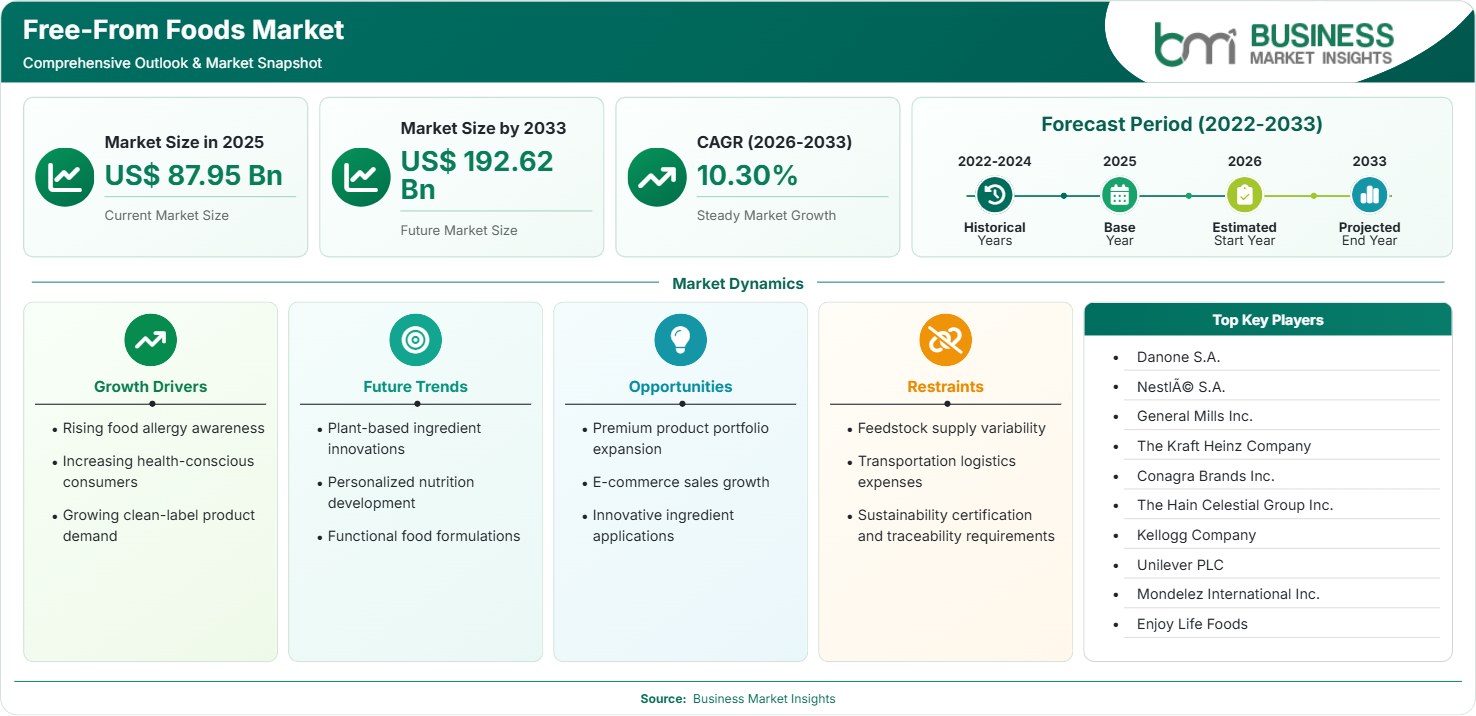
The Free-From Foods Market size was valued at US$ 87.95 billion in 2025 and is projected to reach US$ 192.62 billion by 2033, growing at a CAGR of 10.30% during 2026–2033. Rising awareness of food allergies and intolerances, increasing health-conscious consumer preferences, and growing demand for clean-label food products are driving market expansion. Premium product innovation, expanding e-commerce distribution, and advanced ingredient development continue creating substantial growth opportunities.

Report Coverage
  • Product: Bakery Products, Dairy/Dairy Alternatives, Meat/Meat Alternatives, Condiments, Seasonings & Spreads, Desserts & Ice Creams, Prepared Foods, Pasta & Rice, Others
  • Distribution Channel: Supermarkets & Hypermarkets, Convenience Stores, Specialty Stores, Online Retailers, Others
US$ 87.95 Bn Market size in 2025
US$ 192.62 Bn Market Size by 2033
10.30% CAGR, 2026 - 2033
2026-2033 Forecast Period

01 AI Overview

Free-From Foods Market Summary

  • North America Region: North America holds a 36%–39% market share in 2025 and is projected to grow at a CAGR of 9.8%–10.4% during 2026–2033. Strong consumer awareness of food allergies, increasing clean-label adoption, and extensive availability of specialty food products continue driving regional market leadership.
  • U.S. Market: The United States represents the largest contributor within North America, supported by widespread demand for gluten-free, dairy-free, and allergen-free products, with a projected CAGR of 10.0%–10.6% through 2033.
  • Fastest Growing Region: Asia Pacific accounts for 24%–27% of the global market in 2025 and is expected to register the fastest CAGR of 11.4%–12.0% during 2026–2033. Rising disposable incomes, growing awareness of healthy eating, expanding organized retail, and increasing availability of specialty food products continue accelerating regional market expansion.
  • Leading Segment: Dairy/Dairy Alternatives account for 24%–27% of the market share in 2025 and are anticipated to expand at a CAGR of 10.6%–11.2% through 2033. Growing demand for lactose-free and plant-based dairy products continues supporting strong segment growth across retail and foodservice channels.
  • High Growth Segment: Online Retailers represent 17%–20% of the market in 2025 while growing at a CAGR of 12.5%–13.2% during the forecast period. Expanding digital grocery platforms, broader product accessibility, and increasing consumer preference for online shopping continue strengthening this distribution channel.
  • Key Market Opportunity: Rising demand for personalized nutrition, functional free-from ingredients, premium allergen-free formulations, and expanding digital retail platforms presents significant opportunities for manufacturers to strengthen market presence and product differentiation.
  • Major Market Players: Danone S.A., Nestlé S.A., General Mills Inc., The Kraft Heinz Company, Conagra Brands Inc., The Hain Celestial Group Inc., Kellogg Company, Unilever PLC, Mondelez International Inc., Enjoy Life Foods.
02 Strategic Insights

Free-From Foods Market: Strategic Insights

Free-From Foods Market Strategic Framework
FREE PDF
Request your free sample
Request free sample
03 Stakeholder View

Key Takeaways

  • Consumer demand is shifting from niche allergen-free products toward mainstream health and wellness foods. Food manufacturers are increasingly integrating gluten-free, dairy-free, and clean-label formulations into broader product portfolios to meet rising consumer expectations for healthier everyday food choices.
  • Dairy alternatives and plant-based nutrition continue representing the strongest long-term growth opportunity. Increasing lactose intolerance awareness, vegan lifestyles, and sustainability concerns are accelerating demand for innovative dairy-free beverages, yogurts, cheeses, and nutritional products across both developed and emerging markets.
  • Product innovation is increasingly focused on ingredient functionality and nutritional enhancement. Manufacturers are investing in novel plant proteins, alternative grains, natural sweeteners, probiotics, and functional ingredients that improve nutritional value while maintaining desirable taste, texture, and shelf stability.
  • Asia Pacific offers the most attractive long-term investment potential despite North America maintaining market leadership. Rising middle-class populations, increasing health awareness, expanding retail infrastructure, and growing adoption of specialty foods continue creating substantial opportunities for global food manufacturers.
  • Digital retail channels are reshaping product accessibility and consumer engagement. Online grocery platforms, direct-to-consumer strategies, and subscription-based purchasing models enable manufacturers to expand market reach while providing consumers with broader product selection and personalized shopping experiences.
04 Geographic Outlook

Free-From Foods Market Regional Highlights

North America Free-From Foods Market

North America accounted for approximately 36%–39% of the Free-From Foods Market share in 2025 and is projected to expand at a CAGR of 9.8%–10.4% during 2026–2033. The region benefits from strong consumer awareness regarding food allergies, increasing adoption of gluten-free and dairy-free diets, and well-established retail distribution networks. Continuous product innovation and premium clean-label offerings continue supporting market leadership across retail and foodservice sectors.

  • Growing prevalence of food allergies and dietary intolerances encourages manufacturers to expand gluten-free, dairy-free, and allergen-free product portfolios across multiple food categories.
  • Increasing consumer preference for clean-label products drives demand for foods made with natural ingredients, simplified formulations, and transparent nutritional labeling.
  • Supermarkets and specialty retailers continue expanding shelf space dedicated to free-from foods, improving product accessibility and encouraging repeat consumer purchases.
  • Rising adoption of plant-based diets supports increasing consumption of dairy alternatives, meat alternatives, and innovative allergen-free food products.
  • Continuous investments in product research and ingredient innovation strengthen the competitive landscape and encourage premium product launches.

US Free-From Foods Market

The United States represents the largest national market within North America, accounting for approximately 30%–33% of global demand in 2025 and registering a CAGR of 10.0%–10.6% through 2033. High consumer awareness, strong retail infrastructure, and expanding online grocery platforms continue supporting sustained demand for free-from food products.

  • Growing diagnosis of food allergies and gluten intolerance encourages consumers to seek certified allergen-free food products across everyday dietary choices.
  • Premium product innovation continues expanding across bakery, dairy alternatives, snacks, and prepared foods, supporting market diversification.
  • E-commerce grocery platforms improve nationwide accessibility of specialty food products while strengthening direct-to-consumer sales channels.
  • Increasing focus on nutritional wellness and preventive healthcare continues driving consumer adoption of clean-label and functional food products.

Europe Free-From Foods Market

Europe captured approximately 29%–32% of the global market in 2025 and is projected to expand at a CAGR of 9.5%–10.1% during the forecast period. Strong regulatory standards for food labeling, high consumer awareness, and increasing demand for organic and allergen-free foods continue driving regional growth. Germany leads regional consumption, while Spain demonstrates strong growth potential supported by expanding health-conscious consumer preferences.

  • Germany remains the leading market with a projected CAGR of 9.6%–10.2%, supported by mature retail channels, high demand for organic products, and widespread gluten-free food adoption.
  • Spain is anticipated to register a CAGR of 10.4%–11.0%, driven by growing consumer awareness, expanding premium food offerings, and increasing specialty retail penetration.
  • European manufacturers continue investing in clean-label formulations and sustainable ingredient sourcing to strengthen consumer trust.
  • Rising vegan and flexitarian lifestyles encourage innovation in dairy-free, meat-free, and plant-based food alternatives.
  • Expansion of specialty food retailers continues improving accessibility of certified free-from products across major European markets.

Asia Pacific Free-From Foods Market

Asia Pacific represented approximately 24%–27% of global revenue in 2025 and is expected to register the fastest CAGR of 11.4%–12.0% during 2026–2033. Rising disposable incomes, expanding middle-class populations, increasing awareness of food allergies, and rapid retail modernization continue supporting Free-From Foods Market growth throughout the region.

  • China leads regional demand with a projected CAGR of 11.6%–12.2%, supported by expanding health-conscious consumer populations and growing availability of premium imported and domestic free-from products.
  • India is forecast to grow at a CAGR of 11.9%–12.5%, driven by increasing urbanization, rising wellness awareness, and rapid expansion of organized food retail.
  • Japan continues introducing innovative allergen-free and functional food products addressing aging demographics and preventive healthcare trends.
  • Growing e-commerce penetration enables manufacturers to expand product availability beyond metropolitan areas while improving consumer access.
  • International food companies continue expanding manufacturing and distribution networks to capitalize on growing regional demand.

Rest of World Free-From Foods Market

The Rest of World region accounted for approximately 7%–9% of global market revenue in 2025 and is projected to expand at a CAGR of 8.8%–9.4% through 2033. Market expansion is supported by increasing health awareness, growing organized retail, and improving availability of specialty food products across South America, the Middle East, and Africa.

Brazil remains the leading South American market, while the United Arab Emirates demonstrates strong growth through expanding premium food retail, increasing expatriate populations, and growing demand for healthier packaged food products.

  • Brazil is projected to register a CAGR of 8.9%–9.5%, supported by expanding premium packaged food consumption and increasing availability of gluten-free and lactose-free products.
  • The United Arab Emirates is anticipated to grow at a CAGR of 9.3%–9.9%, driven by premium retail expansion, rising health-conscious consumers, and increasing demand for imported specialty foods.
  • Expansion of modern supermarkets and specialty food retailers continues improving product accessibility across emerging economies.
  • Growing consumer interest in preventive nutrition and wellness supports demand for functional, allergen-free, and clean-label food products.
  • Rising investments in regional food manufacturing encourage localization of free-from product portfolios while improving supply chain efficiency.
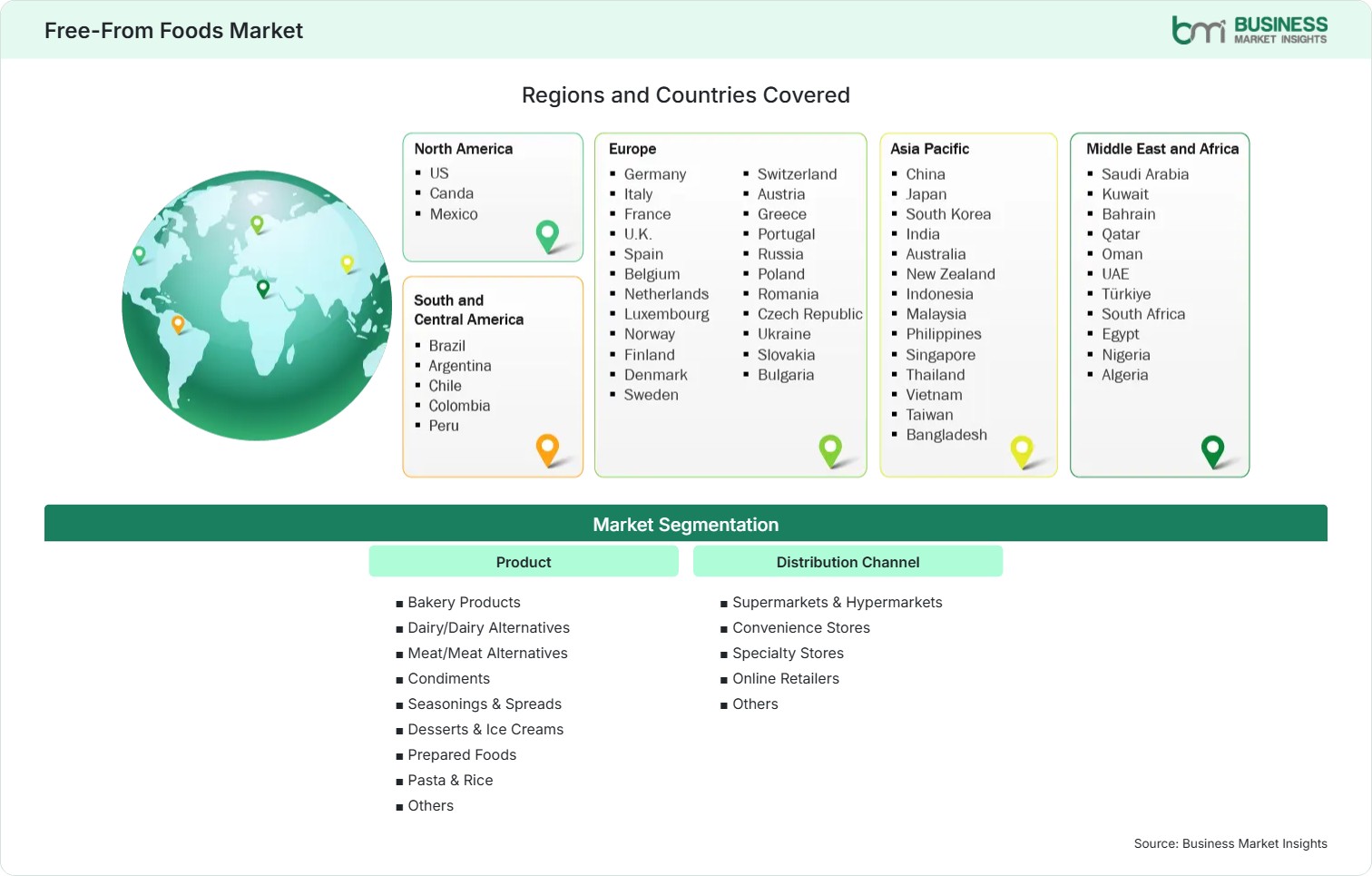
Global Market Geography
FREE PDF
Request your free sample
Request free sample
05 Segment Analysis

Free-From Foods Market Segmentation

Product

The Product segment accounted for approximately 24%–27% of the market share in 2025 and is projected to expand at a CAGR of 10.5%–11.1% during 2026–2033. Rising demand for allergen-free, gluten-free, dairy-free, and clean-label foods continues encouraging manufacturers to diversify product portfolios across multiple food categories. The Free-From Foods Market scope continues expanding as consumers increasingly prioritize healthier lifestyles, transparent ingredient labeling, and specialized nutritional products.

  • Bakery Products: Gluten-free breads, cakes, biscuits, and baked snacks continue witnessing strong consumer demand owing to increasing awareness of celiac disease, wheat intolerance, and healthier eating habits.
  • Dairy/Dairy Alternatives: Dairy-free milk, yogurt, cheese, and cream alternatives remain the leading product category, supported by rising lactose intolerance awareness, vegan lifestyles, and plant-based nutrition trends.
  • Meat/Meat Alternatives: Plant-based meat substitutes and allergen-free protein products continue gaining popularity as consumers seek sustainable and healthier dietary alternatives.
  • Condiments, Seasonings & Spreads: Free-from sauces, spreads, dressings, and seasonings are experiencing increasing adoption as consumers seek additive-free and allergen-safe meal solutions.
  • Desserts & Ice Creams: Dairy-free desserts and frozen treats continue expanding through innovations in plant-based ingredients and natural sweeteners while maintaining taste and texture.
  • Prepared Foods: Ready-to-eat and convenience meals formulated without common allergens continue gaining traction among busy consumers seeking healthier food options.
  • Pasta & Rice: Gluten-free pasta and specialty grain-based rice products continue attracting consumers requiring wheat-free dietary alternatives.

Distribution Channel

The Distribution Channel segment represented nearly 48%–51% of total market revenue in 2025 and is expected to register a CAGR of 10.6%–11.2% during the forecast period. Expanding organized retail, growing digital commerce, and increasing consumer accessibility continue strengthening global market expansion. The Free-From Foods Market trends indicate rising investments in omnichannel retail strategies that improve product availability across multiple consumer touchpoints.

  • Supermarkets & Hypermarkets: These remain the dominant distribution channel due to extensive product availability, competitive pricing, and expanding dedicated free-from food sections.
  • Convenience Stores: Convenience stores continue supporting impulse purchases and daily grocery requirements by offering selected free-from food products in urban locations.
  • Specialty Stores: Specialty health food retailers provide premium allergen-free, organic, and clean-label products supported by personalized customer service and expert product guidance.
  • Online Retailers: Online retail continues recording the fastest growth due to wider product selection, home delivery convenience, subscription services, and increasing consumer adoption of digital grocery shopping.
06 Market Forces

Free-From Foods Market Dynamics

Key Market Drivers

Rising food allergy awareness

Increasing awareness of food allergies, gluten intolerance, lactose intolerance, and celiac disease is significantly driving demand for free-from food products worldwide. Consumers are becoming more proactive in managing dietary restrictions while healthcare professionals increasingly recommend allergen-free nutritional solutions. Improved food labeling regulations and greater availability of certified free-from products further strengthen consumer confidence. These factors continue supporting sustained Free-From Foods Market growth across both developed and emerging economies.

Increasing health-conscious consumers

Consumers are increasingly choosing foods perceived as healthier, more natural, and free from artificial additives, preservatives, and common allergens. Growing focus on preventive healthcare, balanced nutrition, and overall wellness encourages greater consumption of gluten-free, dairy-free, and clean-label food products even among individuals without diagnosed food intolerances. This broadening consumer base continues expanding overall market demand across multiple food categories.

Growing clean-label product demand

Demand for products containing simple, recognizable, and minimally processed ingredients continues reshaping global food manufacturing. Consumers increasingly scrutinize ingredient labels while favoring foods made with natural components and transparent sourcing practices. Manufacturers are responding by reformulating existing products and introducing innovative free-from offerings that combine nutritional value, taste, and clean-label positioning, strengthening long-term market competitiveness.

Key Market Opportunities

Premium product portfolio expansion

Growing willingness among consumers to pay for premium nutritional products presents significant opportunities for manufacturers to introduce organic, functional, allergen-free, and fortified food offerings. Premiumization strategies support higher profit margins while allowing companies to address specialized dietary preferences through innovative formulations featuring high-quality natural ingredients.

E-commerce sales growth

Rapid expansion of online grocery platforms enables manufacturers to reach broader consumer populations while offering extensive product assortments unavailable through conventional retail stores. Digital marketing, subscription purchasing models, and personalized product recommendations continue improving customer engagement and strengthening long-term Free-From Foods Market Forecasts through expanding direct-to-consumer sales opportunities.

Innovative ingredient applications

Continuous advancements in alternative proteins, gluten-free grains, plant-based ingredients, natural sweeteners, and functional nutritional components provide manufacturers with opportunities to improve taste, texture, nutritional quality, and product diversity. Innovation in ingredient technologies enables companies to address multiple dietary requirements while enhancing overall consumer satisfaction.

Market Restraints and Challenges

Premium product pricing concerns

Factor: Free-from food products typically require specialized ingredients, dedicated manufacturing processes, allergen testing, and certification procedures, increasing production costs. Impact: Higher retail prices may limit consumer adoption, particularly in price-sensitive markets, while encouraging buyers to choose conventional food alternatives during periods of economic uncertainty.

Limited ingredient availability

Factor: Manufacturers rely on specialized gluten-free grains, plant-based proteins, allergen-free ingredients, and certified raw materials that often face supply constraints and seasonal fluctuations. Impact: Limited ingredient availability increases procurement complexity, production costs, and supply chain risks while potentially affecting product consistency, manufacturing efficiency, and market expansion strategies.

07 Company Analysis

Competitive Landscape

The competitive landscape is characterized by continuous investment in clean-label innovation, allergen-free formulations, plant-based ingredient development, and premium nutrition products. The Free-From Foods Market analysis indicates that leading food manufacturers are strengthening their market positions through strategic acquisitions, product portfolio expansion, sustainable ingredient sourcing, and digital retail partnerships to meet the rapidly growing global demand for free-from food products.

Company Name

Overview

Products and Services Relevant to this Market

Danone S.A.

Global food company specializing in dairy, plant-based nutrition, and health-focused food products.

Dairy alternatives, plant-based beverages, lactose-free products, functional nutrition foods.

Nestlé S.A.

Multinational food and beverage company offering diversified nutrition and wellness products worldwide.

Gluten-free foods, dairy-free beverages, infant nutrition, plant-based food products, functional nutrition.

General Mills Inc.

Global manufacturer of packaged foods with extensive health-oriented and specialty food portfolios.

Gluten-free cereals, snacks, baking products, organic foods, natural food brands.

The Kraft Heinz Company

International food manufacturer producing branded packaged foods and condiments.

Gluten-free sauces, condiments, ready meals, dairy alternatives, packaged food products.

Conagra Brands Inc.

Consumer packaged goods company focused on frozen, grocery, and healthy food categories.

Gluten-free meals, frozen foods, plant-based products, snacks, packaged convenience foods.

The Hain Celestial Group Inc.

Leading producer of organic, natural, and specialty food products.

Organic foods, gluten-free snacks, dairy alternatives, plant-based nutrition products.

Kellogg Company

Global cereal and snack manufacturer emphasizing wellness and specialty nutrition.

Gluten-free cereals, snack bars, breakfast products, plant-based food offerings.

Unilever PLC

Multinational consumer goods company with extensive food and nutrition brands.

Plant-based foods, spreads, dairy alternatives, functional food products, packaged nutrition.

Mondelez International Inc.

Global snack manufacturer expanding healthier and specialty food offerings.

Gluten-free snacks, biscuits, confectionery, premium packaged foods.

Enjoy Life Foods

Specialty manufacturer dedicated to allergy-friendly and free-from food products.

Allergen-free snacks, cookies, chocolates, baking products, certified free-from foods.

08 Industry Activity

Recent Developments

October 2025

Nestlé S.A. expanded its portfolio of gluten-free and allergen-free meal solutions under several food brands, supporting increasing consumer demand for free-from and clean-label convenience foods.

September 2025

Barilla Group expanded its gluten-free pasta portfolio across North America and Europe by introducing new formulations with improved taste and texture, reinforcing its position in the premium free-from foods market.

May 2025

Danone S.A. completed the acquisition of a major plant-based nutrition business from The Hain Celestial Group, strengthening its portfolio of dairy-free, gluten-free, and allergen-free food products while expanding its presence in the free-from foods segment.

January 2025

Dr. Schär AG expanded its gluten-free product portfolio with the launch of new high-protein, clean-label bakery products, addressing growing consumer demand for nutritious free-from food options.

10 Trust & Transparency

Research Methodology

The market analysis combines proprietary research with secondary data from government agencies, company disclosures, regulatory filings, industry databases and expert interviews. Market estimates are validated through data triangulation, cross-market benchmarking and analyst review.

View Full Research Methodology

11 Questions Answered

Frequently Asked Questions

What does the Free-From Foods Market Report cover?

The report provides comprehensive analysis of market size, segmentation, regional performance, competitive landscape, growth drivers, opportunities, restraints, technological innovations, recent industry developments, and forecasts through 2033.

Why is online retail becoming the fastest-growing distribution channel?

Online retail offers wider product selection, greater convenience, subscription purchasing options, home delivery services, and improved accessibility to specialty free-from products that may not be available through traditional retail outlets.

Which product category holds the largest market share?

Dairy/Dairy Alternatives represent the leading product segment owing to increasing demand for lactose-free products, plant-based milk alternatives, vegan nutrition, and functional dairy replacement products.

Which region dominates the global market?

North America currently leads the global market due to high consumer awareness of food allergies, strong retail infrastructure, extensive product availability, and increasing demand for premium clean-label and specialty food products.

What factors are driving the Free-From Foods Market?

The market is primarily driven by increasing awareness of food allergies and intolerances, rising health-conscious consumer behavior, growing demand for clean-label products, expanding plant-based nutrition, and continuous innovation in allergen-free food formulations.

Access the Full Free-From Foods Market Report

Get segment-level forecasts, regional estimates, competitive benchmarking, company profiles and downloadable Excel datasets.

Access the full Free-From Foods Market Report
350 pages PDF & Excel | 2026-07-27