Protein Ingredients Market Regional Highlights
North America Protein Ingredients Market
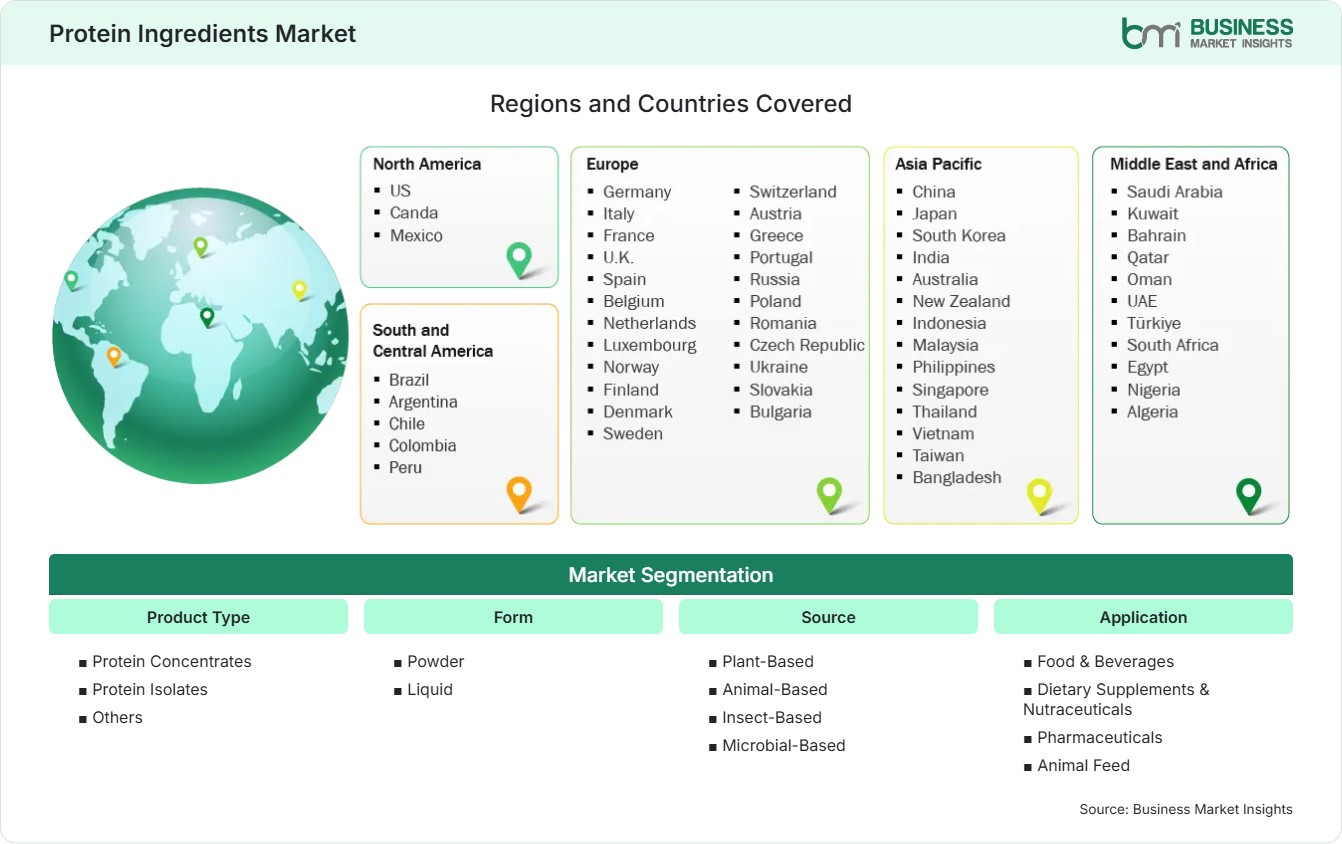
North America accounts for 34%–37% share in 2025 and is projected to grow at a CAGR of 7.60%–8.00% during 2026–2033. Strong demand for sports nutrition, dietary supplements, and functional food products continues supporting regional expansion. The Protein Ingredients Market share remains the largest globally because manufacturers continue introducing innovative protein formulations while consumers increasingly adopt high-protein diets to support active lifestyles, weight management, and overall wellness.
- The US leads regional demand through a well-established nutrition industry, advanced food processing, and growing protein supplement consumption.
- Canada continues expanding protein ingredient production supported by dairy processing and plant-based food innovation.
- Functional food manufacturers increasingly utilize specialized protein ingredients across diverse product categories.
- Research investments continue advancing protein extraction, formulation, and ingredient performance technologies.
US Protein Ingredients Market
The US represents 84%–87% of the North American market in 2025 and is projected to grow at a CAGR of 7.70%–8.10% during 2026–2033. Rising health awareness, increasing sports nutrition demand, and expanding functional food consumption continue strengthening protein ingredient adoption across multiple industries.
- Sports nutrition brands continue expanding high-protein product portfolios.
- Food manufacturers increasingly introduce protein-fortified snacks and beverages.
- Consumers continue adopting protein-rich diets supporting health and fitness objectives.
- Innovation in plant-based nutrition strengthens product diversification across food categories.
Europe Protein Ingredients Market
Europe accounts for 24%–27% share in 2025 and is expected to grow at a CAGR of 7.80%–8.20% during 2026–2033. Germany, France, the UK, and the Netherlands remain major markets because of strong dairy industries, functional food innovation, and increasing demand for sustainable protein products. Western Europe leads regional consumption while Eastern Europe records steady growth.
- Germany remains the leading regional market through advanced food processing and nutritional product manufacturing.
- France continues expanding dairy protein production and functional ingredient innovation.
- Sustainability initiatives encourage development of alternative and plant-based protein ingredients.
- Consumer demand for clean-label products supports premium protein ingredient adoption.
Asia Pacific Protein Ingredients Market
Asia Pacific holds 28%–31% share in 2025 and is forecast to expand at a CAGR of 8.90%–9.40% during 2026–2033. China, India, Japan, and Australia continue driving regional growth through rising disposable incomes, expanding food processing industries, and growing health-conscious consumer populations.
- China remains the largest regional market because of large-scale food manufacturing and nutrition product demand.
- India is the fastest-growing country owing to expanding fortified food consumption and increasing health awareness.
- Japan continues supporting innovation in functional foods and premium nutritional ingredients.
- Australia strengthens plant-based protein production and exports.
- Regional investments continue expanding protein processing and ingredient manufacturing capacity.
Rest of World Protein Ingredients Market
Rest of World represents 8%–10% share in 2025 and is projected to register a CAGR of 7.80%–8.20% during 2026–2033. Latin America, the Middle East, and Africa continue expanding food processing industries and nutrition programs, supporting increasing protein ingredient consumption across food, feed, and healthcare applications.
- Brazil continues strengthening protein ingredient manufacturing and food exports.
- Middle Eastern countries expand investments in functional food production.
- South Africa increases demand for fortified nutritional products.
- Animal nutrition industries continue supporting protein ingredient consumption.
- Food manufacturers increasingly develop value-added nutritional products for regional markets.