
Nutraceutical Ingredients Market Outlook: Size, Share, Trends, Growth Analysis, Competitive Landscape & Forecast, 2026-2033

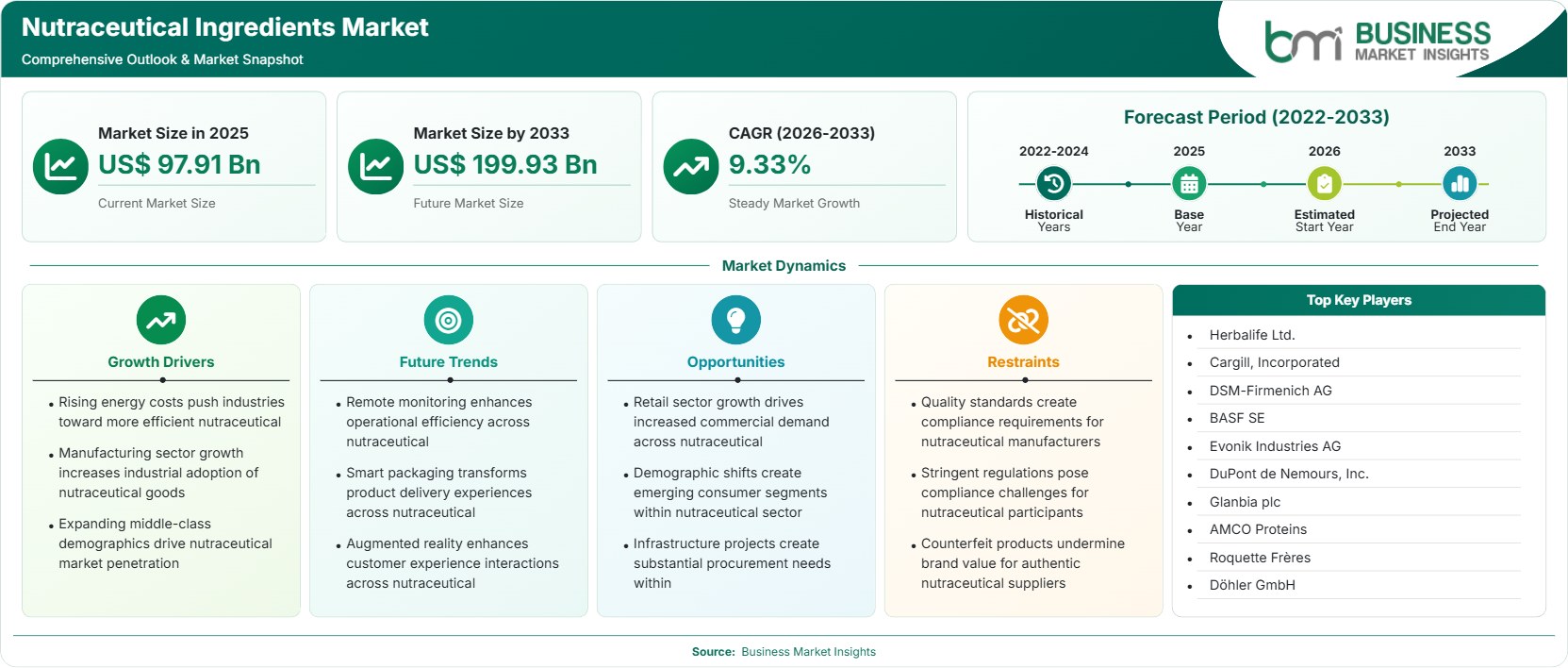
The Nutraceutical Ingredients Market size was valued at US$ 97.91 Billion in 2025 and is projected to reach US$ 199.93 Billion by 2033, growing at a CAGR of 9.33% during 2026–2033. Rising preventive healthcare awareness, expanding functional nutrition adoption, personalized wellness demand, clean-label innovation, and increasing investments in bioactive ingredient development are creating substantial growth opportunities across global nutraceutical value chains.

Report Coverage
  • Ingredient Type: Protein and Amino acids, Vitamins and Minerals, Botanical Extracts, Carbohydrates, Probiotics, Others
  • Form: Powder, Liquid, Others
  • Application: Dietary Supplements, Functional Food, Functional Beverages
US$ 97.91 Bn Market size in 2025
US$ 199.93 Bn Market Size by 2033
9.33% CAGR, 2026 - 2033
2026-2033 Forecast Period

AI Overview

Nutraceutical Ingredients Market Summary

  • North America Region: North America holds a nutraceutical ingredients market share of 34%–37% in 2025, growing with a CAGR of 8.4%–9.0% during 2026–2033. Strong consumer awareness, advanced supplement manufacturing, clinical validation initiatives, premium nutrition demand, digital health integration, and innovation in functional ingredients continue supporting long-term expansion opportunities across regional markets. The U.S. remains the regional leader, supported by strong supplement consumption, innovation ecosystems, and an estimated CAGR of 8.6%–9.2% through 2033.
  • Fastest Growing Region: Asia Pacific accounts for 27%–30% market share in 2025 and is expected to expand at a CAGR of 10.5%–11.3% during 2026–2033. Rising middle-class incomes, preventive healthcare spending, urbanization, functional food adoption, local ingredient innovation, and supportive manufacturing investments continue accelerating demand across emerging economies throughout the region.
  • Leading Segment: Vitamins and Minerals represent 28%–31% share in 2025 and are projected to grow at a CAGR of 8.8%–9.5% during 2026–2033. Widespread incorporation into supplements, immunity-focused formulations, food fortification programs, aging demographics, healthcare awareness, and extensive regulatory acceptance continue supporting stable global demand patterns.
  • High Growth Segment: Probiotics account for 10%–13% share in 2025 and are anticipated to advance at a CAGR of 11.5%–12.4% during 2026–2033. Expanding microbiome research, digestive wellness demand, personalized nutrition strategies, clinical evidence development, innovative delivery formats, and premium product positioning continue creating significant commercial opportunities globally.
  • Key Market Opportunity: Expanding personalized nutrition platforms integrating consumer health data, microbiome insights, wearable technologies, and customized formulations create opportunities for premium ingredient portfolios, targeted wellness solutions, stronger consumer engagement, and differentiated product development.
  • Major Market Players: Herbalife Ltd.; Cargill, Incorporated; DSM-Firmenich AG; BASF SE; Evonik Industries AG; DuPont de Nemours, Inc.; Glanbia plc; AMCO Proteins; Roquette Frères; Döhler GmbH.
Strategic Insights

Nutraceutical Ingredients Market: Strategic Insights

Nutraceutical Ingredients Market Strategic Framework
FREE PDF
Request your free sample
Request free sample
Stakeholder View

Key Takeaways

  • The nutraceutical ingredients market value chain is increasingly integrating ingredient manufacturers, biotechnology firms, food processors, supplement brands, contract manufacturers, and digital health platforms to accelerate commercialization and improve traceability.
  • Functional drinks and premium dietary supplements represent lucrative business opportunities, as consumers are becoming increasingly interested in formulations that deliver on immunity, gastrointestinal wellbeing, energy management, and aging well.
  • Innovation is moving towards clinically proven formulations, precision fermentation, microbiome active ingredients, botanical ingredients, and sustainable sources to enhance effectiveness and credibility of the formulations.
  • Asia-Pacific is a highly favorable market for investment because of its urbanization trends, increased healthcare spending, higher disposable incomes, and demand for fortified food and wellness-oriented nutritional products.
  • Strategic acquisitions, mergers, and collaborations with companies that have ingredient technology are now commonplace.
Geographic Outlook

Nutraceutical Ingredients Market Regional Highlights

North America Nutraceutical Ingredients Market

North America accounted for approximately 34%–37% of global revenue in 2025 and is projected to register a CAGR of 8.4%–9.0% through 2033. The region benefits from strong consumer awareness regarding preventive healthcare, high supplement penetration, and advanced product innovation capabilities. Nutraceutical Ingredients Market share remains highest in this region due to mature wellness ecosystems, extensive retail distribution networks, and increasing demand for personalized nutrition solutions.

  • High expenditure from consumers on dietary supplements continues to boost demand for vitamins, probiotics, proteins, and specialty ingredients in health-oriented demographics.
  • The rising trend of personalized nutrition through digital health platforms and personalized nutrition is encouraging the formulation of scientific-backed formulations by ingredient suppliers.
  • Biotech investments and precision fermentation along with sustainable ingredient development continue to fuel the innovation pipeline.
  • Increasing aging population and chronic disease prevention will drive demand for clinically proven nutritional ingredients.

US Nutraceutical Ingredients Market

The United States represented approximately 74%–78% of North American revenue in 2025 and is anticipated to grow at a CAGR of 8.6%–9.2% through 2033. Advanced research capabilities and a robust ecosystem of ingredient suppliers, contract manufacturers, and wellness brands continue supporting market development. The country remains a major hub for personalized nutrition and functional health product innovation.

  • Sports nutrition, active lifestyle supplements, and products for healthy aging remain strong drivers of ingredients for premium consumer groups.
  • Increased focus on microbiome research and digestive health research leads to rapid development of advanced probiotics and prebiotics.
  • The growth of e-commerce opens up opportunities for greater reach of specialized nutritional supplements.
  • Regulatory compliance and quality assurance standards continue encouraging adoption of scientifically validated ingredients among leading manufacturers.

Europe Nutraceutical Ingredients Market

Europe held approximately 25%–28% of global revenue in 2025 and is forecast to expand at a CAGR of 8.2%–8.9% during 2026–2033. Germany remains the leading national market, while Eastern European countries are emerging as higher-growth destinations with CAGR ranges exceeding regional averages. Consumer preference for sustainable sourcing and premium wellness products continues supporting ingredient innovation and commercialization activities.

  • Germany leads regional consumption due to established supplement industries, strong healthcare awareness, and significant investment in nutritional science.
  • France and Italy continue witnessing growth in botanical extracts and functional food applications supported by natural health product preferences.
  • Sustainability initiatives encourage manufacturers to adopt environmentally responsible sourcing and processing methods for nutritional ingredients.
  • Expansion of healthy aging products is increasing demand for proteins, amino acids, vitamins, and specialty bioactive compounds.
  • Emerging Eastern European markets are attracting investments due to expanding retail channels and improving consumer purchasing power.

Asia Pacific Nutraceutical Ingredients Market

Asia Pacific accounted for approximately 27%–30% of global revenue in 2025 and is projected to achieve a CAGR of 10.5%–11.3% through 2033, making it the fastest-growing regional market. Rising disposable incomes, increasing healthcare awareness, and expanding urban populations are strengthening demand for functional nutrition products. Nutraceutical Ingredients Market growth in the region is further supported by local manufacturing expansion and favorable demographic trends.

  • China continues leading regional demand due to large consumer populations, strong e-commerce penetration, and increasing focus on preventive wellness.
  • India demonstrates rapid expansion supported by rising healthcare awareness, growing middle-class populations, and increasing supplement adoption.
  • Functional beverages are experiencing strong growth as consumers seek convenient nutrition solutions addressing immunity and lifestyle-related concerns.
  • Investments in local ingredient production and fermentation technologies are enhancing regional supply capabilities and reducing import dependence.
  • Traditional botanical knowledge combined with modern scientific validation is supporting innovation across multiple product categories.

Rest of World Nutraceutical Ingredients Market

The Rest of World region accounted for approximately 10%–13% of global revenue in 2025 and is expected to grow at a CAGR of 8.8%–9.6% through 2033. South and Central America benefit from expanding consumer awareness and increasing supplement penetration. Meanwhile, Middle East and Africa markets are witnessing greater demand for fortified foods and preventive health solutions. Brazil leads regional activity in Latin America, while Gulf Cooperation Council countries demonstrate higher growth potential due to rising wellness expenditures.

  • The demand in Brazil is still being led by increased retail distribution and uptake of functional nutrition products.
  • Mexico is experiencing increasing demand for fortified foods and dietary supplements due to increased health consciousness amongst consumers.
  • The Gulf Cooperation Council nations are putting efforts into nutrition and wellness programs that drive up the demand for high-quality ingredients.
  • Rapid urbanization and improved healthcare have been driving the uptake of preventive nutrition products in several African economies.
  • Investments in local manufacture and strategic imports have improved the availability of products.
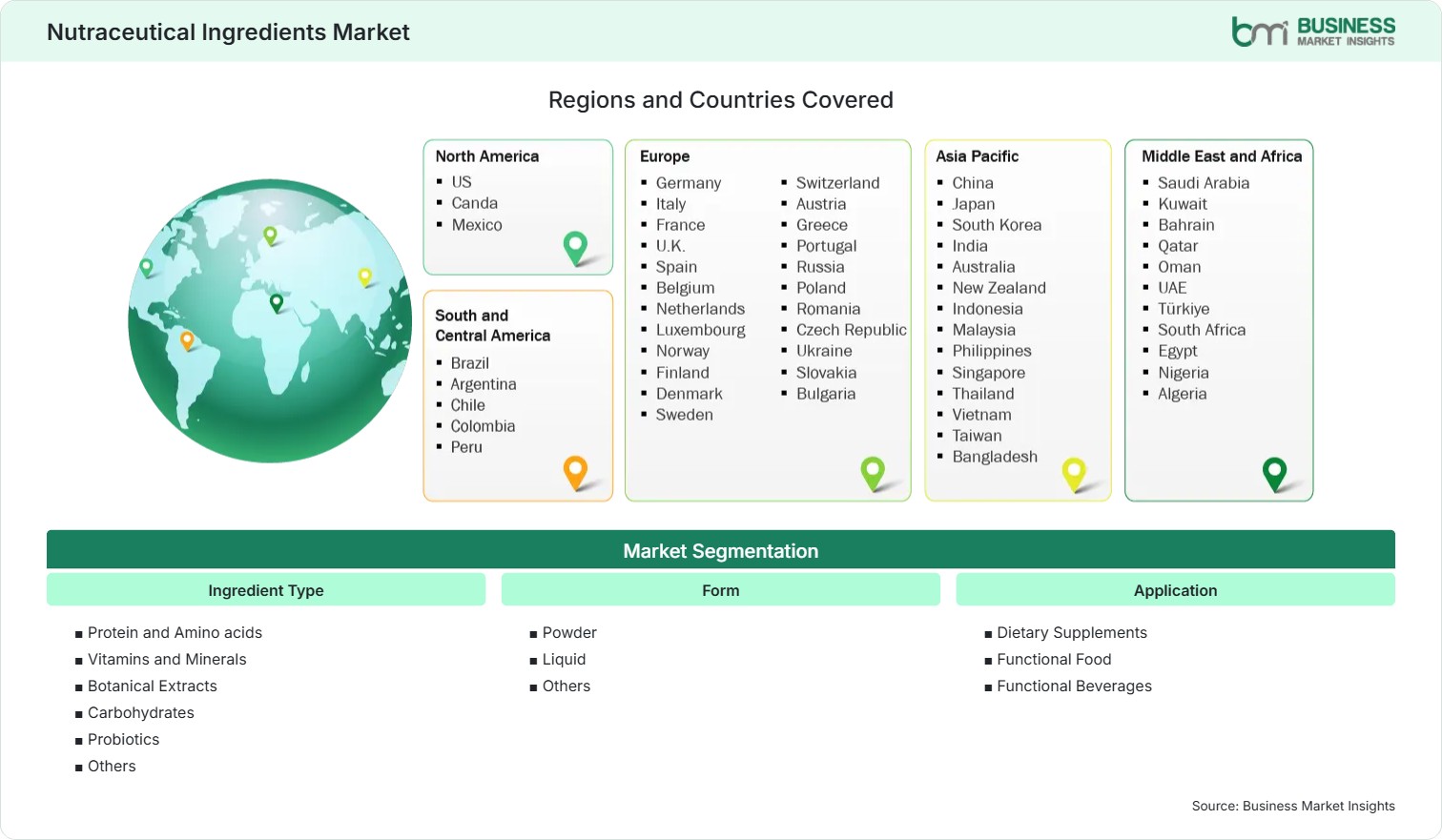
Global Market Geography
FREE PDF
Request your free sample
Request free sample
Segment Analysis

Nutraceutical Ingredients Market Segmentation

Ingredient Type

Ingredient Type accounted for the largest proportion of industry revenues, with Vitamins and Minerals representing the dominant category. The segment reflects diverse consumer health priorities ranging from immunity and digestive wellness to sports nutrition and healthy aging. The Nutraceutical Ingredients Market scope continues expanding as manufacturers integrate multifunctional bioactive ingredients into food, beverage, and supplement formulations. This segment collectively represented approximately 78%–82% of market revenue in 2025 and is expected to grow at a CAGR of 9.1%–9.8% through 2033.

  • Protein and Amino acids: Growing sports nutrition participation, healthy aging requirements, and increasing demand for muscle maintenance products continue supporting adoption across dietary supplements, fortified foods, and performance-focused nutritional formulations.
  • Vitamins and Minerals: Broad regulatory acceptance, widespread fortification initiatives, and consumer focus on immunity, bone health, and overall wellness sustain strong utilization across diverse nutritional product categories.
  • Botanical Extracts: Rising preference for natural health solutions and plant-derived bioactives supports expanding applications in stress management, cognitive wellness, metabolic health, and preventive nutrition products.
  • Carbohydrates: Functional carbohydrate ingredients increasingly support digestive wellness, energy management, and formulation stability requirements across multiple food, beverage, and supplement applications worldwide.
    • Dietary Fiber: Demand continues increasing due to digestive health awareness, satiety benefits, and growing incorporation into functional foods targeting wellness-conscious consumers.
    • Polysaccharides and Oligosaccharides: These ingredients are increasingly utilized in gut-health formulations, microbiome-support products, and advanced nutritional applications requiring targeted physiological benefits.
    • Sugar alcohol: Rising demand for reduced-sugar formulations and healthier food alternatives continues supporting adoption across nutritional products and functional food categories.
  • Probiotics: Expanding microbiome research and consumer interest in digestive wellness continue driving adoption in supplements, functional foods, and innovative health-focused beverage products.

Form

Form selection significantly influences product stability, shelf life, manufacturing efficiency, and consumer convenience. The Nutraceutical Ingredients Market share within powder-based applications remains highest, accounting for approximately 52%–56% in 2025, while the overall segment is projected to register a CAGR of 8.9%–9.6% through 2033.

  • Powder: Superior stability, easier transportation, formulation versatility, and compatibility with supplements, functional foods, and beverage applications continue supporting broad commercial adoption.
  • Liquid: Growing demand for ready-to-drink wellness products, rapid absorption characteristics, and personalized nutrition formats is driving increasing utilization of liquid ingredient solutions.

Application

Application diversity continues expanding as health-focused consumers seek nutritional benefits through multiple consumption formats. Dietary supplements remain the primary demand center, while functional beverages are emerging as a high-growth category. Supported by evolving consumer preferences and continuous product innovation, this segment accounted for approximately 58%–62% of global revenue in 2025 and is expected to grow at a CAGR of 9.4%–10.1% through 2033. Nutraceutical Ingredients Market trends indicate increasing convergence between food, beverage, and healthcare sectors.

  • Dietary Supplements: Strong consumer awareness, preventive healthcare adoption, and demand for targeted wellness solutions continue supporting the segment’s dominant position across developed and emerging markets.
  • Functional Food: Manufacturers increasingly incorporate bioactive ingredients into everyday food products to enhance nutritional value while addressing evolving health and wellness preferences.
  • Functional Beverages: Convenience, rapid consumption, and growing demand for immunity, energy, digestive wellness, and hydration benefits continue accelerating innovation and market adoption.
Market Forces

Nutraceutical Ingredients Market Dynamics

Key Market Drivers

Rising Preventive Healthcare and Wellness Consumption

In global healthcare systems, there is an increasing focus on prevention versus treatment; this makes consumers choose nutritional intervention that will ensure their wellbeing. The World Health Organization suggests that noncommunicable diseases are responsible for a large part of deaths in the world, and hence, the growing interest in the use of nutrition for health management. Consumers seek ingredients that can boost immunity, help in digestion, enhance cognitive abilities and promote healthy aging. The nutraceutical ingredients market growth is driven by this trend, as companies develop science-backed formulas designed to deliver specific health benefits. Increasing wellness consciousness in developed and developing nations is resulting in constant demand for proteins, vitamins, minerals, probiotics and botanical extracts.

Expansion of Functional Foods and Beverage Innovation

Food and beverage manufacturers are increasingly incorporating nutritional ingredients into mainstream consumer products, transforming everyday consumption occasions into wellness opportunities. Demand for fortified snacks, protein-enriched foods, probiotic beverages, and immunity-support products continues rising across multiple demographic groups. Innovation in taste optimization, ingredient stability, and formulation technologies has enabled broader integration of bioactive compounds without compromising sensory performance. Retailers are expanding shelf space dedicated to wellness-oriented products, further accelerating ingredient demand. Nutraceutical Ingredients Market trends indicate growing convergence between traditional food industries and preventive healthcare sectors. As consumers seek convenient health solutions that fit daily routines, functional foods and beverages continue emerging as critical demand drivers supporting long-term industry expansion globally.

Advances in Biotechnology and Ingredient Research

With the development of new scientific knowledge, companies are able to create products that have more pure ingredients, greater bioavailability, and confirmed benefits for consumers via clinical testing. With precision fermentation, advanced extraction processes, and the use of microbiome-related innovations, a wider spectrum of commercially available nutritional ingredients can be developed. Academic centers and commercial organizations remain actively engaged in scientific research projects that enhance the efficacy of the product line while ensuring regulatory compliance. Increased scientific credibility enhances consumer confidence in products and enables premium positioning. Innovations related to gut health, cognitive wellness, physical fitness, and anti-aging contribute to the creation of demand in the market.

Key Market Opportunities

Personalized Nutrition and Digital Health Integration

The integration of health analytics, wearable technologies, and individualized wellness programs is creating substantial opportunities for ingredient suppliers. Consumers increasingly seek products tailored to unique physiological requirements, lifestyle habits, and health objectives. Nutraceutical Ingredients Market Forecasts indicate growing demand for customized formulations supported by health-monitoring data and microbiome analysis. Ingredient manufacturers capable of developing targeted nutritional solutions can achieve stronger differentiation and premium pricing advantages. Partnerships among nutrition companies, digital health providers, and biotechnology firms are expected to accelerate innovation. Personalized nutrition platforms also improve consumer engagement and long-term product adherence, creating recurring revenue opportunities while strengthening relationships between ingredient suppliers and downstream brand owners across multiple global markets.

Growth of Plant-Based and Sustainable Ingredient Solutions

Issues related to sustainability and shifts in dietary choices are motivating greater use of plant-based nutrient ingredients. Today’s consumers not only look at the health benefits of products but consider their impact on the environment, and this is driving the demand for sustainable sources of proteins, fibers, botanicals, and specialty nutrients. Companies that are focused on sustainability and are developing sustainable sources are able to get competitive advantage. With more and more focus on the environment in purchase decisions, companies with sustainable ingredient sources have great potential for growth.

Expansion in Emerging Healthcare Economies

Favorable economic growth, rapid urbanization trends, and increasing awareness about healthcare are some of the factors that make the environment conducive for the use of nutritional ingredients in emerging markets. Growing middle-class consumers have an increasing interest in preventative health solutions and high-quality nutrition products. Moreover, governments in such countries are actively supporting nutrition improvement programs and food fortification. Investing in manufacturing in these countries helps with increased product availability and reduced costs, as well as strengthens supply chains. More widespread adoption of e-commerce channels allows more consumers to buy health-oriented products. With growing health expenditures and improving wellness awareness, emerging markets will be a major source of new demand for nutritional ingredients.

Market Restraints and Challenges

Regulatory Complexity Across International Markets

Factor: Manufacturers of nutritional ingredients need to adhere to various regulatory systems concerning the safety assessment, health claims, labeling, and approval of products in many jurisdictions.

Impact: Smaller manufacturers may experience more difficulties because of resource and skill constraints. Constant changes in labeling and health claim regulations add complexity. Such difficulties may prevent some firms from entering the market or innovating and may limit their ability to develop a global portfolio of products.

Raw Material Supply Volatility and Cost Pressures

Factor: Many nutritional ingredients depend on agricultural commodities, botanical resources, fermentation inputs, and specialized biological materials that are susceptible to climatic conditions, geopolitical disruptions, and supply chain instability. Impact: Price volatility directly affects production costs, profit margins, and procurement strategies. Manufacturers may experience difficulties maintaining consistent ingredient quality and supply continuity during periods of disruption. Nevertheless, persistent input cost fluctuations remain a significant challenge affecting competitiveness, pricing strategies, and long-term profitability throughout the industry.

Company Analysis

Competitive Landscape

The competitive environment is characterized by continuous product innovation, strategic partnerships, biotechnology investments, and expansion of specialty ingredient portfolios. Nutraceutical Ingredients Market analysis indicates that leading companies are focusing on clinically supported ingredients, sustainable sourcing practices, precision nutrition capabilities, and global manufacturing expansion to strengthen their competitive positions.

Company Name

Overview

Products and Services relevant to this market

Herbalife Ltd.

Global nutrition company with extensive presence in dietary supplements, weight management, and wellness products supported by direct-selling distribution networks.

Protein supplements, vitamins, minerals, botanical ingredients, wellness formulations, sports nutrition products, and personalized nutrition solutions.

Cargill, Incorporated

Diversified food and ingredient company serving global food, beverage, nutrition, and health industries through extensive manufacturing and supply capabilities.

Functional ingredients, specialty proteins, fibers, texturizers, sweeteners, nutritional solutions, and formulation support services.

DSM-Firmenich AG

Global science-based innovator focused on health, nutrition, and bioscience solutions with strong research and ingredient development capabilities.

Vitamins, omega-3 ingredients, probiotics, nutritional premixes, specialty bioactives, and personalized nutrition solutions.

BASF SE

Major chemical and nutrition company supplying high-value ingredients for food, health, and wellness applications worldwide.

Vitamins, carotenoids, omega ingredients, nutritional actives, food fortification solutions, and specialty health ingredients.

Evonik Industries AG

Specialty chemicals leader with strong expertise in amino acids, biotechnology, and advanced nutritional ingredient development.

Amino acids, specialty bioactives, fermentation-based ingredients, health nutrition components, and formulation technologies.

DuPont de Nemours, Inc.

Technology-driven company with established positions in nutrition, health, and bioscience ingredient innovation.

Probiotics, enzymes, cultures, specialty food ingredients, functional nutrition solutions, and microbiome-focused products.

Glanbia plc

International nutrition company focused on performance nutrition, ingredient innovation, and wellness product development.

Dairy proteins, amino acids, nutritional premixes, functional ingredients, and sports nutrition solutions.

AMCO Proteins

Specialized protein ingredient supplier serving food, beverage, and nutritional product manufacturers globally.

Whey proteins, milk proteins, protein concentrates, nutritional blends, and specialty formulation ingredients.

Roquette Frères

Global leader in plant-based ingredients with extensive investments in health and nutrition applications.

Plant proteins, dietary fibers, polyols, functional carbohydrates, and nutraceutical formulation ingredients.

Döhler GmbH

Ingredient technology company specializing in natural solutions for food, beverage, and wellness industries.

Botanical extracts, natural ingredients, plant-based solutions, health ingredients, and nutraceutical formulation support.

Trust & Transparency

Research Methodology

The market analysis combines proprietary research with secondary data from government agencies, company disclosures, regulatory filings, industry databases and expert interviews. Market estimates are validated through data triangulation, cross-market benchmarking and analyst review.

View Full Research Methodology

Questions Answered

Frequently Asked Questions

How can a Nutraceutical Ingredients Market Report support business decision?

A comprehensive report helps stakeholders evaluate competitive positioning, identify growth opportunities, assess regional demand patterns, understand regulatory developments, and support investment, product development, and market expansion strategies.

How is personalization influencing future industry development?

Advances in digital health platforms, wearable technologies, microbiome research, and health analytics are enabling customized nutrition solutions tailored to individual wellness goals, creating new opportunities for ingredient suppliers.

Why is Asia Pacific considered the fastest-growing regional market?

Rapid urbanization, increasing disposable incomes, expanding healthcare expenditure, growing middle-class populations, and rising adoption of preventive wellness products continue accelerating demand across China, India, and Southeast Asian countries.

Which ingredient category currently leads industry revenues?

Vitamins and minerals remain the leading ingredient category due to broad regulatory acceptance, widespread food fortification initiatives, strong consumer awareness, and extensive use across dietary supplements and functional nutrition products.

What are the primary factors driving demand for nutraceutical ingredients?

Growing preventive healthcare awareness, aging populations, increasing prevalence of lifestyle-related diseases, and rising demand for functional foods, beverages, and dietary supplements are the major factors supporting long-term industry expansion globally.

Access the Full Nutraceutical Ingredients Market Report

Get segment-level forecasts, regional estimates, competitive benchmarking, company profiles and downloadable Excel datasets.

Access the full Nutraceutical Ingredients Market Report
350 pages PDF & Excel | 2026-09-02