Specialty Food Ingredients Market Regional Highlights
North America Specialty Food Ingredients Market
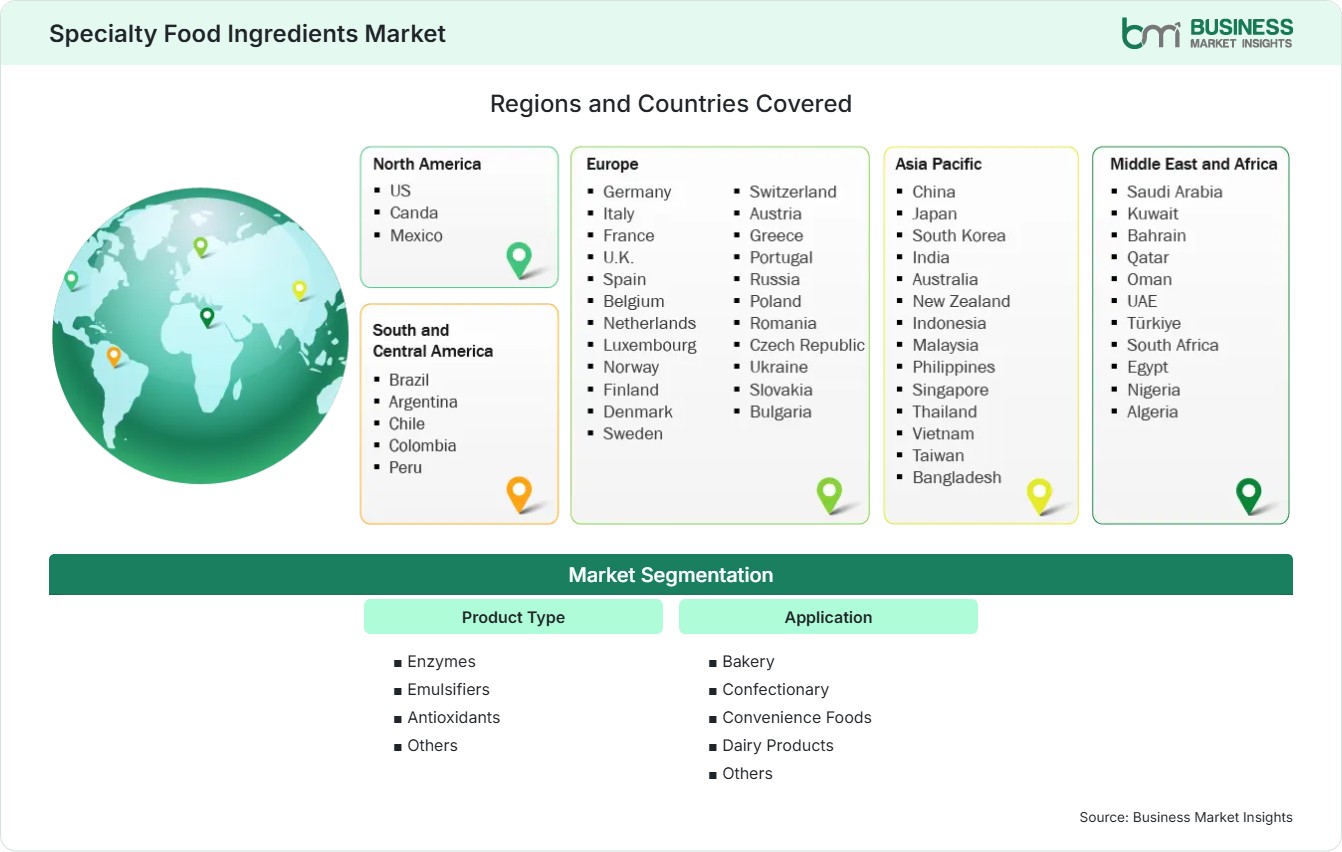
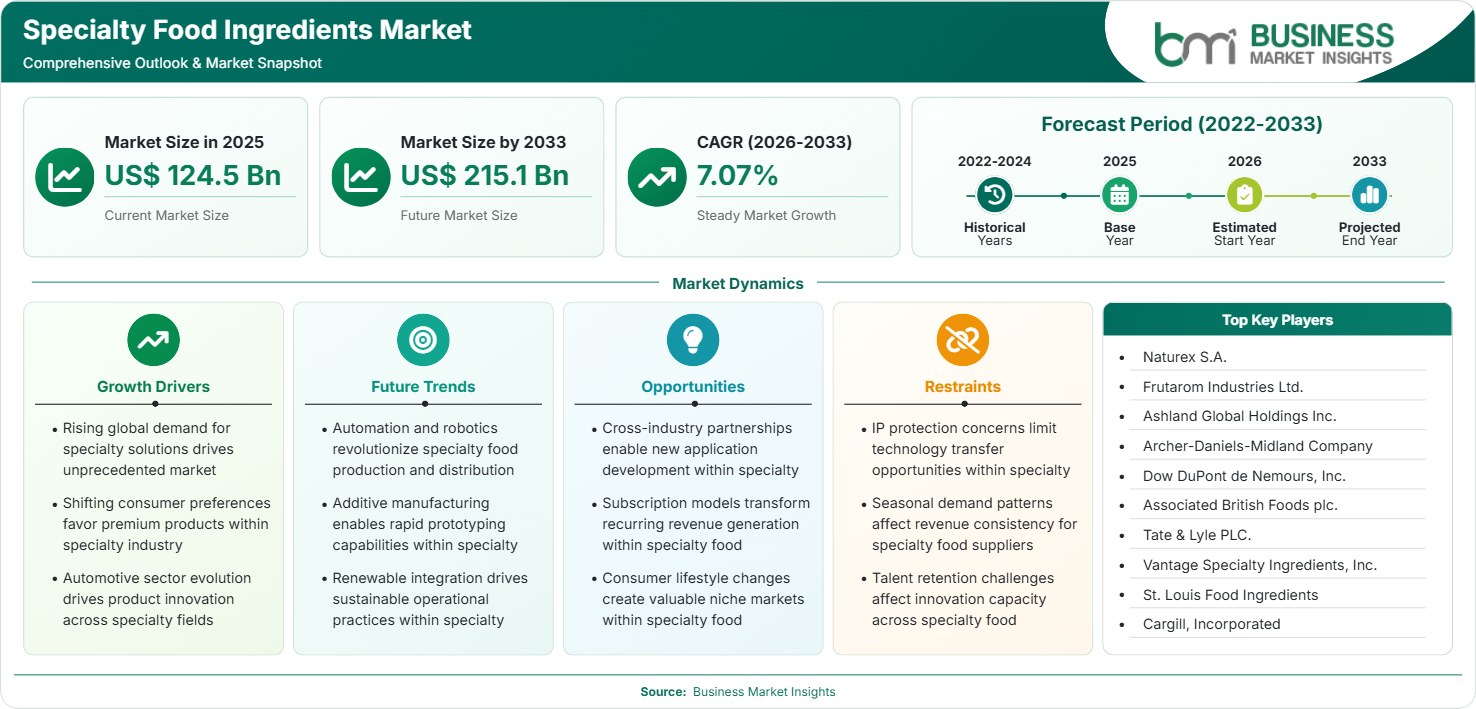
North America accounted for 34%–37% of global revenue in 2025 and is projected to expand at a 6.3%–6.8% CAGR during 2026–2033. The region benefits from mature food processing infrastructure, strong investments in ingredient innovation, and widespread adoption of clean-label formulations. Consumer preference for fortified foods, reduced-sugar products, and plant-based alternatives continues driving innovation. The Specialty Food Ingredients Market share remains strongest in North America due to advanced manufacturing capabilities, established distribution networks, and continuous product development across multiple food categories.
- Food manufacturers increasingly adopt enzyme technologies and multifunctional emulsifiers to improve product stability, texture, and nutritional quality while reducing production costs and supporting sustainable manufacturing initiatives across bakery, dairy, and processed food applications.
- Regulatory oversight from food safety authorities encourages manufacturers to develop transparent ingredient formulations, strengthen quality assurance systems, and expand investment in natural preservatives, botanical extracts, and clean-label ingredient solutions.
- Premium convenience food consumption continues increasing as consumers prioritize healthier ready-to-eat products containing functional ingredients, natural antioxidants, and improved nutritional profiles supporting wellness-focused dietary preferences.
- Strategic collaborations among biotechnology firms, ingredient suppliers, universities, and food manufacturers accelerate commercialization of innovative specialty ingredients designed for next-generation food processing technologies and premium consumer products.
- Digital manufacturing technologies and advanced formulation software improve production consistency, supply chain visibility, and ingredient optimization while supporting operational efficiency throughout regional food manufacturing facilities.
US Specialty Food Ingredients Market
The United States represents the largest contributor within North America, accounting for 74%–77% of regional Specialty Food Ingredients Market revenue in 2025 while expanding at a 6.4%–6.9% CAGR through 2033. Extensive research investments, leading multinational food manufacturers, and robust consumer demand for healthier packaged foods continue strengthening domestic production. Innovation in functional ingredients, sugar reduction technologies, and protein enhancement solutions positions the country as a global leader in premium food ingredient commercialization.
- Continuous investment in biotechnology enables development of precision fermentation, enzyme optimization, and naturally derived ingredient systems supporting premium food production across diverse applications.
- Growing demand for organic, allergen-free, gluten-free, and plant-based products encourages manufacturers to expand specialty ingredient portfolios while improving product functionality and nutritional value.
- Strong partnerships between ingredient suppliers and branded food companies accelerate commercialization of advanced formulation technologies, reducing product development timelines and enhancing market responsiveness.
- Rising investment in sustainable sourcing and environmentally responsible manufacturing strengthens long-term competitiveness while supporting consumer expectations for transparent ingredient supply chains.
Europe Specialty Food Ingredients Market
Europe captures approximately 28%–31% of the global Specialty Food Ingredients Market share in 2025 and is expected to record a 6.5%–7.0% CAGR during 2026–2033. Strict food quality regulations, growing clean-label demand, and strong innovation capabilities continue supporting market expansion. Germany remains the leading regional market because of its advanced food manufacturing sector, while Poland demonstrates the fastest growth with an estimated 7.4%–7.9% CAGR, supported by expanding processed food production and increasing investment in modern ingredient manufacturing facilities.
- European manufacturers prioritize natural colors, botanical extracts, enzyme technologies, and sustainable ingredient sourcing to comply with evolving consumer expectations and stringent food quality regulations.
- Functional foods addressing digestive health, immunity, and personalized nutrition continue creating new opportunities for specialty ingredient suppliers across premium product categories.
- Investment in renewable production technologies and resource-efficient manufacturing strengthens competitiveness while supporting environmental sustainability objectives established across the regional food industry.
- Cross-border research collaborations accelerate commercialization of innovative ingredient technologies that improve food quality, nutritional performance, and manufacturing efficiency across multiple applications.
- Premium bakery and dairy product innovation remains a major growth contributor as manufacturers increasingly incorporate multifunctional ingredients into value-added food formulations.
Asia Pacific Specialty Food Ingredients Market
Asia Pacific accounted for 26%–29% of worldwide Specialty Food Ingredients Market revenue during 2025 and is projected to register the fastest expansion with a 8.2%–8.8% CAGR through 2033. China leads regional consumption owing to extensive food manufacturing capacity, while India records the fastest regional growth at 8.8%–9.3% CAGR supported by expanding packaged food demand, increasing disposable incomes, rapid urbanization, and substantial investment in modern food processing infrastructure.
- Rapid expansion of organized retail and e-commerce improves accessibility of premium packaged foods, encouraging wider adoption of advanced specialty ingredient formulations across emerging consumer markets.
- Government initiatives supporting domestic food processing industries stimulate investments in ingredient manufacturing facilities, research capabilities, and international technology partnerships throughout the region.
- Rising consumer awareness regarding nutrition, immunity, and preventive healthcare drives increased utilization of functional ingredients across beverages, dairy products, bakery items, and convenience foods.
- Multinational ingredient companies continue expanding regional manufacturing operations to strengthen local supply chains, reduce logistics costs, and improve responsiveness to rapidly evolving consumer preferences.
- Increasing export-oriented food production encourages adoption of internationally compliant specialty ingredients supporting higher product quality, safety, and regulatory acceptance across global markets.
Rest of World Specialty Food Ingredients Market
The Rest of World region accounted for approximately 8%–11% of global revenue in 2025 and is forecast to expand at a 6.9%–7.5% CAGR during 2026–2033. South and Central America benefit from expanding processed food industries and agricultural resources, while the Middle East and Africa experience increasing investment in premium packaged foods, food security initiatives, and domestic manufacturing capacity. The Specialty Food Ingredients Market growth across these regions is supported by rising urban populations and improving food processing capabilities.
- Brazil remains the leading South and Central American market, whereas Mexico demonstrates faster expansion through increasing investment in processed food manufacturing and premium ingredient adoption.
- Saudi Arabia and the United Arab Emirates continue investing in food security, advanced manufacturing technologies, and value-added food production supporting higher demand for specialty ingredients.
- Growing international food brands establish regional manufacturing facilities to improve supply chain resilience while responding to changing dietary preferences and premium food consumption trends.
- Increasing government initiatives encouraging local food production create favorable opportunities for ingredient suppliers serving bakery, dairy, confectionery, and convenience food manufacturers.
- Expanding cold chain infrastructure and modern retail distribution improve availability of premium packaged food products utilizing advanced specialty ingredient technologies.