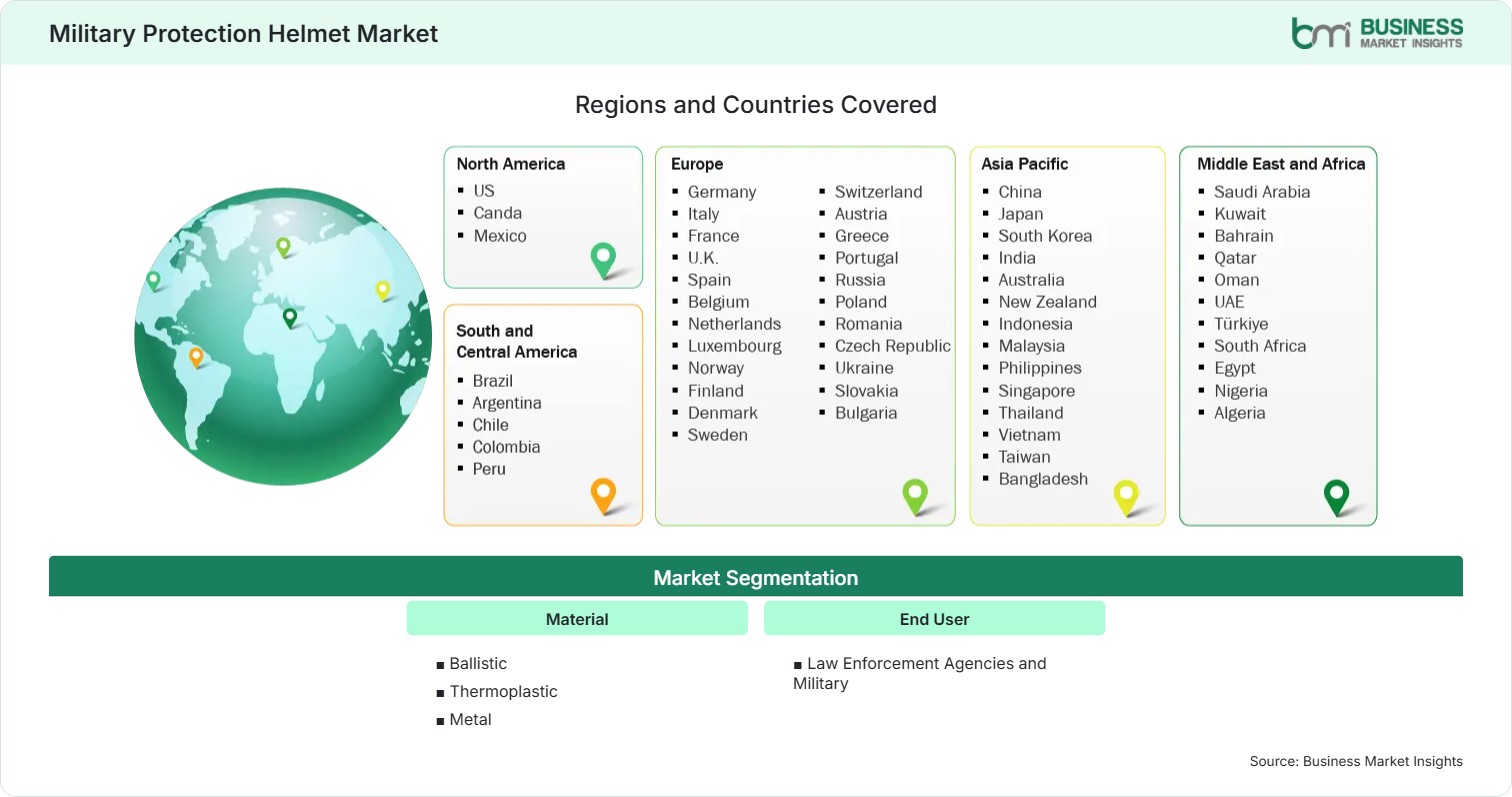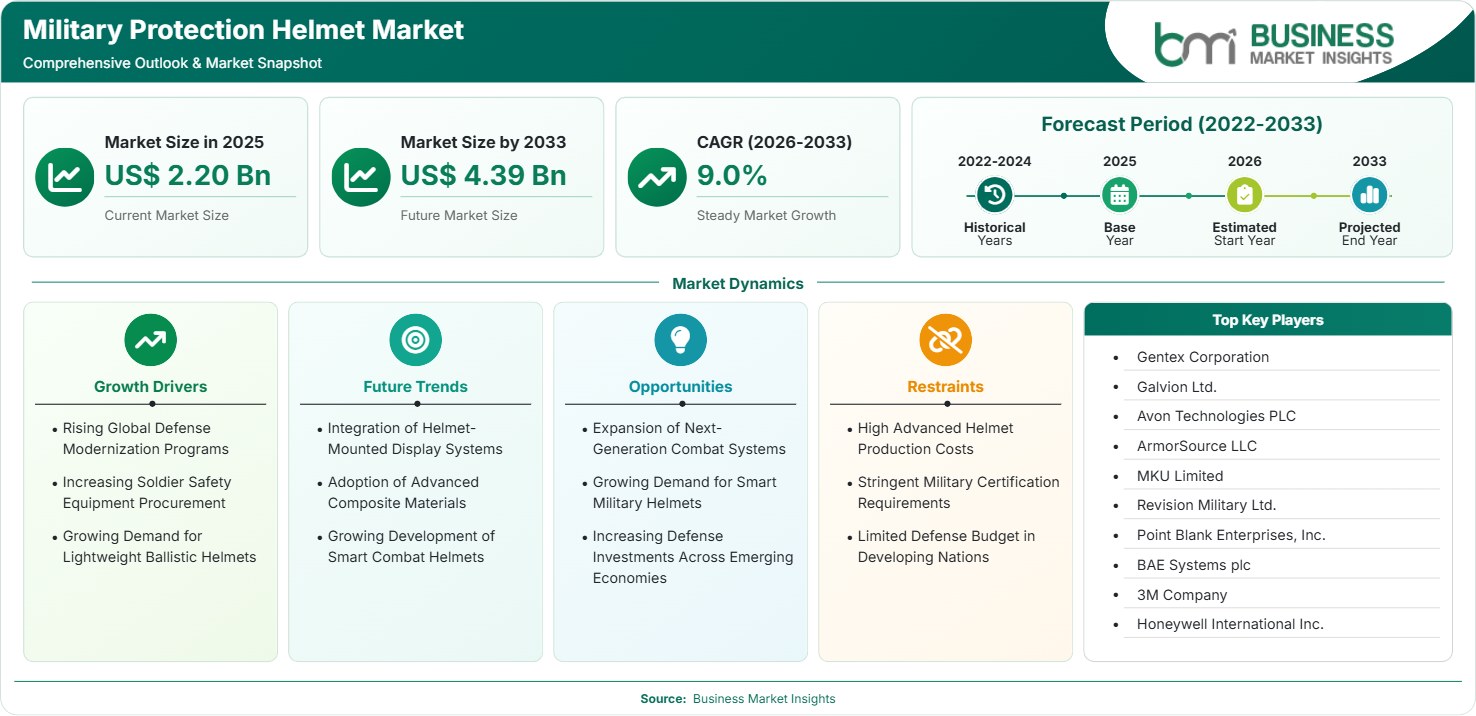
Military Protection Helmet Market Regional Highlights
North America Military Protection Helmet Market
North America remains the leading regional contributor, as the major regional player, holding a revenue share between 36% and 39% of the total market in 2025, while experiencing growth at a CAGR of 8.4% to 9.1% through 2026 to 2033. The ongoing modernization of militaries, along with active defense procurement initiatives and investments in the latest protective solutions for soldiers, further drives the Military Protection Helmet Market in the region.
- The United States Department of Defense continues prioritizing soldier modernization through procurement of lightweight ballistic helmets compatible with communications, night vision devices, and advanced combat equipment.
- Increasing investments in research involving composite materials, impact protection technologies, and integrated electronics are improving helmet performance while reducing weight for extended operational missions.
- Defense contractors continue collaborating with military agencies to develop modular helmet platforms capable of supporting future battlefield technologies including augmented reality and sensor integration.
- Growing homeland security requirements and tactical law enforcement modernization are contributing to stable procurement demand beyond conventional military applications.
US Military Protection Helmet Market
The United States contributes 31%–34% of global Military Protection Helmet market share in 2025 and is projected to register a CAGR of 8.5%–9.2% through 2033. Ongoing soldier modernization initiatives, sustained defense budgets, and continuous procurement of advanced ballistic protection systems are supporting long-term market expansion across military and federal law enforcement organizations.
- The US Army continues investing in next-generation personal protective equipment designed to improve survivability, mobility, and operational effectiveness across diverse combat environments.
- Increasing deployment of integrated soldier systems is driving demand for helmets supporting communication devices, hearing protection, and battlefield data connectivity.
- Domestic manufacturers continue expanding production capabilities while investing in lightweight composite technologies that improve comfort without compromising ballistic performance.
- Federal procurement programs continue encouraging technological innovation through long-term contracts supporting advanced protective equipment development.
Europe Military Protection Helmet Market
Europe accounts for 27%–30% of global revenue in 2025 and is forecast to expand at a CAGR of 8.8%–9.5% through 2033. Rising regional security priorities, NATO capability enhancement initiatives, and increased defense spending continue supporting procurement of advanced personal protective equipment. The United Kingdom remains the largest regional market, while Poland demonstrates the fastest growth driven by accelerated military modernization.
- The United Kingdom continues replacing legacy protective equipment through modernization initiatives focused on improving soldier survivability and operational readiness.
- Poland is rapidly expanding defense procurement programs supported by increased military expenditure and strategic investments in advanced combat equipment.
- Germany continues investing in integrated soldier modernization initiatives emphasizing modular combat systems and lightweight ballistic protection technologies.
- European defense manufacturers are strengthening regional production capabilities to improve supply chain resilience and support long-term procurement requirements.
Asia Pacific Military Protection Helmet Market
Asia Pacific represents 25%–28% of global revenue in 2025 and is expected to record the fastest CAGR of 9.8%–10.5% during 2026–2033. Rising geopolitical tensions, increasing indigenous defense manufacturing, and expanding military modernization programs continue driving procurement of advanced protective equipment. China remains the largest regional market, while India demonstrates the fastest growth supported by defense self-reliance initiatives.
- China continues investing in advanced soldier equipment programs while strengthening domestic manufacturing capabilities for ballistic protection technologies.
- India is expanding procurement of indigenous protective equipment under defense modernization and domestic manufacturing initiatives supporting long-term military readiness.
- Japan and South Korea continue emphasizing technologically advanced protective equipment compatible with digitally connected battlefield systems.
- Regional governments are increasing investments in lightweight composite materials and advanced manufacturing technologies to strengthen defense production capabilities.
Rest of World Military Protection Helmet Market
Rest of World contributes 7%–10% of global market revenue in 2025 while growing at a CAGR of 8.2%–8.9% through 2033. The Middle East continues investing heavily in military modernization, while Latin America and Africa are gradually increasing procurement of advanced personal protective equipment to strengthen national security and peacekeeping capabilities.
Defense modernization programs across emerging economies are supporting gradual adoption of next-generation ballistic helmets featuring improved ergonomics, enhanced impact protection, and compatibility with advanced tactical equipment.
- Saudi Arabia continues investing in military modernization through procurement of advanced personal protective equipment supporting broader defense capability enhancement.
- Brazil is strengthening tactical law enforcement and military protection capabilities through modernization of individual soldier equipment.
- The United Arab Emirates continues expanding investments in advanced defense technologies and integrated soldier systems supporting national security objectives.
- South Africa is witnessing steady procurement of modern ballistic helmets for defense forces and specialized tactical law enforcement agencies.