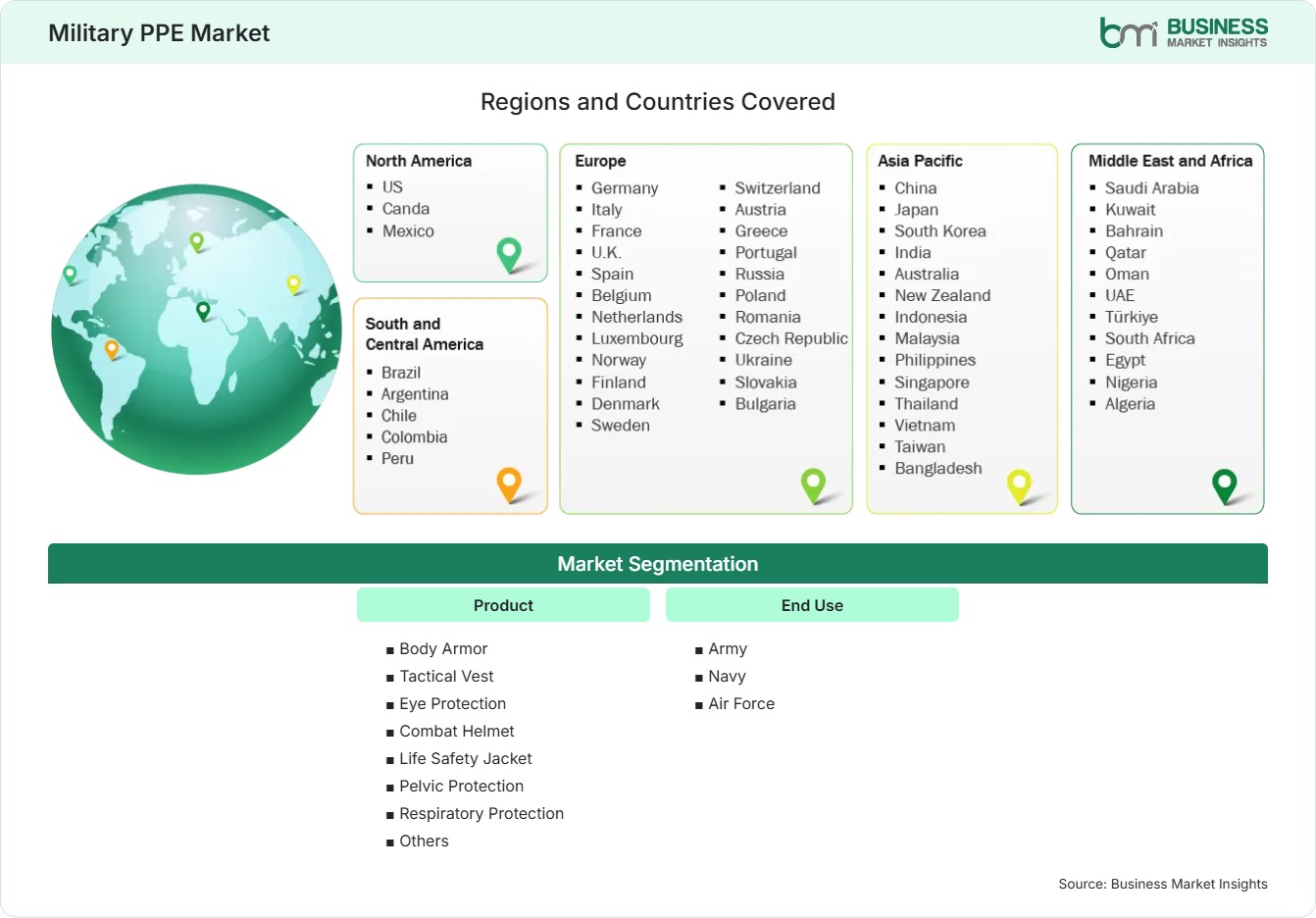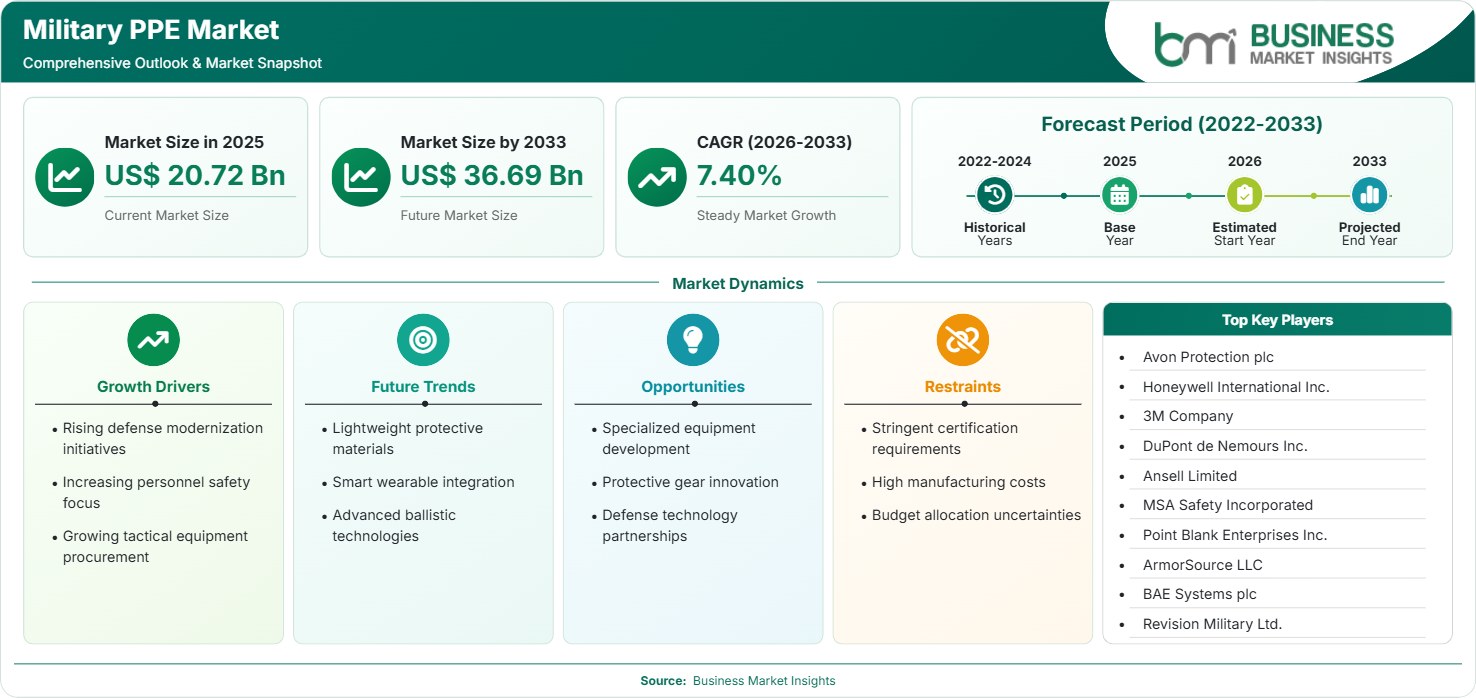
Military PPE Market Regional Highlights
North America Military PPE Market
North America accounted for 36%–39% of global market revenue in 2025 and is projected to grow at a CAGR of 7.0%–7.6% during 2026–2033. Strong defense procurement programs, continuous soldier modernization, and technological leadership continue supporting regional demand. The Military PPE Market share remains the highest globally because of sustained military investments, advanced manufacturing capabilities, and extensive research into next-generation protective systems.
- U.S. defense modernization programs continue accelerating procurement of advanced body armor and combat helmets.
- Military research organizations invest heavily in lightweight ballistic materials and wearable technologies.
- Homeland security agencies expand procurement of protective equipment for specialized operational units.
- Domestic manufacturers strengthen production capacity through long-term government contracts.
- Growing integration of communication systems into protective equipment enhances operational effectiveness.
US Military PPE Market
The United States represented approximately 30%–33% of global market revenue in 2025 and is projected to register a CAGR of 7.1%–7.7% through the Military PPE Market Forecasts. Ongoing defense modernization, increased investment in soldier survivability, and continuous procurement of advanced personal protection systems continue supporting sustained market expansion.
- The U.S. Army prioritizes lightweight body armor and next-generation combat helmets.
- Special operations forces increasingly deploy integrated protective equipment systems.
- Defense innovation programs accelerate wearable technology adoption.
- Ballistic material research continues improving mobility and survivability.
Europe Military PPE Market
Europe accounted for 27%–30% of global revenue in 2025 and is expected to expand at a CAGR of 6.9%–7.5% during 2026–2033. Rising regional defense expenditure, NATO capability enhancement, and military readiness initiatives continue supporting procurement activities. Germany leads regional demand, while Poland records the fastest projected growth.
- Germany remains the largest regional market through extensive defense modernization investments.
- Poland is projected to register a CAGR of 8.2%–8.8% supported by accelerated military procurement programs.
- NATO interoperability requirements continue driving equipment standardization.
- Domestic defense manufacturing investments strengthen regional production capabilities.
- Composite armor innovation improves protection while reducing equipment weight.
Asia Pacific Military PPE Market
Asia Pacific represented 25%–28% of global revenue in 2025 and is forecast to register the fastest CAGR of 8.1%–8.7% during 2026–2033. The Military PPE Market growth is driven by rising military budgets, territorial security priorities, indigenous defense production, and modernization of armed forces. China leads regional procurement, while India demonstrates the fastest projected growth.
- China continues expanding advanced soldier modernization initiatives.
- India is projected to register a CAGR of 8.6%–9.2% through increasing indigenous defense manufacturing.
- Regional governments prioritize advanced ballistic protection technologies.
- Military modernization programs accelerate procurement across all armed services.
- Defense industrial partnerships strengthen local manufacturing capabilities.
Rest of World Military PPE Market
The Rest of World accounted for 8%–10% of global market revenue in 2025 and is projected to register a CAGR of 7.4%–8.0% during 2026–2033.
South & Central America continue investing in military modernization and border security, while the Middle East & Africa strengthen procurement to enhance operational readiness and regional defense capabilities. Saudi Arabia leads regional spending, whereas the UAE demonstrates the fastest projected growth.
- Saudi Arabia continues expanding procurement under national defense modernization initiatives.
- UAE is projected to register a CAGR of 8.3%–8.9% supported by defense technology investments.
- Border security programs increase demand for advanced protective equipment.
- Military training modernization supports procurement of specialized PPE systems.
- Regional partnerships strengthen defense manufacturing and technology transfer initiatives.